Kochia is related to Lamb’s Quarters and Russia Thistle

Bright Ornamental in the Fall

Immigration brought weeds from around the old world to the new world. Quite a few of them came from southern Russia — the grassy steppes — to the prairies of middle America. Among them was Kochia.

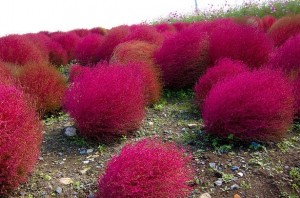
Is Kochia a food plant or an ornamental? Most references say it’s an ornamental because of the fiery color it displays in the fall. But isn’t that a modern view with a full belly? It seems more likely that first it was an edible or a dye plant and only after man moved off the farm did it become an ornamental. It’s also part of the Wild West myth.

Black-tailed prairie dog

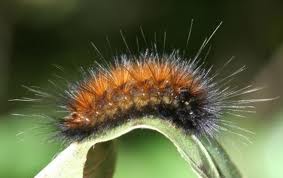
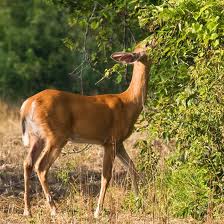
You know the myth, tumbleweeds rolling though deserted dirt streets just before a good-guy-bad-guy shoot out. Didn’t happen. Hollywood notwithstanding the Wild West and tumbleweeds were several decades apart. Indeed, two weeds known as tumbleweeds  — Kochia and the thorny Salsola kali, the Russian Thistle —  came from southern Russia and really didn’t make it into the”Wild West” until around 1900. However, late day Navajo did use Kochia for drought-resistant sheep forage… Yes, Indians raising sheep. Don’t see that in Wild West movies either. Besides the domestic versions wild Prong Horn sheep and deer like the foliage, Black-tailed prairie dogs eat the seeds as do sparrows and presumably other birds. No one has really studied that.  The Diacrisia virginica (Woolly Bear Moth) feeds on the leaves.

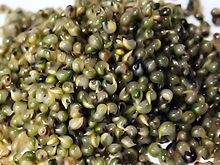
Kochia seeds made into Tonburi

Kochia  leaves and growing tips are edible cooked. The plant is very salty tasting. Seeds are also a garnish called  tonburi with a texture similar to caviar. In fact it is called “land caviar,” “field caviar,” and “mountain caviar.” In Japan tonburi is a delicacy. Seeds are dried, boiled then soaked in cold water for a day. They are rubbed by hand to remove the outer skin. The seeds are a glossy black-green. Plants produce about 15,000 seeds each though three times that is possible. Distribution is by… tumbling.

Like many members of the greater Chenopodium family Kochia, aka fireweed, burning bush and summer cypress, can accumulate nitrates like spinach so if you avoid spinach you should avoid Kochia. Also called Bassia scoparia it is found throughout North America save for Arkansas, Alabama, Georgia, Florida, North Carolina and Maryland. In some states, particularly western states, it is a “noxious” weed, as is the Russian Thistle.

Professor Koch

Kochia (KOH-kee-ah) is named for German Botanist Wilhelm Daniel Joseph Koch, 5 March 1771 – 14 November 1849, professor of medicine and botany. His best known written work was a treatise on German and Swiss flora entitled Synopsis florae germanicae et helveticae (1835-37.) Scoparia (sko-PAIR- ee-uh) is dead Latin for broom-like.

Green Deane’s”Itemized” Plant Profile: Kochia

Woolly Bear

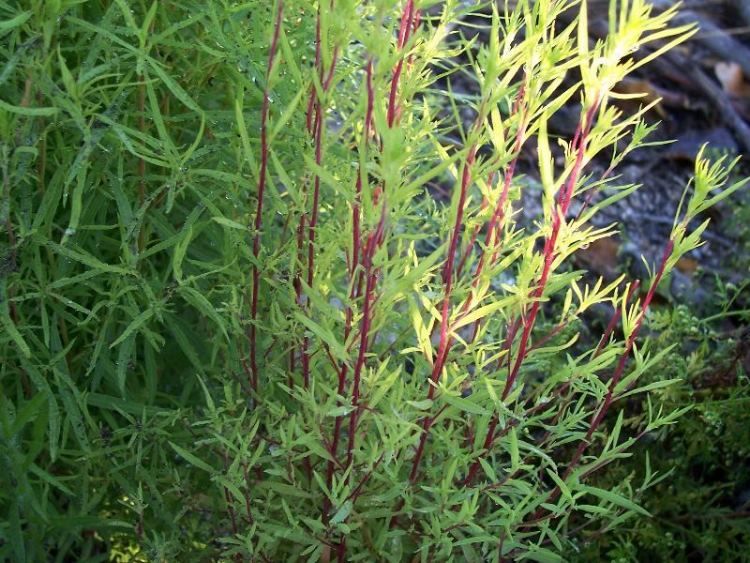
IDENTIFICATION: Kochia scoparia: The young plant forms a small rosette. Mature Kochia grow from 2 to 5 feet (60–150 cm) tall, usually branched from the base (Don’t confuse with Fivehook Bassia which branches along the main stem.)  Leaves are linear to lance shaped, flat, generally gray green, covered with soft hairs (Kochia is less hairy than Fivehook Bassia.) The leaves have smooth edges, and alternate, 1/5 to 2-2/5 inches (5–60 mm) long and from 1/25 to 2/5 of an inch (1–10 mm) wide. Stems are sometimes reddish late in the season.  Seeds are egg shaped, flattened, and roughly 1/25 to 1/12 of an inch (1–2 mm). Plants under cultivation are softer and fuller than wild specimens.

TIME OF YEAR: Blooms July through October. Flower head is a spike forming clusters of inconspicuous, green, petal-less, stalkless flowers that grow in the axils of reduced leaves.

ENVIRONMENT: Roadsides, fields, pastures, disturbed places, new crop fields, ditches, floodplains to 5,000 feet.

METHOD OF PREPARATION: Young leaves and tips cooked, seeds cooked. Protein content ranges from 11 to 22%,  decreasing as the plant matures.

{ 5 comments }

“Green” Perilla

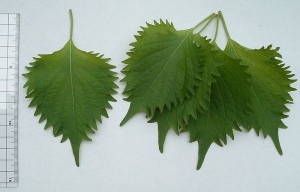
The first Perilla I ever had came from a can, just like the kind sardines snuggle in. The leaves were very spicy and were used that way, as a spice. Later in my garden I grew the plant, which reseeded itself. That’s probably why Perilla is naturalized in the eastern half of North America excluding Vermont, New Hampshire, Maine and Canadian points north and east. Its native land is India.

Green Perilla Leaves

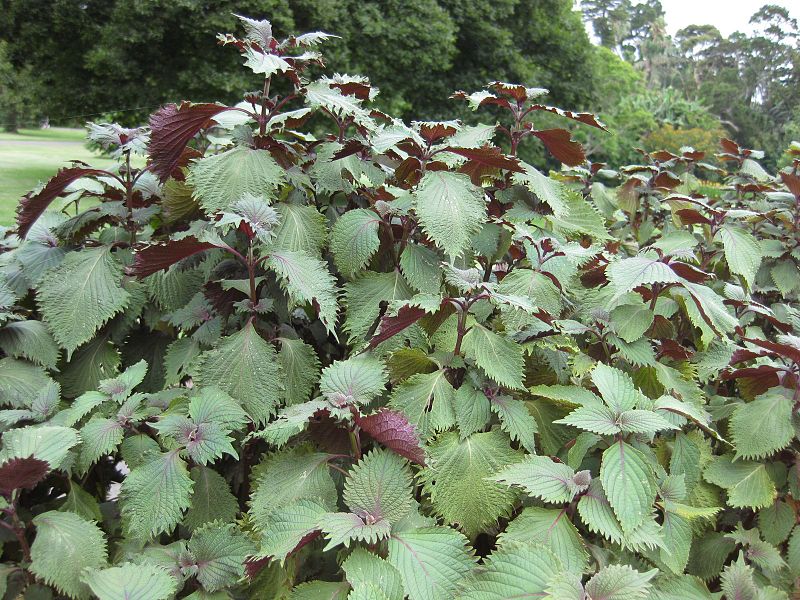
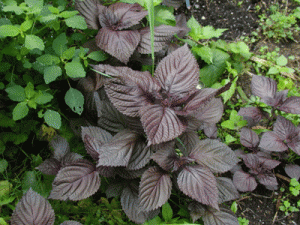
Strictly speaking Perilla is a monotypic genus. (See article on monotypic genus.) There is only one species in the genus, but three are varieties. There are two major forms of cultivated Perilla, green and red though green is the most common escapee I have seen. Those common names are slightly misleading. The “Green” version is green on top of the leaf, and purple below. The “red” version has leaves that are purplish on top and bottom.

Perilla has been used as a salad ingredient, potherb and for its seed oil for literally thousands of years. And while the seed oil is edible  — up to 64% Omega 3 fatty acids — it may not be the best oil to cook with. The oil, similar to unrefined Canola oil, has a chemical that is a potential lung toxin.  The oil also has been used for lamps, which might be a dangerous use regarding potential lung damage. (Unrefined Canolia oil — rape seed oil — was used for cooking in India and a common cause of lung problems.)

According to the Federal Department of Agriculture Perilla has three chemical that are known lung toxin to cattle; egomaketone, isoegomaketone, and perilla ketone, the latter the most abundant and worse. Tests show Perillla ketone also produced pulmonary emphysema in goats, mice and rats. It does horses as well. While humans eat the species with little issue it is best to use any seed oil cold not heated.

In the greater mint family, noses and palettes disagree on what Perilla tastes and smells like, from cinnamon to licorice. I lean towards spicy cinnamon. It has numerous common names, among them Ao Shiso, Beefsteak Plant, Ji Soo, Perilla, Purple Perilla, Shiso, Wild basil, Wild Red Basil, Chinese Basil, Purple Mint, Rattlesnake Weed, Summer Coleus and Perilla Mint. In some individuals the plant can cause dermatitis.

Purple Perilla

Why the genus was called Perilla by the Latin scholar Linnaeus is debatable. It could mean “little bag” referencing the caylex. Despite what Internet “Baby Name” sites say Perilla (per-RILL-ah) is not an American invention, though it was a common girl’s name in the 1800s in the United States. Perilla was the nick name of Caecillia Metella the poetess, and lover of the Ancient Roman poet Ticida, and many others. Ticida (probably Clodius Aesopus) was not political but besides writing poetry he provided supplies to Julius Caesar’s army in 46 BC. Caecillia also seduced several of Julius Caesar’s intimate friends and was involved in much political scandal and intrigue. Soon married and divorced Caecillia was a talented, savvy, good looking party girl who probably wrote erotic poetry and is also called Lesbia in other poems.  We know that Ticida invented the name “Perilla”  for her by using Greek word play on her family name Metella. When she died we do not know. Thus what was a common proper name in the 1800s for girls in America was at its invention used to protect the public identity of a woman who wrote racy erotic poetry and slept around. And perhaps that is why the species is called Perilla, it’s attractive, spicy, and gets around. Frutescens (frew-TESS-enz) means shrubby or bushy.

Green Deane’s “Itemized” Plant Profile: Perilla

IDENTIFICATION: Perilla frutescens: Stems to a yard high, erect, herbaceous, purple, four-angled, a single vertical groove on each side of the stem. Leaves are opposite, petiolate, purple with a very shallow groove. Blades ovate, serrate, acute, to four inches long (10cm) three inches wide (8cm) sometimes crisped (curled or undulated) or not, typically green above and purple-green or entirely purple below, mostly hairless above, hairy on the veins below. Flower spikes growing out of where a leaf stem meets a main stem or at the top end of the plant. Blossoms pink, four stamens, anthers pinkish, fading to purple, two blossoms per node, each with a folded bract. Bracts broadly ovate when unfolded.

TIME OF YEAR: Flowering August to October.

ENVIRONMENT: Gravel bars, rich soils, alluvial soils or dry soils along streams, spring branches, gravel bars, roadsides, railroads.

METHOD OF PREPARATION: Leaves used as a coloring or a spice. Flower spikes in soup or fried. Seeds uses as a spice or a source of edible oil. Sprouts cooked and eaten like a potherb.

{ 27 comments }


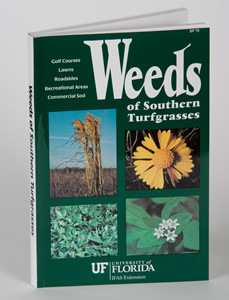
The link to the university’s site to buy the book — I do not get a cut — is here.

The list of known edibles in the book is below. Many of them are covered in separate articles on site.  Click on the common name.

Page 10:   Commelina diffusa, young tips boiled in ample water, blossoms raw. Dayflowers.
Page 11:   Murdannia nudiflora, same as above.  Doveweed.
Page 14:   Cyperus esculentus, tubers, raw, boiled, roasted or candied, oil from tubers, seeds roasted as a coffee substitute. Chufa
Page 19:   Cyperus rotundus, edible after drying, fresh are an insect repellant. See above.
Page 26:   Anthoxanthum odoratum, dry leaves as tea, grain, caution as it is a blood thinner.
Page 31:   Cenchrus echinatus, use as grain after burning off spines, or winnowing between leather pads. Sandspurs.
Page 32:   Cenchrus incertus, same as above.
Page 34:   Dactyloctenium aegyptium, dry seeds to make a flour, or mush, beer et cetera. Crowfoot Grass.
Page 65:   Allium vineale, wild garlic, use like said. Wild Onion, Wild Garlic.
Page 67:   Mollugo verticillata,  leaves as potherb.
Page 71:    Amaranthus blitum, Livid Amaranth, use cooked like spinach.
Page 72:   Amaranthus hybridus, Smooth Pigweed, use cooked like spinach.
Page 73:   Amaranthus verdis, Slender Amaranth, use cooked like spinach.
Page 88:   Cirsium horridulum, all true thistles are edible, first year root raw or cooked, second year stalk peeled raw or cooked, leaves anytime peeled of spines, raw or cooked. Bull Thistle
Page 89:   Conyza canadensis, barely edible as a spice, significant medicinal. Horseweed.
Page 90:   Eclipta prostrata, young leaves and shoots cooked.
Page 91:    Emilia fosbergii, from non-flowering plant, young leaves raw, or cooked, occasional use, long-term use can cause liver tumors.
Page 92:    Erechtites hieraciifolia, raw or cooked, an acquired taste. Fireweed.
Page 103:  Hypochoeris radicata, young leaves cooked (usually boiled.) False Dandelions
Page 105:  Lactuca canadensis, young leaves cooked (usually boiled.) Lettuce Labyrinth
Page 107:  Pyrrhopappus carolinianus, young leaves cooked (usually boiled.) False dandelions.
Page 109:  Sonchus asper, young leaves cooked (usually boiled.) Sow Thistle.
Page 110:  Taraxacum officinale, young leaves cooked, blossoms as tea or to flavor wine, panckakes, roasted roots. Dandelions.
Page 113:  Youngia japonica, young leaves raw or cooked. False Hawksbeard.
Page 115:  Capsella bursa-pastoris, young leaves for seasoning or greens after boiling, seeds as pepper, grind root add to salt and vinegar for horseradish substitute. Peppergrass.
Page 116:  Cardamine hirsuta, leaves and seed pods for seasoning. The Little Mustards.
Page 117:  Coronopus didymus, leaves and seed pods for seasoning. The Little Mustards.
Page 118:  Descurainia pinnata, leaves and seed pods for seasoning. The Little Mustards.
Page 119:  Lepidium virginicum, same as Capsella bursa-pasatopris. Peppergrass.
Page 120:  Sibara virginica, young leaves and seed pods as seasoning. The Little Mustards.
Page 128:  Erodium circutarium, young leaves boiled. Stork’s Bill
Page 129:  Geranium carolinianum, young leaves boiled, very bitter, more a medicinal. Stork’s Bill
Page 130:  Glechoma hederacea, young leaves cooked, much written about this plant. Henbit
Page 131:  Lamium amplexicaule, young leaves raw or cooked. Henbit.
Page 132:  Lamium purpureum, young leaves raw or cooked. Henbit.
Page 133:  Prunella vulgaris, young leaves raw or cooked, tends to be bitter raw.
Page 134:  Stachys floridana, root edible raw or cooked, leaves dried for tea, leaves boiled as famine food, musty flavored. Florida Betony
Page 137:  Desmodium triflorum, threeflower ticktrefoil, in India traditionally boiled then mixed with dry fish. Yum. Tick Clover
Page 141:  Medicago lupulina, seeds edible, leaves edible cooked but implicated in auto-immune diseases. Iffy. Black Medic
Page 146:  Trifolium compestre, leave edible raw or cooked, blossoms, too. Family does not digest well.
Page 147:  Trifolium dubium, leaves edible raw or cooked, blossoms too. See above.
Page 148:  Trifolium repens, leaves edible raw or cooked, blossoms too. Clover.
Page 150:  Vicia sativa, seeds cooked, leaves cooked, but some reports of toxicity in the lab, not in the field.
Page 152:  Modiola caroliniana, leaves used to make a drink. Carolina Bristle Mallow
Page 154:  Boerhavia diffusa, tender young leaves and shoots – cooked and used as a vegetable, root – baked, rich in carbohydrate and protein, though the flavor is bland and the texture sometimes woody. Seeds – cooked. It can be ground into a powder and added to cereals when making bread, cakes et cetera. If the root chemically burns mouth after cooking do not eat. Red Spiderling.
Page 157:  Oxalis intermedia, leaves raw or cooked, entire plant edible. Sorrels
Page 158:  Oxalis stricta, leaves raw or cooked. See above.
Page 159:  Plantago aristata, young leaves raw or cooked, young seed spike raw or cooked, seeds raw or cooked. Plantains
Page 160:  Plantago lanceolata, same as above
Page 161:  Plantago major, same as above
Page 162:  Plantago virginica, same as above
Page 163:  Polygonum aviculare, young leaves, seeds, and blossoms, raw or cooked (probably P. caespitosum, too.) Blossom the hottest but also bitter. Large raw amounts can raise blood pressure..
Page 165:  Rumex acetosella, young leaves raw or cooked (makes a nice tartlet with sour cream.) Root – cooked. It can be dried, ground into a powder and made into noodles. Seed – raw or cooked. Easy to harvest, but the seed is rather small. A drink similar to lemonade is made by boiling the leaves. Sheep Sorrel
Page 166:  Rumex crispus, young leaves and seeds, raw or cooked, similar to above.
Page 168:  Portulaca oleracea, entire plant above ground raw or cooked. Purslane.
Page 172:  Duchesnea indica, berries raw, leaves cooked. Reports of it being poisonous are simply wrong. Indian strawberry
Page 176:  Galium aparine, young shoots and leaves raw or cooked, seed roasted make an excellent coffee substitute. Old leaves toxic with silica.  When the plant is young it stimulates the immune system and is good for the lymph system. Goosegrass.
Page 190:  Centella asiatica, Gotu Kola, leaves edible raw or cooked, better cooked. Pennyworts.
Page 191:  Daucus carota, root cooked, thin and stringy, flower clusters can be french-fried to produce a carrot-flavoured gourmet’s delight, the aromatic seed is used as a flavouring in stews et cetera, the dried roasted roots are ground into a powder and are used for making coffee substitute. Wild Carrots.
Page 192:  Hydrocotyles, young leaves raw or cooked, better cooked, too many leaves raw will lower your blood pressure. Pennyworts.
Page 193:  Parietaria floridana, young leaves, stems, flowers raw or cooked, diuretic, can make some itch, try sparingly at first. (In more than 20 years I have not met anyone who gets the itch.) Pellitory.
Page 196:  Viola, above ground parts edible raw or cooked. Romans made blossoms into wine. Root is toxic.  Violet Virtues.
Page 197:  Viola arvensis, same as above
Page 198:  Viola rafinesquii, same as above

I did not list many of the grass seeds as edible, but probably they are as I do not know of any native toxic grasses in North America.


{ 8 comments }

This is Green Deane being interview for the local PBS station for Thanksgiving, 2009. This show was voted their best episode of the year. http://www.wmfe.org/audiointersection/112409.asx

To see some video of a class in Tarpon Springs click the link below.

http://www.onetruemedia.com/shared?p=9c933ff9f45f4b43f7c07d&skin_id=801&utm_source=otm&utm_medium=text_url

TruthbrigadeRadio.com

Here’s a few minutes of the four hour class at Cassadega (thanks Chris)

http://www.youtube.com/watch?v=vXtHAlXeLTE&feature=player_embedded

{ 0 comments }

There is such a thing as a free lunch, or almost free: The edible wild plants around you.

With a little specialized knowledge and a “guidance” system you can learn to spot edible plants where you live, even in a city. You can do it on your own but it’s better to learn from someone showing you the way. I’m confident you can do it. You only need to learn about a few plants, not every plant you see. And I’ll also tell you where you can learn from a teacher, usually for free.

So let’s get started. You need to know something about foraging, and something about wild plants. Plants are really easy to tell apart. In this blog you’ll read about how to think like a forager. Remember, you’re not trying to learn all of botany or name every plant you see, just the tasty edibles in your area. There are over 120,000 edible plants world wide. About one thousandth of those end up in markets. Of those, about 30 of those are used the most. You’ll be looking for a couple dozen of edible plants in your area that are not in local markets, and they are easy to learn.
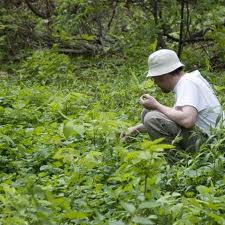
Let’s start with the main rule: Never, ever eat a wild plant without checking with a local expert. Where do you find a local expert, and is there a cost? You can locate a local expert through your local Native Plant Society online or in the phone book. There are chapters in most major cities. You’ll find them throughout the United States and Canada. Plant people are always happy to share knowledge and it’s usually free. They’re passionate about plants, particularly native local ones. You can go on “field trips” and learn from someone who knows what they are talking about. It’s hard to build confidence unless you are studying with someone who is willing to eat the plant in front of you. It is not impossible to learn foraging from books and websites, but it is more difficult and more dangerous. If there isn’t a Native Plant Society near you ask your local librarian: They usually know the main plant person in your area.
The second rule is even after you have the right wild plant — the expert agrees —and it is edible and you have “itemized” it, only try a little. You may like it but it may not like you. Read my blog on Gallberry and Ilex Vomitoria. Yeah. vomitoria… means what you think it means. Most edible wild plants never made it into the mainstream vegetable market in the United States for a reason (though many of them may be common fare in other countries. Purslane is a prime example.) You don’t know if you’ll have a reaction to a particular plant. I am definitely not a person who has allergies, but there are one or two wild plants that just don’t agree with me even though I like them. So, take it easy first.

In fact, it is good advice to never eat a wild plant in the first week you find it. Even among experienced forages there is a strong temptation to make the plant fit the description. I had a friend do that with illness consequences. It’s best to separate the identification and the consumption by a good amount of time. And of course, try only a little the first few times. And learn from an expert.

As for a system….

Every time you or anyone is looking at a plant that might be edible, you need to “itemize” it, put it through four major steps (even the experienced should do it.) I use the word I.T.E.M. to remember what needs to be check out. It’s handy reference and is used in profiling most of the plants on this site.

So, let’s look at the word I.T.E.M.

First, it means (I)dentify the plant beyond doubt. Next, make sure it is growing or fruiting or otherwise available at the right (T)ime of year. Third is checking out the (E)nvironment. This involves two things. One is making sure it is growing in the right place. The other is making sure the plant is getting clean water and is not in polluted soil. And then, what is the proper (M)ethod of preparation. I’m sure you can do that. I.T.E.M. You can rearrange the letters to spell T.I.M.E. if you like as long as you always remember to apply the four steps.

You’ll learn more about I.T.E.M in a moment, but think of it as four obstacles you must eliminate. And you can’t eat a plant until you have gotten rid of those four obstacles. If at any time one or more of them are in the way, that’s a warning sign. If you can’t resolve even one of the warning signs the plant is not eaten. A warning sign does not automatically mean the plant is inedible. But, it does mean you have to do more investigating and get rid of that obstacle before you can consider the plant consumable.

First is “I” identification.

You absolutely must identify the plant correctly, and that involves more than just comparing pictures. This site is NOT to be used for identification. This is site a guide to familiarize you with a particular plant. Identification is a botanical specialty and requires more specific information than appears in these pages. It is learning the physical characteristics of that plant. The best and quickest way is with a local expert and a good identification book used in tandem. There are several reasons for this.
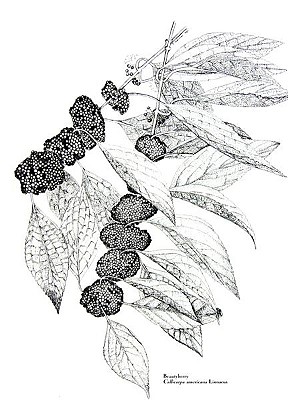
Pictures often don’t tell the entire story, one reason why illustrations of key points are still used. Also, in some areas of the country a plant will look exactly like the picture or illustration in the guide book but in other areas it will not but some other plant might — a non-edible. It is one thing to know a plant in your area is edible. What’s more important is to know what it usually looks like in your area and to identify it absolutely.

I forage in Florida, Maine, and Greece, which are all very different climates. In temperate Maine, the plants are usually identification book perfect. Foraging where there is an actual winter is very easy because the plants consistently look the way they are suppose to look. The closer you get to the equator the more difficult it becomes. In Florida plants are often very different because the extreme environmental changes can make plants look far removed from their published examples. Periods of excess water and periods of excess heat change their shape and often where they grow. There can be a lot of subspecies. And in Greece the plants are just different altogether. They look familiar and unfamiliar at the same time.

Often your local plant can be a bad brother of the one in the guide book, or a close cousin, so it may look only a little different or have different characteristics, such as not being edible. Each plant is a little chemical factory, and one tiny change can make a big difference in the chemicals it makes and affect its edibility. Getting the identification right is crucial. I had a friend, who did not study with me, who call one day about a plant he had been eating — identified via a picture. He wanted to know about its berries. The plant he named didn’t have berries, and I knew immediately what he had done and which plants he had mixed up. He had misidentified a plant and was eating one that had some toxicity because he was not preparing it the right way. He had been wondering why his family had been experiencing bad headaches after eating the plant.

There is actually a little more to that incident. The plant he misidentified is one that experts are split on, some report it is edible if prepared correctly others saying it is not edible at all. On the other hand, I now know that plant can be prepared incorrectly, eaten and survived with just a headache. That suggests with proper preparation it is edible.

Identification is important when you know what you’re doing, and even more important when you don’t. That said, don’t be intimidated by the idea of identifying plants. Humans were passing along the knowledge of edible plants long before writing or botany was invented. You’ll come to recognize plants and trust your judgment.

Regardless of how you know a plant is edible you must know it with errorless certainty. That means you have found it many times, prepared it many times, eaten it many times and every time you see it anew you make sure it is the right plant. It is one thing to be wrong and endure all that entails by yourself, it is another to be wrong and have people get sick over it. It is wise always to cross reference what you read. There is a plant in central Florida which only takes one pea-size seed to kill you, though it will take several painful days to do so and there is no antidote. Two reports, however, say that it is edible after cooking. That brings me to the advice of a fellow you will read about in these pages. His was a forager named Dick Deuerling. When told a plant he thought was not edible was edible he would say this: “Invite me over, let me watch you harvest it, let me watch you prepare it, let me watch you cook it and let me watch you eat it. I’ll come back the next day and if you’re still alive I might try it.” My point is you can’t be wrong, so work hard at making it right.

Next in the word in I.T.E.M is “T” time of year.

If your plant is supposed to be flowering in September and you see it flowering in June, you might have the wrong plant, and a good look alike. That of course depends upon where you live. Some plants that bloom or fruit once a year in a northern climate may do so twice in a warmer climate. As an example, my pyracantha fruits twice. Read the blog on Firethorn Jelly. If a plant is not doing what it is supposed to be doing at the right time of year, you need to answer why, which is another reasons to study with a local expert. And let me add that studying is fun. You usually just join in with a group of plant people as they visit a field or forest. Sometimes those field trips are only a few hundred feel long because there’s a world of plants to look at and the experts are more than happy to share what they know with you. They are pleasant people. The point is, if you ask around you will find someone who knows about wild edibles in your area who is willing to share. I’ve even been the botany lesson of the month for several home schoolers. With the help of local experts you can learn the local plants and how they (usually) differ from the text books.

The next step in the general approach has two parts: “E” Environment. The first part is to make sure the plant is growing in the right environment. If the plant likes its feet wet and it is growing in a sand trap you might have the wrong plant. Some plants can tolerate extreme changes in their environment but usually they have a significant preference. Another possible answer is the sand trap may flood often enough to have a bog plant growing there. Or, it might be an overwatered lawn. Here in Florida we have seasonal lakes with cactus. When the plant is in the wrong environment, you have to answer why. It could be you have the wrong plant, or a varying environmental condition. Again, learning from a local expert will get you that specialized knowledge because they have seen it before.

The second part of the environment is checking the area for pollution of the water, soil or air. You don’t want to eat an aquatic plant in a pond that has parking lot run off — a very common issue here in Florida. You don’t want a plant that is growing in the cracked tar of a parking lot. Plants growing down hill from a major highway are suspect, or on a golf course where pesticides are used, or your neighbor’s lawn for that matter or an inner city park. It’s a matter of common sense, but in reality deciding whether a plant is in good soil and getting clean water it is the greatest challenge facing a forager especially in an urban area. Compared to that, identifying plants is relatively easy. (Incidentally, the most common accidental plant poisoning is kids eating landscape plants in your yard, next is eating landscape plants in your neighbor’s yard.)

The next word in the I.T.E.M. system is “M” Method of preparation. Many wild edible require particular methods of preparation to make them edible. Sometimes those methods kept that plant from entering the mainstream food supply. Pokeweed is a good example. It must be boiled at least twice, if not three times. If you boil it once like many other greens you might get ill from it. Despite several efforts in the United States to get that plant into the food supply the need to boil pokeweed more than once kept it out. Another plant may need to be soaked in salty water, or peeled. Some tubers have to be cooked twice. Method of preparation is important. Know it.

I.T.E.M. is the word to always keep in mind whenever you are foraging. You should use it always no matter how much you know about edible wild plants. It’s a system to keep you healthy and happy as a forager. There six other little guidelines to help you later on but I’ll share them with you now and remind you later.

The first one is if it looks like a mint and smells like a mint it is a mint and is edible. But, it must do both. If it looks like a mint but does not smell like a mint, don’t eat it. If it smells like a mint but does not look like one, don’t eat it. What does a mint look like? You’ll learn that later.

This same rule applies to garlic and onions. If it looks like a garlic and smells like a garlic it is a garlic. If it looks like and onion and smells like an onion it is an onion. But both elements must be present. Here in Florida we have a plant which before blossoming looks just like a garlic, even has a bulb, but NO garlic odor. It can make you very sick if not kill you.

The fourth guideline you’ll learn in this blog is that almost all plants with white sap are NOT edible. There are some exceptions and you will learn those along the way. White sap is a huge warning sign a plant is not edible. As for white berries, 99.9999 percent of those are indeed toxic. Don’t eat them. I know of one exception and it is geographically very isolated.

The fifth rule is real short: All mustards are edible. Some taste better than others, or are more digestible than others, but all mustards are edible.

The sixth one is that all mallows are edible in some way except cotton (excluding refined cottonseed oil.) It will vary which part of the mallow is edible, but other than cotton, mallows are edible in some way.

In the various blogs you will learn about specific plants. The blogs on this site are not about plant identification but about the plant, its history, and uses. For exact identification you need a manual. The green and blue boxes on this site about plants are just general descriptions. You should have more exacting ones if you indeed intend to eat or use wild plants. Read the stories behind the edible plants on this site. You probably have the plants, or a local version near you including cactus. If you have any questions, email me.

You can easily and safely learn to forage, and there is a world of plants to explore and enjoy. Reading blogs like this, and identification books, and visiting other sites, is a way to get started. But the greatest peace of mind and the quickest success is to study with an expert. It is one thing to read a plant is edible. It is another to see the person in front of you identify it AND eat it. Watching someone put something in their mouth where their words were builds trust, trust and knowledge builds your personal confidence. It allows you to say with certainty that you know this plant IS edible and you don’t know if that one is. When foraging with others people will ask about this or that plant and if you don’t know, and most plants you won’t know, tell them so. If you’re honest with yourself regarding what you know and don’t know, you’ll be honest with them and mistakes can be avoided.

Lastly, on nearly every page you will find Green Deane’s “itemized” Plant Profile, as below. It is a general guide, especially regarding identification. For certain identification refer to publications that specialize in identification. There will also occasionally be an herb blurb, about reported herbal uses of the plant.

{ 8 comments }