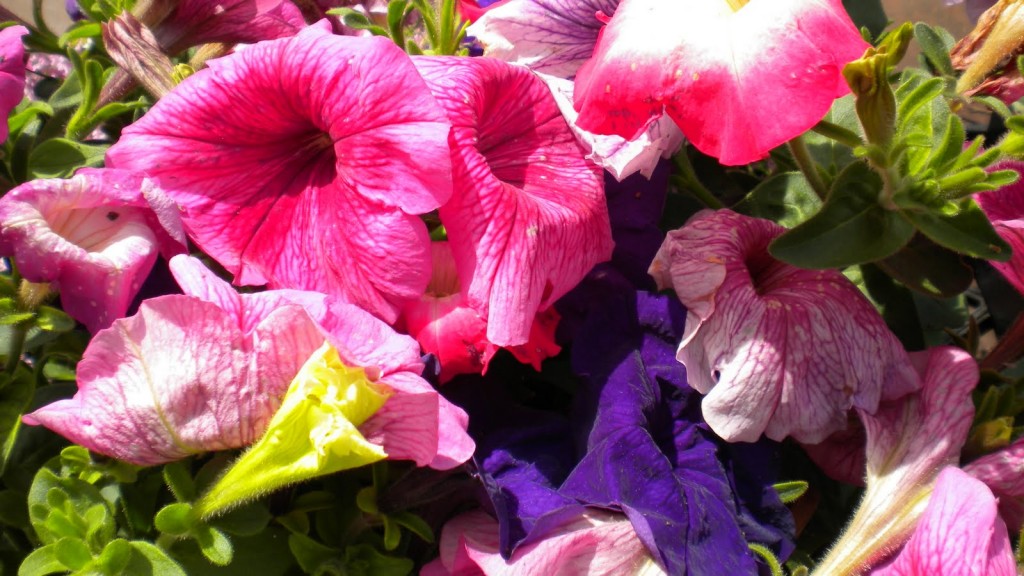
Who need chips when you have flowers to hold dip?

Tulip Tree, Eucalyptus, Melaleuca, King’s Spear, Gunnison Mariposa, Sego Lily, Star of Bethleham, Forest Lily, Guinea Arrowroot, Neem Tree
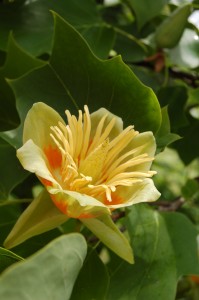
Tulip Tree Blossom

Please ignore the misalignment. I am having wordpress issues they can’t quite seem to sort out.

The blossom of the Tulip Tree, Liriodendron tulipifera, is not edible as far as I know nor would I try it. Other parts of the tree have a heart-stimulating alkaloid that is best avoided. But the flower nectar is drinkable. For just a short time while the tree is blossoming there is a small amount of very sweet nectar in each blossom. It is heavy and honey-flavored. You can drink it directly from the blossom. While early reports say the native made honey from the blossom what they were really doing was collecting nectar. The tree was also called the Sap Poplar, perhaps because its sap is consumable. I don’t know and have not found any reference to said but it wouldn’t surprise me. As a source of nectar the tree also attracts hummingbirds, squirrels and is a host plant for tiger and spicebush swallowtail butterflies.
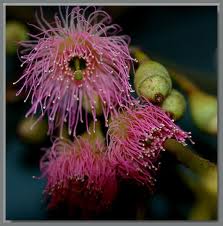
Eucalyptus blossoms

While on the topic of flowers that are not edible but produce a sweet nectar than let’s add the huge family of Eucalyptus. Here in North America Eucalyptus is usually thought of in medicinal terms, some what in the same category as camphor, one of those aromas in your grand- or great grandmother’s house. Where they are native however, Eucalyptus are significant producers of honey, flower nectar, and “manna” sweet dripping directly from the tree or scraped from leaves. Cornucopia II lists no less than 37 Eucalyptus species producing, honey, nectar, manna and in come cases edible bark and seeds. “Eucalyptus” comes from Greek. “Eu” means “well” and “kaleptos” means covered. Well-covered, in reference to the hidden flowers. The base of flowers are sipped on for their nectar. Incidentally in Greek Eucalyptus is pronounced eff-KA-lip-tos. Blame the difference on Dead Latin.
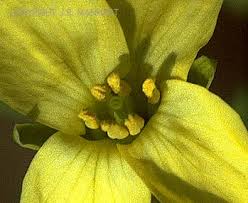
Melaleuca quinquenervia

To compete the trio of sweet flowers that are not edible let’s add the Melaleuca, an invasive nightmare in south Florida. The blossoms and leaves of the M. quinquenervia can be used to make a sweet tea. Usually the tea is made from the leaves and the blossom used to sweeten it. Also called the Paper Bark tree it is used to make temporary huts in the outback as well as containers for cooking food. The Melaleuca  is the number one invasive plant in Florida. It was introduced in the late 1800s but got a huge boost after the turn of the 20th century from one Dr. John Gifford. It consumes huge amounts of precious water, is very prolific, and very difficult to get rid of. On the other hand, like the Eucalyptus it is also a prime producer of honey.
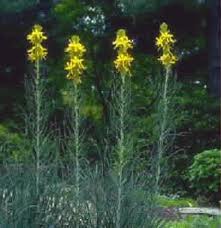
Asphodeline lutea

Like many European wild flowers the King’s Spear, aka Asphodel, Asphodeline lutea, is found in flower gardens around the world. These days it is appreciated for its looks more than its flavor. However, the ancient Greeks and Romans roasted the roots and ate them like potatoes with oil and salt. Sometimes they mashed them with figs. The flowers are also eaten and have a sweet, delicious flavor. It will grow in any soil and under most conditions, except facing north. Very showy, low maintenance, blossoming for about six weeks from May into June. Harvest roots in fall.
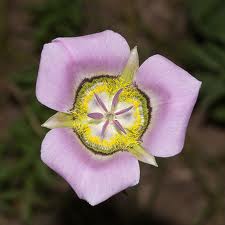
Gunnison Mariposa

The blossoms of two Mariposa get over looked because so much of the rest of the plants are edible. First the Gunnison Mariposa, Calochortus gunnisonii. The fresh bulbs are easten raw with salt and taste like a raw potato. Fried or baked they have a crisp nut-like texture. Dried they are pounded into flour for use as porridge or mush. The seeds are ground and eaten. And the flowers and buds are eaten raw in salads or as a trail side nibble. The Gunnison Mariposa is found from Mexico to Canada in states bordering or containing the Rocky Mountains.
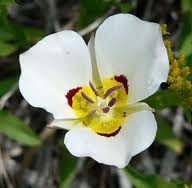
Sego Lily

The second mariposa is called the Sego Lily, Calochortus nuttallii, and is not related to the palms or cycads which are spelled Sago. The bulbs of the Sego Lily are excellent raw, fried or boiled. Preferred ways of cooking include steaming them in pits or roasting them over a smoky fire, each method creating special flavors. The seeds are ground into meal and the whole plant can be used as a pot herb. The flowers and flower buds are eaten raw as a trail nibble or in salads. The Sego has a larger range than its kin above, farther east and west.
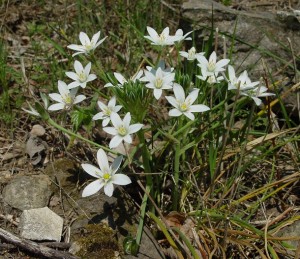
Star of Bethlehem

The Star of Bethlehem started out in central and southern Europe, North Africa, southeast Asia and presumably Levant. When it came to North America is not known but it escaped. Now it is found in most of North American except the Rocky Mountain states and due north into Canada. Botanically Ornithogalum umbellatum the cooked bulbs are sometime eaten. Raw bulbs have been implicated in animal poisonings.We, however, are more interested in higher up. The flowers are traditionally eaten baked in bread. The unopened inflorescence of a relative, Ornithogalum pyrenaicum, are cooked and served like asparagus. It’s a seasonal food in southwest England around Bath and Bristol.
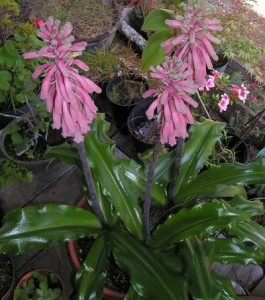
Veltheimina bracteata

Closely related to some species in Edible Flowers: Part 18 is the Forest Lily, Veltheimina bracteata. A native to Africa it is found in flower gardens in warmer climates around the world.  The species is named for the German patron of botany, August Ferdinand Graf von Veltheim (1741-1801). There are only two species in the genus. The Forest Lily’s inflorescence is a dense raceme of tubular flowers on a long stalk. The color of the flowers vary from pale pink to dusky pink to orange-pink or deep rose pink, occasionally greenish-yellow.  The tips of the flowers are sometimes green or spotted with green. Forest lilies flower during late winter to spring. Each flower-head lasts about a month. They are eaten like spinach.
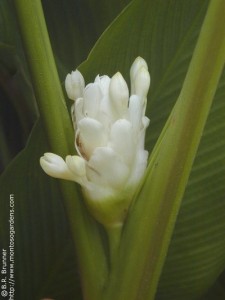
Guinea Arrowroot

For a plant that has been cultivated for thousands of years Guinea Arrowroot, Calathea allouia, is little known and raised only by subsistence farmers. What they know that few others don’t is that the plant’s crisp tubers taste like sweet corn and rival any gourmet hor d’oeuvres in flavor and texture. The leaves are used like tamales wrapping food to impart flavor. And of interest to us young flower clusters are cooked and eaten. The roots are a traditional Christmas food in the Dominican Republic. The species has been distributed around the world and is found in warm climates. The roots keep their crisp texture even after long cooking. They are usually boiled 15 to 20 minutes. As well as being eaten on its own, they are often an ingredient of salads, mayonnaise and fish dishes.
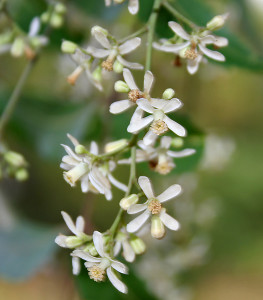
Neem blossoms are bitter

Neem blossoms are bitter

To round out this set of ten flowers let’s end with the Neem Tree. Neem is known for a wide variety of medical uses. There’s hardly any part of the tree that is not employed in some medical use or another. It is also consider a trash tree and a pest in many areas including the Middle East and sub-Saharan Africa. And what few folks know is that the bitter flowers are edible. They are usually eaten with other food as a premeal appetite or a palate stimulant. Botanically the tree is Azadirachta indica, suggesting it’s native to India. In fact, just last week I was given a Neem sapling. It is now happily in the ground. Incidentally, the young leaves are cooked and eaten, the most common way in water buffalo meat salad. Neem honey is prized and the sap is fermented into a local alcoholic drink. If you don’t have your own Neem Tree the leaves and flowers can be bought in Indian markets.

See Edible Flowers: Part Twenty (link not yet active. )
{ 5 comments }

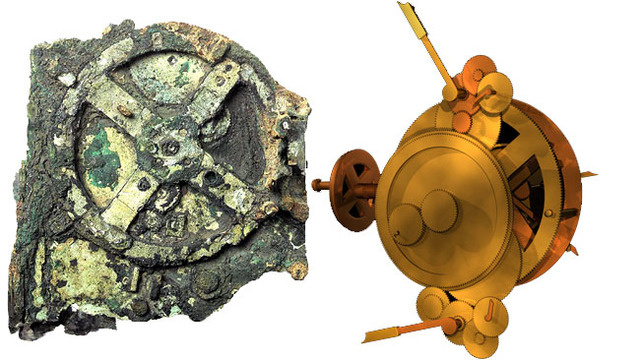
Antikythera Mechanism

The Antikythera Mechanism is unique, kind of like a monotypic genus plant. In fact, this short article was originally written as the introduction for the page “Only Plant In Its Genus.”  It didn’t quite fit and I also didn’t want to throw it away, thus it is here in a personal blog.

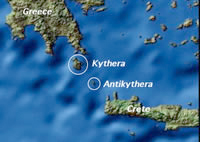
Said “anti-KITH-air-rah” it loosely translates into “Opposite of the Guitar.” Why? Because the nearby large island of Kythera, which has some 3,000 permanent residents, is shaped like a harp. The Greek government want’s to repopulate the island. If you have kids or can have kids they will give you a house and land if you move there.

The only port on Antikythera at Potamos. Photo by Green Deane

which is called a “kythera” from which we get the English word “guitar.”  It is also where  some 60,000 Greeks in Australia can claim ancestry. Almost no one claims ancestry from Antikythera which is 23 miles to the southeast. In land mass “Little Kythera”  is about nine square miles and had only 13 permanent residents when I was there. Now it has about four dozen and is the most remote inhabited island in the Mediterranean. Crete is 18 miles to the southeast.  In season the ferry stops  twice a week and literally for only two or three minutes. It’s the nautical equivalent of an airport touch and go. The ferry backs up lowering the rear gang plank. A minute or less is spent off or on loading people and vehicles then the ferry pulls away gang plank still down.

From Gythio in The Mani — the main city on the eastern side of the central peninsula in southern Greece, one can sight navigate to Kythera. From Kythera you can sight navigate to Antikythera. From Antikythera you can sight navigate to the Rodopou Peninsula on Crete. In ancient days it was the main shipping lane. It’s a route still followed by ferries and weekend sailors. The Historian Plutarch said King Kleomenes III of Sparta occupied the island on his way to Egypt after his defeat in Sellasia in 222 BC. He also tells us a faithful follower of Kleomenes, Thirykion, committed suicide there because as a Spartan he could not bear the shame of retreating. In the 1800s most of the island’s inhabitants were Greeks from Crete or southern Peloponnesos escaping murderous Turks. Following the Greek Civil war (immediately after WWII) exiled politicians were sent to Antikytheria as a form of “island arrest” until 1964.

Tiny Antikythera has three claims to fame: 1) On 11 August 1903,  an 8.3 earthquake raised part of the island 20 feet, a riff easily seen today (the grassy area in the photo lower right.)  That means in the picture to the upper left the harbor used to extended inland to beyond all the nearby buildings.  In retrospect it is probably better for an island to go up 20 feet than go down 20 feet.  2) The island was the home base of fort-building pirates for several hundred years before and after 0 AD. They anchored in the protective harbor the rising island eliminated. And 3) the Antikythera Mechanism, the world’s first mechanical computer.

Visible effect of the earthquake on Little Kythera

Made around 1500 BC to predict astronomical events the Antikythera Mechanism was 1,500 years ahead of its time, or, everyone else was 1,500 years behind the times.  The mechanism was found by sponge divers a century ago. Were the pirates involved? The time period is right. Was the mechanism lost plunder? Did it sink unknown to the pirates? What was it doing there? Was it from the mainland heading towards points south and east, or,  from the Middle East heading towards points north and west? Was technology set back 1,500 years? Since we know know it had at least one dial to track the Olympics — every four years — we know it was at least used by Greeks if not made by them.

One can sight navigate from Crete to the Greek mainland.

One can sight navigate from Crete to the Greek mainland.

Consider these islands 1,500 years ago or even today. The vegetation was sparse, and still is, mostly scrub for goats plus a few spices, thyme, marjoram, oregano, capers. Other edibles included some thistles, wild onions, and a few greens. Most food came from the sea, or robbing, the main occupation. Most of these islands have no springs. Life was harsh. Was the mechanism overlooked for a clay pot of olives, or wine? We’ll never know.

On Cyprus, a few hundred miles to the east, less than five dozens plants are used for food, including several spices. Even soil is hard to come by. In my grandfather’s village of Karea in The Mani (south of Sparta) soil is brought in to create elevated gardens on slabs of bare rock. The land is basically crushed boulders and gravel. Foraging was, and still is a way of life there. But one has to scrounge to find enough to eat. Even in the best of seasons it is like a rocky desert and one reason why the area was never occupied by the Turks or the WWII Germans.

To videos about the Mechanism go click here and here. 

{ 2 comments }

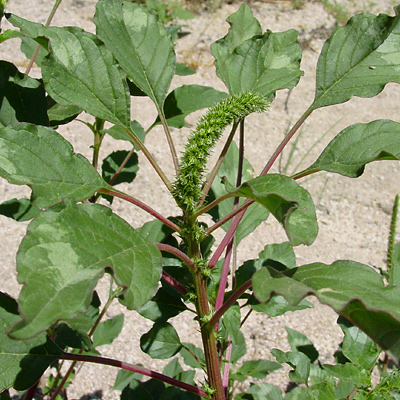
Glyphosate resistant Palmer Amaranth, photo by FireFlyForest.com

A farmer’s headache is not necessarily a forager’s delight.

Palmer Amaranth (Amaranthus Palmeri) has been a foraged food for a long time. It was used extensively by the native American population with at least seven tribes preparing it a wide variety of ways. More on that in a moment.

Amaranth, in general, is a good wild food. It occupies the middle ground between excellent and poor. When collected very young Amaranth is a dietary analogue to spinach, which is a relative. At the meristem stage, still young and tender because the cells are still growing, it’s a tasty green usually boiled. Later it becomes a source of grain.  These stages, however, are dynamic, changing and they change at different rates with different species of amaranth. Some amaranths stay more palatable longer than others. More so, depending upon growing conditions, amaranth can also accumulate high levels of nitrates and oxalates making them less than desirable to eat, for you or livestock.

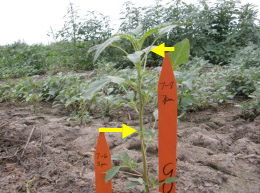
Palmer Amaranth Growth in 52 hours, photo by caes.uga.edu

Palmer Amaranth doesn’t stay young and tender too long. It converts CO2 into sugars more efficiently than corn, cotton or soybean. This allows for rapid growth even when it’s hot and dry because it also produces a large taproot that is studier than that of soybeans or corn and can penetrate hard soil better than cultivated crops, read it can reach water and nutrients other plants can’t reach. Under ideal conditions, Palmer Amaranth can grow several inches per day, see photo left. The species also has a rugged stem to support that growth and height.

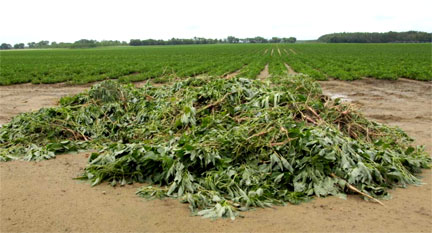
Palmer Amaranth Pulled From A Peanut Field, photo by Rome Etheredge, extension agent, Seminole County, Georgia.

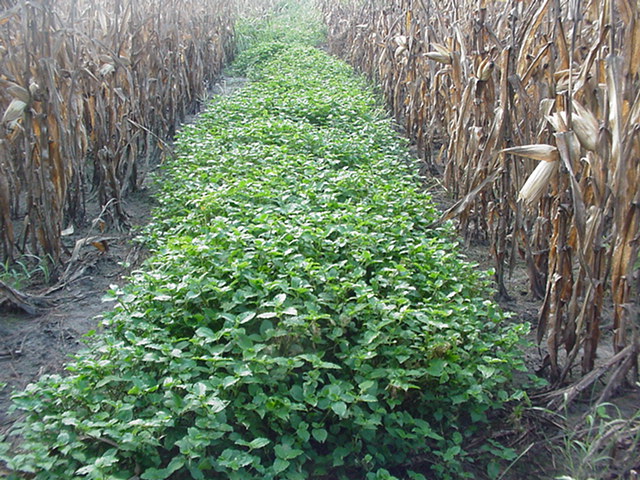
Palmer Amaranth between corn rows

If you think Palmer Amaranth is already a Botanical Bully then consider this:  It is unusual for an amaranth in that it has male and female plants which greatly aids in distribution and ability to adapt. It can also produce half a million seeds per plant. Every seed is a chance to defeat Genetically Modified Organisms, which are quite expensive to develop. When you consider Ma Nature produces million of Palmer Amaranth plants every year that adds up to perhaps billions of chances annually for her to roll a winner, virtually for free. And that’s exactly what happened. Palmer Amaranth developed a resistance to the weed killer glyphosate and became a superweed. That resistance is costing literally millions of dollar in lost agricultural crops. It “single-plantedly” ruined large farming operation in southern Georgia. That has lead to a lot of hard feelings and finger pointing.

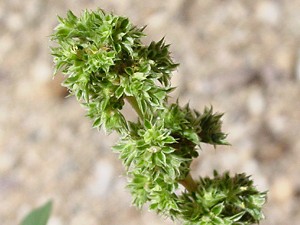
Female flower is bristly, photo by FireflyForest.com

With the help of a nescient media and the no-quality-control Internet the issue is putting farmers and foragers on opposite ends of the nasty rumor mill. More so, what is playing out in Georgia can and will happen elsewhere because resistant Palmer Amaranth is now found in some 20 states. Also, the resistance is expected to spread to other amaranth species plus other edible weeds are developing resistance which brings new meaning to the phrase “seeds of change.”

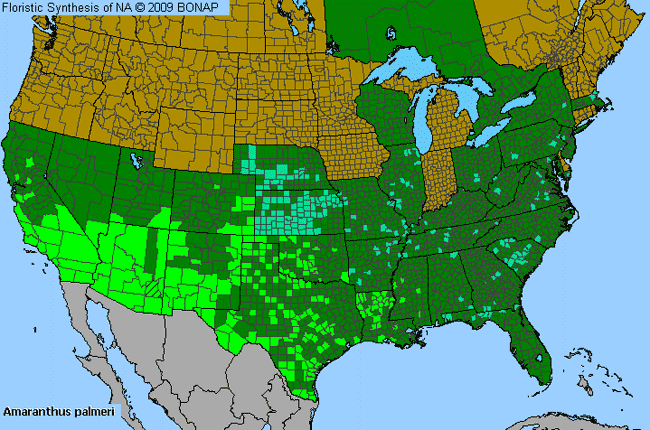
Palmer Amaranth Distribution

Threatening perhaps 500 acres of soybean and cotton in 2004 Palmer Amaranth by 2010 was affecting up to two million acres in the lower half of Georgia. While that put thousands out of work on the other side of the garden row were foragers saying  ‘not all is lost, all you have to do is eat the weed.’ It was inevitable that Internet sites began saying experts were advising people not to eat Palmer Amaranth because the resistance, a kind of botanical doomsday scenario from a grade B movie. ‘Palmer Amaranth killed our crop and it will kill you too.’ That led to a lot of email to me and we all get too much email. I thought getting to the nitty gritty of it all would in the long term help ease my email inundation.

Dr. Stanley Culpepper

The person most often cited as saying the resistant amaranth is not edible is Dr. Stanley Culpepper, associate professor, University of Georgia, and Extension Agronomist. Not so. I contacted Dr. Culpepper personally regarding the edibility of Palmer Amaranth and asked him about it. His view is quite different than what’s rumored on the Internet.

“If one decides to eat Amaranthus Palmeri,”  Dr. Culpepper said, “there will be no difference in its taste or nutritional value if it is resistant to glyphosate or not.  To date, we have not documented any change in the biological aspects of plant growth or reproduction with regards to resistance.”

Dr. Lynn Sosnoskie

That’s quite straight forward. Where in that statement do you read Palmer Amaranth is not edible? No where. Dr. Culpepper’s post doctoral assistant, Dr. Lynn Sosnoskie, who was also kind enough to contact me, added that there shouldn’t be any difference between the resistant and non-resistant plants though that was not specifically tested by researchers. More so Dr. Sosnoskie said that unless one actually tested a plant for glyphosate one could not readily tell the difference between a resistant and a non-resistant plant. However Dr. Sosnoskie did add an observation of interest to us forager. She said Palmer Amaranth tends to grow mostly on highly managed agricultural land and that land has “likely been treated with insecticides, fungicides, and/or herbicides.” That is important.

Thus, and this is my opinion not Culpepper’s or Sosnoskie’s so blame me not them: If there is an issue with Palmer Amaranth edibility it might not be the plant or glyphosate resistance per se but that of an unmanaged plant growing on highly-treated agricultural land. Unlike a commercial crop grown on such land with supervision and exact timing a wild plant might be on such land too long, under the wrong conditions, or harvested at the wrong time. I can see how that might affect edibility particularly with amaranth’s penchant for taking up too much nitrates and oxalates. Again, that is my opinion not Culpepper’ or Sosnoskie’s.

Philosopher William James

The philosopher William James, and brother to novelist Henry James, always insisted there be a practical side to everything, including philosophical notions. A hard-core New Englander he called it “take home change.” What’s the “take home change” of all this? Palmer Amaranth is edible but not the best of the amaranths. There is no evidence the edibility of Palmer Amaranth is different if it is “resistant” or not. It’s fast growing and does not stay young and tender very long. It can accumulate elevated levels of nitrates and oxalates and would probably do so on improved land, read land that is fertilized a lot such as agricultural land is. Amaranth on unimproved land usually has safe levels of nitrates and oxalates.

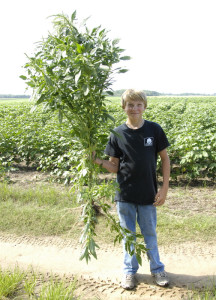
Lane Williams pulled this pigweed mid-summer, 2012, photo by Seminole Crop E-News..

Lane Williams pulled this Palmer Amaranth mid-summer, 2012, photo by Seminole Crop E-News.

The foraging advice of “just eat” Palmer Amaranth does not take into consideration the environment. As my readers know I champion my I.T.E.M. system of foraging and that includes E, for environment. In this case the edible plant in question usually grows in a highly fertilized if not chemicalized environment (vs the poor soil it usually inhabits.) This increases its chances of having higher than normal nitrate and oxalate levels, and probably other things, too. You have to take that inconsideration as part of your foraging decisions. I personally doubt some young and tender Palmer Amaranth plants are much of a problem. But, older plants could be and adult plants might sicken livestock. Also, the problem should lessen with time if the fields lie fallow. It’s an environmental issue more than a genetic engineering one for us foragers. Now you have the accurate information and reasoning you need to make an informed foraging decision regarding Palmer Amaranth in agricultural fields in Georgia. That said, what about Palmer Amaranth?

Amaranthus palmeri aka Carelessweed, is one of 60 to 70 species in the genus, depending upon who’s counting. Palmer Amaranth is a very competitive native now found in 30 states but not reported yet in Maine, New Hampshire, Vermont, Connecticut, Rhode Island, Delaware, Michigan, Alabama, Hawaii, Indiana, and the northern tier states from Iowa north and west.

The Cocopa, Mohave, Navajo, Papago, Pima, Pima Gila River and Yuma tribes all used the Palmer Amaranth for food. Their methods varied greatly including: Fresh plants baked and eaten; leaves boiled as a green; leaves cooked, rolled into a ball, baked and stored; leaves dried then stored for winter; leaves boiled and eaten with pinole; seeds ground into a meal; parched seeds ground then chewed for sugar; seeds parched, sun dried, cooked, stored for winter.

Edward Palmer

Amaranthus (am-ah-RAN-thus) is from Greek means unfading, or evergreen. Palmeri (PALM-er-ee) was named in 1877 after Edward Palmer, plant explorer extraordinaire. Palmer was the right person in the right place at the right time. When Europeans first landed in the new world they were very interested in plants but didn’t record much about how the natives used most of their plants. By the time the white man was pushing west to California a different attitude prevailed. This is why in most ethnobotanical references we know far more about what the Western natives did with plants than the Eastern natives. And one of the reasons why we know that was Edward Palmer, 1829-1911. He collected over 100,000 specimens and discovered some 1,000 new species. Palmer also visited local markets to get plants and study how they were used helping to found modern ethnobotany.


Green Deane’s “Itemized” Plant Profile: Palmer Amaranth

IDENTIFICATION: Amaranthus palmeri: Long dense, compact terminal panicles to 1.5 feet, tall — six feet — with alternately arranged leaves, petioles longer than the leaves.  The leaves of Palmer Amaranth are also without hairs and have prominent white veins on the under surface. The male flowers have highly allergenic pollen.

TIME OF YEAR: Flowers summer and fall

ENVIRONMENT:  Agricultural land, disturbed areas, riparian locations, desert, uplands.

METHOD OF PREPARATIONS: Young leaves, young plants, growing tips boiled, baked or dried. Seeds used as grain, parched, roasted, or ground into flour.

Other thoughts: Most plants have a shikimate pathway, which is a seven-step metabolic process. Humans don’t have that pathway. Round up or Glyphosate, interferes with the shikimate pathway, which is how it kills plants, except plants that have been genetically modified. The logic was clear: Make food plants modified to not be affected by any herbicide that affects the shikimate pathway, thus all you needed was one herbicide to kill all unwanted plants in your crops fields.  However… bacteria do have a shikimate pathway but when Glyphosate was being developed there wasn’t much interest in or knowledge about our gut biome. My assumption is Round Up and the like affect our gut bacteria, and as we all have a different gut biome the symptom vary widely making it difficult for medicine to identity a consistent problem. 


{ 55 comments }

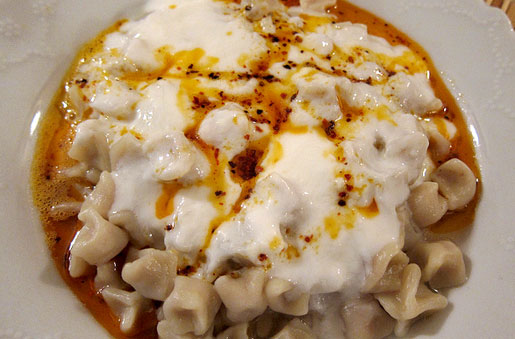
Manti, steamed dumplings of horse, pumpkin, and hot pepper smothered in cheese, down home cooking in Kazakhstan

“I’m so hungry I could eat a horse.”

We’ve all heard the phrase, and it comes from when horse was on the menu. It was rather significant phrase to me as a kid because I grew up with horses, usually five occasionally six. They were my mother’s hobby and the main reason why I spent some 13 summers of my youth haying until I joined the army. I know horses, haying and ground hornets well. I also know it take one huge hole to bury a dead horse. It’s not a hole you dig by hand. Want a reference point? Dig a hold to bury a car. That’s about right except you have to make it deep or carnivores will dig down to it. Even getting a dead horse to the hole is a chore particularly if it dies in a stall in the barn.

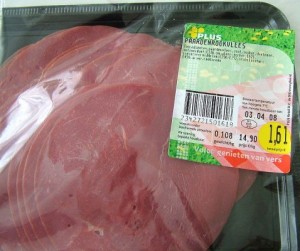
Not only did my mother bring home live horses but horse meat as well. We bought it in the butcher store occasionally. It had to be separated from the beef — other side of the store — but there it was, several different cuts catering to the Canadian shoppers. In fact, horse meat was on the menu at the Harvard Faculty Club up until 1983. It was a common food in the U.S. during WWII and was consumed in quantity because it was not rationed. Archaeologists tell us early man hunted and ate horses. They became beasts of burden much later. Horses are called the noble beast because they will always try to do what you ask of them.

Equinonoid Henry Ford

Here’s a bit of trivia for you: Henry Ford loathed horses. He hated them.  He said he worked hard to develop the car to free man from the Culture of Horses. Ponder that. Here’s a man who helped change an entire society — the world — because he hated a particular animal. Then again, someone who loved horses, which were the main muscle of the day, could have developed the car because they wanted to save horses from all that work and suffering. Either way the internal combustion engine put an end to the horse culture.

Saint Boniface

The banning of horse meat goes back to the eighth century. Popes Zachary and Gregory III both told Saint Boniface to forbid his missionaries to eat horse meat, as it had a strong correlation to the Germanic pagan rituals which Christians were trying to eradicate. The Germans of old liked their horse meat, and still do and until 2005 the United States was the major exporter of resturant grade horse meat.

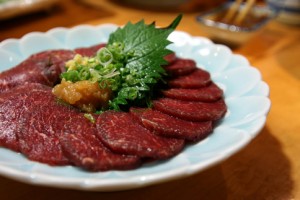
Japan’s Basashi

Buying horse meat and slaughtering horses for commercial meat was illegal in the United States from 2006 until Nov. 18th, 2011, though it was available in other countries during those times. Horse meat could be in US markets in early 2012 but it was sure to create public controversy. The only legal impediment nationally is funding federal meat inspectors. However, California and Illinois have banned the slaughter of horses for human consumption, and more than a dozen states tightly regulate the sale of horse meat. Not so elsewhere.

In Japan there’s a sashimi dish made of horse meat. Horse is very popular in France.  From a culinary point of view horse meat is lean, much along the taste and texture of moose, deer or kangaroo. It is a gray colored, dry, sweeter than beef, and improves in flavor greatly by the inclusion of fat when cooking or from a marinade. Fresh is far better than frozen.

As mentioned elsewhere most people would not eat their pets, regardless of what those pets are. When I meet someone who has a reptile for a pet I have to remind myself of that least I make a few misplaced iguana shoes or turtle soup jokes. Though we ate horse meat eating our horses when they died was not an option. We buried Ginger, Bonnie, Cheeko, Rusty, Mary and Sootie. And I am sure all these years later I would be bothered by the deed had we eaten those big, lovable pets. However, in hindsight all these years later, we also buried a lot of meat. Combined they weighted some 6,000 pounds. Even after dressing that would be three to four thousand pounds of meat, two tons of it. That’s a lot of food to put into the ground. If raising cattle that we eat is a waste of land resources then what is burying a pet horse?

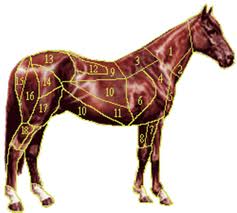
Horses have cuts just as beef does, with more or less tender parts. We usually bought steaks but they ended up in stews more often than fried. Without some tenderizing and fat the frying pan does not treat horse meat well. The stews were excellent. Indeed, my mother loved New England Boiled Dinners. We had that virtually every Sunday for every Sunday I ever lived at home — without exception — and more than once there was a chunk of horse meat in there growing tender by the long, moist heat.

Foul-mouth chef Gordon Ramsay says horse is healthy, packed with half the fat of beef and has far more Omega 3 fatty acids than beef. He describes it as “slightly gamey” and “packed with protein.” I don’t remember it being gamey at all.

While there are legitimate reasons not to eat horse on the positive side, horses don’t have mad cows disease.

Horse meat with mustard

  • 1 1/2 lb. (675 g) lean ground or cubes horse meat
  • 1 Tbsp. (15 mL) olive oil
  • Tomato Sauce
  • 2 Tbsp. (30 mL) olive oil
  • 1 cup (250 mL) tomato sauce
  • 1 Tbsp. (15 mL) brown sugar or honey
  • 1 Tbsp. (15 mL) mustard
  • 1 Tbsp. (15 mL) Worcestershire sauce
  • 1 medium onion, thinly sliced
  • Salt and pepper to taste

Preparation

In a pan, sauté the horse meat in oil. Drain the meat and throw out the cooking fat. Put the meat back in the pan. In a glass bowl, mix all the sauce ingredients. Pour into the pan over the meat. Cover and simmer for one hour. Serve with pasta and sprinkle with Parmesan or Pecorino cheese.

{ 7 comments }

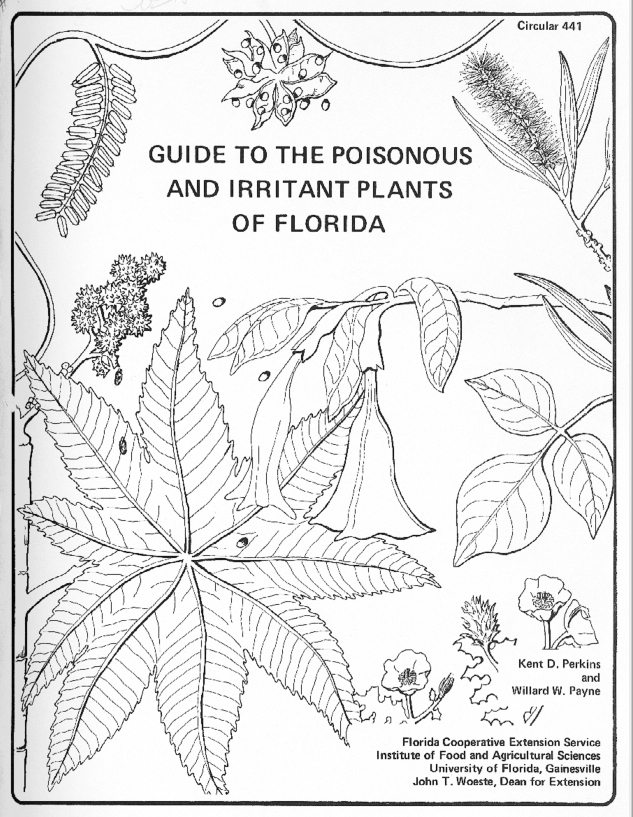
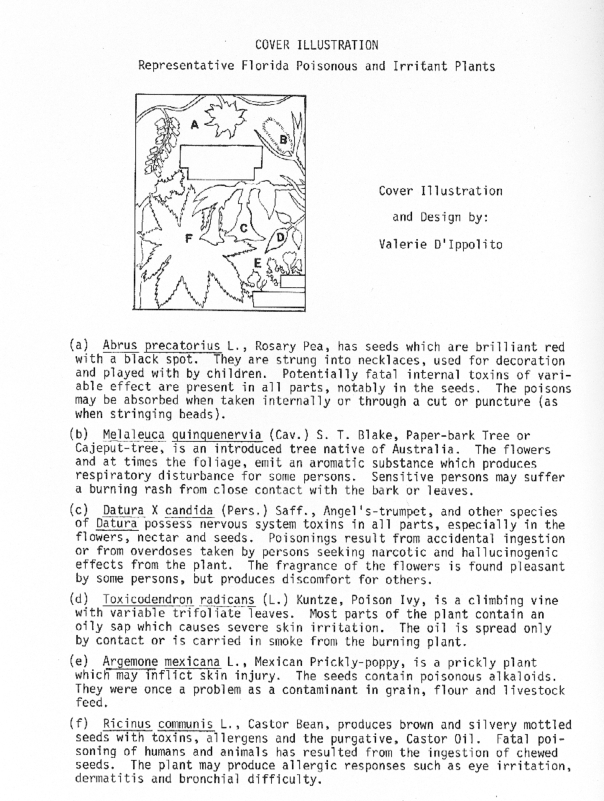
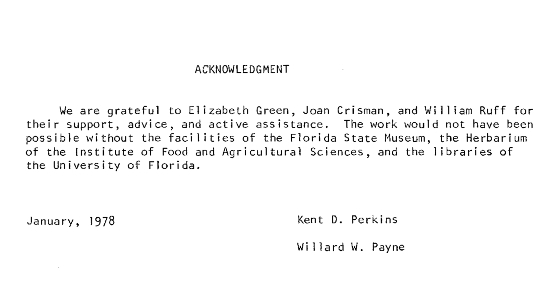
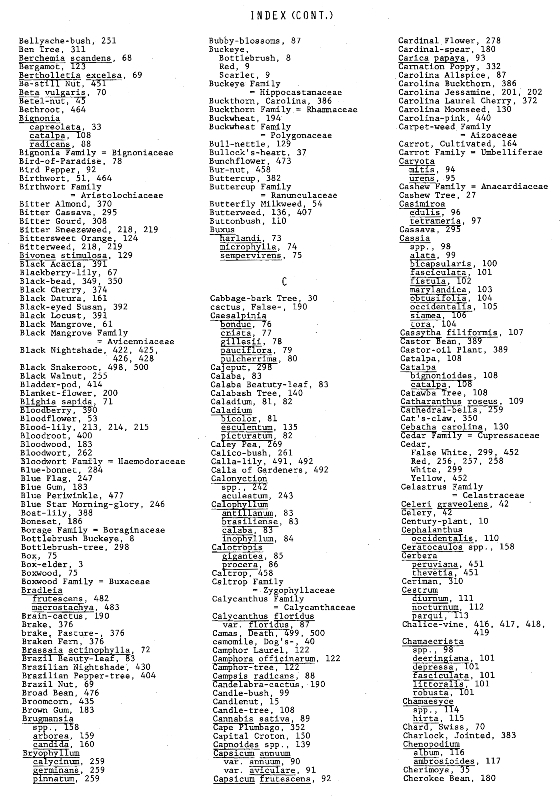
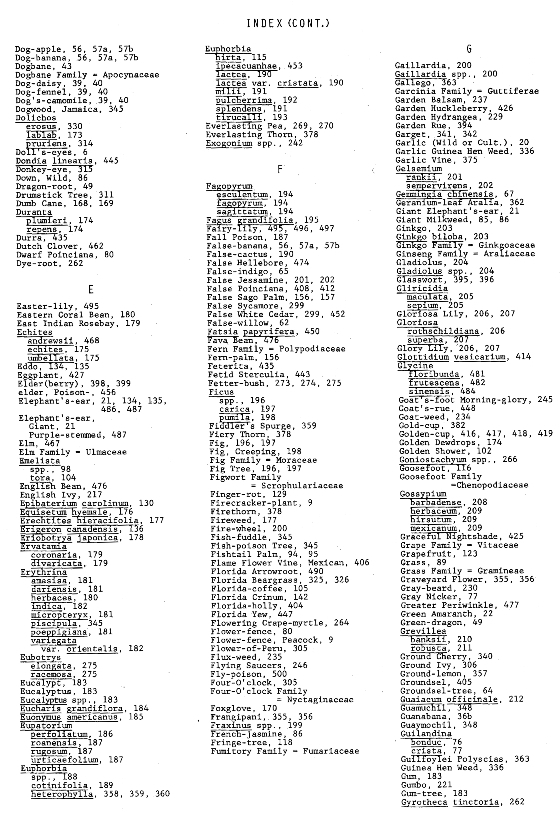
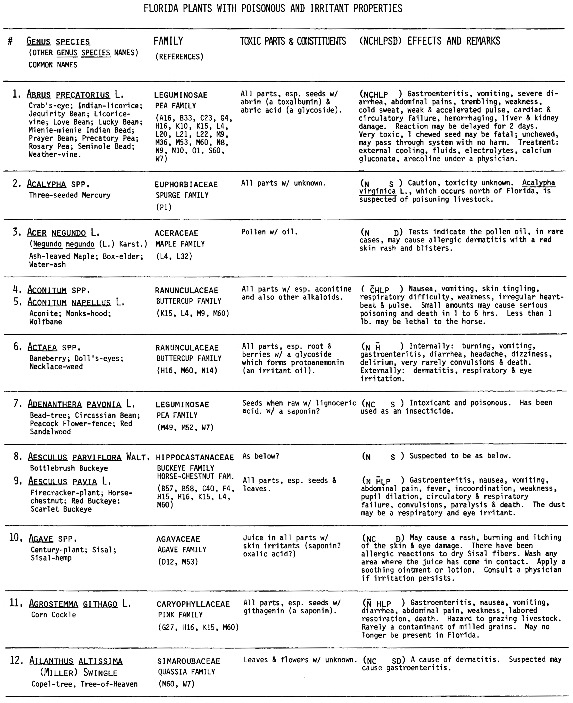
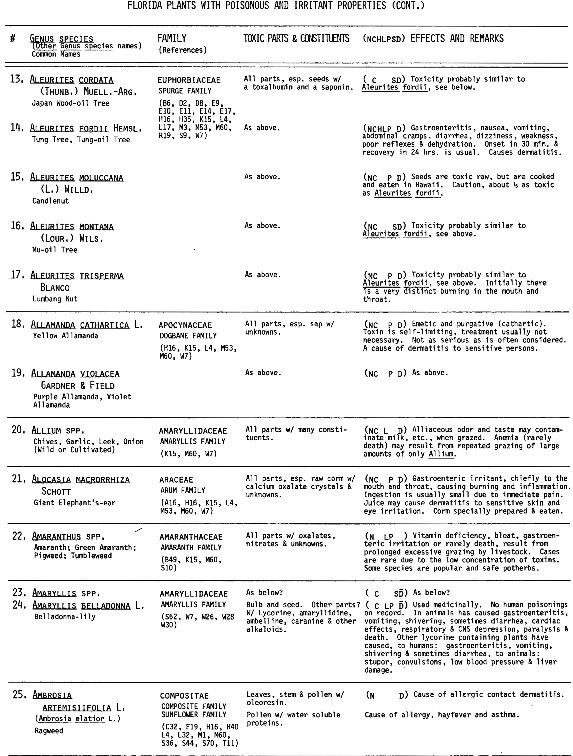
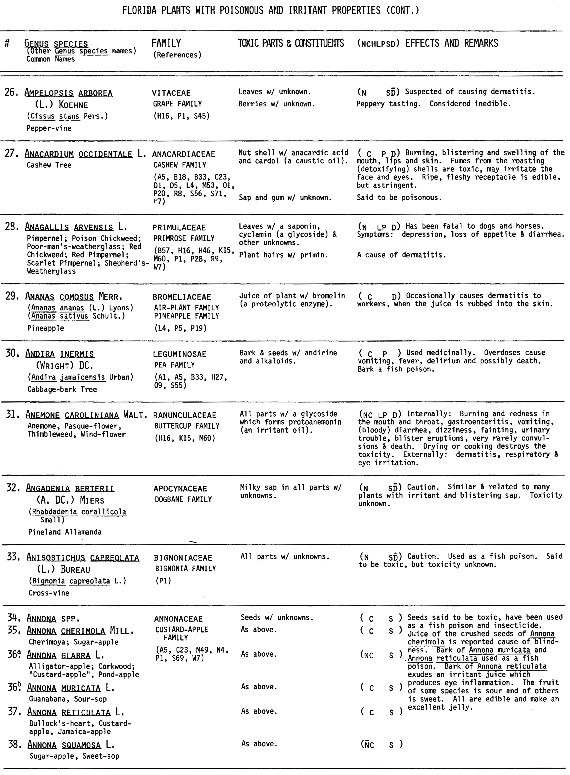
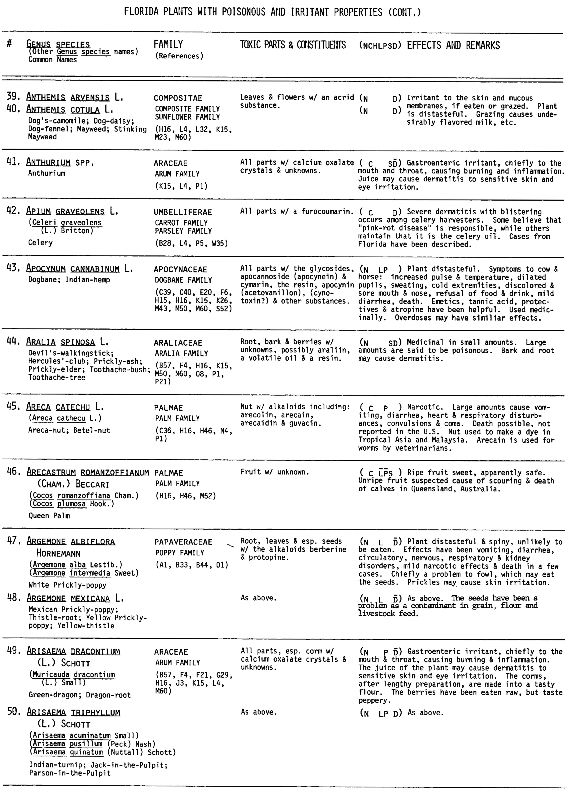
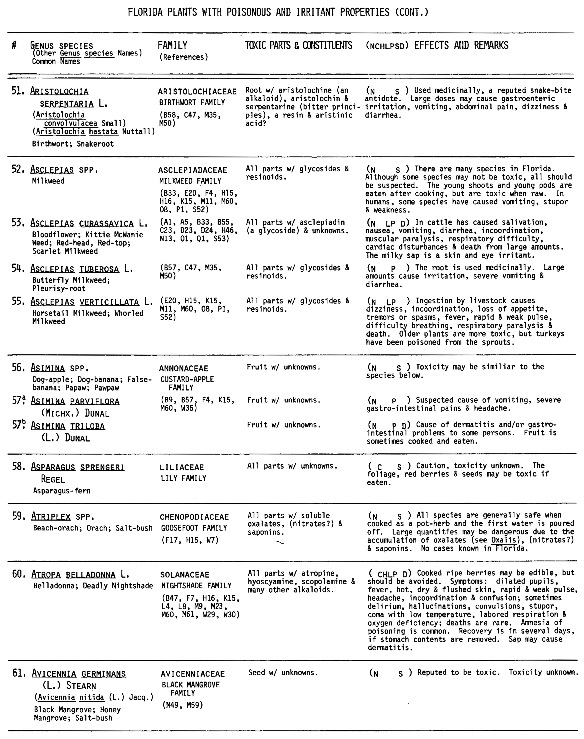
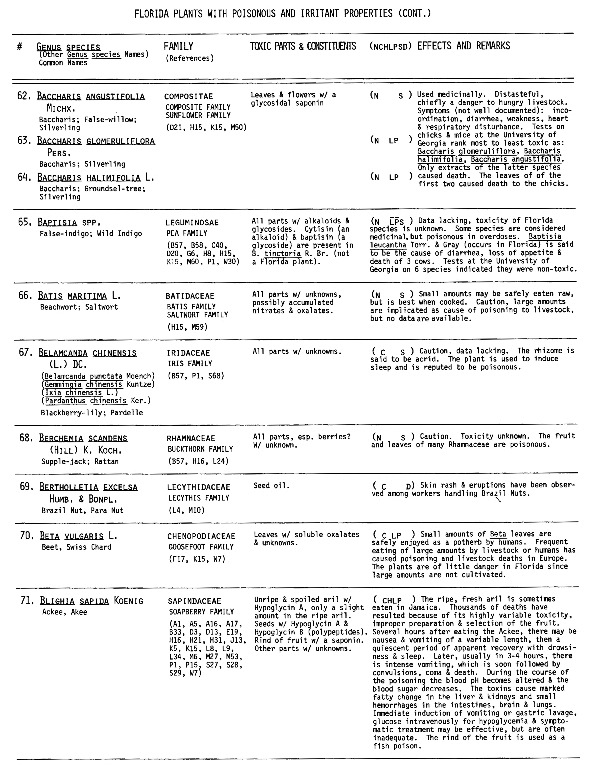
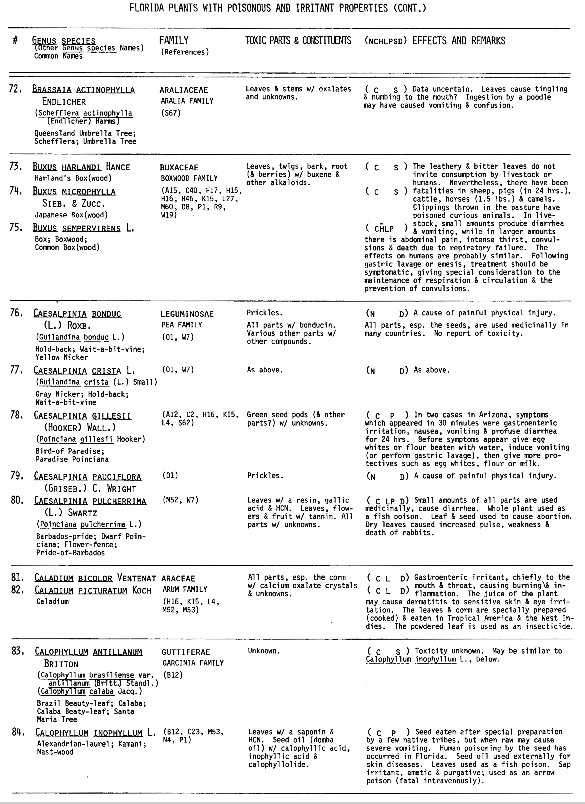
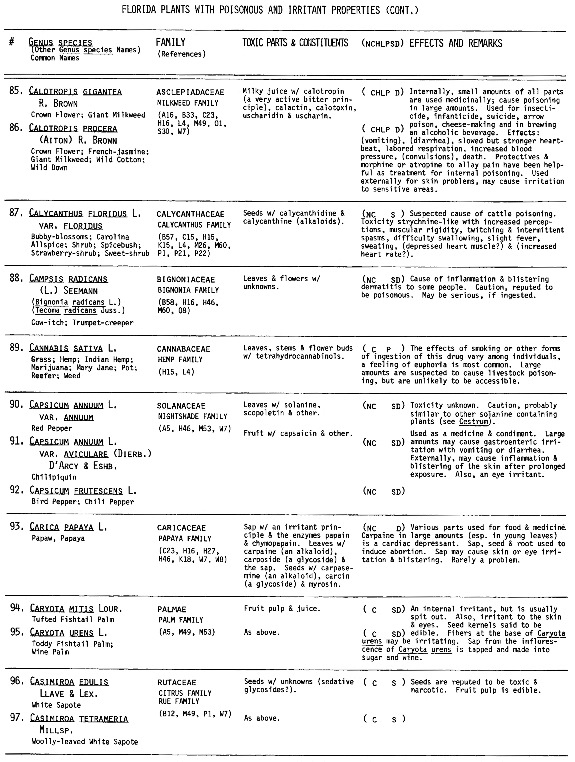
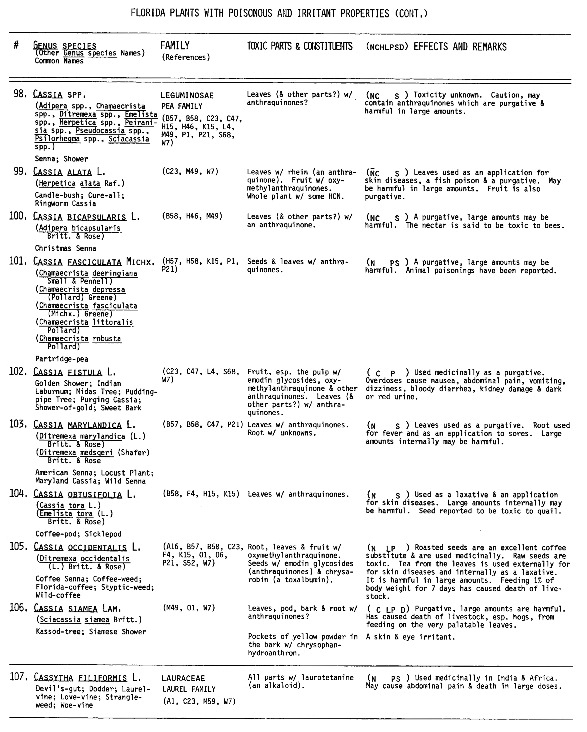
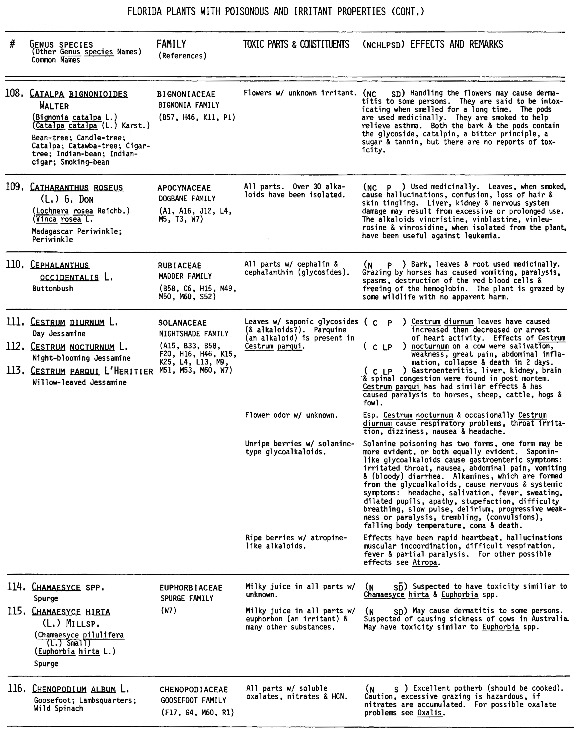
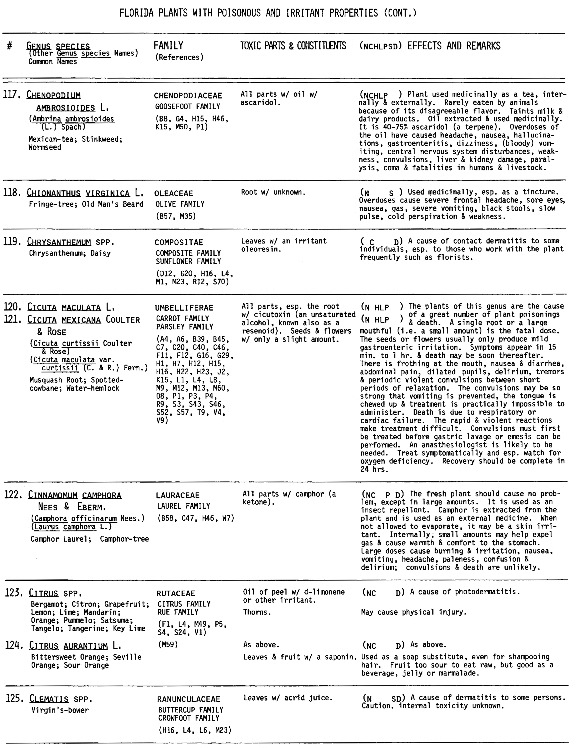
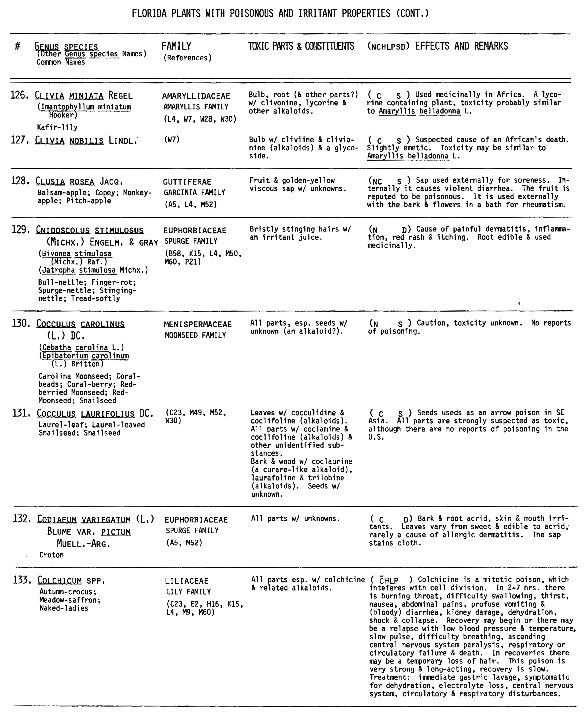
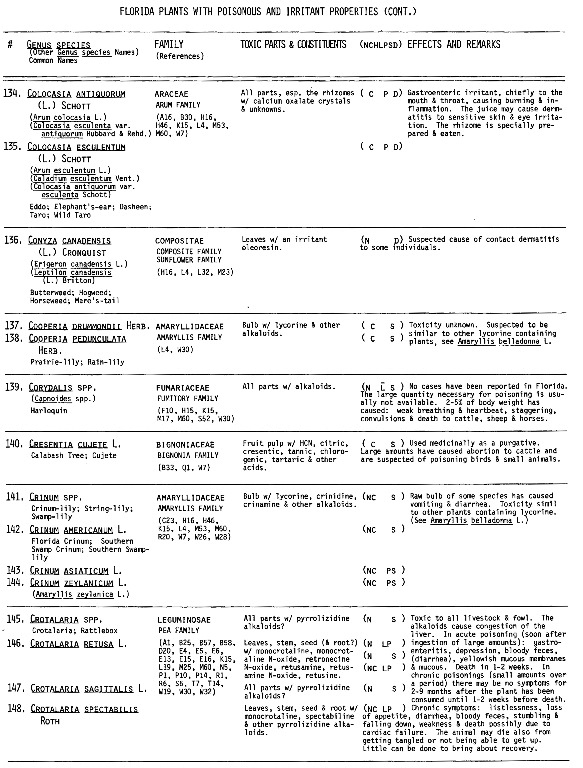
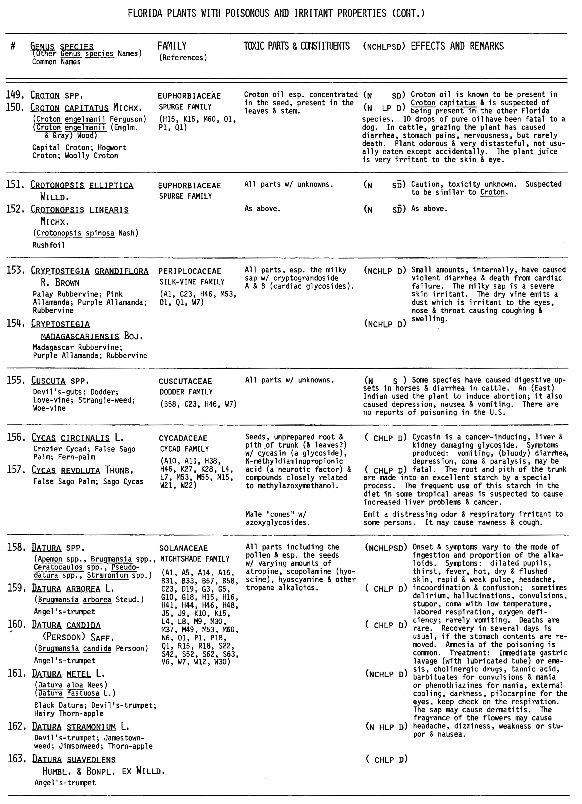
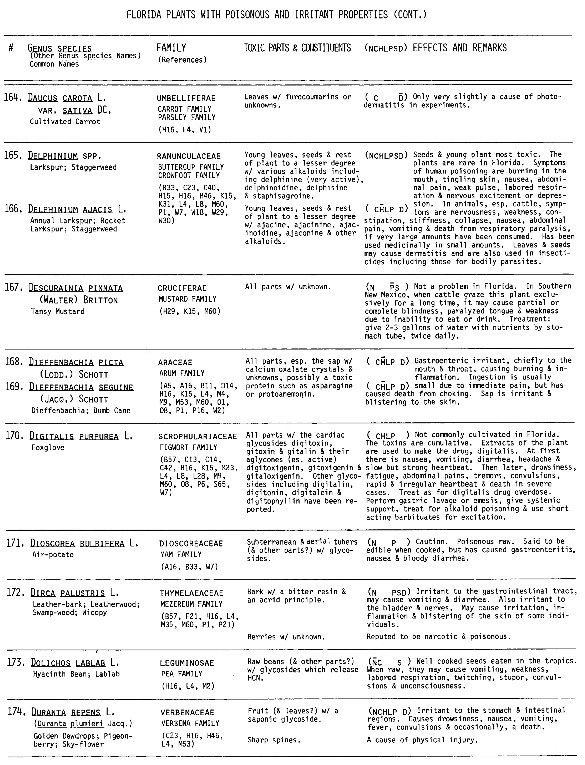
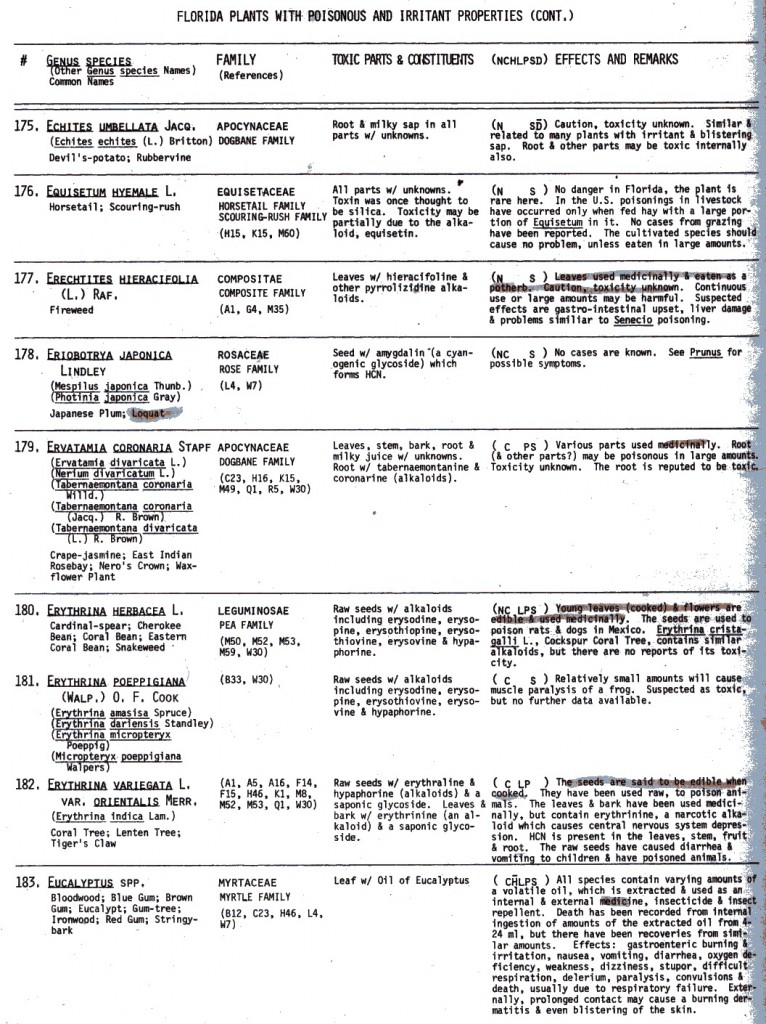
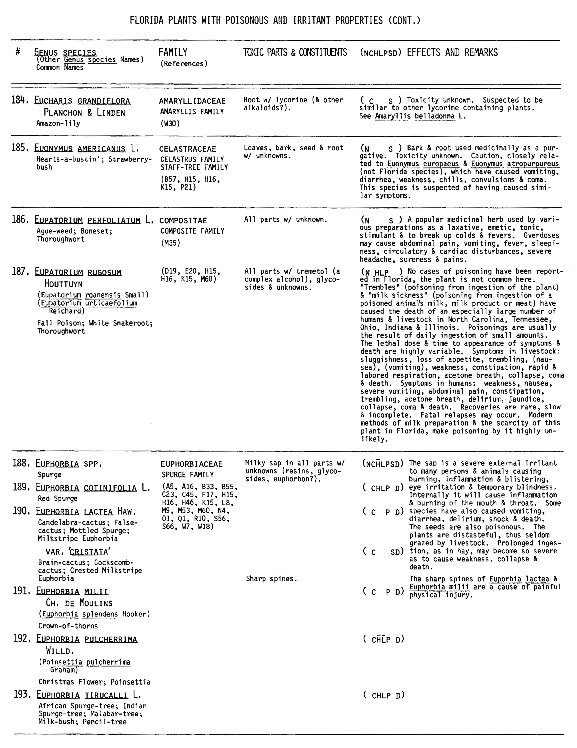
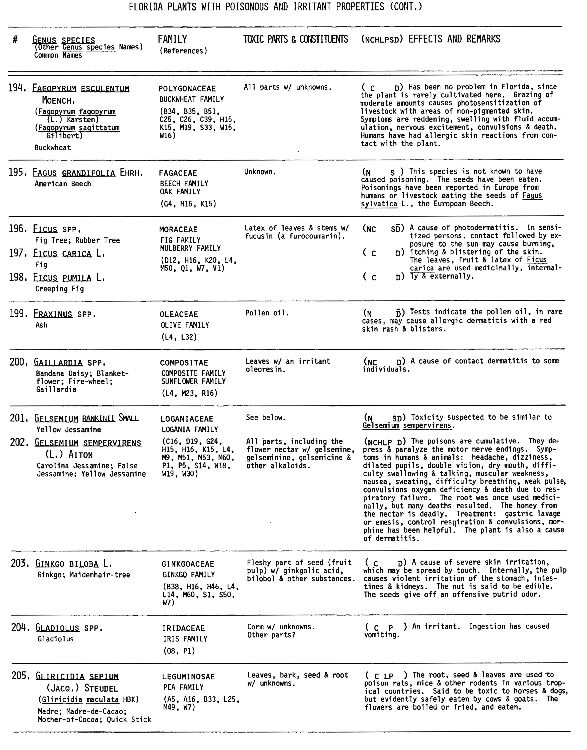
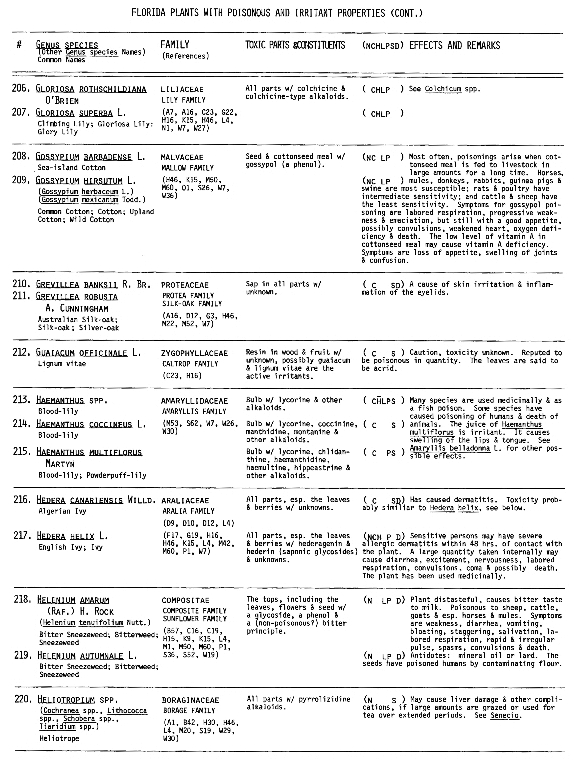
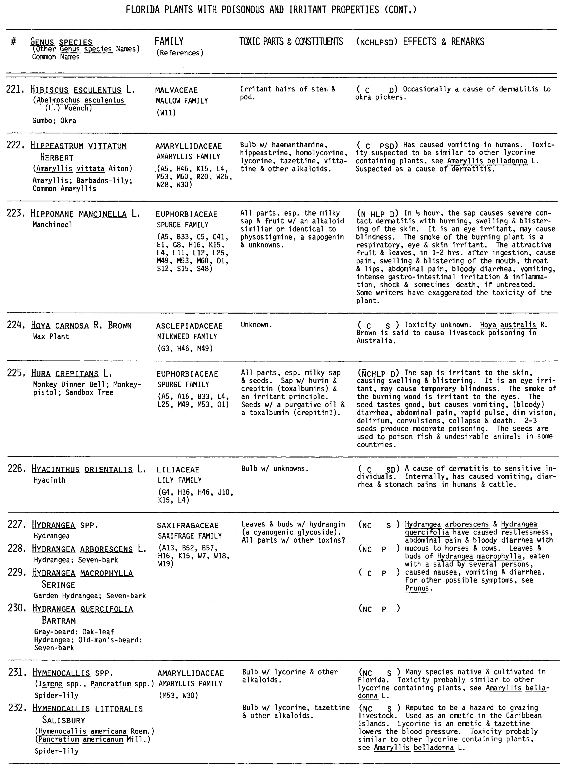
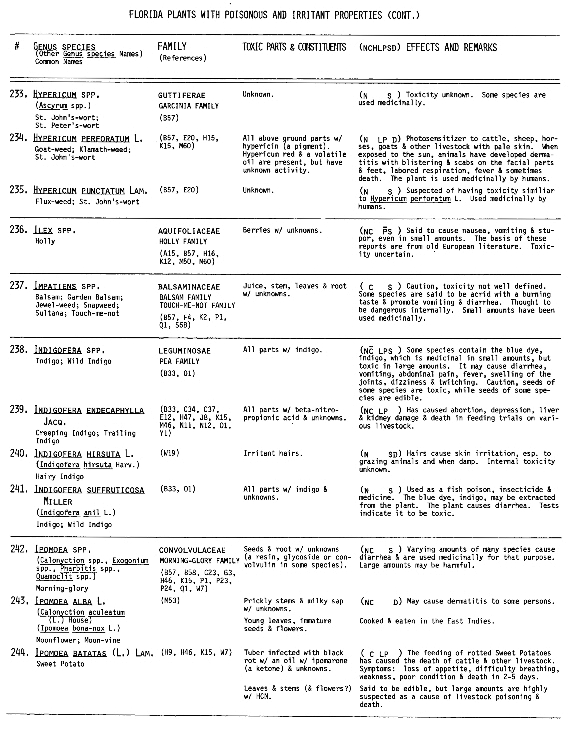
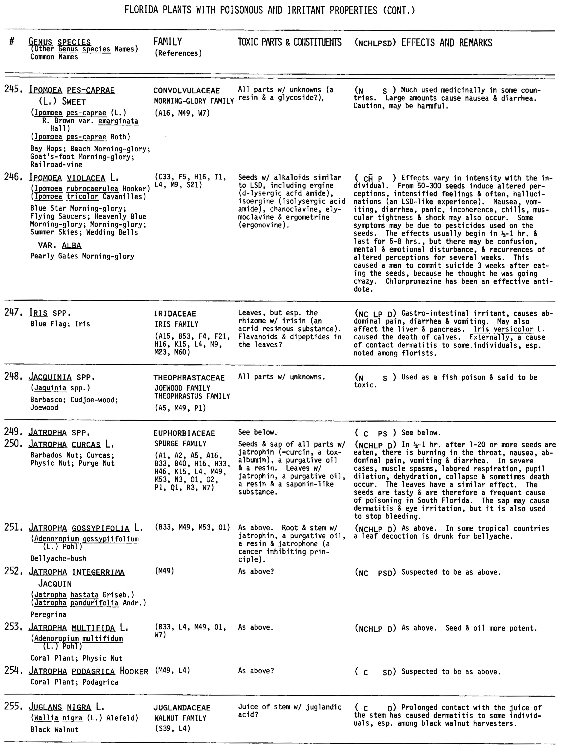
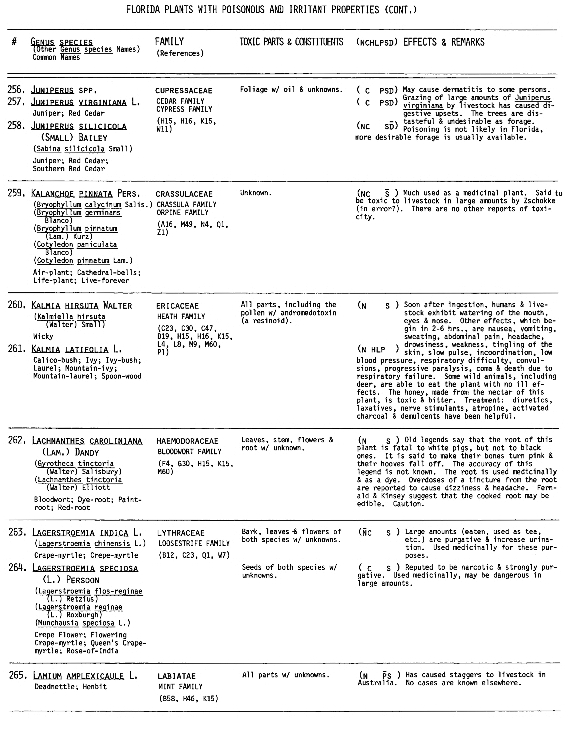
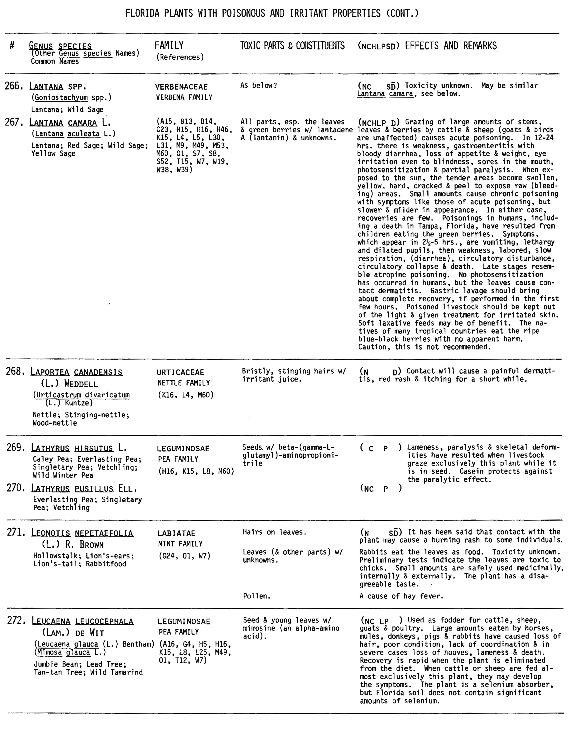
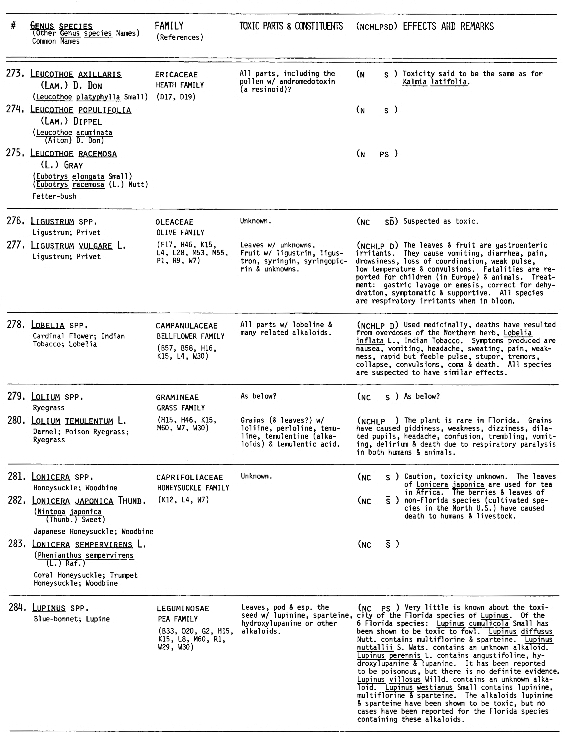
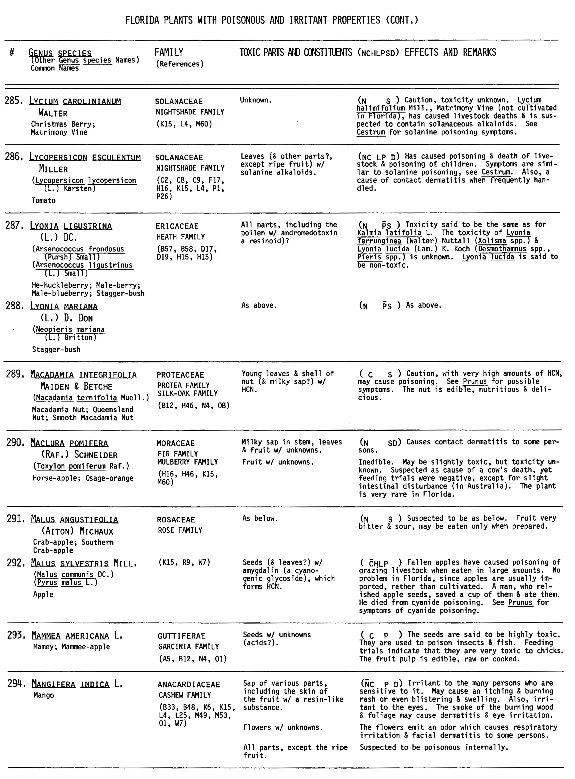
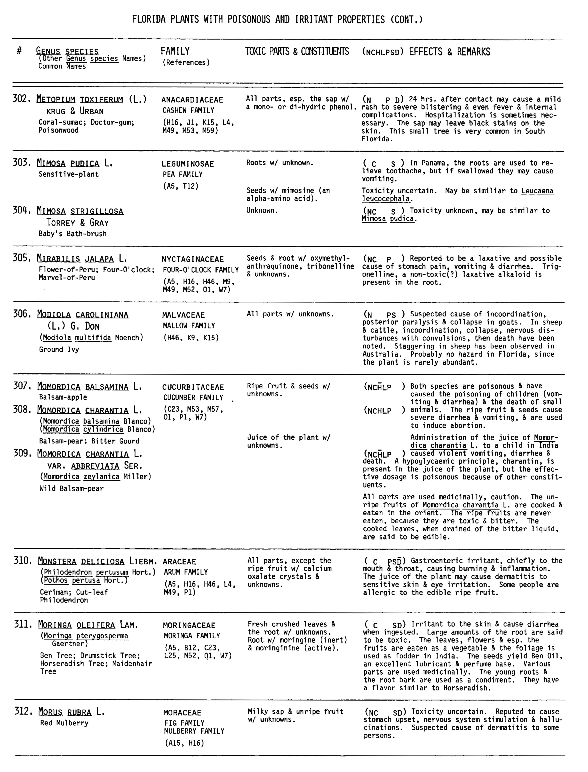
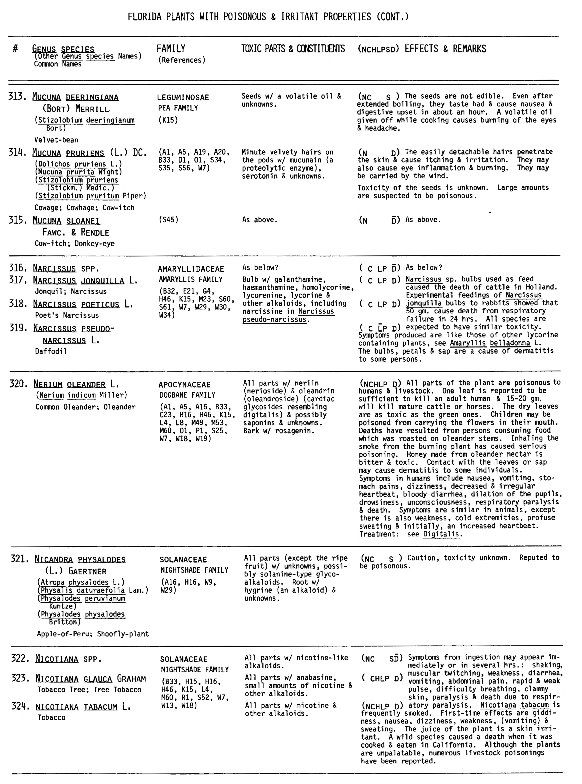
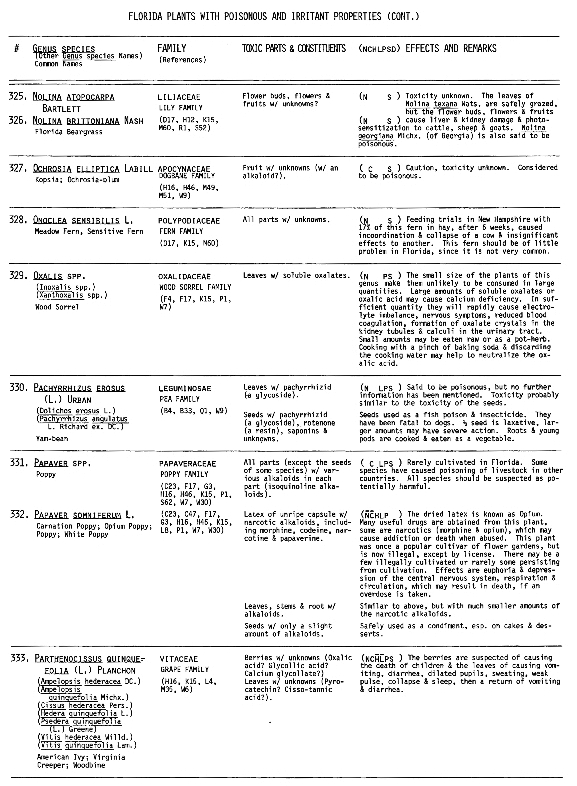
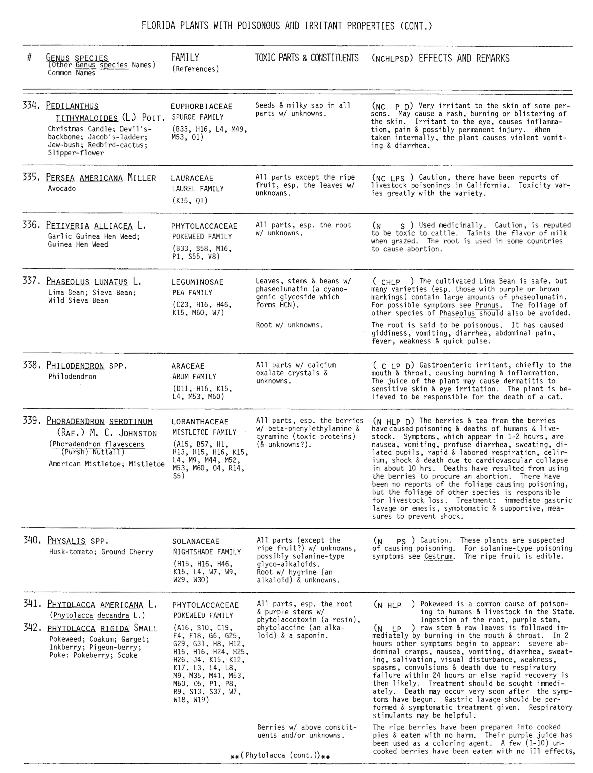
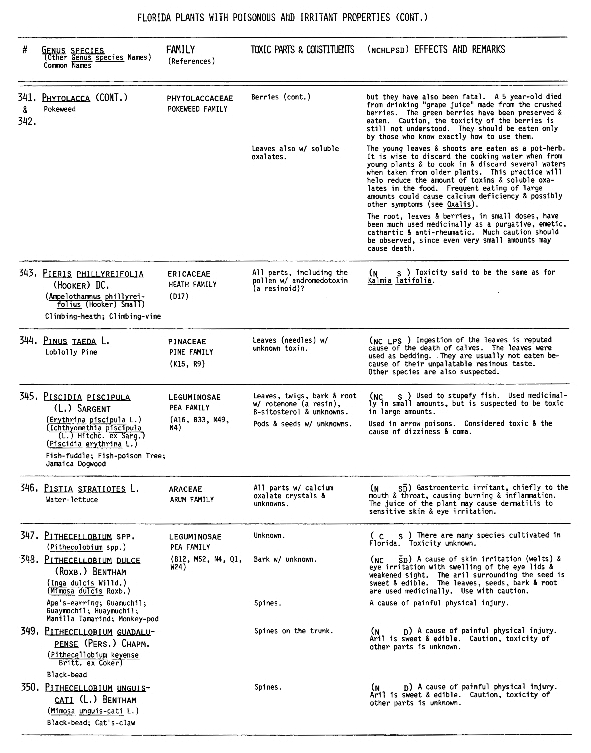
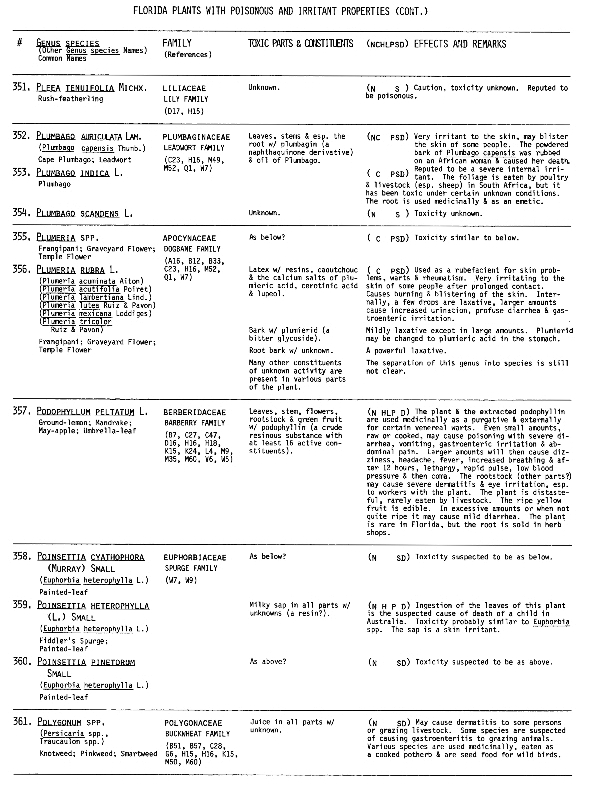
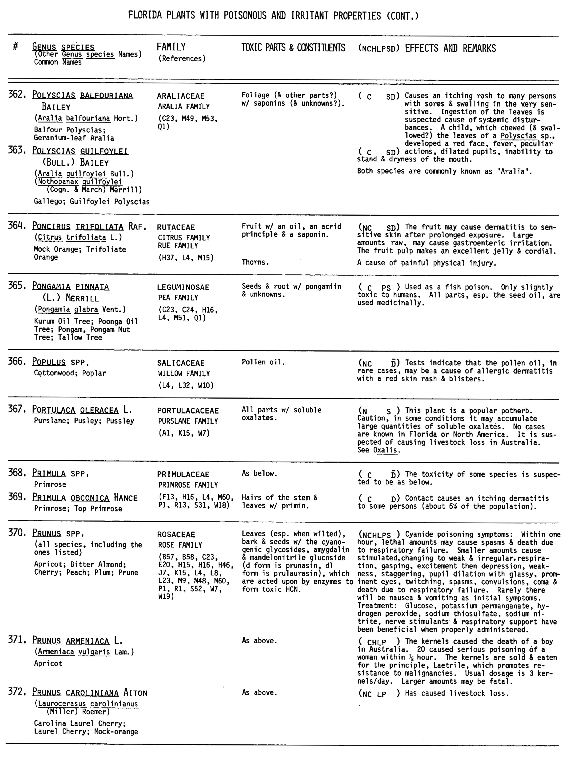
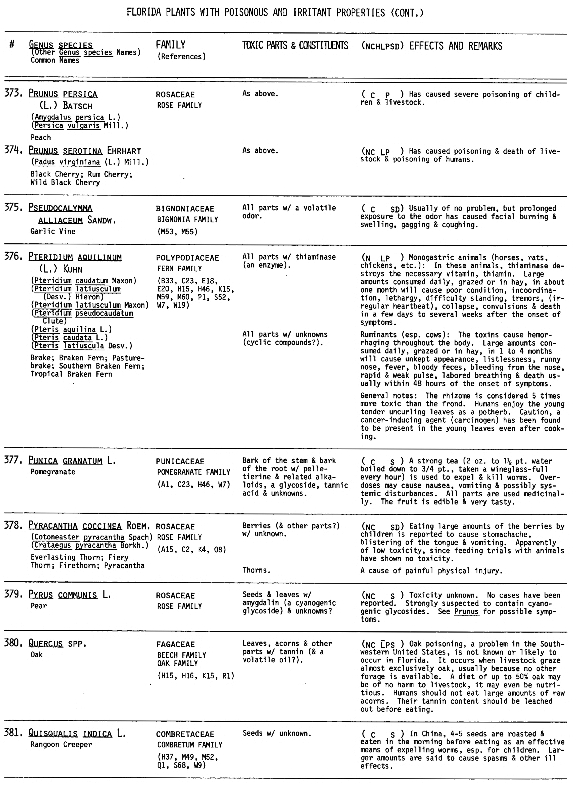
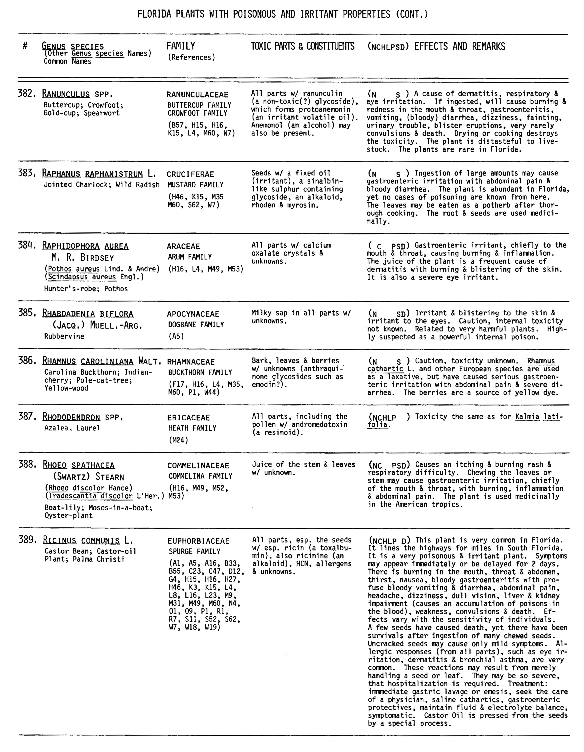
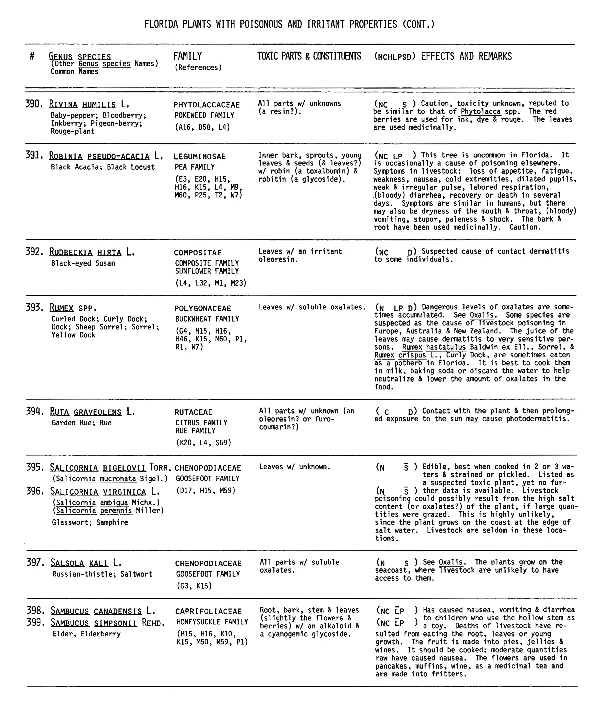
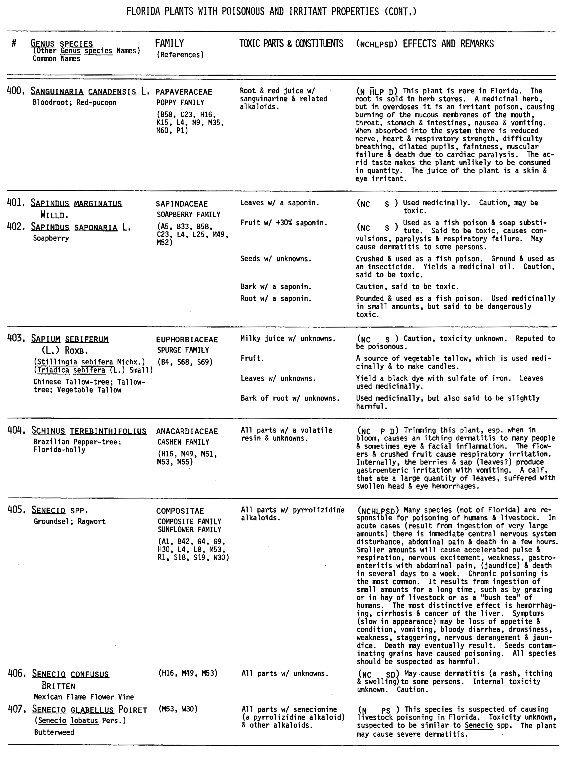
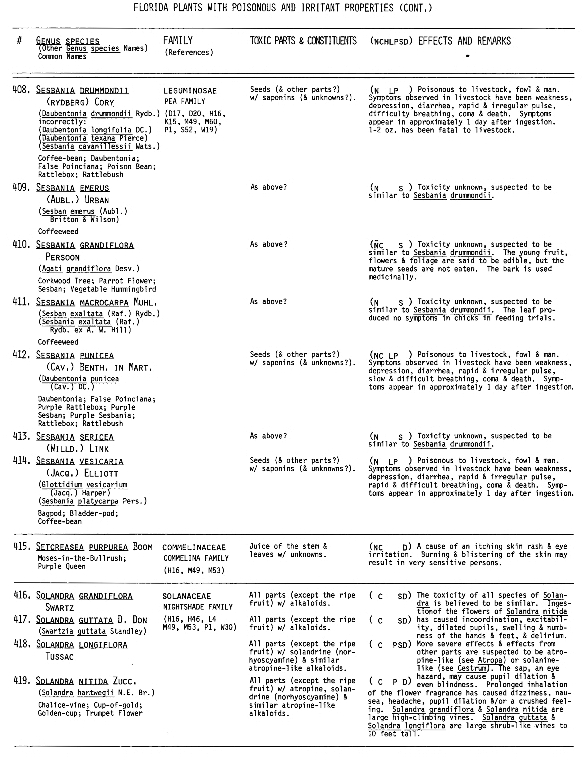
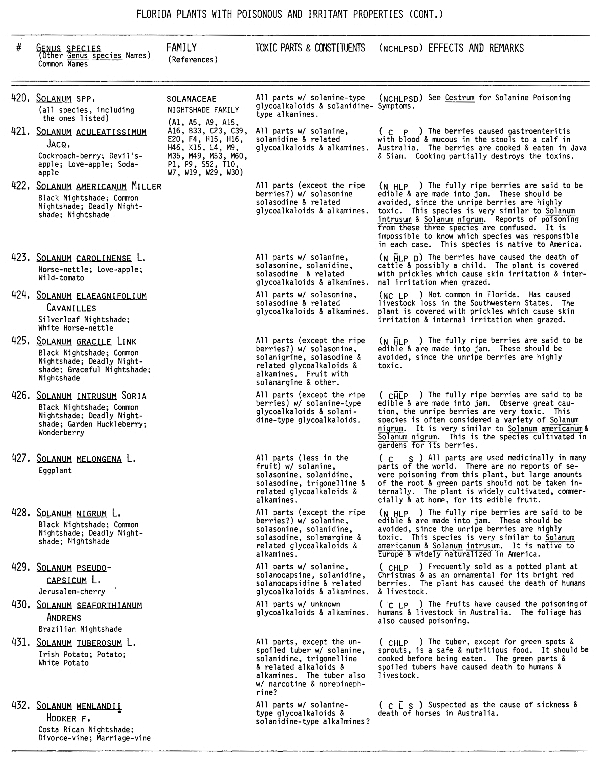
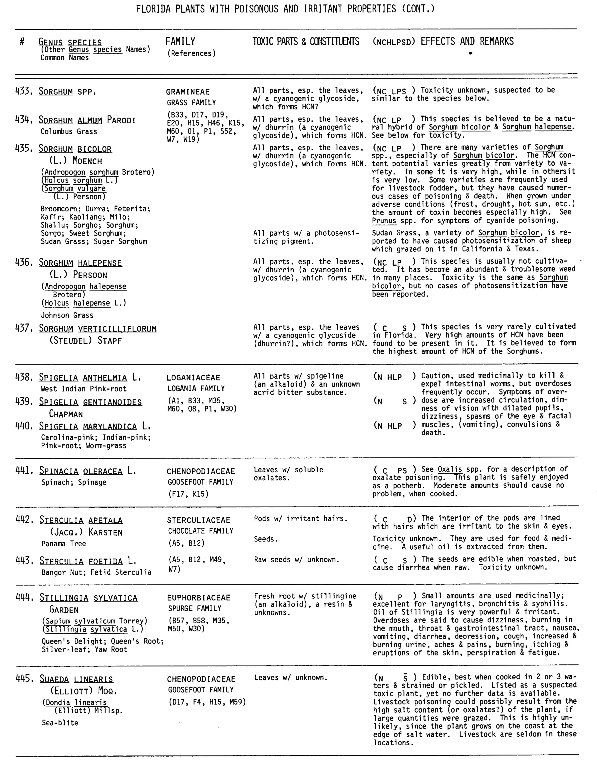
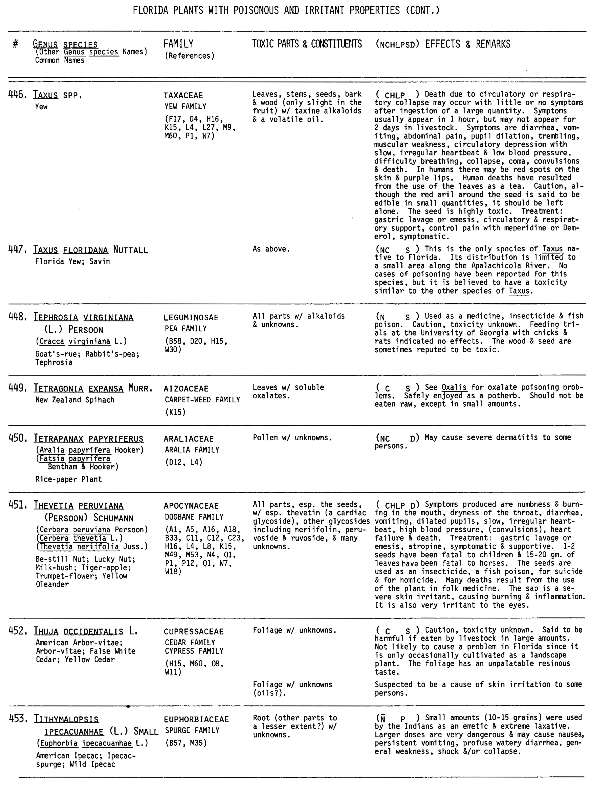
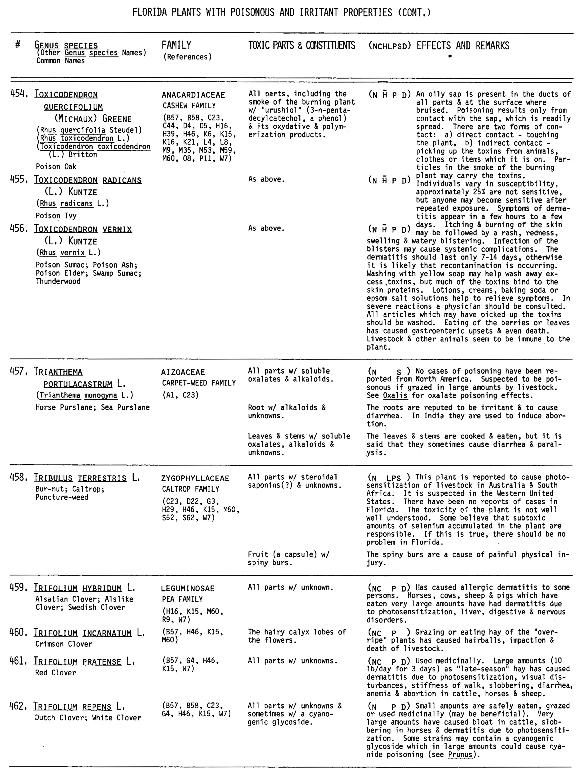
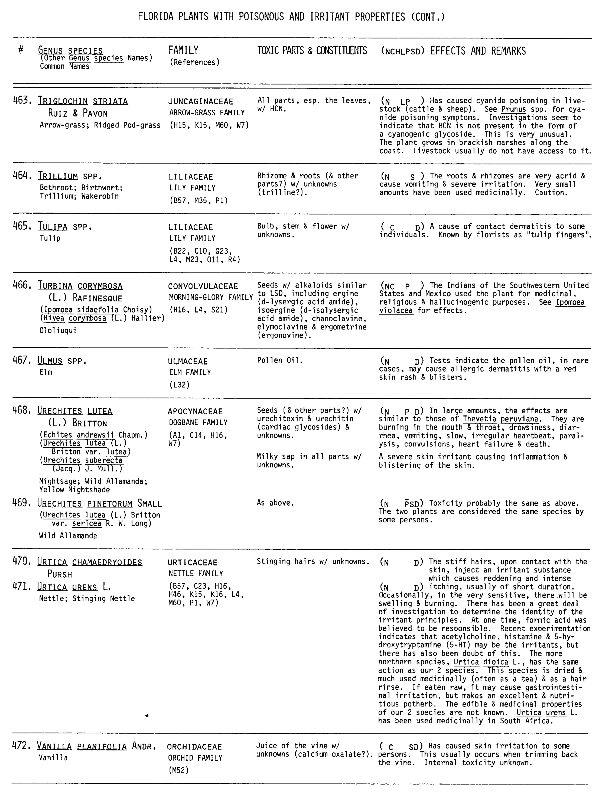
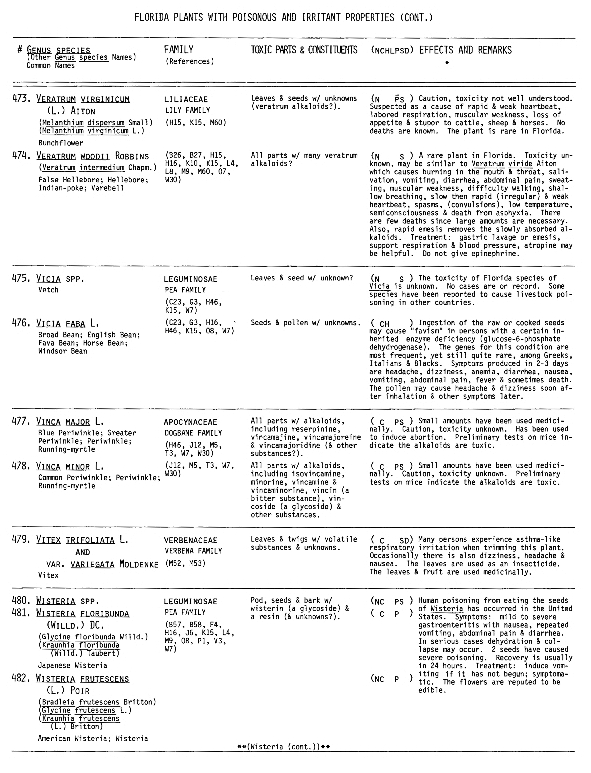
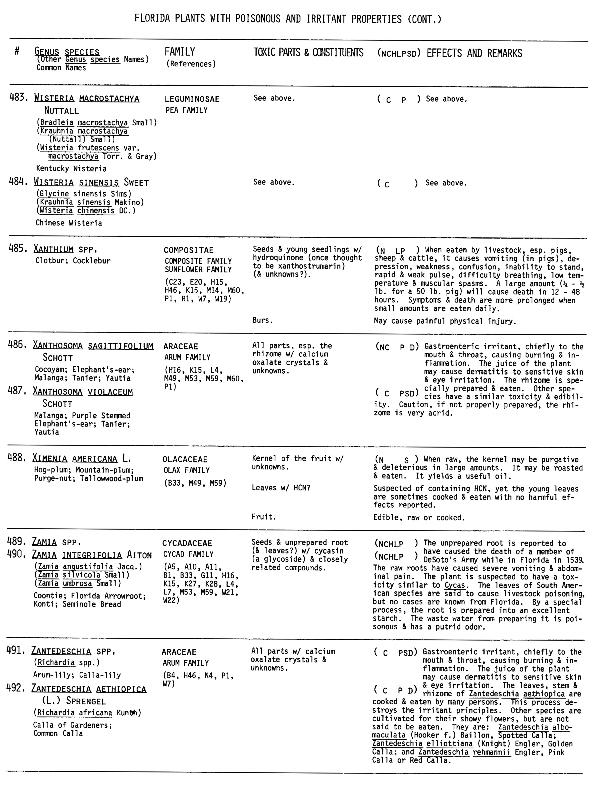
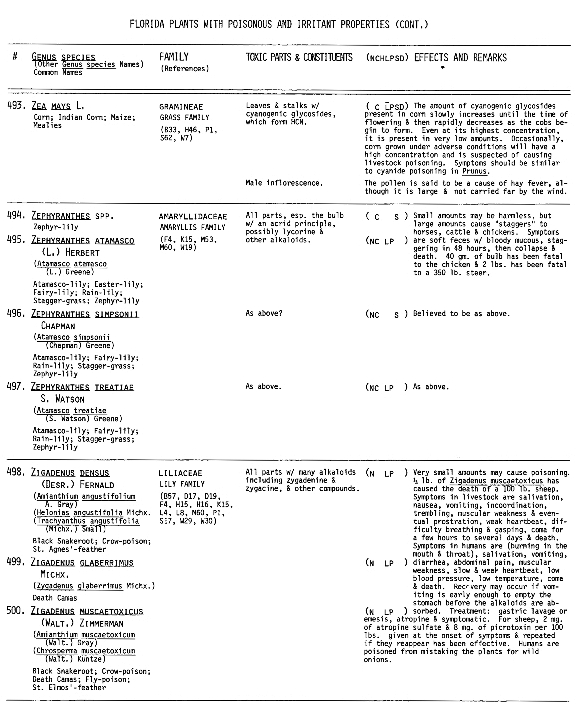
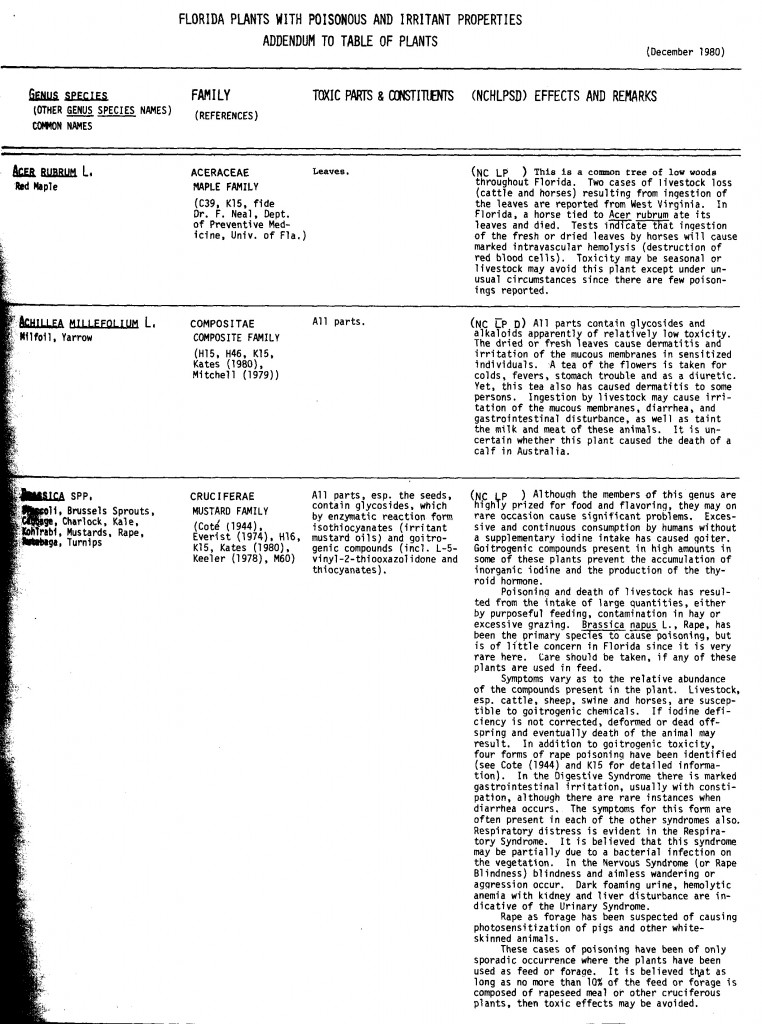
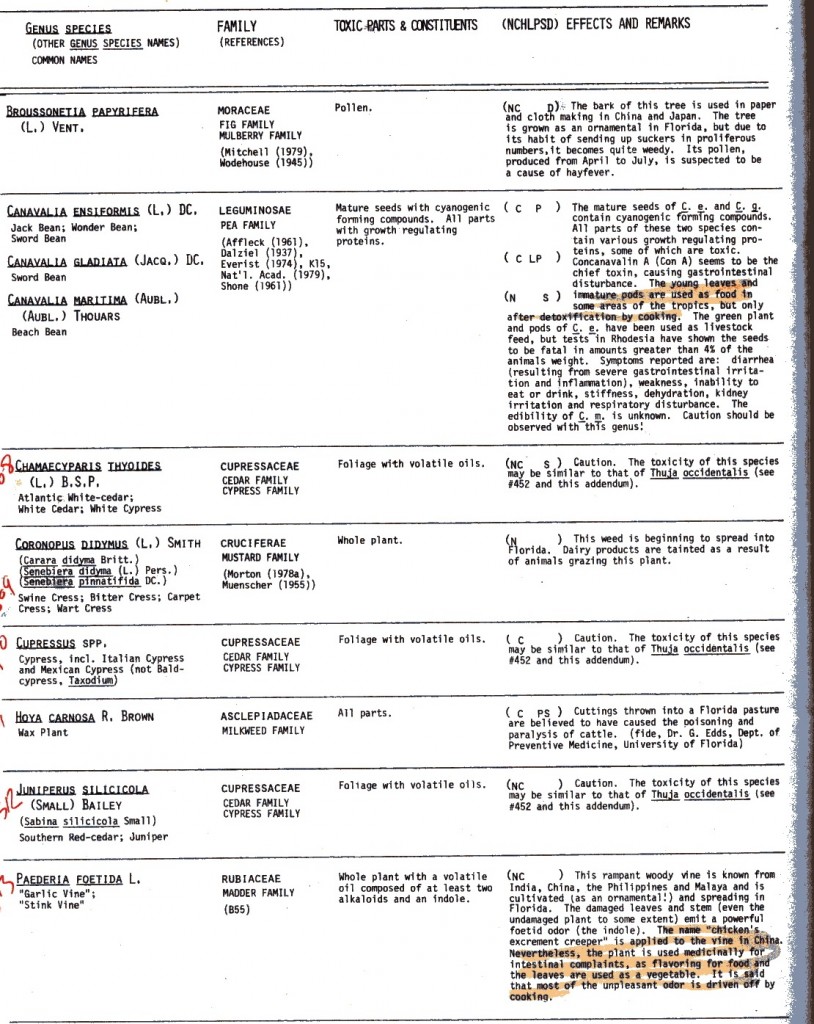
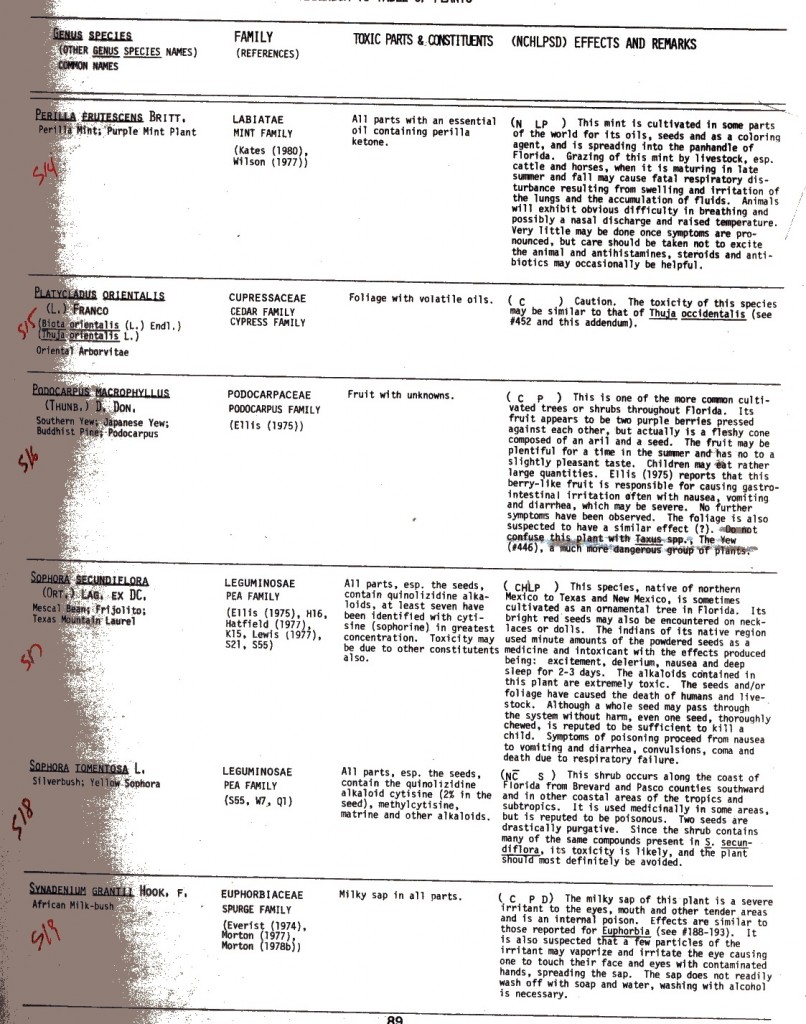
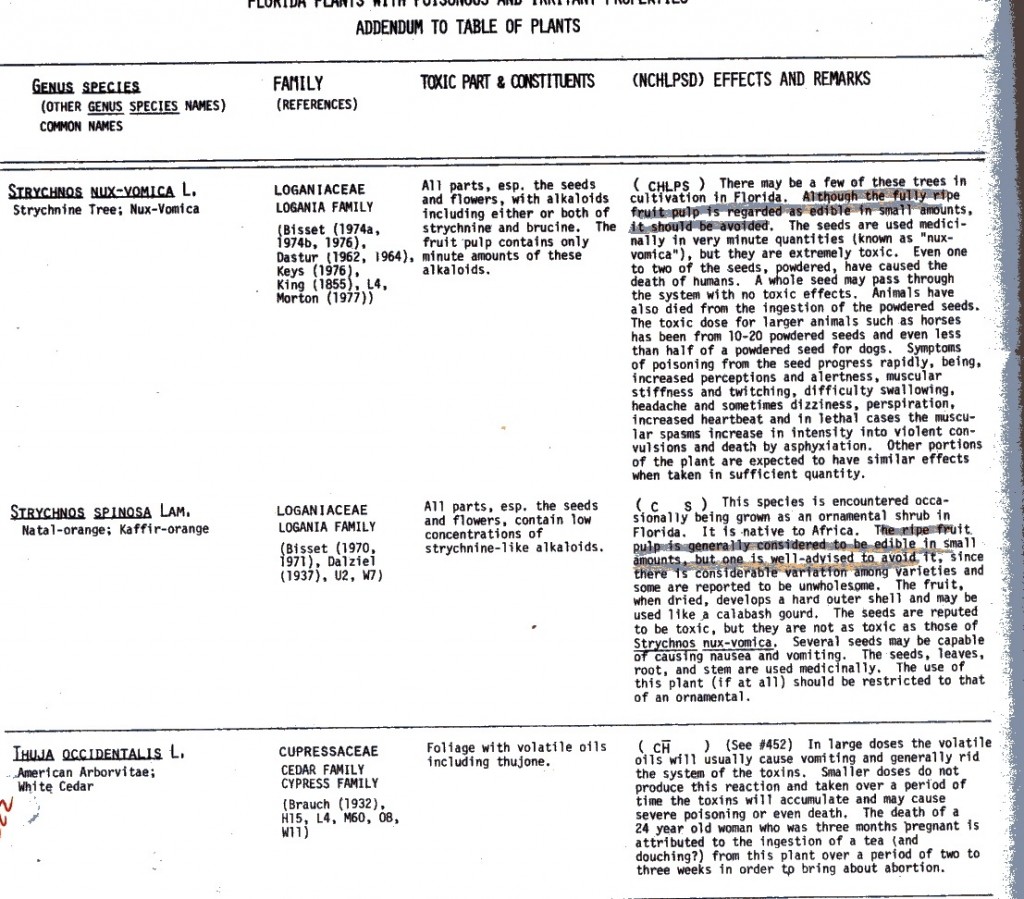
Below is a circular published by the state of Florida in 1978. I think it is no longer in print though I have a hard copy. It is reproduced below. Visual quality varied on the original typewritten copy. There is no intent to violate copyright but just to provide information written before the Internet to the Internet. I have moved the index to the front rather than leaving it at the end. The index is by number not page. There is also a four page addendum at the end which was not indexed in the original so if you don’t find your plant in the index, check there.

Addendum

{ 4 comments }