Going Nuts Over Ginkgo Biloba Nuts

Ginkgo fruit smells God-awful bad

Though the Army sent me to Japan I didn’t see my first Ginkgo biloba (GINK-go bye-LOW-buh) tree until I attended the University of Maine after I was out of the military.

It was planted in front of Bailey Hall. The hall was named for Dr. Francis Bailey, president of the college. I had his petite wife cum Keyboard Commandant for piano lessons. Nina Bailey was actually a dear diminutive lady with high pianoforte standards I would never meet. She had hands horribly ravaged by arthritis, with severely crooked fingers, quite a burden for a pianist. But I remember her, the hall and the ginkgo well. Of course it was wrong of me but back then I always associated the Orient with jungle heat and I thought it amazing the Ginkgo would survive Maine winters. Of course, now I know it is a temperate tree and I am now amazed it grows here in Central Florida.  There is one officially at Mouse World but they are also planted in upscale Winter Park, about four miles from here. In fact, when I want some leaves for medicinal uses I pluck some from a tree in a private yard about a quarter of a mile from my house.
First you have to clean the seeds, outdoors

Three separate species are very ancient: The Ginkgo, the Sassafras and the Monkey Puzzle Tree. Fossil records tell us they were all around for dinosaur lunch some 270 million years ago.  Even now there are some living Ginkgos in Asia and Japan said to be more than 4,000 years old.  In fact, it is reported that Buddhist monks preserved the tree in their monasteries and that ginkgo have all but disappear in the wild.
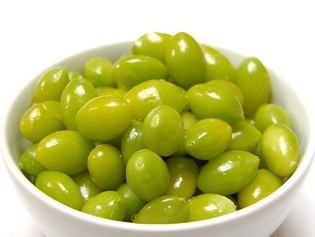
Once shelled and cooked the seeds are delicious

Ginkgos, like Chinese Elms, is a tree that favors urban dweller for they are exclusively planted as choice landscape trees. Most cities have several planted. The down side is usually only the male tree is planted but there are enough of the ladies to go around.

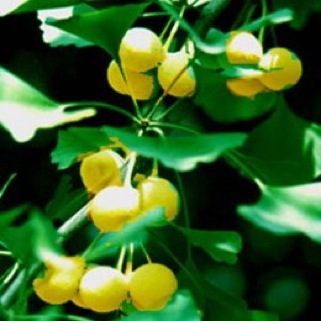
Why this sexism regarding Ginkgos? Because the fruit, which is only on the female tree, has a most disgusting smell. A million years ago that might have attracted a reptilian seed-spreader but to us it smells like cheese-ladened vomit in an outhouse, and or dog droppings. That’s the bad part. The good part is when you smell that disgusting aroma the kernels in the fruit are ready to collect and are delicious, after you extract them, clean them, roast and shell them. They are worth it. A delicacy.
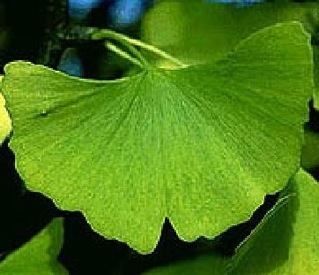
The leaf uniquely has veins that fan out

The fruit is cantaloupe colored and the seeds resemble pistachios. Wear rubber gloves when you collect the seeds.  If possible do not take the entire fruit home, just the seeds and clean as soon as possible. Roast them at 350F for an hour, then crush the seeds between towels tapping gently with a hammer.

Or, you crack them raw with a nutcracker then boil the seeds in salty water while rubbing them with a ladle to get the brown membrane off. Then salt and serve. Some brave souls, and perhaps misguided, put them in microwaveable containers and nuke them until they pop. Ginkgo nuts can be used in soups, stuffings, desserts, meat dishes, poultry dishes and vegetarian dishes. Clean dry seeds can also be popped in the microwave.
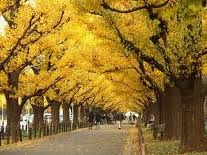
Language: The ancient Chinese name for Ginkgo is yingo, or silver fruit,. This got changed to  Ginnan in Japanese but in Kanji characters that can also be pronounced Ginkyo.  When Engelbert Kaempfer, the first Westerner to see the species, wrote down the name in 1712 his “y” was later misread as a “g” and we’ve been saying it wrong since. Biloba means two lobes and refers to the lobed leaf. It is also called the Maidenhair Tree referring to the fan-like leaflets of the maidenhair fern.
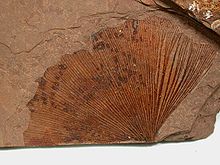
Fossilized Ginkgo Leaf

And now a medicinal use and warnings. Ginkgo leaf is added to Pennyworts to reduce blood pressure (dried, taken as a tea.) People with a vitamin B6 shortage should not eat cooked Ginkgo seeds. Children under six should not eat more than five (5) cooked seeds a day. No one should eat cooked Ginkgo seeds every day. Skipping a day is recommended.  In a well-fed society eating a few cooked seeds in season is not a problem. But if you eat 50 cooked seeds AND have a poor diet (and or you’re a kid, thus less seeds needed) it can be an issue. There is a chemical in Ginkgo seeds (4-methoxypyridoxine) that is anti vitamin B6. Thus if you are experiencing a famine and are low on B6 and you eat a lot of Ginkgo seeds it’s a combination for misery. 4-methoxypyridoxine is thought to be related to the chemical that makes China Berries non-edible. Also some people get contact dermatitis from handling fresh Ginkgo fruit. The fruit have some urushiol, the active chemical in poison ivy which is why you wear gloves when collecting them.
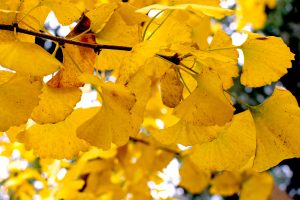
Ginkgo leaves in fall, Savannah Georgia. Photo by Green Deane

Green Deane’s “Itemized” Plant Profile

IDENTIFICATION: Large shade tree  to 120 feet. Long horizontal branches creating a pyramidal crown. Leaves leathery, fan shaped, one and a half inches long and three inches wide. Parallel veins radiating from stem point. Female flowers single or in pairs, male flowers a catkins; fruit cherry like, yellow, very fetid smelling.

TIME OF YEAR: Autumn, when fruit drops or is ready to drop

ENVIRONMENT: Full sun, prefers moist, deep, sandy soil. Won’t grow well in subtropical climes. Planted in numerous cities, parks, college campuses and palatial homes.

METHOD OF PREPARATION: Roast cleaned seeds or boil shelled kernels, or pop them in a microwave oven.

HERB BLURB

Before modern medicine a common mode of thinking was called the Doctrine of Signatures. It was occasionally by chance right so it continued as a means of exploring herbs for use. For example, the ginseng root often grows looking like stick figure of a human. This was via the Doctrine of Signatures a good reason to see if it was good medicine for humans.  Likewise, the ginkgo leaf resembles a cross section of the human brain and its two lobes. And, research shows it does benefit cognitive functions.
{ 19 comments }

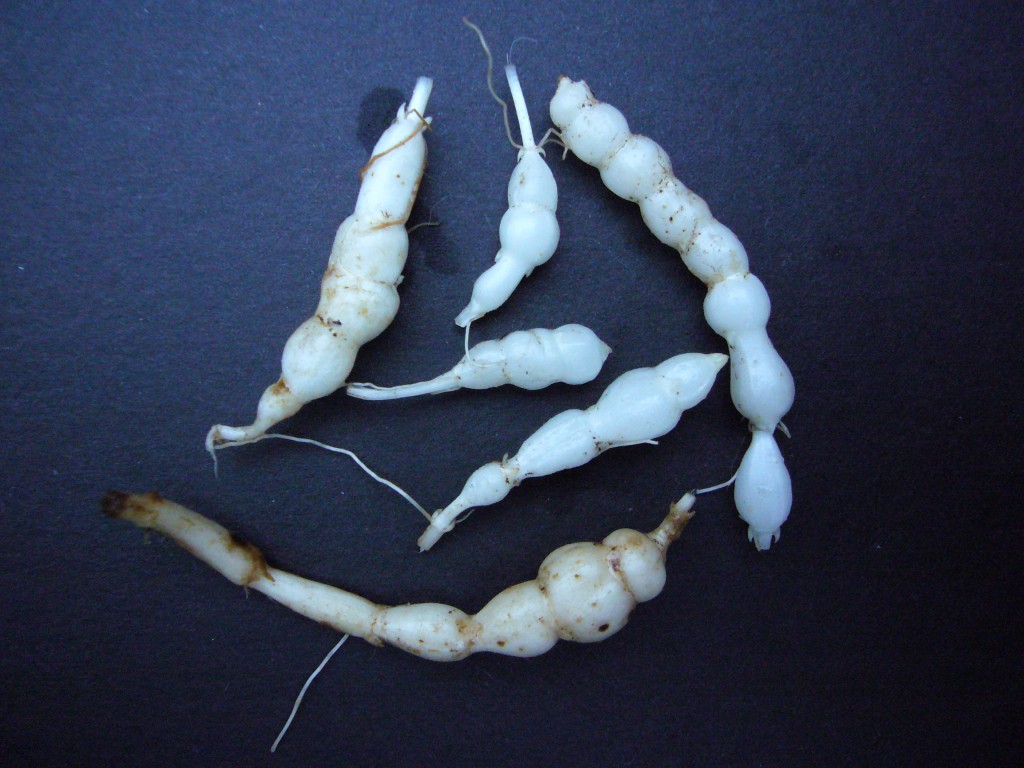
Early season edible roots of the Stachys floridana

Stachys Floridana, Culinary Pretender

I have read from a good source that all Stachys are edible. I politely doubt that for three reasons. First there are 300 to 450 of them depending on who’s counting. It’s doubtful all of them would be edible. The roots of one definitely are not edible. Next, many were used for medicinal purposes which also suggest some are not edible, and even if they were medicine often tastes bad. Lastly, and perhaps the most compelling reason, is that who’s in the family and who’s out is in flux. Botanists are a fickle lot. It could make things more iffy particularly if a non-Stachys non-edible was included as a Stachys.  But, what I do know is our local Stachys is edible and bears an underground resemblance to a relative that commands high prices.

Leaves can be dried and used for tea

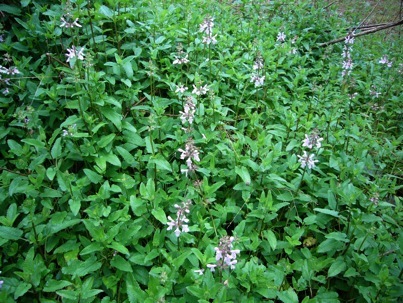
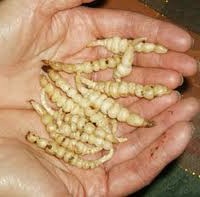
Stachys floridana, (STAY-kis flo-ri-DAN-ah) the Florida Betony, is one of the most common urban plants found in Florida. Sun and a moist lawn are magnets for the versatile weed. The above ground parts — read young plants and leaves — can be cooked like greens. They are, however, musty in flavor. Think of them as a famine food. Tea can be made from the dried leaves and the seeds are edible. But, the crowning glory of the Florida Betony, so to speak, is its root, actually a tuber. These crunchy, tasty treats look like big, fat, white grubs. Others think they look like the noisy  end of a rattle snake hence the other common name, Rattle Snake Weed. Pictured above are some small, early season roots. The Florida Betony puts on a tuber in spring and then kind of takes the hot summer off to return in the fall. In late spring the tubers are often stark white. In the fall they can be tan and in time get soft and not palatable.

Young plants and leaves can be boiled as a potherb

These humble tubers infest many a southern lawn and literally millions of dollars are spent every year to get rid of them: Read a lot of herbicide use. Another family member, Stachy affinis, aka Crosnes, does not have that problem. They sell for about $150 a pound. Actually, I’ve never seen a crosnes growing in Florida. It was originally from China, went to France in the town of Crosnes, and from there to the fancy Paris restaurants. That brought it to cultivation in and around New York City.

Tubers of the Stachys affinis

In restaurants of stars, Stachys affinis, also called Chinese Artichokes, are hard-to-get gourmet delicacies. It makes one wish Florida Betony could be substituted. I’d like the idea of having a few thousand dollars of these in my lawn. Maybe it’s a totally untapped market.  Someone should let the chefs know there is a possible alternative. No doubt a good price break could be worked out, say… $100 a pound.

The Florida Betony is a good example of attitude and knowledge. First is a willingness to eat the weeds, a theme dear to the author’s heart. The other is benefiting from that knowledge. The Florida Betony is the poor root of the pair, not able to command $150 a pound. It even has a different number of chromosomes than the S. affinis (this genus is in flux.) But, the Betony is good eats. I don’t have to pay $150 a pound for the S. affinis when I can get the S. floridana for free. Pass the salt and pepper please.

Stachylos

There is also one other known use for the Florida Betony.  It is a source of a sugar called Stachyose, according to its manufacturer, Schuttl et Benth. It is less sweet than sugar and is used as a bulk sweetener. It is also not completely digestible.  Stachyose promotes friendly bacteria in the gut, it is a probiotic, and — according to research — can inhibit the growth of bacteria that can cause some pneumonia and vaginal infections. Tasty and healthy. That’s a win win.

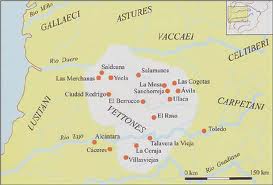
Vettones’ Region

Stachys is from Greek meaning  “stake” or in this case a flower spike. Floridana means of Florida. “Betony” has a long linguistic history. And for this it helps to remember that in olden days letters were not pronounced the same way as they are now. Even today in Greek the B has a V sound.  The original name for Betony was Vettonica. It was named after an Iberian tribe, the Vettones (living in now what is northwest Spain.) The Vettones, however, were Celtic — read proto-Irish — and lent their name to Breton, Brittany, Britain and even the encyclopedia no one buys anymore. The Vettones were thought by the Romans to posses special medicinal magic that drove away bad spirits. A common Roman proverb for someone troubled was, “sell your coat and buy betony.”  Most of the plants in the mint family that were named Betonica are now called Stachys.  Affinis (ahf-EYE-niss) is Latin for “similar to.”

No one does nutritional research on the Florida Betony. However, nutrition for the S. affinis per 100 grams is:  Calories 75, total fat  0, dietary fiber 2 grams, protein 2.6 grams, carbohydrate 17 grams, cholesterol (mg) 0, sodium (mg) 4, sugars (g) o.

Stachys palustris of northeast North America

Incidentally, if you live in a northern clime two other Stachys with edible tubers are available. The first is  Stachys palustris, the Marsh Woundwort.  It can be found in the northeast quadrant of North America, basically the Mason Dixon Line north and as far west as Illinois and Manitoba. The tubers can be cooked in a variety of ways, or dried and made into bread, and the young

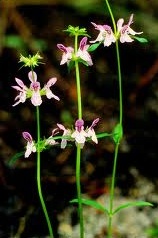
Stachys hyssopifolia

shoots are cooked and eaten like asparagus. The second, according to Dr. Francois Couplain, is the Stachys hyssopifolia, the Hyssopleaf Hedgenettle (say that 10 times fast.) It’s found in states that border the Atlantic as well as Kentucky, Indiana, illinois, Iowa and Michigan. Seeds of the Stachys scopulorum were eaten by natives in the desert southwest of North America and Stachys sylvatica is consumed in Europe, and about New York City.

The roots of Stachys officinalis are not edible. They are bitter and can make you throw up.

Green Deane’s “Itemized” Plant Profile

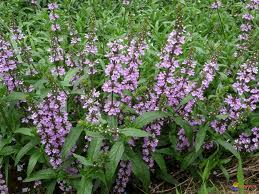
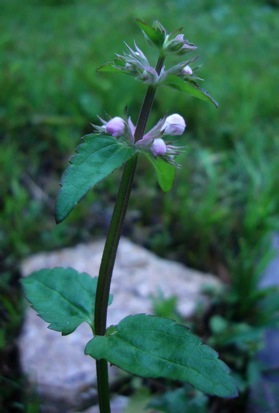
IDENTIFICATION: Florida Betony is square-stemmed, erect, hairy; tubers are segmented and resemble a rattlesnake’s rattle, usually little finger long; The stems up to 18 inches tall. Simple leaves opposite on the stem.  The flowers occur in clusters of 3-6,  sepals fused, forming a tube which is hairy, with 5 lanceolate lobes. The petals are fused, 2-lipped. The upper lip is somewhat erect. The lower lip is 3-lobed.

TIME OF YEAR:  The best roots are fat and ready to eat before Florida’s hot summer begins.  Roots near surface usually many found together. During the hot months the plant can disappear to reemerge in fall. In northern climates the roots are harvest in the cool of fall.

ENVIRONMENT: Moist yet well-drained areas, such as lawns.

METHOD OF PREPARATION: Roots raw or cooked, crispy in salads, great in stir fries. Leaves and shoots of the plant can also be eaten raw or cooked. They are, however, rather musty tasting and best mixed with other greens.  The Indians reportedly ate the seeds as a famine food. Some say the flavor of the tubers are like cauliflower where as I lean toward jicama. The texture, however, is like a radish. Lastly, the leaves of some Stachys species were smoked like tobacco. The roots of the Florida Betony also have chemicals which have “antioxidant activity. “

{ 108 comments }

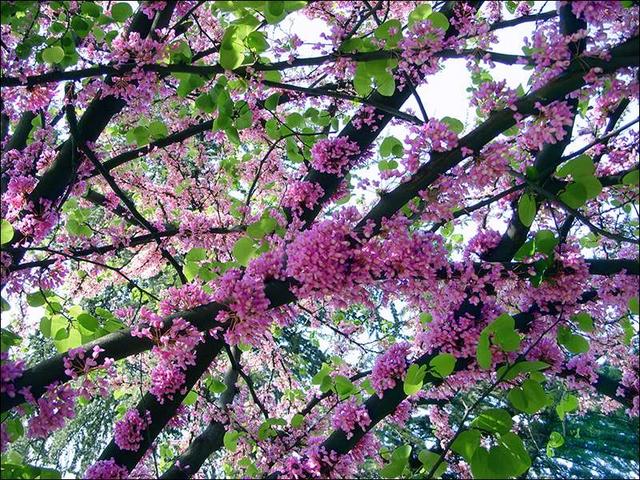
Eastern Red Buds can be showy in spring. Photo by Green Deane

Cercis canadensis: In The Bud of Time

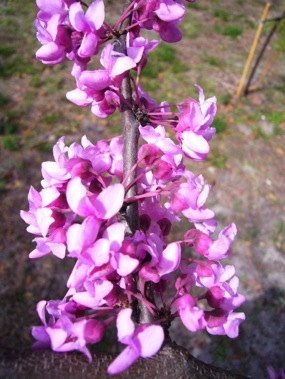
Eastern Red Bud Blossoms

It’s one of those trees that if you don’t see it at the right time you’re not looking for it the rest of the year. I had gone past it perhaps four or five dozen times over a couple of seasons, but never in spring. But one day the blossom caught my eye. I knew what it was I just hadn’t seen it there before.

Eastern Redbud trees are native across much of the United States and Canada, basically east of the Rockies. The most common species is Cercis canadensis  (SER-sis kan-uh-DEN-sis.)  They’re small trees in the pea family and among the first to bloom in the spring before they leaf out. They also produce large numbers of multi-seeded pods, from spring to late summer depending where it is.

Red Bud’s Edible Pods

Native Americans ate redbud flowers raw or cooked as well as the young pods and seeds raw or cooked. The flowers can be pickled. They have a slightly sour taste and are high in Vitamin C . They’re  a pleasant addition to salads and can also be used as a condiment. The unopened buds can be pickled or used as a caper substitute. The seed is  about 25% protein, 8% fat and 3% ash. More so, a 2006 study show the flowers and the seeds to be very high in antioxidants as well as linoleic and alpha-linolenic acid. The seeds also have oleic and palmitic acids. Think of it as The First Forager’s Health Food Store. Young leaves are edible raw or cooked.

Redbuds were first cultivated in 1641 and even George Washington planted some around Mt. Vernon. The name Cercis canadensis, as usual, has living Greek and Dead Latin origins. Cercis is from the Greek “kerkis” which means “a weaver’s shuttle” and refers to the shape of the pod; canadensis means “of Canada.”

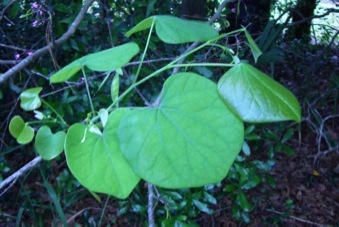
Heart-shaped leaves

The redbud’s native range is New Jersey to central Florida, west to Missouri and Texas and northern Mexico.  It’s branches and stems also have been used for basketry.

Also edible are the flowers and pods of the C. occidentalis (found in western North America ) and the C. siliquastrum found in Europe. There are also several cultivars now of varying colors. One popular variety is called Forest Pansy. It has reddish leaves and pods. They are edible as well. Like all members of the pea clan the blossoms are a very distinctive “wings and keels” arrangement, keel in the middle, wings on either side.

Green Deane’s “Itemized” Plant Profile

The Greek name for the shuttle — kerkis –inspired its botanical name Cercis

IDENTIFICATION: Small deciduous tree, typically 20 feet in height, gracefully ascending branches, rounded shape. Alternate, simple, broadly heart-shaped and 3 to 5 inches high and wide. Leaves emerge reddish, turning green. Flowers are pea-like, wings and keel, rosy pink with a purplish tinge. Flowers develop before the leaves in spring, in clusters along the branches.

TIME OF YEAR: Flowers in spring, followed by pods, seeds in fall.

ENVIRONMENT: Full to partial sun, well drained soil, often planted as an ornamental. I have also seen them growing, poorly, in total shade. They also seem to grow along the edges of open spaces.

METHOD OF PREPARATION: Buds raw, pickled or cooked. Flowers raw or cooked, young pods fried. Flowers fry nicely as well. Young leaves edible, raw or cooked. Regarding the flowers, the light colored upper part of the blossom is sweet, the darker lower part is bitter. Some folks removed the lower bitter part before eating. It’s a personal choice.

HERB BLURB

Herbalists say extracts from the inner bark and roots were used to treat colds, flu and fever. The Alabama Indians man a root and inner bark infusion for fever and congestion. The Cherokee used a bar infusion for whooping cough. The Delaware used an infusion of the bark to treat fever and vomiting.  The Osage used charcoal from the wood for war paint.

Redbud Blossom Muffins

2 cups redbuds blossoms

2 tablespoons minced fresh sage or rosemary leaves

½ cup sugar

Minced zest of 1 lemon

1 ½ cups flour

2 teaspoons baking powder

½ teaspoon baking soda

¼ teaspoon salt

1 large egg

3/4 cup milk

1/2 cup yogurt

2 tablespoons melted butter or oil

1 tablespoon lemon juice

Topping:

1 tablespoon sugar

½ teaspoon ground cinnamon

Preheat oven to 375°F

In bowl #1, combine redbuds, herb, sugar, zest. Let sit 30 minutes.

In bowl #2 Sift flour, powder, baking soda, salt large bowl.

In bowl #3 Combine egg, yogurt, milk, oil, lemon juice.

Pour the content of bowl one in to bowl two and toss.

Add the wet ingredients from bowl three, stirring to just moisten. Do not over mix.

Fill your muffin tins 3/4 full.

Combine sugar cinnamon the topping sprinkle some each muffin Bake for 25 minutes, or until tops spring back when lightly touched.

Remove form muffin pan and cool on a wire rack.

{ 73 comments }

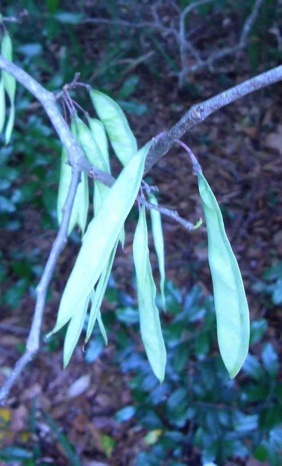
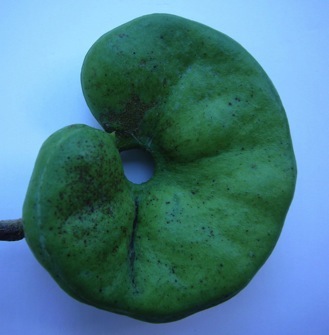
Unripe pod of the Enterolobium cyclocarpum

Lend Me An Ear Tree

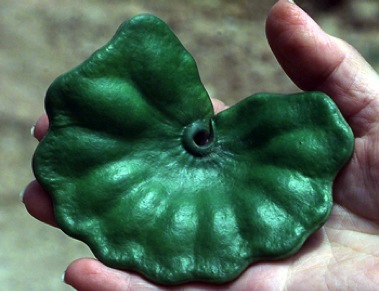
Just about anyone who has spent anytime in a warm climate will some day find on a sidewalk a black seed pod that looks like a human ear…. or a miniature elephant’s ear. That usually leads to seeing a huge shade/food tree that seems to be more appreciated in equatorial countries than others. Here in Florida, where bellies are full, the Ear Tree is a trash tree and rarely tended.

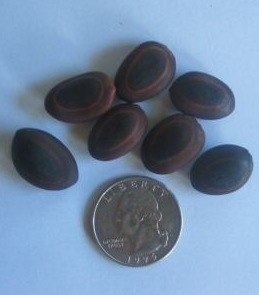
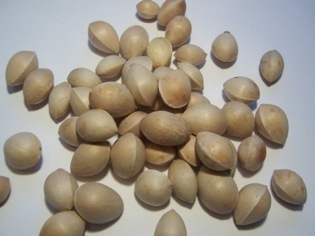
Round seeds of the E. cyclocarpum

As a southern Greek of northern birth — hence my constant migration southward — the Ear Tree was my second introduction to warms climates after the palms.  Ear Trees get more respect the closer one gets to the equator.  It’s planted as a shade tree, a source of forage for cattle, and food for humans. It shades coffee trees and fertilizes the soil by fixing nitrogen. Outside of the United States you will find it cherished in parks and designed landscapes like majestic oaks are elsewhere. In the US it is a neglected opportunist often with storm-damaged branches and litter around its base. They are, as trees, very fragile and can drop huge limbs.

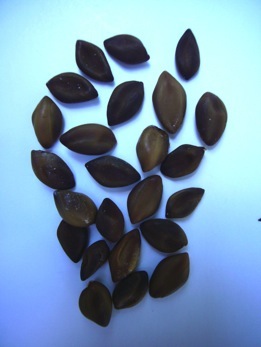
That said, there are actually two species of “ear trees” in Florida. One has edible seeds and the other probably not. So far experiments have not been successful. The edible ear tree pod, Enterolobium cyclocarpum, is pictured at the top. The questionable ear tree pod, Enterolobium contortisiliquum, is pictured below right.  To tell them apart, look for deep green pods with clearly marked seed pockets, also distinguishable when turned dark. More so, the seeds of the two are different. Round in the known edible, E. cyclocarpum, and pointed in the doubtful E. contortisliquum.

Pod of the non-edible E. contortislliquum

The flowers of the E. cyclocarpum (edible) are white and arranged like a spiked ball. The tree blooms February through April. The fruits take three months to ripen. The seeds are ripe when the seed pod (pericarp) turns from green to dark brown and by the noise the seeds make when the fruits are shaken. Each fruit 8 to 16 seeds.  A tree can yield many pounds of seeds. The seeds are ovate and laterally flattened. They are red-brown, smooth, very hard, and marked on one surface by a line that follows the contour of the seed.

I have several reports that the very young pods, the immature, unripe seeds are edible when boiled. The white pith of the black pod, however, and the roasted ripe seeds peeled are edible. In fact, the seed flour is 35 percent protein. That’s three times the protein of wheat flour. The unripe pods are full of a sugary dry pulp. The ripe fruits are collected from May through July, from the ground or from the trees. A pole with metal hooks can be used to remove fruits from trees. The seed pods have to be opened to get the seeds out. Small impurities are removed with sieves. Seeds from the mature pods average 1,100 to 1,170 per two pounds.   The mature black pods themselves are not edible but can be a source of saponins for soap making. The pods, by the way, are very sticky inside.

Seeds of the non-edible E. contortislliquum

The wood, similar to walnut, is water resistant and easy to work with hand tools. It is used for  furniture, cabinets, veneer, construction, panels,  posts, firewood and charcoal.  Natives used its trunk to make the famous dug-out canoes you saw in grade-B movies. Enterolobium cyclocarpum, (en-ter-oh-LOW-bee-um syk-lo-KAHRP-űm) also provides tannin for preserving hides and is a source of a gum similar to gum arabic. Without attention at ambient temperatures the seeds can germinate up to a year later. With careful storage, at 5 C and 68 percent moisture, they will have an 80 percent germination rate after 11 years.

One of the more unusual aspects of the Ear Tree is that it evolved when there were large land mammals to spread its seeds. But, those were killed off by human hunters and or the Younger Dryas Event some ten to twelve thousand years ago. Smaller mammals did some spreading of the seeds after that until horses and cattle were introduced into the Americas. It is called  Corotu, Orejoni and more commonly, Guanacaste, which means ear-tree in Spanish. That comes from the Nahuatl word/phrase cuauhnacaztli which means “area where the ear tree grows.” The Ear Tree is national tree of Costa Rica and El Salvador.

Enterolobium is Dead Latin meaning “in lobes,” referring to the seeds in the pods. Cyclocarpum is two Greek words used to mean seed/fruit in a circle, referring to the shape of the pod. Contortisiliquum is said kon-tor-tih-SIL-ih-kwoo-um and means twisted pod.

One last point: The non-edible species might be edible with proper preparation that I am not aware of. I think one offending chemical is calcium oxalate which can sometimes be dealt with by dry heat. But like many members of the greater family it could also have alkaloids that permanently damage the liver so I think it is a species best left alone.

Green Deane’s “Itemized” Plant Profile

IDENTIFICATION: 100-foot tall tree with broad spreading crown to 70 feet wide; bark with shallow longitudinal grooves.  A vigorous grower; looks feathery, fern like, leaves alternate, evenly bipinnate; leaflets oblong; flowers white, in powderpuff-like clusters; fruits reddish to dark brown with a yellow ring around. Easy to grow, may be grown indoors if kept pruned to size. 

TIME OF YEAR: Time of year: fruits in spring, matures in summer

ENVIRONMENT: Likes warmth, bright light, moist soil. Native from Mexico through Central America, to Venezuela, Trinidad, Guiana, and Brazil where it is dispersed by horses, peccaries and now extinct large herbivore.  Introduced as a shade tree in the West Indies, South and Central Florida, and other tropical/subtropical regions.  It ranges at least as far north as Central Florida (Orange and Seminole Counties.)

METHOD OF PREPARATION: Reportedly the very young pods and Immature seeds from green pods are edible if boiled in plenty of water. I have not yet proven that. However the ripe seeds roasted and peeled are edible.  Pith of the mature pods is sweet and sticky. It can be eaten raw or cooked. In Columbia they mix the pith with sugar and eat the paste as a dessert.

HERB BLURB

Bark extracts have been used for colds, bronchitis and to reduce fevers.

{ 35 comments }

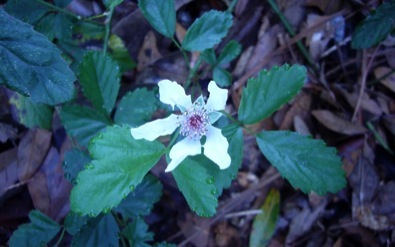
Dewberries are blackberries “lowly” cousins

Dewberries: Rubus Trivialis

Dewberries go far in the world, for a lowly vine. They can reach up to 15 feet long, one node root at a time.

Essentially a blackberry on the ground, Dewberries are a delicious addition to any foraging. Besides me and thee, the Dewberry is very popular with bees. The flowers attract honeybees, bumblebees, mason bees, leaf-cutting bees, cuckoo bees  and miner bees. The flowers also attract butterflies and skippers. The berries, actually drupes, are important summer food for many birds including red-headed woodpeckers, bluebirds, northern cardinals, and wild turkeys. The raccoon, fox squirrel, chipmunk and white-footed mouse eat the fruits. The cottontail rabbit and white-tailed deer browse on the leaves and stems. In fact, during lean years the Dewberry is an extremely important deer food, but then again, so too is poison ivy. Only humans and primates are allergic to poison ivy.

The Southern Dewberry (Rubus trivialis, ROU-bus triv-ee-AY-liss) differs some from the more widespread Common Dewberry (Rubus flagellaris.)  While both have prickles, the Southern Dewberry has bristles, the Common Dewberry does not. What’s the difference between prickles and bristles? It’s the amount of little spines you catch your finger on. A few are a prickles, a lot are bristles.) Also, the Southern Dewberry is evergreen, the Common Dewberry is not. The family the dewberry is in in some 250 genus strong, 26 of them in the southern United States. And the family has been around a long time according to fossil records, some 30 million years give or take a million or two the experts tell us. A whole lot of creatures have enjoyed them over the millennia.

Per usual, the botanical name for Dewberry, Rubus trivialis, is part Dead Latin and bastardized Greek. Rubus is a Roman word meaning red, the hair and or bristles on the stems often make them look reddish. Trivialis refers to the common occurrence of this plant. While it’s also the source of the English word “trivial” it really means “three ways” or crossroads. In Greek Tria is three and Via is force or way. Why “crossroads” means trivial is anyone’s guess but I would suppose crossroads are far less important than the main road, thus we have mainline and trivial.

Dewberries specifically are found Pennsylvania south to Florida and west to Colorado and Texas. Blackberries are found around the world. For example, the Dewberry is listed as an noxious weed in Tasmania. Imagine, a people so removed from nature that an abundance of delicious berries is a nuisance.   Hmmmm…. A 2007 study showed a blackberry leaf extract was good at reducing the formation of wrinkles. Seems to me the Tasmanians have the opportunity to be the most wrinkle-less folks on the planet. See my article on Blackberries.

Green Deane’s “Itemized” Plant Profile

IDENTIFICATION; Trailing vine, often roots at the nodes, twigs have reddish hairs; prickles small and scattered. Leaves alternate, variable in size and shape; leaflets elliptic to narrow-oval, twice as long as wide; hairless, toothy. Blossom has five petals, white to pink; pistils many, stamens numerous

TIME OF YEAR: Spring in Florida, June and July in northern climes. Dewberries ripen before other blackberries.

ENVIRONMENT: Edges of woods, roadsides, old fields. Likes most soils, can grow in full sun or some much shade.

METHOD OF PREPARATION: Black fruit, off the vine or prepared like any fruit berry.  Leaves can be made into a tea, long used to treat diarrhea.

{ 21 comments }