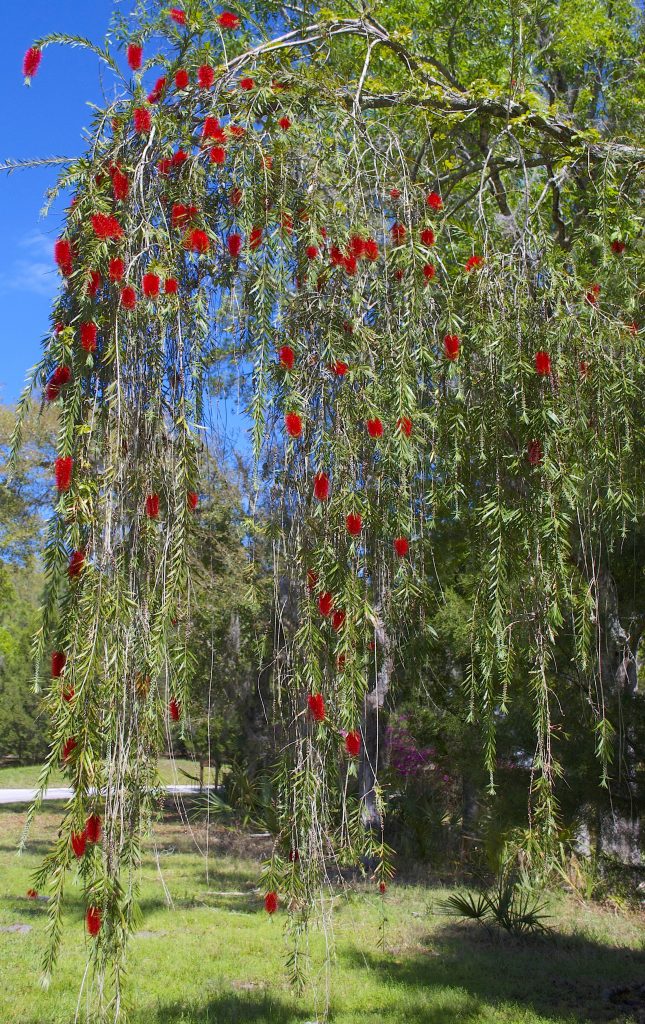
The Weeping Bottlebrush Tree is native to Australia. Photo by Green Deane

I’m often asked during my classes why I mention many plants that can be used to make tea. There are two answers: One is that different teas can be pleasurable if not healthy. The other answer is more practical: Leaves that can made into tea can often be use for flavoring like a bay leaf, or, a leaf that can make a tea can be a possible marinade. Why a marinade? Flavor. The menu for the natives only changed with the season so anything they could do to improve the taste of a day-in day-out food was welcomed. Those leaves can also be stuffed into vegetables and beasts about to be roasted.
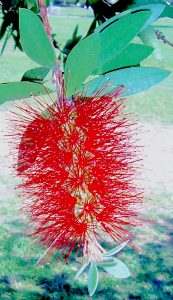
Tea can be made from the blossom or leaves. Photo by Green Deane

While there are many native species that can be used for tea there’s also an imported ornamental that available as well, the Bottlebrush Tree, or Callistemon citrinus (kal-liss-STEE-mawn  sih-TRY-nus, or, sit-REE-nus.) It is reported that all of the Callistemon species can be used the same way but I personally don’t know that for certain. You can use either the Callistemon citrinus leaves or blossoms to make a tea or use the leaves to make a tea and use the blossom to sweeten the tea. A very close relative of the Callistemon is the Melaleuca  (to see separate entry ) It’s leaves can also be used to make a tea and the blossom to sweeten it. The main difference between the two species is that the stamens (male parts of the flower) are generally free in the  Callistemon but grouped into bundles in Melaleuca. Another difference is that Melaleucas like wet places and Callistemons dryer locations. One look, however, at the leaves, blossoms and fruit and it is clear they are related. At one time the Callistemons were in the Melaleuca genus and some botanists still put them there. As for other uses a tan dye is made from the flowers and with a mordant they dye green. A cinnamon dye can also be made from the leaves. The wood is hard, heavy, tough, and close grained. It’s used for tool handles and fuel.
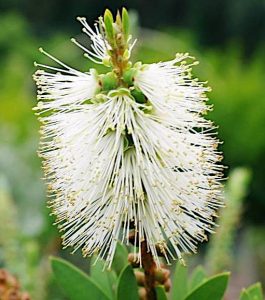
Bottlebrush blossoms can also be white.

Besides the Bottlebrush Tree other common names include the Red Bottlebrush, Lemon Bottlebrush, and Crimsom Bottlebrush. The genus name Callistemon was created by Robert Brown (1773 – 1858) a Scottish botanist who made significant contributions to botany by using the microscope (read making small differences into big differences.) Callistemon is two mangled Greek words, “kallis” (beautiful)  and “stemon” (stamen.) Together they mean “beautiful stamens.” The species name, citrinus, means like citrus. Remember the blossom looks like a bottlebrush, not a pom-pom. If you have a pom-pom blossom you have a different species altogether, usually in the pea family and not useable. Incidentally, the name “Lemon Bottlebrush Tree” comes from the aroma of the leaves, not from any color per se.

Green Deane’s Itemized Plant Profile

IDENTIFICATION: A small tree or large shrub, 6-12 ft (2-4 m) tall and 6-9 ft (2-3 m) wide. Leaves narrow, lance shaped, leathery, distinctly citrus aroma. Fuzzy-looking flowers composed mostly of stamens. Bark moderately rough, light brown.

TIME OF YEAR: Leaves year round, blossoms heavily in early spring with red flowers followed by some blossoms in summer.

ENVIRONMENT:  Native to Australia and New Caledonia it likes well-drained soil, sandy loam. Will not thrive in heavy soil or soggy ground. Can take  some salt spray, likes full sun. Drought tolerant once established. While planted ornamentally in warm areas throughout the world it is naturalized in Louisiana and Puerto Rico.

METHOD OF PREPARATION: Blossoms soaked in hot liquid to release nectar to sweeten, leaves used to make a tea.

How embarrassing. A week after posting the article above I found one I wrote two years earlier and never published.  It was on a thumb drive, not my main computer. It has some more information:

Callistemon citrinus

Some plants are at the same time easy and difficult to identify. Wild grapes are a good example. The genus is usually easy to sort out but exactly which species can be elusive. The Bottlebrushes can have similar issues.

While native foragers had no issues with the Bottlebrush tree and its close relative, the Melaleuca, botanists did, eventually putting them into two different genus. The trees are clearly related and look similar from leaves to blossoms to seeds.

The main difference among them is Bottlebrush blossoms have “free” stamens and the Melaleuca bossoms have “united” stamens.  What does that mean? The stamen of the bottlebrush stand apart like  separate hairs whereas the Melaleuca are like upside down little brooms, many stamens on one stem. However, some botanists think this slight difference is not enough for them to be two separate species. They argue the Bottlebrushes should be merged into the Melaleucas, and some published works have done that but not without controversy. With that thought in mind also know that not all Melaleucas have cylinder-shaped blossoms. Reclassification, reunification, or agreement is probably a long ways off. Fortunately foragers are not bothered by such tempests.

The blossoms of all the Bottlebrushes (and Melaleucas) can be used to make a sweet tea, or to to sweeten other teas. Callistemon blossoms are usually red but they can also be yellow,  green, orange or white.  They produce  a triple-celled seed capsule which remains on the tree until the plant dies or a fire causes the release of seeds. The seed capsules resemble beads on a bracelets.

Best known among the Bottleburshes for leaf tea is the Lemon Bottlebrush, Callistemon citrinus aka Callistemon lanceolatus. The leaves only need to soak in hot water.  While that is fairly straightforward, the question is which Bottlebrush is the C. citrinus?

The most common Bottlebrush species one will encounter locally is the C. viminalis, also called the Weeping Bottlebrush.  Like a weeping willow the branches droop extensively. Its “brushes’ are very cylindrical and about six inches long. The leaves, which smell more medicinal than citrusy, are around three inches long, skinny, linear, stiletto-shaped, pointed, and drab green. The leaves lateral’s veins (coming out  from the midrib) are nearly obscure.  The seeds capsules are flatish on top, or “not contracted” looking like little cups almost full, a ring around the top.   Locally the  tree can grow to 20 feet. In Jamaica it has been used for generations for a hot drink  call “tea” used for the treatment of gastro-enteritis, diarrhea and skin infections. Again, separate tests extracts were antibacterial  and antifungal activity against gram-positive  and gram negative bacteria.

The less common but more desirable C. citrinus weeps as well, but not as much. Its leaves smell lemony when rubbed (not crushed) and its “brushes” are slightly egg shaped and shorter than the C. viminalis, two to four inches. Young leaves of the C. citrinus are fuzzy and coppery later turning drab green. Mature leaves are about three inches long,  more a long oval than stiletto shaped. The round tip has a sharp point and the leaf evergreen. The seed capsules are puckered at the top, or “contracted” with a small hole in the middle. Locally the tree grows to 10 feet or so. There are dwarf versions, so use your nose.

Be advised some websites — copying each other no doubt —  say the entire tree is poisonous though they have been used to make tea for virtually thousands of years.  The leaves of the genus have been studied extensively. A methanolic extract of them is antibacterial, antifungal, and antioxidant in activity. The extract works against both gram positive as well as gram negative bacteria as well as some fungal species.

In a 2010 report (Am. J. Applied Sci. 7 (1) 13-16) leaves of C. citrinus were shade dried for 48 hours and crushed into a powder using a blender. Six grams of powder were used in 10 ml of ethanol distilled water to make an ethanol extract and 10 mls of of methanol distilled water for a methanolic extraction. They were then centrifuged (3,000 rpms) for 15 minutes and clear liquid harvested. This was done three times then the alcohol evaporated by incubating at room temperature. They, too, had antibacterial and antifungal activity.

In their native range in Australia the Cellistemon is often the host to the larval stage of the cossid moths, Endoxyla leucomochla and Hepialidae, aka the Witchetty grub, a popular raw or cooked food of the Aboriginals. They have an almond taste with the consistency of egg and when cooked have a crispness like fried chicken.

Upright small tree or large shrub, 6′-12′ high by 6′-8′ wide. Leaves are narrow, lance shaped, and leathery, with a distinctly citrus aroma (thus the common name). Bright red, plump, bottle-brush shaped flowers composed mostly of stamens bloom off and on throughout hot weather. Bark is somewhat rough and light brown.

Herb blurb

Molecules. 2009 Jun 2;14(6):1990-8.
Chemical composition and antibacterial activity of the essential oils of Callistemon citrinus and Callistemon viminalis from South Africa.
Oyedeji OO, Lawal OA, Shode FO, Oyedeji AO.
School of Chemistry, University of KwaZulu-Natal, Westville Campus, South Africa. aoyedeji@pan.uzulu.ac.za
Abstract
The chemical composition and the antibacterial activity of the essential oils obtained by hydrodistillation from the leaves of Callistemon citrinus and Callistemon viminalis were analyzed by GC and GC/MS. Twenty-four and twelve components were identified for C. citrinus and C. viminalis, representing 92.0% and 98.3% of the total oils. The major components of C. citrinus and C. viminalis were 1,8-cineole (61.2% and 83.2%) and alpha-pinene (13.4% and 6.4%), respectively. The in vitro antibacterial activity of the essential oils was studied against 12 bacteria strains using disc diffusion and broth microdilution methods. The oils exhibited strong zone of inhibitions against some bacteria such as S. faecalis (20.3-24.0 mm), both strains of S. aureus (23.0-26.3 mm), B. cereus (17.3-19.0 mm) and S. macrcesens (11.3-23.7 mm) when compared to standard antibiotics gentamycin and tetracycline used as controls. Expect for P. aeruginosa and S. macrcescens, the MIC values of both essential oils ranged from 0.31-2.50 mg/mL.
 

{ 25 comments }

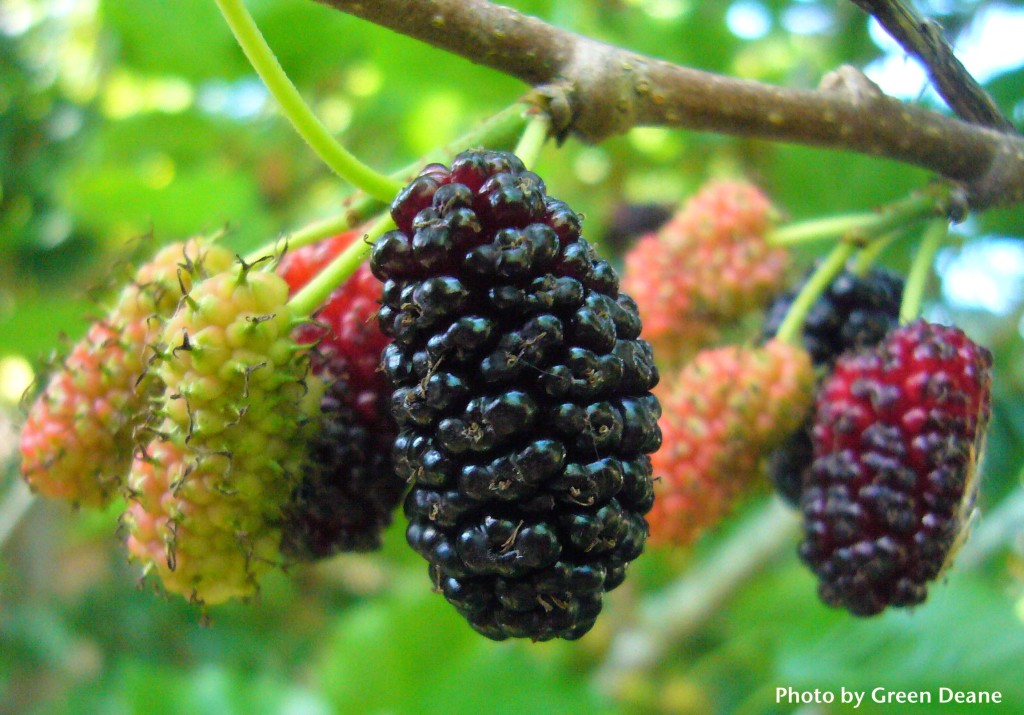
Ripening "red" mulberries. Photo by Green Deane

Ripening “red” mulberries. Photo by Green Deane

Mulberries: Glucose-controlling hallucinogen

I used to get a lot of dates using mulberries.

Not to sound sexist, but most women like men who can cook. And when the mulberries were in season I would ply a young lass or two with mulberry pie or sorbet explaining this was a delicious concoction unavailable anywhere else, kind of like me ….hint-hint, wink-wink. It worked so well that every season (before I owned my own land) I would scout out available mulberry trees and ladies and plan to match them up for gastro-amorous intentions. Mulberries, in my case, Morus rubra (MOE-russ RUBE-ruh) are full of life. One spring I trimmed my mulberry and used the branches for stakes. They rooted and grew. Not one to get in nature’s way I dug them up, gave them to a friend, and they are still growing.

Unripe red mulberries, young leaves edible cooked

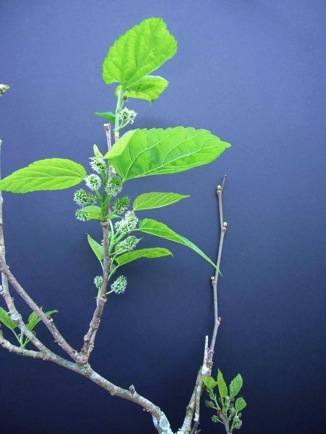
Mulberries are native to North America and also introduced. Their berries are extremely healthy, and other parts of the tree have medical uses as well. The berry is used in pies, tarts, wines and cordials. Cooked, such as in muffins, they are much like blueberries in flavor. The Black Mulberry and Red Mulberry, the latter native to eastern North America, have the strongest flavor. The Asian Mulberry, naturalized in urban areas, is edible but a clear distant third in taste. Mature fruit of all are packed with reseveratrol. Unripe fruit and mature leaves have a white sap that’s intoxicating and mildly hallucinogenic. White Mulberry tea quite popular in Japan. White Mulberry leaves  are also the sole food source for the silkworm (Bombyx mori, named after the Mulberry genus Morus). The worms are edible cooked but not that tasty.

Mulberry leaves can help regulate blood sugar levels, and reportedly play a role in losing weight by controlling sugar cravings. They are also is a source of Vitamin C and carotene. Mulberries have anthocyanins which are edible pigments commonly called antioxidants. Young leaves cooked are edible

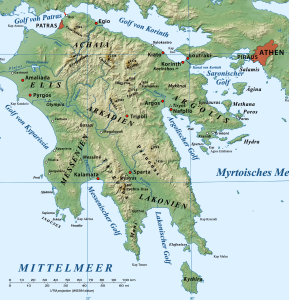
The Mulberry Shaped Portion of Greece. Green Deane's family is from south of Sparta, about half-way down the peninsula, The Mani.

The Mulberry Shaped Portion of Greece. Green Deane’s family is from south of Sparta, about two-thirds the way down the peninsula, The Mani.

As for the name, Ruba is red. Morus is a bit more involved.  A Babylonian story later incorporated into Greek mythology attributes the reddish color of the mulberry fruit to the tragic death of lovers. The Greek god Moros, who drove men to their fate, arose from that and where we get the English word, through Dead Latin,  “morose.”  Contemporary Greeks call the mulberry Mouro and southern Greece, Peloponnese, is often called Mora because it is roughly shaped like a mulberry leaf… if you’ve had too much retsina…

At one time the Paper Mulberry was grouped with other mulberries, and is closely related, but is now called Broussonetia papyrifera (broo-soh-NEE-she-uh pap-ih-RIFF-er-uh.)   Its fruit is edible and it can grow into a very large tree. Here in the South, it’s a linden-like tree that often defies identification.  Its young leave are also edible when cooked,  however, they are chewy. To see a separate entry on Paper Mulberry go here.

Nutritionally, the mulberry berries area powerhouse:  They’re low in saturated fat, cholesterol and sodium, high in Vitamin C, Vitamin K, iron, dietary fiber, riboflavin, magnesium and potassium, about 4.5 carbs per 100 grams, 120 calories.  Mulberry  leaves are consider animal food if not intoxicating to people. But young leaves are edible cooked, boiled or stir-fried. Fresh mulberry leaves are 71.13 to 76.68% moisture, 4.72 to 9.96% crude protein, 4.26 to 5.32%  total ash, 8.15 to 11.32% Neutral Detergent Fiber (NDF), 0.64 to 1.51% crude fat, 8.01 to 13.42% carbohydrate and 69 to 86 kcal/100 g for energy. Ascorbic acid ranged from 160 to 280mg/100g β-carotene from 10,000.00 to 13,125.00 μg/100 g, respectively. Iron, zinc and calcium ranged from 4.70-10.36 mg/100 g for iron, 0.22-1.12 mg/100 g for zinc, and 380-786 mg/100 g, for calcium.

The following recipes are from Living off the Land and Wild Edibles by the late Marian Van Atta, whom I knew some 40 years ago when I was living in Rockledge, Florida. She was a rotund homebody and more what we would call today a permaculturist rather than a forager.

Marian van Atta

Mulberry Pie: One baked 9″ pie crust. 4 c. Stemmed mulberries. 1/4 c. Cornstarch. 3/4 c. Sugar. 1/2 c. Water. 2 T. Lemon or Lime juice. — Add sugar to mulberries in a saucepan. Mix cornstarch with water. Add to berries. Add juice. Cook over medium heat until mixture thickens and juice becomes clear. Pour into bake pies shell. Cool and serve.

Mulberry Vinegar: In a large bowl, place 3 quarts clean mulberries. Mash and pour 3 cups of boiling-hot white vinegar over berries. Cover with a towel and for 3 days, mix fruit with a wood spoon. Strain juice trough jelly bag. To each cup juice add one cup sugar. Boil together for 5 minutes. Pour into sterilized jars and seal. When ready to use, pour 2 T. Mulberry vinegar in an 8 ounce glass. Fill with water and ice.

Mulberry Sauce: To four cups of mulberries add 1 1/2 c. Brown sugar, 1 t. each of cloves and allspice, to mashed berries. Bring to boil. Simmer until thick stirring often. Bottle and seal.

Green Deane’s “Itemized” Plant Profile

IDENTIFICATION: Mulberries are fast-growing but rarely exceed 40 feet, easily trained to be short and easy to harvest. Leaves  alternate, simple, often lobed, toothed on the edge. The fruit is about an inch long changing from white to red to dark purple or black. Reminds one of a long blackberry, will stain your fingers purple.

TIME OF YEAR: Fruits in late spring, what ever that might be in your climate.

ENVIRONMENT: Likes moist soil and prefers hardwood forests. However, in Florida they frequent abandoned truck farms and other fields. Often are found growing by hotel and apartment complexes parking lots, and roadsides.

METHOD OF PREPARATION: Out of hand or for anything one would use a blackberry, strawberry or blueberry for.  Young leaves of any of the mulberry species cooked, though they can be tough.


{ 78 comments }

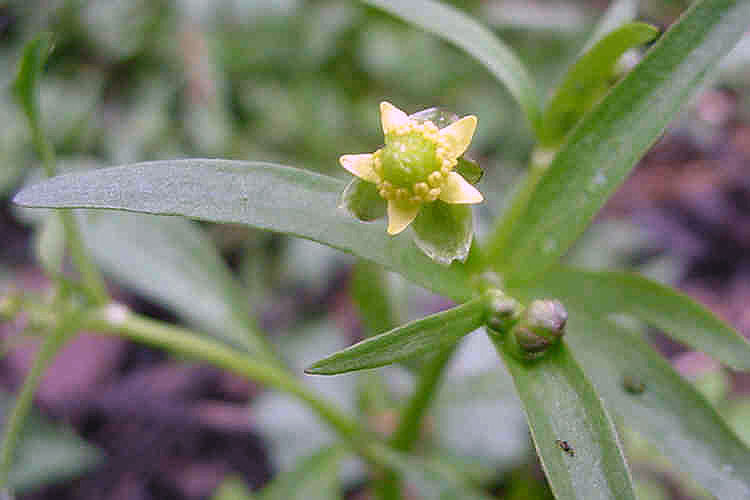
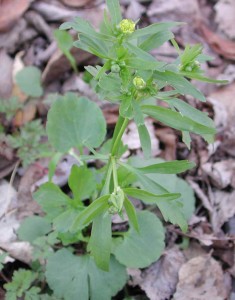
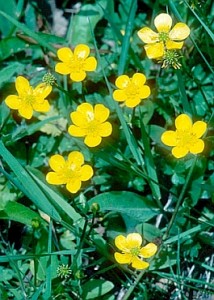
Ranunculus abortivus, our local Buttercup.

Buttercups are usually considered not edible. In fact, I think they were the first plant I learned not to eat when I was just a few years old in Pownal, Maine.  Of the 2,252 species in the family and some 600 buttercups in the genus perhaps a dozen and a half squeak into the edible realm.  Potential famine food. I also learned at an early age they grow in wet places such as near quicksand.

Note the kidney-shaped lower leaves of the Ranuculus abortivus.

There is something of a debate whether true “quicksand” exists in North America. I don’t see why not.  It’s liquefied soil, usually sand kept in suspension by water flowing up from a spring underneath. Directly behind the first house I lived in there were buttercups and quicksand. Cows were known to drown there. In fact when I was four or five I fell head first into said. I was rescued by the family dog named “Sister” who wasn’t much more than a puppy herself.  Her barking fetched my mother who hauled me out. Thus exploring buttercups and I go way back along with falling into things. (By the way if you do find yourself in quicksand, float as you would in a pool.)

The only use for our buttercups was the childhood game of holding the yellow blossom under someone’s chin to see if they “liked” butter. The chin always lights up with a yellow glow. It took scientists a century to figure out why. You can read a web page about it here or you can read the entire article below.)

Ranunculus bulbosus

Buttercups, like horseradish, engage in chemical warfare. In horseradish the heat one tastes comes from crushing cells that hold two different chemicals apart which are only peppery when they combine. This is to discourage consumption by me, thee and the denizens of nature. The buttercup is similar in that the offending chemical, a glycoside called Ranunculin, is not a problem until the plant’s cells are crushed. Then an almost instant enzyme reaction turning Ranuculin into Protoanemonin, a bitter, irritating, yellow oil. The animals most bothered by buttercups are grazing cows then horses, sheep and pigs, the latter two sometimes suffering paralysis.  Humans are rarely poisoned by buttercups because they taste so bad. It is not fatal in small amounts but a significant irritant that can make you ill with gastric distress.

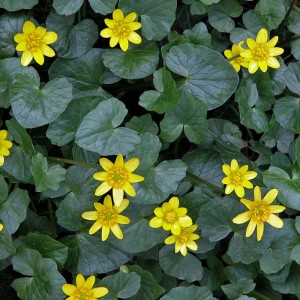
Ranunculus ficaria, the Fig Buttercup

So, which part is toxic? The entire plant: Sap, flowers, seeds, and leaves but the greatest concentration is in the yellow flowers, next are the shoots which have one-sixth as much. However, dried the plant can be eaten by cows. Heat also destroys the toxin. According to the late poisonous plant expert John M.Kingsbury, “as far as has been determined they [Buttercups) all contain the same toxic principle, although in varying amounts, and produce an equivalent syndrome.” Thus our goal is to use species that have small amounts and/or which can be easily removed. R. sceleratus has 2.5% Protoanemonin (dry weight basis) and R. bulbosa 1.45%. R. repens has only 0.27%.

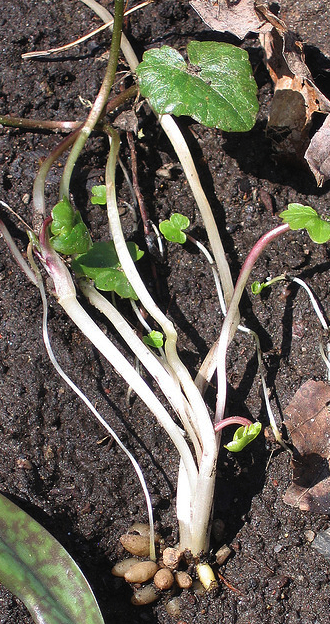
Ranunculus ficaria bulbils also grow in the leaf axils.

Which ones have been consumed? Ranunculus abortivus (leaves boiled) Ranunculus acris (leaves boiled) Ranunculus aquatilis (entire plant boiled) Ranunculus bulbosus (roots, much boiled or after drying, young flowers pickled, ) Ranunculus californicus (seeds parched and pulverized, there are about 30 per pod and are approximately 18% protein, 26% oil) Ranunculus cynbalaria (mature leaves boiled) Ranunculus edulis (tubers, young stems and leaves boiled) Ranunculus ficaria (young leaves eaten raw in salads, bleached stems cooked and eaten, bulbils — both leaf axils and roots — cooked with meat and eaten, flower buds substituted for capers) Ranunculus inamoenus (roots cooked) Ranunculus lapponicus (leaves and stems boiled) Ranunculus occidentalis var. eisenii (seeds parched) Ranunculus occidentalis var. rattanii (seeds parched) Ranunculus pallasii (shoots and young roots boiled) Ranunculus polyanthemos (leaves pickled first in salt water then added to cheese) Ranunculus reptans (roots cooked on hot rocks) Ranunculous repens (leaves boiled, flowers pickled after boiling) Ranunculus sativus (raw stems eaten as is)  and Ranunculus sceleratus (leaves boiled and or fermented.) R. acris, R. bulbosa, R. edulis, R. ficaria, R. repens, and R. sceleratus were introduced from Europe. 

Among the Native Americans who consumed buttercups in various ways were the: Cherokee, Gosiute, Miwok, Neeshenam, Iroquois, Acoma, Inuktitut (Eskimos) Keres, Laguna, Mendocino, Pomo, Hesquiat, Makah, Quileute, and Costanoan.

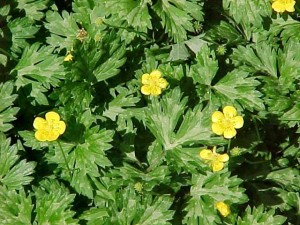
Ranunculus repens, the creeping butterfup.

John Lightfoot, who wrote Flora Scotica in 1777 said “not withstanding this corrosive quality, the roots when boiled become so mild as to become eatable.” Merritt Fernald, the grand wild food man of Harvard yard, said the R. bulbosus bulbils if overwintered and dry become mild and sweet.   Medicinally the buttercups have been used in a wide variety of ways. The Illinois-Miami used them to treat arrow and later gunshot wounds, the Cherokee as a poultice on abscesses, as a sedative and for sore throats. The Iroquois used a decoction for epilepsy, blood diseases, sore eyes, stomach issues, stiff muscles, snake bite, toothaches, as an emetic, to counter poisons and to dry up smallpox sores.  The Meskwaki used them externally to stop nosebleeds.  John Bartram, 1751, reported Buttercups were used for syphilis, asthma, rheumatism, pneumonia and other ailments. The juice has been used to remove warts. Extracts of R. sceleratus are good against plant fungus. The native Florida Buttercup. R. abortivus was also considered a remedy for syphilis. I don’t want to know about application methods.

Pliny the Elder

The genus name, Ranunculus, is Dead Latin for small frog. Pliny the Elder, 23-79 AD, used that name for the buttercup which should tell you man has been familiar with the plant family for a long time. Farmers long ago thought cows eating buttercups would improve the color of their butter. Some farmers even rubbed the yellow blossoms on the udders. Considering the flowers can be irritating that probably did not work out well. However, a tea made from buttercups and poured on the ground drives earthworms to the surface. The yellow flowers yield a light fawn dye if alum is used as a mordant, green with chrome as the mordant, and yellow with tin as the mordant. Mordants set the color on the fabric.

 Why Buttercups Reflect Yellow

As reported in Phys.Org scientists have discovered why buttercups reflect yellow on chins – and it doesn’t have anything to do with whether you like butter. The new research sheds light on the children’s game and provides insight into pollination. Researchers found the distinctive glossiness of the buttercup flower (Ranunculus repens), which children like to shine under the chin to test whether their friends like butter, is related to its unique anatomical structure.  Their findings were published 14 December, 2011, in the Royal Society journal Interface.

Buttercup reflecting under chin

The researchers discovered that the buttercup petal’s unique bright and glossy appearance is the result of the interplay between its different layers. In particular, the strong yellow reflection responsible for the chin illumination is mainly due to the epidermal layer of the petal that reflects yellow light with an intensity that is comparable to glass. Scientists have been interested in how the buttercup flower works for over a century. They have previously shown that the reflected color is yellow due to the absorption of the colors in the blue-green region of the spectrum by the carotenoid pigment in the petals.  As the blue-green light is absorbed, the light in the other spectral regions (in this case, primarily yellow) is reflected. It has also been known for many years that the epidermal layer of the petals is composed of very flat cells, providing strong reflection.

This new study shows how the buttercup’s exceptionally bright appearance is a result of a special feature of the petal structure. The epidermal layer of cells has not one but two extremely flat surfaces from which light is reflected. One is the top of the cells, the other exists because the epidermis is separated from the lower layers of the petal by an air gap. Reflection of light by the smooth surface of the cells and by the air layer effectively doubles the gloss of the petal, explaining why buttercups are so much better at reflecting light under your chin than any other flower.

Buttercup are toxic to dogs and cats if eaten.

The researchers also found that the buttercup reflects a significant amount of UV light. As many pollinators, including bees, have eyes sensitive in the UV region, this provides insight into how the buttercup uses its unique appearance to attract insects. Dr. Silvia Vignolini, lower left, from the University of Cambridge’s Department of Physics (Cavendish Laboratory), explained the importance of the buttercup’s unique appearance: “Although many different factors, such as scent and temperature, influence the relationships between pollinators and flowers, the visual appearance of flowers is one of the most important factors in this communication. Flowers develop brilliant color, or additional cues, such as glossiness – in the case of the buttercup – that contribute to make the optical response of the flower unique. Moreover, the glossiness might also mimic the presence of nectar droplets on the petals, making them that much more attractive.”

Physicist Dr. Silvia Vignolini

Dr. Beverley Glover, Department of Plant Sciences, said: “This phenomenon has intrigued scientists and laymen alike for centuries.  Our research provides exciting insight into not only a children’s game but also into the lengths to which flowers will go to attract pollinators.” Professor Ulli Steiner, from the Nanophotonics Center at the Cavendish Laboratory, the University of Cambridge’s Department of Physics, said: “It is fun to revisit a problem that is more than one century old and, using modern methods, discover something new.  The strong collaboration between Physics and the Plant Sciences has enabled this.”

Next topic to be researched: Quicksand… For you historical buffs there once was a Buttercup, Texas. And for 11 weeks in 1968 the song on the top of the charts was “Build Me Up Buttercup”  by the Foundation.

{ 32 comments }

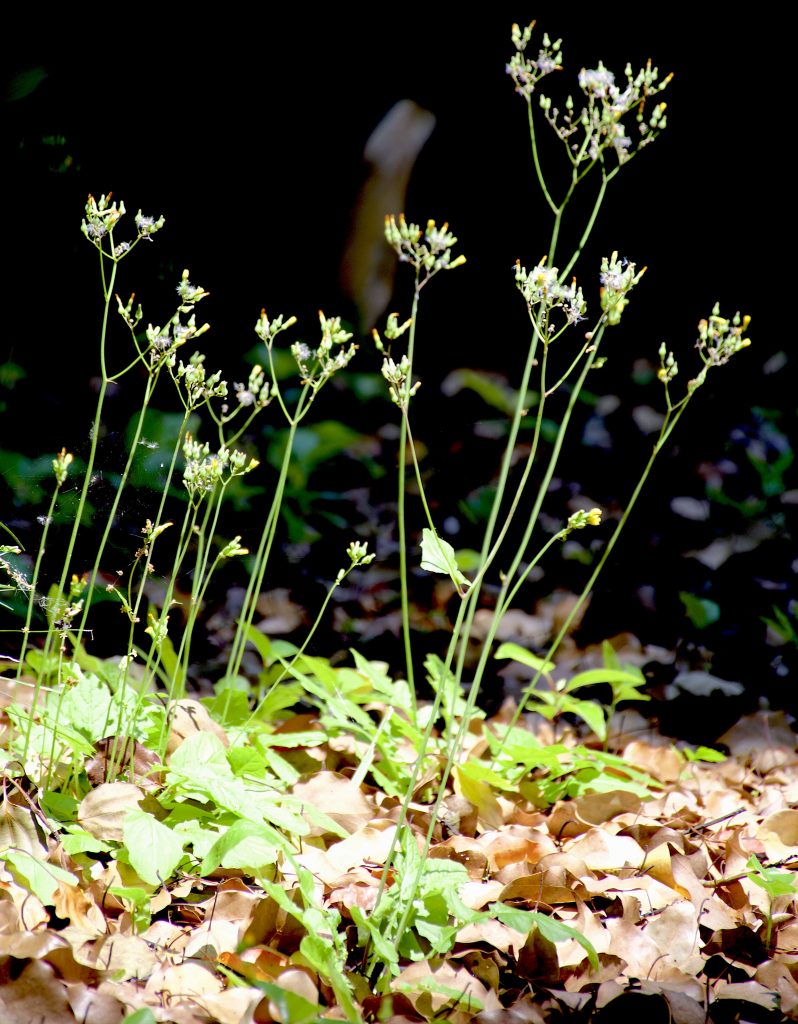
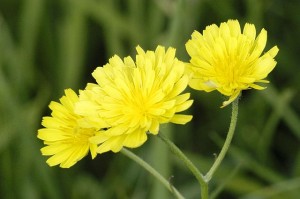
False Hawk’s Beard can have blossoms in all stages. Photo by Green Deane

Crepis Japonica: Seasonal Potherb

If the Crepis fits….wear….ah…eat it

Crepis japonica gets no respect. When I wrote this original article fourteen years ago you couldn’t find Crepis japonica in field guides on edible plants. And there was very little of substance about it on the Internet other than its name. The same can also be said for its edible cousins, Crepis setosa, Crepis runcinata, Crepis glauca, Crepis capilaris, Crepis bursifolia, Crepis vesicaria and Crepis tectorum.  My point, there’s an edible Crepis near you.

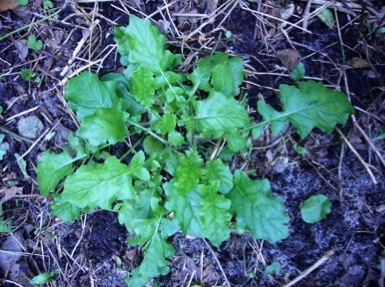
Crepis japonica basal rosette. Photo by Green Deane

All these Crepis have little variations, and some are more or less bitter than the others, but they are found across North America, Europe and Asia. For such an edible group they are barely known. While this article is about the Crepis japonica there is in North America: Crepis capilaris, the Smooth Hawksbeard which is found in most northern states; Crepis glauca or Crepis runcinata, the Fiddle Leaf Hawksbeard which is found along the Rocky Mountains through the United States into Canada; Crepis tectorum, the Narrow Leaf Hawksbeard which is found in the upper half of the United States and Canada; Crepis setosa, the Bristly Hawksbeard, found in a smattering of states of no particular pattern; Crepis vesicaria, the Beaked Hawksbeard, which is found along both coasts of the United States, and Crepis bursifolia, the Italian Hawksbeard, which is found in California, and Europe. Crepis japonica is found from about Pennsylvania south in to the South and west to Texas, also in Asia.  What can be said of one, applies to the others and they are used in similar ways.

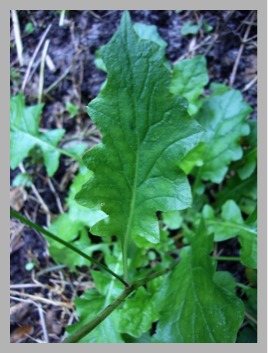
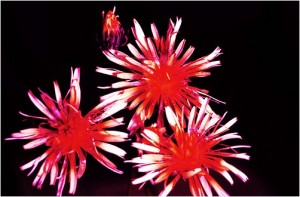
Crepis leaves resemble crepe paper

My local Crepis, C. japonica (KREP-is juh-PAWN-ih-kuh) might not get much attention because they changed its name from”Japanese sandal” which was kind of cute, to ” Japanese Young” or Youngia japonica (YOUNG-ee-ah) honoring which botanist I’ve never been able to find out.) Also being called the Oriental False Hawksbeard doesn’t help. But no matter what you call it, or them, the plants do just fine and are excellent potherbs.

Personally, I prefer the name Crepis japonica than Youngia or  hawksbeard. Youngia sounds a bit contrived and I have always associated “hawksbeard”  with a totally different plant in a different area of the country.

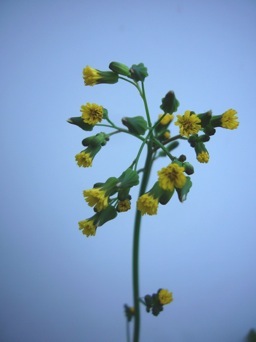
Crepis japonica’s continuous blossoms. Photo by Green Deane

As for the word “Crepis” we know that Theophrastus, the immediate successor to Aristotle in Athens, mentioned the plant by this name some 2,300 years ago, as did Pliny some 400 years later in Rome. But English-speaking botanists say they don’t know why the genus was named Crepis. They use the phrase “lost to history” to explain that when perhaps they should admit they are linguistically challenged: Knowing a non-speaking, dead form of writing — Latin —  doesn’t count towards linguistic proficiency.

Three possibilities are usually offered in English for the word “crepis” (krepis) two of which are not convincing. The first definition is that it describes a step at ancient Greek temples, what we would call a fancy doorstep. I have not been able to confirm “Krepis” ever referred to a temple step, and neither can a Greek professor of Greek I know

Crepis biennis as insects see it, Bjørn Rørslett – NN/Nærfoto

A more common ascription is that “krepis” means slipper or sandal, some say boot.  Again, research in Greek does not bear that out.  But it is getting closer.  A secondary use of “krepis” in non-demotic Greek is for the soft leather that makes up the soul of a shoe, back when shoes were more like pointy moccasins. And if you have fantastic eyesight and imagination the seed of the C. japonica might look like a slipper or a sandal. But that is looking very hard for an answer.

Crepis capillaris

The primary use of the word “krepis” in non-demotic Greek was for a textured light cloth that had various uses including veils. From there it went into Dead Latin as “crispus, or, “crisp” meaning curled and wrinkled. Then to French and lastly to English as  “crepe” as in “crepe paper.”  And indeed the leaves of the C. japonica and the rest, are curled and wrinkled. Crepis explained. You read it here first in 2011 …. lost to history… what nonsense. The more I live the more I think academics are lost inside their ivory towers, or like well frogs: They know only the bottom of their well and the tiny patch of sky above.

The local Crepis, C. japonica, is native to Japan and China and was first mentioned in the United Sates in 1831. It is now found throughout the world, and in many places it grows year round.

Crepis runcinata

There are about 200 Crepis worldwide and a couple of dozen in the United States. At least six are known to make a good potherb if not better than sow thistle and wild lettuce (read my separate articles about Sonchus and Lactuca which is one of several articles I have on wild lettuce.)  One writer refers to Crepis as “bitter”  but that has not been my experience. In fact, it’s very mild — when picked young and tender. Granted, however, bitterness may vary among species.

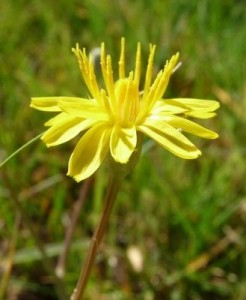
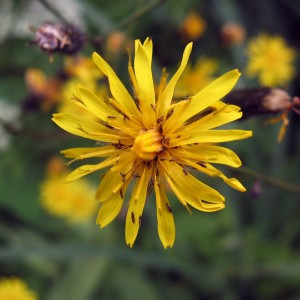
As you can see by the photos, it’s a low rosette with a long and skinny flower stock topped by small, dandelion-like yellow flowers, which are rather distinctive.  It can blossom, seed and drop old blossoms all at the same time. And, when in seed the Crepis blossom resembles a miniature puffy, slightly ratty dandelion, about one fifth the size.

Crepis tectorum

It might be easy to overlook Crepis in some landscapes but it tends to grow in colonies so you’ll spot a small stand of tall stalks with yellow flowers. It likes grassy areas and does not tolerate mowing well. The roundish dandelion-like leaves are shiny above, soft and dull underneath if not downy. Sometimes some edges of the leaves are decorated with a little dark trim. Veins are pronounced in the leaves, which curl on the edge. “Hawksbeard” also tends to have the same growing season as sow thistle and wild lettuce. Whilst you’re out collecting them keep your eye out for the “Japanese Sandal.” Youngia its first name in 1831, is a bit more foggy. When it was coined there were two well-known Thomas Youngs, a poet, and a physicist who was considered (after Aristotle) the last man to know everything. The naming nod usually goes to the latter.

Crepis bursaefolia

While C. Japonica can be found as far north as Pennsylvania, it’s more common in the southern United States where it’s considered an invasive weed. But, isn’t that a matter of perspective? It could also be considered a free beneficial crop, along with many other plants. In fact, one study found up to two-thirds of what we call weeds in an urban setting are edible. And let us not forget, any insect that likes a dandelion, such as a nectar-seeking bee, will find the Crepis familiar territory.

Despite its low profile, figuratively and literally, Crepis might have the last laugh. It has anticancer and antiviral “activities.”  A 2003 study in China showed a hot water extract of Crepis japonica inhibited cell proliferation and growth with human leukemia cells, mouse cancer cells, influenza A virus and herpes simplex type 1. An alcohol extract also worked but to a lesser degree. They think the “antiviral ingredients were likely to contain phenolic compounds including tannins….”

Not bad for a little weed that gets no respect.

Green Deane’s “Itemized” Plant Profile:False Hawksbeard

IDENTIFICATION: Crepis japonica: Flower: In the composite family, disk flower resembling a dandelion; Fruit; See seed. Leaves: oblong, soft, wrinkled and curly, often tinged red on the edge. Stem: Round, fuzzy, skinny, up to two feet. Seed: Seeds look like a miniature dandelion puff ball, several on one stem. Root: tap root vertical.

TIME OF YEAR: Springtime, can persist into warmer months in southern states and again in the fall through winter

ENVIRONMENT: Moist, semi-shaded to sunny areas, sandy to rich, soil, likes grassy areas and unmaintained lawns.

METHOD OF PREPARATION: Young leaves can be eaten raw, better cooked as a potherb, very mild when young, boil for 10 minutes or longer.


{ 51 comments }
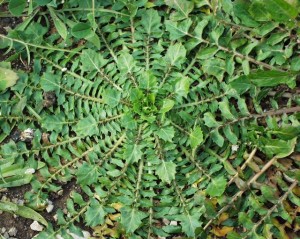
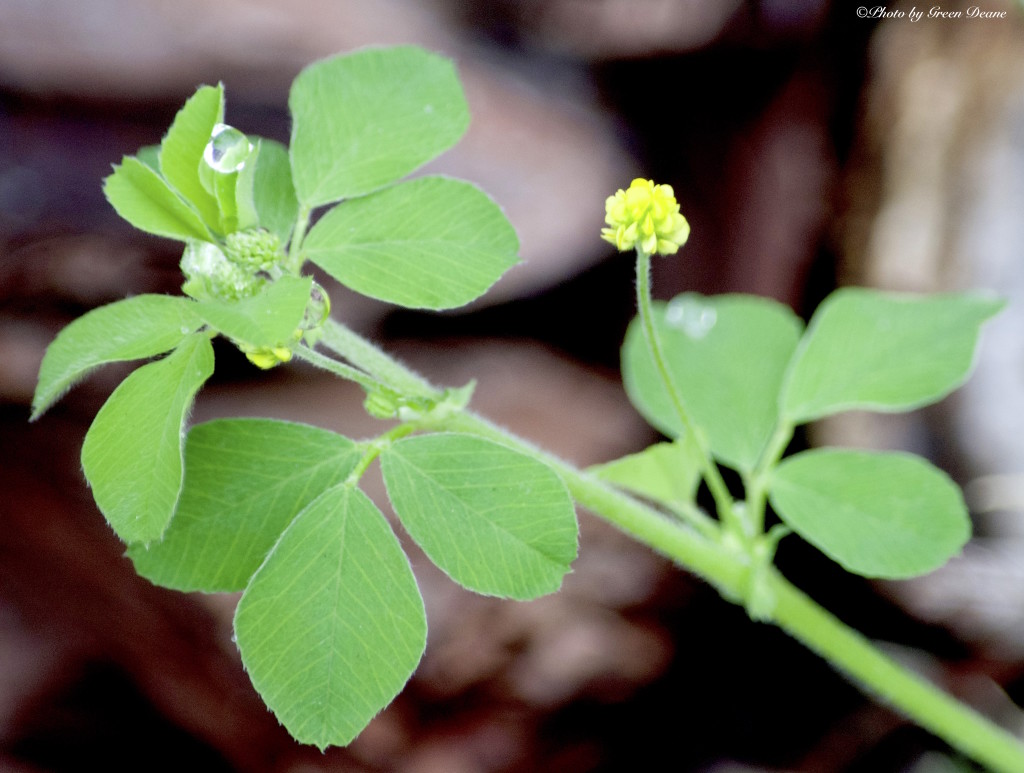
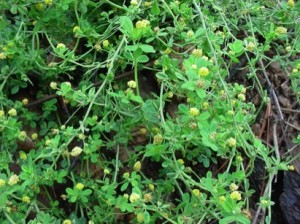
Black Medic resembles hop clover. Photo by Green Deane.

Black Medic resembles hop clover. Photo by Green Deane.

Medicago Lupulina: Grain and Potherb

I debated a long time whether to include Black Medic as an edible. There are several plants in that category and over time I usually land on one side or the other. Black Medic is one of them.

Black Medic itself has not been implicated in any disease that I currently know of. But one of its relatives and at least one chemical it contains has. Not exactly a smoking gun but where there is warmth there might be fire.

Black Medic, an old world edible

Black Medic is a species in the Medicago genus. Some Medicagos (Alfalfa for example) might present a health risk because they have L-canavanine.  It’s an amino acid which can cause abnormal blood cell counts, spleen enlargements, or a recurrence of lupus in those who had the disease under control. Seeds and sprouts have more L-canavanine than leaves or roots. One qualifier: Heated alfalfa did not appear to cause any problems, and the thinking is heating the L-canavanine destroys its potential toxic activity.  The seeds of the Black Medic might also contain trypsin inhibitors that could reduce nutritional qualities. Sprouting the seeds might eliminate that purported problem. It’s all rather iffy.

Alfalfa also has some estrogenic components, so it is not recommended for pregnant women or children, and it also increases the clotting ability of your blood, or decreases the effectiveness of such drugs as Warfarin/Coumadin. Lastly Alfalfa sprouts can appear fresh yet contain a multitude of bacteria so they are not recommended for children, those with chronic disease, or the elderly. It would seem cooking the Medicago genus is a good idea. So, if you are a healthy young man you might be able to eat a Medicago now and then and be none the worse for it. But what about Black Medic? The answer is no one really knows. 

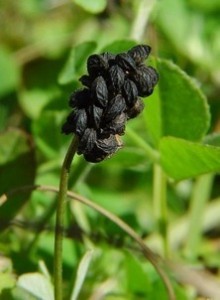
Dried seed head

A report that California Indians used to eat the seeds of the Black Medic is a curious one. They parched them or ground them into a flour.  The seeds can be beaten off ripe inflorescences over a sheet or the like to collect them.  In Eurasia, where the plant is native, it was used as a potherb.  Black Medic is first mentioned in the early United States in a seed catalog in Pennsylvania in 1807. The plant went west with the expansion of the nation. Oddly there seems to be no mention of the Natives eating it as a potherb (they only ate the seeds) nor any mention of Eurasians eating the seeds (they only ate the foliage.)  Need could dictate that, poor record keeping, wrong questions asked, or how the plant was being used the day the chronicler visited.

According to the well-known Dr. James Duke (Medicinal Plants of China) nutritionally the leaves of the Black Medic are rather high in protein for a green. Three ounces has about 23.3 grams of protein, 3.3 of fiber and 10.3 of ash. In milligrams they have 1330 mg of calcium, 300 mg of Phosphorus, 450 mg of magnesium and 2280 mg of potassium.

Botanically the Black Medic is Medicago lupulina. Medicago (med-ik-KAY-goh) is Greek bastardized through Dead Latin. Some say the Greeks imported a grass (alfalfa) from Media (Persia now Iran.) Some say the Medes brought it with them when they invaded Greece. Regardless the Greeks called it “median grass” which in Greek is μηδική (said mee-thee-KEE.) The Romans’ called it Medica. That got botanized into Medicago when combined with agere, to bring.

Lupulina is Latin for “little wolf.  Origin of the term is a bit contorted. The Black Medic blossom resembles Hops (Humulus lupulus  which means “low wolf.” That hops in Germany often climbed on the Willow Wolf Tree, Lupus silicarius (wolf with silica.) That double hint towards lupus ended up Lupulina.

Green Deane’s “Itemized” Plant Profile: Black Medic

IDENTIFICATION: Medicago lupulina: Multi-branched, slender, prostrate, slightly hairy stems, 12 to 24 inches long, spreads low to the ground, does not root from nodes. Leaflets of three, center leaflet on separate petiole and longer than other two. Resembles hop clover but has longer leafstalk, leaflets often bristle-tipped. Tightly coiled one-seed black pod.  Re Black Medic and Hop Clover: Stems of M. lupulina are downy (they have white hairs.) The stems of Trifolium. dubium are almost hairless and more reddish.

TIME OF YEAR: Flowers April to August, seeds ripen July to September. Not frost tender.

ENVIRONMENT: Roadsides, waste areas.

METHOD OF PREPARATION: Seeds parched and or ground into flower. Leaves as a potherb. Chewy. Should be cooked.


{ 14 comments }