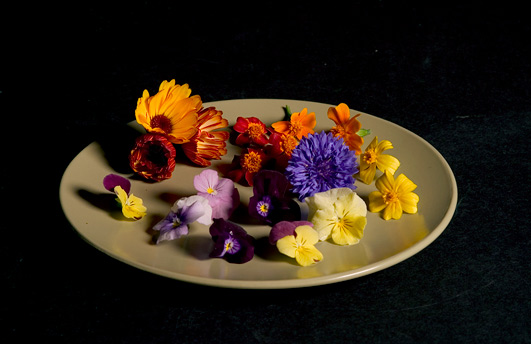
Flowers can be pretty, potent, and flavorful

Mayflower, Chrysanthemum, Cornflower, Rose, Daylily, Elderberry, Chicory, Johnny-Jump-Ups, Linden, Banana
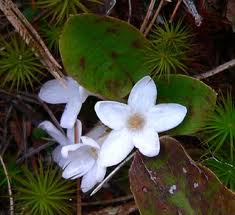
The aromatic and small Mayflower

A rite of spring in the frozen north, or at least the part I lived in as a kid, was to go looking for Mayflowers. Hardy little souls, they would blossom on the side of small Maine mountains and cope with bone-cold nights and reluctant-to-melt patches of snow and ice. They are the first to blossom after the frost leaves. My mother had her favorite haunts for the flowers and we would go clambering amongst boulders and hardwoods for them. Their intoxicating aroma, and the fact they are the only green thing growing that time of year, makes them easy to find. Epigaea repens, also called Trailing Arbutus, actually have the same aroma as citrus blossoms, or at least to my nose they do. Slow growing and in the Heath family they are salad fare but light and delicate. However, in many places they are rare, so pick accordingly. They’re also illegal to pick in some places. Check your local laws, or, have no witnesses and eat the evidence. See full article on site.
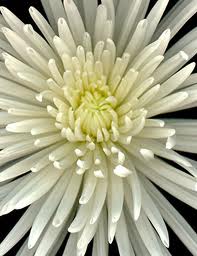
Bitter and pungent "mums"

Our next edible needs little introduction: The Chrysanthemum, also called Mums, one of my grandmother’s favorite. First cultivated in China perhaps 3,500 year ago, they have been on the menu for many millennia. Mums got to Japan in the 8th century and are the flower of the emperor’s family. Yellow and white “mums” botanically Chrysanthemum morifolium, are the ones usually found in the kitchen. The blossoms are boiled to make a sweet drink. In salads the raw flowers are pungent, if not bitter. Use sparingly. They are also used to flavor wine (remember lilac wine?)  The leaves are steamed or boiled and used as greens. I’ve grown them in my vegetable garden for that very purpose. The greens also dehydrate well. To Victorians  a red chrysanthemum means “I love” a white one, truth, and a yellow one “slighted love.”
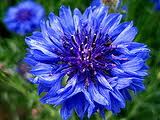
Cornflower, spicy with hints of cloves

When you’re a kid you’re told everything is poisonous, and for me that included Bachelor Buttons. Also called the Cornflower, they have been tossed into salads and used for a garnish for a long time. They got the name cornflower because the hardly species grew in English grain fields when all grain was called “corn.” Long before wedding rings were common bachelors indeed did wear Bachelor Buttons in their jacket button holes to let the ladies know they were single. How did she let them know the same thing? Curiously, she showed cleavage. Married women covered up, single women advertised.  Another version is that if the flower retained it color while worn his love was true, but if it faded it was not… sounds a bit rigged to me… Then again, I might not have been a lifelong bachelor if I had picked a few of these flowers. Bachelor Buttons were the favorite flower of President John Kennedy. His son John John wore one at his wedding to honor his father. The flower also reaches way back into history. It was used in the funeral wreath made for Pharaoh Tutankhamun, about 3,300 years ago. Their flavor is spicy, sweet, reminds one of cloves. In the language of flower a Bachelor Button means “single blessedness.”
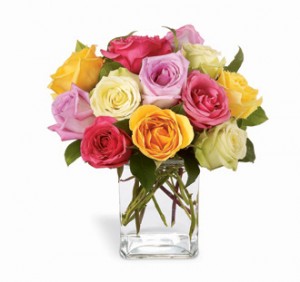
Roses have many flavors

Long ago and far away I got accepted to law school… Another story for another time. The job I had stopped before classes began so to tide me over I delivered flowers. One could tell several stories regarding that including how most women are very suspicious when they get roses from him on other than Valentine’s Day. I even had some deliveries refused! Beyond that, however, the roses I delivered had no scent. None. Zip. Zilch. Nada. No rose aroma at all. Just before I would deliver them I’d take them out of the van and spray them with an artificial rose aroma. The roses were raised for their look and in the process the scent was bred out (and you did not spay them in the van or you smelled roses for weeks.)  Less purebred roses are known for their rose hips and edible petals. The flavor depends on the type, color and conditions of raising. They can range from tart to sweet, spicy. Darker ones have stronger flavors. Remove any white portion of a petal. That will be bitter. All true roses (genus Rosa) are edible.
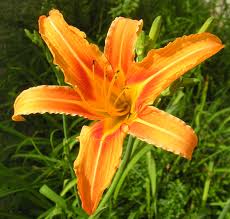
Use Daylilies in moderation

A foraging standby in all but the southwest desert and northwest Canada is the daylily. But first a couple of  precautions. I am writing about only the Hemerocallis genus. Also go sparingly, they can be diuretic or laxative. That said day lilies are on the sweet side, vegetable-ish. Like squash and gladiola blossom they’re used to hold tasty finger food but like other blossoms cut them away from the white bitter base. I used to enjoy them often but the only local patch is now under a highway exit. See full article on site.
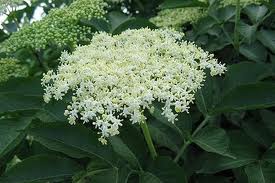
Elderberry's blossom is flat topped

No compendium of edible wild flowers is complete without mentioning Elderberry blossoms. Small, aromatic, they have been used for tea for centuries with some recipes 600 years old. They can also be put into pancake batter and the like to sweeten and give a nice texture. Another use for the blossoms is to flavor a light summer time sparkling wine, or as my friend Dick Deuerling would call it “Elder Blow Champagne.” The dark purple to black berries have been used medicinally — particularly for colds and flu — and in the kitchen. I like Elderberry pie and to use the dried berries as a spice such as on ham. Approach red elderberries with caution. See full article on site and video.
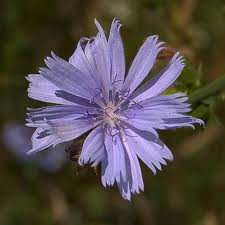
Chicory blossoms and buds are on the menu

I can remember the first time I saw Chicory in blossom. I was in Alexandria, Virgina, visiting a dear friend for a couple of weeks and wandering amongst parks, monuments, and museums. The mower had somehow missed it and I noticed it immediately. The blue pretty Chicory is a close relative of the dandelion but not sweet at all. In fact it runs towards bitter and earthy. Think radicchio. You can eat the flowers and the bud, or pickle the buds. The root has been roasted and used to extend and flavor coffee. See full article on site.
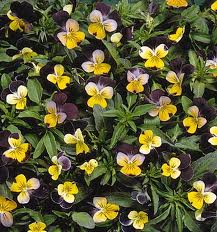
Wintergreen flavored Johnny-Jump-Ups

I don’t know if I should tell you about Johnny-Jump-Ups or not. Botanically Viola tricolor, they are among the first flowers I can remember my mother picking from the wild and eating on the spot. She did it because her mother did it (and she also never missed harvesting a cowslip either.) Johnny-Jump-Ups like moisture and can tolerate shade so… here goes… Our house was in the country had a septic system with drain field. That drain field was moist and shaded and Johnny-Jump-Ups grew there in profusion. And that is where my mother picked them, one after another, eating them on the spot. She’s now 86. Maybe they primed her immune system. Johnny-Jump-Ups have a mild wintergreen flavor and a variety of uses.  They’re added to salads, desserts, soups, served with cheese and used to decorate confections. Incidentally they are the ancestor of the common Pansy. To see an on site article about violets click here.
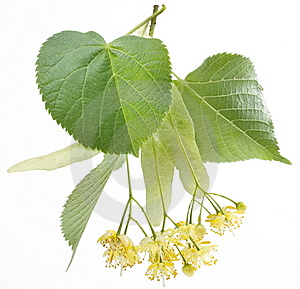
Note the tongue depressors

My first association of the Basswood tree was not with flowers but its soft young stems. My father used to make homemade pipes out of apple wood then use a basswood stem for the pipe stem. (Read about it in “Dad’s Applewood Pipes.”) If the cattail is the supermarket of the swamp the Basswood tree is the supermarket of the forest. However, its blossom are edible and make a well-known tea though you may know of it by its other name, Linden tree and Linden tea. The Linden tree is nearly impossible to misidentify in that it is the only one in North America that has what looks like a large tongue depressor under the blossom. The flowers are delicate and have a honey flavor. Mix them with basswood seeds and the combination tastes like chocolate. See full article on site and video.
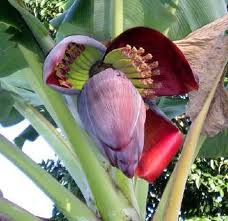
Banana blossoms are usually cooked

Few people in temperate North America ever think of eating a banana blossom, but a lot of folks in warm areas do, and it does not prevent your banana tree from producing fruit. The entire flower/fruit arrangement of the banana is odd with the blossom being a purplish torpedo. Look closely at the stalk end of the blossom and you can see what will eventually become a hand of bananas. The blossom can be eaten raw (bitter-ish) or cooked, less or no bitterness. Usually it is peeled to get the more tender parts then shredded or sliced thin and soaked to reduce the bitterness. The flavor is not of the banana but rather more of a vegetable. See full article on site and video.

Be sure to read Edible Flowers: Part Four
{ 0 comments }

Poison Ivy Ponderings

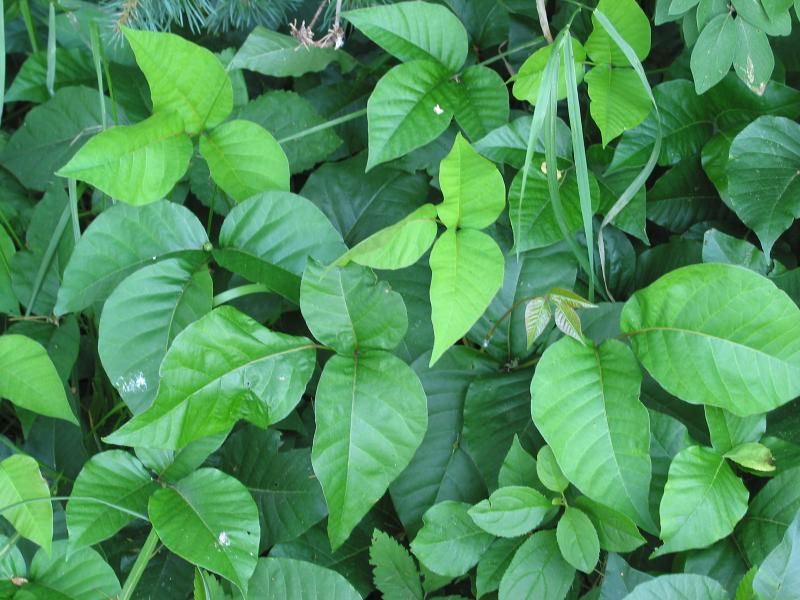
Three leaves, no spines, can be trouble

I did something this past week I have not done in some twenty years:  I got poison ivy.

Given what I do for a living, running around the wild all the time in a state smothered with poison ivy, I suppose two cases 20 years apart is a good record.

Berries range from green to white

It’s a small rash with a big itch, on the front of my right knee. Clearly I kneeled in it. That I didn’t notice is perhaps a professional embarrassment or a statement to my enthusiasm. But I really didn’t get off the beaten path so where I actually got exposed is a tad of a mystery. As for other irritants I’m assaulted by fire ants often, which is why I wear long white socks while teaching. They are my first line of defense against those amazingly painful creatures. And wasps are also in the occupation hazard mix. Fleet of feet helps with those, and avoiding three places where they love to nest: Folded palm fronds, and inside sculpted podocarpus or elaeagnus bushes, occasionally southern cedars as well.

When I knowingly get exposed to poison Ivy I quickly wash — within the minute — with Fels Naptha soap. That has seemed to have worked for the last two decades. Of course the key word is “knowingly….”   Fels Naptha is an inexpensive industrial strength laundry soap sold by the bar in most grocery stores, costing somewhere around a dollar per. My mother used it as well. Experts say immediate washing is good, even with just water. You want to remove the offending oil urushiol (you-RUE-she-all) before it penetrates the skin. The woodlore of using Jewelweed juice on skin exposed to poison ivy might stem from the plant’s saponins, a natural soap it contains. The important point to remember is don’t use a soap with oil in it as the oil will just spread the urushiol around making things worse. You want a non-oil soap that breaks surface tension and helps wash the urushiol away, as quickly as possible. I always have my “poison ivy” soap and water with me when in the field.

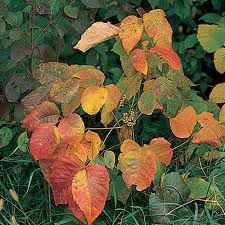
Poison Ivy In Fall

There’s an amazing amount of misinformation about poison ivy on the Internet, even on medical sites that should do better. While there may indeed be three people among the seven billion of us who are absolutely immune to poison ivy, the 6,999,997 rest of us are not. It is more accurate to say we differ in our resistance and rate of expose. Said another way, nearly everyone will get poison ivy if they are exposed to it long enough, including the 20 percent who are really resistant.  For some that is one exposure, for others dozens. The folks who say “I’m immune to poison ivy” are the prime candidates because they are not avoiding it. Over the years I have spoken to many a person who was extremely surprise when they got their first case of poison ivy because they were “immune.” The point is you will get poison ivy at some point if you keep getting exposed to it so the best course of action is to avoid it and keep that day as far away as possible, if ever. Dr. John Kingsbury, who was an expert on toxicology, says the plant cells have to be breeched to release the oil, that just rubbing the plant would not cause a problem. He added, however, that an insect chewing part of a leaf would release the oil so even a small amount of crushed cells can release enough oil to cause a reaction.  He was adamant that soap did no good and that the contamination was immediate. Other views have disagree in the 47 years since he wrote his book saying that non-oil soaps, even plan cold water helps if used immediately.

Incidentally, there is little difference between Poison Ivy and “Poison oak.” There’s no agreement whether they one or two species. Best guess is different varieties of the same species. From our point of view it doesn’t matter. It, or they, are bad.  In fact there are six related species that can give people rashes or other allergic reactions: Mangoes, cashews, pistachios, poison ivy, poison sumac, and Brazilian pepper.

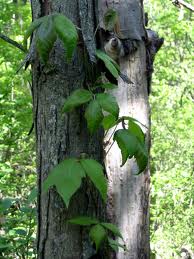
Poison ivy can climb and cover trees

All that said there are some interesting facts about poison ivy. Only humans, some other primates, and guinea pigs can get it. Your dog and cat can’t. But they can carry the oil, urushiol, on their fur and give it to you, and that oil is active for years. Poison ivy is also a very nutritious food for deer as well as rabbits. Some 60 birds eat the fruit and bees visit the blossoms.

What is fascinating is how poison ivy works. The oil “locks” onto your skin cells, essentially interrupting the chemical signal from the skin to the rest of the body. Thus the area expose is viewed as foreign, so the body attacks it. The result is sores, itching and bleeding. As bad as that is it also has a positive side. Native Americans would put poison ivy sap on warts so the body would get rid of the warts. That’s some interesting thinking. Unfortunately poison ivy can also be systemic. You can get it on your knee and have it crop up on your back. In fact, the only other time I got poison ivy the first blisters appeared in my right elbow. Then they showed up in my left elbow then behind both knees.

What irritates me the most is not my current itching but that I am so good at recognizing it that it managed to get me anyway. There is one other possibility. I’m quite sure I did not come in contact with the plant. However, it did rain and the oil can wash off damaged plants with the water carrying the oil. I could have knelt in that, a more feasible explanation, or at least one my ego likes it.

Euell Theophilus Gibbons 1911-75

There is also a controversial side to the plant: Eating poison ivy to confer immunity. No doctor would recommend it nor do I. However, Euell Gibbons, the previous generation’s back-to-nature guy, wrote that he ate some every spring and never had a case of poison ivy there after. I know an herbalist who does the same thing in the spring every year. And I personally have seen one person eat it, again in the spring. There are three theories:

One is they all eat the plant in the spring when perhaps urushiol production is low. Or, two, the mucus that covers our insides protects us and we just digest the oil. A third possibility is it does somehow confer a protection. Kingsbury was firm in his thinking that eating it was very dangerous and that the plant was dangerous all year long.  I think I will leave the experimenting to others. I’m not compelled to try it, not sure why… ah pardon me a moment while I scratch my knee…

For me avoiding poison ivy has worked fairly well thus far so no sampling in spring needed though I am pondering switching to long pants, maybe a tight body suit… nawh…

{ 56 comments }

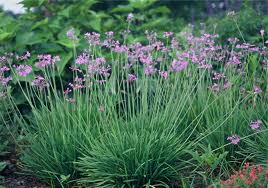
Society is a very common landscape plant

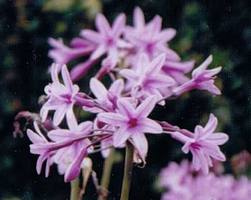
Because I am asked about it all the time I decided to do an article on it: Yes, you can eat Society Garlic… well… most of it, maybe all of it.

The flowers and leaves are edible raw, no debate there. The peppery leaves can be used like garlic in salads and other dishes. The flowers are on the peppery sweet side, onion-ish. The bulbs, however, are more medicinal though there are reports of them being eaten as well. A native of South Africa it is a favored food and medicine of the Zulus. The botanical name is Tulbaghia violacea (tool-BAG-ee-uh vee-oh-LAY-see-ay or vie-oh-LAY-see-ay) Tulbaghia honors Ryk Tulbagh, 1699-1771, governor of the Cape of Good Hope. Violacea means violet-like, referring to the blossom.

Blossoms resemble violets

One of the odd aspects of the most of the plants in the genus is that they are pollinated by moths at night when the plant manages to be lightly scented. T. violacea however is scented in the day and pollinated by bees and butterflies. (Moths are out only at night and butterflies only in the day.)

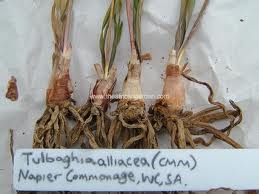
A second species, Tulbaghia alliacea, Isikhwa or Wild Garlic, is used in a similar fashion except its bulbs are cooked with meat or roasted and eaten. There are at least two cultivars, “John Rider” and “Silver Lace.” Their leaves and flowers also edible. The Silver Lace cultivar has a white stripe on each side of the leaf. Also edible is Tulbaghia ciolacea.

It’s called Society Garlic because Dutch settlers to South Africa thought it was a more polite spice to use for flavoring dishes than true garlic particularly for social events. Oh… and alliacea… (al-lee-AY-see-uh) means like onions.

Green Deane’s “Itemized” Plant Profile

Tulbaghia alliacea bulbs are eaten

IDENTIFICATION: Society Garlic is a fast-growing, bulbous plant about two feet tall. Leaves are long, narrow, strap-like, slightly fleshy and smell strongly of garlic when bruised. They grow from fat, tuberous roots which spread to form clumps of plants. The pinkish to mauve, tubular flowers, clustered into umbels of up to twenty flowers are on flower stalks above the leaves. They smell of garlic when picked. Triangular capsules replace the flowers and are grouped into a head. When ripe they split to release flattened, hard black seeds.

TIME OF YEAR: Your local summer or all year round in warm climates

ENVIRONMENT: Drought resistant, most soils, sunny or partial shade.

METHOD OF PREPARATION: Leaves and flowers raw, or cooked. Bulbs are reportedly edible but I have not tried them. Medicinally the crushed leaves have been used to treat sinus headaches, the fresh bulbs are boiled in water and the decoction taken orally to clear up colds and coughs. They have also been used for pulmonary tuberculosis and intestinal worms. The aroma also repels insects.

Herb Blurb

Posted here as published: Aspergillus flavus and Aspergillus parasiticus are important plant pathogens and causal agents of pre- and postharvest rots of corn, peanuts, and tree nuts. These fungal pathogens cause significant crop losses and produce aflatoxins, which contaminate many food products and contribute to liver cancer worldwide. Aqueous preparations of Tulbaghia violacea (wild garlic) were antifungal and at 10 mg/ml resulted in sustained growth inhibition of greater than 50% for both A. flavus and A. parasiticus. Light microscopy revealed that the plant extract inhibited conidial germination in a dose-dependent manner. When exposed to T. violacea extract concentrations of 10 mg/ml and above, A. parasiticus conidia began germinating earlier and germination was completed before that of A. flavus, indicating that A. parasiticus conidia were more resistant to the antifungal effects of T. violacea than were A. flavus conidia. At a subinhibitory extract dose of 15 mg/ml, hyphae of both fungal species exhibited increased granulation and vesicle formation, possibly due to increased reactivity between hyphal cellular components and T. violacea extract. These hyphal changes were not seen when hyphae were formed in the absence of the extract. Transmission electron microscopy revealed thickening of conidial cell walls in both fungal species when grown in the presence of the plant extract. Cell walls of A. flavus also became considerably thicker than those of A. parasiticus, indicating differential response to the extract. Aqueous preparations of T. violacea can be used as antifungal treatments for the control of A. flavus and A. parasiticus. Because the extract exhibited a more pronounced effect on A. flavus than on A. parasiticus, higher doses may be needed for control of A. parasiticus infections. J Food Prot
. 2011 Jun;74(6):1007-11. doi: 10.4315/0362-028X.JFP-10-434.

{ 53 comments }

Edible Flowers can be more than just lightweight additions

Tulips, Yucca, Begonias, Blue Porterweed, Queen Ann’s Lace, Dill, Gladiolas, Wapato, Impatiens, Citrus

Tulips’ flavor vary with color

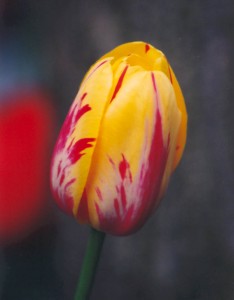
Tulips are one of those wonderful flowers you hear that are toxic. The answer is yes and no. The petals are quite edible raw or cooked though they loose their color on cooking. They can have many flavors: Beans, peas, cucumbers and none. Pink, peach and white blossoms are the sweetest, red and yellow the most flavorful. While you can use them to garnish salads their more common use is to hold appetizers or dip. If you use the entire blossom cut off the pistil and stamens from the center of the blossom. The bottom ends of the petals can also be bitter so cut them off as well when used individually. So what is toxic? Not the flower. It’s the yellow inner core of the tulip bulb. It has to be cut out before the rest of the bulb can be cooked and eaten. Also know some people are quite allergic to tulips. Just touching them will cause n allergic reaction. See full article on site. In flower langauge the red tuliup is a declaration of love, a yellow tulip hopeless love, a variagated tulip beautiful eyes.

Crunchy and sweet but try one first

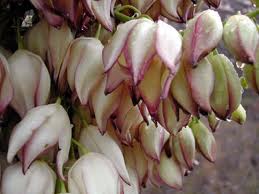
If tulips have a bit of a reputation then Yucca blossoms should as well. I have read in many a foraging book that yucca blossoms are edible raw. The problem is some are and some are not. The ones that grow in my area, Yucca filamentosa,  are not, which is unfortunate. They have a wonderful crunchy texture, and a sweet taste. You really want to eat them. But the Y. filamentosa also has saponins, call it plant soap. After eating one you soon get a bitter astringency in the back of your mouth and throat, like you got when as a kid you uttered a dirty word and mom had you taste a bar of soap. It brings back those days. So yes, yucca blossoms are edible raw, but try yours first, just a little. Then wait half a minute to a minute. If all is well, enjoy. My local blossom while not pleasant raw does cook up nicely. I boil them for a few minutes and then use them in several dishes. See full article on site and video.

Begonia flavor also varies with color

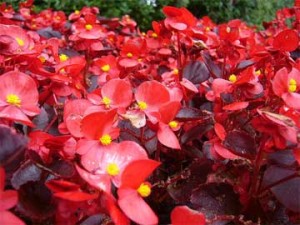
My video and separate article on Begonias got me mentioned in the national New Zealand magazine about them. It’s a small electronic world. Begonia blossoms are edible raw or cooked, as are the leaves of most of the begonias, particularly the wax begonias (websites that say wax begonias are not edible are repeating a significant mistake from an earlier book.) The flavor, like the tulips, varies with the color. It can range from swampy to sweet. The biggest problem you are going to run into with begonias is since they are usually cultivated they are also sprayed with pesticides if not other materials. You either have to raise them specifically to eat or be a lazy gardener. Either will do. Fortunately for me, and not for the state of Florida, begonias have become naturalized so I can find them in the wild. Indeed, it was some 20 years ago when I was canoeing on Rock Spring Run — read in a spring-fed swamp — when I saw a begonia and wondered what it was doing in the modern urban equivalent of the middle of nowhere. The leaves reduced to a paste and mixed with sour cream, a little sugar, and then baked make a delicious tartlet. And of course, the blossoms are an attractive and tasty addition to salads, as are the leaves. You can also fry the leaves into crisps, add a little salt… tasty… See full article on site and video. In the language of flowers Begonias are “dark thoughts.”

Blue Porterweed tastes like raw mushrooms

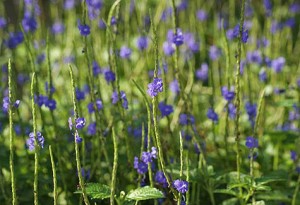
I do believe I was the first to publish anywhere in modern times, Internet or otherwise, that Blue Porterweed blossoms are edible. Even the venerated Cornucopia II doesn’t mention it. No doubt their edibility was known long ago because the flower has been used for at least a few hundred years to make tea, beer and as a flavoring. I am sure somewhere along the way someone tried the flowers. Locally we have two versions, a native which grows low, and a tall cultivated one. The flowers on both are edible, and the odd part is they taste like raw mushrooms. As with many delicate flavors the nose is quite involved and it takes a few moments for the flavor to come through. Tasters find it amazing. The flavor does not survive cooking. Incidentally, the leaves are used to make a tea and beer and the stem is used for flavoring. See full article on site and video. I have also eaten the blossoms of red-flowered porterweed, to no bad effect.

Queen Ann’s Lace, carroty, strong

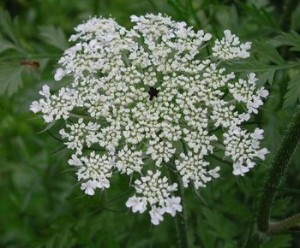
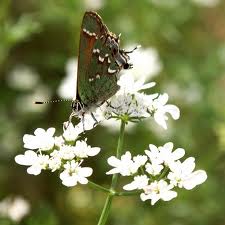
Among the wild flowers I played with as a kid was Queen Ann’s Lace, the wild carrot. Its bird’s nest blossom with a red hue in the middle was easy to identify. It’s also hairy and smells of carrots. Perhaps surprisingly, it’s not native to North America but an import from Europe.  Centuries ago the modern carrot was cultivated from the Queen Ann’s Lace, and by the way, the green tops of the cultivated carrot are edible as a flavoring or a green, if they are raised in a wholesome environment.) The blossoms of Queen Ann’s Lace is carrot flavored and strong. Use sparingly until you are used to it. Also make sure you are not picking poison hemlock blossoms. The wild carrot smells of carrot, the stem is hairy, and look for a red spot in the middle of the blossom. Poison hemlock has none of these. See full article on site.

Dill blossoms, stronger than the herb

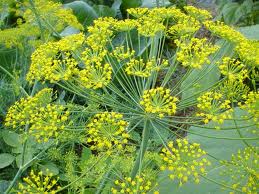
As is often said, travel is a broadening experience. When you go to a different land it’s exciting to see plants you don’t know specifically but you know what family they are in. The first time I went to Greece I saw wild dill growing everywhere, besides wild figs. Then years later on a business trip to extreme south southern California there was dill again. Wouldn’t you know I happen to live in a state where it’s not found in the wild. Oddly dill blossoms are stronger flavored than the leaves. Tangy, use the flowers as you would the herb and seeds.

Remove glad blossoms centers

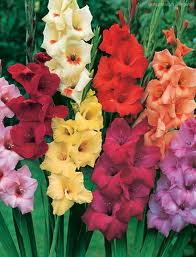
When you live where the ground freezes annually — called winter — you have to wrap some plants and take others inside. That was an annual assignment when I was growing up and on top of the list was digging up gladiola bulbs every fall. And every year my mother had a huge gladiola garden with boxes of bulbs overwintering in the basement (also not found in the South.) Had I known gladiola blossoms were edible it might have made the childhood chore more bearable. Glads (Gladiolus) blossoms are bland, lettuce like, and you must remove the anthers… take the middle of the blossom out.  Basically eat the petals. They can also be cooked. Like squash glad blossoms are often used to hold tasty tidbits. And in the language of flowers gladiolus means “strength of character.”

Wapato petals only

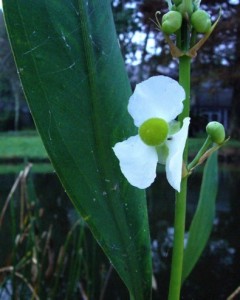
Among the wild flowers I have tasted the white petals of the Wapato are a first-rate delicacy. The plant itself is known for its egg-sized tubers that arrange themselves around the base like numbers on a clock. Its blossoms are very distinctive. The only problem getting to Wapato, or Wapati, is as they like to grow in water but you can often find them close to shore. Take only the petals of the blossom. They are sweet and fragile, tasting a bit like marshmallow. No cooking here. If you use them in a salad put them on top or they will get lost. See full article on site and video.

Only cultivated impatiens

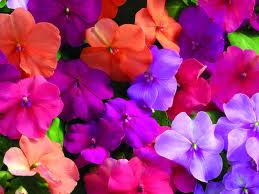
I hate to admit it but the only place I can find this next edible flower is in cemeteries because it doesn’t grow in the wild here, Impatiens wallerana. The cultivated Impatiens are from Africa and their blossom is edible, sweet. There are few reports on edibility on our native North American impatiens, called Jewelweed. Indeed, Jewelweed is edible after two boilings but there are no references to any parts edible raw. Just the opposite, all kinds of warning not to eat our native Jewelweed raw. So this is one case of where the cultivated blossom is on the raw food menu but the wild one is not. As the species is known as a wild soap, eating it unprepared is ill-advised.

Citrus, use sparingly

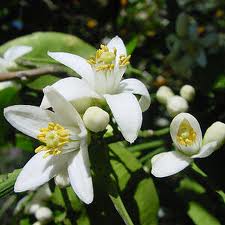
For the home crowd one has to mention Citrus blossoms. Orange blossoms, lemons, grapefruit, calamondins, kumquat… The whole citrus club. They are, no surprise, citrusy and in fact the flavors are used often in Mediterranean cooking. When I first moved to Florida back in the Dark Ages I can still remember the first time I detected the wonderful aroma of a citrus grove in blossom. I thought it was Mayflowers, a blossom from my past, and what I will start Edible Flowers: Part Three with.


{ 12 comments }

Not only are flowers tasty and pretty but many have antioxidants via their color

 Nasturtium, Calendula, Spanish Needles, Arugula, Squash, Cilanto, Bee Balm, Carnation, Dandelion, Lilac

Which blossom will be your favorite edible flower?

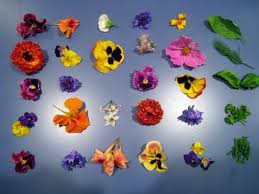
The question is not rhetorical. Which flowers come to grace your dinner table for food is a result of preference, taste, and opportunity. There are dozens of edible flowers, wild and cultivated. Which ones are right for you? In this 18-part series on Edible Flowers you will find  over 170 to choose from. This series includes cultivated and wild flowers for food and tea. If you are interested only in edible wilds flowers or only edible cultivated flowers see those articles on site. They are a compilation of this series in just two articles.

There are many flowers and flavors to choose from

If you are a forager, you might favor wild flowers as they come into season. If you’ve got a green thumb you can grow them in a garden. City dwellers may choose to raise some in balcony pots or use commercial varieties.

While preference, taste and opportunity are three general categories to keep in mind there’s other aspect: Message. Message? Yes, there is more to a blossom than edibility. A century ago, and in some places now, edible flowers also carry subtle suggestions, not only on the dinner plate but in arrangements, too. In the Victorian Era, flowers were specifically used to send messages under the moral radar.

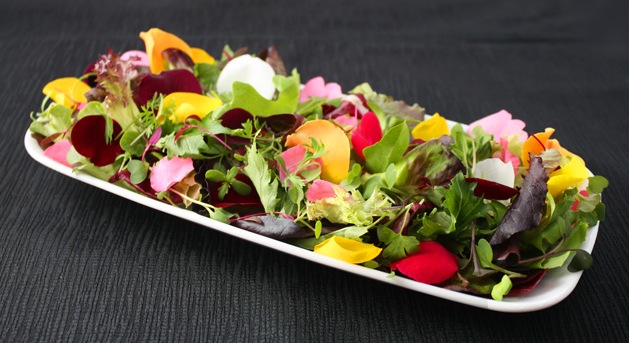
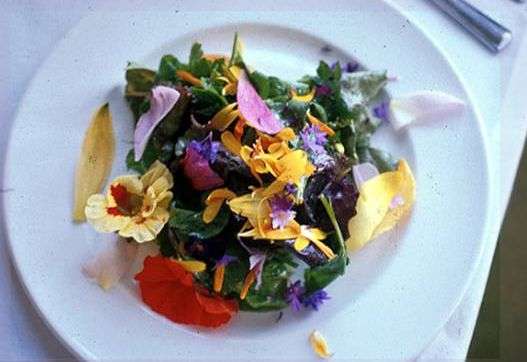
Edible flowers have been on the menu for as long as man has been eating. In recent times they go in and out of vogue, on the restaurant plate for a few years then off for a few, at least as far as chefs are concerned. To those of us who like edible flowers the blossoms never go out of season.

Salads are a common use but entrees, too

As a general rule edible flowers are usually a delicate flavor. There are notable exceptions such as the peppery-piquant of a nasturtium blossom or almost any plant in the greater mustard family  Also usually one eats just the petal parts of the blossom. Dandelion rays are sweet but the green base is bitter. That said there can be exceptions. The tart base of the Roselle blossom is used to make a lemonade-like drink and wild flower Spiderwort blossom is tossed in the salad whole. Where relevant preparation requirements have been included.

There is a word of caution. If you are a person who has allergies, try only a small amount of a blossom the first time, a very small amount, such as a quarter inch square of the blossom. While blossoms might be delicate they can still pack a chemical punch. I know from personal experience. Introduce them gradually into the diet if you are not sure. Also, some flowers have known effects, such as yellow violas are laxative in quantities.

Nasturtiums

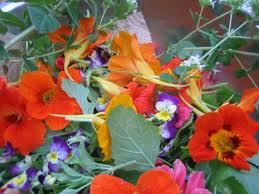
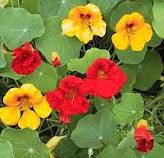
Since Nasturtiums were mentioned let’s start the series with them. A favorite nibble of my mother, the blossoms are peppery. The entire plant is edible, even the seeds can be pickled and used like capers. Nasturtium in Latin mean literally to “twist the nose” because of their pungency, and have been praised for their flavor for at least 2,000 years. Often Nasturtiums are used in kid projects because the seeds are large, they’re fast to germinate and grow, safe, and edible. Leaves and flowers are added to salads or as garnish. Leaves can be cooked but rarely are. See separate article on site.

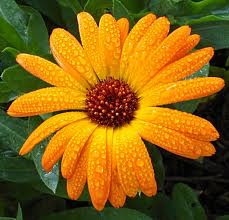
Calendula has been called the poor man’s saffron. There are 12 to 20 species in the family, depending on who is counting. They are native from Micronesia to the Mediterranean area to Iran. Often lumped in and confused with marigolds — which can be used for coloring, too — the name Calendula comes from the Latin kalendae, meaning the first day of the month, and where we get the English word “calender.” It is believe they are called that because in warm regions they are always in bloom and always on the first day of every month.  The Calendua’s flavor is similar to saffron, bitter to tangy.

Spanish needles, piny

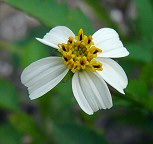
Spanish Needles aka Begger’s Ticks, botanically Bidens Alba, has a piny flavor, resinous. There are several daisy-like Bidens around the world, white or yellow, few petals or many. Flowering year-round in warmer climates, the plant was recommended some 50 years ago to become a commercial crop. Because it grows in so many places for free that never happened. While Spanish Needles blossoms are salad fare, they hold their flavor while cooking and can be added to a variety of dishes. I have a chicken recipe in my article on Pines in which Spanish Needles flowers work well. Also see separate article on site about Spanish Needles and my video. See full article on site and a video.


Arugula. resembles mustard blossoms.

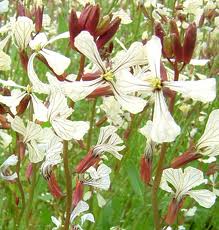
Among the more peppery blossoms of the garden is Arugula, also called rocket and roquette. It’s a popular aromatic salad green grown for its leaves but also its seeds. Somehow the blossom gets overlooked… well, not in my kitchen. Arugula is one of those garden vegetables that is also very easy to grow in a patio pot and lasts for many months with repeated cuttings. Though a forager I have grown arugula in my gardens for many years. When the plant finally wants to go to seed you can prolong it by harvesting the flowers. Then enjoy the seeds. The light yellow flowers are sprinkled on salads or put afloat in soups to add a bit of pepper. The can be cooked but do wilt and loose volume.

Squash blossoms are squashy

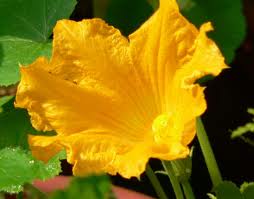
Squash blossoms actually cover a wide range of flowers including zucchini, pumpkins, calabashes, acorn, spaghetti squash and the like. All are squashes for our purposes and all have edible blossoms. Both male and female blossoms are edible but removing female blossoms can reduce squash production in your garden. You can tell the female squash blossom by looking just behind the blossom. There you will see a miniature squash. Stuffing squash blossoms with soft cheese is a time honored means of preparation. What people don’t know is that the leaves and sprouts of most garden variety squashes are edible cooked as are their seeds. Removed the seeds from a squash, wash off the debris, and roast in a slow (low) oven for a half hour or so. You can eat them shell and all or shell them.

Edible cilantro, non-edible Olive Streak

You either like Cilantro, or you don’t. If you do like cilantro then the flowers are cilantro lite. The plant has a dual identity. The green part much used in Vietnamese cooking is called cilantro. Its seeds however are called coriander. Cilantro sparks intense debates. To some people it tastes like soap, or so they think. The famous chef of French cooking, Julia Child, said she would take cilantro out of a dish and throw it on the floor. Others enjoy the flavor. The different perceptions apparently is one of association. The more one is exposed to cilantro the more it moves from soap to food. It grows on you it would seem. While its seeds, coriander, are quite aromatic they don’t seem to engender flavor disagreements like the leafy parts of the plant. Use in salads or soups.

Bee balm, closet mint with oregano

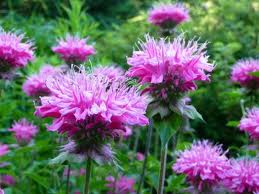
Bee Balm is another huge selection of flowers closely related to the mint family. Usually in the genus Monarda, they are intense, aromatic. The flavors can vary not only species to species but between cultivated specimens and their wild siblings. The leaves are often used to make tea, some with calming qualities. Often the entire plant is placed in the house to give a pleasant aroma as it dries. The blossoms tend to reflect the flavor of the parent plant but usually have hints of oregano to thyme to citrus flavors. Our local species is Monarda punctata, which has a separate article and video. Where I grew up it was Oswego Tea, or Monarda didyma. See separate article on site and video.

Carnation, think cloves

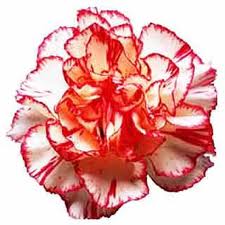
There are few flowers more common than Carnations. They have been cultivated since ancient times and were quite popular in Rome during the empire days. Its botanical name, Dianthus, means flower of the Gods. Originally just in shades of pink or peach now a rainbow of colors are available, each still keeping it clove-like scent. Like many blossoms carnations were used to convey sentiments in times when overt expression of love were frowned upon. Thus many a bouquet was carefully constructed to send just the right message with just the right color. As a commercial product they have gone in and out of favor to the extreme. What I liked to do when I was a kid was put white carnations in a vase with food coloring in the water. In time the carnation takes on the color of the food coloring. Use them for color and flavor. They are also one of the ingredients in the liqueur Chartreuse. In the language of flowers a red carnations means “alas for my poor heart.” A striped carnation is a refusal, a yellow carnation is disdain.

Dandelions, on the honey side of life

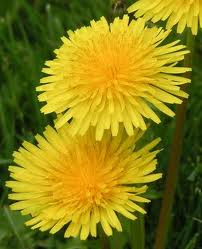
Perhaps no wild flower is better known as an edible, or played with, than the Dandelion. Who hasn’t sent the flower’s powder puff of seeds off into the wind with a strategic breath of air? It’s a rite of human passage. The first batch of wine I made as a kid, after two successful five-gallon crocks of beer with cooking malt and bread yeast, was dandelion wine. The yellow parts of the blossom are sweet, if not honey-flavored. It makes a fine homemade wine and the blossom added to salads (or pancakes) is a cheery compliment. However, trim off all green parts unless you happen to like bitter. And with all wild plants, be careful where you harvest to avoid pollution. I also have a separate article and video on the Dandelion. See full article on site and video. In the language of flowers dandelion is an oracle.

Lilacs have a lemon note

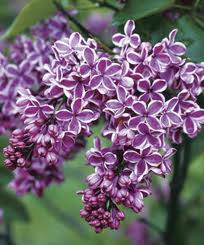
As a kid I never associated Lilacs with food. When the fragrant lilacs blossomed in late May you knew in a couple of weeks school was soon going to be out for the summer and glorious days were ahead. I don’t think I ever experienced more freedom then those summers. I was a latch key kid so summer vacation meant months of roaming through the countryside for days on end… until haying season started. In the greater Olive family the most common blossom color for lilac is … lilac. My 86-year-old mother in Maine still tends to her lilacs. And just in case you are interested there is a 10-day Lilac Festival in Rochester N.Y. every May. Not bad for a plant with European ancestry. At the festival they have over 500 different lilacs on some 1,200 bushes. You can even sample lilac wine. Where do I sign up? Lilac blossoms are pungent and on the lemony side. In the language of flowers there are three meanings. The field lilac means humility, the purple lilac is the first emotional love, and the white lilac youthful innosense,

See Edible Flower: Part Two

{ 6 comments }