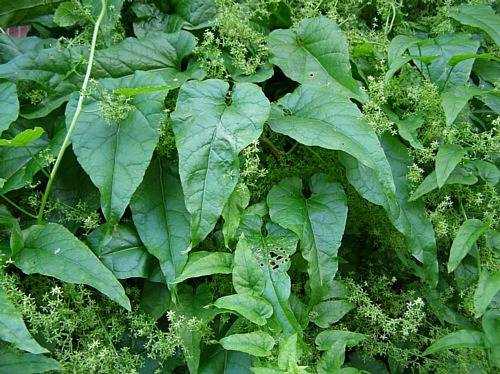
Leaves and flowers of the cold tolerant Spinach Vine

I like to think of myself as biclimatic, living 42% of my life (thus far) in a cold climate and 58% in a warm climate. There are virtually thousands of wild edibles and I’ll never be able to write about all of them. Most of the foraging books strike a temperate balance which is why I add a higher percentage of warm species to my pages. They just aren’t covered. This plant, however, is for all my relatives who are still in love with snow, ice, frozen pipes and frostbite.
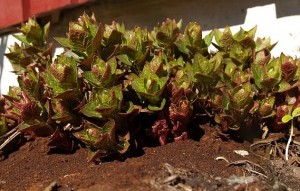
Shoots are ruddy

The Spinach Vine is a native of the Caucasus Mountains where it thrives in dappled forest sunlight. The growing season is short, the winters polar bear cold at higher elevations. It is there that this wild edible vine takes advantage of every no-frost day to put on a fine display of edible leaves. Closely related to Chenopodiums — Lamb’s Quarters, Fat Hen — it’s edible raw or cooked. That makes it a hot item in vegetable gardens and permaculture plans particularly in cooler climates.
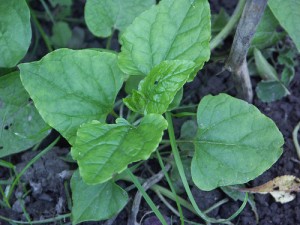
Young leaves are heart shaped, older leaves more arrow shaped

Not surprisingly this wild edible is a cultivated sensation in Scandinavia which is known for having a chilly night or two (the coldest I ever experienced was 53 below zero. We went ice skating just to say we did. The bonfire and hot coffee did not keep us warm. Twenty feet from the fire you would freeze to death. Personally, I would live on the Equator if I could.) In the northern growing season the Spinach Vine will manage nine to twelve feet of bushy growth. Interestingly, like our local milkweed vine (Morrenia odorata) the lower leaves are heart-shaped on long stems, older leaves more arrow shaped, flowers small and green. Seeds are black and shiny.

Botanically the plant is monotypic, which means it is the only plant in its genus (read it has the botanists confused.) As for the name, Hablitzia tamnoides… (hab-LITZ-ee-uh tam-NOY-these.) If you remember from my Botany Builder lessons in my weekly articles, “oides” OY-deez means resembles or looks like. In this case tamnoides means looks like the edible Tamus communis, or the Black Bryony (which oddly is in the yam family.) Hablitzia honors Carl Ludwig Hablizl, aka Karl Ivanovich Gablitz, a naturalist in the late 1700s and early 1800s who also happened to be a vice-governor in Crimea. That’s supposed to be handsome Carl on the upper left according to a Russian website but I doubt it. His dates are 1752 to 1821. He’d have to be 69 in the photo and photographing people didn’t happen until the late 1830s. Perhaps a son. Carl was born in Prussia but moved with his father at age six to Russia in 1758. From 1769 to 1773 he participated in a scientific expedition to southern Russia, exploring the lower Volga (as if no one had before him.) Carl became the caretaker of the treasury garden in Astrakhan in 1781 then took part in a Caspian expedition for Count Voinovich in 1783 looking for plants, animals and artritocratical birthplaces among lowly Greeks (a long story best left to baptismal intrigue.) Called an academic Carl wrote The Natural history of East Tartary, 1789, a book of some 216 pages available on line for about $12, used. Not sure how his name of Gablitz, same as a town in Austria — Vienna Woods in fact — got transliterated into Hablizl. Here’s a guess, though: When you’re Germanic and but working for a Russian count perhaps it was prudent to change the spelling of your name. Would Gablitzia tamnoides be much different than Hablitzia tamnoides?

 Green Deane’s “Itemized” Plant Profile: Spinach Vine

IDENTIFICATION: Perennial, small its first year, needs a trellis, vine to about 12 feet, many branches, green five-petaled flowers, shoots green and red, ruddy, wrinkled heart-shaped leaves when young, more arrow shaped when older. Seeds, kidney shaped, flattish, biconvex, edge rounded, smooth, glossy black.

TIME OF YEAR: Summer, start in a hotbox, it can take some frost in the fall. If you are going to grow it in a warm climate the seeds need to be kept in the frig for a while, chill hours improve germination.

ENVIRONMENT: In its native range it likes Spruce and Beechwood forests, gullies and ravines.

METHOD OF PREPARATION: Leaves and shoots, raw or cooked. Tastes similar to musky nettles.

And for the heck of it, the name in several languages:

BULGARIAN :  Кавказий шпинат  Kavkazii shpinat.

CHINESE :  高加索菠菜   Gao jia suo bo cai.

DANISH :  Spinatranke.

DUTCH :  Kaukasus spinazie.

ENGLISH : Spinach Vine, Caucasian spinach, Caucasus spinach, Climbing spinach, Hablitzia.

FINNISH :   Köynnöspinaatti.

FRENCH :   Épinard grimpant du caucase.

GERMAN :  Kaukasische Spinat.

GREEK :  Καύκασος σπανάκι  Kuvkasos spanaki.

ITALIAN :  Spinacio del Caucaso, Spinaci di Caucasi.

JAPANESE : コーカサスのホウレンソウ   Kookasasu no horensou,  コーカサスのほうれんそう  Kookasasu no horensou,  コーカサスの菠薐草   Kookasasu no horensou.

POLISH :  Szpinak kaukazki.

PORTUGUESE :  Espinafre de Cáucaso.

RUSSIAN :  Габлиция тамусовидная   Gablitsiia tamusobidnaia.

SPANISH :  Espinaca del Cáucasia, Espinaca del Cáucaso.

SWEDISH :   Rankspenat.

TURKISH :  Ispanak Kafkasya.
{ 14 comments }

Quack Grass, a source of grain and root flour

Plants of little use often have only one common name, or not even that. Plants that are valued or are a pest usually have too many names such Quack Grass.

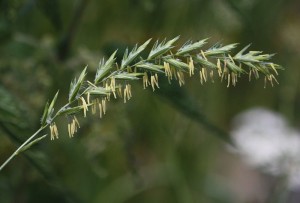
Quackgrass Seed Head

Quackgrass Seed Head

Most people today know Quack Grass,  Elymus repens, as a pest, a hard-to-get-rid of weed found in corn and soybean crops, persistent and resistant to a variety of herbicides. To the Internet population Quack Grass is an herbal medicinal employed as a diuretic. Forgotten between reduced agricultural cash flow and increased urinary flow is Quack Grass as food.

In Edible Wild Plants of Eastern North America, Merritt Fernald, the grand botanical man of his day, wrote: The ubiquitous Quack-Grass or Witch-Grass (with scores of other colloquial names) is usually known merely as a persistent and obnoxious weed, most difficult to eradicate and completely eating up the good of the land; but it was shown in the 18th century that it might be eaten if one cared to utilize it. Thus the British botanist, Withering, wrote: ‘the roots dried and ground to meal have been used to make bread in years of scarcity.'”

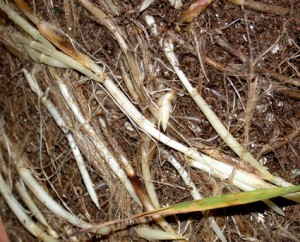
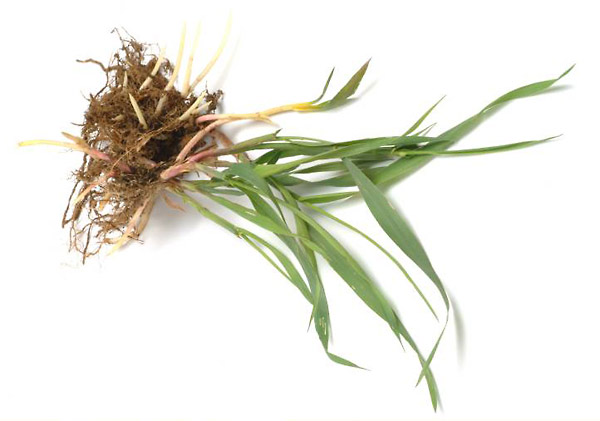
Quack Grass Roots

Flour from the roots, not exactly what one might expect to learn. Daniel Moerman in his Native American Food Plants mentions seven species used as grain by the natives including E. repens. Also listed were: Elymus canadensis var. candensis, Elymus elymoides, Elymus glaucus, Elymus glaucus ssp. glaucus,  Elymus multisetus, and Elymus sibiricus. Dr. Couplan in his Encyclopedia of Edible Plants of North America adds Elymus condensatus, Elymus triticoides, and Elymus canadensis (without the variation.)  In Cornucopia II E. canadensis is reported as an important food for the Paiute. It also reports E. triticoides were parched and ground into a fine meal called pinole. It was eaten as porridge or in cakes and drinks. The book also warns that hair on the grain must be singed off before it is used as food. Quack Grass  is not a large producer of grain, perhaps only 25 seeds per plant. The starchy root is more attractive from a foraging point of view.

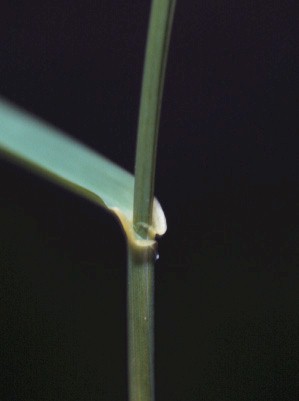
Notice how auricles wrap around the stem

Also called Couch Grass, Quitch, Twitch, Witchgrass and a couple of dozen other common names, it came to North America from Europe around 1818. Botanically, as one might expect, it has has several names: Agropyon repens, Elytrigia repens, Elytrigia vaillantiana, Triticul repens, Triticum vaillantianum, and most recently Elymus repens (EL-ih-mus REP-inns) which understandably translated means Low Growing Wild Millet. Elymus is Dead Latin’s version of an old Greek word for Millet (Elymos) which comes from Elgo which means to cover referring to the lemma and palea which tightly cover the seed. In botanical English it is often referred to as Wild Rye.  In Greek mythology Elymus is also the natural son of Anchises and brother of Eryx; one of the Trojans who fled from Troy to Sicily. With the help of Aeneas they built the cities of Aegesta and Elymé. The Trojans who settled in that part of Sicily called themselves Elymi, after Elymus. He was also a man from Lemnos killed by Gorge when the women there killed all the males on the island. I know a family from Lemnos. So the he’s and she’s must have patched things up since then.

Grains must be singed of hair

Quack Grass seed is some 12% oil and has 3 to 8% triticin, which is related to inulin which might make it suitable for diabetic use. On digestion triticin releases fructose; mucilage (10%); saponins; sugar alcohols (mannitol, inositol, 2% to 3%); essential oil with polyacetylenes or carvone (0.01% to 0.05%); small amounts of vanilloside (vanillin monoglucoside), vanillin, and phenolcarboxylic acids; silicic acid; and silicates.

Green Deane’s “Itemized” Plant Profile: Quack Grass

IDENTIFICATION: Elymus repens: A perennial grass from rhizomes reaching 3 1/2 feet in height.  Leaves, 1 1/2 to 12 inches long, very skinny, under 1/2 inch.  Blue green leaves may or may not have hairs on the upper surfaces, lower leaf hairless.  Short membranous ligule, narrow auricles that clasp the sheath, the quickest and easiest element of identification. Seed head a long, narrow spike with many individual spikelets arranged in two rows along the stem.  Spikes 2 to 8 inches long, seeds with awns. To separate it from other grasses look for the auricles, rhizomes, and a long, narrow spike for a seed head.

TIME OF YEAR: Can flower spring to fall.

ENVIRONMENT: Crop fields, turfgrass, lawns, nurseries, moist meadows, urban landscapes, disturbed areas.

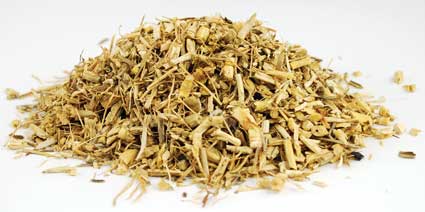
METHOD OF PREPARATION: Grain winnowed, singed, used for flour porridge. Roots dried and ground, used like flour.


{ 16 comments }

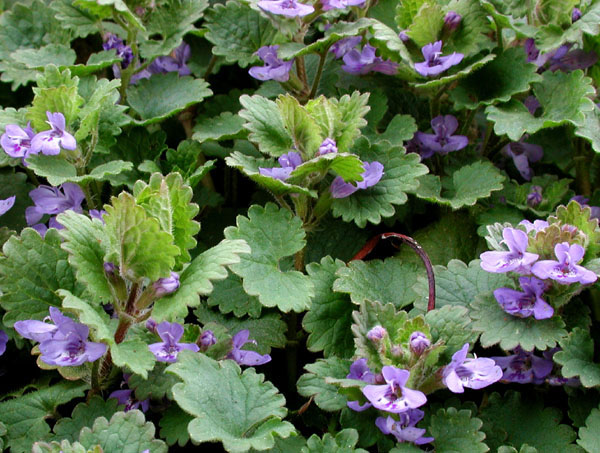
Ground Ivy has scalloped leaves like Henbit and Dead Nettle

Most of the time when someone mentions Ground Ivy the comment usually is something like “How do I get rid of the damned stuff?” Here at ETW we have have the solution.

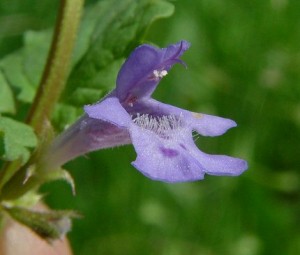
Ground Ivy Flower

Ground Ivy, Glechoma hederacea, is a creeping perennial that roots at the nodes and smells similar to mint when crushed or mowed.  It’s a prime weed of turfgrass and landscapes. If you like well-behaved English type gardens then Ground Ivy will drive you insane because it may be small but it’s the Botanical Bull in the China Shop. It doesn’t take over, it takes command. While there are no look alikes — if you look closely enough — there are four species which from some distance might be mistaken for Ground Ivy. It is often misidentified as a Common Mallow (Malva neglecta), but the square stem of Ground Ivy distinguishes it from the Common Mallow which has a round stem.  Henbit (Lamium amplexicaule), Purple Deadnettle (Lamium purpureum) and Persian Speedwell (Veronica persica) are somewhat similar in appearance to Ground Ivy, but none of them have creeping stems that root at the nodes. Of these four all but the Persian Speedwell are edible.

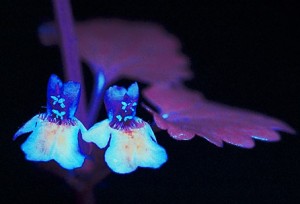
What Insects See in Ultraviolet Light, Photo by Bjørn Rørslett – NN/Nærfoto

Ground Ivy, once known as Nepeta glechoma and Nepeta hederacea in the Catnip genus, is a native of Europe and southern Asia. It was introduced into North America by 1672, probably earlier, for medicinal uses. Ground Ivy moved west and was naturalized in Indiana by 1856 and Colorado by 1906. How and exactly when it was distributed is not known. While it concentrates in the deciduous and riparian forests of the Northeast and around the Great Lakes it is now found throughout North American except for the desert southwest (New Mexico, Arizona, Nevada) and the three top tier northwest Canadian Providences (the Yukon, Northwest Territories, Nunavut.) It also surprisingly missing on the east end of the continent from the islands of Saint Pierre and Miquelon.

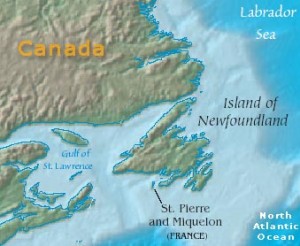
Saint Pierre and Miquelon

Don’t know where Saint Pierre and Miquelon are? This is your lucky geographic day: The islands are situated at the entrance of Fortune Bay off the southern coast of Newfoundland. They are not part of Canada but still part of France, a leftover toehold in the New World from colonial days. Residents are French citizens and vote in French election though the home county is more than 4,000 miles to the east. It was from these islands that a large amount of Canadian whisky was smuggled into the United States during prohibition. Makes you think they should have called it French Whisky, or at least French Canadian Whisky.

Though you may think Ground Ivy’s botanical name has some Scottish influence it’s totally Mediterranean…well, almost. Glechoma is latinized Greek, or in this case very bastardized Greek for pennyroyal. The Greek word is  Βλήχων, said VLEE-kon, yes, with a V. How that got mangled into gleh-KOH then gleh-KOH-ma is any linguistic guess. This also why the genus spelled Glechoma and Glecoma because there is no good agreement on how to translate the Greek X into Dead Latin or English. The X is close, though, to the CH as in a Scottish “loch” but not as hard.  Hederacea (head-er-ah-SEE-uh) is Dead Latin for “like ivy” read creeping. When all put together it kinds of means Pennyroyal Ivy. Common names include Alehoof, Catsfoot, Field Balm, Run-Away-Robin, Lizzie-Run-Up-The-Hedge, Herbe St. Jean, occasionally Creeping Charlie — which is the name of many plants — and Gill-Over-The-Ground, the latter perhaps being the most common after Ground Ivy. “Alehoof” means “ale herb” a time when Ground Ivy was used like hops.

While humans can consume it within reason ground Ivy is toxic to horses in large amounts.

 Green Deane’s “Itemized” Plant Profile: Ground Ivy

IDENTIFICATION: Glechoma hederacea: Flowers usually in clusters of three in the axils, the area between the stem and petiole.  Flowers blue-violet, 3/8 to 5/16 inch long. Leaves are opposite, nearly round or occasionally kidney-shaped, on long petioles. Edges scalloped, large rounded teeth. Leaf veins rise from the same point. Stems square, trailing, rooting at the nodes, mostly hairless but with occasional short, stiff backward-pointing hairs. Seed, tiny nutlets, egg-shaped and brown in color. Each flower produces four seeds.

TIME OF YEAR: In cooler climes blooms later spring to early summer. Here in Florida it is a spring and fall plant, avoiding the hot summer. In Canada it can be found September to November.

ENVIRONMENT: Thrives in moist not saturated shaded areas, but will also tolerate sun. Common plant in grasslands, wooded areas disturbed ground, around damns. Because of rooting at the nodes it survives mowing, is found in lawns and around buildings. Has no particular soil requirements but is difficult to permanently remove from any soil other than very loose.

METHOD OF PREPARATION: While it is in the greater mint family Ground Ivy is not a gentle mint as many are. Use very young Ground Ivy for greens and soup et cetera, older leaves for tea and medicinal applications. Fresh or dried leaves are used for herbal tea, bitter, young shoots and leaves eaten like spinach, cooked in soups which they flavor, try first. The Saxons added it to their beer for flavor like hops, to clarify the beer, and add shelf life. It is very high in iron.

Herb Blurb

A 1986 study found that Ground Ivy’s ursolic and oleanolic acids inhibited the Epstein-Barr virus and protected mouse skin from induced tumor growth. A 1991 study showed the species fatty acid stimulated enzyme activity in blood platelets. Traditionally it was used to treat sciatica, ringing in the ears, constipation caused by lead poisoning, kidney disorders, indigestion, coughs, and tuberculosis. Animal research has not supported its use for cough. Leaves, dried or fresh was stuffed up the nose to relieve headaches.

{ 48 comments }

Edible Flowers Make Every Dish Festive

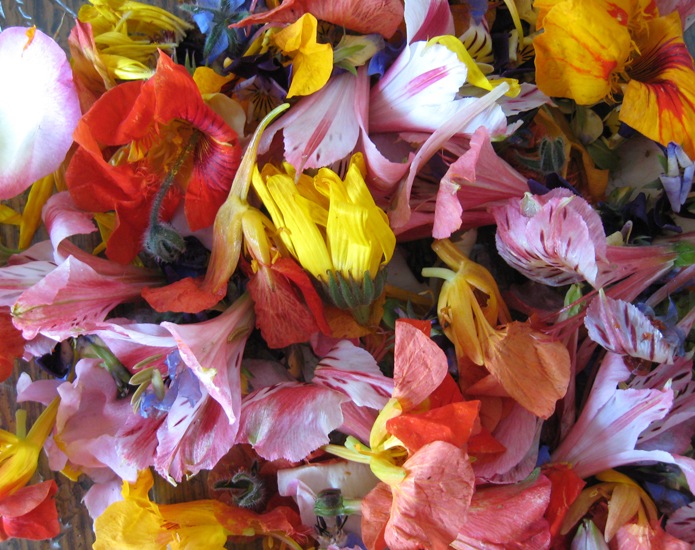
Burnet, Magnolia, Fennel, Garden Sorrel, Tansy, Pink Wood Sorrel, Sunflower, Pineapple Guava, Prickly Pear, Pansies

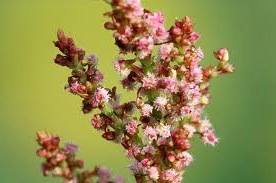
Burnet Blossom

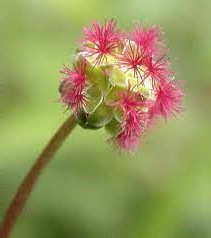
Burnet  (Sanguisorba minor) is very easy to grow whether in a flower pot or a garden. A native of Europe it came to early settlements North America and has escaped naturalize. So is it a wild edible or a cultivated edible? You can buy the seeds or good look for it. I take it from my garden, dice it, and sprinkle it on salads especially when I don’t have an cucumbers because Burnet tastes like cukes. Burnet blossom also have a hint of cucumber flavor as well. It was the favorite herb of Francis Bacon, and Thomas Jefferson mentioned it. A tea made from the leaves has medicinal uses. It’s naturalized in North America except the south and the middle third of the U.S.

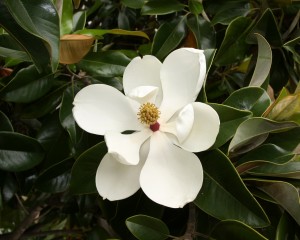
Magnolia grandiflora

Magnolias are one of the iconic trees of not only the South but exported to many non-hard freeze areas of the world. And people have admired the huge magnolia blossoms for a long time. Few folks know the blossoms of the Magnolia grandiflora are edible, however their flavor is intense and they taste similar to how they smell. They are not eaten raw per se. They are pickled. Oddly the practice started in England and you only use the petals, not the entire blossom. What works best is to pickle the petals in a sweet/sour pickle recipe. Then take out one petal, dice it, and use it sparingly as a flavoring in salads. The flavor is strong so go easy. Also, M. grandiflora‘s leaf can be used just as Magnolia virginiana‘s can as a bay leaf, that is to flavor soups and the like. However, don’t use the entire leaf because it is way too big. Cut it into smaller pieces when used like a bay leaf.

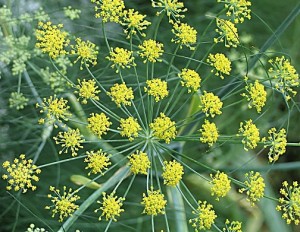
Fennel Blossoms

Another plant I saw growing wild in Greece but is mostly cultivated in the United States is fennel. In fact, at one mountain pass not far from Sparta the only weed growing in the crack of the curb along the road was fennel, and most of it close to a yard tall. I’ve always included fennel in my garden because it’s so versatile. Fennel’s blossom is an explosion of yellow and the flavor is of mild fennel. It’s the hint of anise appreciated in cold soups and many desserts. Incidentally, fennel is the only species in its genus, Foeniculum vulgare.

The many blossoms of garden sorrel

You can have a lot of motivation to plant garden sorrel. It’s a Rumex and many of the wild sorrels are too bitter to eat, as are their blossoms and seeds. While there are exceptions — I know of only one locally that is pleasant — you can have a steady supply of sorrel leaves and blossoms if you include this old world flavor in your kitchen garden. Rumex acetosa is used in nearly every ethnic cuisine in Europe, from being mixed into mash potatoes to flavoring reindeer milk. The blossoms are tart like the rest of the plant, lemony. Use as you would a lemon.

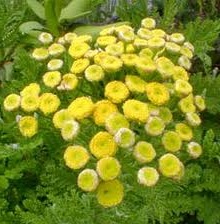
Rayless Tansy Blossoms

Another escapee from Eurasia now found over most of North America and the rest of the world is the Common Tansy. First mentioned for medicinal uses by the Ancient Greeks, the “bitter buttons” by the 8th century were in Charlemagne’s herb gardens and used by Benedictine monks in Switzerland. In 16th century England it was a “necessary of the garden.” Tansy, related to the thistle, even been used as an insect repellent. In fact, meat (and corpses) were wrapped in it for preservation and keep insects at bay. It is not a good repellent against mosquitoes but does a good job with the Colorado Potato Beetle.  Like chamomile it contains thujone so it should be used very sparingly. But then again, that’s what spices are for. The blossoms’ flavor is bitter, camphor-like.

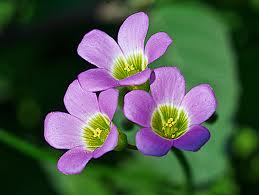
Pink Wood Sorrel

Wood sorrel was probably the first wild food that I ate while my parents weren’t looking. A childhood chum of mine, Peter Jewet, and I used to spend summers wandering around the woods and it was he who showed me wood sorrel, though he called it “sour grass.” We didn’t notice that it didn’t look like grass at all. Locally there is one native wood sorrel with a small yellow blossom — edible — and several sorrels from the Caribbean Islands and beyond. They all have large pink blossoms are make nice, tart additions to salads. They are like rhubarb lite. See my full article and video.

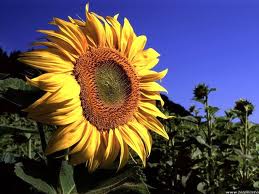
Sunflower

Nearly everyone knows you can eat sunflower seeds. There are actually two general kinds of seeds. There are black seeds with a white stripe. Those are the ones you usually buy in the store. Then there are Sunflower seeds that are smaller and totally black. Those are used for oil (and those that don’t make the oil grade end up in bird seed.) But there’s more to eat on a sunflower that seeds, no matter which kind. The unopened buds are edible cooked. They taste like artichokes, to whom they are closely related. And once the huge blossom is open the petals can be eaten, though they are bittersweet. They’re often mixed with pasta. The full article on site is here.

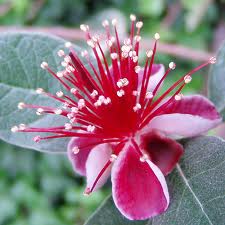
Pineapple Guava Blossom

Pineapple Guava’s are becoming a popular ornamental with an unusual flower and fruit.  In fact, there is one where I teach regularly. The blossoms are striking and reminds one of several cactus blossoms, in its own way. The fruit, equally unusual, ripens in September or October here. It stays green but does get soft enough to eat. There is a bit of pineapple in the fruit’s flavor if one uses the imagination. I have a Strawberry Guava in my yard and its even more difficult to taste “strawberry” in its fruit. The flower of the Pineapple Guava, Feijoa sellowians, is sweet. Like the fruit it says tropical reminding one of papaya.

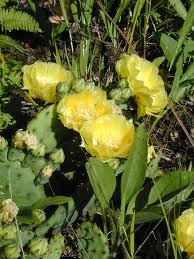
Tap to dislodge bees

I have read there are no toxic Opuntias. With some 300 of them I don’t personally know. I do eat cactus pads on a regular basis. I fry and grill them. But, as with most cactus, one has to contend with glochids and spines. The spines one can see. It’s the tiny hair-like glochids that can make one semi-miserable, tolerable in a finger, maddening in your tongue. Duct tape removes them moderately well. Wear gloves harvesting. The best approach is to use a long shap fillet knife as the flowers are surprisingly thick. Also tap them first to dislodge bees. Among all the Opuntia the Prickly Pear Cactus flower is the most often eaten, not raw but cooked, usually boiled. Their flavor leans towards tart. The blossoms also make a good wine.

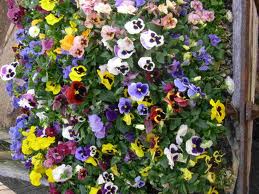
Happy Pansie Faces

The problem with Pansies is the same problem with Begonias: Getting them from a wholesome source. Pansies are actually violets and descended from the much-loved Viola tricolor aka Johnny-Jump-Ups. There is always the question if one should lump all violets in together or do some sorting. I chose to sort a little. Pansies are extremely common bedding plants but they are commercially raised so that can mean some chemicals you don’t want to consume. it is best to raise your own so you know exactly what you’re eating. Like most short violets pansies tend to have a nice scent and are sweet to the taste. There are only two cautions. The root is definitely not edible. The American natives used them for insecticide. And, yellow violets tend to be laxative in less than moderate quantities.

See Edible Flowers: Part Seven

{ 12 comments }

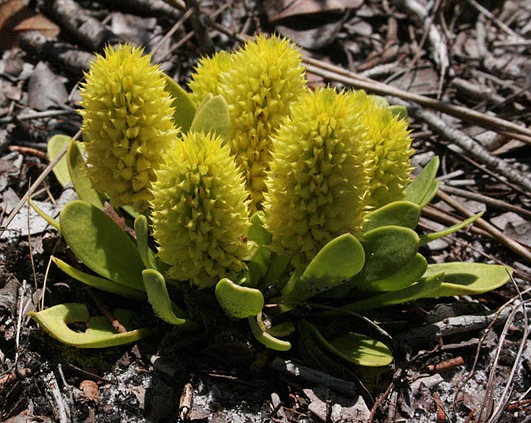
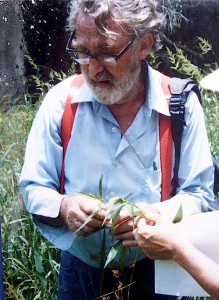
Candyroot, Polygala nana, sometimes Polygala lutea var. nana, Photo by Green Deane

I will be the first to admit my experience with Candyroot is very limited. In a flower book I carried with me on field trips some 33 years ago with Florida forager emeritus Dick Deuerling I have written: Root chewed, can also make a tea.

That is scant. I did not note it is edible, just chewable. I can remember where we found it, a single plant growing in the middle of a woods road. Getting an elaboration from Dick isn’t possible because he passed on some thirteen years ago at age 92.   It’s low profile might explain why little is published about the plant regarding edibility… well, it’s not really “edible.” Chewable and drinkable are more accurate. Dr. Daniel Austin who managed to write more than two pages about the genus in his book Florida Ethnobotany, writes: “Milkworts are everywhere in the pine flatwoods in late April. Sometimes thousands of plans belonging to nine species will be in view on ridges and swales.” 

Dick Deuerling, 1990, Photo by Green Deane

Generally said there are two groups of Polygalas in North America, those that have roots that smell like wintergreen or licorice, and those that don’t (nose opinions vary.)  Florida’s Seminoles had specific plant names but also used them generically making it confusing as there are 23 different species of Polygalas in Florida. The Creeks used Polygala lutea for medicinal uses but also had just one word for all the Polygala species, hi:lamásî, meaning roughly medicine, use, tea. The Choctaw called P. lutea “kwonokashaipsa” which means “little people eat it.” Incidentally, Polygal lutea means “much milk yellow” and it is called the Yellow Milkwort though it can also reach orange in color.

The Polygalas certainly have been medicinal — including emetics — and have a variety of names around the region including: Bachelor Buttons, Drum Heads, Gay Wings, Bird-on-Wings, Baby Toes, Baby’s Feet, Baby Slippers, Satin Flower, Indian Pink, Maywing, Procession Flower and Rogation Flower, the latter two for making garlands to wear in religious ceremonies.

In northern climes of North America Polygala seneca, aka Snakeroot, was a common herbal medication and is the only member of the genus in the new world to be written about to some extent. It contains, among many chemicals the wintergreen smelling methyl salicylate. Snakeroot has been used to treat not only snakebite — questionably — but colds, croup, pleurisy, rheumatism, heart issues, coughs, convulsions and externally for swellings. It can be an emetic, an expectorant and a diuretic. Florida’s Polygala boykinii also has methyl salicylate. NOTE: If you are allergic to aspirin you might be allergic to methyl salicylate.

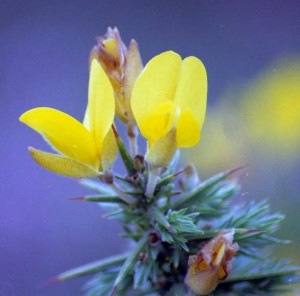
Gorse seeds are spread by ants

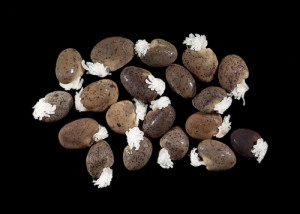
Like Gorse, the seeds of the Polygalas are spread by ants, which is called, myrmecochory (myrme means ant, and choreia dance or moving in a circle.) No ants, no Polygalas. As one might imagine that means the plants don’t move too far too fast. The seeds have elaisomes, which are fleshy structures attached to seeds that are rich in oil and proteins. Indeed, “elaisome” comes from two Greek words, “elaion” meaning oil and “soma” for body. The ants take the seeds into the nest, eat the elaisomes, then dump the seeds outside the nest. The seed then finds itself in an open space sitting in rich decaying material, not a bad start in life when you’re a plant.

White Elaisomes on Silky Bushpea Seeds

Elaisomes is said ee-LAY-eh-psalms, which isn’t good Greek but it is far better than Dead Latin’s ee-LIE-eh-psalms. The native Greek ear would prefer a third way,  eh-LAH-ee-shoms as oil is LAH-dee and body is SHO-ma. Of course, Candyroot is much easier.

Botanically this Candyroot (several are called Candyroot or candyweed) is Polygala nana (poh-LIG-uh-la, NAh-nah.) Polygala means much milk. The species in the genus, some 550 of them, were thought to increase lactation. Nana means small.

To help you sort out some species: Polygala cruciata, Drumheads, flowers pink-violet in tight cylindrical raceme. Polygala cymosa, Tall Pinebarren Milkwort, plants two feet tall. Flowers yellow in cymes. Polygala incarnata, Procession Flower, violet, in narrow cylindrical heads much longer then wide, individual flowers angled upward. Polygala lutea,  Orange Milkwort, four inches tall, a tight raceme, orange. Polygala nana. Candyroot, plants four inches tall, flowers in a tight raceme, yellow. Polygala rugellii, Yellow Milkwort, flowers in dense yellow raceme, looks like P. nana but is much taller than four inches. Polygala violacea (P. grandiflora) Showy Milkwort, flowers purple, with two large ears. P. nana does not grow south of Broward County but P. smallii does, however it is endangered. P. violacea will make you vomit and P. rugelii is a laxative among other things.

Green Deane’s “Itemized” Plant Profile: Candyweed

IDENTIFICATION: Polygala nana: A small rosette of spatula-shaped nearly succulent basal leaves about 1-2 inches tall.  Rabbit’s-foot heads of flowers within the rosette a few inches taller that the leaves. Flower petals are lemon yellow united to form a tube in compact racemes. Leave mostly sessile, succulent, spathulate.

TIME OF YEAR: An annual, it blossoms in spring but can extend into summer

ENVIRONMENT: Moist soil, usually open pinelands in low pockets. This particular species if found in the Old South from the Atlantic seaboard to Texas.

METHOD OF PREPARATION:  Roots chewed for flavor, not consumed. Or root soaked in hot water for a tea. As the genus can be emetic and medicinal, caution is recommended. Again, if you are allergic to aspirin you might be allergic to methyl salicylate, which is chemically very similar.


{ 9 comments }