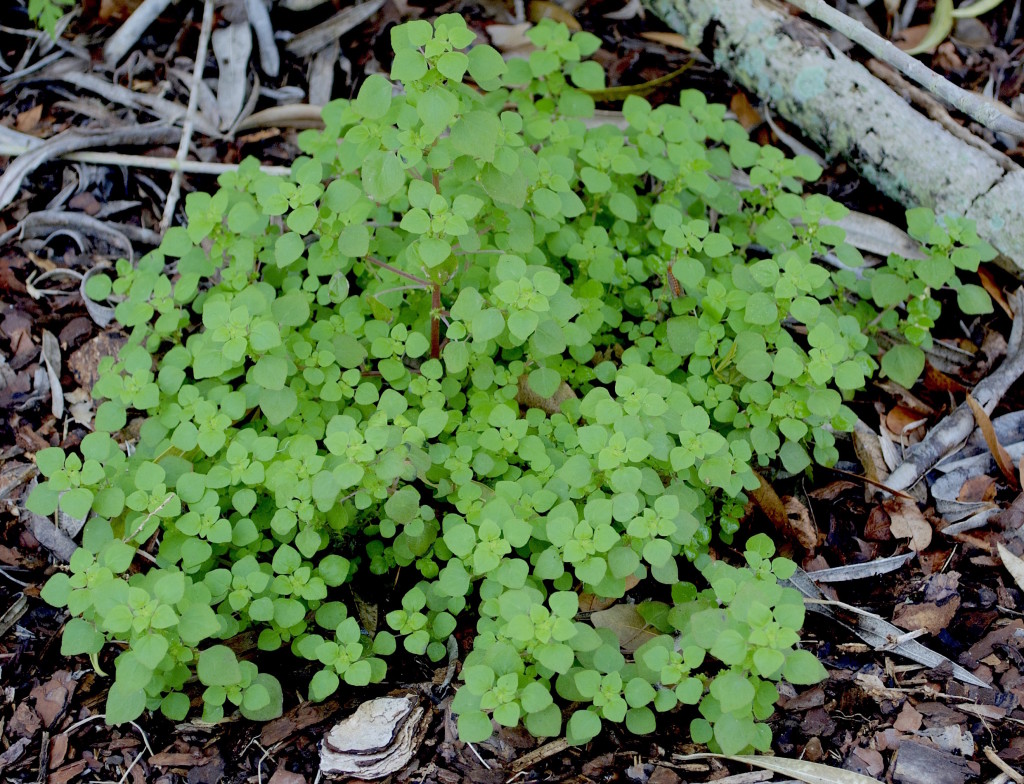
Pellitory, food and medicine. Photo by Green Deane

Pellitory, food and medicine. Photo by Green Deane

Pellitory: Parietaria is a Whiz

Finding greens locally in the cooler months isn’t much of a challenge unless you’re looking for Pellitory . It likes to hide and move.

Pellitory, or Parietaria, is in the greater nettle family and likes it cool and dry, if not shady. It even grow on rocks up to 12,000 feet. Uncooked, pellitory has a hint of cucumber aroma, hence sometimes it’s called the Cucumber Weed. Cooked, it is bland, which suits some palates just fine because you can flavor it as you like. I have friends who just stuff it raw into tacos with other fixings.
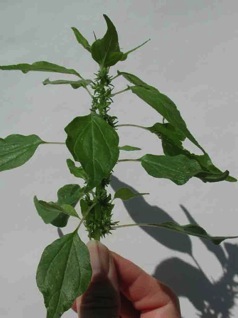
Pellitory, note flowers on stem

Parietaria (pair-ee-eh-TAR-ee-uh) also known as Pellitory Over-the-Wall. It has a reputed split personality you should be aware of. Its purported double life may also explain why so many foraging books skip it. Many years ago I was told by foraging expert Richard “Dick” Deuerling (co-author of Florida’s Incredible Wild Edibles) that half the people who ate pellitory got the itches — like a  niacin flush but longer lasting.  I don’t get an all-over itchy feeling when I eat Parieitaria so I don’t think about it, but, if a person has allergies they should approach Parietaria with caution. Frankly in the decades since hence I have met only one person who get the itches from eating it. However, Dick, below left, was a stickler for details and I could have easily just met a lot of folks who don’t react to it. 
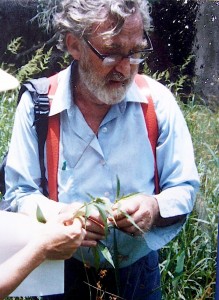
Dick Deuerling circa 1992. Photo by Green Deane

While there is a difference between eating a plant and breathing its pollen, in the Mediterranean area pellitory, in particular Parietaria judaica, is becoming a significant problem. More than 82% of people who are allergic to pollen show an allergy to that particular Parietaria. Some Australian hospitals call the P. judaica the Asthma Weed and warn against it, labeling it dangerous. If you have allergies, or hay fever, Pellitory might be a plant to skip, or at least approach carefully.

That said, besides being an edible salad ingredient and pot herb for thousands of years, Parietaria has been used herbally, with a slight contradiction in constituents. Its attested main feature is that it is a diuretic of significant strength and good for kidney stones, bladder issues, et cetera. Yet, it is high in sodium which tends to make some folks retain water. On the other hand, Parietaria is high in potassium and nitrates, the latter of which a 2006 study showed helped lower blood pressure, which is often done by lowering ones fluids.  Ben Johnson wrote centuries ago:

‘A good old woman . . . did cure me with sodden ale and pellitorie o’ the wall.’

The nutritional profile of a relative,  P. diffusa, is per 100 grams fresh weight 155 calories, 5.4 grams of protein, 2.8 grams of carbohydrates, 0.6 grams fat and 5.2 grams fiber. As for minerals it has 883 mg of calcium, 585 mg sodium, 463 mg potassium, 200 mg magnesium, 80 mg phosphorus, 2.8 mg of iron, 1.2 mg zinc, 0.9 mg manganese, and 0.4 mg of copper.

There is also some debate if the plant as a treatment herb is more potent green or dried. There are arguments for both. Now, if you are still willing to try pellitory, know the complete plant also cleans glass and copper pots well.  It’s botanical name, Parietaria, comes from the Latin word paries, meaning a wall. Of course, if you have  been reading a lot of these articles you know by now that Latin is just a combination of stolen Etruscan and mangled Greek. “Paries” in Latin came from the Greek word “parifi” meaning edge. Parietaria likes to grow in the cracks of walls but it can also form large clumps, such as in my garden or under dry road bridges frequented by transients. The local species is Parietaria floridana.

Below is a recipe from the Italian book Piante Selvatiche by Roberto Gamacchio, which specializes in wild greenery.

Pasta with Parietaria

Ingredients:
Macaroni or spaghetti, 7 ounces dry
Parietaria 3.5 ounces

Béchamel sauce 2 ounces
salt
chilli

Cook the pasta “al dente”. Steam the Parietaria, salt and blend. Add the sauce and chilli to taste. Fold the sauce in the pasta,  serve immediately, salt to taste

 Green Deane’s “Itemized” Plant Profile

IDENTIFICATION: Six inches to a 14 inches tall in Florida, usually unbranched. Central stem is green, four-angled, it can be slightly hairy. The lanceolate  leaves alternate. Each flower is surrounded by several green bracts that are longer than the flower. The flowers are green with no petals, four stamen. Grows in colonies. NO TEETH ON LEAVES. If you have a pellitory with teeth on the leaves you have misidentified an Acalypha, not edible.

TIME OF YEAR: Early winter in Florida, lasting just a few of months at best, December to around March, occasionally later in cool winters and very deep shade. Elsewhere usually during cool spring months.

ENVIRONMENT: Walls, fences, edges, cool dry areas, light shade, moist to slightly dry conditions.

METHOD OF PREPARATION: Edible raw or cooked.  Try a small piece first, it may make some people who eat it raw itch for a while. Raw it is better chopped up in salads.   HINT: Even when cooked the stems can be fibrous, so chopping or cutting them into bite-size length  before cooking is recommended. The water pellitory is cooked in is considered by chefs to be excellent stock for making risotto.

 

{ 44 comments }


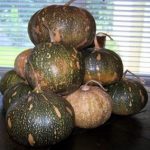
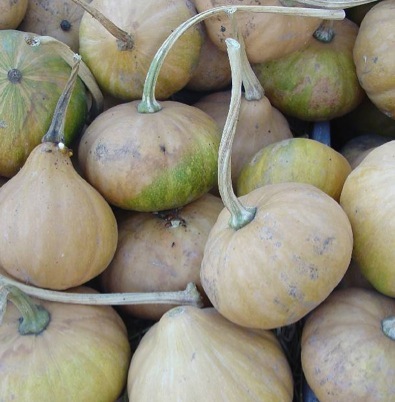
Seminole Pumpkins lite. They can also be dark green

Cucurbita muschata: Seminole Pumpkin

Unlike watermelons which are from Africa, pumpkins and their kin are North American natives. When Panfilo de Narvaez was on an expedition in 1528 near what is now Tallahassee, Fl., he saw Seminole Pumpkins under cultivation. They still grow in the wild in many states, Florida north to Pennsylvania. They might have even been in Massachusetts when the Pilgrims arrived.

Let me quote Dr. Julia Morton, the larger-than-life grand dame of edible and poisonous plants in the southeastern US:

“A mainstay of Florida Indians and early settlers, the Seminole pumpkin is botanically identified as a form of Cucurbita moschata Poir., the species embracing the Cushaw or winter Crookneck squashes. It will spread over the ground, drape a fence or climb trees; needs to be fertilized only at planting time; requires no protection from insects. The fruit, variable in form and size, is hard-shelled when mature and keeps at room temperature for months, is excellent baked, steamed or made into pie. The Indians sliced, sun-dried and stored surplus pumpkins. Very young, tender fruits are delicious boiled and mashed; the male flowers excellent dipped in batter and fried as fritters. Thus, the vine produces three totally different vegetables. This is an ideal crop for the home gardener. The portion of the vine which has borne will die back but vigorous runners, which root at the nodes, will keep on growing, flowering and fruiting, yielding a continuous supply.”

The Indians not only cleared land for agriculture but they took advantage of the Seminole Pumpkin, which is a vigorous climber. They would plant it as the base of a dead oak tree and let the vine climb the tree and fruit off the ground. The plant would then grow all over the hammock reseeding itself. The natives  were, actually, more ingenious than that. A hammock is a hardwood island in a swampy area. They would girdle the trees on the inner part of the island killing them but turning the inner part into a small field protected by a wind break and prying eyes. Getting the pumpkins down was no issue with a lot of young braves wanting to prove themselves. Uninjured, a Seminole Pumpkin will store for several months even in hot weather if it has good ventilation.

The pumpkin is round, lightly ribbed, around three pounds with tan skin or mottled and green. The sweet flesh is deep orange and dry. Highly productive, it is resistant to insects and disease. The fruit  is actually more closely related to butternut and calabaza than the common Halloween pumpkin.

The botanical name, Cucubita moschata (kew-KUR-bi-ta MOSS-kuh-tuh) means Musk-scented Bottle Gourd. Moschata is also where we get the word “musk” from. Cucubita was what the Romans called the bottle gourd.

Green Deane’s “Itemized” Plant Profile

Green Seminole Pumpkins

IDENTIFICATION: Vine, soft-hairy, creeping, leaves ovate or nearly round or sometimes triangularly lobed, toothed, six inches to a foot long, soft, limp. Flowers funnel-shaped, crinkly, yellow, five lobes, three to four inches wide. Fruit comes in many forms, round, oblate, pear-shaped, short-necked, ribbed, orange when ripe with orange-yellow flesh, central cavity more or less filled with soft, fibrous pulp and flat, elliptic, white seeds, to three quarters of an inch long.

TIME OF YEAR: Fall and winter

ENVIRONMENT: Hammocks, everglades, abandoned camps

METHOD OF PREPARATION: Numerous: Boiled or baked, used as a vegetable, dried and ground into a flour for bread, young shoots and leaves cooked as greens, flowers with pistils removed cooked and eaten. They can also be stuffed. Seeds edible, can be roasted or hulled and ground into a gruel.


{ 51 comments }

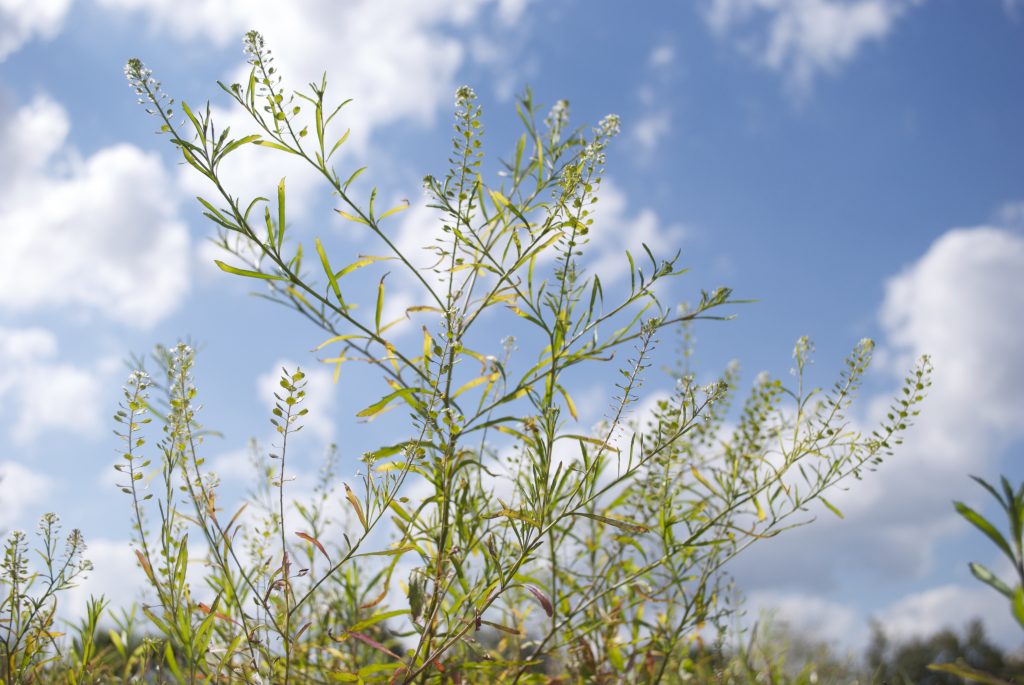
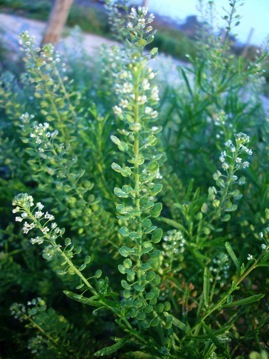
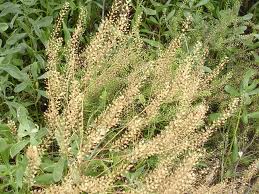
Peppergrass starts as a basal rosette then sends up a flower spike. Photo by Green Deane

Lepidium Virginicum: Bottlebrush Peppergrass

There are two ways of thinking about peppergrass, either as a real neat wild treat, or an obnoxious weed. Regardless of your world view — or weed view — peppergrass is a survivor and part of man’s diet for many thousands of years. As far back as 300 BC Pliny was writing about the Lepidium, and more than a thousand years before that the Incas were cultivating it.

Used in the kitchen and flower arranging

There are about 175 different Lepidiums, no doubt some native to your area and some imported. Growers dislike them because raw they can flavor milk and are herbicide resistant. (Fermented peppergrass, however, is an excellent silage feed for cattle. ) Pictured is “Poor-Man’s-Pepper” Lepidium virginicum (leh-PID-ee-um vir-GIN-i-kum). Virginicum means “North American” and Lepidium is dead Latin’s bastardization of Greek for little fish scale, Lepidion. And indeed, with a little imagination the notched seed pods of the Lepidium can look like little fish scales, some say little purses, I think flat, tiny lentils. Modern Greeks call this (and the related Shepherd’s Purse) kardamo which means cress.

A bottle brush of seeds helps identify it

While in many places Lepidium is a winter and spring visitor, it is a year round plant here in Florida though it is most noticeable and happiest in winter here. The young leaves can be added to salads or soups — they are peppery. The seed pods can be used like pepper. The root, ground and mixed with vinegar is a good substitute for horseradish.  I like them as a trail side nibble. The leaves contain protein, vitamin A and are rich in Vitamin C. There are no poisonous look-alikes. If you have a Peppergrass with really large seeds it might be Thlaspi arvense, an edible relative. 

As with all mustards, it has a tiny four-petal flower, whitish-yellow with two stamen. Bees like them. The flowers are on elongated racemes, which lends them to the classic description of looking like a small bottle brush. The leaves are deeply toothed. First the plant produces a low rosette of deeply cut basal leaves, then vertical growth and seeding. Some species in some places are biennial, rosetting one year, growing up and seeding the next.There are actually four very common Lepidiums and variations in all of North America. The leaves and seeds tell them apart but their use is the same. The shape of the seeds spell T.H.O.R. and that is how I remember them.

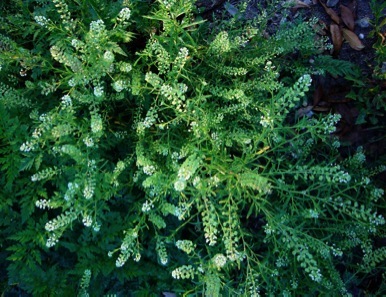
Peppergrass in the fall

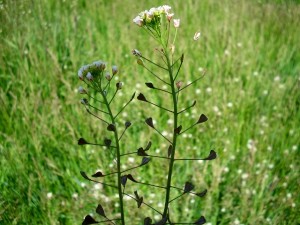
The Cow-cress, Lepidium campesire, has basal leaves that embrace the stem — making them rise up — and a seed pod shaped like a front Tooth, with a tiny nick at the end. A close relative, the Shepherd’s Purse, Capsella bursa-pastoris, below, resembles “Poor Mans” but its seed pods are Heart-shaped. “Poor-Man’s Pepper” has deeply toothed leaves and an Ovalish seed pod with a small notch at the end. Pennycress resembles “Poor Man’s” as well, but the seed pods are Round and deeply notched. The common horseradish, that the sauce of the same name is made from, is a relative though it is much larger and has tiny egg-shaped seed pods. That the family is nutritious is just the beginning of the story. There are medical uses, some proven. The L. virginicum is antiamoebic, for example.

Shepherd’s Purse is a Winter Annual

In a 2003 study looking for antiprotozoal agents from plants researchers found  “a crude extract from the roots of Lepidium virginicum exhibited antiprotozoal activity against Entamoeba histolytica trophozoites,” one nasty bug. “The results support the anecdotal reports for the traditional use of L. virginicum roots in the control of diarrhea and dysentery in the highlands of Chiapas, Mexico.”

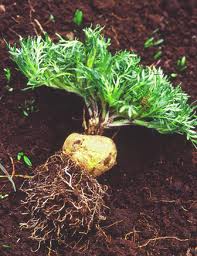
Perhaps the most famous Lepidium, however,  is Lepidium peruvianum, also know as Maca. It grows a tuber that has been used to “enhance” fertility in man and beast. Research shows it also relieves stress.

Maca, the most famous Lepidium

Maca is hardy, being cultivated high in the Andes at altitudes from 8,000 to 14,500 feet. It has the highest frost tolerances of all plants and takes seven to nine months to produce a root, which can be eaten fresh or dried. They can be stored dry for as long as seven years. L. peruvianum roots have a tangy, sweet taste similar to butterscotch. In Peru they are eaten as is or made into jam, pudding, porridge, soda even a fermented drink called Maca Chicha.

There is a debate whether the Maca sold today is L. peruvianum or Lepidium meyenii, with the latest opinion favoring peruvianum.  Called the “natural viagra” Maca has caught the attention of the non-Peruvian world: In 1994 less than 50 hectares were used in the commercial cultivation of maca; by 1999 over 1200 hectares were under production. It now exceeds 2000 hectares.

Those 2000 hectacres are found high in the Andes, an inhospitable place of intense sunlight, violent winds, and below-freezing weather. With such extreme condition and poor, rocky soil, the area is among the world’s worst farmland. However, Maca evolved to live under those conditions as have most mustards. They can be found growing in Greenland and the Arctic circle. The Incas domesticated Maca about 2,000 years ago, and primitive versions of Maca — early cultivars — have been found in archaeological sites dating back nearly 4,000 years.

If you’re not inclined to eat the peppergrass, then there is another use: the dried seed stems make a great addition to dried arrangements and wreaths. They are showy, sturdy, and last for a long time.

Sometimes you have to approach an edible plant’s nutrition obliquely. Peppergrass is a good example. There’s been research on the plant for inhibiting pathogens but not much on nutrition. However a 1944 study involving silage (cattle food) gives us some insights. (Journal of Dairy Science, Vol 27, Issue 5, pp 365-367.) 

There was a heavy stand of Peppergrass (Lepidium virginicum) at the Virginia Agricultural Experiment Station at Blacksburg Virginia. There was too much to let it all go to seed but if they left it it would smother out the alfalfa they were growing. Mowing, racking and hauling it away was costly if no use was found for. So they decided to use it for silage. It was a bold idea because plants in the greater mustard family can taint the flavor of milk. 

The ten acres yielded approximately 28 tons of Peppergrass. They mixed it with 50 pounds of molasses per ton as a preservative then let it ferment. At the end of fermentation there was no odor or flavor of peppergrass. They also tested the nutriments of the peppergrass before and after ensilaging. By weight the Peppergrass was 3% potassium, 1.34% calcium, 0.40% magnesium and 0.23% phosphorus. After fermenting the amounts were slightly less. Alfalfa was in the finished silage but the study did not make clear if it was also analyzed with the peppergrass.  

As for other nutriments we have to rely on an unpublished report. A newspaper article in June 1990 said a sample of Peppergrass had been sent sent to the University of Florida Herbarium for analysis. The analysis reportedly said Peppergrass was high in vitamin C (as ascorbic acid) a good source of vitamin A (beta carotene) and iron. It was also a good source of protein. This would be in keeping with it as a member of the greater mustard family. There is also a 1951 University of Florida report on B vitamins in common produce and some wild plants. They included Peppergrass. Per 100 gram serving it has 0.045 mg of B1 (thiamin) 0.623 of B2 (riboflavin) and 2.54 mg of B3 (niacin.) 

Another thing we can do is look at Peppergrass’ relatives. We have reports on two: Lepidium sativum (Garden Cress)  and Capsella bursa-pastoris.  Garden Cress per 100 grams of fresh leaves has: 32 calories, 2.6 grams of protein, 0.7 grams of fat, 5.5 grams of carbohydrates, 69 mg of vitamin C (meeting your daily need) and 930 RE of vitamin A. The minerals are 606 mg potassium, 81 mg calcium, 76 mg phosphorus, 14 mg sodium, and 1.3 mg iron.

Here’s a recipe from Leda Meredith who  forages in New York City .

Peppergrass Chermoula
Chermoula is a North African marinade that is usually used with seafood. It is also wonderful on steamed vegetables and mixed into whole grain salads.

1 large clove garlic, peeled OR several underground field garlic bulbs
1 tablespoon fresh green peppergrass seedpod discs
1 small hot pepper
1/2 cup fresh cilantro (coriander) leaves
1/4 – 1/2 cup extra-virgin olive oil
1/2 teaspoon salt

1. Place the garlic, peppergrass, chile pepper, and cilantro in a food processor and pulse to finely chop. Scrape down the sides of the food processor bowl with a spatula and pulse again (repeat a few times to end up with a more or less evenly minced mixture).

Alternatively, finely chop the garlic, chile and cilantro. Pound them together with the peppergrass with a mortar and pestle.

2. Add the salt and 1/4 cup of the olive oil and blend. You want to have a slightly liquid paste. Add more olive oil if needed.

Chermoula will keep in the refrigerator for up to 2 months.

Green Deane’s “Itemized” Plant Profile

IDENTIFICATION: Flower: Four petals, two stamen. Fruit: See seed. Leaves: Lobbed, toothed, varies, long to lance shape. Stem: Erect. Seed: Seed pods vary in shape round the stem. Root: Tap root vertical

TIME OF YEAR:  Springtime into summer

ENVIRONMENT: Well-drained soil, sandy to rich, old pastures, gardens, lawns, roadside, nearly any sunny spot

METHOD OR PREPARATION: Leaves as potherb, seeds for spice or pepper flavoring, can use flowers to flavor vinegar. Some young leaves can be used raw in salads. Try a little first. Can blanch leaves then saute.

{ 29 comments }


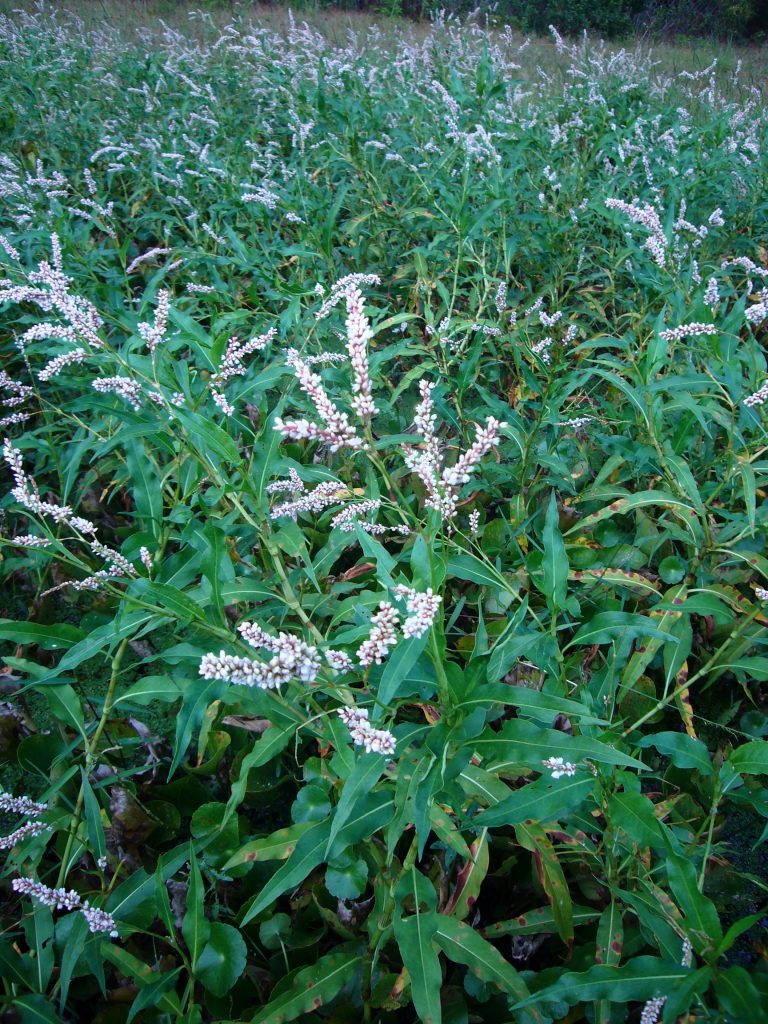
Look for Smartweed in low, damp areas such as clean ditches. Photo by Green Deane

Polygonum punctatum: Smartweed

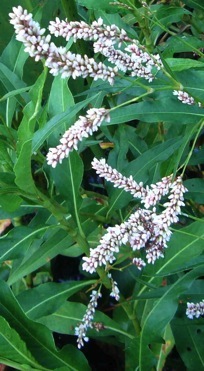
The blossoms are hot and bitter. Photo by Green Deane

I can remember my first taste of a smartweed leaf… kind of like trying a piece of burning paper. Indeed, a lot of plants resemble smartweed but one quick taste and you’ll know if you’ve got the right plant: If it isn’t very peppery, you picked wrong. Actually, the burn is not immediate. It takes a few seconds to kick in and then it intensifies. And about the time you wish it would stop intensifying it’s just getting started. Word to the wise, use sparingly and try only a very small piece to start with chewing between teeth and tongue.

It’s a little hard to stuff inside the head, but the smartweed, Polygonum punctatum, (pol-IG-on-um punk-TAY-tum) is in the the buckwheat family, but you would never use it on morning pancakes.  It’s for seasoning, soups, and perhaps salads. Not only is it burning hot but some varieties, especially P.  hydropiperoides, (hye-dro-pie-per-OY-dees) are also vasoconstrictors. So if you have high blood pressure, go easy on those species. It’s all right as a spice, a bit much as a pot herb.

The Smartweed is common throughout North American and nearly year round in the southern range. Actually it is easy to identify even when brown dead and is still peppery. It has freely branching stems and a lot of joints which gives the plant its name. Polygonum is Greek for many knees. Punctatum means dotted, referring to dots on the tepals, and indeed it is also called Dotted Smartweed. It’s a fine plant for seasoning while camp cooking, but can overwhelm like cayenne pepper. Also be careful because some people can develop dermatitis from it.

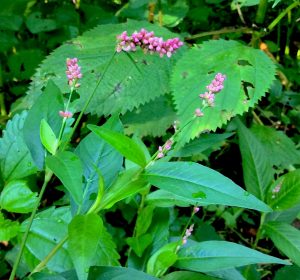
Blossoms can be be pink or white depending on the species. Photo by Green Deane

There are three species locally, all useable: The P. punctatum as well as P. densifolrum (compactly flowered) and the aforementioned P. hydropiperoides (water pepper.) P. hydropiperoides has tannins, rutin (3% in leaves) quercitin, kaempferol and some protein. It is considered a diuretic and has been used to stop intestinal and uterine bleeding, hasten menstruation and to treat hemorrhoids. It has many more applications as well. The Natives also cooked the leaves of the trio and ate of them sparingly. It’s also a common waterfowl food. If you crush a bunch and put it in a small body of water it will force the fish to float to the top by interrupting with their oxygen uptake (as does American Beautyberry leaves.)

I saw some P. hydropiperoides in Mead Gardens, Winter Park, Fla., the day I originally wrote this article. It was flowering and taking on a bit of fall red. It had been a while since I had seen the P. hydropiperoides, the P. punctatum being the one my path crosses most often. Soooo, I tried a good part of a leaf…. the hole in my tongue should heal in a few days. The blossoms are hot as well but are also bitter.

Some Polygonums have edible roots, perhaps the best know is P. bistorta, a Eurasian import. The roots are first soaked in water then cooked in embers. Or it can be chopped up, soaked in many changes of water, then passed through a mill to make a puree. The bulbs of the P. viviparum have been eaten raw but they are better roasted. The roots of the Polygonum multiflorum are also edible raw or cooked as are the roots of the Polygonum bistortoides  The seeds of the Polygonum douglassii, Polygonum aviculare and the European Polygonum convolvulus have been eaten since mesolithic times.

And while the Smartweed is called “many knees” at one time its name was arsesmart. I have never found any reference to what chemical(s) make the species peppery. Lastly, I have a video on the Smartweed on You Tube… made it in the rain… dedicated I am…

Green Deane’s “Itemized” Plant Profile

IDENTIFICATION: P. punctatum: Alternate leaves are smooth-edged, lance shaped, willow-like, one to six inches long, leaf base forms sheath around stem. Young leaves flat, older leave  can be wavy,  The stems are often reddish, flowers are small, pink or  white in dense clusters from the leaf joints or stem apices. It can grow to four feet or more but is usually smaller.

TIME OF YEAR: Year round in Florida, seasonal elsewhere, blooms July to first frost.

ENVIRONMENT:  It likes moist areas.  I often find it in the center part of old woods roads where they dip down and collect water or stay moist.

METHOD OF PREPARATION: In Asia the seedlings (sprouts) are collected and used like spicy radish sprouts for a hot flavor. Mature leaves and stems chopped up and used sparingly as pepper, leaves and stems boils in soups, again sparingly.  Numerous herbal applications.  The roots of some species are edible cooked, some require a little cooking, others require much cooking. The seeds of some are also edible. Check with a local expert about your local Polygonum.

HERB BLURB

A Mem-Inst-Oswaldo-Cruz. 2001 Aug; 96(6): 831-3. Abstract:Polygonum punctatum (Polygonaceae) is an herb known in some regions of Brazil as “erva-de-bicho” and is used to treat intestinal disorders. The dichloromethane extract of the aerial parts of this plant showed strong activity in a bioautographic assay with the fungus Cladosporium sphaerospermum. The bioassay-guided chemical fractionation of this extract afforded the sesquiterpene dialdehyde polygodial as the active constituent. The presence of this compound with antibiotic, anti-inflammatory and anti-hyperalgesic properties in “erva-de-bicho” may account for the effects attributed by folk medicine to this plant species.

{ 32 comments }

Kangaroo meat is nutritious but Australians don’t like it because it’s their national animal.

Kangaroo meat is so good it makes one wonder why the Aussies ever imported beef.

Kangaroo meat likes slow cooking and added fat

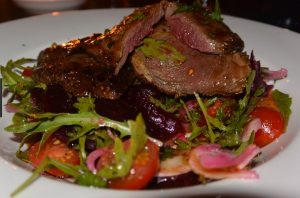
If you follow the Paleo lifestyle, as this writer has for some 14 years, Kangaroo meat is just about perfect:  High quality protein, 2% fat, the best known animal source of Conjugated Linoleic Acid (helps you take off body fat) as well as high in iron and zinc. It does us modern cavemen proud. Kangaroos used for food are free-ranging and don’t contribute to greenhouse gasses. Even some vegetarians are eating kangaroo meat under an ethical view called Kangatarianism. I just call it tasty. How do you get it? You can order Kangaroo from several companies that will ship it to you packed in dry ice. Or, in larger cities you can find it in local markets and restaurants. Like other meats you can get various cuts and forms, medalions to ground. As a lean meat it does not over cook well and benefits from added fat in various dishes (as does horse meat.)

This account is from a 1948 expedition to Arnhem Land, a remote part of the northern Australia the size of Ireland set aside for Aboriginals who want to pursue the hunter/gatherer lifestyle. It’s how to cook and eat a wallaby indigenous style.

“A large fire was made in a depression in the sand, and stones and shells were heated.  Small green branches were placed on top of the stones and the wallaby was flung on these.  After 5-10 minutes it was taken off the fire, placed on a layer of green leaves, and the singed fur was removed with a tomahawk. [Just the fur, not the skin.] Although the women sometimes did this preliminary treatment, a man always did the subsequent cutting up, which was done with a metal spear blade.

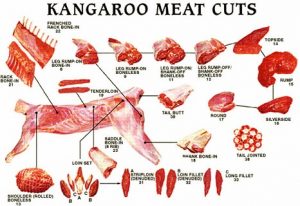
Kangaroo provides a variety of cuts for cooking.

The first cut was made horizontally on the ventral [belly] surface at the level of the anus, and next on the dorsal [back] surface along both sides to sever the leg muscles.  Another cut was then made from the anus to the neck.  The viscera were pulled out; and the kidneys, liver, heart and lungs, and the omental and mesenteric fat [the fat surrounding the intestines] were separated from the rest, and cooked on the hot stones and coals for 5 minutes.  The cooked lungs were used to soak up the blood inside the carcass and then eaten.  The offal was regarded as a delicacy by everybody and a certain amount of squabbling always followed its distribution.

The tail was cut off, and during the cooking was put on or alongside the body.  The carcass was laid flat, dorsal side downwards, on the hot stones and ashes and the body cavity was filled with hot stones. Sheets of paperbark formed a cover over the animal, and sand was scooped out to make an oven.  Wallabies weighing 15-20 pounds were cooked for 25-35 minutes.  Everything edible was eaten except the stomach and intestines.  The skull was cracked open to get the brain, and the bones were broken to extract the marrow.”

Wallabies are edible, too.

Kangaroos themselves are something of a problem in Australia. There were 27 million in 2010. By 2016 that number was 45 million, a decade later some 50 million. Blame rainy conditions that produce a lot of kangaroo food thus a lot of kangaroo babies. It seems to be a case of either humans start eating them or the kangaroos are going to starve to death by the millions. It’s a hard  choice for many Aussies who think of  “Skippy The Kangaroo” as many Americans think of “Bambi” a non-edible edible. By the way, as a meat animal kangaroos are very environmentally friendly… unless you have a few million carcasses lying around…

{ 3 comments }