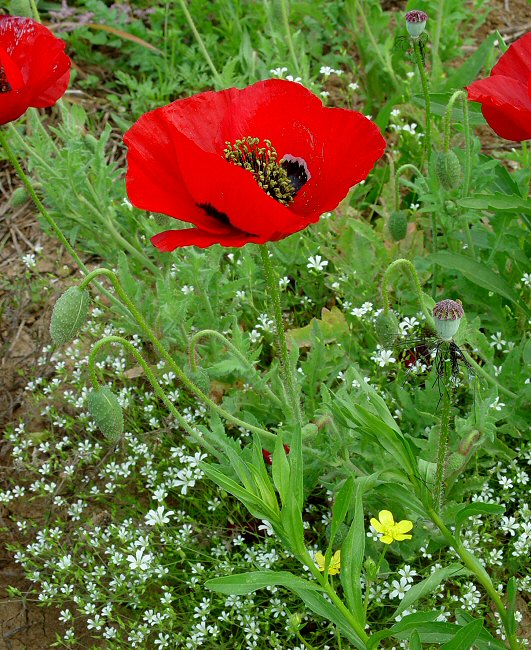
The Memorial Poppy, Papaver rhoeas

(Yes, I am a veteran. Thus on this Memorial Day let us think of friends and relatives and everyone’s loved ones who did not come home alive. More than a century ago the Poppy became that reminder.) 

Several plants have relatives whose reputations are difficult to live down. The Natal Plum is one. Related to the Oleander the delicious plum suffers from its deadly kin’s reputation. The Corn Poppy shares a similar fate. Mention poppies today and folks think opium. Mention poppies 90 years ago and people thought World War I. The Corn Poppy is the memorial flower of veterans. Silk and paper poppies are handed out for donations to veteran causes and worn on Memorial Day. The practice began with a poem.
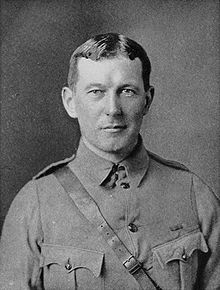
Col. John McCrae

Canadian John McCrae was a poet who was also a surgeon and medical officer on the front lines. Sitting in an ambulance on 3 May 1915, he wrote the poem “In Flanders Field” the day after personally conducting a burial service for a friend, Alexis Helmer. At the service McCrae mentioned the poppies. After writing the poem with a pencil stub he showed it to a couple of soldiers then reportedly tossed the poem away but it was recovered by those who read the first draft. After revisions and one rejection by The Spectator it was published 8 December 1915 in Punch Magazine. The poem begins with: In Flanders fields the poppies grow.* It became the most quoted poem of the era. In 1918 an American Young Womans’ Christian Association worker (and college teacher) Moina Belle Michael was attending a YWCA Overseas War Secretaries’ conference in New York City. She saw a copy of the Ladies Home Journal with the poem in it with its ascending illustration (below left.) Though she had read the poem many times she was struck by accompanying artwork. In her autobiography, ”The Miracle Flower, The Story of the Flanders Fields Memorial Poppy” written in 1941 on the eve of World War II, she wrote:
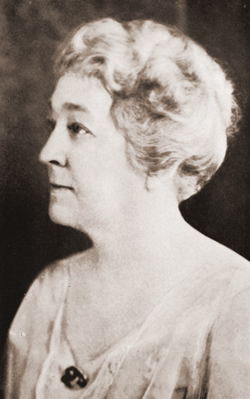
Moina Michael, the Poppy Lady

“I read the poem, which I had read many times previously, and studied its graphic picturization. The last verse transfixed me — ‘To you from failing hands we throw the Torch; be yours to hold it high. If ye break faith with us who die, we shall not sleep, though poppies grow in Flanders Fields’. This was for me a full spiritual experience. It seemed as though the silent voices again were vocal, whispering, in sighs of anxiety unto anguish, ‘To you from failing hands we throw the Torch; be yours to hold it high. If ye break faith with us who die we shall not sleep, though poppies grow in Flanders Fields’. Alone, again, in a high moment of white resolve I pledged to KEEP THE FAITH and always to wear a red poppy of Flanders Fields as a sign of remembrance and the emblem of ‘keeping the faith with all who died’. In hectic times as were those times, great emotional impacts may be obliterated by succeeding greater ones. So I felt impelled to make note of my pledge. I reached for a used yellow envelope, turned the blank side up and hastily scribbled my pledge to keep the faith with all who died.”
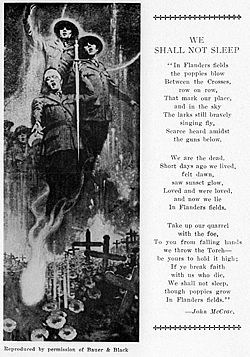
The artwork that move Michael to start wearing the poppy

So moved Michael went out that afternoon and managed to find some artificial poppies and handed out 25 keeping one herself. The tradition was born. Later Michael wrote a poem herself,   “We Shall Keep The Faith.” It had the verse: We cherish too, the poppy red, that grows on fields where valor led, It seems to signal to the skies, that blood of heroes never dies.”

In 1920 Anna E. Guerin, another YWCA secretary visiting from France, learned of the custom while attending an American Legion convention which was supporting the sale of poppies. Guerin decided when she returned home to hand-make the poppies and raise money to benefit orphans and widows of the war. It was she who sent a
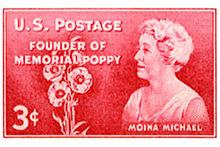
The “Memorial Poppy” Stamp, 1948

delegation of French widows to visit British Field Marshal and former Commander-in-Chief Douglas Haig in 1921. They had poppies with them and suggested selling them to raise money for the injured and unemployed veterans. Haig, who by then was 1st Earl Haig, lent his support to the cause and himself set up the Haig Fund that still supports veterans. The practice was firmly established when several countries officially recognized the veterans’ poppy. To this day, paper poppies are assembled by needy and disabled veterans in hospitals and raise millions of dollars each year. But why the Corn Poppy? To answer that you have to know somethings about the species.
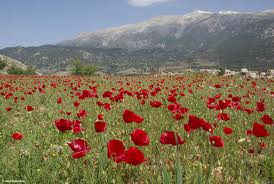
A Field of Poppies in Western Crete

Poppies thrive on disturbed ground and can tolerate high amounts of lime. The plant also produces millions of seeds. The seeds can lie dormant in the ground for years until disturbed. The shelling and the trenching of the war brought them out of slumber. More so they grew where nothing else would grow, the lime-rich blasted ground of no man’s land and make-shift graves. The bright red poppies reaching out of blood-soaked ground made a lasting impression upon the generation.
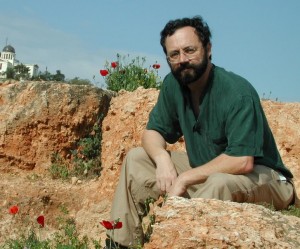
Green Deane in Athens with Poppies

Green Deane, then 50,  in Athens with Poppies near the Acropolis.

For a plant with such a notorious relative the Corn Poppy has many uses. Young leaves are cooked and used like spinach, or raw as flavoring in soups and salads. The petals are used to make a red syrup used in soups or for coloring. The seeds can be used in cakes, bread, rolls, or  pressed for their oil which is an excellent substitute for olive oil. Who as a child (or older) played with the poppy seeds falling off a roll? The rosette of basal leaves before the plant flowers is excellent raw as well. The unripe ovaries are also edible raw.
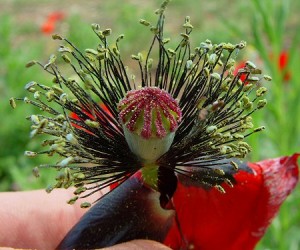
Poppy with petals folded back

Like its genus mates the corn poppy has a white sap but no particular hallucinogenic qualities. It got the name “corn poppy” from a time when all agricultural grains — oats, wheat et cetera —  were generally called corn. The flower grew in the disturbed ground of “corn” fields. As for the botanical name Papaver (Pap-PAY-ver) is Dead Latin for milk, in reference to its sap. Rhoeas (ROH-ee-as) is Latin bastardized Greek for red, referring to the color of the blossom. Poppy is an Old English variation of Papaver. Other common names include Flanders Poppy, California Red Poppy, and Shirley Poppy.

Green Deane’s Itemized Plant Profile: Corn Poppy
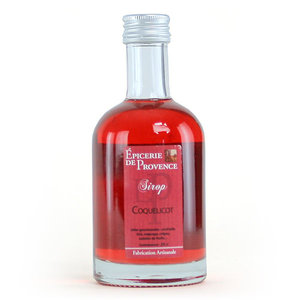
Poppy Syrup

IDENTIFICATION: Papaver rhoesa: Stems from a large tap root, white to yellow sap, many stems, branching, green with some purple at the base; leaves alternating, lower leaves with stems, upper leaves without stems, serrated teeth, small hairs with glandular base; Flowers have four to six petals, scarlet with a black splotch (can be white) 1.5 to 3 inches wide, many stamens exceeding the pistil, anthers yellow grown.
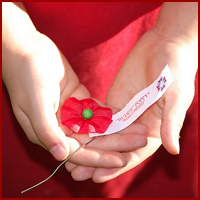
The Buddy Poppy

TIME OF YEAR: May to October

ENVIRONMENT: Waste ground or disturbed ground, neither hot weather or cold weather.

METHOD OF PREPARATION:  Young leaves cooked, or raw in salads; petals edible, seeds edible.

* The original poem said “where poppies blow” but it was changed to where poppies grow with both words being used. The debate on how the first line should end continues. Here is the first published version:
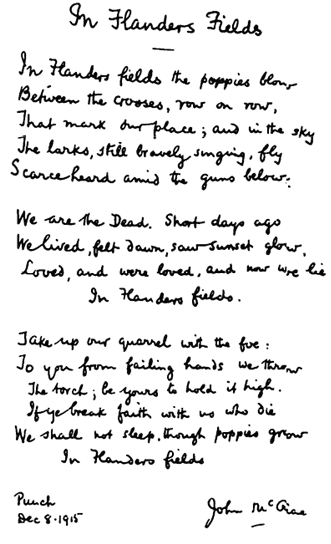
in-flanders-field-copy-of-original-signed-001


{ 4 comments }
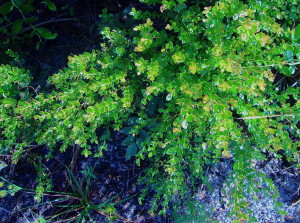
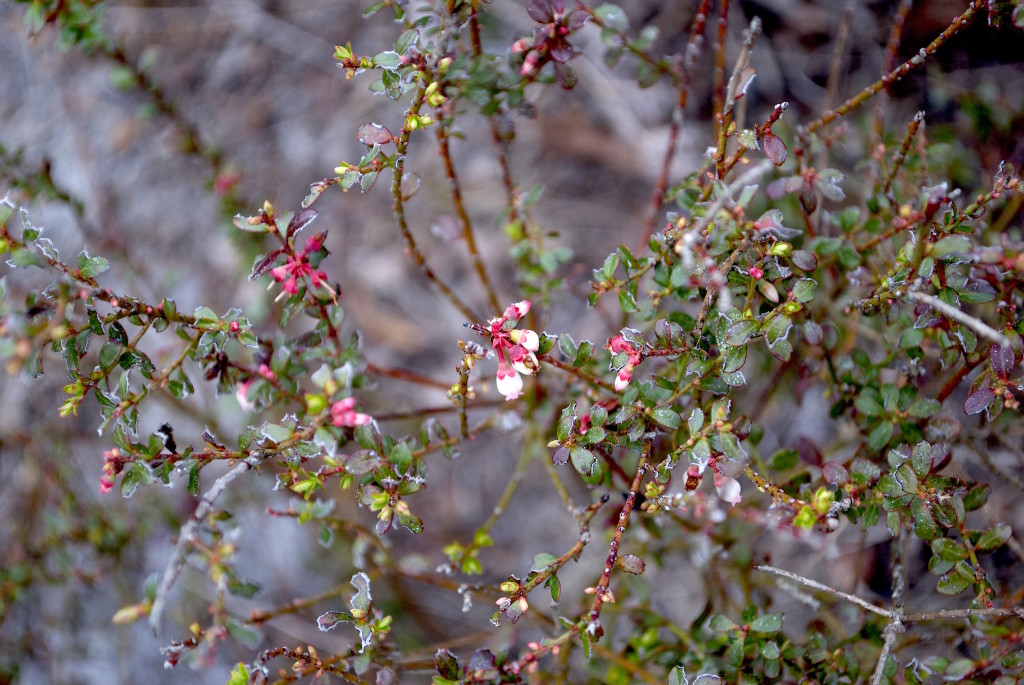
Vaccinium myrsinites DSC_0362

Vaccinium darrowii is redder than Vaccinium myrsinites

Vacciniums: Am I Blue?

Blueberrying was a family tradition. The only debate was did you pick them clean, or did you pick leaves, bugs and all then clean the haul later? My mother preferred the clean method, so clean it was. Why did she prefer the clean-picking method? Because as a child she and her mother visited a friend who had just finished picking a lot of blueberries. My mother was asked if she wanted some, she said yes a big bowl. The bowl of blueberries were delivered then milk poured on them. That caused all the twigs, leaves and bugs to float to the surface making the berries not possible to eat. We picked clean. 

vector-of-a-cartoon-man-about-to-whack-a-fly-on-his-nose-coloring-page-outline-by-ron-leishman-14178My most enduring memory, however, was when I was 14 and had just started high school. I was picking away late one season on a Sunday afternoon when a bee came up and stung me right on the end of my nose. Yes, it did swell up. Yes, I did look ridiculous.  Yes, I was forced to go to school the next day, putting Cyrano de Bergerac to shame.

We berried in two very different areas with two very different kind of blueberries. Low-bush blueberries were extremely common, covering huge fields, hundreds of acres. The fields were burned every year to ensure a good crop of blueberries, which prefers poor acid soil and ashes. In late summer rows were marked by string. Pickers with hand rakes would come in and strip a field in a couple of days. They always focused on the productive center of the field, leaving the edges. We used to raid those edges on the weekend, collecting quarts of ignored fruit. But, there were other blueberries as well.

High on a ridge, west of the Libby Road where it intersects with the Witcher Road, in Pownal Maine, there’s a north south granite ledge showing here and there. On that ledge were the best specimens of high-bush blueberries I’ve ever seen. Tall shrubs, they were six to eight feet tall and loaded with large, sweet blueberries. Picking was fast, if there weren’t bears around, which brings me to a short story about my Great Aunt Myrt, born in the 1880’s. She loved blueberries.

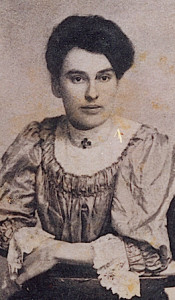
Great Aunt Myrtie May Putney circa 1900

Great Aunt Myrtie May Putney circa 1900

Like all eight of her siblings born in the late 1800s, Myrt caught scarlet fever when she was in her teens and as a consequence was nearly stone deaf. That presented some problem, of course, but life went on. One day she was out with other members of the family picking blueberries. While they were picking a bear came along and started eating the berries right next to Myrt. Everyone but Myrt apparently saw the bear and moved away. Myrt kept right on picking. As you may imagine, the mostly deaf members of the family trying to get Myrt’s attention by yelling did not work nor did it scare the bear. Myrt was focused on filling her berry bucket. When her bucket was finally full she left the patch and joined the others.

“Didn’t you see that bear?” my grandfather shouted? “Yes,” said Myrt, shouting back, “but I wasn’t going to let that damned bear have my blueberries.” Myrt, a feisty, tall, good-looking woman, lived into her 90s. No doubt the healthful blueberries helped.

When picking off high bush blueberries it was not unusual to come home with a washtub full of them. You could eat fistfuls of blueberries and still have gallons left. In fact, the only way we ever ate them were either fresh or in muffins. Gallons of blueberries in the frig was a good feeling. The quantities of blueberries hereabouts are more modest, and sporadic.

Vaccinium myrsinites, dwarf blueberry.

Vaccinium myrsinites, dwarf blueberry.

The most common blueberry locally where I live now is Vaccinium myrsinites. There are no fields of them or even large patches that I’ve ever seen, always just a few short bushes here and there, usually around 18 inches high though they can get to three feet.  Another local is the Vaccinium stamineum, Deerberry. It’s taste varies from tart to sweet. Deerberry is the easiest of all the blueberries to identify with leaves are egg-shaped and whitish underneath. The fruit can be green to deep ruby when ripe. 

The high bush blueberry of my youth, Vaccinium corymbosum doesn’t quite get to Florida, or if so one foot across the state line. There is, however, a high-bush blueberry in Florida that grows to 20 feet or more, the Sparkleberry, aka Farkleberry, Vaccinium arboreum. It is edible but not too palatable. The bottom of its leaves have a net of gold-colored veins.

As you may infer, numerous birds and mammals like the blueberries. Among the creatures that like them are grouse, partridge, quail, robins, blackbirds, thrushes,  chipmunks, deer, elk, rabbit and bear.  Deer are quite fond of the leaves, a point not lost on hunters. Medicinally, decoctions of the leaves have been used for sore throats and diarrhea but if too strong can be toxic.

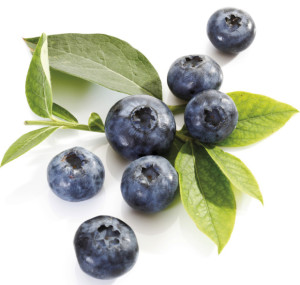
The experts tell us there are no toxic crown berries.

The experts tell us there are no toxic five-point crown berries.

Vaccinium myrsinites is said vak-SIN-ee-um  mur-sin-EYE-teez. Myrsinites is from Greek and means looking like the myrtle. What vaccinium means is more of a debate. One idea is that it goes back to a prehistoric European language called Thraco Pelagian, a precursor to Greek. A competing idea is that it is from the Latin word “vacca” meaning cow (frankly, both could be right since half of Latin is bastardized Greek, and the other half is misappropriated Etruscan.)  The cow berry, Vaccinium vitis-idaea was common where plant namer Linnaeus was born, so…. we’ll never know. No doubt blueberries have been eaten for thousands of years and can be found in all lands circling the north pole then south. The oldest find is from a Bronze-Age grave in Denmark, a few thousand years ago. Two-hundred year old frozen blueberries have also been found in Northern Canada.  In the Heath family, all Vacciniums — all 450 or so species — have a five-pointed, star-shaped calyx that remains on the fruit. Some Native Americans believed that in times of starvation “the Great Spirit sent the star berries down from the night of heaven to feed the children.”

If you have black blueberries with large leaves you may have huckleberries…. read that article here.

Green Deane’s “Itemized” Plant Profile

IDENTIFICATION: V. myrsinites is a small shrub, one to three feet, leaves alternate, ovate to elliptic, to 3/4 of an inch long, sometimes with fine, sharp teeth and spine-tipped. Leathery. Young grayish foliage often purple tinged. Flowers red or red-purple, in small compact clusters, bell-shaped, berries blue or blackish, round. V. darrowii looks similar but the base of the blossom is redder as are the tips of the blossoms. 

TIME OF YEAR: Blooms in late May, fruit in the summer, June to August depending on area

ENVIRONMENT: A small bush with small fingernail sized leaves in saw palmetto prairies and pine flat woods

METHOD OF PREPARATION: Uses nearly too numerous to mention, jelly to wine, pies to confit, full of antioxidants.

{ 2 comments }
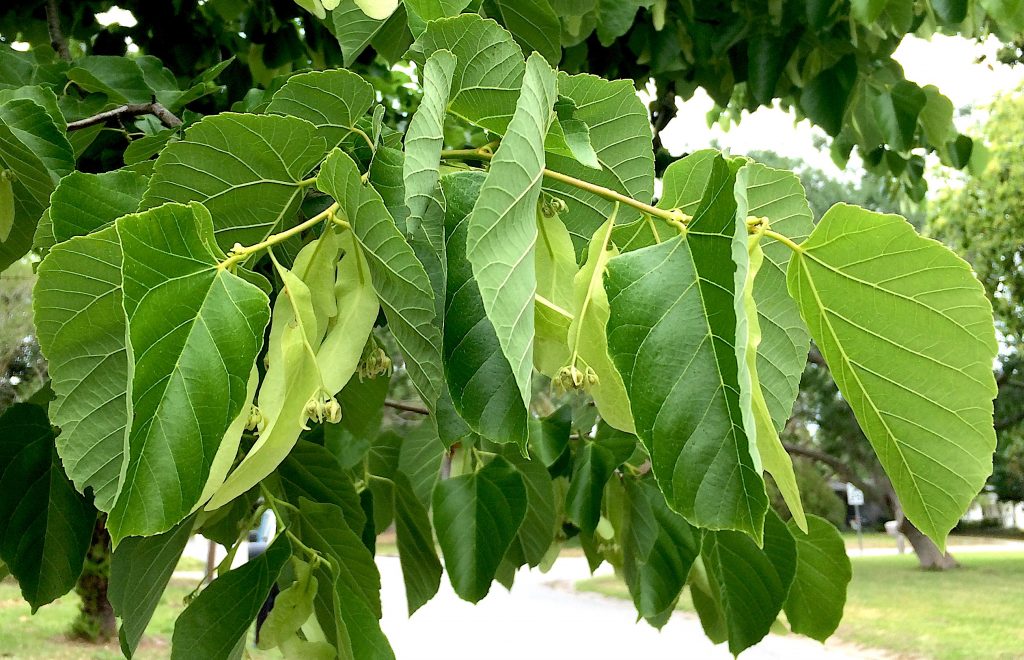
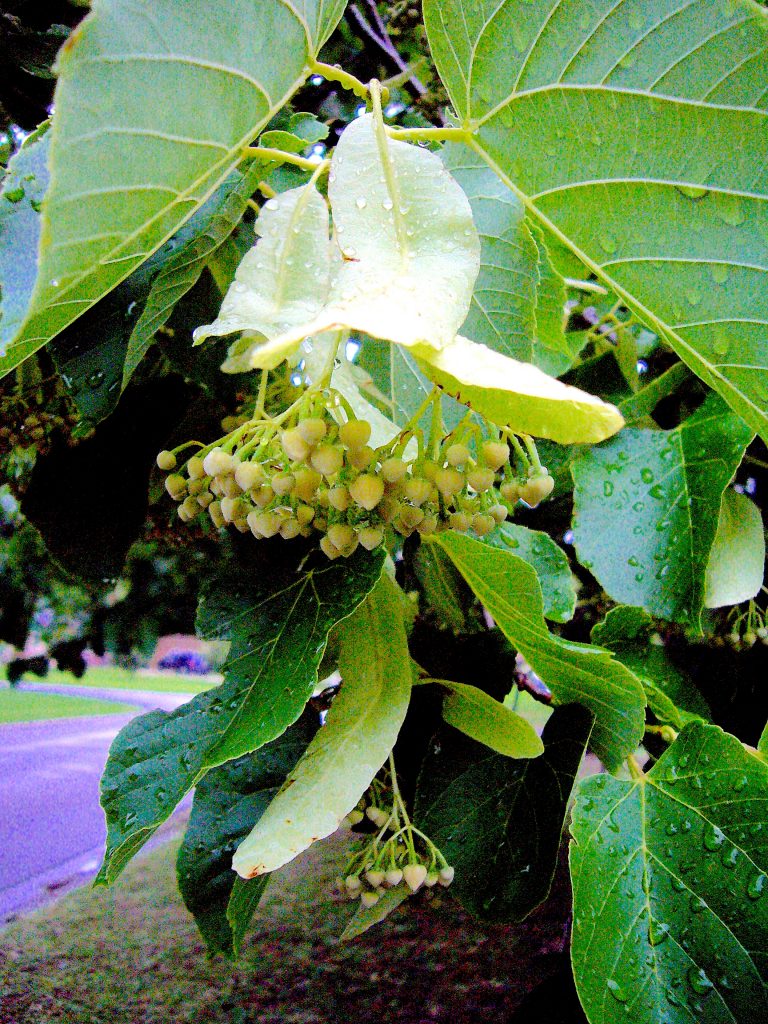
Basswood leaves and bracts soon to be blossoming. Photo by Green Deane

Tilia americana: Forest Fast Food

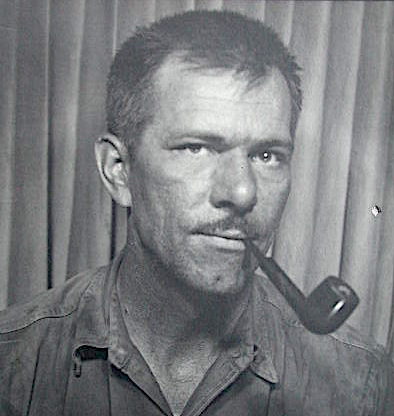
My first recollection of basswood was not on the supper table but rather helping my step-father make pipes.

Pipe maker Robert Hartley Jordan

First we’d find a nice piece of applewood for the bowl; take the bark off then boil the bowl wood for a couple of hours on (of all things) the wood stove. That “drove” the sap out so when it dried or was used it wouldn’t crack. After the bowl was shaped, sanded and drilled a stem was needed. That’s when we’d go find a basswood sapling of just the right size to make a stem. At that young age it’s easy to run a wire through the core and ream out the pith. That was fitted to the bowl and the pipe was done except for polishing. Dad would rub the sides of his nose with the finished bowl to give it a shine. Oil glands on our nose apparently are perfect for that. I still have one or two of those pipes we made from some 60 years ago.  

The bract and seed arrangement are unmistakable. Photo by Green Deane

It was not unusual that we turned to the Basswood for utilitarian uses rather than food. Even among the native Indians only one tribe — the Ojibwa — was known to eat parts of the Basswood. Others may have but there is no record of it. Indeed, modern foragers may actually consume more of the tree than the Natives did. However, the tree was a major source of fiber for the Indians and that’s where the  common name, Basswood, comes from.“Bass” is a corruption of “bast” which is a type of fiber. The Indians soaked the bark for two to four weeks to loosen long fibers. They used the fibers for many of their needs: Bags, baskets, belts, fishnets, house mats, snowshoe netting, ropes, sewing thread and even suturing wounds. It was used where a lot of fiber strength was not needed. The Ojibwa ate the young buds raw or cooked as greens and they used the sweet sap, boiling it down to a syrup. Fortunately, there is more to be had.

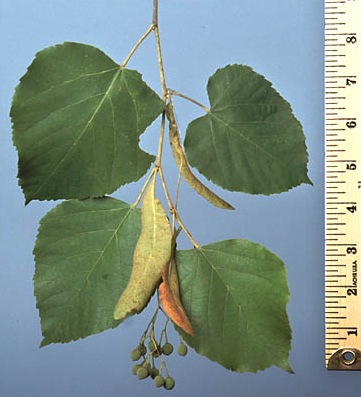
Bass wood leaves petioles, tongue and fruit

Besides the buds the young leaves are a prime “wild green” of the forest. Young shiny shoots are also tasty. Edible raw or cooked you can make a salad using the leaves as the main ingredient like lettuce. Cooked they lose flavor and shrink in size considerably. The cambium, between the outer bark and the wood, in spring time, is moist and tastes of cucumber. It’s good for soups or when dried can be powdered and used for bread. You can also eat it raw off the tree, the least amount of work for the nutrition and flavor. However, don’t destroy the tree for it. Take vertical pieces. 

While the flowers are edible raw or cooked and a tea can be made from them. Two tablespoons per cup. They  also produce a lot of nectar creating high-quality honey. For that Basswood is sometimes called the “Bee Tree.”  The tree also has a small nut, more like a seed. Fill one pocket with them as you wander through the woods, crack ’em with your teeth and spit out the shell.  The tree can produce seeds when as young as eight years and continue to 100. Past 120 years old the tree starts to get a lot of “cavities” and becomes home to a many woodland creatures, notably porcupines and raccoons. Basswoods can live up to about 200 years old.

As you would guess, denizens of the forest like the Basswood as well. Whitetail deer, rabbits, mice, voles, squirrels, chipmunks and foxes snack on the tree, as do many species of song and game birds including quail.  Some voles, however, girdle the tree, killing it.

One particular habit of the Basswood is to produce sprouts, especially after the main tree dies. Often you will find a clump of basswood sprouts of varying sizes, many of which get large enough to harvest. Basswood is valued for its wood which is soft, light and easily worked wood, particularly for turned items and hand carving. Natives made face masks out of it. Before synthetics it was was the material of choice for prosthetic limbs. It’s also been used to make boxes, toys, woodenware, drawing boards, veneer, venetian blinds, plywood and pulp. The Iroquois even used the bark as an emergency bandage for wounds.

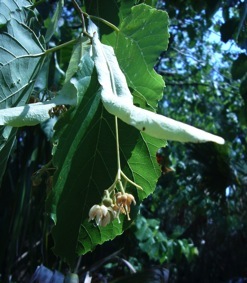
Large tongue-like bracts on Basswood blossom

One problem with the Basswood is what to call it. It has multiple common and scientific names. Experts can’t agree if there is one species with variations or several species, though they are all edible. While some call the Basswood that grows in Florida Tilia floridana (TILL-ee-uh flo-re-DANE-nah) the current name de jour is Tilia americana (a-mair-ee-KAY-na) . Tilia comes from the Greek word “ptilon” meaning wing, referring to the large winglike bracts of the flower cluster. Some think they look more like tongues than wings. Americana means of America and floridana of Florida. As for common names, particularly in Europe, the Basswood is called the Linden tree.  That name comes from the Old English word of “linde.” It’s been called that for some 1300 years. So, where did “linde” come from? That’s a bit more … sticky.

Folks of yore somehow noticed that when a bird “deposits” a mistletoe seed the seed sticks to the tree. That is how mistletoe, a parasite, gets from tree to tree. So they used mistletoe (or holly) to make a glue to put on tree limbs to catch small birds. That was called birdlime, lime coming from the Latin word for mud, limus, so less poetically, bird mud. So limus became lime which became lime+en which became by 700 AD linde which then became linden. Many Brits today call the Basswood the lime tree. (The citrus “lime” came from the Arabic limah.)  Lime, in the sense of mud, is still with us today. When we mark a field for sports it is called liming the field.

Personally, I like the young leaves right off the tree when they are about the size of your thumb nail. On one hike through Spring Hammock in Seminole County a Basswood tree had toppled over. Not uncommon in Florida. Weeks earlier it was upright. But this was prime leafing out season and though toppled it was putting on leaves and I ate my fill. Mild, slightly sweet, tender. Well worth looking for. And one more thing: A paste made from the seeds and flowers of the Basswood tree is a good substitute for chocolate.

Green Deane’s “Itemized” Plant Profile

IDENTIFICATION:

Tall tree to 100 feet, round uniform crown. Leaves alternating, distinctly heart shaped and strongly toothed. Creamy, five-petaled flowers in small clusters,. unique tongue-like light-colored bract with each flower cluster. No other tree in North America has such an arrangement. Gray bark, furrowed with flat ridges.

TIME OF YEAR:

Spring in Florida, early or mid summer farther north.

ENVIRONMENT:

Deep, well-drained soil. In Florida that is close to fresh water, lakes and streams

METHOD OF PREPARATION

Season new young leaves, smaller than mature leaves, lighter in color and shiny. Raw or cooked. Young shiny shoots, raw or cooked. The buds raw or cooked, a bit mucilaginous. Cambium raw or cooked, seeds raw or cooked though usually eaten raw on the trail. Sap boiled down to sugar.

{ 26 comments }
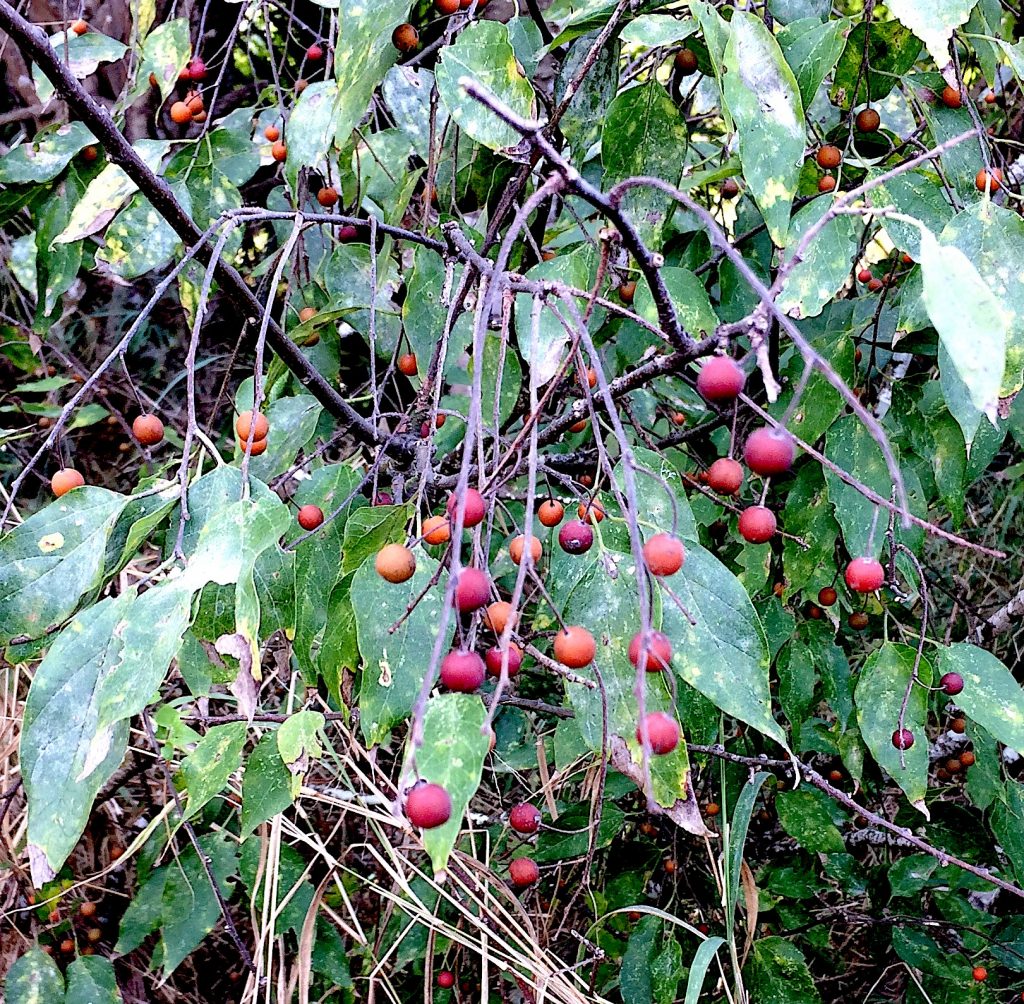
Sugarberries ripen from green to burnt orange. Photo by Green Deane

 Sugarberries are Hackberries with a Southern Accent

Sugarberries like to be near water and that’s why it caught my eye as I coasted by on a bike trail: It was growing on top of a dry hill.

Part of my approach to plants is to answer the questions raised by I.T.E.M., Identification, Time of year, Environment, and Method of Preparation. If you can’t satisfactorily answer them all then you might have the wrong plant. This surgarberry was environmentally out of place.  I had seen such a thing once before with a sugarberry and you have to figure out why. It is simply good form to do so, and safe foraging.

Sugarberries — Celtis laevigata  (SELL-tiss lee-vih-GAY-tuh )– like moisture. You’ll often find a stand of them near rivers. The last time I found a stand out of place they were growing near an irrigation canal.  This time there was no canal. The Sugarberry was struggling with two Black Cherries for one spot, and winning. There was a swale nearby but on the top of the hill it was more for aesthetic reasons than practical. Then I saw the lawn irrigation head nearby. The tree was near a large, long-term business and daily watering was enough to make it think it was living in a wetter spot. Probably a bird dropped a seed while visiting a young cherry and the rest is botanical history.

Sugarberries, also called hackberries, were prized among people everywhere, New World and Old. They are big trees that can grow to 100 feet. The berries are small, sparse, and usually way out of reach. They have been praised since ancient times. Homer, the 900 BCE blind poet of ancient stories that shaped the Greek culture, spoke of them. He said one taste of the hackberry in a foreign land was enough to make a man never want go home again. Honestly, that’s an exaggeration. They are sweet and tasty but a huge amount of work would be involved to get even a cup of  them. Perhaps natives everywhere trimmed the tree short and husbanded it.

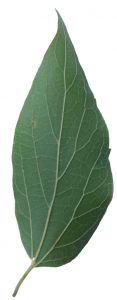
Sugarberry leaves have three main veins at the base. Photo by Green Deane

The berry is just about the same size as chokecherry but the stone is larger. Inside the stone is a kernel. The pulp around the stone is about 10 times thicker than the pulp on a cabbage palm berry which is paint thin, so think ten layers of paint… read not a lot. This is a trail side nibble when in reach. However, the Native Americans had a different idea. Some would grind up the entire berry, stone, kernel and all, and make a paste out of it, either to bake in a fire or to add with fat and parched corn to make a gruel. Others removed the pulp, eating that separately. Then they lightly dried the kernel and cracked it. The inner kernel was considered a delicacy and the outer shell was ground up and used as a spice, usually on meat. The stone can be eaten raw and they also store well in oil. When ground into a powder they can be added to flour to make bread. The entire berry is high in calcium, can be up to 20% protein, and has a good amount of phosphorus as well. It also has a high amount of fat and fiber.

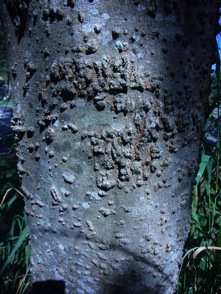
Sugarberries have warty bark

How the tree got its name is a bit of a story. Only in the South are they called Sugarberries. Elsewhere they are Hackberries. That word came via Scottish from the names of some northern Scandinavia cherry trees that mean hag, or old woman.  How the name of cherry trees got to be associated with the Celtis is anyone guess, though the fruit do resemble choke cherries and the tree is considered by some to be a ‘witch” tree. My guess is because the bark of the species is usually warty in patches it might have reminded folk of an old face . That warty bark is one of its identifying characteristics (and in the southwest of North America some hackberries also have thorns.) Don’t confuse the Sugarberry with the Toothache Tree which has very aromatic, medicine-smelling leaves and thorns.  The Sugarberry does not.

Celtis is the ancient Greek name for a lotus with sweet berries, and was used by Pliny. Laevigata means smooth, and most of the sugarberry’s bark is smooth but there are always tell-tale corky warts, usually without thorns.  It is interesting that English speakers would refer to the tree as the Sugarberry and the Greeks, a world and language away, call their tree, the C. australis, the Honeyberry. Clearly the dry sweetness impresses people.

While the C. laevigata is the common species in the lower half of the United States, there are several species, many of them edible, and found throughout North American and the world. Check out the species nearest you.  Most hackberries like highlands, the sugarberry the low lands. Oh, It is a common host for mistletoe, is a good candidate for bonsai, and like the black walnut its leaf litter discourages growth of other plants.

And at Emerson Point Preserve, Palmetto, Fl.,  there is a “sugarberry” with teeth on the leaves. Current guess is that it is a “Japanese Sugarberry.”  

Green Deane’s “Itemized” Plant Profile

IDENTIFICATION: Leaves  alternate along the stem, medium to dark green, 2 to 4″ twice as long as wide, oval,  serrated only on upper half of leaf,  asymmetrical (lop-sided) three prominent veins, leaf spots and galls common, wigs zig-zaggy. Leaves turn yellow in the fall. Flowers greenish-yellow in spring. Fruit a green berry turning to orange, red or dark purple. Branches droop. Gray bark has patches of corky warts.

TIME OF YEAR: Fruits late summer, fall

ENVIRONMENT: Likes full sun and prefers moist rich soil.

METHOD OF PREPARATION: Ripe fruit pulp raw or cooked. Stone and inner kernel raw or cooked, stone shell ground up as seasoning, kernel roasted as a delicacy, entire berry pulp and seed crushed and cooked. Dried berries ground into a powder for adding to flour. The meal you make from crushed berries can be cooked in water to make a tan-colored Milk, quite tasty and one of the easiest way to consume the fruit.


{ 35 comments }

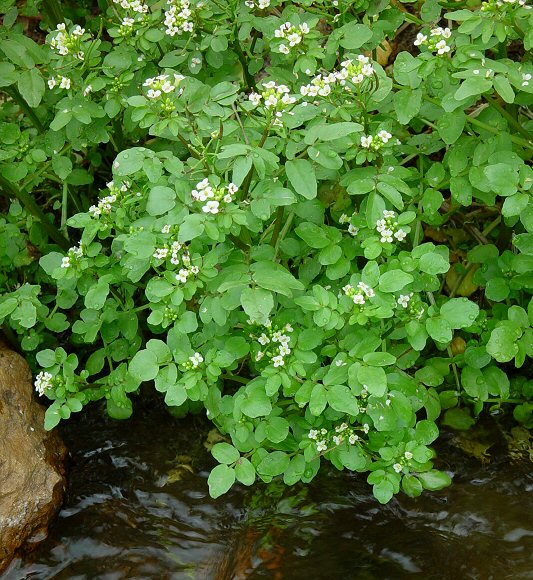
Watercress is an escaped non-native found througout most of North America

Florida is the Winter Watercress Capital of the U.S.

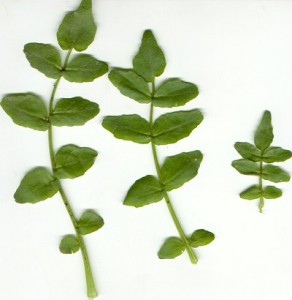
Leaf shape can vary

Nasturtium officinale (nas-STUR-shum oh-fis-in-AY-lee ) is one of the oldest leaf vegetables cultivated by man. It’s naturalized in Florida and in fact all of North America, Europe and Asia, the latter two where it is native. Wild watercress is a short-lived edible in central Florida. January to March and maybe a little of April just about sum up its season, and that’s being generous.  Of course the farther north you go the later in the season it can be found such as in Gainesville in May. Locally Watercress  can also be found in drainage ditches leading to the St. Johns River and occasionally along the banks of the St. Johns River.  No doubt in other agricultural areas such as Lake Apopka it can also be found as well as in canals. The only place I have found it past its season is downstream from natural springs that maintain a 72F temperature year round, such as Wekiva Springs.

And while it can indeed by found throughout North America central Florida is the capital of winter watercress production in the United States. The old winter watercress capital was Huntsville, Alabama, but that city traded the mustard member for aerospace technology. I discovered watercress about 45 years ago in Sanford, Fl., some 95 miles north of here.

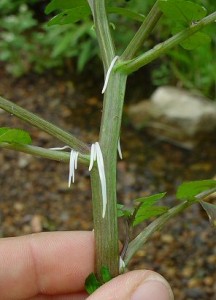
Given a chance it will root at the nodes

In 1863 Francis Peyre Porcher in his book the “Resources of the Southern Fields and Forests, Medical, Economical and Agricultural, Medical Botany of the Confederate States” wrote of watercress: “Introduced. Ditches Florida. Northward. This plant came into pretty high favor about a century ago [1776] as a spring salad; and it soon obtained preference to all other spring salads on account of its agreeable, warm, bitter taste, and for sake of its purifying, antiscorbutic and diuretic properties. It was greedily gathered in all of its natural habitats within some miles of London for the supply of the London Market, and eventually became an object of regular, peculiar, and somewhat extensive cultivations.” To read more about Dr. Procher read my article on Smilax.

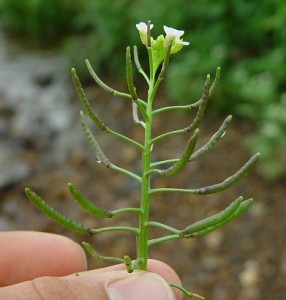
Toothpick seeds pods are called siliques

Man is not the only consumer of Watercress. It is eaten by ducks, muskrats, and deer who know a good thing when they find it. Watercress contains significant amounts of iron, calcium and folic acid, as well as vitamins A and C. It has a long history of medicinal use and was even popular in Roman times.  The Greeks thought it was good for the brain and thinking. Many benefits have been attributed to eating watercress, such as that it is a mild stimulant, a source of phytochemicals, a diuretic, an expectorant, a digestive aid and anti-cancerous. Research in Iran has shown it to have antioxidant potential as well as able to lower cholesterol and triglycerides. Research in the United States suggest it has a role in preventing or treating cancer.

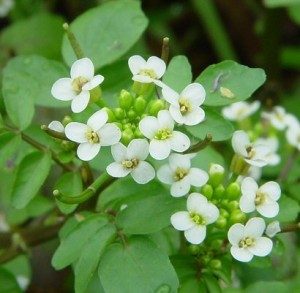
Typical four-petaled mustard flower

Cultivated since ancient Persian times, watercress may cause cystitis in some people particularly women (bladder inflammation.)  Its consumption is not advised for those who have a delicate stomach or suffer from acidosis or heartburn. I have a temperamental tummy inherited from one grandmother but cooked Watercress has not bothered me. I like it with salt, pepper, olive oil, a sprinkle of garlic and balsamic vinegar.  (I only eat it raw when I collected immediately downstream from a very clean spring.)  Excessive or prolonged use may lead to kidney problems and some advise against eating it during pregnancy.

Nutritionally, watercress is no lightweight. It’s 19 calories per 100g and is 93.3% water. However, it has: Protein: 2.2g; Fat: 0.3g; Carbohydrate: 3g; Fiber: 0.7g; Ash: 1.2g; Calcium: 151mg; Phosphorus: 54mg; Iron: 1.7mg; Magnesium: 0mg; Sodium: 52mg; Potassium: 282mg;  A: 2940mg; Thiamine (B1): 0.08mg; Riboflavin (B2): 0.16mg; Niacin: 0.9mg; C: 79mg. Recipes below.

There are actually several “watercress” in North America you might want to investigate. They include: Barbarea vulgaris, Barbarea verna, Cardamine bulbosa, Cardamine pensylvanica, and Arabis alpina.

“Nasturtium” means literally “twisting nose” and was the Roman name for peppery watercress.  Officinale means it was approved in ancient Rome to be sold as a food or medicine in special stores. The Greek name for watercress, Nerokarthamon, broadly translated, means “able to tame Nero’s mind.” It was thought in ancient Greece Watercress could cure insanity.

Creamed Watercress

2   Tbsp  Butter

1   cup chopped onions

2   cloves  garlic, minced

2   Tbsp flour

1   cup  Half and Half

1/4   tsp nutmeg

8 to 16 ounces of watercress, chopped

Salt and pepper to taste

Heat butter in braising pan on medium low. Add onions and garlic; cook about 10 min, until onions are soft and translucent.   Add flour. Cook, stirring occasionally, 2 min.  Stir in half and half and nutmeg; bring to a simmer and cook 2 min.  Add watercress to pan in small batches; cook, stirring frequently, 3-4 min, until watercress is wilted. Season to taste with salt and pepper.  During cooking you make have to add more half & half depending on the consistency you want. For a richer side dish use cream.

Chickpeas and Watercress

1 can chickpeas in water ( also called garbanzo beans) or 1 ½ cups precooked+ ½ cup water

½ onion, diced

3 tbsp olive oil

Juice from of one lemon, ( approx 2 tbsp)

½ tsp curry powder

½ tsp coriander powder

½ tsp cumin

½ tsp gram masala

1 large bunch of watercress or two handfuls, rinsed & trimmed

* In a large skillet or frying pan, saute onions and garlic in olive oil until soft about 3-5 minutes. Add chickpeas straight from the can., including all the water. Add the spices and lemon juice, cover, and simmer about 10-15 minutes, stirring occasionally, adding more water if needed, until chick peas are browned and soft.

* Reduce heat, add spinach and cover. Allow spinach to wilt for 2-4 minutes. Serve immediately.

 Watercress Pesto

2 garlic cloves, chopped

2 tsp grated lemon rind

5 tbs olive oil, plus extra drizzle

400g spaghetti or tagliatelle

12 cherry tomatoes, halved

12 pitted olivesMethod

* Preheat the oven to 180 C

* Roughly chop 80g of watercress, and place in a food processor with half the parmesan, the pine nuts, garlic and lemon rind. Gradually add the oil and process to from a smooth paste. Season with salt and pepper.

* Cook the pasta in a large pot of salted boiling water until al dente.

* Meanwhile, place the tomatoes, cut-side, on a baking tray. Drizzle with olive oil and season with salt and pepper. Cook in the oven for 6-8 minutes or until just starting to wilt. Toss the pasta with the pesto, tomatoes, olives and the remaining parmesan and watercress.

 Watercress Tabouleh

1 cup bulgur

2 Tblsp chopped walnuts

6 tsp walnut oil or extra virgin olive-oil, divided

2 shallots, chopped

1 Tblsp finely chopped garlic

12 cups thinly sliced watercress (about 2 bunches), tough stems removed

1/3 cup chopped pitted dates

2-3 Tblsp water

4 tsp white-wine vinegar

½ tsp salt

* Prepare bulgur according to package directions. Transfer to a colander and rinse under cool water; drain. toast walnuts in a small dry skillet over medium low heat.* Cook until the shallots start to brown, 4 to 6 minutes.

* Add garlic and cook stirring, until fragrant, about 15 seconds.

* Add the watercress, dates and two tablespoons of water and cook, stirring occasionally, until the greens are tender and the water evaporates (add another tablespoon of water if the pan is dry before the greens are tender) about 4 minutes.

* Stir in vinegar, salt and the prepared bulgur; cook until heated through, about 1 minute.

* Drizzle with the remaining one teaspoon of oil and sprinkle with the walnuts before serving.

 Watercress Soup

In this recipe, freshly harvested watercress is cooked with potatoes, chicken stock, milk, onions and garlic to make a deliciously light soup.  To ensure the watercress retains its tender crunch, add it to the soup last. If you wish, you could also blend all the ingredients for a smoother soup.

Ingredients:

* 2 bunches of watercress, roughly chopped

* 1 medium potato, cubed

* 1 medium white onion, diced

* 2 cloves of garlic, crushed

* 1 Tbsp of butter & 1 Tbsp of olive oil

* 2 cups of organic chicken or vegetable stock

* 2 cups of milk

* 2 tsp of sea salt

* 1/s tsp of freshly ground black pepper

Preparation:

1. Heat the butter and olive oil in a pot over a medium heat. Add the onions and sauté for 30 seconds. Turn the heat to low and sweat the onions for 15 minutes. Stir them occasionally to ensure they don’t caramelize. 2. Turn the heat back up to medium-high and add the garlic. Fry for 30 seconds. 3. Now add the potato cubes, salt and pepper and fry for 1 minute. Add the milk, the stock and stir. 4. Let the soup simmer for 10 minutes. Add the watercress and stir well. Turn the heat down sightly and simmer for 5 minutes. 5. Add a pinch of black pepper and serve immediately.

Green Deane’s “Itemized” Plant Profile

IDENTIFICATION: A coarse, many branched pungent member of the mustard family with deeply divided compound leaves, low-growing, dense in suitable small waterways. It has the customary four-petaled flower of the Brassica family, white petals, and seed pods on stems. It grows in the same location and time of year of young water hemlock. Pick carefully.

TIME OF YEAR: January to April in Florida, spring though fall in some temperate climates.

ENVIRONMENT: Likes to grow in clean, running water but not rapids.

METHOD OF PREPARATION: Raw or cooked. Wholesome water is hard to find so cooked is the preferred way. Prepare like any mustard green.

HERB BLURB

Research supports traditional views that watercress has medicinal applications. Herbalist use it as a stimulant and diuretic, research suggests it has antioxidants, the ability to lower some blood lipids, and to prevent or treat cancer, particularly that of the lungs.


{ 8 comments }