Sunny Savage

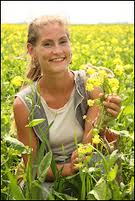
I had the pleasure this past week of having the well-know forager Sunny Savage visit two of my classes here in Florida (If you think she is attractive on TV you should see her in person.)

She and her husband Ryan were in the state looking for a sail boat and they stayed locally. She had quite a few stories to tell particularly about the taping of her shows.  It was quite nice to have another foraging notable on the trail because I don’t have the opportunity to be a student too often any more and it is fun to learn.

I will tell you more about the boat and plans this adventuring couple have as they shape up, but I think a world tour is in the offering.

{ 2 comments }

Why Forage?

Often I am asked “why forage for wild food?” Why that question is asked is probably worthy of an article unto itself. But here let’s focus on one answer (out of several.) Let’s look at cost.

The U.S. Bureau of Labor Statistics released recently their March number crunching. Food prices in March rose 2.4%, the sixth month in a row food prices have gone up, and the largest jump since 1984. But that’s counting everything. If you look at specific categories the numbers are more revealing.

Fresh and dry vegetables went up 56.1%, fresh fruits and melons 28.8%, fresh eggs 33.6%, pork 19.1%, beef and veal up 10.7% and dairy products up 9.7%.  All of that makes the Bidens alba growing in my yard all the more attractive, maybe even that pesky squirrel. Some think “food inflation” will continue even if the economy improves. Apparently that is what is happening in India now. Some investment gurus are talking about investing in, literally, food, and others like Warren Buffet are recommending investment in agriculture or countries with a lot of agriculture.
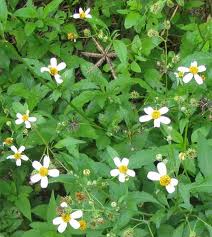
Bidens alba

It’s interesting the price of plant products rose more than animal products, though animal products are also dependent on plants, however not necessarily plants that man grows. The difference is commercial plants for people need chemicals and tending whereas many plants for animals — range grass for example — do not, nor do most of the weeds we eat. However, contrary to what most folks think, foraging is not free. There are costs. Discounting time, one has to get to a place to forage. One has to transport the collected food and the food has to be cleaned. That requires some cost, from calories to bike tires to gasoline to clean water.

One also needs to know which plants to pick. That knowledge can come free, and/or from lessons, books, and internet services. My personal plant library of some six dozen books cost me about $1,000. You may never own more than one foraging book, but my point is wild food is not totally free. But, it is the next thing to free, and the cost is much less than store-bought food and is less subject to inflation and taxes.  Once you have foraging knowledge inside your head any cost gets prorated over time to the point of being negligible.  A $20 course and a $30 book totals up to $50 but if you and yours can eat for a lifetime it’s a good investment. It’s also a certain measure of independence and security.
I’m not suggesting foraging as an answer to the growing food problem.  With unemployment hovering near 17% (depending who’s counting and how they count) there are nearly 40 million Americans on food stamps, up 22.4% over this time last year. The government is now paying out more in benefits than it is taking in. At some point entitlement programs will be cut back.  However, 40 million people can’t go out and forage even if they knew how. The impact on the environment would be devastating. The reality is not even one percent of the population (400,000 persons) are interested in foraging. I doubt that even one tenth of one percent (40,000 persons) are interested. Maybe one hundredth of one percent might be interested.

This we know: Food prices are rising, sharply. There is some cost associated with learning how to forage, and most people are not interested in foraging — at least not now. I think that adds up to a strong argument. Not only is it economical to forage, but it will be a steady food supply because others don’t see the value it represents. Even if they recognized its value today they are far behind you in the learning curve. Learning to forage can mean you have something to eat when they don’t. You certainly have more variety and better nutrition.

When you learn to forage you are doing more than identifying edible wild plants. You are also developing a skill and confidence. No matter how dire the need, those cannot be learned overnight. Foraging is like rigging, you learn mostly by doing and that cannot be rushed. You’re already way ahead of billions.

{ 2 comments }

If you could choose one wild plant to become a commercial product, what would it be?

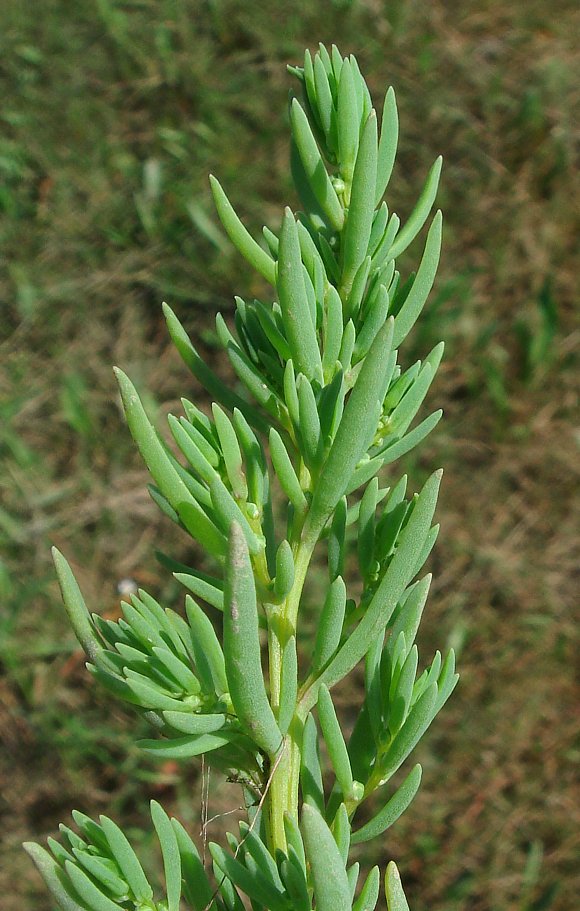
Many people have tried to make poke weed (Phytolacca americana) a green in your local grocery but toxicity and the required two-boilings have always plagued its commercialization. The ground nut (Apios americana) was one of the original exports from colonial America but it has at least a two-year growth cycle. Louisiana State University (1984-96) developed a commercial variety but the program disappeared when the professor-in-charge, Bill Blackmon, changed colleges. In 1962 Professor Julia Morton of the University of Miami recommended Spanish Needles (Bidens pilosa) become a commercial product. A half a century later that hasn’t happened, perhaps because of flavor or the fact it can grow almost anywhere as a weed.  My candidate would be Suaeda linearis, Seablite, and if I could figure out how to do it I would.

Seablite has everything going for it except perhaps for its name. It’s mild but tasty, has excellent texture, can be eaten raw or cooked though cooked is the usual way. It’s nutritious, stores well, looks good, easily grows in salty ground (read unused land) and even feels good to handle.  About the only downside, for me, is that I have to drive about 60 miles to get some. I need to introduce it to my garden.

Think of Seablite as a Chinopodium that likes to grow in salty places, either near the ocean or salt licks. It has a high sodium content but boiling reduces that significantly.  If you live anywhere near the ocean or inland salty areas, now and the next few months is the time to go looking for seablite and seepweeds.

{ 4 comments }

Plant An Alarm Clock

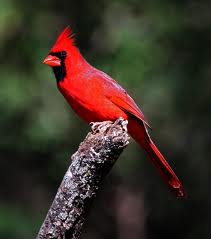
I don’t need an alarm clock. I have a cardinal.

I don’t know exactly which cardinal it is, and if I did I might be tempted to shoot him. Cardinals are early risers. They sing with the dawn. Mine’s a night owl. He starts his territorial song marking around 3:30 a.m., or about three hours before sunrise. I wouldn’t mind if he were far away, but he’s right outside my bedroom window, and I know why. My mulberry tree.

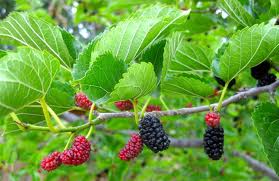
It’s a red mulberry I planted just about a decade ago. This time of year it’s heavy with fruit, and my cardinal is staking his claim early. Like bluejays who argue in a forest, all yelling “My tree, my tree, my tree”  this early-to-bed early-to-rise cardinal is announcing first dibs on “his” mulberry tree.

Morus rubra. Think of it as large blackberries on a tree, sweeter, and no thorns. To the cardinal, and I’m sure his nearby bride, this is feast time. It’s fast food, gourmet cuisine and good dining all in one. What the cardinal clan doesn’t eat I will be turning to pies. In fact, even the young leaves are edible, cooked, though the berries are so good one rarely ever gets to the leaves.

As you might suspect I started this essay at 03:40 a.m. I’m sure as the season moves on so will he and I’ll be able to get some sleep. Until then there’s only one thing to do: Grab a flash light and go get some breakfast off his tree.

{ 0 comments }

Monkeys and Weeds

Put five monkeys in a large cage. Then put a step ladder in the cage with a banana on top. Soon the monkeys learn to go up the step ladder and get the banana. Life is good, the monkeys are happy.  Now you introduce change.

You put a banana on the step ladder as usual. When one of the monkeys starts to go up the steps to get the banana you spray the rest of the monkeys with very cold water. That irritates them mightily. Every time a monkey starts to go up the step ladder to get the banana the other monkeys get sprayed with cold water. Soon they will not let any monkey go up the step ladder to get the banana.

Now you take one monkey out of the cage and put in a new monkey. When the new monkey, who has never been sprayed with cold water, starts up the step ladder to get the banana the other four monkeys beat him up. He soon learns not to go up the step ladder to get the banana.  Take out another monkey and replace it with a new one who has never been sprayed with cold water or beaten up for getting the banana. As soon as he starts  up the step ladder to get the banana he is beaten up by the three who have been sprayed and by the one who has never been sprayed but has been beaten up. Soon all five monkeys, old and new, ignore the banana.

In time you can replace all of the original monkeys in the cage, one by one. You now have five monkeys who have never been sprayed with cold water but they will beat up any monkey who tries to get the banana. That is the basis for “that’s how we do things around here.”

Enforcing a weed ordinance is like beating up the new monkey for doing something quite understandable and not wrong. But, since the creation of and reasons for such ordinances are forgotten, and how they were enforced have changed, now the extreme rules. The learned behavior is now how it is done.  So when you let dandelions grown on your lawn you have to contend with ordinance monkeys who want to (legally) beat you up but they really don’t know why they are doing it other than that’s how it is done around here.

In the journey to a better planet environmentally, not all of the battle is deciding to lead a green, plant-friendly, environmentally sound life. It also has to include confronting ordinance monkeys and retraining them. A dandelion in your lawn is not a bad thing, no matter what the home owners’ association president says or the local county code enforcement officer. They get paid, or are given the power, to (legally) beat you up for doing something quite natural and understandable. If they don’t stop you they don’t get paid, and or lose power.  Think cold water.

Consider my little front “lawn.” In 10 years no pesticides have been put on it. No toxic plants have been planted. Little water has been pumped out of the aquifer to water it. Little fuel or machinery has been used to upkeep it. It produces food for me and wild life, which it has a lot of.  It has also violated county ordinances by climbing the step ladder.

Consider my neighbor’s lawn for the past 10 years. Pesticides are dumped on it nearly weekly. Toxic plants are the mainstay where there isn’t decapitated grass, grass that requires much fuel and machinery to keep artificially coiffured. Much water is pumped out of the aquifer to keep it green. No wild life lives there. It produces no food for the family or local creatures. It is ordinance perfect. The banana that is left alone.  And yet, that is exactly backwards from what it should and needs to be.

The minor battle is changing your life to being plant and environment friendly. The major battle is retraining the monkeys.

{ 1 comment }