Practicing Homelessness

There are less Christmas parties this year than in the past, with economic conditions reducing the usual yuletide cheer. Still, there are some traditions. Former employees of a company I used to work for meet annually for a seasonal get-together. It’s a time to catch up, confirm that nearly everyone is still unemployed, and promise to keep in touch.

I was chatting with eligible Hillary, who, if I were half my age, would not be safe. As usual the topic came around to activity with wildl edible plants, and other things, too.

What you’re doing,” she said, “is practicing to be homeless.”

Her comment took me by surprise and intrigued me. While not true in reality — a least not yet — it was an astute observation. On reflection, my answer would be both yes and no. If I were homeless now I think I could find tastier and better food in the evening dumpster behind a restaurant than in the woods across the road. So there are two kinds of homelessness to consider, being homeless while society is functioning, and being homeless when it is not functioning. In fact, some 35 years ago I knew a bum who basically lived off restaurant toss outs. His name was Major, and he got all his tobacco needs from cannibalizing cigarette butts tossed away in ash trays.

If Hillary was thinking about no society then she was quite right. Without intending so I am practicing to be homeless, but not foodless. There is no doubt I — or you — could live off wild foods, especially if we toss in a fish, bird or rat fairly often, though I suspect cat and dog would be the more common meat. It would not be a diet of choice, and would only vary by the season rather than by the meal. If you dig up a 20 pound yam it has to be eaten or preserved. But, it is doable.

On more reflection, foraging food is a matter of degrees. A depression could reduce the number of restaurants with food to throw a way, and the competition for any scraps that made it to the dumpster could be intense, if they got to the dumpster. So perhaps foraging is a spectrum, the restaurant dumpster on one end and the woods on the other. More to the point: If Hillary had made her comment five years ago, it would have sounded silly. Today it doesn’t.

I’ve never really worried about food. A tent over my head has always been the more pressing issue. Perhaps it is time to reconsider both.
{ 0 comments }

Foraging After Dark

I took a residential walk this evening to identify trees after dark. Yes, after dark. Now why do a silly thing like that?

I know someone who has his foraging students draw the plants they are studying, even if they can’t draw. The purpose is to accentuate the important elements of identification. Wandering around trees after dark is much the same thing.

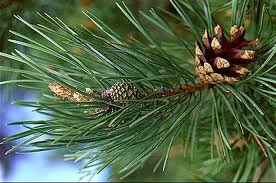
Aromatic pine needles

Pines are fairly easy to identify after dark in a residential setting, meaning a few street lights now and then. There are seven species that grow locally, Slash Pine being the most common. The foliage, needles, is a good giveaway, and the pine aroma. But more than that pines grow tall, which is their downfall. They don’t have roots that spread out like the oak. They send down a tap root so the pine stands like a brittle spear in the ground. When tropical force or hurricane winds blow the pine shatters.

Large rough leaves

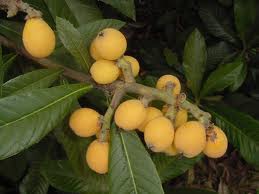
Then there was the loquat, an import from Asia. There are two varieties, each with long rough wrinkled leaf, with many herbal uses. Some of them blossom in the fall, some blossom in the spring, who knows why. But the leaf and fragrant blossom gives it away to the touch and nose.

The nose is the detective after dark. I found far more Laurel Cherries than I thought, many of them quite large. How can you identify them after dark? Break a leaf and smell it.  If you smell almond you have the laurel cherry, except it is not almonds you smell but cyanide.  Can that leaf kill you? One might, several can.

Live oaks are everywhere locally but I found a Black Jack Oak. How can I tell? I held the leaf up to the street light. It was shaped like Casper The Ghost holding, his arms out tapering at the ankles. The Water Oak is similar except Casper is not holding his arms out.

A unique leaf

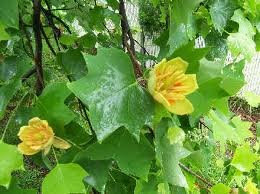
An odd leaf shape also helped identify the Tulip Tree, which has nothing to do with tulips. It is also called a yellow poplar but it is not a poplar. It has a large leaf with two short arms and a square end, slightly indented. The Sweet Gum was the only star leaf of the evening.

There was an Arbor Vite, a cedar masquerading as a lawn tree. The vertical branch growth and aroma gives it away. Aroma also gave away the many camphor trees. It is hard to believe no camphor tree here  more than 138 years old, which is how long ago they were introduced locally.

The crape myrtles are naked smooth so they are easy to identify, as are the well trimmed viburnums, landscape trees that require a lot of attention but produce nothing but green leaves.  The square hedges are Japanese yew. The seed is toxic but the aril is edible.

In the dark the Norfolk Pine, which isn’t a pine, and the Monkey Puzzle tree look similar. One careful touch, however, is all you need. The Norfolk Pine is, comparatively, soft and the Monkey Puzzle Tree well-armed with sharp leaves.

Pointy Holly

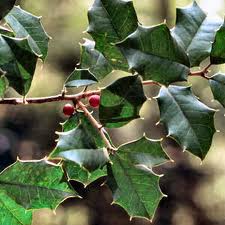
The conundrum of the evening was a holly. That it is a holly is not the issue, but which holly. Is it the American Holly, which can be made into a caffeinated tea, or the English Holly, which has some uses? Best guess, the American Holly, roundish leaves not bent and distorted as English Holly can be.

Oddly, I see few palms, which are easy to identify in the dark. They are also more grass than tree. One would think in a Central Florida neighborhood palms would be accented. I actually see more sagos than palms. Sagos are deadly. They are also cockroach high rises but they look nice in the daylight. That reminds me of what one does not see after dark, all the imported ornamentals that are usually quite poisonous.

Florida’s natural landscape is a resource. Coiffured lawns are usually toxic plant sites. Most plant poisonings occur in your own yard, followed by your neighbor’s yard. It is rather bizarre that when we left behind farming we surrounded our homes with poisonous plants. Most ornamentals are colorful. After dark they are but shadows among the real plants.

{ 0 comments }

Foraging before there was botany had to be a lot easier than after botany. Someone showed you what was edible and that was that. Of course somewhere back along the line a few thousands years there was some experimentation but for most of human history it foraging was a case of eat like mom ate, or the tribe.

I grew up in an area where fiddlehead ferns were a Rite of Spring, if not one of the endearing hold overs from the past. When I moved to Florida I didn’t leave that behind but there are less fiddleheads here and harder to find. Also, where it is green most of the year spring greenery just isn’t as significant as it is in the gray north.

Sword Fern Tubers

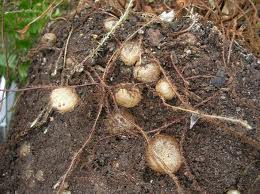
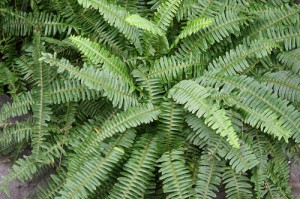
The other displeasure was personal: My yard in Florida was filled with a non-edible fern that took over everywhere there was some shade. And as much as I could tell it never produced a single fiddlehead either. I knew the fern well because I was always digging it and its tubers up, moving them or tossing a few.  In eight years it has survived one hard freeze and cover virtually half my open space, the reducing mowing. The fern was also the only fern on the exotic pest list of the state of Florida. That alone should have been a clue.

Sword Fern,

My fern is Nephrolepis cordifolia, a non-native “Boston” fern that showed up in Florida from somewhere in the 1930s. It caused quite a stink in that it was, and is, often sold in place of the native fern Nephrolepis exaltata, the Sword Fern.  But of the five Nephrolepis in Florida only the cordilfolia had tubers.  That should have been the second clue.

I recently bought a Florida fern book because I simply wanted to know more about them.  There’s around 160 different ferns in Florida and they ain’t easy to tell apart. Determined to expand the choice of fiddleheads, I was looking for edible ferns on the internet when I hit on one page that said the tubers of the N. cordifolia were edible.

Edible? None of my 40 books had said that but I did find a botanical study in Nepal on the nutritional elements of the same fern. It was also written up in a book but that particular page is not available on the internet. So I am left with the phrase the tubers of the N. cordifloia “are eaten fresh and roasted.” And in time I learn so they are, and now that lawn of non-edible ferns has purpose again.


{ 3 comments }

Non-Green Environmentalism

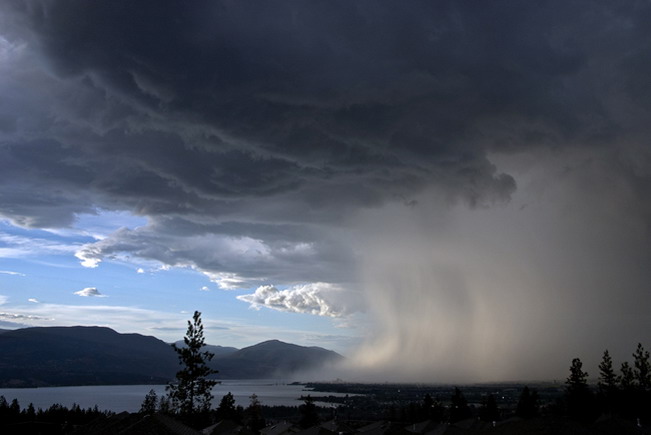
Mature Thunderstorm

Early on I developed two interests. One was foraging for wild plants. It assured me food where ever I went. The other was watching clouds, one of the few things you can do on your back….and in public  On a 24-hour basis you can predict the weather just as well as the weather bureau, just by lying in a hammock and studying the sky. Those two interests enjoy the company of each other here in Florida.

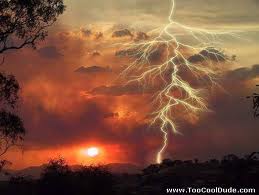
Central Florida is the lightning capital of the United States and second in the world after Rwanda in Central Africa, which bests Florida by 2.5 times more strikes. Still, thunderstorms grow in a very predictable way here and one can watch their growth and their life cycle. Plants are the same way. When you are in your hammock all you have to do is look a little to the left or right to see a plant to study should the clouds blow away. But clouds and plants have one other thing in common: People ignore them.

As little as 70 years ago, or if you like round numbers, 100 years ago, most humans on the earth watched the sky and plants intensely for survival, food, shelter, advanced warning and contentment.

Until about World War II most people still lived an agrarian life. In the second half of the 1900s most people left the farm. And by 2000 most people had left the earth for the Internet.  Like books, radio and television before it, the Internet has removed us even more from the world around us.

On one of my plant videos a fellow left a comment that seemed obtuse so I looked at his YouTube profile. In 15 months he had watched 19,400 videos. That’s an average of 46 videos a day. Even if that were the only Internet access he had that is an amazing amount of time on the Internet…. and if he owned a television…. well, you see my point.

Not too long ago I had to do some research and among the findings was those under 30 or so view the Internet as reality and life off the net as not reality.  In a century we have gone from very attuned to the world around us to viewing it as not real.  When one considers it is the world around us that keeps us alive it is quite a thing to ignore.  Which brings me to the environmental movement. I’m not sure the environmental movement is … well… interested in the environment.

I started my videos and site because my environmentalist friends could barely tell apples from oranges, especially if the packaging was the same. Environmentalism has taken on a lot of politics and even militancy, such as burning down businesses. To me environmentalism is walking along a bike trail and seeing a 20-foot wide brown swath on each side, sprayed with an herbicide to keep the plants away from the trail. That’s quite brilliant: Build a trail though nature then kill nature around the trail.

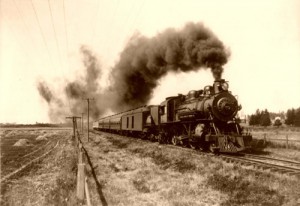
To me environmentalism is personal not political. Can I eat that sow thistle or has the railroad company sprayed along here? (Active railways are, by the way, among the most toxic places to forage because most intentionally use extremely potent herbicides.) The environmentalism movement is very concerned about greenhouse gasses which may or may not be significant yet the greatest threat lies at our feet, the pollution of soil and water. Just as humans have drifted away from being attuned to the earth environmentalism has drifted away from the environment. Environmentalists tend to ignore the environment like police ignore traffic laws. I think we need to get back to the roots of things, pay more attention to the earth, and the sky. Air pollution and cloud watching don’t mix.

{ 2 comments }

For the second time recently I was reminded of development. My favorite field of lamb’s quarters is now an upscale gated community. And where I used to forage for Apios americana, the groundnut, is million-dollar houses on a brooklet … it doesn’t take much water to increase real estate values.

For tens of thousands of years, perhaps hundreds of thousands, groundnuts grew along this little stream (less than a foot deep, often jumpable.) But houses were squeezed in between it and the road. You know the kind:  4,000 square feet home for a divorced overachiever with 2.4 kids and a .6 girlfriend. And gone were the ground nuts, or at least access to them. I could trespass a business to the south then walk/kayak down stream a mile and float through the gated community, stopping to steal a few but … I understand property rights but we are talking about people who’s view of greenery is golf lawns. I’ll gladly take the groundnuts off their property so they can have more decapitated grass..

There is a growing problem of people controlling access to land they have complete disdain for. This bladder stream is called the Little Wekiva. It joins the Wekiva River. That river  flows some 16 miles to the north to the St. Johns River. I know of no public access to the Wekiva River. There are three places that charge a fee, and of course, there are numerous home owners along the way, the majority of whom can’t tell an orange tree from poison ivy.  Access from one bridge to the river was closed after a dunk underage teenager dove in and died. The logic escapes me: Responsible citizens are banned from the river because an unsupervised idiot dove in head first from a 20-foot bridge into four feet of water. I call that a self-correcting problem and no reason to ban adults from a natural resource owned by all.

{ 1 comment }