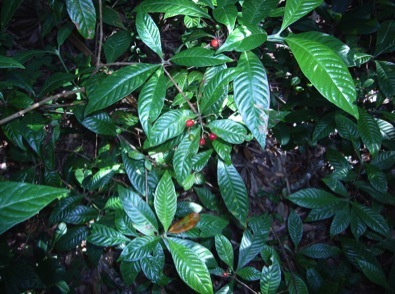
Wild Coffee is usually found on the coast

Psychotria nervosa Florida Style

Because I am constantly asked about it: Yes, you can eat the pulp off the seeds of the wild coffee, and yes, you can make a brew from the seeds. That’s the good news.  Now the bad news:

The pulp lacks character. Let’s call it bland with a musty aftertaste, but edible. Some detect a hint of sweetness. As for using the seeds as coffee: Not a good idea but don’t take my words for it.  Professor Daniel Austin, author of Florida Ethnobotany, says the brew tastes bad and can leave you with a headache. I would add they also do not have any caffein. If caffein is what you seek, read my article on hollies.

A native of Florida, the wild coffee bush, Psychotria nervosa, (psy-KO-tri-a  ner-VO-suh) has red berries from about December to March. It attracts cardinals, mockingbirds, catbirds and spicebush swallowtail butterflies. The attractive plant is easily identified by shiny beautiful evergreen foliage and the bright red berries. Prominent veins give the plant a textured look. You’ll find it on hammocks, barrier islands and in landscaping. Wild coffee likes filtered sunlight and living under cabbage palms and scrub oaks.

While “Wild Coffee” contains no caffein some members of the family are hallucinogenic. The roots can be used like ipecac to induce vomiting. One relative found in warmer climates, Psychotria lingustrifolia, the Bahama Wild Coffee, has edible pulp as well.

It is fairly easy to tell you have a wild coffee plant, but which one is a bit more of a challenge. Psychotria nervosa is an erect, evergreen, branching shrub to 10 feet, smooth to sometimes hairy leaves, sometimes hairy stems. Leaves opposite, simple, no teeth, shiny green above, elliptical to oval, 2.5 to 6 inches long, two inches wide. Flowers white to eight inch, tubular with four or five lobes, stemless clusters, where the upper leaf stems meet the main stem, blossoming usually in spring and summer. Its sessile flower clusters (stemless) is one of two Psychotrias like that, the other is the P. sulzneri but the sulzneri has greenish-white flowers and upper surface of its leaves are dull green/blue and not shiny. It is always hairy.  P. lingustrifolia has skinny leaves and long stalked flower clusters.  P. punctata has stalked flowers like the lingustrifolia but has dots under leaves.

To recap: If the leaves have dots on the bottom it is a punctata. If it has long-stalked flowers/berries and no dots it is the lingustrifolia. If it has non-shiny leaves it is the sulzneri. If it has shiny leaves, short or stalkless white flowers/red berries and no dots, it is the nervosa. See below for a similar looking non-edible plant.

Psychotria means having medical applications, nervosa means conspicuous veins. Lingustrifolia is tongue like leaves, punctata is dotted, and sulzneri... that’s anyone’s guess but there was a C.F. Sulzner in Miami who was involved with helping the New York Botanical Society about a century ago. P. nervosa also used to be called Suzlner’s Coffee.

Green Deane’s “Itemized” Plant Profile

IDENTIFICATION:  Psychotria nervosa is an erect, evergreen, branching shrub to 10 feet, smooth to sometimes hairy leaves, sometimes hair stems. Leaves opposite, simple, no teeth, shiny green above, elliptical to oval, 2.5 to 6 inches long, two inches wide. Flowers white to eight inch, tubular with four or five lobes, stemless clusters, where the upper leaf stems meet the main stem

TIME OF YEAR: Blossoming usually in spring and summer, fruits in winter.

ENVIRONMENT: Shady areas moist and well-drained to moist but not water logged; hammocks, barrier island.

METHOD OF PREPARATION: Flesh of the seed is edible raw, seeds can be roasted and ground for a black drink that may give you a headache.
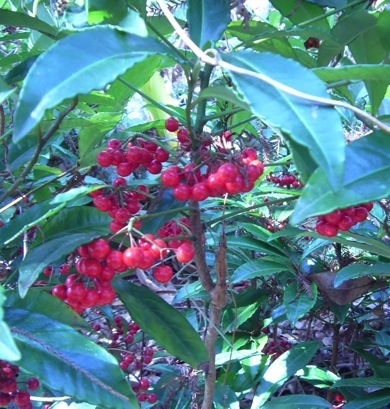
Coralberry’s an invasive from Asia. Note its veins are not as prominent as Wild Coffee and the edges are crenate, resembling blunt teeth.

Don’t confuse the Wild Coffee with the Ardisia crenata, or coralberry. Note the leaves of this ardisia are scalloped, like blunted teeth. The Wild Coffee leaf edges are smooth, also called “entire.”  (Kre-NAY-tuh means scalloped.)  I have eaten the pulp off one berry and suffered no ill effects that I know of.
 

{ 15 comments }

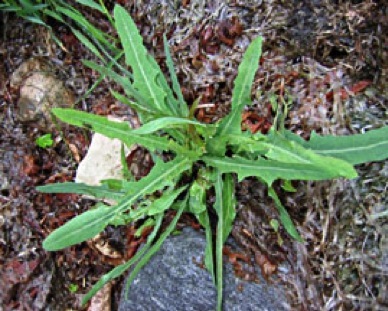
Lactuca Floridana early in the season

  Lactuca floridana:  Let Us Eat Wild Lettuce

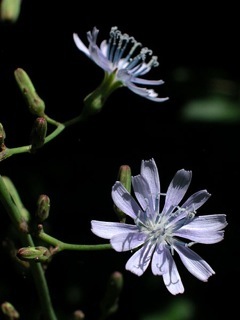
Lactuca floridana has blue blossoms

Wild lettuce is not as tame as garden lettuce.

Garden lettuce is one of those nearly flavorless nearly nutritionless affectations of agriculture. Don’t misunderstand me: I like domesticated lettuce. But it is the milquetoast of the lettuce world. It’s genteel. Wild lettuce still has some kick to it. That kick is bitterness, which comes from the latex sap. Thus wild lettuce breaks one of the cardinal rules of foraging: Avoid white sap. It is one of a half dozen or so plants with white sap that is edible in some way. In the case of wild lettuce, boiling. When young the bitterness is less pronounced, and in some species is very mild or missing.

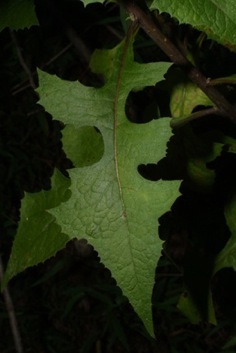
Note veins on leaves and uneven lobes

There are many species of wild lettuce. (See Lettuce Labyrinth) All grow rank as they age, so it is best to harvest them between four and 12 inches high. Woodland Lettuce tends to have lobed leaves on bottom and grassy leaves on top. Look for a V-shaped leaf stem and pure white milky sap.  It’s one of my favorite spring time greens, boiled for about 10 minutes and served warm with olive oil and balsamic vinegar.  Depending on size, I chop them up and eat stems and all.

Lactuca (lak-TOO-ka) is a Latin form of lac, an illusion to the milky sap. Floridana is Latin for of Florida. Some Lactuca, by the way, are diuretic, such as the L. scariola. The dried sap of some of the species, L. virosa,  mimics opium but the sap is difficult to collect and it only puts one to sleep, temporarily.

The Internet is rife with a multitude of pathetic claims that wild lettuce is akin to opium. That is nonsense. It is so good as an opium substitute that wild lettuce is not illegal anywhere. Ponder that. A lot of dried sap might make one a little sleepy, but an aspirin — or willow — is better at pain relief. Research from the 1930s through the early 2000s shows it is lousy as a significant pain killer. If you are disparate and have nothing go for it. But if you are expecting pharmaceutical-grade relief it ain’t happening.

 Green Deane’s “Itemized” Plant Profile

IDENTIFICATION: Plant has milky sap. Tall plant with lobbed green leaves, often powdery gray-green, dandelion-like flower cluster except blue, not yellow.  The lactuca changes little in appearance from young to old, only growing larger, with more lobs on the leaves. End lobe on old leaves is arrow shaped. There can be much variation with some Lactuca having straight leaves with out any lobes at all. Look for flowers on many spikes rather than a cluster. The underside of lower leaves usually have a few hairs along the stem.

TIME OF YEAR: Spring time.

ENVIRONMENT: Lawns, fields, vacant lots, waste areas, parks.

METHOD OF PREPARATION: Young leaves in salads, tend to be bitter, older leaves boiled for 10/15 minutes.  I like them with olive oil, vinegar, salt and pepper.  Also eaten are L. canadensis, L. intybacea, L. scariola and L. muralis.


{ 57 comments }

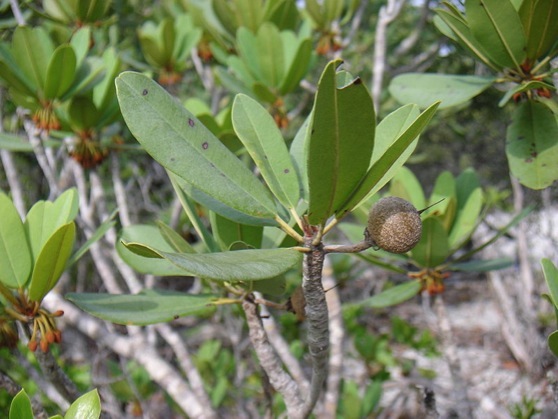
The Wild Dilly, overshadowed by a once-famous relative

   Wild Dilly: Almost Chique

If the Natal Plum and the Wild Dilly could sit down and have a conversation they would probably agree that having a famous relative makes life miserable.

In the case of the Natal Plum its species sibling, the Oleander, is one of the most deadly plants in the world, the preferred plant of suicide in many parts of the world. Not exactly the best of relations to have. With the Wild Dilly the problem is nearly the opposite. It’s relative was once one of the most consumed plants in the world, or at least part of it. With a relative like that you’re always in its shadow, in this case figuratively and literally.

The Wild Dilly is the runt relative of the Manilkara zapota, the source of the original chewing gum. The Wild Dilly, however, happens to be Manilkara bahamensis and rated inferior to its relative. But from a foraging point of view, it still is of value.

The Wild Dilly is no longer used used to make chewing gum like its relative but it does have edible fruit. The only precaution is the fruit is laced with latex and is not edible until all the latex is gone via ripening, unlike the natal plumb which can be eaten with flakes of latex in it. If you pick the fruit of the Wild Dilly and let it set it will ripen. The fruit tastes a little like a pear and a lot like brown sugar. Don’t eat a lot at one sitting or it can cause constipation, unless of course you need that. Tea from the leaves have been used to treat the flu and and fever. In Cuba the tree is known as an astringent and antiseptic.

Botanically the Wild Dilly has been on a long nomenclature journey. It has been called Mimusops emarginata, Achras emarginata and Achras jaimiqui. Manilkara bahamensis (said man-il-KAR-uh ba-ha-MEN-sis) means “Malabar Bahama.” Manilkara is Latinized form of a venacular name for a similar tree in Malabar though it is a Bahama native. Achras, said AK-rass, is Greek for a wild pear tree. Emarginata (e-mar-jin-NAY-tuh) means with a notched margin (leaf end) and mimusops, (mim-MOHS-ops) is from the Greek words mimo (ape) and ops (resembling) read it looks like a monkey, referring to the fruit. Jaimiqui is the native Taino name, meaning “Water Crab Spirit.” The Wild Dilly is salt tolerant but exactly why the Taino called it the “water crab spirit” is unknown. But if I might hazard a guess: The salt water crab has angled if not distorted legs. The Wild Dilly is gnarly and grows at odd angles. Perhaps there is a connection there. (Land crabs, Hermit Crabs, are quite different.)

So your choices are “Malabar Bahama” “Notched-Leaf Wild Pear,” “Notched-Leaf Looks Like a Monkey” or “Wild Pear Water Crab Spirit.” Officially, for the time being however, it is Manilkara jaimiqui subspecies emarginata:  Malabar Water Crab Spirt with Notched Leaf. Tasty is another word that comes to mind.

Green Deane’s “Itemized” Plant Profile

IDENTIFICATION: Shrub to small tree to 40 feet with milky sap, compact, round top, gnarled trunk, slow growing. Leaves alternate, oblong to obovate, notched or rounded at tip, two to four inches long, leathery with light  waxy bloom on top, reddish brown hairs below, clustered at the ends of twigs.  Flowers light yellow, six-lobed, to 3/4 inch wide, drooping clusters. Fruit round, 1.5 inches wide, brown, thick, scruffy skin, brownish flesh with milky sap until fully ripe. One to four seeds.

TIME OF YEAR: Flowers year round, fruits predominantly summer to fall

ENVIRONMENT: Hammocks, mangroves and other coastal thickets

METHOD OF PREPARATION: Fruit raw when ripe. Sap can be used to make gum.


{ 0 comments }
sadfsafasdfasdf

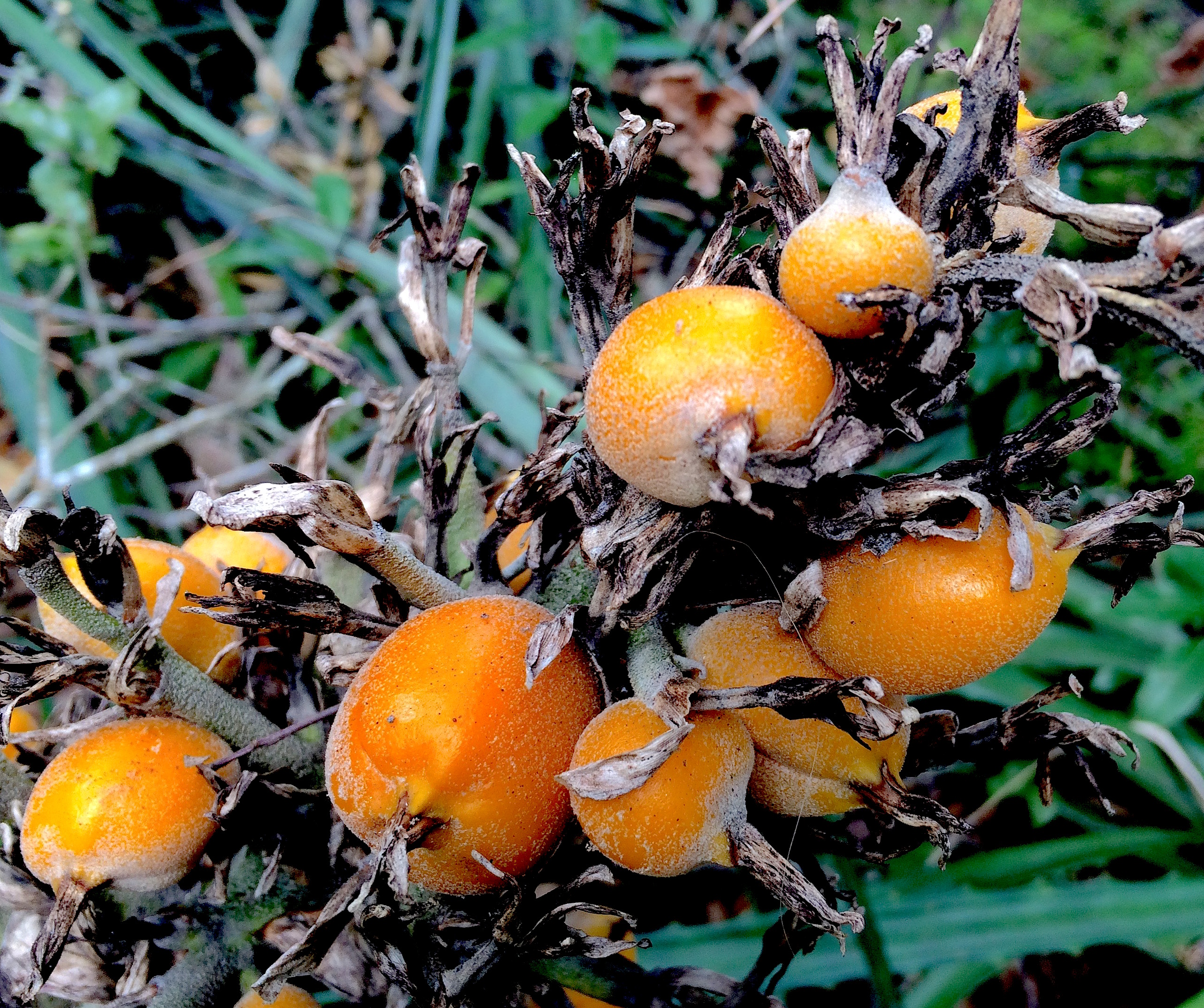
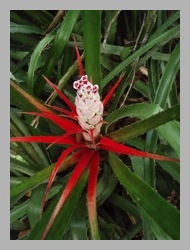
The edibility of Wild Pineapple fruit varies person to person. Photo by Green Deane

Bromelia pinguin: Wild Pineapple

I took the picture above while out bicycling on a Christmas Day, 2008. But, didn’t identified the object de green until the next Thanksgiving.

Officially the United States Department of Agriculture says the Bromelia pinguin (bro-MEEL-ee-uh PIN-guin) does not grow in Florida, yet I have seen it thriving in four different untended places at least 130 miles apart, Mead Garden, West Orange Bike Trail at Ingram Road, Boulware Springs Gainesville and Colby Alderman Park southeast of Deland. What made it hard to identify was that it looked like three different plants. First guess was a Bromeliad. It also resembled a cactus, which did not help. It has stem spines pointing in two directions and I got several vicious wounds collecting samples. The fruit also looked like those of a pindo palm, but I was fairly sure it wasn’t a palm. All in all it was a conundrum.

Pineapple that doesn’t exist blossoming in April

After several false starts I was back where I started, in the Bromelaid family. It was a Bromelia pinguin. Then I ran into the usual language problem, but with a little twist. The larger family, Bromeliads, is named for Olaf Bromelius, a Swedish medical doctor and botanist. Bromelia, however, is from the Greek word meaning food, “broma.” Pinguin is from “penguis” Latin for stout or strong, a reference to using older leaves for cordage. While it is clever that the Bromelias are Bromeliads the names aren’t directly related. In Spanish its common name is pinuelo or pina salvaje. The natives called it karatas, and is often called wild pineapple. Many of the 48 different Bromelias have food uses.

Native to Central America it is cultivated and escaped in Florida, the Caribbean, Puerto Rico and Hawaii.  It has long leathery leaves arching about a yard high and five feet long. They are usually about 120 degrees from each other forming a spiral around the plant. The leaves act like troughs directing water and nutrients down to the center of the plant where they are absorbed. The water stored there is so acidic it eats mosquitos, adding more food for the plant. The leaves have savage hooked, sharp spines that can point toward the base of the plant or away. Each plant produces 10 to 75 yellow fruit on a spike, each with 30 to 50 shiny black seeds. Besides man and other large mammals they are the favorite food of the red land crab, karatas.

The ripe fruit, which clings like Hercules to the stalk, can be eaten raw or cooked and is used to make a tart drink but see the caution below.  I do not recommend eating it raw, or more specifically undiluted. The raw fruit can be extremely acidic and can burn the lip, tongue and throat. It needs to be diluted. The new leaves and flower stalks can be cooked like vegetables as can the flowers (with stinging hairs removed.)  Medicinally the juice of the fruit has been employed for many uses from treating intestinal parasites, fevers, oral ulcers and to induce abortions. Older leaves fibers have been used to make cloth, fishing line, nets and string.  A 100g sample of new growth is 92g water, 158 mg calcium, 50 mg phosphorus, 0.51 iron, 0.029 thiamine, 0.041 mg riboflavin, 0.382 niacin and 34 mg ascorbic acid. In Mexico the fruit are boiled and peeled before eating. 

The fruits of the B. nidus-puellae, B. alta  B. karatas, B. balansae, B. comosa B. plumieri, and B. chrysantha are also edible. The pineapple used to be in this genus.

One more note of caution: There might also be “meat tenderizer” in the juice of the Wild Pineapple. I know if I eat it my tongue and mouth feel fuzzy for a few  hours, as if chemically shaved. But I also know people who can eat them without any oral effect. I recommend being careful with the plant from an edible point of view. Other Bromelias respond well to roasting.

Green Deane’s “Itemized” Plant Profile

IDENTIFICATION: A  pineapple-like plant with large sword-shaped dark green leaves with alternating curved spines on their edge.  It has many wooly red-orange flowers then elliptical yellow berries. The spines are vicious. Do not wade into a patch of Wild Pineapples.

TIME OF YEAR: Whenever in blossom or fruit. The plant flowers then fruits then dies

ENVIRONMENT: Prefers shade and well-drained soil.

METHOD OF PREPARATION: Flowers (stinging hairs removed) young shoots, stalk and core as a cooked vegetable. Fruits raw or cooked but I highly recommend not eating the fruit raw as it can be very acidic.

{ 41 comments }

Willow, medicine and famine food

Salix caroliniana: Nothing Would Be Finer

The willow is not prime eats. It’s not even secondary eats. In fact, it is famine food, but, willow can also cure your headache and other pains, so it’s worth knowing about.

The inner bark of the willow is edible, though you probably will have to boil it a few times to make it so. In Scandinavia it was dried, pulverized and mixed with flour to make bread. Don’t be surprised, even sawdust has been added to flour to make bread. In 1918 William Edward Fitch, M.D., wrote in his book “Dietotherapy” that:

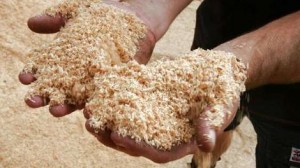
The right sawdust can be added to bread and other food.

“In Sweden and Norway sawdust is sometimes converted into bread, for which purpose beech or some wood that does not contain turpentine is repeatedly macerated and boiled in water to remove soluble matters and then reduce to powder, heated several times in an oven and ground. In this state it is said to have the smell and taste of corn flour…. During the present European war it is claimed that Germany has reported to the use of sawdust in bread making.  A friend of the author, traveling in Germany and Switzerland in 1916, was presented with a loaf of this bread which was being used as food for the English and French prisoners.”

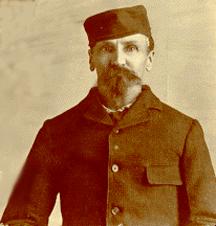
Alfred Packer, 1842-1907

Young willow shoots, buds and leaves are also edible but very bitter (and high in Vitamin C.) Boiling is the method commonly used to make them more palatable but they can be eaten raw if you can eat them. In fact, during a trial in Colorado in 1886 a prospector, Alfred Griner Packer, testified his party got lost in the winter of 1874. They went without much food for nine days and then ate first their moccasins. After that they ate willow buds. Lastly, they ate each other though Parker changed his story three times. The jury thought it murder not survival or self-defense and sentenced Packer to 40 years. He was pardoned after some 17 years, worked as a security guard for six years then died in 1907.

So, they ate their shoes before willow buds, then came each other. That doesn’t put willow too high on the food chain. What about curing headaches?

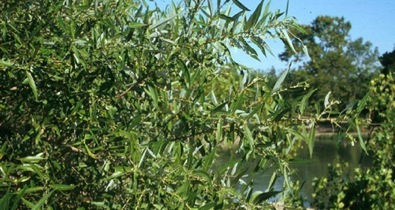
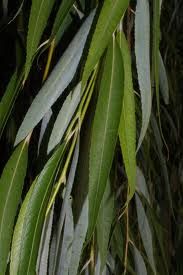
Wilows have long, thin leaves with tiny teeth

Hippocrates, who was around when the Acropolis was being built, knew that chewing leaves of willow reduced pain for childbirth, and in fact he prescribed it. In North America at least a dozen Indian tribes used willows to relieve fevers, aches, and pains. The willow’s “salicin”  was the inspiration to make aspirin.  For 60 years in the 1800s scientists tried to make an artificial aspirin that did not upset the stomach greatly. They succeeded in 1893.

You see, when a person eats a willow leaf or some of the bitter inner bark the stomach provides the acid to make it salicylic acid, the pain reliever. But artificial salicylic acid is really tough on the stomach. Eventually they found acetylsalicylic acid, and that is basically the aspirin of today.  Back then the Bayer company was a dye maker. One of its chemists, Felix Hoffmann, figured out how to mass produce aspirin.  The chemical eases pain by depressing parts of the central nervous system. Aspirin is a made up name. It comes from the ‘A” in acetyl chloride, “spir” from Spiraea ulmaria (the plant they derived the salicylic acid from, Meadowsweet) and ‘in’ which was a familiar name ending for medicines then.

Willow bark can be a source of tannin, black dye, and cordage. The white willow yields cinnamon-colored dye. In most areas where the willow grow locals also used it to make baskets, cages, fishing gear and even horse bridles. Different willows offer different parts for consumption from oozing sweet sap to root tips, Check out your local willow.  The weeping willow, a standard ornamental, is also useable. Incidentally, the growing tips soak in a little water make a natural rooting/growth hormone for plants.

The common willow here is Salix caroliniana (SAY-licks kair-oh-lin-ee-AY-nuh.) Salix is the ancient name for willow, possibly from either Gaelic “suil” or “seileach” tree or or willow tree, or from another part of the world Akkadian “salihu” sprinkler of water.  Caroliniana means of the Carolinas, read North America.

Composer Ann Ronell

Willow Weep for Meis a popular song composed in 1932 by Ann Ronell. It’s now a jazz standard though Frank Sinatra did a ballard rendition. Ronell was romantically involved with George Gershwin at the time and there is an amazing striking similarity in the song to Gershwin’s bluesy style. Some think Gershwin wrote the song for her and gave her the rights. That is entirely possible in that the song is unmistakenly Gershwinesque. However, in her defense Ronell studied with the famed Walter Piston, the leading composition teacher of the day. His books on composition were standard instruction for generations of music students. She wrote film scores among many things and was more than capable of imitating Gershwin. It just might be the song was her gift to him. More than a generation later Peter and Gordon, and, Chad and Jeremy both recorded their own version of the song as did the aforementioned Sinatra and Etta James, whose recording is far different than Frankie’s.

Green Deane’s “Itemized” Plant Profile

IDENTIFICATION: Leaves alternate, simple, lanceolate 5 to 8 inches long and 3/8 to 1 inch wide.  The margins are finely toothed.  Upper surfaces smooth,dark green, lower surfaces whitish; stems strong, long, limber. Flowers are catkins emerging at the same time as the new leaves; silk-tipped seeds released from small pods that split in the spring. The Carolina Willow has yellow glands on the tips of the teeth on the leaves — you will need a magnifying glass. It also has at the base of young leaves leaves that resemble mouse ears.

TIME OF YEAR: In southern climes, year round, northern climes spring to fall.

ENVIRONMENT: Likes it feet wet in fresh water

METHOD OF PREPARATION: Shoots, buds, young leaves boiled. Expect them to remain bitter. Inner bark edible as a famine food. Different willows, however, produce different edible parts and more than listed here. Investigate your local willow. Native Americans chewed or boiled tea from the leaves and inner bark to relieve fever, toothache pain, arthritis, and headache.


{ 15 comments }