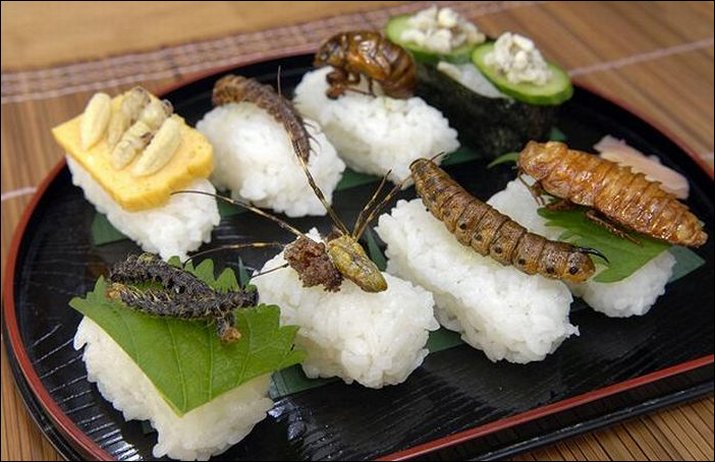
Insect Cuisine by Shochi Uchiyama
On this site are several articles about edible insects (among other creatures.) Below is an expanding collection of more than 50 edible insects. I plan to localize it. There is, depending on who’s counting, an estimated 1,462 species of edible insects. While the numbers fluctuate this includes about 235 species of butterflies and moths, 344 species of beetles, 313 species of ants, bees, and wasps and 239 species of grasshoppers, crickets and cockroaches… yes cockroaches… Insects are commonly eaten in 13 countries by two billion people. They provide not only economical and excellent nutrition but new flavors and textures as well. I personally have eaten several insects below, in one form or another, some times in juvenile form or adult, a few both, usually intentionally.
The list has a world view though the families of edible insects most often found in North American where I am based are: Grasshoppers (Orthoptera acrididae) crickets (Orthoptera gryllidae) metallic wood-borers (Coleoptera buprestidae) long-horn beetles (Coleoptera cerambycidae) weevils (Coleoptera curculionidae) mealworns (Coleoptera tenebrionidae) bees (Hymenoptera apidae) and ants (Hymenoptera formicidae.)
While there are exceptions the following insects are usually avoided: Adult insects that either sting or bite; insects that are covered with hair; brightly colored insects; disease-carrying insects; any insect that gives off a strong odor and spiders, which are not insects… too many legs… (and when the site was upgraded the photos were displaced. Still working to get them sorted out.)
Acorn Grub
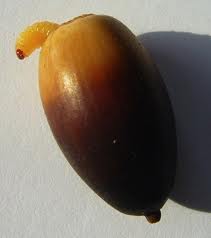
Acorn Grubs: Inside many acorns in the fall is a small grub, cream colored, tan, a reddish brown head, no legs and fat in the middle. It eats bitter acorn meat but is not bitter itself. The grub can be eaten raw — chewy — or cooked, buttery with no hint of oak or tannins. Laid by one of several beetles, the grub will grow in comparison to the size of the acorn. Eventually it will chew a small hole in the leathery shell and squeeze out. As it is pliable the hole will be much smaller than the grub but the grub will squeeze through. Then a mother moth will come along and put her eggs in through the hole left by the grub. Those grow into a worm with legs. Those are edible, too according to entomologist I know. One more thing: If you cook the grubs do it slowly or break them open. They can explode. To read more about acorn grubs click here. To see my video click here.
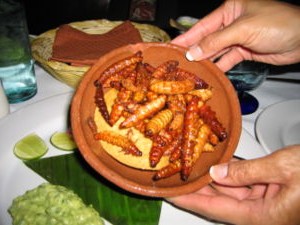
Agave Worms
Agave Worm: Actually larvae, they were never associated with booze until 1950 when they were added to mescal as a marketing gimmick. Now they are associated with Tequila which is technically a mescal product. Also known as the maguey worm, they are the larvae of either the Hypopta agavis moth or the Aegiale hesperiaris. When not pickled in alcohol they are coral in color but fade when preserved in methanol. The “worms” are a common food without Tequila in Mexico
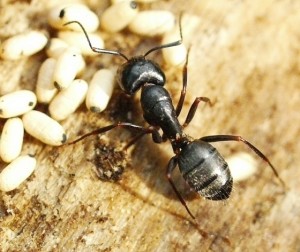
Best parched or roasted
Ants, Carpenter: While the name might fit they should have been called syrup ant, or sap ants. Some 99% of their diet is liquid, usually from aphids or vegetation. They’re called carpenter ants because they build nests in wood. In the process of hollowing out a dead log or a damp house support they leave a pile of sawdust. Among the largest ants in North America then can be any color but are usually black, sometimes red, sometimes a combination. They are smooth bodies and release a foul odor when disturbed, hence eating them raw, while possible, is not the best means of consumption. They also nip harmlessly but annoyingly. Native Americans parched them. They would make a large screening basket out of willow then put the entire ant’s nest and hot coals in the basket then winnow out the ants, ashes, parts of the nest and coals.
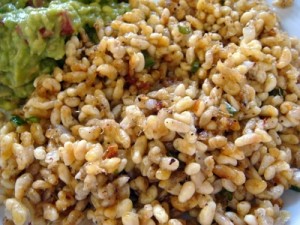
Escamoles
Ants, Escamoles: Escamoles are the larvae of the large and venomous black Liometopum ant, which makes its home in the dried, woody parts of maguey and agave plants. The eggs resemble cottage cheese with a buttery, nutty taste. As one can imagine the large, toxic ants don’t give up the eggs easily making them expensive plus they are available only seasonally. Called “Insect Caviar” they are often served in guacamole or sauteed with butter, onion, cilantro and epazote. They can be up to 60% protein.
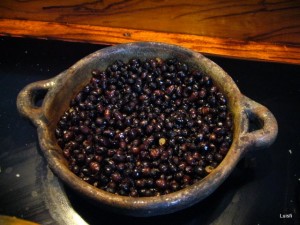
Leaf Cutter Ants
Ants, Flying: Tequila is not the only thing served with salt and lime. Called Sompopos de Mayo in Guatemala Flying Ant queens are collected and roasted on a clay griddle with salt and lime juice. The flavor is on par with buttery pork rinds. Available in May, which is the beginning of the rainy season, only the back end is cooked and eaten. One can buy them already separated by vendors.
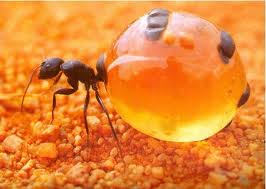
Honeypot Ant
Ants, Honeypot: Found in areas like South America and Australia they were a delicacy for the Aboriginals. Honeypot ants are an ant’s solution to storage problems. The big-belly ants are fed nectar causing their abdomens to swell. The nectar-like substance is then used to feed other ant. The problem is ants aren’t a collective of dummies. The Honeypot Ant are buried deep in the hard packed earth, some three to five feet down and you have to contend with irritated ants every foot of the way. But in a time when there was no sugar or candy Honeypot Ants were the original treat, a comfort food even if it does have legs that wiggle. They are closely related to carpenter ants.
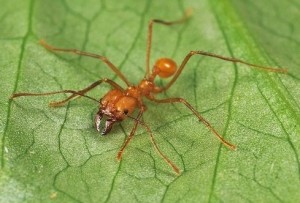
Leaf Cutter Ant
Ants, Leafcutter: Thirty-eight or forty-seven species of ant are called leafcutters, depending on who’s counting. They are also called Hormigas Culonas in Spanish which means ant with a big butt. I never could figure that out because their heads are much larger than their buts. Leafcutter ants use foliage to grow a fungus for food. The species are divided into two genera, Atta and Acromyrmex. If you’re wondering, the Attas have three pairs of spines and a smooth exoskeleton. The Acromyrmex have four pairs of spines and a rough exoskeleton. They can have nests 100 feet across containing some eight million ants. Bon appetit. Their flavor is like a bacon-ish pistachio. In Colombia they are the local “popcorn” at movie theaters.
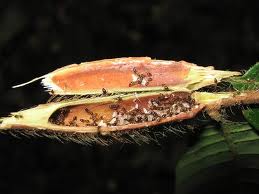
Lemon Ants already plated
Ants, Lemon: For such a little ant it has a large name: Myrmelachista schumanni. Found in the South American jungle their claim to fame, other than tasting like lemons, is they exude a kind of herbicide — formic acid — that kill all plants in a large area except the one tree they nest in, the Duroia hirsuta. Wait, you say, isn’t formic acid the acid makes fire ants fiery? Yep, but the Lemon Ants don’t sting you with it and that is why they taste lemony. They prefer the Duroia hirsuta because its branches are hollow thus they are out of the weather and protected. One Lemon Ant’s nest is thought to be 807 years old and three million strong. Tiny, you break off or open a branch and have at them, a jungle treat.
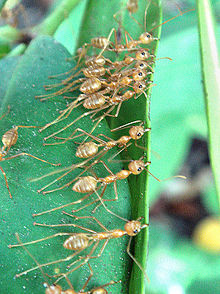
Weaver Ants Bite
Ants, Weaver: There’s good news and there’s bad news. They are edible. They also bite. Take a look at the picture. Several ants are tugging on a leaf to make a nest with. See those jaws holding the leaf? They can bite you, too. So, you either collect them carefully and cook away or… you grab the ant from the front, crushing it and eat the back end. These ant eat other insects so they are aggressive. They have been used at least 1,600 years as biological controls in and around gardens and the like. Weaver ants are completely arboreal, read you will find them on plants, in shrubs and on trees, not in the ground. Their eggs are sold in Thailand and the Philippines and taste creamy. The adults are sour and have been mixed into rice for flavoring. One particular species in Australia, Oecophylla smaragdina, is called the Green Ant because is back end is green. They bite but not badly, irritating rather than painful. One opens the nest and reaches in for the eggs. You crush the eggs and ants together and down they go. The lemony flavor and aroma clear congestion and the like. They also are used to make a lemonade like drink. For some unknown reason the ants do not get bacterial infections, which is of interest to scientists. In Asia weaver ants are red.
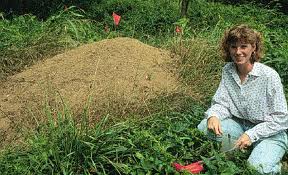
Wood Ants’ Nest
Ants, Wood: I suppose one could eat adult wood ants but its their eggs that are usually on the menu. Also called Formica Ants, they make large debris nest mostly in forests. A large Wood Ant’s nest can be raided a couple of times a year without harm. On a sunny day put a tarp on the ground. Put branches and the like on the tarp then fold the tarp over the branches leaving a sunny spot in the middle and shade around the edges. Dig into the nest and dump the ants, eggs and debris into the middle of the tarp. The ants will carry the eggs away from the middle to the shade where you can collect them. Eaten raw or cooked their flavor is similar to shrimp.
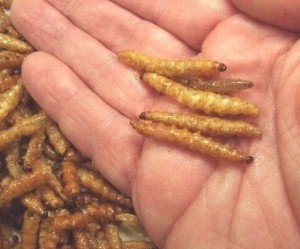
Bamboo Worms
Bamboo Worms: Find the Grass Moth, find its larvae, and you have a Thailand treat, Bamboo Worms. Like the Agave Worm above, not really a worm, it is usually served fried. These are a gourmet treat. You can buy them from vendors on the street or dried and bagged for international shipments. During their life cycle the larva eat their way up through several sections of the bamboo and when ready to emerge they return to the bottom to eat their way out. Most locals know when this is to happen and the worms become food.
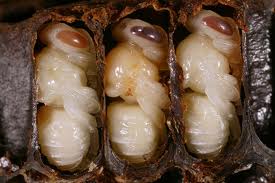
Bee Larva
Bees: Yes, the ones that occasionally sting you because you irritated it. While adult bees are eaten, usually roasted, sometimes ground into flour, more popular is bee larva. They are baked, fried or deep fried. Thus cooked bee lava become flaky, their flavor nutty to caramel. Pallets disagree with opinions on taste ranging from sunflower seeds to shrimp to pork cracklings. Cooked bee larva are also often covered in chocolate and sold as a gourmet item, particularly in Mexico.
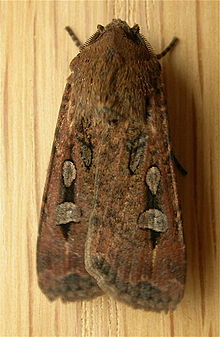
Big Fella Bogon Moth
Bogong Moth, Agrotis infusa, is a migrating night-flying moth in Australia. They gather in high elevation caves in the summer months in huge quantities, a fact not missed by the Aboriginals. They would travel from the lowlands to eat the tasty, high protein — 24% — fatty food that is also high in potassium. The moths were either killed or stupefied by the heat and smoke then their bodies collected. After collection the moths were cooked in sand and stirred in hot ashes. This burned off the wings and legs. They were then sifted through a net to remove their heads. Then they were eaten. Sometimes the cooked moths were ground into paste and made into cakes. “Bogong” may mean “Big Fella.” Aussie tucker cafe Ironbark in Canberra serves a brandy-flavoured bogong moth fritter with boab root.
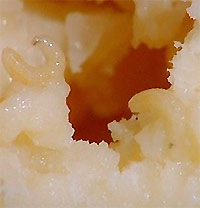
Maggoty Cheese, Casa Marzu
Casa Marzu: Perhaps this should not be included but… It’s a Pecorino cheese that has been allowed to rot and become permeated with fly maggots, specifically Piophila casei. The sheep-milk cheese not only gets infested with maggots but they also digest the cheese and relieve themselves in the cheese, adding the flavor. Actually the acid in their digestive tract breaks down the fat in the cheese. The result is a smooth, very strong cheese. The cheese is eaten, maggots and all. The European Economic Union made it illegal for a while but it is now viewed as a “traditional” food and thus legal. Incidentally, the maggots can jump up to six inches.
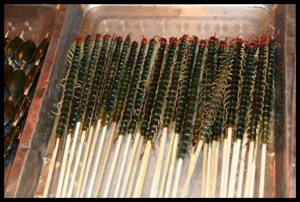
Centipedes on a stick
Centipedes: Generally said centipedes are preferred over millipedes. Centipedes, however, have pincers and can bite but once the head is removed they are tiny crustaceans for consumption after cooking. Millipede definitely have to be cooked and are found as a street food in Asia. Some millipedes some have little hydrogen cyanide glands and can exude foul smelling liquid if handled. That’s why the street vendors charge the prices they do. Centipedes are insect eaters, millipedes are vegetarians. Centipedes have one set of legs per segments, millipedes have two sets of legs per segments.
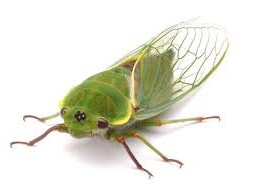
Cicada
Cicada, Katydids: There’s some 2,500 species of Cicadas, which is dead Latin for “tree cricket.” Greeks call them tzitzikas after the sound they make. Periodical cicadas, found only in the Eastern US, can live underground for up to 17 years before emerging and molting into adults. Other Cicada are annual. Right after molting they are soft and tasty. Female cicadas are plumper and preferred fare. In some species the Cicada can get up to six inches long. They are usually skewered and deep fried, or fried. Incidentally, in Ancient Greece the upper classes preferred Cicadas to locust. Local Cicadas can be green, brown or black.
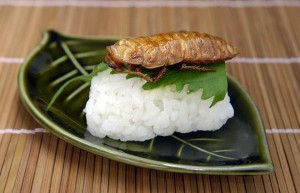
Deep-Fried Cockroach
Cockroach: Yep, La Cucuracha. They are not only very edible but very clean. Of course, the main idea is to raise them intentionally and feed them a healthy diet such as fresh fruits and vegetables. It takes at least 48 hours to clean out their digestive system. Not the brightest of insects they can live several days without a head, eventually dying from lack of water. They can be eaten toasted, fried, sauteed, or boiled. Don’t eat them raw. Large hissing cockroaches taste like greasy chicken. I have not tried Florida’s hissing palmetto bugs yet. They smell bad when alive. I’ll let you know.
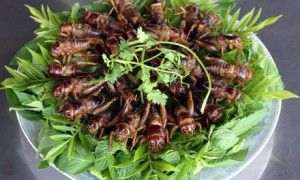
Fried Crickets
Crickets are probably the most widely consumed insect. Even American Natives were known to roast them up along with grasshoppers. The natives would dig a relatively deep hole in a field and put wood in it. Then they would drive the insects in the field towards the hole. Once the insects were in the hole the fire was lit. When the flames died down they had a bug in. Crickets are about as inoffensive as an insect can get. They are eaten fried, sauteed, boiled, and roasted. Don’t overlook their relatives, the mole crickets. Also see Kamaro.
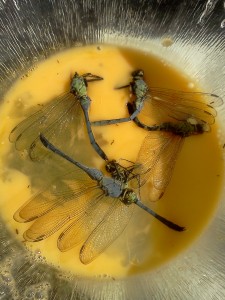
Egg batter for dragonflies
Dragonfly and Damselfly: Do you know how to tell the difference? Damselflies fold up their wings, Dragonflies do not. They are eaten in Indonesia and China, larval and adult form. In Bali they are caught with sticks smeared with a sticky sap. Eaten boiled, fried, or grilled on the barbie. Wings are usually removed before cooking unless going over the charcoal. Here they are being dipped in egg before cooking. Boiled in coconut milk with ginger and garlic is also a favored means of preparation. Photo courtesy of Girl Meets Bug.
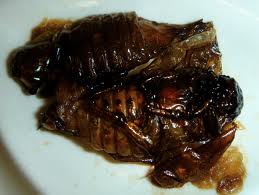
Choice Dung Beetle
Dung Beetle: The name says it all. They live under fresh cow dung. Before you hurl your supper let’s ponder this for a moment. Commercial dung beetles are cleaned, dehydrated and seasoned. While indeed inhabiting cow patties those cows are living off off organic grass and rice plants and the patty is just predigested fodder. Despite their humble beginnings dung beetles are among the most tasty of insects, crunchy and full of protein. Usually they’re fried. In South America white dung beetles are on the menu and are often cooked with pork and vegetables. “Cleaning” means their abdomens are removed before cooking. Photo courtesy of Girl Meets Bug.
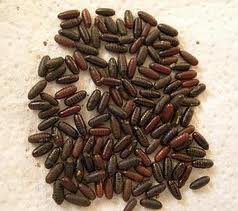
Fly Pupae
Fly, House: You’re not going to want to hear this but the common house fly is like so many edible insects. Its pupae resemble red capsules and have a fatty acid similar to fish oil. Eating them provides a bit of crunch with a rich flavor, some say like blood pudding. They can be parboiled and fried, or just fried. Given the habit of some flies it best to raise your own on wholesome fly food.
Eaten raw or roasted
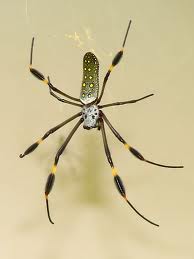
Golden Orb Spider, Giant Wood Spider: Among the few spiders that are eaten is Nephila maculata, found in warm areas of the Pacific. Here in the southern U.S. we have a relative, Nephila clavipes called the Banana Spider. Will have to try one when the opportunity presents itself. The Nephila maculata is eaten raw or roasted (sealed in a green bamboo tube over fire until the tube is blackened. The spiders split open.) The flavor, with salt, is a cross between a raw potato and lettuce with a peanut butter after taste. A close relative to the Nephila is also eaten, the tent-web spider, Cyrtophora moluccensis. While nutrition and flavor are factors so, too, is size. All of these spiders are on the large size making them worth the calories expended to collect them. Adult female Nephila have about three grams of protein each. Don’t confuse the Nephila with a toxic spider of the same common name from South America, the Phoneutria fera, which looks like a skinny tarantula. They don’t look alike at all but have the same common name. The Nephila is called the Banana Spider because the back end often is yellow. The Phoneutria is called the Banana Spider because it hitches rides north on bunches of bananas and is poisonous.
Grasshoppers Galore
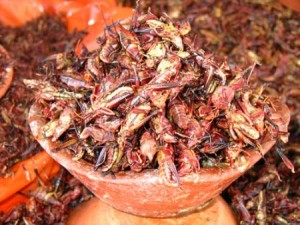
Grasshopper: Not all grasshoppers are edible. Look for solid colored ones, black, green or brown. Multicolored ones can be toxic, as is the huge lubber here in Florida. In Mexico grasshoppers, called chapulines, are roasted then eaten with chili and lime. Native American did the same thing with grasshoppers as they did crickets, drive them into a deep dug hole in the middle of the field with wood in it then light a quick fire and have roasted hoppers. They are a good source of protein and calcium. In Africa the Nsenene grasshopper is a Ugandan delicacy. Some farmers eat grasshoppers raw after removing the guts.
Tomato and Tobacco Hornworms
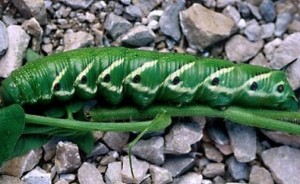
Hornworm: Tomato and Tobacco Hornworms can be fried but there is a word of caution. The plants they are usually found on, tomato and tobacco leaves, are not good for humans to eat. So unless you raise the hornworms on a specific diet wild hornworms have to be either starved for a few days or fed food they like and we can eat. Fortunately, green peppers fits that need perfectly. Their flavor is a combination of tomatoes, shrimp, and crab. If it has a red horn is a tobacco worm, black horn is tomato worm. You would have thought they would have reversed that. Entomologists are apparently no more logical than botanists. To read more, click here.
June Bugs
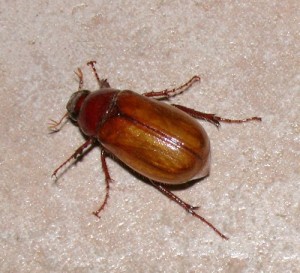
June Bug: June bugs (Phyllophaga) are a fairly safe bug for anyone to start with because there are no toxic look-alikes and they tend to eat inoffensive stuff, read organic matter. They can also be eaten as a beetle or larva. I’m sure you’ve seen the larval stage. You turned over a spade of soil and a large larva curled into a C. That’s a June bug. The flavor is on the buttery, walnut side. Native Americans roasted them on coals. We can fry them up, or if you have enough, throw them in the hot air popcorn popper. Remove legs and wings before eating. Those parts just don’t digest well. Green June bugs is a similar species and also edible. One way to catch them is to shine a bright flashlight on a white sheet at night. Happy Collecting!
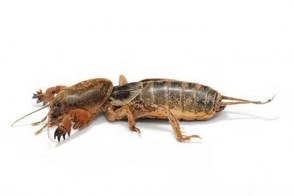
Kamaro is another name for Mole Cricket, a very ugly and expensive lawn pest… if you keep a lawn. In the Philippines where they are called Kamaro and are a sought-after delicacy, cooking styles range greatly, though there are a couple of themes. Some like to stir-fry them without any oil or flavoring, preferring a taste they give off that way, slightly like liver. Once cooked you can eat them totally but most folks prefer to take off claws, legs and wings. To read more about the Kamaro cum Mole Cricket click here.
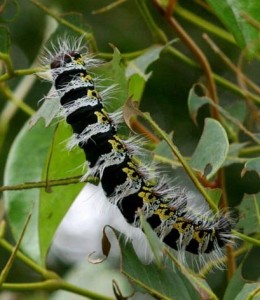
Squeeze but not too hard, buning off hairs is optional
Kanni, which is sometimes included with the Mopane Worms below, is a different species and some 58% protein, 11% fat. It also has zinc, calcium, potassium, magnesium, sodium, iron and trace elements of copper and manganese. Scientifically Cirina forda, it’s a caterpillar collected from the sheabutter tree, or also from the ground around it. The larvae are squeezed of frass but not too hard or they lose an esteemed yellow liquid. They are then boiled and dried in the sun before eaten. Kanni is a widely used regional ingredient in vegetable soup.
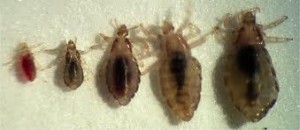
Body Lice
Lice: It’s stock caricature to have monkeys pick lice off each other but what about people? In the Life, Letters and Travels of Father Pierre-Jean de Smet, S.J., 1801-1873 the Belgian Jesuit wrote on page 1002: “I have seen the Cheyennes, Snakes, Utes, etc., eat vermin off each other by the fistful. Often great chiefs would pull off their shirts in my presence without ceremony, and while they chatted, would amuse themselves with carrying on this branch of the chase in the seams. As fast as they dislodged the game, they crunched it with as much relish as more civilized mouths crack almonds and hazel-nuts or the claws of crabs and crayfishes.” In fact a louse has been found in human coprolite in Mexico that is 826 to 2512 years old. As they are blood consuming insects we might not want to eat them live theses days… unless of course they are your own….
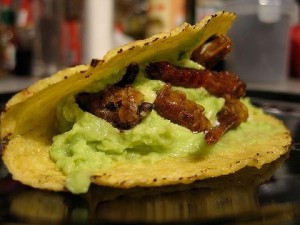
Locust Taco
Locust: The Ancient Greeks were of two opinions about eating locust. The upper classes preferred cicadas whereas the lower classes preferred locust. Shepherds ate locust. Politicians did not. Locust were also dried in the sun, ground into powder and mixed with milk. Interestingly, by 100 AD, some 500 years later, the Greeks had abandoned eating insects. Locust are usually eaten dried without wings and legs. Natives in various place put the insects live in a long bag and shake them from one end to the other, back and forth. The legs and wings are then winnowed away and the bodies are put out in the sun to dry. Some desert people boiled locus in salt water first then dried them.
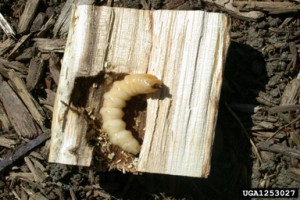
Longhorn Beetle Grub
Longhorn Beetle: There are some 20,000 species of Longhorn Beetles, and not all easy to sort out. We are interested in then ones that created their name. They are called “longhorn” because often their antennae are longer than their bodies. We have native Longhorn Beetles and a rather destructive import from Asia that destroys trees. Eating them is your civic duty. Look for a large grub with large chewing parts in wood. Willow, Popular and Cottonwoods are preferred as well as Maples in the northeast.
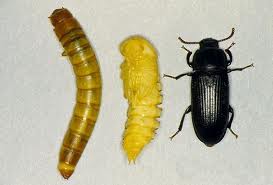
Mealworm and stages
Mealworm: Mealworms are perhaps the first non-leggy “insect” a person intentionally eats. Long used in the pet trade they have been favorite of entomophagists for a long time. Inoffensive, easy to raise, easy to cook, tasty. I started to raised them when I was caring for wildlife, from baby blue jays to infant squirrels. I still have a batch of them. Mealworms are the larva of the Darkling Beetle. They are often prepared boiled, sauteed, roasted, or fried. They have a nutty flavor. Edibility of the adult beetles is debatable. You might find one of my videos interesting.
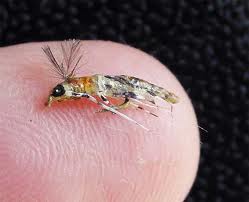
Midge Fly
Midge fly: Locally they are called Blind Mosquitoes. Sometimes they become so thick that lakeside businesses have to spend a lot of money clean the outside of their buildings and cart millions of their little carcasses away. Some places in Africa folks press them into solid blocks then cooked the blocks to make a food called Kunga Cake. The male Midge Flies are easy to identify by their fuzzy antenna. I used to feed then to a pet jumping spider.
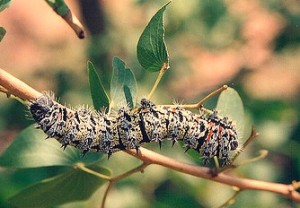
Mopane Worm
Mopane Worms eat leaves of the Mopane Tree and are a multi-million dollar industry in Africa. The main problem is unpredictability of harvest which lasts for about three to seven weeks depending on the rainfall. Mopane worms, called “macimbi” and scientifically Imbrasia belina, fetch a higher market price than beef. The main thing to remember if you collect them alive is to squeeze the juice out of them before salting and drying. Once dry rehydrate them then cook in oil and garlic. Another way to process them is after the frass is squeezed out they are roasted on coals to burn off the hairs. Any red coloring indicates the worm has not be cooked enough. Then they are dried.
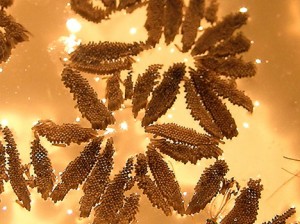
Get revenge by eating mosquito eggs.
Mosquito Eggs: Here’s your chance for revenge for all those times a mosquito has gotten past your defenses and took a blood donation. Very common in Mexico mosquito eggs are dried then roasted. You’ll often find them wrapped in a tortillas or served with a squeeze of lime or lemon. The eggs are laid by mom mosquitoes in trees near lakes. Mosquito eggs are about one-sixteenth of an inch long, dark colored, and larger at one end Interested? A small bottle sells for about $50.
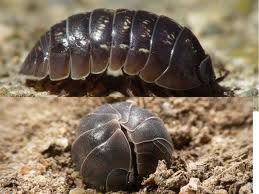
Pillbugs
Pillbug: These used to be a fairly common food in England and parts of Europe. Also known as sowbugs, roly polys, and woodlice, they’re terrestrial crustaceans related to lobsters, crab and shrimp. The better tasting ones are the ones that roll into a little ball when disturbed. Two factoids: They change sex and don’t urinate. To read more about pillbugs click here.
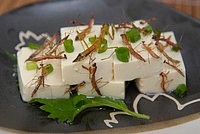
Preying Mantis and tofu
Praying Mantis is the correct spelling though “preying” would have been accurate, too, in that it is an insect eater itself. They can range greatly in size. The same rule that applies to some plants applies to mantises: Young and tender. They are usually fried, as are Walking Sticks, and taste like a cross between shrimp and mushrooms.
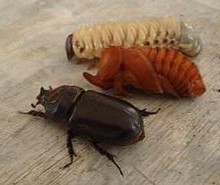
Rhino Beetle’s Three Stages
Rhino Beetle: Setting aside the issue of size the Rhino Beetle is one of the strongest creatures on earth. When motivated it can lift 850 times its own weight. The beetle and its larvae are both eaten. The grub is high in protein, calcium, and phosphorous. Good sized, they are fried, grilled, roasted and stewed. Like Dragonflies they can also be cooked in coconut milk. Grub fat is used like butter, once clarified.
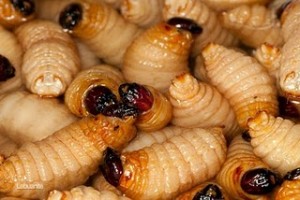
Sago Grubs
Sago Grubs: At least one palm weevil makes its edible way into North America, perhaps a couple more. The larvae of the palm weevil are esteemed wherever they are found, Florida to Malaysia to New Guinea. Sago grubs are often cooked coated with Sago flour and wrapped in Sago leaf. NOTE: that is the true Sago Palm, Metroxylon sagu, not the ornamental cycad called a sago palm [Cycas revoluta] which is very toxic to man and beast. The latter is also a cockroach high-rise. Personally I would avoid any bug found on a Cycas revoluta. Its toxin causes liver failure. Just make sure you have the right “Sago.” Palm weevils that feed on the true Sago Palm have a bacon flavor and are like most palm grubs full of fat.
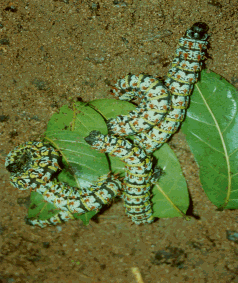
Young and tender Sapelli caterpillars
Sapelli Caterpillars, Imbrasia oyemensis, is considered a delicacy and one of the few green caterpillars on our list along with the hornworms. They are valued for their flavor and the fact a lot of them can be collected in a short amount of time, calories in calories out. They are small and firm, very suited to drying and preservation. The caterpillars fall from the Sapele Tree, Entandrophragma cylindricum, during the rainy season and at that time of year provide 75% of the protein of the Pygmies consume. Their name is also spelled “Sapele” and the tree they feed on Aboudikro.
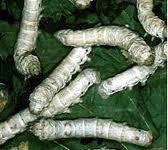
Silkworms
Silk worms, in my opinion, are highly overrate as food. True silk worms are no longer found in the wild. They are a byproduct of the silk industry. A huge byproduct. I’m not convinced they are eaten and popular because of taste but rather because they are available and there’s so many of them. We have silk worms because of silk not taste. They are sold by street vendors in most of Asia. If I remember correctly they are also canned and exported.
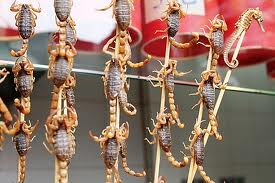
Scorpions on a stick
Scorpions: Several scorpions are found in North America. To read about the locals click here. Like silkworms above, scorpions are found skewered and fried in Asian markets. They taste like crunchy crabs. Whether to eat the tail or not is a matter of personal taste. Cooking destroys the protein-based toxin.
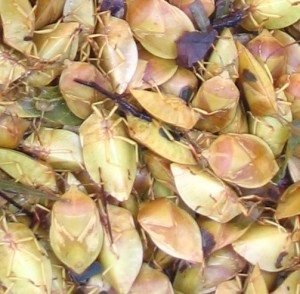
Dried Stink Bugs
Stink Bugs, Jumiles: Just as some plants straddle the edible non-edible line so, too, do some bugs among them the stink bugs. High in B vitamins, their flavor varies greatly depending upon what they’ve eaten, the species, and how they are processed. Some of them are also nearly indestructible and survive cooking. Often times they are added to stews for flavor (some taste like cinnamon others mint. Others are eaten as the food itself, particularly in Mexico. In parts of Africa stink bugs are collected by hand. The live and dead stink bugs are then separated The lives ones are put in a bucket of warm water and stirred. This causes them to release their stink. The bugs are then dried and are ready for consumption. The separated dead bugs have their heads removed then their bodies squeezed and the juice wiped off. They are then boiled and sun dried. Once dry they can be eaten as is, fried, or are cooked with a little water and salt.
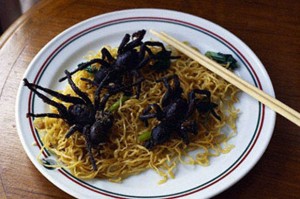
Usually Deep Fried
Tarantulas: No doubt more than one hungry human has downed a tarantula or two, whether before the invention of cooking or not we cannot say. But tarantulas weren’t really on the menu until the 1970s when many Cambodians were near starvation following political upheaval. Survival skills turned a big hairy spider into a national craze that has not slackened in the decades since. Usually well-cooked with salt, oil, sugar and garlic one starts with the legs which remind you of crab. The abdomen is soft and squishy, the flavor is nutty with a musty after taste. You’ll either like it or you won’t.

A taste for termites
Termites: I read once that termites are the perfect food for humans. They have all the essential amino acids we need. That’s certainly good news. Too bad flavor was left out of that equation. Termites don’t taste bad per se. They taste like minty wood, or at least the ones that live in the jungle do. Maybe the ones in desert mounds taste like minty sand. Could be worse, like tarantula tummies. In some places they are so well liked termites are eaten raw straight out of the mound with a straw. I wonder if they slurp. Another way to collect termites is to put a bowl of water under a light source at night. The termites fall into the bowl. Usually they are roasted, the wings are removed, a little salt is added, and bon appetit.
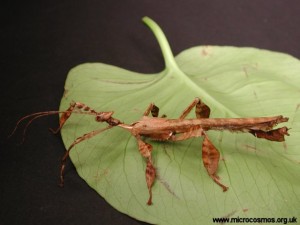
Walking Stick
Walking stick: Like Praying Mantis Walking Sticks fall between the entomological cracks regarding who they are related to. More diverse than Praying Mantises they can be an inch long or 18 inches. A popular edible in Asia and New Guinea, they taste, as one might expect, leafy. Some prefer only particular a foliage so feeding them alternative diets for a couple of weeks to moderate flavors might be called for. In one species the leg can be used for fish hooks.
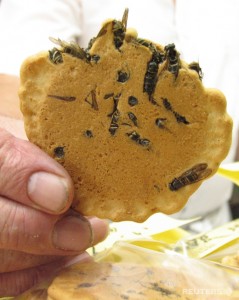
Wasp: Japanese Emperor Hirohito like boiled wasps with rice. Surprisingly I learned that when I lived in Japan decades ago when he was still Emperor. Wasps, like bees, are eaten as larva and adults, cooked which takes a lot of the sting out of the stinger. The larval form is preferred over the adult. Their flavor is butter and earth. In Mexico entire paper wasp nests are collected, cooked, nest and all and made into a sauce. In other areas the nest is collected and put next to the fire to roast the lavae inside. Wasps are generally put into two categories, social and solitary. Solitary wasps tend to build nesting burrows or small mud nests. They’re not on the menu too often. Social wasps tend to build paper nest they use for one season. The sting of the social wasp is usually worse than that of the solitary wasp because it uses its stinger for defense. Solitary wasps use their stinger to paralyze prey. That is why the sting of the social wasp hurts more. Also they usually don’t loose their stinger upon stinging so they can sting multiple times. Wasps are important agriculturally because they consume most agricultural insect pests. And not all wasps have wings. The “velvet ant” Dasymutilla occidentalis, is a wingless female was that is so flexible that while being held by the front end she can sting with the back end.
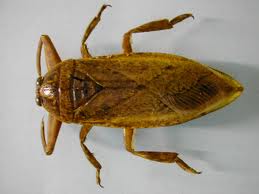
Giant Water Bug
Water Bugs might be even more off putting than tarantulas. They’re not small and you might have seen one in a movie or a nightmare once. Also called Toebiter because they do the giant water bug is popular in Thai cuisine. It is eaten whole, steamed or fried, and is the unseen special ingredient in several sauces. Raw they smell like green apples which doesn’t mean much when they have a hold of your toe… or the like. Steamed, they are aromatic like a banana with the flesh of a white fish. I see then now and then in Florida.
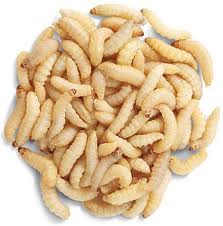
Farm-raised Wax Worms
Waxworm: Waxworms have got quite a reputation in the west as one of those inoffensive offensive edibles. They are the larvae of the wax moth. Fed on a diet of bran and honey they are roasted or sautéed tasting like a cross between a pine nut and an enoki mushroom, very fatty. With those flavors, as you might expect, they go good with butter… then again nearly everything goes good with real butter. In the wild waxworms live off bee larvae.
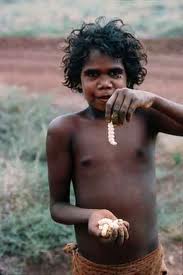
Wichetty Grubs, raw or roasted
Wichetty Grub: Without Ray Mears perhaps most folks outside of Australia would have never heard of the Wichetty Grub. They are so large and nutritious that 10 a day provides all the calories and nutrition an adult male needs. Eaten by Aborigines, they are dug out of roots and eaten raw or cooked, often roasted in coals or over a fire. They have a strong egg yoke flavor, and like many grubs are surprisingly chewy. Ah… c’mon.. if a kid can eat one so can you...
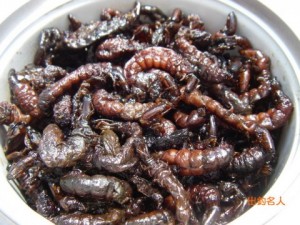
River Insects
Zaza mushi: I ate a lot of strange things when I lived in Japan but never got around to Zaza-mushi. On some of the outer islands where old ways and local customs still hold sway you can eat things that are as myserious as haggis. Zaza mushi is the larvae of aquatic caddis flies that live at the bottom of rivers. The name comes from “zaazaa” the sound the Japanese use to imitate flowing water, and “mushi” which means insects… River Insects. The Japanese just don’t hear things like we do. To them a cow says bow-wow and a cat niki-niki.


 70%. It decreased to