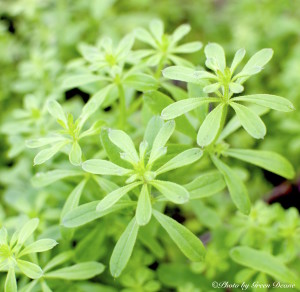
Galium gallops in and out of season. Photo by Green Deane.

Galium gallops in and out of season. Photo by Green Deane.

You don’t find Goosegrass. It finds you.
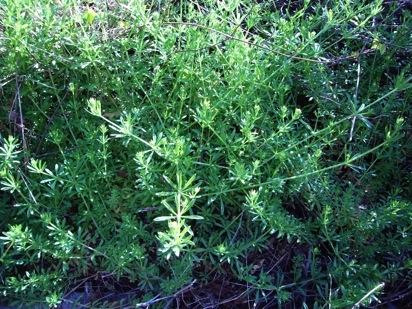
Goosegrass, Galium aspirine

Covered with a multitude of small hooks, Goosegrass, Galium aparine (GAY-lee-um ap-ar-EYE-nee) clings onto almost everything it touches. In fact, it clings so well you don’t have to take a bag with you to collect it. I usually just grab a bunch and touch it to my back pack. Instant stick. Indeed, the real headache with Goosegrass (aka Cleavers, Bedstraw, Stickywilly) is cleaning it of debris. It hates to let go of anything (which means a ball of it makes a good sieve.)

Young tips raw or boiled 10 to 15 minutes make an excellent green and the seeds roasted are one of perhaps two plants that actually makes a coffee-tasting coffee substitute (without caffeine.) Galium is in the same greater family as coffee. Older plants become laced with silicon and are too tough to eat, though I wonder if they would yield a lubricant of sorts.

Goosegrass is so called because geese love it along with most farm fowl and livestock. It is not, however, welcomed everywhere. Its seed are prohibited or restricted in Connecticut, Massachusetts, New York, and Vermont.  Kentucky calls it a threatening weed. The Canadian provinces of Alberta, British Columbia, Manitoba, and Saskatchewan list it as a noxious weed. Why not just call it lunch? There are no noxious weeds in countries that are starving.

Botanically Galium aparine means” milk seizer.” Juice from another member of the genus, Gallium verum, was used to curdle milk for cheese making.  Galium comes from the Greek word  γάλα  (GAH-la)  meaning milk. Aparine is from the  Greek verb  απράζω (ap-RAH-zoh) meaning to seize. Greek shepherds would use Goosegrass as a strainer for milk and other things. As a strainer you can bunch it up or make crosshatched layers.

Other colloquial names include: Clivers, Barweed, Hedgeheriff, Hayriffe, Eriffe, Grip Grass, Hayruff, Catchweed, Scratweed, Mutton Chops, Robin-run-in-the-Grass, Loveman, Tongue Bleed, Goosebill, and Everlasting Friendship.  The ancient Greeks called it philanthropon, “man loving”  from its clinging nature. It’s a fun plant to introduce to kids because it sticks to their clothes.
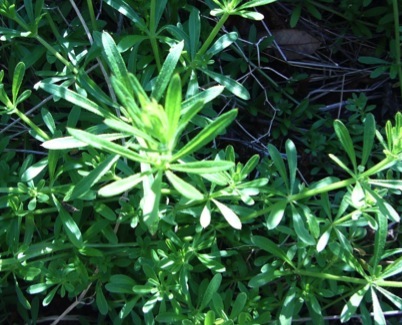
Goosegrass’ whorled leaves

Actually four Galiums are used somewhat regularly. Besides curdling milk the Galium verum’s blossoms were used for coloring and scenting cheese and butter with a honey-like fragrance. The flower tops are also used to make a refreshing drink. Galium mollugo, White Bedstraw, Revala, is one of 56 leaves added to a ritual dish in Friuli, Italy, and is now naturalized in the eastern US, the northwest but not the Deep South.  Galium odoratum is used for flavoring fruit cups and German Maywine. It is found in a hodge-podge of places in North America, part of the eastern US and Great Lakes area, part of the northwest, and Colorado. Check a USDA map for your area. The dried leaves are a tea substitute and the flowers are eaten or used as a garnish. Also listed has having edible leaves are: Galium boreale, Galium gracile, Galium spurium, and Galium triflorum. There’s also about a dozen endangered species, most of them in California. So, carefully identify your local Galium.

As one might guess the genus has been used for medicinal purposes. Dried Galium verum has some coumarin in it and has been used to treat bladder and kidney problems including stones as well as dropsy and fever. It also has citric acid (which makes it refreshing as a drink) and that might have anti-tumor activity. Some think it lowers blood pressure and is anti-inflammatory. It can also prevent scurvy. Native Americans used Galium pilosum to prevent pregnancy.  Goosegrass also strengthens your immune system and is good for you lymph system. During WWII children in Britain were paid to harvest Goose Grass (and other medicinal herbs.) It was used by pharmaceutical companies to make medicine to combat infections. 

Galium triflorum and Galium uniflorum were used for the flu and as a diuretic.  The Cherokee used Galium circazans for coughs, hoarseness, and asthma. For respiratory problems the Ojibwa used Galium tinctorium. Galium triflorum was the most used medicinally. They used it as in infusion for gallstones and a poultice to reduce swelling. The ladies also used it as a perfume and for washing hair.  The root of the Galium tinctorium was also used for a red dye.

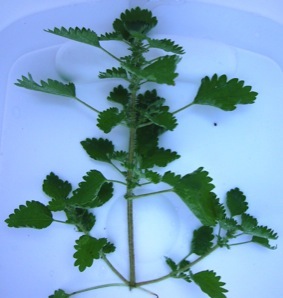
Locally, that is in central Florida, two Galiums are common, the Galium aparine and Galium tinctorium. They are fairly easy to tell apart. Galium aparine, the for-certain edible, has six to eight leaves in a whorls at a node. It prefers dry areas. Its white flowers have four petals. The Galium tinctorium, the smaller of the two, has four to six leaves in a whorl and likes damp places. Is white flowers have three petals (sometimes four.) While it would be nice if the Galium tinctorium were edible I have found no reference that says it is. If you know otherwise please let me know.

 Green Deane’s “Itemized” Plant Profile

IDENTIFICATION: Galium aparine: A weak square stem plant covered with little hooks that bend back towards the bottom of the plant. Feels scratchy and will cling to almost any texture. Leaves small and skinny, usually in a whorl around the stem, eight leaves at a time, lowest leaves petioled and roundish; upper leaves sessile, narrowly oblanceolate. Minute  four petal-white flowers on small stalks where leaves meet the stem (axils). Fruit a tiny two-lobed capsule, covered with fine hooks.

TIME OF YEAR: May to July in northern climes, early March in Central Florida.

ENVIRONMENT: A wide variety, rich moist ground to upland scrub, woods, thickets, waste ground beside trails.

METHOD OF PREPARATION: Young shoots and or tip of older plants raw or boiled 10/15 minutes. Serve warm with butter or olive oil, sale and pepper. Or, let them cool and use them in a variety of ways, salads, omelets et cetera. Slow-roasted (low temperature) roasted ripe seeds when ground make a good coffee substitute without caffein. Older plans are not edible. Look for new growth in spring.

According to Professor Gordon Brown, Goosegrass is good for the lymph system.
{ 52 comments }

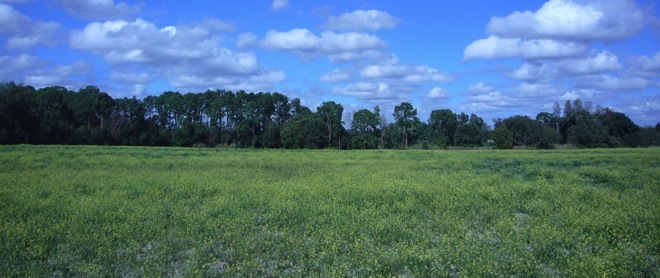
Field of Wild Radish near Tarpon Springs, Florida

Raphanus Raphanistrum: Radical Radish

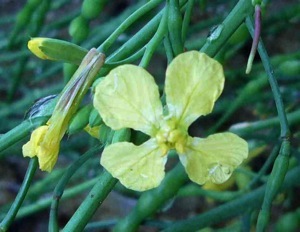
Flowers are cross-shaped

The Wild Radish has an identity problem. It looks similar to it’s equally peppery cousin, the wild mustard. In fact, it really makes no difference which you have, both are edible, appear the same time and are used the same way. Both grow locally though I think radishs are more common. So, how do you tell them apart?

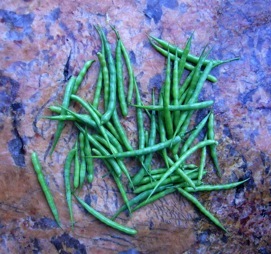
Seed pods are jointed

Wild radishes have singular flowers while mustards have a clump of flowers. The petals of the radish flowers are veined, mustard flowers are not. The seed pods of the radish are segmented, the mustard pods are not. Also wild radishes tend to grow to one or two feet high, maybe three. Wild mustards can four to six feet high. Usually just with a glance you can tell if it is a field of radis or mustards.

Blossooms and seeds are edible

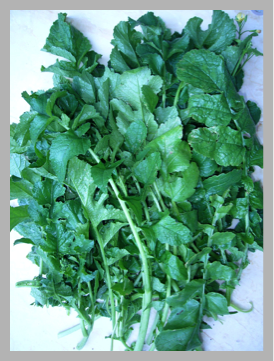
Like the mustard the greens of the wild radish make an excellent greens, boiled for 10 minutes or so in plenty of water. They are edible raw but can upset some tummies. In fact, many livestock owners consider the radish and the mustard toxic for the same reason, then again, cows have several stomachs to upset.  I have eaten boiled radish greens for years and find them one of the tastiest short-lived plants of spring. That’s the only flaw of the Wild Radish, it’s here for a few weeks and gone. Thus for a few weeks I am busy harvesting, blanching, and freezing as much as I can process.

Leave reduce significantly during cooking

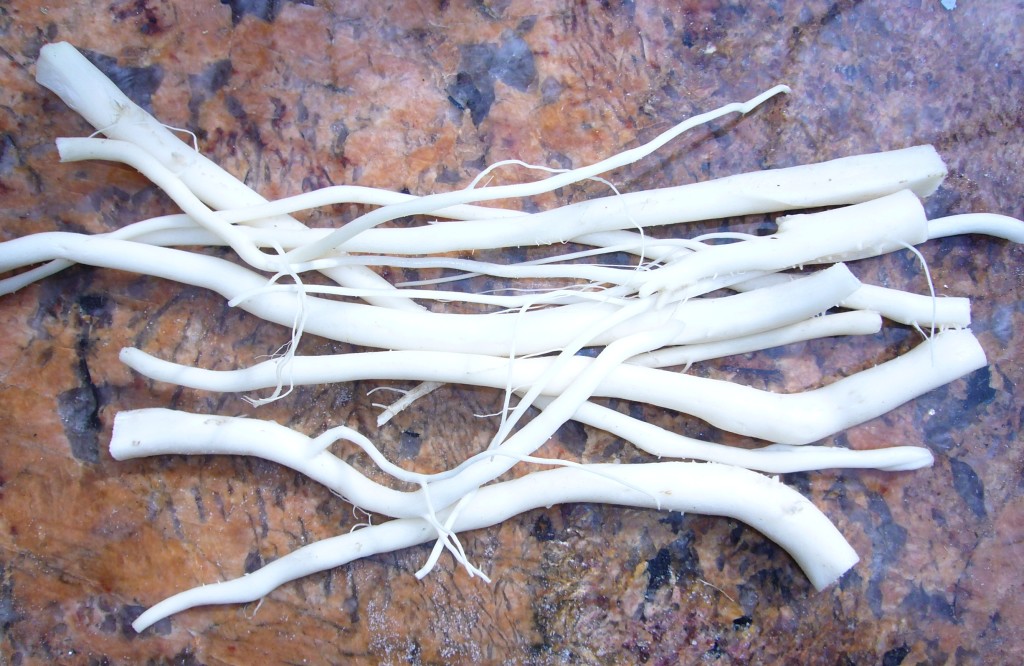
The blossoms are edible and the seed pods have many uses, from eaten raw to cooked to pickled.  Few mention the edibility of wild radish roots.  They are quite edible and remind me of kohlrabi in flavor, not a radish. They have vitamins B, C, rutin, and minerals.  The tough, outer layer peels off like a separate jacket, often coming off in strips the way colors wrap around a barbershop pole. What is left is the clean, smooth, inner core of the roots.  I dice them and cook them in plenty of boiling salted water for 45 minutes.  Depending upon their age, they can be occasionally be fibrous but still quite tender and tasty. They do, however, smell like radishes when peeling and can fill the house with a sulfur aroma when cooking. The cooking water may also turn light tan. I like them with salt, pepper and butter. Cooked, they are not peppery at all but rather mild.

Roots minus tough jackets ready for cooking

Also called the “Jointed Charlock” the Wild Radish’s name is a double take. Raphanus raphanistrum  (RA-fah-nus raf-ahn-ISS-trum.) Both come from Raphanis, a Greek word that means appearing quickly. It was the the Ancient Greek name for this vegetable. “Charlock” comes via Old English from the French word “cerlic” the name for the plant.

Green Deane’s “Itemized” Plant Profile

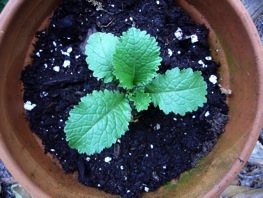
Young seedling

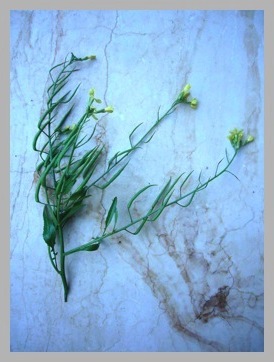
IDENTIFICATION: Flower: Four sepals, four petals, six stamen, 4 long, 2 short, pistil in middle; Flowers tend to be solitary and petals clearly veined. Leaves lobbed, tough, stem round. The pods of wild radish break in fragments to expose the seed while the wild mustard open straight down the middle to expose the seed. Pods stick out around the stem like a spiral staircase. Under a yard high.

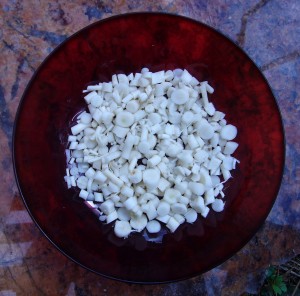
Chopping roots help cook them quicker 

TIME OF YEAR: Springtime to summer in northern clims, winter in Florida.

ENVIRONMENT: Well-drained soil, sandy to rich, old pastures, gardens, lawns, roadside

METHOD OF PREPARATION: Leaves as potherb, seeds for spice or flavoring, can use flowers to flavor vinegar. Some young leaves can be used raw in salads. Try a little first. Roots, peeled of outer core then boiled.

Recipe by Pascal:

Take 3 part apple cider vinegar, 2 parts white wine, 1/2 clove garlic, a bit of California Bay Leaf and Italian Spices, red chili and voila! Oh…and a dash of sea salt as well per jar. Canning it for 15 minutes (water-bath canning).

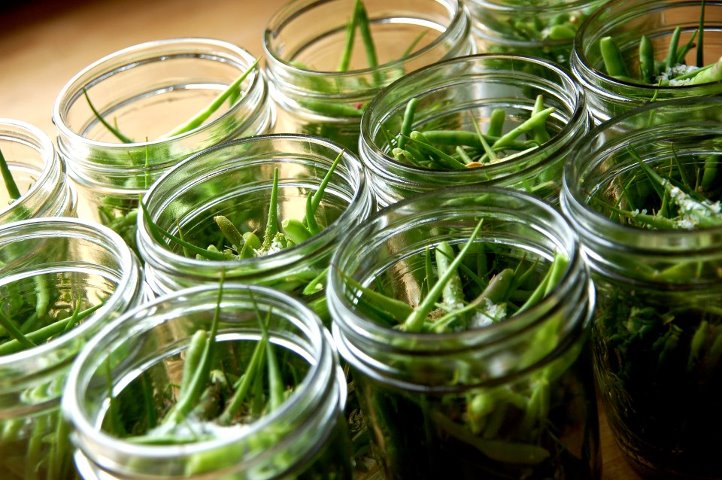
Wild radish seed pods ready for pickling (you can use mustard pods as well)

Wild radish seed pods ready for pickling (you can use mustard pods as well)

{ 19 comments }

Urtica chamaedryoides: Nettle Knowledge

Stinging Nettles Know How 

I  was hiking one day when I saw what I thought was a mint I had not seen before. I picked a leaf and it bit me, badly. Welcome to the world of stinging nettles.

Florida’s Heartleaf Nettle

As luck would have it, I also picked the North American nettle that stings the worse, Urtica chamaedryoides (UR-tee-ka  kam-ee-dree-OY-deez) which is a combination of Dead Latin and Living Greek that means “burning dwarf.” Modern Greeks call the nettle Tsouknida.

Humanity has been using the nettles for thousands of years. Not only are they an excellent source of food but also cordage. They  also seem to be an element of grade-school torture, judging by all the videos on the Internet involving kids and nettles.

From the nutrition point of view, they pack a wallop as well. Stinging Nettles are rich in vitamin A, potassium, magnesium, and calcium. They are also high in protein and when cooked are very mild, tasting similar to spinach but slightly rougher. 

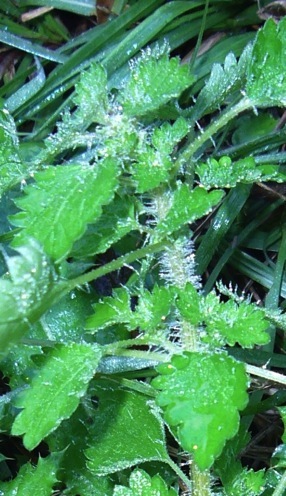
Stinging hairs cover the nettleSoaking, cooking, refrigerating, wilting or drying neutralizes the plant’s sting. And to be on the safe side the plant should not be eaten after flowering. It reportedly can irritate the urinary tract, which makes some sense as it is a diuretic as well. It also gets stringy as it ages. Cooked nettles can be used in a wide variety of recipes from polenta to pesto to soup. There is a recipe below. The water you cook the nettles in can be kept for tea or as a soup base. You can also dry the leaves and use them for tea as well.

The stems of the nettles contain blast fiber and have been used the same way as flax, Caesar weed, Spanish Moss, and retted similarly. (Retting is a means of rotting off the non-fiber material of the plant. ) Nettle fiber is more coarse than cotton, closer to burlap. Clothes have been made out of it and it was a fashion style recently.

As for stinging… I have been stung by a spurge called Cnidoscolus stimulosus and this stinging nettle (Urtica chamaedryoides.) While both bites are different I think the Urtica wins, so to speak.  With me the Cnidoscolus‘ contact begins to burn slowly and intensifies over an hour or so and then goes away completely by two hours. The Urtica hits, as Shakespeare said,  like a “hotspur” throbs, then lessens in an hour but stays painfully sore as a welt for several days especially after contact with water.  The juice of jewelweed or dock is reportedly a good treatment for the Urtica sting. Didn’t work.  The juice of a chewed leaf is also supposed to bring relief but I can say that absolutely does not for with me nor plantagos or urine (don’t ask.) A paste of baking soda did bring some relief.

There are some look-alike plants to the beginner. Two are the Pilea pumila and a new weed, the Fatoua villosa.  Neither sting. It is that simple. A third plant that does not really look like the Urticas but does sting is the aforementioned Cnidoscolus stimulosus. It has deeply palmate leaves and large white flowers, at least a half inch or more across.  You can see a picture of the Fatoua on the UFO page. The article on the Spurge Nettle is here.

One last word before the recipe. While folks can be allergic to stinging nettles they are also used to treat certain allergies particularly hay fever. Around the world nettles have been used for at least centuries to treat nasal and respiratory issues such as coughs, runny nose, chest congestion, asthma, whooping cough and in some cases tuberculosis. The roots are used as well as dried leaves. Apparently freeze dried leaves are the best.

Nettle Pesto

Ingredients

6 cups fresh nettle, blanched in boiling water for a minute, drained and roughly chopped, 2 cloves of garlic finely chopped, 1/3 cup  pine nuts, 1/2 cup grated Parmesan cheese, 1/3 cup olive oil, salt and pepper to taste.

Directions

Place the blanched nettle, pine nuts, Parmesan, a little salt and pepper, in a food processor. Blend the mixture until the mixture is smooth, or reduce by hand. While the motor is running, or mixing by hand, gradually pour in the olive oil until well distributed.

Green Deane’s :”Itemized” Plant Profile: Stinging Nettles

IDENTIFICATION: Urtica chamaedryoides: An unbranched weed one to several feet high, small inconspicuous flowers, fine bristly hairs all over the stem, leafstalks and underside of leaves. Very obvious. The bristles sting greatly when gently touched.  Manhandling the plant reduces the chance of being stung as it breaks the hairs before they sting. Mature stems can be used for cordage.

TIME OF YEAR: Spring and fall, depending upon the climate, during Florida’s winter into spring.

ENVIRONMENT: Moist areas, along streams and woodlands, nettles are found around the world.

METHOD OF PREPARATION: Leaves raw or cooked but eating raw requires much skill to reduce stinging. Usually young shoots and leaves are boiled 10 to 15 minutes.  Reserve the resulting water for nettle tea. Once cooked use like spinach or basil. Very nutritious. The cooking water is good as a tea or soup base. Dried leaves can be used to make tea. If you are on the trail you can use an alternative method of preparing nettles used by Ray Mears, an English wild food expert. He places the entire plant near a fire for a few minutes until it completely wilts, and that stops it from stinging. 


{ 66 comments }
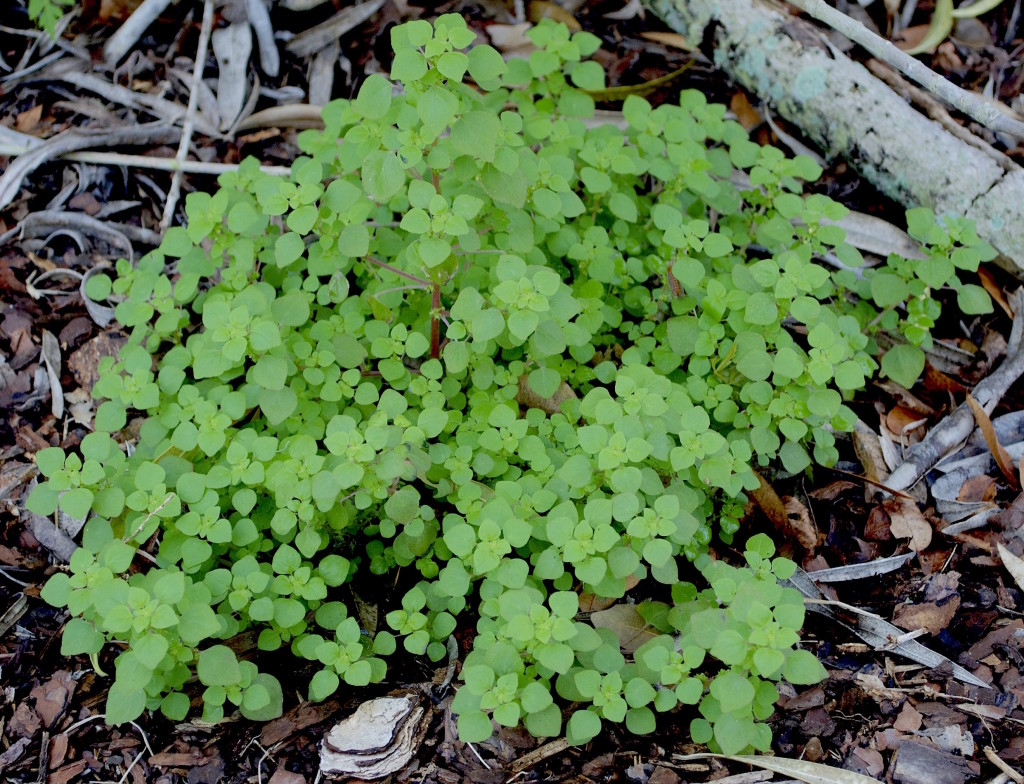
Pellitory, food and medicine. Photo by Green Deane

Pellitory, food and medicine. Photo by Green Deane

Pellitory: Parietaria is a Whiz

Finding greens locally in the cooler months isn’t much of a challenge unless you’re looking for Pellitory . It likes to hide and move.

Pellitory, or Parietaria, is in the greater nettle family and likes it cool and dry, if not shady. It even grow on rocks up to 12,000 feet. Uncooked, pellitory has a hint of cucumber aroma, hence sometimes it’s called the Cucumber Weed. Cooked, it is bland, which suits some palates just fine because you can flavor it as you like. I have friends who just stuff it raw into tacos with other fixings.

Pellitory, note flowers on stem

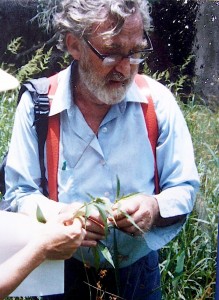
Parietaria (pair-ee-eh-TAR-ee-uh) also known as Pellitory Over-the-Wall. It has a reputed split personality you should be aware of. Its purported double life may also explain why so many foraging books skip it. Many years ago I was told by foraging expert Richard “Dick” Deuerling (co-author of Florida’s Incredible Wild Edibles) that half the people who ate pellitory got the itches — like a  niacin flush but longer lasting.  I don’t get an all-over itchy feeling when I eat Parieitaria so I don’t think about it, but, if a person has allergies they should approach Parietaria with caution. Frankly in the decades since hence I have met only one person who get the itches from eating it. However, Dick, below left, was a stickler for details and I could have easily just met a lot of folks who don’t react to it. 

Dick Deuerling circa 1992. Photo by Green Deane

While there is a difference between eating a plant and breathing its pollen, in the Mediterranean area pellitory, in particular Parietaria judaica, is becoming a significant problem. More than 82% of people who are allergic to pollen show an allergy to that particular Parietaria. Some Australian hospitals call the P. judaica the Asthma Weed and warn against it, labeling it dangerous. If you have allergies, or hay fever, Pellitory might be a plant to skip, or at least approach carefully.

That said, besides being an edible salad ingredient and pot herb for thousands of years, Parietaria has been used herbally, with a slight contradiction in constituents. Its attested main feature is that it is a diuretic of significant strength and good for kidney stones, bladder issues, et cetera. Yet, it is high in sodium which tends to make some folks retain water. On the other hand, Parietaria is high in potassium and nitrates, the latter of which a 2006 study showed helped lower blood pressure, which is often done by lowering ones fluids.  Ben Johnson wrote centuries ago:

‘A good old woman . . . did cure me with sodden ale and pellitorie o’ the wall.’

The nutritional profile of a relative,  P. diffusa, is per 100 grams fresh weight 155 calories, 5.4 grams of protein, 2.8 grams of carbohydrates, 0.6 grams fat and 5.2 grams fiber. As for minerals it has 883 mg of calcium, 585 mg sodium, 463 mg potassium, 200 mg magnesium, 80 mg phosphorus, 2.8 mg of iron, 1.2 mg zinc, 0.9 mg manganese, and 0.4 mg of copper.

There is also some debate if the plant as a treatment herb is more potent green or dried. There are arguments for both. Now, if you are still willing to try pellitory, know the complete plant also cleans glass and copper pots well.  It’s botanical name, Parietaria, comes from the Latin word paries, meaning a wall. Of course, if you have  been reading a lot of these articles you know by now that Latin is just a combination of stolen Etruscan and mangled Greek. “Paries” in Latin came from the Greek word “parifi” meaning edge. Parietaria likes to grow in the cracks of walls but it can also form large clumps, such as in my garden or under dry road bridges frequented by transients. The local species is Parietaria floridana.

Below is a recipe from the Italian book Piante Selvatiche by Roberto Gamacchio, which specializes in wild greenery.

Pasta with Parietaria

Ingredients:
Macaroni or spaghetti, 7 ounces dry
Parietaria 3.5 ounces

Béchamel sauce 2 ounces
salt
chilli

Cook the pasta “al dente”. Steam the Parietaria, salt and blend. Add the sauce and chilli to taste. Fold the sauce in the pasta,  serve immediately, salt to taste

 Green Deane’s “Itemized” Plant Profile

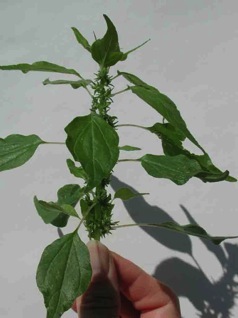
IDENTIFICATION: Six inches to a 14 inches tall in Florida, usually unbranched. Central stem is green, four-angled, it can be slightly hairy. The lanceolate  leaves alternate. Each flower is surrounded by several green bracts that are longer than the flower. The flowers are green with no petals, four stamen. Grows in colonies. NO TEETH ON LEAVES. If you have a pellitory with teeth on the leaves you have misidentified an Acalypha, not edible.

TIME OF YEAR: Early winter in Florida, lasting just a few of months at best, December to around March, occasionally later in cool winters and very deep shade. Elsewhere usually during cool spring months.

ENVIRONMENT: Walls, fences, edges, cool dry areas, light shade, moist to slightly dry conditions.

METHOD OF PREPARATION: Edible raw or cooked.  Try a small piece first, it may make some people who eat it raw itch for a while. Raw it is better chopped up in salads.   HINT: Even when cooked the stems can be fibrous, so chopping or cutting them into bite-size length  before cooking is recommended. The water pellitory is cooked in is considered by chefs to be excellent stock for making risotto.


{ 43 comments }


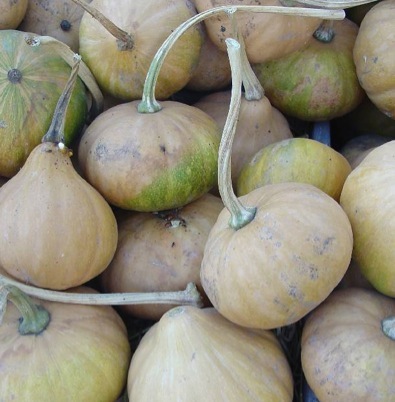
Seminole Pumpkins lite. They can also be dark green

Cucurbita muschata: Seminole Pumpkin

Unlike watermelons which are from Africa, pumpkins and their kin are North American natives. When Panfilo de Narvaez was on an expedition in 1528 near what is now Tallahassee, Fl., he saw Seminole Pumpkins under cultivation. They still grow in the wild in many states, Florida north to Pennsylvania. They might have even been in Massachusetts when the Pilgrims arrived.

Let me quote Dr. Julia Morton, the larger-than-life grand dame of edible and poisonous plants in the southeastern US:

“A mainstay of Florida Indians and early settlers, the Seminole pumpkin is botanically identified as a form of Cucurbita moschata Poir., the species embracing the Cushaw or winter Crookneck squashes. It will spread over the ground, drape a fence or climb trees; needs to be fertilized only at planting time; requires no protection from insects. The fruit, variable in form and size, is hard-shelled when mature and keeps at room temperature for months, is excellent baked, steamed or made into pie. The Indians sliced, sun-dried and stored surplus pumpkins. Very young, tender fruits are delicious boiled and mashed; the male flowers excellent dipped in batter and fried as fritters. Thus, the vine produces three totally different vegetables. This is an ideal crop for the home gardener. The portion of the vine which has borne will die back but vigorous runners, which root at the nodes, will keep on growing, flowering and fruiting, yielding a continuous supply.”

The Indians not only cleared land for agriculture but they took advantage of the Seminole Pumpkin, which is a vigorous climber. They would plant it as the base of a dead oak tree and let the vine climb the tree and fruit off the ground. The plant would then grow all over the hammock reseeding itself. The natives  were, actually, more ingenious than that. A hammock is a hardwood island in a swampy area. They would girdle the trees on the inner part of the island killing them but turning the inner part into a small field protected by a wind break and prying eyes. Getting the pumpkins down was no issue with a lot of young braves wanting to prove themselves. Uninjured, a Seminole Pumpkin will store for several months even in hot weather if it has good ventilation.

The pumpkin is round, lightly ribbed, around three pounds with tan skin or mottled and green. The sweet flesh is deep orange and dry. Highly productive, it is resistant to insects and disease. The fruit  is actually more closely related to butternut and calabaza than the common Halloween pumpkin.

The botanical name, Cucubita moschata (kew-KUR-bi-ta MOSS-kuh-tuh) means Musk-scented Bottle Gourd. Moschata is also where we get the word “musk” from. Cucubita was what the Romans called the bottle gourd.

Green Deane’s “Itemized” Plant Profile

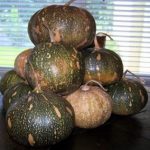
Green Seminole Pumpkins

IDENTIFICATION: Vine, soft-hairy, creeping, leaves ovate or nearly round or sometimes triangularly lobed, toothed, six inches to a foot long, soft, limp. Flowers funnel-shaped, crinkly, yellow, five lobes, three to four inches wide. Fruit comes in many forms, round, oblate, pear-shaped, short-necked, ribbed, orange when ripe with orange-yellow flesh, central cavity more or less filled with soft, fibrous pulp and flat, elliptic, white seeds, to three quarters of an inch long.

TIME OF YEAR: Fall and winter

ENVIRONMENT: Hammocks, everglades, abandoned camps

METHOD OF PREPARATION: Numerous: Boiled or baked, used as a vegetable, dried and ground into a flour for bread, young shoots and leaves cooked as greens, flowers with pistils removed cooked and eaten. They can also be stuffed. Seeds edible, can be roasted or hulled and ground into a gruel.


{ 51 comments }