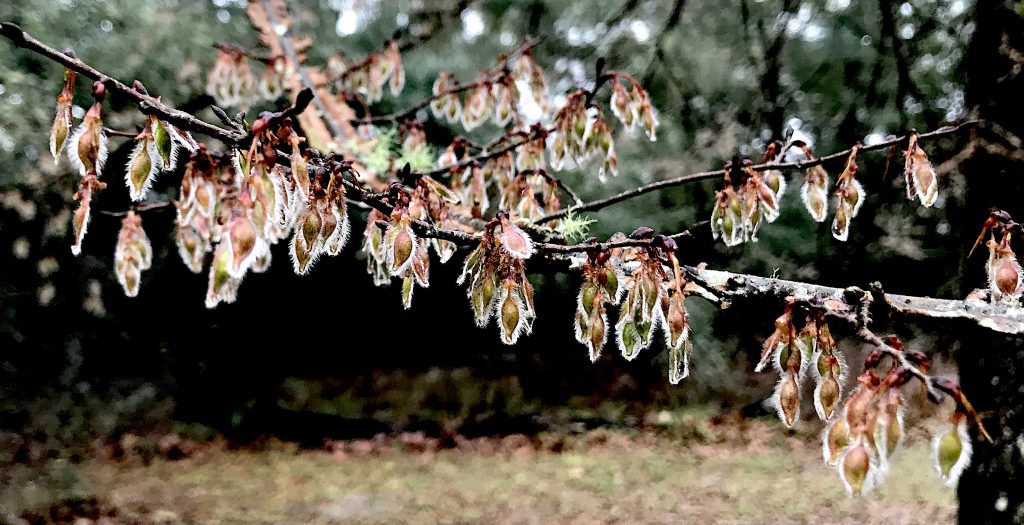
They look flimsy but they are tender and tasty: Drake Elm Leaves and Samaras. Photo by Green Deane
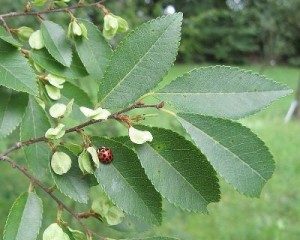
Samaras on a lacebark elm. Photo by Green Deane
As far as I know all elm leaves are edible except one that is native to Manchuria, Ulmus propinqua. In the last century the Dutch Elm Disease wiped out most elms in North American thus the most common elms now are the work-project-planted Lacebark Elm and it’s shaggy cousin the Siberian Elm. Florida’s elm escaped the disease and can be found often in river plaines. Elm leaves and seeds have calcium, manganese, iron, magnesium, phosphorus, potassium, selenium, zinc, beta-carotene, vitamin C, and some B vitamins. They also have harder things to say: D-galactose acid, D-galacturonic acid, L-rhamnose acid, Oleic acid, Palmitic acid, Polyphenols, Tannin, and oligomeric procyanidins (the latter have antiseptic and anti-allergic action.) The Lacebark and Siberian elms, also called Chinese elms, like all elms have edible seeds in little green envelopes called samaras. If you find seeds in the samaras, they can be used like lentils. The inner bark is also edible and when dried makes a useful flour. For more information on elms go here or for a video here.
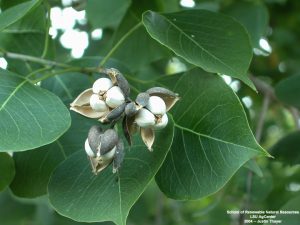
The Chinese Tallow tree is also called the Pop Corn Tree.
Is it edible? Yes, no, maybe… The Chinese Tallow tree — left — is both banned and championed. It’s edibility is also linked to why it’s even in the United States to begin with. The tree was imported by none other than Ben Franklin (well… he sent some seeds to a friend in Georgia.) The purpose was to use the white external fat for making candles which tallow was once used for. Hence the tree’s name in English. In theory that small coating of saturated fat on the outside of the seed is edible. It is also very stable. But there are two problems. It can be extremely difficult to remove and inside the seed is an oil toxic to humans. So the external fat and the inside oil should not mix. Some people have experimented with crushing the entire seed and heating the mash thus melting the saturated fat along with releasing the toxic oil. When they cool the edible fat and the non-edible oil are separate. In China, where the tree is valued, they steam the white saturated fat off. The white fat is very stable and won’t melt in a hot frying pan. The tree, while an invasive species in some areas of North America — such as Florida — is being considered as a good candidate for bio-fuel. You can read my article about it here about it here. A later magazine article about the species is here.
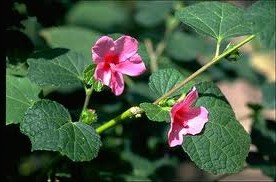
Caesarweed is in the hibiscus group.
Caesarweed is a common sight locally but right now it is being a seasonal extrovert and blossoming profusely. Like the Chinese Tallow tree above, Caesar Weed is another plant intentionally imported for industrial use, in its case making fiber for burlap bags and the like. It’s not strong enough to make a sturdy rope like Skunk Vine (which was imported when each ship had five miles of rope.) But if thrown in water and allowed to rot for a few weeks long blast fibers in Caesarweed are left over. The tasteless flowers are edible, the seeds can be eaten as is or ground and used like corn starch, or sprouted to make microgreens. The larger leaves have medicinal uses besides being a famine food (they have an offputting hairy texture issue that can upset the tummy.) You can read about Caesar Weed here or see a video I did on it here.
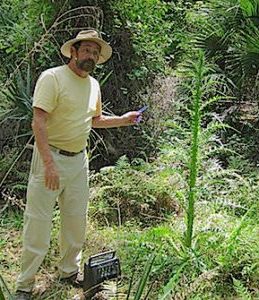
Foraging classes are held rain, shine, hot or cold. Photo by Nermina Krenata
Foraging Classes: We are entering the nicest time of year for outdoor foraging classes, not too hot, not too cold.
NOV 8th, Mead Garden 1500 S. Denning Dr, Winter Park, FL 32789. Meet at the bathrooms. 9 a.m. to noon.
NOV 9th, Red Bug Slough 5200 S. Beneva Road, Sarasota. 9 a.m. to noon
Bring cash on the day of class ($30 per adult) or click here to pay in advance for your class. If cost is a hardship email me at: GreenDeane@gmail.com
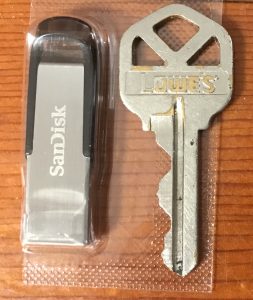
You get the USB, not the key.
All of Green Deane’s videos available for free on You Tube. They do have ads on them so every time you watch a Green Deane video I get a quarter of one cent. Four views, one cent. Not exactly a large money-maker but it helps pays for this newsletter. If you want to see the videos without ads and some in slightly better quality you can order the DVD set. It is nine DVDs with 15 videos on each for a total of 135 videos. Many people want their own copy of the videos or they have a slow service and its easier to order then to watch them on-line. The DVDs make a good gift for that forager you know especially on long, cold winter months. Individual DVDs can also be ordered or you can pick and choose. You can order them by clicking on the button on the top right hand side of this page (if your window is open wide enough.) Or you can go here.
Green Deane Forum
Want to identify a plant? Looking for a foraging reference? Do you have a UFO, an Unidentified Flowering Object you want identified? On the Green Deane Forum we chat about foraging all year. And it’s not just about warm-weather plants or just North American flora. Many nations around the world share common weeds so there’s a lot to talk about. There’s also more than weeds. The reference section has information for foraging around the world. There are also articles on food preservation, and forgotten skills from making bows to fermenting food. One special section is “From the Frightening Mail Bag” where we learn from people who eat first then ask questions later. You can join the forum by clicking on “forum” in the menu.
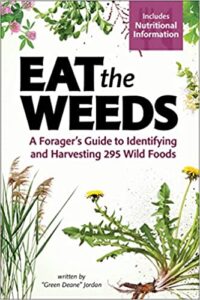
EAT THE WEEDS, the book, 274 plants, 367 pages, index, nutrition charts and color photos. It’s available in many locations including bookstores such as books a million, and Amazon. Most of the entries include a nutritional profile. It can also be ordered through AdventureKeen Publishing. This is weekly newsletter #648 If you want to subscribe to this free newsletter you can find the sign-up form in the menu at the top of the page.
To donate to the Green Deane Newsletter click here.