Acorns, or Oak Nuts?

It seem like a little thing that grew into a big problem, just like the edible I was writing about.

I had several requests to do something about acorns. Though a well-covered edible on the Internet and in nearly every foraging book most people think they are poisonous, a rather surprising idea. They are not, unless you’re a horse. After writing my article I had a quandary: Do I index it under oak or acorns? It would seem oaks and acorns are in rare company, a nut that is not the same name as the tree.

Cashews come from a ….cashew tree. Pecans from a pecan tree. Walnuts from a walnut tree. Acorns from an Acorn Tree…wrong…

I started a list in my mind… apples, apple tree; oranges, orange tree; mulberries, mulberry tree… persimmons, almonds, cherries, plums, loquats, grapes..well, grape vine. but still grape. One even gets ‘ears” from the Ear Tree, but acorns….

Now hazelnuts do come from the Hazelnut tree, but so do “filberts” because the hazelnut ripens around St. Filbert’s day….Aug. 20…no, I really didn’t know there was a St. Philibert …built a lot of churches in the early 800’s, one with his name still standing….so we get both filberts and hazelnuts from the hazelnut tree.  I could try to add that whiffles come from the whiffle tree but they come from the Ash tree, and they aren’t even edible (it’s a part of carriage or cart that transfers the pulling of the horse to the vehicle.)

So I decided to index acorns under acorn, not oak. No one goes looking for an oak recipe, and acorn looks good at the top of an edible index. And I think I’ll start calling oaks “acorn trees.”

{ 13 comments }

Living off the Foraged Land

I am not a survivalist per se, though every day I do break my personal best record of consecutive days alive.

That said, I know many survivalists. They tend to be men and fall into two camps, responsible older men determined to survive in what they see are difficult times ahead that they hope never comes. The other camp is young men who think along Rambo lines, a gun and a mountain top is all they need plus are few sex salves. They are anxious for society to fall apart. With the responsible group inevitably the issue of edible wild plants comes up.  I have a lot of folks who say they plan to come to my place should there ever be a shortage of food. I think, however, there are some misnomers about living off the foraged land.

Often I walk 15 miles or leisurely bike 30 or so. And when I do I take note of the edible plants I see along the trip and what kind of meal or meals I could make by day’s end. Doing that inventory often makes three things apparent. One is that every single opportunity for food would have to be exploited, no matter how meager. Two, it would take most of ones time to collected and prepare the food. And, lastly, that capturing some creatures makes the entire endeavor far more nutritious.
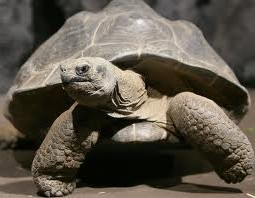
Let’s take those backwards. Usually every time I am out walking or biking this time of year I see a tortoise. In real hard times that would be dinner, and breakfast and the next supper as well. More so, it is easy to get — pick it up — and a huge concentrations of the stuff our bodies want and need. All life lives off the living, even vegetarians (who seem to discriminate against vegetables by eating only them.) That tortoise I see every time would keep me living for another day or two. (That one, by the way,  is protected.)
Next is time. It would take a lot of time to find enough food to survive each day. Occasionally there would be a bonanza of something, like a grape harvest, but most of the time it would take a lot of time to find enough to live off. And then one has to collect  fire wood, find clean water, prepare the food and cook it. There are only so many hours in a day. It is difficult for one person to do all the things that need to be done to survive let alone thrive.

Then there is the variety, or specifically lack there of.  Here in Florida I can always count on some Biden alba leaves to eat, some acorns that need leaching, cattails, lichen, spurge nettle roots, seasonal fruits, seasonal leaves, and other seasonal nuts. Sustainable, perhaps, but there are going to be lean days, weeks, months and seasons. Worse the menu is going to be the same and change only by season.
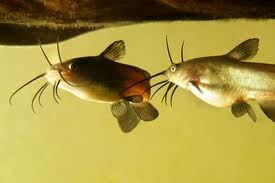
Compare that to someone who knows how to fish. One medium size fish and you won’t starve that day.  While it takes some skill to fish it is not difficult to learn. (Personally, I have five cast nets and almost never come home with an empty creel.) The hunter, more controversial, gets even more food than the fisherman, but that requires far more skill, and of course, a weapon, which is much harder to come by than making a pole, line and hooks. (Though trapping can also be included in hunting, but that too takes more skill than fishing, and takes longer to learn.)
And then there is foraging, what we started out with. While foraging is near and dear to my stomach it is the skill that takes the longest to learn and produces the least amount of calories, typically 34% of a hunter/gatherer’s caloric needs. It also takes up the most time. That would all seem to argue, especially to my survival friends, that learning to fish would be a priority, hunt next and down the road foraging.  In fact fishing and traping can be very efficient in that they can be done while you are doing something else that needs to be done, like setting up camp. Oddly, foraging may still have greater value than fishing or hunting in the long term.
If we were ever in a true survival mode where we had to gather our food (by hand, hook or Colt 45)  fish would be the first depleted food. Animals next. Plants last, and by that time there just might be less people around.  So even to the survivalist foraging can have value, even to the Rambos. Many survivalists, who like to think they are a breed apart, share this in common with most people: They don’t know much about plants, and like many folks, just ignore them. They think all they need is a good foraging book with pictures. That mentality also extends to gardening, as in all it takes is putting the seeds in the ground. Gardening is humbling and it takes about 10 years of study to be able to produce what you want to produce when you want it.

I like to forage because it makes me part of the world I am in, whether society is together or falling apart.  I will forage for fun and flavor whether society is tact or not. And while I do not expect society to disintegrate, I like the idea that I can always find something to eat nearly everywhere.

{ 1 comment }

Great Grandmother Cat

One of the reasons why Eat The Weeds exists is to advocate eating the wild foods around you but also to be another voice in the growing chorus that is suggesting the way we eat nowadays is not healthy. That would include being critical of a lot of doctors who are wrong about nutrition.

Grandma vs chemist

This author follows two mottos: One is eat like your great grandmother ate, that is, if your great grandmother would not recognize it as food, don’t eat it (this would apply to most of the chemicals on the ingredient list after salt and sugar.) The other motto is trust the cow, not the chemist. It is this author’s studied view that much of the heart disease, diabetes and certain cancers are a directly linked to the chemist being invited into the commercial kitchen.  So I eat cheese not processed cheese food, a balanced wholesome meal, not a prepackaged, pop into the microwave repast.

Pokeweed

This is not to say wild foods are entirely safe. There is usually a reason why a wild food is not mainstream. Sometimes it is transportation and storage issues, as with loquats or pindo palm fruit. Other times, it is legally just too risky. Pokeweed is an example of a tasty food that several states and private concerns have tried unsuccessfully to make mainstream and on your grocer’s produce shelves. The fine botanical print about ending up in the hospital if you cook it wrong is a set back, especially to anyone under 40, almost none of whom cook any more, which is why there is so much already-cooked food as so called grocery stores. I will admit the first time I collected pokeweed on my own, cooked it and took a swallow, it was a brave step. Today’s consumers won’t go near pokeweed unless society breaks down completely and it’s eat pokeweed or starve.

So this writer thinks in alternative foods, and is not a fan of the food or medical community that takes poor studies for gospel and doesn’t change their ways until long after bad advice becomes a health epidemic or medical dogma. But then there is my cat.

Charger de faire, Oliver

If you’ve wandered around the site or my videos you’ve seen Oliver Whitecat, my quality control expert and supervisor. He came into my life by accident at the age of six weeks and has turned into a cat-of-a-lifetime. He is bright, playful, loyal, sweet, sassy, and thinks. And like most cats, he has his dietary yea’s and nay’s. If it flies he likes it, raw or cooked. If it swims and is cooked he likes it. Sushi is not on his list of hit parade foods. Shrimp anyway is definitely no. Food from four feet is hit or miss. Pig yes, lamb no. Beef maybe. Squirrel yes, deer yes, goat maybe… depends on the sauce. But all of that got me to thinking….

Most of the foods Ollie likes he wouldn’t have, despited his brilliance and resourcefulness, a chance in hell catching. Deer is absolutely on the top of his list. When is a 13-pound cat ever going to catch a deer? Deer is not what HIS great grandmother ate. And cooked fish….can’t see that turing up on any feral cat’s menu either. Bird is a given, squirrel if he’s lucky. But goat and beef? Cow and cat just ain’t in the same league.

Then I look at his cat food, the kind he gets daily. It has nothing to do with him as a cat:  Seafood platter, Turkey with giblet gravy, savory beef marinade. Heck, it makes me hungry but there is no way his great grandmother cat or 20th great grandmother cat ate cooked seafood, caught turkey with gravy or even dreamed of savory beef marinade.

On the other hand he is not a vegetarian. Rice and textured vegetable protein gravy does not a healthy cat make.  I think we need a new line of cat food: Bird bisque, rodent roast, insect snacks, Warmed Up Hairball… those are more in keeping with how his great grandmother cat ate…. So how can I justify him eating deer, something that clearly in not in his natural diet? Well, his larger relatives do so maybe he would if he could.

We’ve all seen the scrub brush video of some wild cat running down some speedy prey only to be supper in the end. Oliver does that, with lizards and occasional cockroaches. They really don’t stand a chance. I think he even enjoys the crunch. So I will continue to give my little lion what some of his big brethren eat… and just be glad I’m not the size of a mouse.

{ 1 comment }

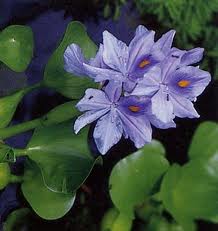
Facts don’t disappear in life, but in the end attitude is their equal. Water hyacinths can demonstrate that.

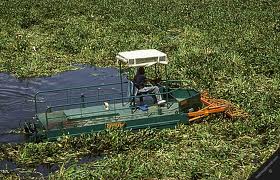
If you know much about the state of Florida it was over run not long ago by water hyacinths. The state botanists still call it the worse weed on earth. They say this for two reasons:  It impacts tourism and also the water ecology of the state. It’s a billion-dollar boondoggle. But then there is attitude and perception.  While flustered Florida sputtered away calling it a weed Florida ignored the fact that in other parts of the world the water hyacinths is used for cattle fodder (a point you would think would not have been missed by the nation’s third largest producer of cattle.)

With preparation people can eat water hyacinth, it makes a good fertilizer, has very useable fiber, can be used to make bio-fuel, and importantly it has the ability in water or on land to absorb pollutants. It’s a sponge that loves to grow and can double its population in just two weeks. Do you have a “love canal” that needs cleaning up, or is the price of gasoline getting too high? To the point: Is water hyacinth a weed or a bio-tool that can be used?  Florida had to address the threat it posed. Protecting an economy is important because that in turn protects people. But maybe it is time for some attitude adjustment.

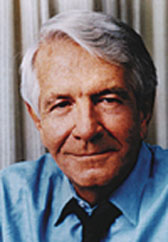
Water hyacinth can be a “weed” with all the negative connotations that engenders or a valuable plant. The view determines ideas and how tax dollars are spent. Now billions are spent to either spray the plant with favored pollutants (called herbicides) or mechanically crush the plant and let it rot. Why not utilize the plant and at the same time reduce its population? The newsman Harry Reasoner once said he hated labels because once you labeled someone or something you stopped thinking about it. Calling a plant a weed does exactly that. You can spend billions killing something and throwing it away, or harvesting something that can help people and show a return. It’s a matter of attitude.

{ 3 comments }

Grass and Tree War

Grass and Trees are at war

Point of view, thinking differently…  Consider:

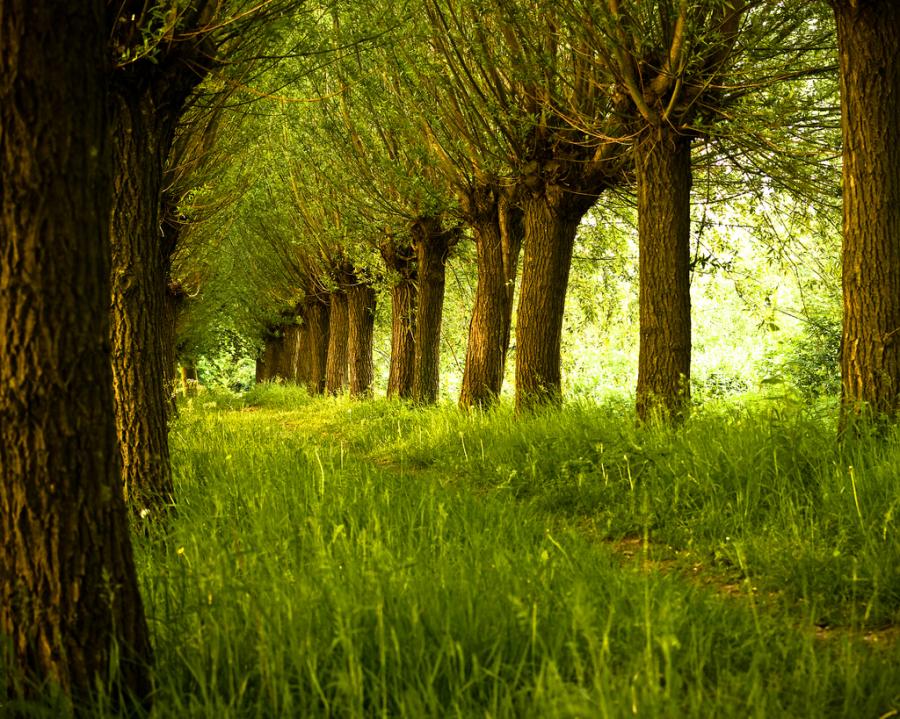
What if plants are more goal-orientated than we think them to be? After all, we put ourselves on the top of the list, whatever that list is, and that placement, deserved or not, skews our view and thinking. What if trees and grass are in a war to dominate the earth? The trees for most of history were winning. But now grass has human help.

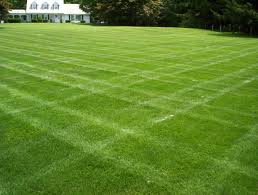
For some grasses, the battle plan is to accept some losses (literally off the top) for domination. If you don’t mow a lawn, the trees win. Mow a lawn, grass dominates. Thus grass, so to speak, is using humans to fight trees. That’s rather curious because far more trees are beneficial in some way than grasses, and much more edible. Each lawn of decapitated grass is local battle between grass and trees, and the non-edible grass is winning while consuming a lot of green to stay green.

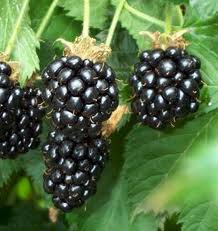
In one of the articles here, I mention that in Tasmania the wild blackberry is considered an extreme nuisance. Ponder that for a moment:  A self-tending annual edible plant with delicious food and medicinal uses is a state-declared nuisance. Isn’t that more a problem of utility than definition? Most of the “noxious” weeds listed by most agricultural authorities are in fact edible. Let’s call them Forgotten Food. The problem is we don’t eat the weeds any more. We get our food pre-managed instead of really gathering it ourselves, or growing it.

Setting aside for a moment my name, it’s not unreasonable to ask why is there so much lawn? Don’t misunderstand me, lawns can be nice. I’ve had some mighty good moments on lawns. Parks, golf courses, monuments and cemeteries can benefit from lawns. But do you realize lawn grass is the second larges crop in America only after corn, another grass.  I am not sure humans should be helping lawn grass dominate the flora of the world nor should we be herbiciding edible weeds. Food is food. Only an obese nation values decapitated grass. There are no “noxious” edible weeds in Ethiopia. When I was last a visiting relatives in Greece, I saw perhaps a hundred square feet of lawn, total. Clearly nations can get by without lawns.

Front Yard Salad

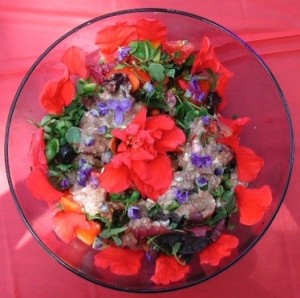
What lawn I have is a greens keeper’s nightmare. I intentionally grow most of the weeds virtually hundreds of millions of dollars are spent on every year trying to keep out of lawns: Chickweed, pellitory, spiderwort, wild lettuce, sow thistle, dayflowers, dandelions, pennyworts, spanish needles, mustard, sorrel, hawksbeard and betony.  Into salads and cooked greens they go, nutritious and no approve chemicals that might be recalled next week because they might make me glow in the dark a decade from now. For most of the year my little lawn, which is about 30 by 40 with over a dozen trees, provides me a with a steady supply of organic greens (and some roots.) I don’t have to do much for the bounty, except harvest and fend off local authorities.

Original suburban gardeners, "Good Neighbors"

One year they said my weeds were over 18-inches high, thus violating the residential code ordinance.  I agree you can’t have a “Good Neighbors” farm in a cul-du-sac neighborhood. But this was tended, not over grown, not wild nor abandoned…. a natural garden, food for my table, not “weeds.” I won my case by pointing out the ordinance said weeds that were “unintentionally” over 18 inches tall were in violation. I countered my weeds, which I could identify by their Latin names and cook for any inspector who wanted to dine with me, were intentionally over 18-inches high thus not in violation.  The truth is only two or three of them can even reach 18-inches and I won on a technicality rather than convincing them of the wisdom of being green.

There are, I think, three issues: First, a lot of jobs are involved with the maintenance of lawns and the death of edible weeds. What a resource that would be if put towards fostering Forgotten Foods rather than killing them. Next, a century ago lawns were an affectation, now they are standard. Some lawns in some places are fine, the national mall comes to mind and the veteran cemetery that will hold me one day. But it is time stop making them a standard residential feature. They need to be uncommon again, and thus I think, then more appreciated for what they are.

And of course there are ordinances, which need to be eased a bit. Why, after all, is a seven-foot deadly oleander acceptable on a lawn but not an edible 20-inch Tradescantia? It is said politics make odd bedfellows. It seems to me the left and the right have a meeting point in the greenery arena. I put no pesticides or herbicides my lawn. That is certainly good in the long run for me, my neighbors and the aquifer. I am responsible for my lawn’s maintenance. I don’t hire illegals to decapitate it using Arab oil in a Japanese lawnmower brokered by someone in India imported on a Chinese ship. We need to start rethinking the idea of a lawn as lawn when it should be a place for trees and edibles. And while we do need to be cognitive of residential values we need start changing ordinances that say yes to expensive grass and toxic ornamentals but no to food-producing landscapes and Forgotten Food.  Edible landscaping can be just as attractive as poisonous landscaping. It costs less, is far safer, and provides a nutritious return. Lawns are winning in their war against trees. I think we need to change sides.

{ 4 comments }