Hibiscus tiliaceus: Edible Chameleon

It’s difficult to find a hibiscus you don’t like, including the Mahoe.

In fact, to this writer’s knowledge all hibiscus are edible in some way. They are not all edible in the same way though and the palatability varies greatly. With some it is the flower, others the leaves, sometimes the seed oil only. But, if you have a hibiscus, you have some kind of edible some way.

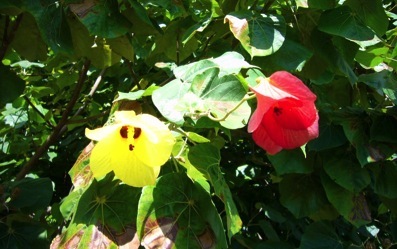
Maheo blossoms change color from morning to night

Like most hibiscus the Mahoe’s blossom lasts only a day. The blossoms stars out yellow but by the end of the day is turning maroon red…. a dynamic flower, and edible, cooked or raw. So are the young leaves, cooked. The roots are edible cooked and the inner bark, the cambium, can be suckled of its moisture and nutrients. The bark can be peeled off in strips and used as is for fishing line. It was also used to make cloth in the Pacific Islands before cotton was made available. And if you use a bow and spindle and spin a hardwood spindle on a baseboard of dry Mahoe, it makes a burning ember for a fire very easily.  Actually, the flowers can be boiled like a green or dipped in batter and fried. The leaves can also be fermented into a sauce to make a tempeh starter or boiled in salted water to make a beverage called Onge Tea.

The next reasonable question is why do the blossoms turn color? There are two possible answers that can coexist. One is that the plant is making antioxidants to protect it from the sunlight. The other is the change in color allows the shrub to attract different pollinators who are attracted to different colors.  That leads one to infer that flowers collected later in the day may be more beneficial that those collected in the morning.

The botanical name for the Mahoe, Hibiscus tiliaceus (Hye-BISK-us til-ee-AH-see-us) is quite straight forward and not some naughty word play by Carl Linneaus, who started naming plants.  Hibiscus is from the Greek word iviscos (ee-VIS-kos) where we get the word viscus and viscosity in English. It means “sticky” because most Hibiscus are mucilaginous. And the species name itself is very sensible. Tiliaceus means like the Tilia, or the Basswood tree (aka Linden tree and Lime tree.) The Mahoe leaves do resemble the Tilia leaves… roughly heart shaped and a very long, pointed tip. Linnaeus got it all right for a change. Mahoe is from the Taino language of the Caribbean and refers to two trees, the Mahoe, and the Blue Mahoe ( Talipariti elatum) the latter a much larger tree.

Don’t confuse the Mahoe with the Milo, or Thespesia populnea, see separate entry. The Mahoe has 9 to 11 prominent veins in the leaf. The Milo has seven. The  Mahoe also has dense star-shaped hairs on lower surfaces, the Milo does not. Don’t confuse either with  the H. pernambucensis which has solid-yellow flowers, without the dark center.

Green Deane’s “Itemized” Plant Profile

IDENTIFICATION: Shrub to a large tree, tangled growth, in wet areas low branches root in the water, leaves nearly round, Basswood like, short tip, four to eight inches wide, shiny green above, soft, fuzzy gray-green below, flowers cupped 5-petaled, five petals, dark center, yellow turning maroon falling at night or the next morning. Ten-pointed calyx, five seams, seeds hard, brown, 1/8 inch

TIME OF YEAR: Year round in warmer claims, nearly year round in subtropical/temperate areas.

ENVIRONMENT: Coastal hammocks, dunes, damp mainland, landscaping

METHOD OF PREPARATION: The flowers can be boiled like a green or dipped in batter and fried. The leaves boiled like a green or  fermented into a sauce to make a tempeh starter. They can be boiled in salted water to make a beverage called Onge Tea. The inner bark is edible as well, though usually suckled. Roast the roots.


{ 4 comments }

Anredera cordifolia: Pest or Food Crop?

The Madeira Vine is a love/hate relationship. You will either hate it — as many land owners and governments do — or you will love it for it is a prolific source of food.
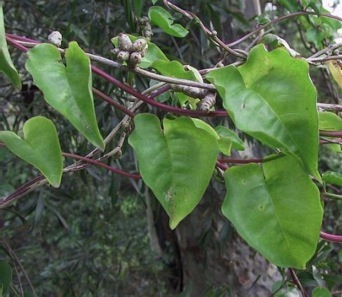
Anredera cordifolia's edible leaves, cooked

Apparently far more valued in the past than the present, the plant has quite a history. Anredera cordifolia is native to the dryer areas of South America such as Bolivia, Paraguay, Uruguay, southern Brazil and southern Argentina. It got to the United States soon after the country was founded, or the early 1800s. It was in England by 1835 and was introduced into southern Europe where it is naturalized from Portugal to Serbia. In the United States is naturalized from Florida to Texas. It’s also found in the southern half of California and in Hawaii. In South Africa, Australia, New Zealand and Hawaii it is a serious “invasive weed.” Australia (New South Wales) spends hundreds of thousands of dollars every year to fight it.  (Historical note: It was often planted outside of latrines in Australia because it was thought the leaves had a laxative effect.)

Record of intentional cultivation might go back to 1821 in Florida but we aren’t sure because two plants were called the same thing. The Rev. Jedidiah Morse of Charleston Ma. then New Haven Cn., set out in 1820 to survey Indian tribes in the United States. Writing about the St. John’s River in Florida and its border lands on 15 July of that year he said:
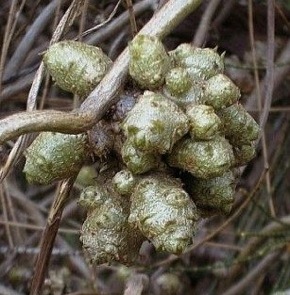
Air bubils are not edible, but roots are, cooked

“These light lands are not suitable for Indian corn. The best produces scarcely twenty bushels per acre. Indigo, cotton, madder, sugar cane, the mulberry tree, the date, the olive, the pomegranate, the almond, the Madeira vine, the coffee tree, beyond the twenty seventh degree, the lemon, and above all, the orange trees, thrive well, on choosing suitable soil and exposure.” (page 148, report to the Secretary of War of the United States on Indian Affairs.)

The problem is we really don’t know what Morse was referring to. In his day the common grape vine was also called the Madeira Vine, so was it an Anredera he saw or a Vitis (grape?) Natives in Florida did grow grapes, especially some escaped cultivars left over from much earlier Spanish inhabitations.  However, grape production from escaped or wild grapes in Florida is iffy. Their fruiting is sporadic, often skipping many years, plus there were wild grapes growing without any tending. Cultivating a fast growing starchy root crop like the Madeira Vine, however, makes sense.
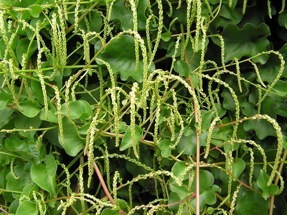
Anredera cordifolia in blossom, note flowers droop

As the plant is subtropical it will survive only a light frost. From its roots it will grow some 130 feet a year, with an occasional growth spurt of three feet a week.  It can have lateral stems up to 65 feet long.  The vine does not have tendrils but it climbs by twisting (at eye level) lower left to upper right, the so-called Z-twist. It is interesting that most edibles climb that way whereas most toxics climb lower right to upper left, the S- twist. The Madeira Vine has long drooping flower spikes covered with tiny white blossoms (looks like their common name of Lamb’s Tails.) Their aroma ranges from apple-ish to almond-ish. One of the main identifying characteristics is large prolific clusters of tiny bulbils (sometimes called “tubers) in the air. Plant them and the new crop takes off, or spreads wildly, depending upon your view.

Not only are the underground roots (actually rhizomes) edible but the evergreen leaves as well. They are bright, shiny green on top, lighter green underneath, no hair, short petioles, about five inches long, waxy, roughly heart-shaped. The small bulbils are not edible but have been used medicinally to reduce inflammation, improve ulcers and protect the liver. They might also increase nitric oxide to the brain (see herb blurb below.)
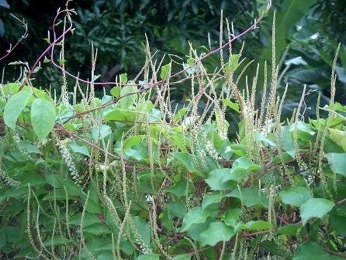
Anredera leptostachys' blossoms point up

Anredera (ah-REE-der-uh or an-RED-er-uh) is thought to come from the Spanish word Enredadra, which refers to any twining or climbing weed. Cordifolia (chord-dee-FOAL-lia) means heart-shaped leaves) As to why it is called the Madeira Vine is also unknown. One author, Edwin Menninger in his 1970 publication Flowering Vines of The World, suggest the plant first went to the island of Madeira and then back to the northern New World.  There are about 12 different species of Anredera, many of them edible, and is related to Malabar Spinach, a garden vegetables in warmer climates. Incidentally the Island of Madeira is called said because in Portuguese it means “wood” from the Latin “materia.”  This is because the island was once heavily wooded. That;s also where we get the word “material.”

Lastly, if you’re in southern Florida or Texas and come across a Madeira Vine with up-turned flower spikes and no ariel tubers you have A. leptostachys (syn A. vesicaria) aka Cuban Ivy. It’s edibility is similar to the Madeira Vine as is the A. baselloides. In fact, the Madeira vine is sometime mistakenly called


[stextbox id=”custom” caption=”Green Deane’s “Itemized” Plant Profile”]

IDENTIFICATION: Hairless perennial creeper, fleshy rhizome, bright green, alternate, fleshy/waxy heart-shaped leaves with reddish-brown stems. Small fragrant, cream flowers in slender drooping spikes. Tubers produced underground, bulbils on stems.

TIME OF YEAR: Depends upon location, mid-spring in Florida, summer to fall in some areas, January to May in others.

ENVIRONMENT: Edges of forest, rocky places, coastal areas, hammocks, prefers warm, moist fertile soils.

METHOD OF PREPARATION: Leaves cooked and used like spinach. Underground roots cooked, baked preferable. Can be eaten raw but the texture is gooey. Above ground bulbils (tubers) are medicinal.[/stextbox]

HERB BLURB

APeptides. 2007 Jun;28(6):1311-6. Epub 2007 Apr 27.

Ancordin, the major rhizome protein of madeira-vine, with trypsin inhibitory and stimulatory activities in nitric oxide productions. Chuang MT, Lin YS, Hou WC. St. Martin De Porres Hospital, Chiayi 600, Taiwan.

Anredera cordifolia (Ten.) Steenis, or the synonymous name of Boussingaultia baselloides or Boussingaultia gracilis var. pseudobaselloides, is a South American species of ornamental succulent vine, commonly known as the madeira-vine. The fresh leaves of madeira-vine are frequently used as vegetables. A. cordifolia is an evergreen climber that grows from fleshy rhizomes. The rhizome contained one major (23kDa) protein band under non-reducing condition in the SDS-PAGE. The first 15 amino acids in the N-terminal region of the major protein band (23kDa), named tentatively ancordin, were KDDLLVLDIGGNPVV which were highly homologous to sequences of winged bean seed protein ws-1, Medicago truncatula proteinase inhibitor, soybean trypsin inhibitor, and sporamin. By using activity stains, the ancordin showed trypsin inhibitory activity in the SDS-PAGE gel which was found not only in rhizomes but also in aerial tubers, but few in fresh leaves. The crude extracts from rhizomes of madeira-vine were directly loaded onto trypsin-Sepharose 4B affinity column. After washing with 100mM Tris-HCl buffer (pH 7.9) containing 100mM NaCl, the ancordin was eluted directly by 0.2M KC1-HC1 buffer (pH 2.0). In calculation, the purified protein exhibited 0.0428mug trypsin inhibition/mug ancordin (corresponding to 0.53 unit of TPCK-treated trypsin inhibited/mug ancordin). The purified ancordin was used to evaluate the nitric oxide productions in RAW264.7 cells in the presence of polymyxin B (poly B, 50microg/ml) to eliminate the lipopolysaccharide (LPS) contaminations. It was found that ancordin (1.25-5microg/ml) could dose-dependently (R=0.954) stimulate the nitric oxide (NO) productions (expressed as nitrite concentrations) in RAW264.7 cells without significant cytotoxicity, and kept the similar effects in NO production in 6.25microg/ml ancordin.

AnAntinociceptive effects of the tubercles of Anredera leptostachys

M. P. Tornos, M. T. Sáenzhttp, M. D. García and M. A. Fernández

Departamento de Farmacología, Facultad de Farmacia, Universidad de Sevilla, C/ Profesor García Gonzalez s/n, 41012- Seville, Spain

The tubercles of Anredera leptostachys are used as an antinociceptive and anti-inflammatory in the popular medicine of the Caribbean basin. In the present work, the anti-nociceptive and central nervous system depressant (CNS) effects of the methanolic extract from the tubercles of A. leptostachys have been evaluated. The antinociceptive activity was assayed in several experimental models in mice: acetic acid, formalin and hot plate tests. The methanolic extract (250 and 500 mg/kg) significantly and in a dose-dependent manner reduced the nociception induced by the acetic acid (P<0.001). In the hot plate test, the extract significantly increased the latency time of jump although it slightly increased the licking time. The naloxone partially reversed the antinociception of the extract in the hot plate test. In the formalin test, the methanolic extract also significantly reduced the painful stimulus but the effect was not dose-dependent. In the study of the CNS-depressant effects, the extract was found to produce a significant reduction of the exploratory capacity with both doses assayed (P<0.001). The muscular relaxation only decreased with the higher doses assayed (P<0.001). The escape instinct was also significantly reduced (P<0.001) by the two doses of the extract and both were more effective than standard drugs morphine and diazepam.

{ 45 comments }

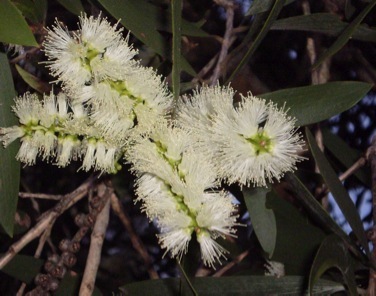
Bottle brush blossoms of the M. quinquenveria

Melaleuca, Tea Tree, Sweetener, Pharmacy

The Melaleuca tree is the most invasive “weed” in the state of Florida, quite a feat when you consider there are over 1,000 exotic species growing in the state.  Some plant had to be first and it is the Melaleuca.

Like so many plants Florida wants to get rid of it was intentionally introduced several times. Some Melaleucas were brought to Sarasota in 1886 and to the Gotha/Orlando area by 1898. In 1902 the United States Department of Agriculture was involved and the tree showed up in Broward and Lee counties 1906, at the southern end of the state. It was naturalized by the 1920s and in the 1930s seeds were scattered from Army airplanes in an attempt to change the Everglades into forest (Melaleucas use a lot of water, one of their problems today. ) Their reproduction it rapid with up to 20 million seeds per tree. Melaleucas can completely cover a square mile in 25 years. Left unchecked the Everglades would disappear under a canopy of Melaleuca.

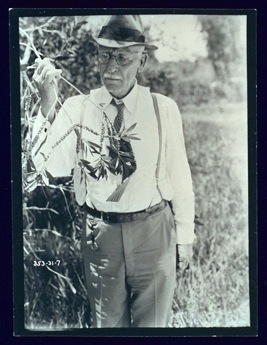
Dr. John Gifford, PhD., 4 June 1938

Dr. John Gifford (1870-1949) didn’t introduce the tree to Florida but he was a powerful and constant force behind its proliferation. He wasn’t the mother of the Malaeuca in Florida but he certainly was the father and guiding hand. Gifford was the first person in the United States to get a PhD in forestry and was an assistant professor of Forestry at Cornell. The University of Miami arboretum is named after him. Gifford moved to Florida in 1902 and was convinced the Melaleuca could drain the malaria waters of south Florida. He wrote many articles in its favor in both professional and lay publications.  Four years before his death, however,  he had a change of mind writing: “A few seeds in a letter from far-off Australia, a few trees started, and finally there is a changed landscape. No one can predict what will happen when he drops a seed from foreign parts in a new environment. If it happens to be a weed, he may regret it …”

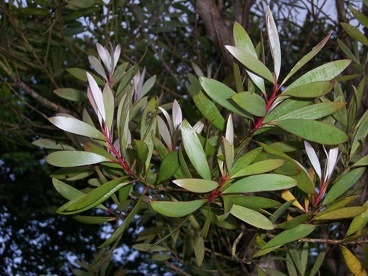
M. quinquenveria evergreen leaves

By mid-century many people were beginning to think they had a serious Melaleuca problem. In 1955 the Central Florida Beekeepers Association raised the alarm because they thought Melaleuca nectar was adulterating their honey. But 20 years later they would oppose measures to remove the trees as by then the trees were providing much nectar.  Another irony is that Gifford, who worked tirelessly to proliferate the Melaleuca also worked tirelessly to establish the Everglades National Park. Thus he was very instrumental in creating the park and the most significant threat to it.

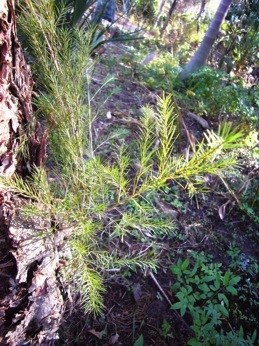
M. alternifolia, the source of oil for tea tree oil.

Despite all these ill-omens Melaleucas were being sold as “one of the best landscape trees for Florida” as late as 1970.  In fact, when I first came to Florida in the ’70s Melaleucas were planted as windbreak on causeways from the mainland to barrier islands, such as to the space center. Now in Florida it is illegal to possession any part of the Melaleuca. That said I know of several growing on public property about four miles from me in the center of the state next to an unused public boat ramp in Winter Park. (If the law allows public access to the rich-neighborhood lake but the dock is not repaired one conveniently gets around the law and keeps the lake private.)

Tea Tree Oil

All tolled, 56 different species of Melaleuca from all sources were imported into Florida (out of 236 total species) though the predominant species is Melaleuca quinquenervia, which can be seen in Mead Garden and a few lakeside locations in Winter Park. It occurs naturally in Australia throughout Queensland, New South Wales, New Caledonia, and southern New Guinea. It’s been cultivated in South America (Guyana, French Guiana), Africa (Uganda, Senegal, Madagascar), Philippines, India, and Asia (Hong Kong, Taiwan). It also grows in Benin, Egypt, the Bahamas, California, Hawaii, Louisiana, Texas, and Puerto Rico. In Leu Gardens, Orlando, there is a scraggly M. alernifolia, from which we get Tea Tree Oil.   Home remedies started with seeping the leaves in water until it was the color of tea. The leaves of the M. alternifolia look very much like a fir where as the the M. quinquenervia resemble that of the bottlebrush tree.

As for their foraging usefulness this comes directly from the Bush Tucker Man, Les Hiddins, who had a series on edible wild plants of Australia in the 1980s. Hiddens was a good-looking and charismatic major in the Australian army. Eight months out of the year his job was to catalog wild edibles in the country for possible use of the military in those areas. On one of his videos he uses pollen from the blossoms to sweeten his tea (just let the blossom seep in the hot water) and says the leaves make a tea, not a good tea he adds, but a tea nonetheless. That’s why one common name for the Melaleuca is the Tea Tree. The bark can also be used for tinder, as cork, basket liners, or larger pieces to bake food in or line ground ovens.  It also wicks water.

The wood is durable under ground and water and is valued for boats, cabinetry, carving, cross ties, fence rails, flooring, gunstocks, mine beams, pilings, posts, rafters, railway sleepers, ships and wharves. Dried it is excellent fuel. The leaf oil has many medicinal applications. There is a word of caution, however. The tree is a significant allergen and cause of dermatitis so proceed carefully.  On the medicinal side, oil from the leaves and twigs is called Cajeput oil. The oil may be useful for high blood pressure, herpes simplex, and inhibiting Helicobacter pylori.  It may also be able to lower blood sugar levels. The research, however, is iffy on most of that but it does have proven antimicrobial properties.

The Melaleuca is closely related to the Callistemon, or the Bottlebrush Tree, a common ornamental (see separate entry.) The main difference between them is that the stamens are generally free in Callistemon but grouped into bundles in Melaleuca. One look, however, at the leaves, blossoms and fruit and it is clear they are related.

Melaleuca (Mel-al-LEW-kuh) comes from combining the Greek words,  melanos ‘black’ and leukos ‘white’ a reference the trunks and branches of other trees in the species. Quinquenervia (kwin-kway-NER-vee-uh) is from Latin, quinque meaning ‘five’, and nervus ‘nerve’ or ‘vein’  referring to the leaves. It is also called Melaleuca leucadendron (black and white white tree.)

A note about Dr. John GIfford. He is shown, inspecting a Melaleuca branch in Davies, Florida, 4 June 1938. Gifford was the first person in the United States to get a PhD. in Forestry (Photo courtesy of Historical Museum of Southern Florida, Miami.)

Green Deane’s “Itemized” Plant Profile

IDENTIFICATION: An evergreen tree, to about 80 feet, bark is whitish, spongy, peeling, in many layers; leaves, flat, leathery,  to 5 inches long, alternate, simple, short-stalked, narrowly elliptic. Leaf veins are more or less parallel. Leaves smell of camphor when crushed. Flowers white, small, crowded in bottlebrush-like spikes at branch tips; fruit short, cylindric or squarish, woody capsules with many tiny seeds.

TIME OF YEAR: Leaves year round, blossoms in season, usually fall.

ENVIRONMENT:Prefers seasonally wet areas, standing water or well-drained uplands, can tolerate freezes once established, usually not killed by forest fires.

METHOD OF PREPARATION: Blossoms soaked in hot liquid to release nectar to sweeten, leaves used sparingly to make a tea, used for colds. Oil has antimicrobial action, is used as a flavoring, and is a good mosquito repellant.


{ 3 comments }

Albizia julibrissin: Tripinnated Lunch

I was drinking “Mimosas” — orange juice and champagne — about 20 years before I discovered the Mimosa tree was edible. That makes some sense when you realize the tree and the drink have nothing in common except the name (so called because the drink was as smooth as the Mimosa blossom.)

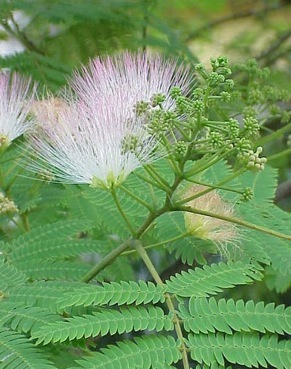
Mimosa blossoms and leaves

Some sites on the Internet say the first tree came the United States in the early 1900s in California. This is doubtful. William Bartram, a botanist who explored Florida and followed a trail not one mile from where I am writing, wrote a letter to Thomas Jefferson in which he mentions the “mimosa.” He said they were introduced into North Carolina in the late 1700s by none the less than Andre Michaux, the original grand old man of botany in the New World. Gopher Apples are named after him, Licania Michauxii. The next question would be where did Michaux get the Mimosa? The answer is Europe.

Botanically this Mimosa is Albizia julibrissin (al-BIZ-zee-uh jew-lih-BRISS-in) It was named after the Italian nobleman Filippo del Albizzi, who introduced the tree to Europe in the mid 1700’s. Julibrissin is a corruption of the Persian phrase “Gul-i Abrisham” which means ‘flower of silk.’ Where did Albizzi get it? The tree is native to southern and eastern Asia, from Iran east to China and Korea, perhaps even Japan where I saw it a life time ago when I was in my early 20’s.

My particular tree was a seeding runt along a path I frequented. The long pod, horizontal seeds, and tripinnate leaf helped with the identification. It is not a large tree but in 200 years it has managed to spread up to southern New England, down to Florida, west through the Old South, across Texas, and up the west coast of the United States.

Usually very picturesque, it has graceful, lacy leaves and delicate, pink pompom-like flowers. Those are followed by a flat paper brown seed pods with the seeds perpendicular to the sides of the pod. They are not edible.* It’s young leaves, however, are edible cooked. The Mimosa (Silk Tree) also has numerous herbal and medical applications.

(*I have received one email from a fellow who says his grandmother used to serve him seeds in a tortilla, a practice I have not been able to confirm.)

Green Deane’s “Itemized” Plant Profile

IDENTIFICATION: A small deciduous tree growing to 40 feet, broad crown, level or arching branches. Bark is dark green/gray striped vertically as it ages. Leaves tripinnate, flowers densely throughout summer, no petals, a cluster of stamens, white, pink with a white base, looking like silky threads.

TIME OF YEAR: All times of year. Young leaves as long as it is producing them.

ENVIRONMENT: Prefers dry, waste areas, or up hill banks from roads, railroads and right of ways.

METHOD OF PREPARATION: Boiled young leaves.  The blossoms are edible like a vegetable or crystallized. The seeds are NOT edible as far as I know.

HERB BLURB:

School of Pharmaceutical Sciences, Peking University Health Science Center, Beijing 100083, People’s Republic of China. Department of Natural Products Chemistry, Shenyang Pharmaceutical University, Shenyang 110016, People’s Republic of China. Accepted 2 February 2006.

Three new triterpenoid saponins, julibroside J29 (1), julibroside J30 (2), and julibroside J31 (3), were isolated from the stem bark of Albizia julibrissin Durazz. (Leguminosae) by using chromatographic method. Their structures were established by spectroscopic methods. Compounds 1, 2, and 3 displayed significant anti-tumor activities in vitro against PC-3M-1E8, HeLa, and MDA-MB-435 cancer cell lines at 10 ?M assayed by SRB and MTT methods.


{ 73 comments }

Cutting the Wild Mustard: Brassica & Sinapis 

Lorenzo’s Oil and Canola, Too

If you can’t find a wild mustard growing near you, you must be living in the middle of a desert ‘cause they even grow in the arctic circle. In fact, it’s among the few plants in Greenland and is even found near the magnetic north pole.

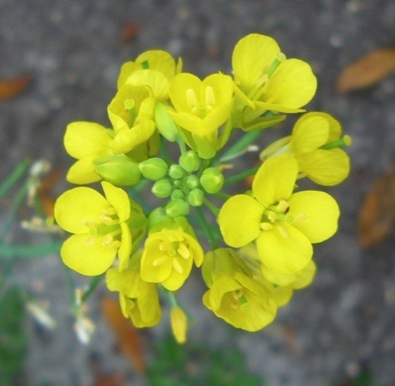
Mustard blossoms, note four petals and clustered

A native of Eurasia and cultivated for some 5,000 years, the Mustard — Brassica et alia,  previously  Sinapis et alia, or as the botanists write, spp. — came to North America in the 1700s and is as wide-spread and varied as possible. It usually blossoms in winter here in Florida and over Christmas I saw a patch in full bloom in a backyard, feeding honeybees.  I would have brought some home for supper but couldn’t find the homeowner for permission to harvest. But that’s okay, there’s an orange grove near me that  is starting to sprout mustards, so…

The word “mustard” comes from the dead Latin phrase “mustrum ardens” because the Romans put the peppery “burning” seed in wine must. Why? They watered down their wine. Perhaps mustard added flavor.  Maybe they liked their wine peppery. Brassica is Latin for cabbage and Sinapis (sin-NAP-is) is Greek meaning mustard. In other words, it was correctly named in Greek but is now incorrectly named in Dead Latin. That’s botanical progress. Modern Greeks call it sinapi. ( I think Latin is preferred over Greek because it is a dead language. One doesn’t have to learn to speak Latin to be considered a scholar of said…. which is kind of like being a celibate sex expert. )

While the table condiment mustard does indeed come from the mustard seed, the leaves, flowers, seed pods and roots are also edible.  Mustards are in the same large family with cabbage, cauliflower, broccoli, turnips, kale, kohlrabi, wasabi, and others. The only problem is there are so many wild mustards its hard to tell which one you might have.   They are all edible, but some are a little more edible than others. What that means is mustard greens I used to pick in Maine were fairly tender, and not strong when cooked. The mustard greens I pick here in Florida are much tougher and spicier. They have to be chopped up more and cooked longer, but they still are delicious if a bit toothy. The point is you have to experiment a little to find your preference with your particular mustard.

Young leaves can use used raw in salads, or cooked as a potherb. As the plant ages, it becomes strong and sometimes the leaves are too bitter to eat. Tender young seeds pods can be added to salads, but are peppery.  If you are so inclined, you can make mustard out of the seeds, just grind them up and mix with vinegar, salt optional. Each plant can produces 2,000 to 3,500 seeds a season and the seeds can remain dormant underground for years.

Flower buds are also tasty when boiled. One nice touch is to add raw mustard flowers to your favorite vinegar to give it a little personalized pick-me-up — like the Roman wine, after all vinegar is just tarted up wine. The ratio is about half a cup of blossoms per pint of vinegar.  Oh, the shape of the blossoms — like a Maltese cross — gave name to their family, Cruciferae, or cross-like. That’s the positive side of mustard, here is the negative side:

Mustards leaves are usually cooked

Many agricultural departments classify wild mustard as poisonous because if cattle eat too much of it they can get quite ill with stomach irritations — and they have more than one stomach to irritate. Humans aren’t the herbivores cattle are and we don’t tend to eat as much mustard, still some caution is advised. Many are allergic to mustard so if you’ve never eaten any, it is best to try only a little at first. Mustard is a bane to dairy cows because it can flavor the milk making it unsellable. It does not affect the flavor or eggs, as my chickens and duck eat it happily.

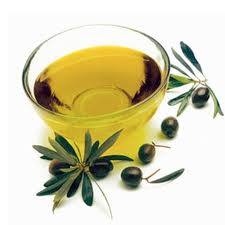
Mustard, also know as charlock, is also at the heart of an academic controversy representing trillions of dollars. Canola is a mustard seed oil, from the rape plant, a mustard species. The word Canola comes from “Canadian Oil Seed, Low-Acid” which was its experimental name. Canola is currently very popular and presented as a healthy oil. Some experts would disagree, at the forefront, Dr. Mary Enig, PhD., an oil expert who often champions coconut oil.  Here is one place to read one side of the story: The Great Con-ola. 

There is a constituent in the rape seed oil — erucic acid — that is toxic to people and many animals in any significant amount. It has to be refined out. That refining process involves heating and deodorizing which Enig says increases the amount of chemicals and transfats in Canola oil. In her view it is a barely tolerable seed oil in its natural state made more unhealthy by refining.  One note though, erucic acid is helpful in the treatment of adrenoleukodystrophy, the wasting disease, and was the magic ingredient in Lorenzo’s oil.  Does this mean Lorenzo could have been helped by eating the seeds of a local mustard plant? That’s an interesting question. Modified olive oil and rapeseed oil stopped the progression of his disease. Lorenzo was helped with the usually toxic erucic acid about the same time agribusiness was trying to produce an erucic-free rapeseed oil. Whether that oil is good for those of us who are healthy is a hotly debated issue. In it natural state rape seed oil when used for cooking can cause lung cancer.

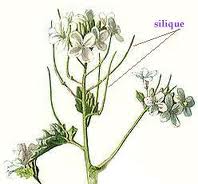
Mustard siliques

In the 1980’s corn oil — which research consistently shows is high-octane cancer fuel — and soybean oil, heavy in unbalancing Omega 9’s — were coming under increasing criticism as being unhealthy. The search was on for a vegetable oil that had a supposedly good health profile. Rapeseed oil was a possibility but it had to be refined for mass consumption and the erucic acid removed. In the quarter century since what was once considered an oil fit for only industrial uses has become the household food oil of choice. There isn’t much human use to prove this modified version of rapeseed oil  safe in the long term. None in fact. There are no long-term studies on human use because it has been assumed to be safe. Animal studies, however, implicate rapeseed oil in creating heart lesions, Vitamin E deficiency and stunted growth. Cattle growers refuse products with it. You may want to read up on Canola oil and consider its value to you.

Personally, I avoid Canola oil, preferring oils that were around in my grandparents’ day and avoiding all oils (and sugars or substitutes) discovered or made in the 1900s. I think the diabetes and obesity epidemics are directly caused by manufactured oils and high fructose corn syrup — that and the wrong advice to eat a high carbohydrate diet.  My mottos are: Trust the cow, Not The Chemist, and, Stay Away From Doctors… They Make You Sick. I am not a health nut, but in the long run I think eating like our great grandparents may just be the best diet because it was proven over thousands of years to work. They ate real food. Today we tend to eat processed semi-food stuff, what I call technofood.

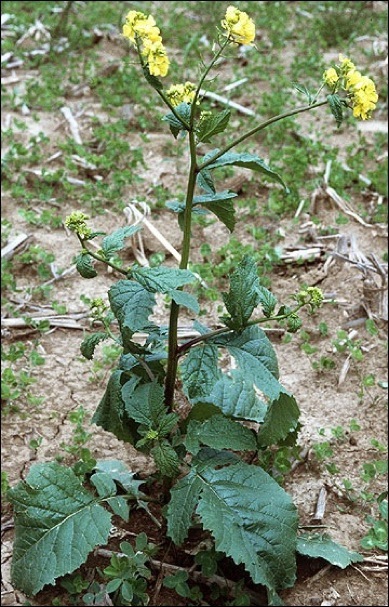
Off the soap box and back to the plant: When I was a kid, back in the Dark Ages, my father built our house with no plans for a lawn. Still, the graded area had to be covered with something so he spread hay chaff from the hay barn all over the area in the spring. That year — 1960 — we had two major crops grow there. First was a very healthy and happy small field of mustard plants, most of them reaching towards six feet tall. Following them was an equally lush growth of pigweed, Chinopodium album. We ate a lot of greens that year.

Green Deane’s “Itemized” Plant Profile

IDENTIFICATION: Flower: Four four petals NOT veined; Flowers tend to in clusters. Leaves: toothed, somewhat lobbed. Seed are in pods called siliques. The pod open straight down the middle to expose the seeds on both sides. Wild radish pods usually break into fragments. Can grow to six feet tall.

TIME OF YEAR: Springtime, or summer depending on where you live.

ENVIRONMENT: Well-drained soil, sandy to rich, old pastures, gardens, lawns, roadside.

METHOD OF PREPARATION: Leaves as potherb, seeds for spice or flavoring, can use flowers to flavor vinegar. Some young leaves can be used raw in salads. Try a little first.

{ 23 comments }