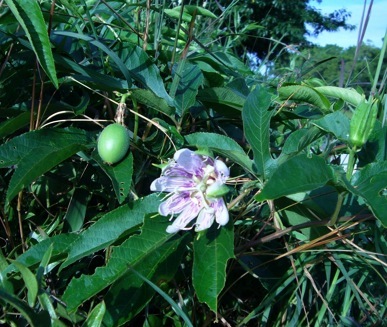
Maypop, Passiflora incarnata

Maypops: Food, Fun, Medicine

As popular as they are, Maypops get stepped on a lot, but that doesn’t keep them down.

They are one of five hundred kin in the passion flower family, specifically Passiflora incarnata (pass-siff-FLOR-ruh in-kar-NAY-tuh.) Passiflora  means “passion flower” and incarnata means “in the flesh.” A relative, Passiflora edulis (pass-siff-FLOR-ruh ED-yoo-liss = edible) is used to flavor Hawaiian Punch. When the flowering vine was first discovered by Spanish explorers in  Florida in 1529 the shape of the blossom captured their imagination and they described it as a symbol for the “Passion of Christ.”
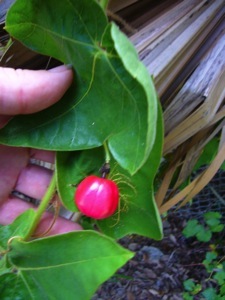
Passiflora foetida

Passion flowers do have complex blossoms. P. incarnata is two to three inches across with 10 white tepals in a shallow bowl with a fringe of purple and white filaments, called a corona. The center is a white stigma with five stamens. The vine is long and trailing with three-lobed leaves.  The vines blossom for a long time and  set fruit over the same period so one vine can have old and young fruit at the same time. Shaped like a egg, the fruit starts out green and hollow and eventually fills with a kind of jelly and seeds while also turning yellow on the outside.  Finding the fruit is rather sporadic since woodland creatures like them as well and dine at night. Caution: Maypops’ non-shiney green skin is edible raw but too many can slightly burn the mouth. The rind is better cooked. The pulp-covered seeds in a green or yellow maypop are quite edible.

“Maypops” is a two-season name. Here in Florida and other parts of the south they can blossom in May. But the fruits don’t get big enough to step on and “pop” until June or July. The name comes from “maracock” which is what the Powhatan nation called it. And though thought of a “southern” wild fruit, Maypops grow as far north as Pennsylvania and west to Kansas, south to Texas, central Florida and Bermuda. Under cultivation P. incarnata likes full sun to partial shade, light, evenly moist soil. Deciduous, it can take temperatures down to 5F. In the wild they grow in sunny areas with good drainage, at the top of a berm, not the bottom. Many caterpillars like the Maypop including the Gulf Fritillary and Zebra Wing Butterfly.
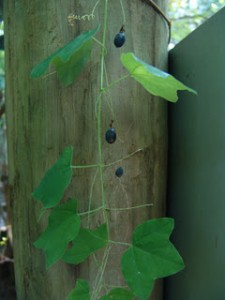
Passiflora lutea

If you find a tiny passion flower that is off yellow with small fruit that’s deep purple/black when ripe, it’s the Passiflora lutea (LOO-tee-uh = yellow) edible but not too tasty, used to make ink. It likes to grow in wet areas. Don’t mistake it for a wild cucumber,  Melothria pendula, which have leaves that smell like cucumber. When M. pendual’s fruit is black it’s the Mother of all Laxatives.  The Passiflora suberosa (sou-ber-OH-sah = corky) with blue fruit is also edible (the fruit.)  The Passiflora foetida, common in south Florida, has red fruit as is edible as well, quite tasty with very thin skin.

Oddly, while native to North America, Maypops are far more popular in Europe. Americans used make jelly out of them,  Native Americans cooked Passiflora incarnata leaves in fat In other species the leaves are toxic.  Europeans currently make pharmaceuticals. The fresh and dried whole plant has been used to treat nervous anxiety and insomnia. It is the most common ingredient in herbal sedatives in Europe. In Europe a teaspoon of dried, ground plant is used in a tea. Even a sedative gum has been made with Maypop. See the “herb blurb” below. Perhaps the Maypop vine is medicinal: It smells and tastes bad, as does most medicine that is good for you. What does the vine smell like? Like an old rubber shoe. The fruit, fortunately, does not share that…. too much.  Oh, and this will not make sense until you consider the general shape of the leaves and fruit: The Maypop is a relative of the papaya.

Other Passifloras with edible fruit include: P. alata, P. ambigua, P. ampullacea, P. antioquiensis, P. caerulea, P. coccinea, P. cumbalensis, P. x decaisneana, P. edulis f. flavicarpa,  P. laurifolia, P. lingularis, P. maliformis, P. manicata, P. mixta, P. mollissima, P. organensis, P. pinnatistipula, P. platyloba, P. popenovii, P. quadrangularis, P. serrato-digitata, P. tripartita, and P. vitifolia.

Lastly, the Internet is the Great Garbage Can of Misinformation, managed by juvenile boys, amateur writers and more recently ignorant Artificial Intelligence. Of late sites have been proliferating the nonsense that Passiflora incarnata has cyanide in it. It categorically does not (whereas other passiflora DO have cyanide. The American Pharmaceutical Association Practical Guide to Natural Medicines by Andrea Peirce states: “Unlike other Passiflora species, … [the] Passionflower does not contain the poison cyanide, as some sources incorrectly suggest; they may have mistaken Passiflora incarnata for Passiflora caerulea, the ornamental blue passionflower that does contain this toxin.”

Passiflora foetida does have some cyanide in it as evidenced by some research on goats feeding on the foliage. However, I have eaten a fruit or two at a time with no problem. Goats, of course, eat leaves so they can get a higher concentration of cyanide. The passion fruit used in Hawaiian Punch, Passiflora edulis, has to be limited to goats as well, less than 45 percent of their feed.

I would add that cooking or sometimes mascerating green parts of edible plants with small small amounts of hydro-cyanides releases the cyanide. Also note the “Herb Blurb” below. P. incarnata has some MAO inhibitors. MAO inhibitors and chocolate should not be combined.

Maypop Jelly

2 cups ripe maypops, sliced
1 cup water
2-1/2 cups sugar
1-3/4 ounces pectin

Combine the maypops and water, and boil gently for five minutes. Strain, discarding the pulp. Combine the liquid and sugar and bring to full rolling boil. Add pectin, and again bring to rolling boil. Remove from heat, pour into hot, sterilized jars, and seal. Makes 2-1/2 pints.

Green Deane’s “Itemized” Plant Profile

IDENTIFICATION: (Passiflora incarnata) The passion flower is a woody vine that grows up to 30 feet long and climbs with tendrils. It has striking, large white flowers with pink or purple centers. Leaves are three lobed and the fruit egg-shaped going from green to yellow or orange when ripe.

TIME OF YEAR: In Florida it starts fruiting in June with early fruit ripening around August. Farther north the ripening is towards fall. Can be propagated by seed or cutting, cuttings are slow to root.

ENVIRONMENT: Maypops grow in thickets, disturbed ground, unkept pastures, roadsides and railroads. They like full sun and water but good drainage. You will not find them in damp areas.

METHOD OF PREPARATION:Green and yellow ripe maypops off the vine, though larger green ones are better than small ones. They can be made in to a jelly or an ade.  Green ones better cooked than raw, yellow ones are nice raw. Leaves can be cooked like a green. With other passionflower eat only the fruit.

HERB BLURB:

According to the Memorial Sloan-Kettering Cancer Center Website: Derived from the aerial parts of the plant. Patients use this herb to treat insomnia, anxiety, epilepsy, neuralgia, and withdrawal syndromes from opiates or benzodiazepines. The active component of passionflower is unknown. The alkaloid components (e.g. harman, harmaline) are thought to produce monoamine oxidase inhibition, while the maltol and gamma-pyrone derivatives cause activation of GABA receptors (4). Reported adverse events include sedation, dizziness, impaired cognitive function, and one case report of nausea, vomiting, and ECG changes. All adverse events subside following discontinuation of passionflower (7) (8). Theoretically, passionflower may potentiate the sedative effect of centrally acting substances (e.g. benzodiazepines, barbiturates, alcohol) (10). A small pilot study evaluated passionflower for generalized anxiety and showed comparable efficacy to oxazepam (8), but a systematic review concluded that randomized controlled studies are needed to confirm such effects (12). Passionflower may be of use in combination with clonidine for opiate detoxification, but additional research is required. No standardization exists for passionflower extract, therefore dosages and activities may vary.


{ 74 comments }

Milkweed Vine, Araujia odorata

 Araujia odorata.: Menace or Manna?

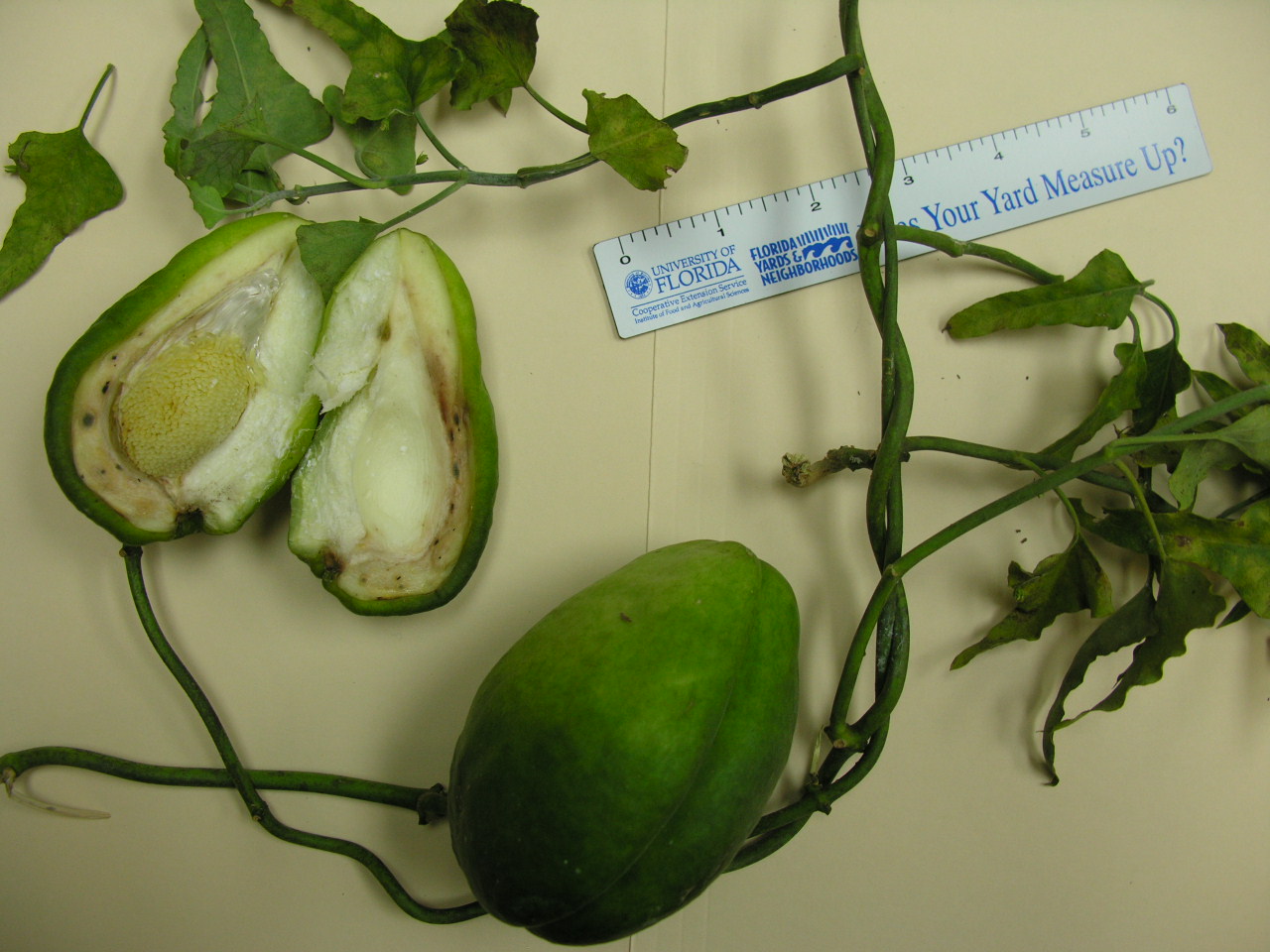
One spring I was looking for poke weed when I spied a liana I had not seen before. It had a large fruit that looked like a chayote, but it wasn’t a chayote. I took it home, but was doubtful. It was clearly in the milkweed family and local vines in that family aren’t edible.

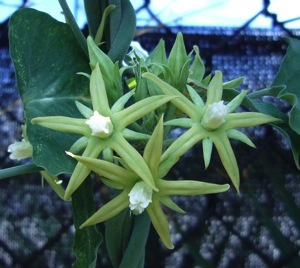
Araujia odorata’s blossoms

A couple of hours of researching and I identified the plant, a horrible weed of no redeeming value. It was first spotted in an Orange grove owned by Donald. J. Nicholson near Orlando (Florida) in 1957, apparently an escaped ornamental though the original plant was never found so how can they say it was an escaped ornamental? I suspect it was for food. I subsequently found a 1971 report that said it was cultivated in Pasco County Florida in 1939 and escaped from there and was first seen in a citrus grove in 1957. That’s when it came to the state’s attention and why it was “discovered” in 1957.  Whether 1939 or 1957 it started showing up in the lower two-thirds of the state threatening citrus groves. It climbs on the trees and reduces their production, can even kill them via shade. There was no mention of it in Cornucopia II or Edible Plants of North America or any other of the five dozen books I had.  So I disposed of it and deleted my pictures.

A few months later someone on a forum wondered what it was called. I couldn’t remember and I couldn’t find it again on the Internet. About a year after I first found it I was still irritated that I hadn’t found it again. I worked on it for several hours one day until I hit pay dirt.  This time I also found one reference to it as being edible.  That opened the door. The report was in the Journal Economic Botany, and they wanted some $38 to download the article. As I as going to Tarpon Spring for the annual Greek epiphany event — 132 miles away — I dropped by the University of South Florida on my way back (USF was named when Tampa WAS south Florida.) I rummaged around the bound copies of the journal and found the article. It said the Morrenia odorata ( now called Araujia odorata) was very edible. Highly esteemed in South America. I wonder how that was missed all these years in Florida?  A January 2007 report on the plant by the state does not mention edibility.

In the Journal of Economic Botany Professor Pastor Arenas says all of the “Morrenia” species are edible. To quote the researcher:

“The fruit is the plant part most commonly eaten, but, with the exceptions of the roots, all the other organs are consumed, though the different ethnic groups vary in their preferences… The resource is prepared in various ways: Either raw, in salads, boiled, or roasted. Non-indigenous settlers use only the fruit and seeds, with which they prepare several dishes, including “doca jam,” a regional dessert made with the fruit…. The indigenous population considers it to be a very wholesome food and, despite the loss of many elements of their traditional diet, this plant continues to be highly valued. Although it is a wild plant, it is protected and even cultivated by several ethnic groups….”

According to Arenas’ monograph three native tribes eat the flowers raw. Sometimes they boil the vanilla-scented flowers, squeeze out the extra water, then mix them with oil. One group pounds the flowers and young leaves in a mortar with a little water and salt, making a salad.  Three groups eat the leaves raw, another takes the leaves and the young shoot ends and make them into a crown shape. They boil it in a pan. Then the ring is drained and eaten dipped in oil. Two groups form the raw leaves, stalks and flowers into a bunch to use to absorb a preparation made of salt, wild pepper (Capsicum chacoense) and water. The bunch is dipped in the liquid and sucked until the liquid is gone.

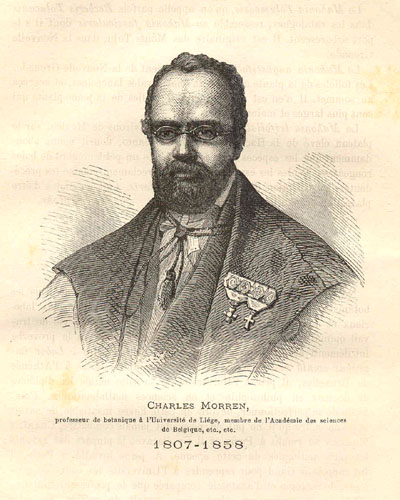
Charles Morren, 1807-1858

Arenas reports the tender, immature fruits, (which I will call a vegetable) are eaten without preparation. They are consumed whole and raw. Sometimes they are mashed in a mortar, seasoned with salt and pepper. One group mixes the mashed fruit with cactus (Opuntia chakensis) which resembles bitter lemon.  Not that much raw fruit can be eaten at one time because the latex in the vegetable can irritate the mouth. The seed and hairs (coma) of mature vegetable are not eaten. Depending upon the age of the vegetable it is boiled or roasted (30 minutes or so) and usually eaten with oil.

The soft stems and the ends of young shoots are often eaten with the leaves and flowers. The adult stem is a famine food, boiled until soft, the outside removed, and then eaten with oil. No fibrous or woody parts are consumed. The vine bears continuously so there can be young and mature pods on the same vine. They are collected with a long pole with a hook on the end, similar to how Ear Tree pods are collected. Extra vegetables are roasted then split in two, dried over heat or in the sun then stored once desiccated. They are reconstituted by a brief boiling then eaten with oil.

The A. odorata has other uses besides culinary. The sap can be used to curdle milk for cheese making, and there are numerous medicinal applications as well.  A decoction of the plant plus roots was used to induce lactation. The latex is used to remove warts, calm toothaches and used against snake bite. The plant, interestingly, is toxic to cows and usually fatal. The sap can be used as a glue.  Nutritionally the vegetable is close to squash but has a Vitamin C content closer to citrus. In fact, it has more Vitamin C than oranges.

While a staple food in Brazil and Argentina (first described in 1838) in the United States it is a “weed,” that is, on nearly every possible weed list, federal to state to local. It’s a costly vine to the citrus industry and efforts continue to find ways to kill it off. Incidentally, monarch butterflies like it but it is also a breeding ground for flies that ruin papaya.

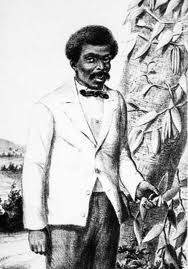
Edmond Albius

Odorata means sweet-smelling or fragrant. Morrenia was a bit of a challenge. It was named for Belgian botanist Charles Morren, (1807-58) a professor at the University of Liege. Morren discovered how to artificially pollination vanilla. Folks had tried for 300 years to do it. His method is still the one used, per se. What he did was watch the flower. A tiny sociable bee without a stinger — the  Melipona Bee– came along, lifted a little flap and went into the flower. It is the only insect that does that.  But it took a 12-year-old slave, Edmond Albius, to figure out a simple way to do it with a little stick and his thumb.  So the genus should be called Albiusa but instead it is now Araujia. Why? Who knows  but its new name is after Portuguese botanist António de Araújo e Azevedo, 1st Count of Barca (1754–1817). 

My friend, Marabou Thomas, says cooked the vegetable tastes “like some crazy combination of potato and zucchini marinated in honey.”  My older pallet doesn’t pick up the honey notes but it is delicious. I am convinced that if folks knew how tasty the Araujia odorata is the state would not have to spend millions to keep it in check.

In extreme southern Florida or farther south you might confuse the Morrenia odorata with Cynanchum cubense. The blossoms of  the C. cubense do not have star-like sepals.  Also north of Florida don’t confuse it with the Cynanchum laeve, which has similar leaves and vine but smooth milkweed-like pods. I get a huge amount of mail from folks finding the Cynanchum laeve thinking it is the  Araujia odorata. They read “milkweed” and “vine” and don’t bother to learn that A. odorata fruit looks like a roundish squash, and C. laeve is a smooth pod.

Green Deane’s “Itemized” Plant Profile: Milkweed Vine

IDENTIFICATION: Araujia odorata: A perennial, leaves grow in pairs on stems, grey-green, slight fuzzy texture.  New leaves on new growth heart-shaped to 5 inches, older vines pointy, broad base, smaller. Flowers greenish-white,  small, five small petals, fragrance reminds some of vanilla. Fruit large seed pod, resembles a chayote, or a papaya, or an avocado in shape, mature pods 5 to 6 inches long, 3 to 4 inches wide, green until ripe then yellow, tan, or brown, will split open.

TIME OF YEAR: Blooms heavily in mid-spring, fruits continuously, can over winter if no frosts or freezes.

ENVIRONMENT: Rain forests to dry forests, groves, anything it can climb on, bushes, trees, fences, wires.

METHOD OF PREPARATION: Numerous: Young leaves, fruit, flowers and shoot tips raw, older fruits boiled or roasted in embers (usually 30 minutes)  Older stalk boiled and peeled.  Older green fruit can be dried and preserved.  Unripe seeds and coma are edible. Ripe seeds and coma are not edible.  When roasted the inner rind flavor is similar to squash. When boiled it is more like zucchini/potatoes.

There used to be a video on You Tube of  women collecting, preparing and eating the Araujia odorata in Argentina. Apparently that has been deleted. Here is my video about it. 


{ 31 comments }

Mesquite’s More Than Flavoring: It’s Food

If Euell Gibbons was still around he might ask, “have you ever eaten a Mesquite tree?” rather than his famous questions about pines.

Many people have used the Mesquite flavor while barbecuing. But long before there was a “barbi” American natives were harvesting pods off at least six species of Mesquite. Among them were Prosopis chillensisProscopis glandulosa,  Proscopis glandulosa var. glandulosa, Proscopis glandulosa var. torreyanna, Proscopis pubescens, and Proscopis velutina, the latter perhaps the most preferred.

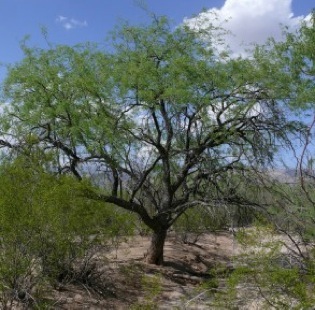
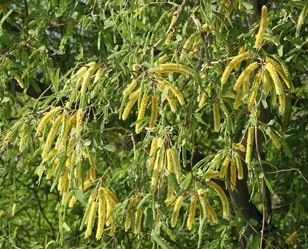
Mesquite Tree

Among the Indians using the Mesquite were the Apache, Cahuilla, Chiricahua, Cocopa, Comanche, Diegueno, Havasupai, Hualapai, Isleta, Kamia, Kawaiisu, Keres, Kiowa, Laguna, Luiseno, Mahuna, Maricopa, Mohave, Paiute, Papago, Pima, Pima Gila River, Seri, Yavapai, and Yuma. They knew a good thing when they tasted it. There are almost as many uses for the tree as there were tribes. Main uses were young pods eaten raw or cooked, mature tan pods ground up whole to make a gluten-free flour; or, the pods and seeds separated and ground separately for different uses.

Those other uses include: Grinding, adding water, and letting the mixture ferment; pods used as a sugar substitute (they’re 16% sugar);  the tree’s white resinous secretions used to make candy or chewed like gum; fresh pods pounded and juice drank like milk;  pounded beans mixed with sea lion oil; pods rotted in a hole for a month then ground into a flour to make a beverage; beans boiled, cooled then pressed into cakes; catkins sucked for sweetness; toasted seeds ground and added to coffee; flowers eaten raw or roasted, often formed into dumplings then stored.

While making wine was a way of preserving food and its calories in the desert southwest, the native range, preservation was rather easy, dry the pods and seeds on the roof. Thus we must conclude they made wine for the same reasons we do today… for health reasons of course….

But, before you do anything with a pod, taste it. They aren’t always sweet or of good flavor. If you don’t like the taste of the pods on a particular tree, try a different tree. Also avoid moldy pods and any pods stained black (which means always harvest off the tree, not the ground. Pods on the ground can be infected with a fungus that can cause insanity and a very painful death. Leave them alone.)

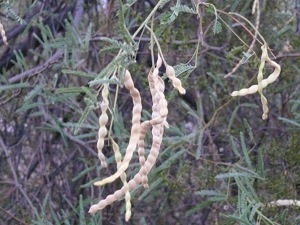
Mesquite Pods

The pods are 13.9 g protein, 3.0 g fat, 78.3 g total carbohydrate, 27.7 g fiber, and 4.8 g ash. Seeds contain 65.2 g protein, 7.8 g fat, 21.8 g total carbohydrate, 2.8 g fiber, and 5.2 g ash.  Per 100 g, the flower contains: 21.0 g protein, 3.2 g fat, 65.8 g total carbohydrate, 15.5 g fiber, 10.0 g ash, 1,310 mg Ca, and 400 mg phosphorus. Analyzed differently the entire pod is 14.35% water,  1.64% oil, 16.36% starch, 30.25% glucose, 0.85% nitrogenous material, 5.81% tannin-like material, 3.5% mineral salts, and 27.24% cellulose. If you are using the leaves as fodder for animals they are 19.0 g protein, 2.9 g fat, 69.6 g total carbohydrate, 21.6 g fiber, 8.5 g ash, and 2,080 mg Ca.

And just what wildlife likes those leaves and fruit? Cattle, horses, domestic sheep, goats, mules, and burros. It is not unusual to see these trees browsed up to the height these animal’s can reach. Mesquite seeds are an important part of the diet of mice, kangaroo rats, woodrats, chipmunks, ground squirrels, rock squirrels, cottontail, skunks, quail, doves, ravens, the black-tailed prairie dog, black-tailed jackrabbit, porcupine, raccoon, coyote, collared peccary, white-tailed deer, mule deer, wild turkey, and mallard ducks. However, cattle on a poor diet can be made ill by eating mesquite.

Besides food mesquite has had various medicinal applications as well. Water and alcoholic extracts are antibacterial. However, using the wood in the fireplace has caused dermatitis, as has working with seasoned wood.

Mesquite Flowering

Generally said there are three common species of mesquite; the Honey Mesquite (Proscopis glandulosa), Screwbean Mesquite ( Proscopis pubescens), and Velvet Mesquite ( Proscopis velutina.) The Velvet Mesquite is also the largest of the mesquite species. Low-branched, broad spreading thorny shrub or small tree it has a well-developed crown. It can grow 30 feet tall, and 20 feet wide, with a two-foot trunk. If damaged when young by frost, fire, or browsing, it can sprout multiple trunks — coppicing –and form a shrub.  One might confuse the many mesquite with the many Acacias. However, the mesquite always have 10 stamen (the male part of the flower) and Acacias have more than 10 stamen per flower.

Proscopis (pro-SO-piss) is Greek for burdock, a reference to the tree’s thorns. But if you go back further in the language it  means ‘towards abundance’, from the Greek word ‘pros’, meaning ‘towards’, and ‘Opis’, wife of Saturn, the Greek goddess of abundance and agriculture. ‘Mesquite’ is the English version of the  Nahuatl Indian name for the tree, ‘misquitl’ which means ‘bark that tans’ a reference to the pods because Mesquite bark is often green and involved in photosynthesis.  Velutina, from Latin, meaning velvety and is said vel-oo-TEE-nuh though in Brazilian Portuguese it is said Veh-lou-chee-AN-nah.

Green Deane’s “Itemized” Plant Profile

IDENTIFICATION: Velvet Mesquite’s bark is reddish-brown and smooth when young, older trees have bark that’s gray-brown, rough, thick, and shredded into long, narrow strips. Young branches are green and grow in a zig-zag pattern. At the base of each leaf on young branches you will find two inch-long yellow thorns in pairs. Leaves are bipinnate and grow alternatively on a branch. Three to six inches long the leaves are  dark to dusky green with a gray, hairy surface and paler undersides. Flowers are yellow-green, catkins about 2-3 inches long. Blossoms have  bell-shaped calyces, and 5 petals. Pods are straight or slightly curved, flat, about 3-8 inches long, singly, or in drooping clusters. Seed pods are tan and covered in short, velvety hairs when young.

TIME OF YEAR: Pods mature in early summer, dropping by early fall. Often fruit twice, once before seasonal rains and once after.

ENVIRONMENT: Thrives in arid areas but also responds well to irrigation. Mesquite are members of the pea and restore nitrogen to the soil.

METHOD OF PREPARATION: Numerous uses. Young pods raw or cooked, usually boiled. Pods and beans ground up together into a flour, or the pods and beans used separately.


{ 12 comments }

Asclepias: Some like it hot, some like it cold

The question is to boil or not to boil.

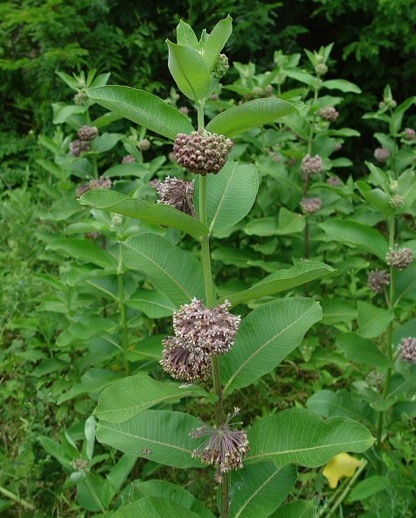
Milkweed in blossom

Actually that’s not quite accurate. There is general agreement that young milkweed shoots, leaves and pods are edible after boiling. The two questions are how many times should you change the water and should the water always be boiling or can you put them in cold water to start?  Worse, at least two authoritative sources disagree on those exact things, and exactly the opposite. A third authority considers them famine food only. It is best to say you will have to experiment. We want to get rid of the bitterness because it is toxic. Said another way, don’t eat any milkweed that is bitter after cooking. Taste it and wait 30 seconds or so.  Regardless of how cooked, they give me a significant stomach ache. Others folks they don’t bother.

If you read only medical references they will frighten you with talk of cardiac glycosides and one gets the impression that if you as much as look at a milkweed you will drop dead. The state of North Carolina says milkweed is toxic but only in high amounts. That’s good news. The University of Texas says North Carolina also says all milkweeds (Asclepias) shoots, leaves and pods are edible cooked. To quote them:

“Although milkweeds are poisonous raw, the young shoots, leaves and seed pods are all edible cooked. When placed in cold water, brought to a boil and simmered till tender, milkweeds are said to be delicately flavored and harmless. (Poisonous Plants of N.C. State) The flower buds, nectar-sweet flowers and seeds are also edible.”

That may be so but personally, I doubt it. I would not try any milkweeds with skinny leaves. They tend to have more of the bad stuff and I have not as of yet met an edible skinny-leaf milkweed. Again, do not eat any bitter parts of the milkweed.

When most books talk about edible milkweed they are referring to Asclepias syriaca. (ass-KLEE-pee-us  sihr-rye-AK-ah.) It’s the most common particularly up north and was all over the place where I grew up, its rough pods unmistakable. Here in central Florida they are no where to be seen. The one I notice the most often here in the wild is Asclepias humistrata. Actually five were in medicinal use in Florida with no mention of them as food.The pods are small and they taste awful.

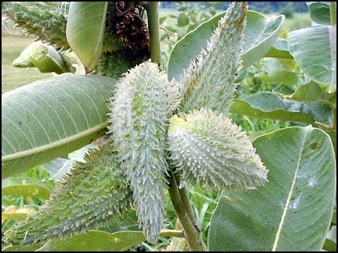
Milkweed pods

As for the A. syriaca the young sprouts, buds and immature pods were eaten by the Iroquois and prairie tribes. The Chippewas stewed the flowers. The cooked buds taste like okra. Flowers were also dried for winter use. It was also used as a fiber and medicinally as an urinary aid, a contraceptive and the sap as a wart remover.

Asclepias was the name of a legendary Greek physician and god. That is the name the Greeks used for the plant. Syriaca means of Syria, which it is not. In fact, A. syriaca is a native of eastern North America but Linnaeus thought it was from the Middle East. Curiously the rules that govern the naming of plants do not allow a name to be changed because a geographical mistake was made. There has to be a botanical reasons to change a name. The name Pinus palustris means swamp pine yet the tree (the Long Leaf Pine) grows only in high dry areas. It has been denied a name change. Remember that the next time you think botany is a rational science.

And while I had hoped to avoid a particular controversy I get emails on the topic of whether the common milkweed is bitter or not and comments that if my milkweed is bitter I must have made a mistake and picked dogbane. I know two things: 1) The milkweed that grew in our pasture in Pownal, Maine, from the 1950s through the 1970’s was Asclepias syriaca and 2) it was bitter, not horribly so, but bitter.  Other areas of the nation Asclepias syriaca is not bitter and people write to me telling me milkweed is not bitter. How can we reconcile this? Sam Thayer, author of Forager’s Harvest and Nature’s Garden, has a possible answer: Introgression. Specifically that is the incorporation of genes from one species or subspecies into another related species or subspecies. We would commonly call it cross pollination.

Said another way where the common milkweed is not bitter it tends to be the only species of milkweed around. Where it is bitter it tends to be one of many species around, the others of which are bitter and not eaten. Plants can’t be choosy. If the pollen fits fertilization takes place even if it the suitor is a bitter relative. This also happens locally among certain palms such as the Pindo Palm and Queen Palm sharing traits. So yes there is non-bitter common milkweed, and there is bitter common milkweed, and there is poisonous bitter dogbane. Ya have to be careful.

To help you tell Milkweed and Dogbane apart, the underside of the milkweed leaf and stem are slightly hairy. Dogbane is not. Veins on the top of milkweed leaf are light green and prominent, on dogbane they are not as prominent and are cream-colored. Milkeweed leaves do not squeak when rubbed, dogbane leaves do. Milkweed leaves grow smaller as you go up the stalk, dogbane leaves grow slightly larger. The milkweed stalk is hollow, the dogbane is solid.

Green Deane’s “Itemized” Plant Profile

IDENTIFICATION: A. syriaca, the most common northern milkweed,  is an erect perennial.  Three to six feet tall, milky juice, mostly single, stout, hairy stems. Flowers are pink to pink, 5 parted, densely-flowered drooping umbrels. A. syriaca has rough fat pods and leaves with short stalks. Make sure you have the right species. It can mean the difference between a pleasant meal or a bitter  pile on  your plate.

TIME OF YEAR: Early to mid-summer

ENVIRONMENT: Upland prairies, fields, meadows, waste places, prefers full sun

METHOD OF PREPARATION: Young shoots, leaves and pods boiled in several changes of water. That can vary greatly, some are not bitter some are. Bitter ones should be boiled in copious amounts of water at least once. Whether cold water to start or boiling water to start will have to be learned by experimenting. If the cooked vegetable is bitter, try a different method. Gather leaves in early spring when they first open. Gather seed pods in summer. Parboil for three minutes, then discard bitter water and replace with clean boiling water. (Cold water tends to fix bitterness, other times hot water does.) Repeat this process three times, then cook the leaves for 15 minutes before seasoning them. A pinch of soda can be added during cooking to break down the fiber and improve flavor. The young shoots under six inches long, found during the spring are used as a vegetable. Remove the fuzz on the shoot by rubbing it off. Preparation is the same as for the leaves. Collect flower buds and flowers during the summer. Dip buds in boiling water for one minute, batter and deep fry. When cooked like broccoli, buds are similar to okra. The flower clusters may also be battered and fried. After cooking, buds, flowers and leaves can be frozen. Use like okra in soups. A bit of baking soda in the water will help break down the tough fibers in the seed pod. Parboiled for several minutes, the young pods may be slit, rolled in a cornmeal/flour mixture and fried or frozen for future use.


{ 52 comments }

 Thespesia populnea: Coastal Cuisine

One of my uncles had the type of personality that where ever he hung his hat, that was home. The Milo is much the same way.

A probable native of India, one would think the Milo has spent all of creation in Florida and the Caribbean, it’s so at home in the environment. In truth, it is an escaped ornamental plant and in that regard rare. Ornamentals naturalize all the time but here in Florida they are usually toxic. The Milo is not. It is also cultivated in Central and South America and no doubt will soon be “at home” there as well. In fact, in the U.S. Virgin Islands it has taken over some beaches used by nesting sea turtles. In Florida it is found from about the space center and Tampa southward.

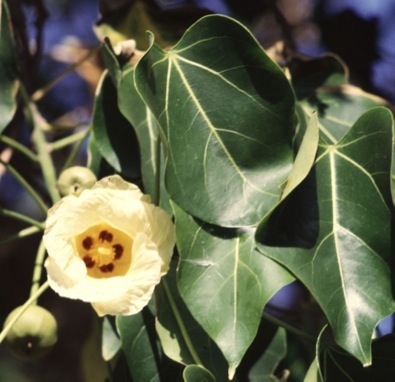
Thespesia populnea

The Milo doesn’t like to be cold but can take mild frosts once established. It resists salt, spray, wind  and grows happily on the shores of bays and inlets. It can live on silty land, coral, sand dunes and soil of high rock content. Like the mangroves, it provides shelter and food to many denizens of the coastal swamps. We can eat it, too. Young leaves, buds, and flowers are edible raw or cooked.

The Milo makes excellent wood for carving, the bark can be used for cordage, and for caulking. In West Africa the leaves are used to wrap food. Medicinally, the Milo has been used throughout Polynesia. A decoction of the leaves has been used to treat coughs and headaches, an infusion of the bark to treat intestinal diseases, and a drink from the leaves and bark to treat fevers in teething babies. Plant extracts have anti-viral and anti-bacterial activity.

The botanical name, Thespesia populnea, means “divine” and “like the poplar.”  Said thess-PEEZ-ee-uh  pop-ULL-nee-uh, the divine part refers to the flower and the leaves do resemble the leaves of the popular, a cold climate tree. Also don’t confuse the Milo with a close cousin, the Mahoe, (Hibiscus tiliaceus) see separate entry. The Milo has seven prominent veins in the leaf. The Mahoe has nine or eleven. The Mahoe also has dense star-shaped hairs on lower leaf surfaces, the Milo does not. Don’t confuse either with another close cousin, the Hibiscus pernambucensis which has solid-yellow flowers, without the dark center. See a separate entry for H. pernambucensis.

Green Deane’s “Itemized” Plant Profile

IDENTIFICATION: Shrub or tree to 50 feet, leaves heart-shaped, two to five inches long, flowers hibiscus-like but cupped to three inches long, crinkled, pale yellow when first opened with purple-red throat, dark red by end of day, can stay on tree for several days, seeds brown, 3/8 inch by 1/4 inch long.

TIME OF YEAR: Flowers spring and summer, young leaves year round.

ENVIRONMENT: Coastal hammocks, shoes, bays, inlets, keys, mainland, landscaping.

METHOD OF PREPARATION: Young leaves, buds, and flowers raw or cooked. Flowers can be boiled or batter dipped and fried.


{ 2 comments }