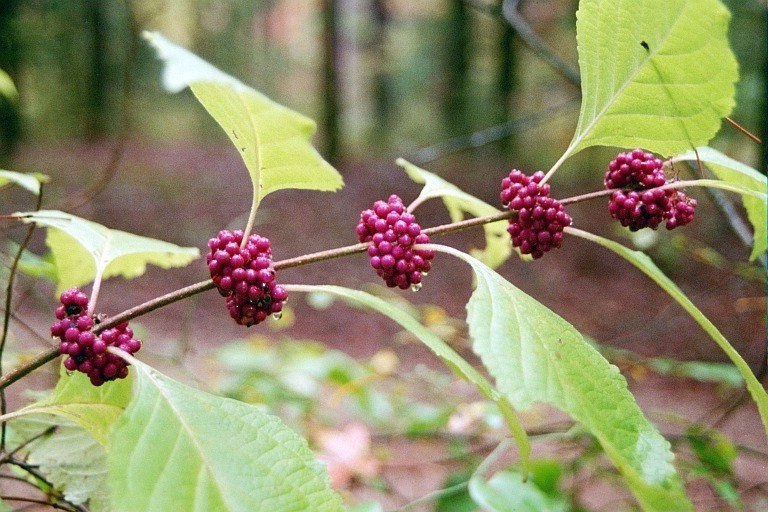
American Beautyberries cluster around the stem

Beautyberry: Callicarpa Americana

The Beautyberry is squirrel’s version of take out.

Squirrels will often break off a branch a foot or two long and carry it to an oak tree penthouse to enjoy.  Mockingbirds and other birds are also exceptionally fond of the Beauty Berry. Humans are not as enthusiastic.

“Insipid” is the word usually used to describe its gustatory qualities.  The truth is the berries of the Beauty Berry, or Beautyberry  (Callicarpa americana, (kar-lee-KAR-pa a-mair-ee-KAY-na) while an attractive magenta, are mealy and almost flavorless. Their only immediate palate character is a little texture from a tiny seed.  But, this is not to say the Beautyberry– also called the Beautybush — is worthless to man nor beast. While this writer knows of no nutritional analysis of the Beautyberry, it might have similar antioxidant and vitamin properties as other colored, edible fruit. Many web sites warn not to eat the berries, and some call them poisonous. They are not poisonous but I suppose if one is going to make a mistake it is better to say something is poisonous when it is not than edible when it is poisonous. And for the record, worldwide there are about 140 different species of Callicarpa. The leaves of this one, incidentally, make an excellent fish poison for stunning them.
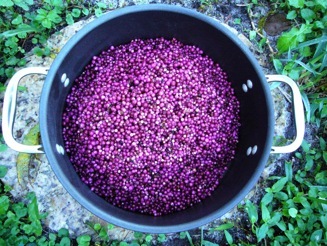
Berries ready to be made into jelly

Blooming pink in spring and fall, the Beautyberry has fruit clustered along the stem. The berries are slightly astringent and best eaten raw only a few at a time. Where Beautyberries excels is in making jelly. Beautyberry jelly is exceptionally good.  (See recipe below.) Perhaps drying or cooking eliminates any astringency. I make Beautyberry jelly nearly every weekend it is in season as well as Pyracantha jelly (see my blog Firethorn and Santa Claus.)

Dr. Julia Morton, a famed research professor of biology at the University of Miami said this about the Beauty Berry in her book ‘Wild Plants for Survival in South Florida:”  “The rank odor of the plant makes nibbling of [berry] bunches on the stem unpleasant.”

Her point was well taken: There are three chemicals in the leaves scientists are trying to replicate for mosquito repellent. They may be as effective as DEET, according to researchers with the USDA. The chemicals, particularly one called callicarpenal, showed significant bite-deterring activity against the yellow-fever mosquito and the mosquito that spreads malaria. Callicarpenal and other compounds isolated from the plant also repelled fire ants and ticks.

Natives had many uses for the Beautyberry, among them: A decoction of the root bark as a diuretic; the leaves for dropsy; a tea from the roots for dysentery and stomach aches; a tea made from the roots and berries for colic; and, the leaves and roots in sweat baths for the treatment of malaria, rheumatism and fevers. This author can only speak to the use of berries in jelly, and leaves as an external mosquito repellent.  However, a study published 6 Feb 2007 Journal of Natural Products suggests the C. Americana has anti-cancer potential.
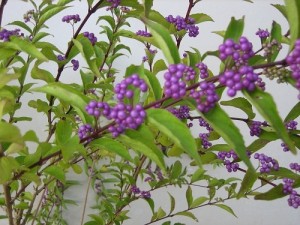
The Japanese Beautyberry’s fruit is on stems away from the main stem.

A fairly common Beautyberry that is an ornamental is the Callicarpa japonica. It is easy to identify from the American Beautyberry because its fruit are on long stems away from the main branch. American Beautyberries wrap around the main stem. More so, the C. japonica is long branched, slim, skinny-leafed and weeping, the C. americana is not. While I am not aware of any nutritional reports (in English) about C. japonica’s berries that I know of, animal studies report the leaves are high in protein.  Human’s don’t eat the leaves.They are dried and used to make a tea. I do know of one person, however, who tells me she makes jelly out of C. japonica berries. There are also a few other Asian Callicarpas that have edible or medicinal parts. Callicarpa dichotoma berries are too bitter to consume.

The Beautyberry is a cousin of the smelly Lantana and the Oaxaca Lemon Verbena, which I also have in my yard. I got the Oaxaca from a Greek friend of mine who got it from a Hispanic neighbor. How this supposedly exceptionally rare plant got from one particular isolated spot in southern Mexico to Central Florida I do not know. It doesn’t even have an established common name, but it makes a nice lemon-flavored herbal tea. (See my article on Oaxaca lemon verbena.)

The following jelly recipe is from “Florida’s Incredible Wild Edibles” by Richard Deuerling and Peggy Lantz. The book is for sale on Amazon. Many years ago I used to wander through the Florida landscape with Dick and Peggy and others on outings with the Native Plant Society. They taught me a lot. The only problem with going into the wilds with such folks is it takes about an hour to go a hundred feet because there is so much to be said about the plants one knows, and debates, usually over some unidentifiable “dirty little composite.”  Here is a link to their book: http://www.amazon.com/Floridas-Incredible-Edibles-Richard-Deuerling/dp/188525802X

 Beautyberry Jelly

1 ½ qts. of Beautyberries, washed and clean of green stems and leaves. Cover with 2 qts. water.Boil 20 minutes and strain to make infusion. Use 3 cups of the infusion, bring to boil, add 1 envelope Sure-Jell and 4 ½ cups sugar. Bring to second boiland boil 2 minutes. Remove from heat and let stand until foam forms. Skim off foam, pour into sterilized jars, cap.

UPDATE: One of my students, Fred, does a lot of foraging and has lived his life in mosquito-ladened Florida. He reports: [Beautyberry’s]  “jelly is awesome but I really love the beautyberry for its insect repellent properties. After learning about this from a Green Deane class and being an avid forager myself I decided to use the beautyberry as a bug repellent so it wouldn’t slow down my summer foraging (Florida summer mosquitoes can be horrible). I pretty much chopped up a plant(leaves and stems) and boiled it in a pot and let it cool and strained the brown liquid into my blender, about 1 1/2 cups. In a separate pot I warmed some organic neem oil (1 cup) with 1 ounce of beeswax until melted. Then you turn the blender on and pour in the oil mixture very slowly and it becomes a cream. I have to say hands down the best insect repellent ever! Because its a creme on july/august days one application is all you need for the entire day even when your sweating.”

Green Deane’s “Itemized” Plant Profile

IDENTIFICATION: A small, deciduous shrubs 1 to 2 m in height, leaves opposite, elliptical to ovate, large, with saw-toothed edges.  Flowers cluster around stem, funnel-shaped with four clefs.  Fruit magenta 2 to 4 seeds, White fruited ones are an escaped cultivar and edibility is unknown.

TIME OF YEAR: Spring and fall in Florida, late summer to fall in northern climes

ENVIRONMENT: Dry,open woods, moist woods, thickets and hammocks, adapted to climates with hot, humid summers and moderate winters

METHOD OF PREPARATION: A few berries can be eaten raw, depending upon your agreeing with the flavor, otherwise makes a great jelly. The berries can be used to make a tea with antioxidants.

 HERB BLURB

Native American Indians used the roots and leaves to make a tea to treat fever, dysentery, malaria and rheumatism
 

{ 126 comments }
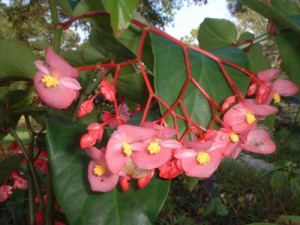
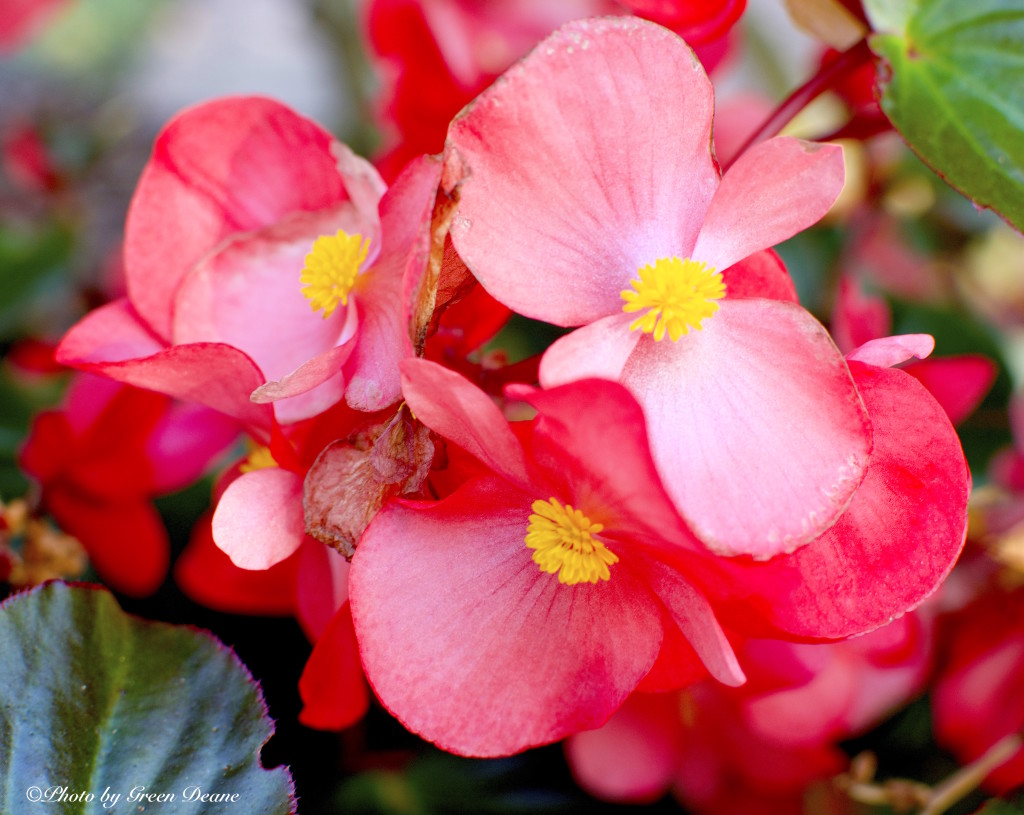
The flavor of Begonia blossoms and leaves changes with their color. Photo by Green Deane

The flavor of Begonia blossoms and leaves changes with their color. Photo by Green Deane

Waxing about Edible Begonias

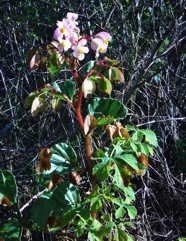
It was on Rock Springs Run, some 43 years ago here in Florida, when I first saw them, just above the variable water line. I couldn’t believe it: Wax Begonias, the most common houseplant in the world, in the middle of the swamp, and edible. I next saw them some 17 crow-fly miles away on a damp bike trail.  And more recently they were in another county by a stream some 30 miles off to the southwest. The Wax Begonia is just one of many “invasive weeds” in central and southern Florida, spreading by seed. But, you can also find it in cemeteries in the summertime, on front porches, flower beds and in south-facing windows everywhere in the winter.

Begonias are naturalized in Florida. Photo by Green Deane

Begonias are naturalized in Florida. Photo by Green Deane

Known as Begonia cucullata  [Beg-GOH-nee-uh kuk-yoo-LAY-tuh or kew-kew-LAY-uh) (previously B. semperflorens, sem-per-FLOR-enz) the fleshy leaves and flowers are edible raw or cooked.  They can have a slight bitter after taste and if in water most of the time, a hint of swamp in their flavor. Sauteed alligator with Begonia sauce might be a musty challenge to the pallet.  (See recipes below.) The B. cucullata is not the only edible Begonia. The popular Begonia X tuberhybrida (too-bur-HY-brid-uh) also has edible leaves and flowers. Very delicate and also very colorful, the B.X. tuberhybrida does not grow in the wild but that does not mean you can’t find them for nibbling. There are two cautions, however: Begonias contain that overrated tart threat, oxalic acid, and since they are primarily only found under cultivation make sure they haven’t been treated with pesticides and the like. While the escaped Wax Begonia has but a few colors  (red, pink, or white) and simple flowers, the tuberhybrida comes in many colors and the flavor varies with the color. Its blossoms are also more complex, often doubled.

Wax Begonia

Wax Begonia Blossoms

The Journal of Economic Botany has mentioned edible Begonias several times since the 1940’s including an article on them in 1992, pp.114-115. There are at least a baker’s dozen plus more edible species of Begonia than those already mentioned making at least 15: B. annulata (aka B. hatacoa)  B. auriculata, B. barbata, B. gracilis, B. grandis var evansiana (sparingly), B. hernandioides, B. malabarica, B. mannii, B. picta, B. palmata, B. plebeja (stems peeled, sap is used to make a drink) B. Semperflorens,  B. rex and B. roxburghii (cooked.) B. fimbristipula is used to make a tea. Among those are tuberous, non-tuberous, hybrid and non-hybrid begonias. There are also reports of numerous other Begonias being consumed in several countries, from Mexico to India. Wherever they grow they have been important to people. They are a good source of food and medicine and vitamin C, long eaten to prevent scurvy. Begonias have been cooked up as potherbs in Japan, India, Indonesia and Myanmar (Burma.) They are used to make a sauce for meat and fish in Indonesia, salads in China, Indonesia and Brazil. In Java, the Philippines and Brazil they are also a flavoring ingredients. In northern Mexico and China they are a favorite wild snack for children. In fact, some rural people use the tart sap to curdle milk for cheese making.

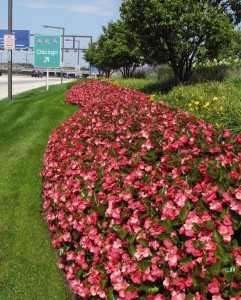
Begonias are a common bedding plant. Make sure they have not been sprayed.

Begonias are a common bedding plant. Make sure they have not been sprayed.

In Paraguay the leaves of the B. cucullata are eaten fried or in soup or salads while the sap is used to treat sore throats. As just mentioned, Begonias have had numerous medicinal applications. One of them, using B. malabarica to affect glucose levels, has been shown to be effective in diabetic rats, echoing its folk use in people. In the West Indies those under the weather use Begonia leaves as a tea for colds. Roots and tubers of Begonias have been a mainstay of folk medicine for centuries. They have been used as emetics, purgatives and cathartics. The sap has been put on wounds, and concoctions used for cough, consumption, and fever. Shoots have been used to treat upset stomachs and enlarged spleens. The acid-based sap has been used to treat toothaches and gum aliments. It is anti-bacterial.  Elements in the Begonia have been proven to have anti-tumor activity and it is commonly used in the West Indies by herbalists to treat cancer. A few websites say Wax Begonias are cancer-causing but I cannot find any research to support that assertion. In fact, I found just the opposite with a related species. A study reported in the Journal of Ethnopharmacology, Volume 124, Issue 1, 6 July 2009, found: “Cucurbitacin B, E, I and dihydrocucurbitacin isolated from Begonia nantoensis were reported to have cytotoxicity in cancer cell lines.” The assertion that wax begonias can be carcinogenic can be traced back to at least a 2007 Public Broadcasting Service webpage recipe quoting two chefs from a 2003 copyrighted work. The chefs also say only the petals of the tuberous begonia are edible. I think they got that from an older and equally wrong book on edible blossoms. Many non-tuberous Begonias are edible. Numerous “edible flower” websites, cut and pasting each other and not doing any homework, have perpetuated the errors. Let’s set the record straight: Begonias other than tuberous have edible leaves and blossoms.

Wax Begonia blossoms

The most common house plant in the world — the Wax Begonia — came from Brazil’s Atlantic Coastal Forest (where it is used like spinach and a diuretic.) Begonias are native to South America, Central America, South Africa and Asia though most of the hybrids come from the Wax Begonia. The genus name Begonia comes from Michel Begon, a 17th-century governor of Santo Domingo, and amateur botanist. Naming the genus after Begon was a good idea but not without some politics. Begon was governor of the French Antilles from 1682 to 1685. Botanist Charles Plumier had been recommended by Begon to King Louis XIV to be the official plant collector in the French Caribbean. Plumier got the job and he rewarded Bergon by naming the plant after him.  A symbiotic relationship, it would seem. Cucullata means hooded, a reference to the shape of the flowers.  Semperflorens means ever flowering, and, tuberhybrida is tuberous hybrid. Begonias have been cultivated for at least 1,400 years starting with B. grandis in China.  It was used in herbal medicine as an astringent to clean wounds, reduce swelling and to treat a number of diseases. B. fimbristipula (fim-bree-STEE–pou-la) is made into a bitter, purple tea, and can sometimes be found in your local Chinese market. Begonias got to Japan in 1641 and then England in 1777. By 1847 there were between 70 and 80 species of Begonias growing in Europe. They were in the United States by 1850 but really took off after World War I. There are now some 1,600 species and at least as many cultivars. Besides the Wax Begonia, the American Begonia Society recognizes seven other horticultural types: Cane-like, Shrub-like, Thick-stemmed, Rhizomatous, Rex-hybrids, Tuberous and Trailing-Scandent. Yet, the humble Wax Begonia is the most popular, selling in excess of $60 million dollars worth a year in the US. But let us not fault those who like the other varieties the genus can offer. Begonia are a common bedding plant for three reasons, beside their attractiveness. They like shade, deer don’t like to eat them, and most humans don’t know they are edible.  As for me and thee, raw leaves and blossoms have a crunchy texture, somewhat acidic, some with an after note of bitterness, some without. Cooked they can be tart and bitter to sweet, swampy if raised in damp conditions. I would like to thank Kingsley Langenberg and the American Begonia Society for pointing me in the right direction. Their view is far more comprehensive of the genus than my edible perspective.  To learn more about Begonias and the ABS their website is: http://www.begonias.org.

Green Deane’s “Itemized” Plant Profile

IDENTIFICATION: Tender herbaceous perennials, won’t take a frost, succulent stems, depending on variety, attractive mounds one-half to a foot and a half height though I have seen them two feet high. Leaves usually glossy green ovals, scalloped. Flowers may be single or double.  Seeds, dust-like. The tuberhybrida resembles a small, fleshy carnation, some think pom-poms.

TIME OF YEAR: Leaves whenever they can be harvested, blossom as well, tends to bloom constantly.

ENVIRONMENT: Rich well-drained soil. Flower growers say the soil must be allowed to dry between waterings but I have seen them growing in swamps often. They are a warm-climate understory plant, liking bright shade.

METHOD OF PREPARATION: Wax begonia: Leaves and blossom raw, leaves cooked. The petals of the tuberous begonia are also edible, and the stems can be used like rhubarb.  As always, identify your species, check with a local expert, and try sparingly.  Recipes below.

Begonia Tartlet Two cups edible leaves per portion Approximately three ounces of sour cream per portion 1/4 to one half teaspoon of sugar per portion, or to taste Cooked pastry tartlet or graham cracker tartlet (the latter contrasts nicely with the tart filling.) Mince the leaves and put into a pot with about 1/2 cup of water on medium low heat. The object is to cook and reduce the leaves to a thick paste. To that paste add the sour cream and sugar. Put in tartlet. Heat in oven at about 300F for 30 to 60 minutes, or until content bubbles gently. Remove from heat. Cool. Serve. This recipe can also be used with sorrel.

Begonia Spread Use one 8 oz package of soft cream cheese, 1/4 to 1/3 strawberry or other jelly or jam, some fruit juice or other liquid to soften more if needed. Wash and coarsely chop begonia flowers to make about 1/3 cup. This is a matter of taste so adjust to what you like. Mix the cream cheese and jelly in a food processor or mixer and add the chopped begonia petals.

For an adventure you can fry the leaves like potato chips. They turn black. Add salt for a salty sour flavor.

{ 15 comments }
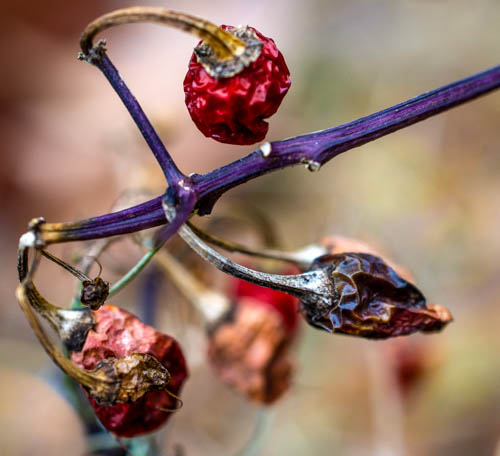
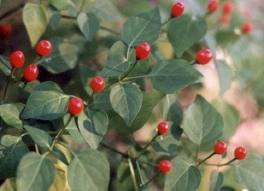
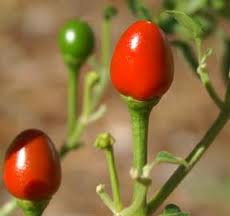
Wild peppers grow in many areas of Central and North America. The vary greatly and the exact species above is debatable. To read more about wild peppers go here. Photo by Green Deane

Wild peppers grow in many areas of Central and North America. The vary greatly and the exact species above is debatable. Photo by Green Deane

Capsicum annuum var. glabriusculum: Hot Eats

The original hot peppers

Did you know hot peppers grow in the wild? From Central American north to Arizona east to Florida then up the coast to New York and Connecticut.

Commonly called “bird peppers” they are properly Capsicum annuum var. glabriusculum.  For a little pepper the birds defend bravely, it has gone a long ways.

Most of the natives of the Caribbean area called it some form of “aji” such as axi, aje, agi, asi et cetera. That held on as the Spanish moved in with aji bobito, aji caballero, aji caribe, aji chirel, aji chivato, aji guaguao, aji montesino, aji piante, and aji titi.  However, the top dogs of the ancient Caribbean world were the Aztecs, and they called it ….chilli… and now you know. That led to more names, chile amash, chile bravo, chili de maonte, chile de zope, chile quimiche, chili siete caldos and chilillo.

They were originally named Capsicum annuum var. aviculare (annual peppers of the birds.) Birds, who have no need for botanist or nutritionists, know a good thing when they eat it. And bird peppers are good food. They have vitamins A and C, and a host of other compounds thought to prevent cancer and tumors. And they have heat.

Capsicum (KAP-sih-kum ) is from two living Greek and Dead Latin words, Kapto, to bite, and capsa, a box, in reference to the fruit shape.  Annuum (ANN-yoo-um) means annual, and glabriusculum (glab-ree-us- KYEW-lum)  means completely without hair.  Saying “chili peppers” is then redundant, as chili means those hot little peppers.

All bird peppers are edible

A bit of history. The word pepper comes from the Greek word pipari (pee-PAIR-ree) which means the black spice, which is botanically Piper nigrum (PYE-per NYE-grum ) which also means black pepper. For such a common item today it is difficult to stress how important black pepper was long ago. When the Goths sacked Rome in 410 AD among their demands were 5,000 pounds of gold and 3,000 pounds of black pepper. In the middle ages debts and dowries were paid with pepper corns. The pepper trade built Genoa and Venice, as well as Alexandra. It was a cartel similar to the diamond cartel today in which prices are kept intentionally high by a few suppliers. Chris Columbus’ trip to the New World was an attempt to break that cartel. And in fact, he did find “pepper” but gold fever took over.

In Florida Homosassa — a well-known spring and river, means either either “river of fishes” or “place of many pepper plants.” I have also found them on the upper west side of Turtle Mound in New Smyrna Beach.

 Green Deane’s “Itemized” Plant Profile

IDENTIFICATION: Shrub, three to 10 feet tall, leaves ovate to ovate-lanceolate, pointed, one half to two inches long, sometimes much longer, four or five inches. Flowers white, yellow-green or lavender, five-lobed to half-inch wide. Fruit round, conical or elongated and pointed, one half-inch to an inch long, may change from white to yellow then purple to red, nearly hollow, a few small seeds, very pungent.

TIME OF YEAR: Seasonal in northern climes, year round in warmer areas

ENVIRONMENT: Hammocks, waste places, cultivated ground

METHOD OF PREPARATION: Ripe fruit as seasoning, leaves cooked as greens, rich in calcium, phosphorus, vitamins A and B. In Africa the fruits or leaves are eaten as an antidote if poisonous fish has been eaten.


{ 22 comments }

Cardamine pensylvanica: Petite Pot Herb

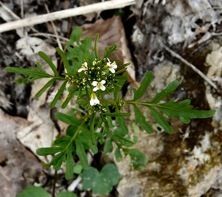
The first time I saw Bittercress I knew it had to be an edible. I just didn’t know which one.

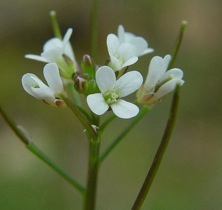
Bittercress

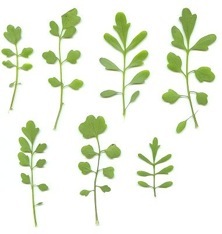
How did I know? Plants are in families and it looked like a lot of wild edible plants in the Brassica family, or Cruciferae:  Scrawny, leggy, skinny little leaves, minute four-petaled flowers, seeds in a pod on stems, peppery leaves.  The only odd element was I found it in very wet soil, next to a stream. Come to find out, it likes rich, damp soil, and a close relative that looks very much alike, likes dry terrain.

Cardamine pensylvanica (yes one “N” in pensylvanica thanks to the dead language of Latin) really isn’t bitter, or at least the ones I’ve had haven’t been. Actually several Cardamines are available in the United States and at least four in Florida, C. pensylvanica, C. parvifolia, C flexuosa and C. concatenata. Other ones found and consumed in the U.S. are C. hirsuta, C. amara, C. oligosperma and C. pratensis, for leaves; and C. rhomboidea and C. diphylla for their leaves and/or roots.

It is not at all unusual for the roots of such plants to be ground up and mixed with vinegar and salt to make a horseradish kind of sauce. I’ve done it often with the roots of the Lepidium virginicum, or Poor Man’s Pepper Grass.

If you find a Cardamine in Florida growing where it is quite dry it is probably the C. parvifolia. If wet, then probably the C. hirsuta (see separate entry.)  Incidentally, there are four endangered species of Cardamine in the U.S.  (C. constancei, C. incisa, C. micranthera and C. pattersonii) so harvest conscientiously.

While C. pensylvanica is the most common locally the only native one is C. concatenata, or Cutleaf Bittercress. The Iroquois used it as food, raw, with salt or cooked. It was also used as a medicine. They mashed the roots and used them to treat headaches, colds, to encourage the appetite, for heart problems and injuries. It was also considered slightly hallucinogenic.

The botanical name, Cardamine pensylvanica, is said kar-DAM-in-ee pen-sil-VAN-ee-ka. You will also see kar-da-MY-neez, which is the British way of saying it. Cardamine is from the Greek word kardamis, for a kind of cress. Contemporary Greeks call cress κάδαμο  (KAR-tha-moe.)  Pensylvanica means “of Pennsylvania, or Eastern North America. Parvifolia (par-vee-FOH-lee-uh) means small leaf.  Concatenata (kon-kan-teh-NAH-tuh) means linked or chained together. Hirsuta means hairy, referring to the lower stems.

Thee are some 150 species in the genus and are found at every location on the rotation except the Antarctic. The leaves vary greatly from plant to plant, species to species, from minute to medium-sized, pinnate to bipinnate, basal to cauline (growing on the upper part of the stem.) The edges of the leaves smooth or toothy. And you have just to got to love those arguing botanists. The genus Dentaria and the genus Cardamine are the same genus, just different egos at conflict.

Under cultivation C. pensylvanica can be coaxed to grow to more than a yard high and wide. A perennial herb, it can be trained into round shrub. Oddly, when raised intentionally it does not like to be wet and one has to water it moderately.

Green Deane’s “Itemized” Plant Profile

IDENTIFICATION:

Scraggly plant to two feet, weak taproot, flowers white, tiny, about 1/16 to 1/8 inch across. Silique seed pods, elongate, narrow, middle membrane,  many seeds. Basal leaves and middle leaves long, deeply lobed, with great variation. Leaves have three distinct veins.  Stems  multiple, upright or spreading, branched, green to purplish, round to angled in cross-section, hairy towards base.  Upper stem can be non-hair, lower stem can have fuzz.

TIME OF YEAR:

Flowers April to October, leaves and seed pods for several months

ENVIRONMENT:

C. pensylvanica  prefers wet feet, C. parvifolia likes it dry

METHOD OF PREPARATION:

Young leaves raw, older leaves cooked, seed pods raw or pickled, some roots can make a good horseradish substitute.

{ 9 comments }

Launaea intybacea: Edible Bitter Lettuce

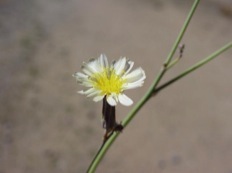
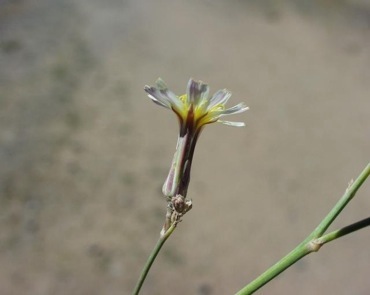
Bitter Lettuce blossom

The plant came first, and it’s anybody’s guess to what its scientific name is.

Every botanical wonderkin thinks his powers of observation and classification are the best and so plants get renamed and shuffled around and the potherb debate rages on. I started out with Launea Intybacea and Launaea intybacea then Brachyrhampus intybaceaus. That lead to

Cicerbita intybacea and Lactuca intybacea, which made some sense as it is called wild lettuce in

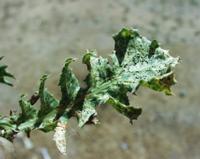
Bitter Lettuce leaf

English but it really isn’t a lettuce and there are several wild lettuce already. Lastly there is the Spanish name Achicoria Azul, which means Blue Chicory. Unfortunately the plant has yellow blossoms, though sometimes white. So, taking a hint from its relatives, I’ll go with the original and for a common term call it Bitter Lettuce.

A native of Africa, the Bitter Lettuce has been introduced to Florida, Texas, Mexico, the West Indies, Central America, South America, Oman and the Old World. Edible or not, it is often listed as an invasive weed.  It is very adapted to dry conditions. It starts out as a rosette

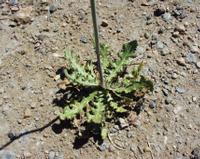
Bitter Lettuce basal rosette

then sends up a leafy flowing stalk. After it seeds it develops new growth from the base of the stem and or root and can take on a bushy appearance. The plant can keep producing new rosettes and can send up new shoots from the root for several years.

Don’t be surprised if you have to boil leaves 40 minutes or so in a lot of water to make it edible.

As for the name, Launaea intybacea — I had to pick one — it is said law-NEE-ah in-ti-BAY-see-ah. (With thanks to Latin expert Peter Ommundsen for this and other help.) Launaea probably honors French botanist Jean Claude Michel Mordant de Launay (c.1750-1816). Intybacea is Dean Latin for endive/chicory. That came from Egyptian “tybi” (January), referring to the month Endive was customarily eaten

Green Deane’s “Itemized” Plant Profile

Bitter Lettuce Blossom

IDENTIFICATION:

Annual herb one to five feet tall, succulent branching stems and milky juice. Leaves four to 12 inches long, in a basal rosette and alternating on the stem, lettuce green, lobed, toothed with soft, red-tipped spines on the edges. Flowers yellow, sometimes white, in erect heads in branched clusters. Seeds 1/8 inch wide, ribbed, spiny

TIME OF YEAR:

Flowers year round

ENVIRONMENT:

Roadsides, coastal strands, agricultural lands

METHOD OF PREPARATION:

Occasionally used as food. Young plants and young leaves palatable when cooked as greens. Does not taste good raw.

{ 4 comments }