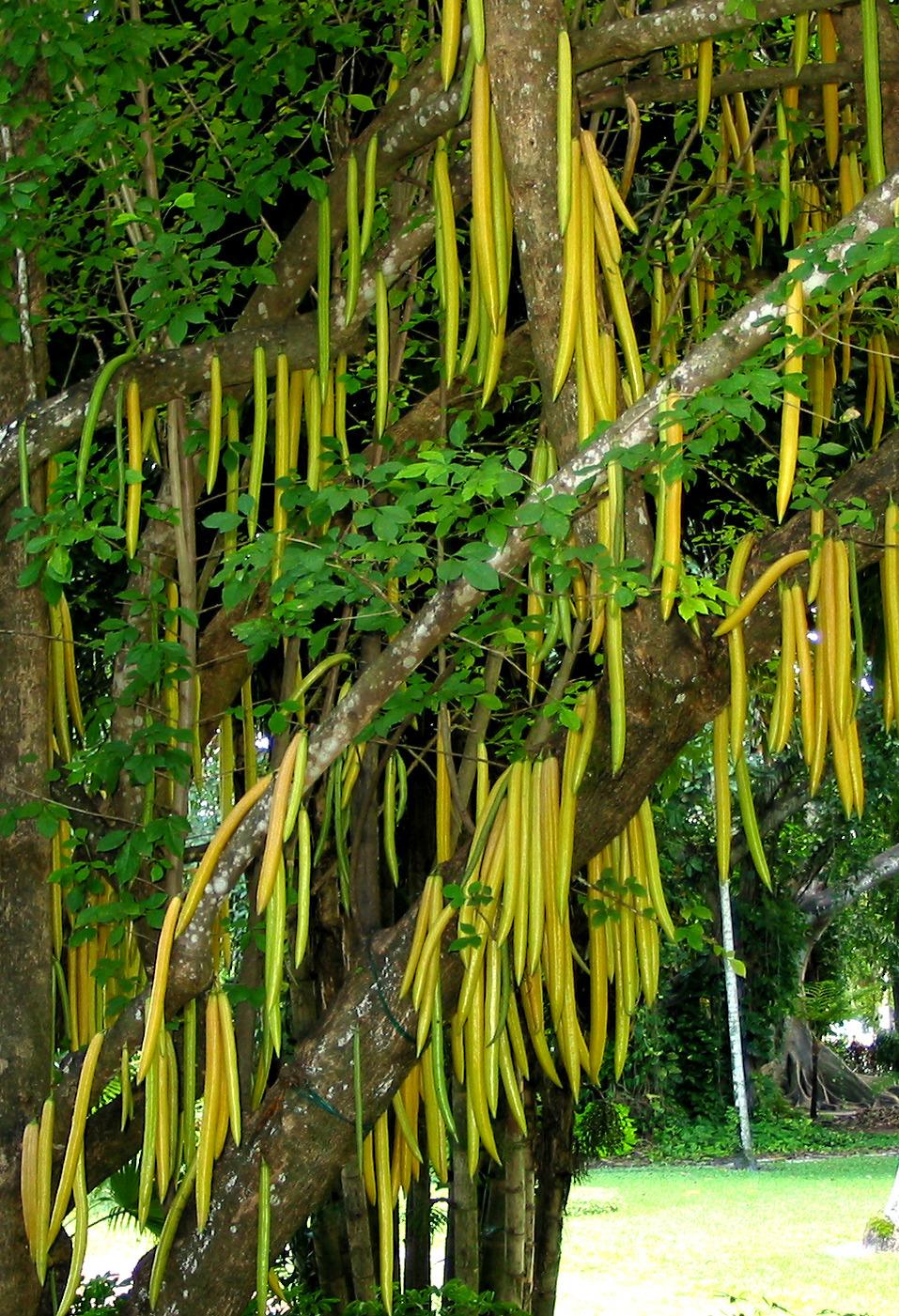
The Candlestick fruit is edible, most often it is pickled or eaten raw.

If you are meandering through a botanical garden in a warm climate and you see a tree growing four-foot-long candles it might be Parmentiera cereifera. Endemic to Panama it’s a favorite specimen for them to grow because of the unusual fruit and is called Palo de Velas or Arbol de vela. 
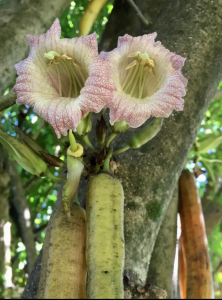
The blossoms and fruit can grow on the trunk. Photo by Susan Rushton

The species is cultivated for the edible fruit as is P. aculeata. There is a Candlestick Tree at Marie Selby Botanical Gardens in Sarasota, the Fairchild Tropical Botanical Gardens in Coral Gables, The Fruit and Spice Park Redland, the Flamingo Gardens in Davie, FL and the Mounts Botanical Garden in West Palm Beach. The fruit is as resistant as a carrot but tastes like tomato and okra some say bell peppers and sugarcane. The seeds are edible as well. 

The genus honors the French agronomist and pharmacist Antoine Augustin Parmentier (1737-1813) whose claim to botanical fame was to promote the potato in France. At the time the French called it “hog feed” and believed it caused leprosy thus it was officially banned. Parmentier’s efforts got the ban lifted. Cereifera means wax producing.

Green Deane’s Itemized Plant Profile
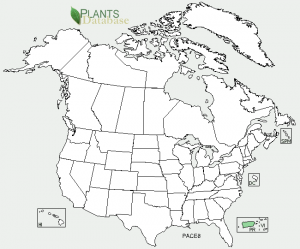
Also found Puerto Rico and south Florida.

IDENTIFICATION: A rough-bark tree to 25 feet, opposite ovate leaves of three leaflets. White blossoms, fruit from one to four feet long, green turning yellow, resembles a candle. The fruit can grow directly from the trunk.  It’s in the Bignoniaceae family which has about 104 genera and 860 species. Preliminary phytochemical investigation suggested the presence of flavonoids, saponins, tannins, triterpenoids and steroids.

TIME OF YEAR: Mid-winter in Florida. 

ENVIRONMENT: Adapts to different soil and climate condition. Can tolerate frosts. 

METHOD OF PREPARATION:  Edible raw or cooked when waxy yellow. It resembles sugarcane in texture. Can be pickled and preserved. Roots are diuretic.

{ 4 comments }

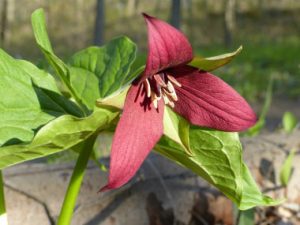
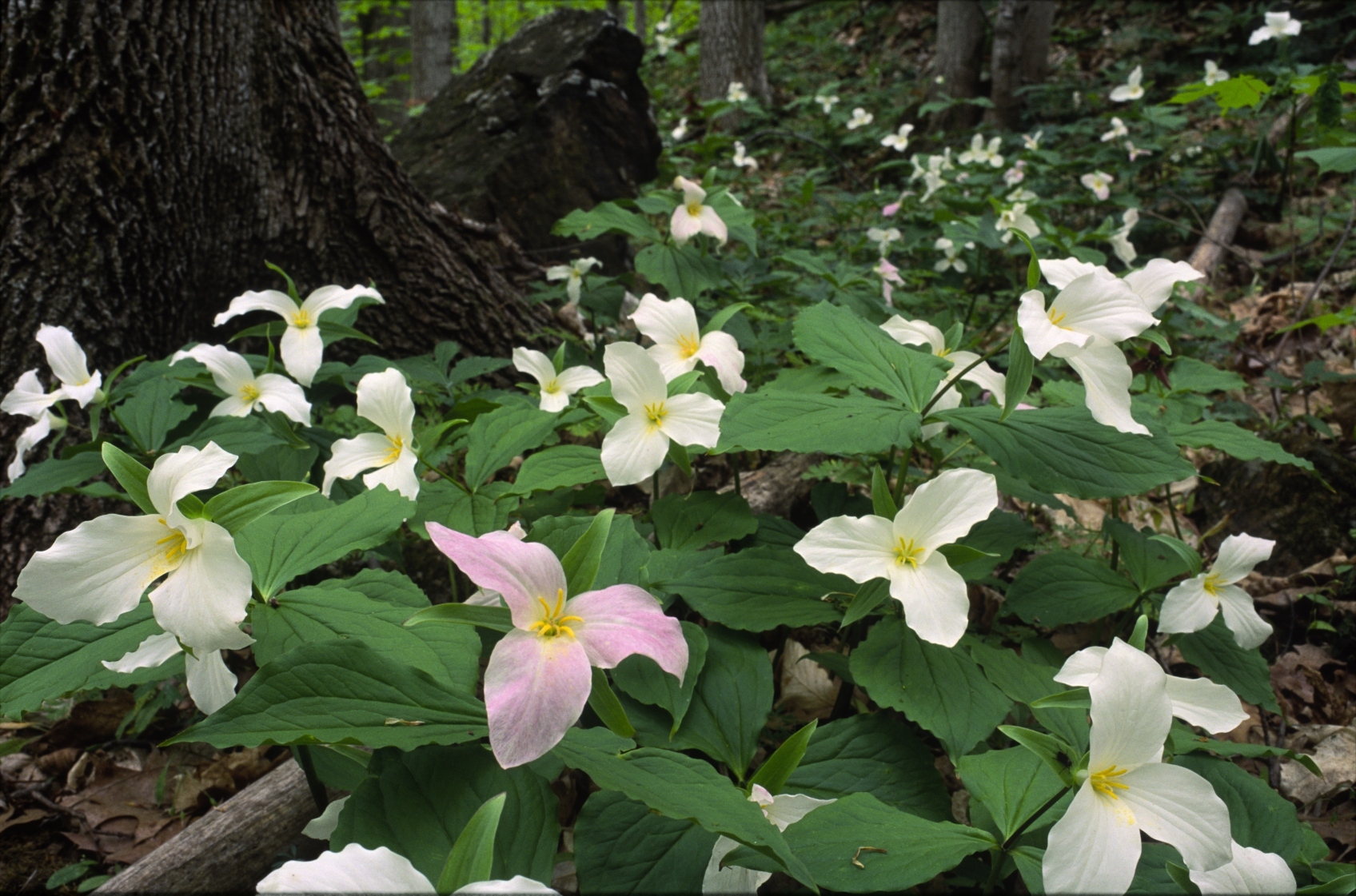
Trilliums can be a bright spot in a drab spring

Arlene Tryon 1963

Every May Day — the first of May  — we kids would hang a May Basket on our teacher Arlene Tryon and disappear off the school grounds. It was a tradition in the rural, one-room school: Half a hundred kids just took off at noon time in all directions. No police were called (the schools didn’t have phones anyways… or running water) no parent was upset, no one got lost or was kidnapped. Some of us boys even managed to walk a couple of miles and climb to the top of Bradbury Mountain State Park (without paying an entrance fee.) 

We had to cross a gully to hike to the state park and there grew Trilliums and Skunk Cabbage (see separate entry.) Trilliums were kind to the nose so I was not surprised then to learn people ate them. But the annual trek to the top of Bradbury fixed the date in my mind of the plant being at the right stage in southern Maine: May first. 
The young unfolding Trilliums before flowering are edible and were called by Mainers “much hunger.” They are a salad and pot herb tasting like raw sunflowers seeds.  After they flower the edible parts are bitter. Not all Trilliums are edible. Among the comestible species are T. erectum, T. sessile and T. grandiflorum. 

Green Deane’s “Itemized” Plant Profile

IDENTIFICATION: Trillium don’t produce true leaves or stems. The stem is an extension of the rhizome. It produces tiny scale-like leaves. It has a single terminal blossom and leaves of three in a whorl. 
TIME OF YEAR: Spring, early in southern areas, later in northern areas. 

ENVIRONMENT: Wet areas, gullies, by streams, moist woods

METHOD OF PREPARATION: These plants are often protected. Make sure of your local laws. That said young leaves before the plant blossoms can be eaten raw or cooked. The berries and rhizome are not edible. 

{ 2 comments }

Jewels of Opar

Jewels of Opar sound right out of a movie.

Learning wild edibles has a sense of discovery to it. One day a friend said she had an edible in her yard with a strange name: The Jewels of Opar. If that sounds like something out of a Indiana Jones movie you’re close. It was novel with the Indiana Jones of his day: Tarzan and the Jewels of Opar. It was the fifth book of Edgar Rice Burroughs and appeared in 1916. The plant is supposedly native to warmer areas of the United States. However, Dr. Daniel Austin did not include it in this 909-page book Florida Ethnobotany. 

Related to Purslane Jewles of Opar are used in similar ways. One source, Cornucopia II, calls it the Caruru and Flameflower and says: “The leaves and stems are blanched and used in green salads, cooked in soups, or eaten like purslane.”  Others call it Javense Ginger and say the long orange root cause be used that way, as a flavoring. A Chinese report says the roots can be stewed with meat. Because of that report and another we know some of the leaves nutrients.

Talium paniculatum can be used like purslane.

100 gram have 15 calories, 1.19 grams of protein, 0.31 grams of fat, 2.02 grams of fiber, 0.939 grams of carbohydrates. Potassium is 304 mg, calcium 78 mg, magnesium 61 mg, sodium 5.1 mg, iron 4.71 mg, phosphorus 0.73 mg, zinc 0.27 mg, no vitamin A or C reported but it has 1316 mcg of beta-carotene which is a vitamin A precursor. 

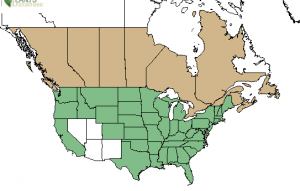
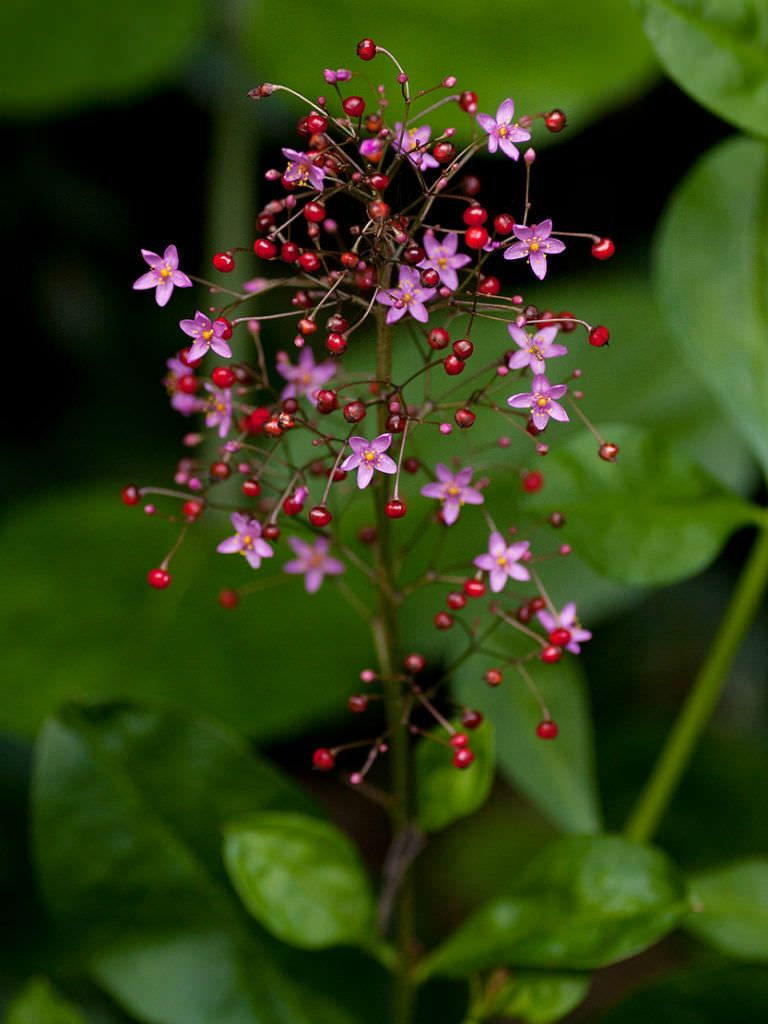
Botanically the Jewels of Opar are Talinum paniculatum. (tah-LINE-uhm puh-nick-you-LAH-tum.)  Talinum is new Dead Latin for a native Sengal name for the plant. Paniculatum means like a panicle. Unfortunately its reporting is sporadic, a few counties here, a few counties there, from South Carolina to Texas. No doubt it is more wide-spread but has not be officially found by an official botanist and approved by an official botanical state committee. It is listed in five areas in Florida. A similar-looking edible species is Brookweed, Samolus valerandi.

The species is somewhat tart because of oxalic acid. Hexane extract proved “outstanding” against Micrococcus luteus and Candida albicans. The species has Campesterol, stigmasterol, and sitosterol. 

Green Deane’s “Itemized” Plant Profile

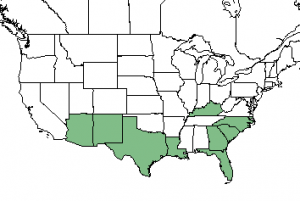
Jewels of Opar distribution

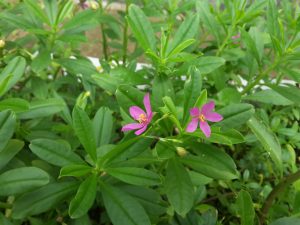
IDENTIFICATION: Mucilaginous leaves are flat, glossy, to four inches long, half as wide, growing in thick whorls, has whispy pink flowers and dark red fruit. Roots are long and orange. 

TIME OF YEAR: Year round

ENVIRONMENT: Moist areas, well drained soil, warm weather, intolerant of frost, prefers full sun but can grow in partial shade. 

METHOD OF PREPARATION:Shoots and leaves eaten raw or in stews and soups,  Used in folk medicine extensively used ornamental. 

{ 8 comments }

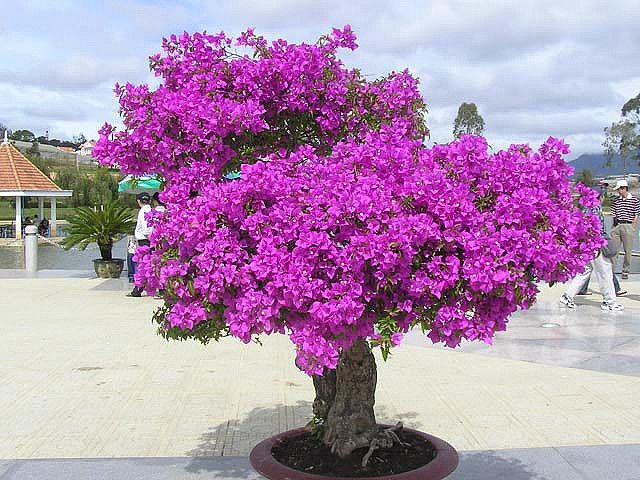
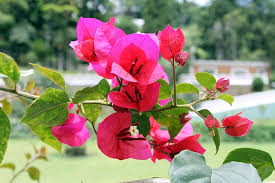
Only the blossoms of one Bougainvillea, Brasiliensis is usable.

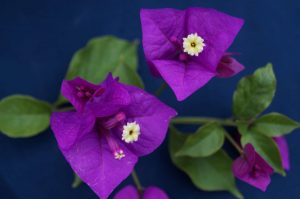
We use the sepals not the flower itself.

Bougainvilleas are often referred to as a toxic plant.  The reason given is that scratches from their thorns infect easily. The thorns are coated with a substance that can cause contact dermatitis. Symptoms are a rash, tenderness, and itching. It can resemble poison ivy. Any wounds should be cleansed and care for. Bougainvilleas are not forager friendly except one, the purple variety, B. brasiliensis. 

On page 161 Cornucopia II says “Bougainvillea Brasiliensis, Purple Bougainville, In Mexico the flower bracts are used for making an attractive, violet colored water drink (agua fesca) called agua de buganvilia. It is said to have a refreshingly delicate taste. Other types of bougainvillea are not suitable for making the drink.” 

B. brasiliensis can also be redish instead of purple.

In the Four O’Clock family, there are four to 18 Bougainvillea species. Botanical egos can’t agree. The plant was named after Admiral Louis Antoine, Count of Bougainville, who was in charge (1767) when the plant was first seen at now Rio de Janeiro by Europeans, in this case Frenchmen sailing around the world (and unwittingly at the same time taking the first woman to go around the world, Jeanne Baret.) 

Modern Bougainvilleas are a hybrid between Bougainvillea spectabilis (the species discovered in 1767) and Bougainvillea glabra.  There are also 300 varieties which makes identifying parentage difficult. 

Green Deane’s Itemized Plant Profile.

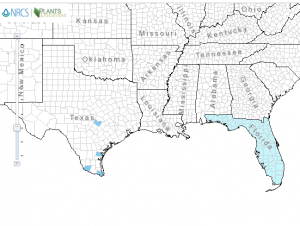
Bougainvillea distribution in North America

IDENTIFICATION: A sprawling, woody vine that behaves like a shrub with showy flowers of yellowish-white waxy tubes surrounded by three 1 to 2 inch long colorful bracts. Bougainvillea can reach 40 feet tall/long. Bloom colors including purple, scarlet, orange and pink. The species is evergreen. 

TIME OF YEAR: Spring to fall

ENVIRONMENT: Full sun, the more sun the more blossoms. 

METHOD OF PREPARATION: Purple bracts and be used to make a tea or other beverages. Four blossoms per cup is used. For a cough remedy lemon juice is added and honey or sugar. Heat water, add blossoms, let seep, remove blossoms before drinking. This drink is also made as a cough remedy. 

{ 4 comments }

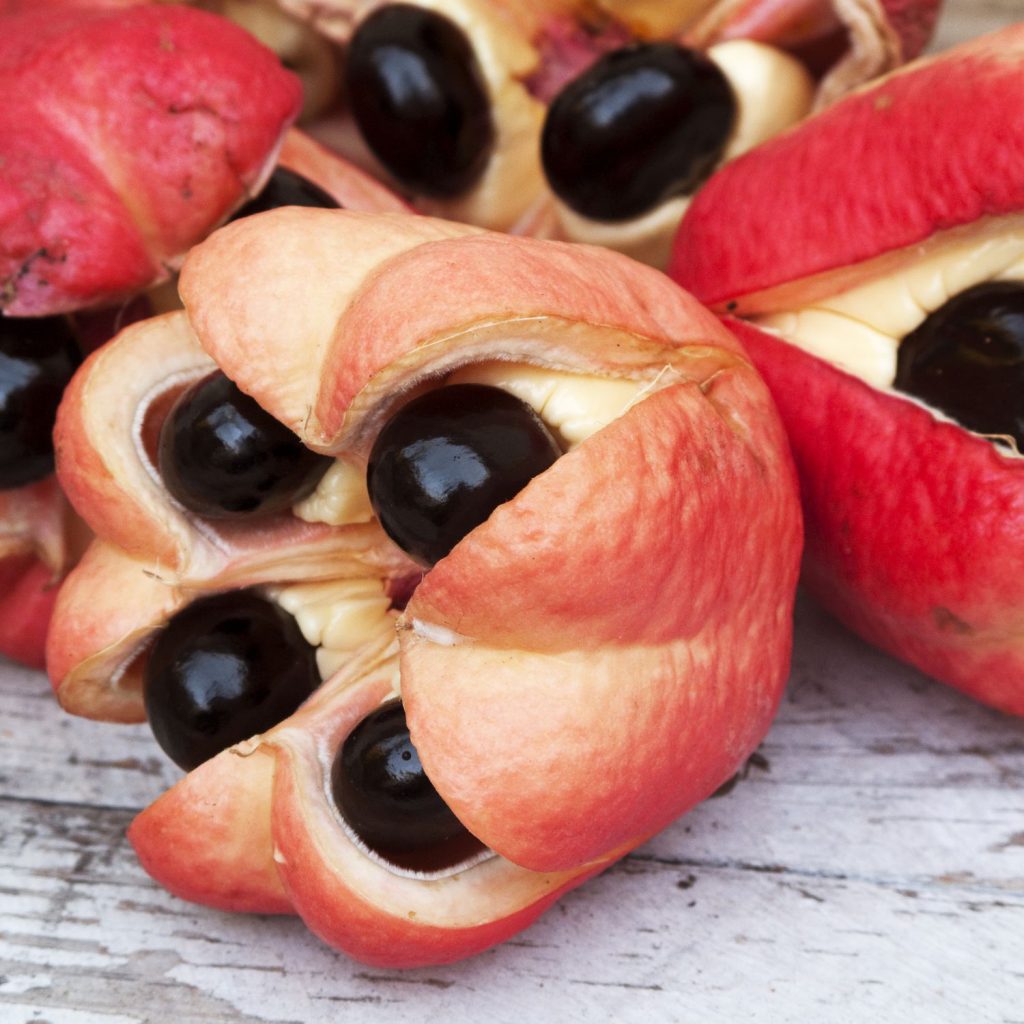
Ackee must be carefully harvested and prepared.

Delicious and deadly, that’s ackee. 

Native to Africa and a common food in the Caribbean Islands Ackee is eaten at home and in restaurants in Jamaica and canned in brine for export. Because Ackee killed some 5,000 people between 1886 and 1950 the raw fruit is officially banned in the United States though you can buy it frozen or canned. I knew someone who had a tree in his yard. Like the tomato it’s a fruit that’s used like a vegetable and is the national dish of Jamaica.  

Jamaican Ackee Pizza

You will find this tree either wild or intentionally cultivated in Central and South Florida. The toxin in the fruit is hypoglycin, an amino acid unnatural to our bodies. It causes a severe drop in blood glucose. The arils are toxic before the fruit naturally opens called “yawing.” The seeds are always toxic. If even a tiny little part of seeds are left in the ripe arils it can make you sick. The rind has saponin and is used to poison fish. 

The botanical name Blighia sapida is name for Captain William Bligh of “Mutiny on the Bounty” notoriety. He got the nomenclature nod because he was the first one to take the plant to Kew Gardens in London in 1793. Sapida means savory, delicious or prudent and wise… a questionable name for this national fruit.  

I’ve eaten Ackee once raw and it reminded me of cheese in flavor and texture. Indeed, there are four dozen cultivars and they are split between “butter” or “cheese” types. The “cheese” type is pale yellow and solid and often used in canning. The butter type is more delicate and more often used fresh. 

All of Ackee is toxic except the ripe aril.

If we combine two reports we learn 100 grams of fresh ackee aril has 10 grams of carbohydrates, 3.45 grams of fiber, 19 grams of fat, 9 grams of protein and 140 calories. There’s 500 IU of vitamin A and 68 mg of vitamin C which is your daily need. Iron is 5.52 mg, calcium 30 mg,  B1 (thiamin) 0.10 mg. B2 (riboflavin) 0.18 mg, and B3 (niacin) 3.74 mg.   

A tall evergreen tree, most poisoning happen in the winter because the tree does not get enough sun exposure. If raised from a seed the tree can fruit in as little as three years.

Green Deane’s “Itemized” Plant Profile 

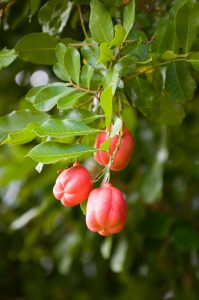
IDENTIFICATION: Medium to large tree, 30 to 75 feet, alternate pinnate leaves with six  to eight leaflets with short stems; shiny green, stiff, six to eight inches long.

ENVIRONMENT: Grows well in well-drained, deep, fertile soils but also non-fertile soils such as sand and calcerous bedrock 

TIME OF YEAR: January March, October-November. 

METHOD OF PREPARATION: The aril is edible only when the fruit naturally opens. It must be separated from the fruit and the seed and absolutely no part of the seed is consumed.  The red tissue and veins that attach to the aril must be removed. The aril is edible raw and turns yellow when cooked. Don’t over cook as it will fall apart easily. You can get ill from canned fruit.

{ 2 comments }