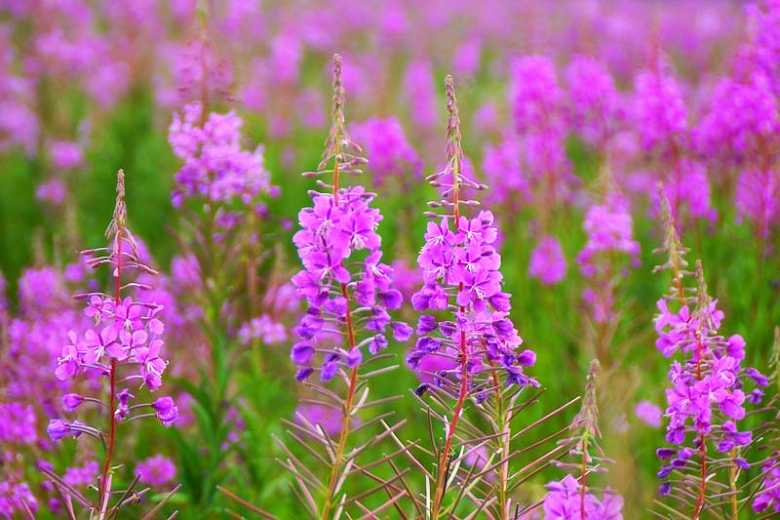
Chamerion angustifolium is the prettier of the two fireweed/burnweeds.

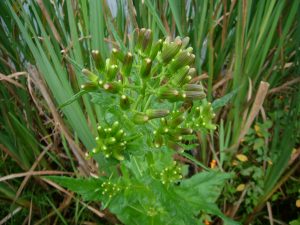
The other Burnweed in blossom. Photo by Green Deane

Having two different edible plants both called Fireweed and Burnweed can be confusing. This species is showy, a tall wildflower with noticible pink flowers. The other is not showy at all, in fact its greenish flower barely open, see photo right. You won’t confuse the two in person though some of their territories overlap. For the other one see a separate entry under Burnweed which is Erechtites hieracifolia, the wallflower of the two. 

Fireweed is call that because it is ruderal, that is, it takes advantage of burned ground and sprouts soon after a fire scorches through. It can tolerate bombing and volcanos. When London was blitzkreiged in WWII Fireweed was one of the first flowers to emerge from the rubble. It was also the first blossom to appear after Mt. St. Helens blew her top in the spring of 1980. In the Evening Primrose family, it was in the genus Epilobium but was recently changed (as are so many plants now that DNA testing tells us botanists really got it wrong… an often.) Now it is Chamerion angustifolium.

Nutritionally fresh Fireweed shoots have per 100 grams 20 calories, 0.3 grams of protein, 0.4 grams of fat, 6.4 grams of carbohydrates, and 0.8 grams of fiber. They have 32 mg of calcium, 31 mg of phosphorus, 20 mg of magnesium, 0.7 mg zinc, 0.6 mg sodium, 0.5 mg iron, 0.18 manganese and 700 mcg of copper.

Found in most of North America except Texas and the Old South, Chamerion is from two Greek words, chamai and nerion, together meaning “dwarf oleander” (as it has a leaf shape like the Oleander.) That’s seems a waste of name space as angustifolium means narrow leaf.

Green Deane’s Itemize Plant Profile

IDENTIFICATION: Spikes of red to pink to white four-petaled flowers, boom begins in the middle of the stem, leaf veins are circular and to not terminate at the edge of the leaf. To six feet tall. Blooms most of warm weather, seeds are in pods.

TIME OF YEAR: Young shoots and stems in spring, older leaves for tea.

ENVIRONMENT: It likes disturbed ground such as where logging occurs, woodland borders, meadows, roadsides and after fires.

METHOD OF PREPARATION: Shoots raw or cooked, young stems and leaves cooked, steaming or boiling works, leave can be used for tea. Older stalks can be peeled. Old stem peelings twisted into twine for fishing nets.

{ 2 comments }

Wild Currants

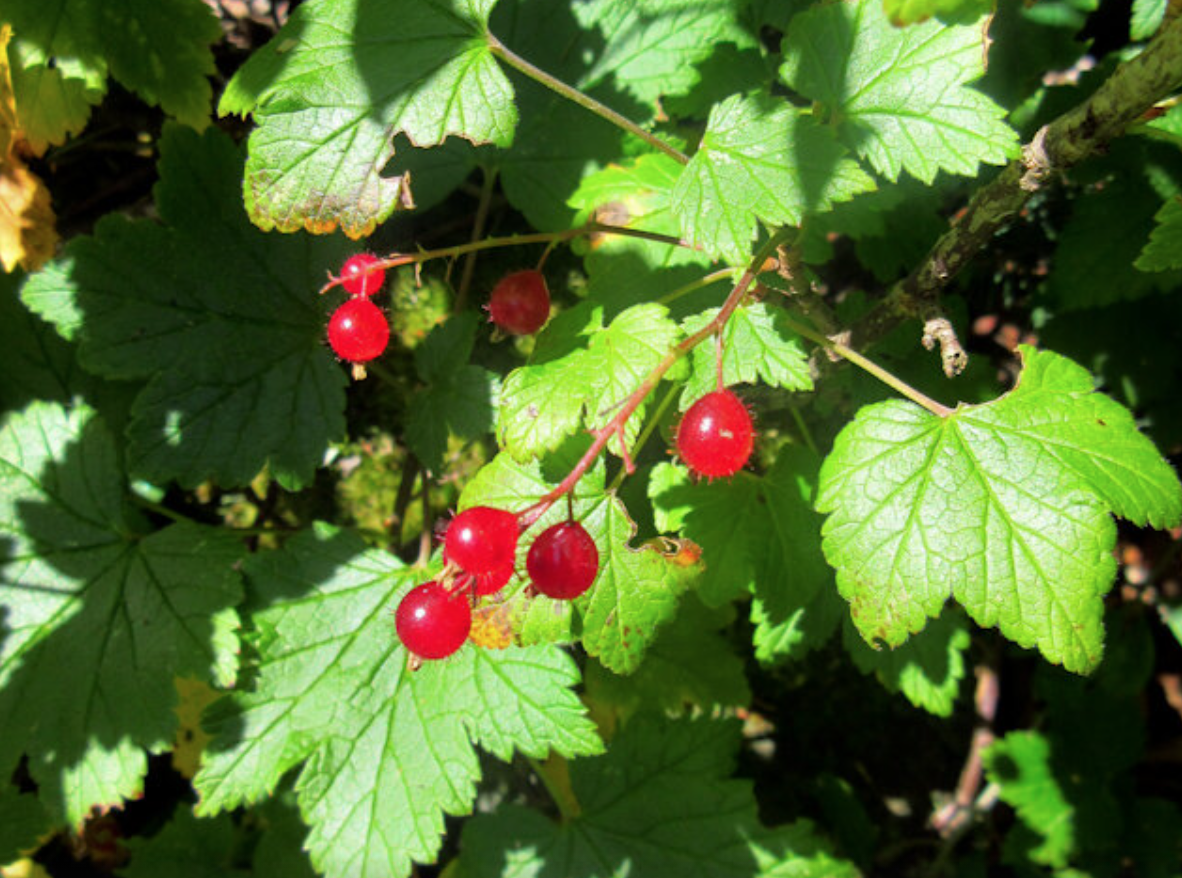
Ribes glandulosum, Maine, not bad when fully ripe.

There are more than 80 species of Wild Currants and Gooseberries (Ribes.)  The latter is heavily armed with spines and prickles the former is not. Therein lies a great distinction and less pain. 

At least 42 different species of Wild Currants were eaten by Native American groups. There may be 50 species of currants and their names are always changing. Wild Currants like cooler weather as do Gooseberries.They are more above the Mason-Dixon line than below it. However, the USDA says currants are native or introduced to all of North America except Alabama. I used to see them around abandoned houses in the rural areas of Maine.  We’d ride our horses along old woods roads and often find crumbling homes with formerly cultivated species growing near them, gooseberries included. 

A representative nutritional profile for one Wild Currant, 100 gram serving, has: 50 calories, 1.4 grams of protein, 0.2 grams of fat, 12.1 grams of carbohydrates, and 34 grams of fiber. It has 41 mg of vitamin C, about two thirds of your daily need, and 72 RE of vitamin A. As for B vitamins, B1(thiamin) 0.04 mg, B2 (riboflavin) 0.05 mg, and B3 (niacin) 0.1 mg. The minerals are: potassium 257 mg, calcium 32 mg, phosphorus 23 mg, sodium 20 mg, magnesium 13 mg, iron 1 mg, zinc and manganese 0.2 mg and copper 0.1 mg. 

The Natives had a wide variety of uses for the various Wild Currants as some were tart and other sweet, some strong smelling others not. They were eaten fresh, cooked or dried. They were mixed with other berries to produce certain flavors and or mixed to make wine. Through dried they were not usually stored for long b

Green Deane’s Itemized Plant Profile

IDENTIFICATION: Currants are shrubs rarely more than six feet high. The leaves remind one of a maple leaf. They usually have scalloped edges and three to five distinct lobes. The veins on the leaf fan out from the base like fingers on a hand. If you crush a leaf it can have a skunk-like aroma, be citrusy or spicy. Flowers can be white, yellow or red. The berries — in clusters —can be black and blue or red and gold. They usually have stripes up and down the berry. Unripe berries are green. There are numerous cultivars and they can liberate themselves into the countryside. 

TIME OF YEAR: Fragrant flowers April to June, ripe fruit early fall. 

ENVIRONMENT: Full sun, well-drained medium to heavy soil. Afternoon shade in warm climates. 

METHOD OF PREPARATION: Preserves, jams, jelly, pie filling, garnish, salad addition. Underripe berries have more pectin.

{ 1 comment }

Silverweed

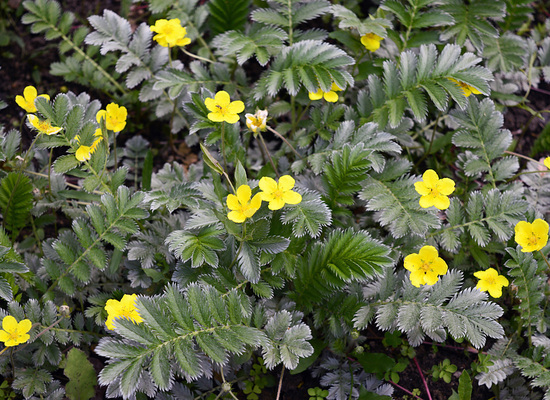
Pacific Silverweed, a traditional vegetable.

Pacific Silverweed gets around… mostly the top of the world: Siberia, Alaska, the Yukon, British Columbia, Nunavut, Ontario, Quebec, Newfoundland, Greenland… New Hampshire…( Mt. Washington is, after all, a mile high) western Long Island, Washington state, Oregon, California… And it has a long list of names: Silverweed, Pacific Silverweed, Greenland Silverweed, Eged’s Silverweed, Potentilla pacifica, Potentilla anserina ssp. pacifica, Argentina egedii ssp. ededii, Argentina egedii ssp. groenlandica and no doubt others. It was renamed in the 1990’s and not everyone is pleased. I think the nom de jour is Argentina egedii. What ever it is called many native groups ate it for a very long time proving botanists are not necessary. 

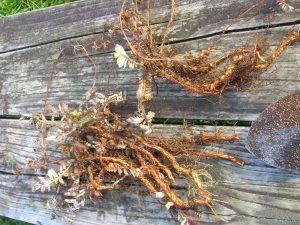
Pacific Silverweed roots. Photo by Radix4roots

Pacific Silverweed also has a lot of things we need. Per 100 grams of steamed roots it has: 132 calories, 3.1 grams of protein, 0.6 grams of fat, 29.5 grams of carbohydrates, 9.5 grams of fiber. No vitamin C reported and barely any Vitamin A, 0.2 RE. The B vitamins are B1(thiamin) 0.01, B2 (riboflavin) 0.01 and B3 (niacin) 2.4 mg. The minerals line up: Phosphorus 109 mg, sodium 65 mg, magnesium 60 mg, calcium 37 mg, iron 3.5 mg, zinc and copper 1.1 mg each, and manganese 0.8 mg. 

One of the problems with the plant is it grows like crazy. But if you’re hungry that’s great. At least 12 native groups in North America considered it a staple. They also ate A. anserina the same way (Silverweed, Common Silverweed and Silver Cinquefoil.) It’s a smaller plant and is found in wet places inland distributed sporadically throughout most of North America except the Old South. 

As for the botanical names… What Argentina means is easy, “silvery.” “Anserina” is Dead Latin for “of the goose” either because it was fed to geese or the plant’s leaf shape reminded someone of a goose foot which is also what “chenopodium” means. In Sweden it is called Goosewort.  Egedii” took me far longer to sort out. But, I had an inspiration one day and found the answer on page 813 of a 72-year old book, Gray’s Manual of Botany, edited by Merritt Fernal. (If you’ve visited my website I’ve mentioned Fernald here and there.) Egedii honors Hans Poulsen Egede (1686 -1758) “the father of Greenland” (or in new Dead Latin, groenlandica.)  

Green Deane’s Itemized Plant Profile

IDENTIFICATION: A low-growing perennial that spreads by creeping stolons. Leaves are pinnately compound, alternating, glossy green with very silver undersides. The five-petaled, five-sepaled flowers remind one of buttercups. 

TIME OF YEAR: Fall

ENVIRONMENT: Beaches, dunes, sand flats, coastal estuaries, high tidal marshes, at or above the mean high tide. (When you consider New Hampshire only has 18.57 miles of coastline that’s quite a feet… feat. If you count every tidal nook and cranny it’s 235 miles.)  

METHOD OF PREPARATION: The roots are always cooked — boiling or roasting — to remove bitterness. They can be dried before or after cooking for storage 

{ 1 comment }

Wood Ears

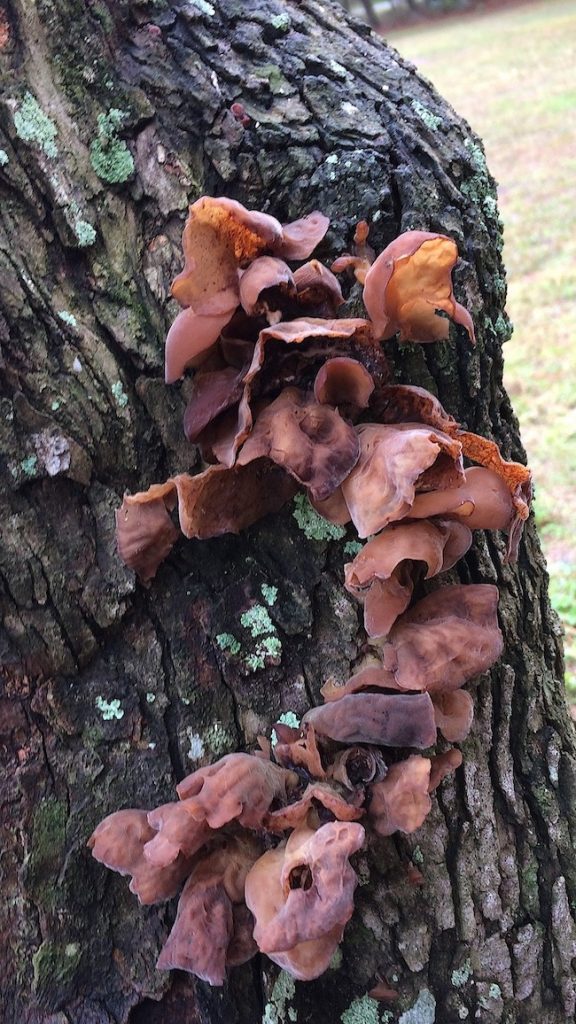
Wood Ears on a dead oak. Photo by Green Deane

Wood Ear Mushrooms, Auricularia auricula, Auricularia polytricha. Also called Cloud Ear, Tree Ear, Black fungus, and Jelly Ear, they are in a group known as Jelly Fungus. These are privately found and used in North America though they are a commercial product in Asia and can be bought. There are several species of Wood Ear and they are all used much the same way and look similar. 

We have two nutritional results for Wood Ears, a commercial one and one from a study. The folks who sell dried Wood Ear say they have per 100 grams dried: 357 calories, 85.71 grams carbohydrates, zero protein, zero fat, 57.1 grams fiber, 38.57 mg iron and 143 mg sodium. The study lab says 208.27 calories, 14.12 grams protein, 3.53 grams fat, 31.77 fiber, 97.39 mg iron, 49.42 sodium, 17.65 RE vitamin A, B1 (thiamin) 0.176 mg, B2 (riboflavin) 0.423 mg, B3 (niacin) 2.50. The macrominerals are 758.95 mg potassium, 293 mg phosphorus, and 250 mg calcium.

As you are more likely to use one ounce dried the breakdown is:  59 calories, 4 grams protein, 1 grams fat, 9 fiber, 27.59 mg iron, 14 sodium, 5 RE vitamin A, B1(thiamin) 0.05 mg, B2 (riboflavin) 0.12 mg, B3 (niacin) 0.71 mg. The macrominerals are 215 mg potassium, 83 mg phosphorus, and 71 mg calcium.

When cooked they are firm and crunchy with a musty flavor if you don’t flavor them. One way to do that is to dehydrate them then rehydrate them in some flavor you want to use such as broth, juice… or bourbon. 

Auricularia auricula  redundantly means Little ear ear. In Asia they are known as Yung ngo, Kikurage, Mokurage, and Aragekikurage. Polytricha means having many hairs. 

Green Deane’s Itemized Plant Profile

IDENTIFICATION: Tough, gelatinous, rubbery, flabby, irregular ear- to cup-shaped fruiting bodies with ribs near the point of attachment. Usually dark brown. Spore print white, fertile surface downward. Single or in clusters.

TIME OF YEAR: Year around and or seasonally depending upon where yo live.  

ENVIRONMENT: On hardwood with bark still in place. I look for them on branches of dead oaks.

METHOD OF PREPARATION: Rinse and remove any tough patches. Used for their chewy texture fresh or dry. Soak dry ones in a flavored liquid you like, add them to whatever you are cooking. They work best with foods you are boiling, stir-frying, or sautéing. Use quickly as they don’t store well.

{ 2 comments }

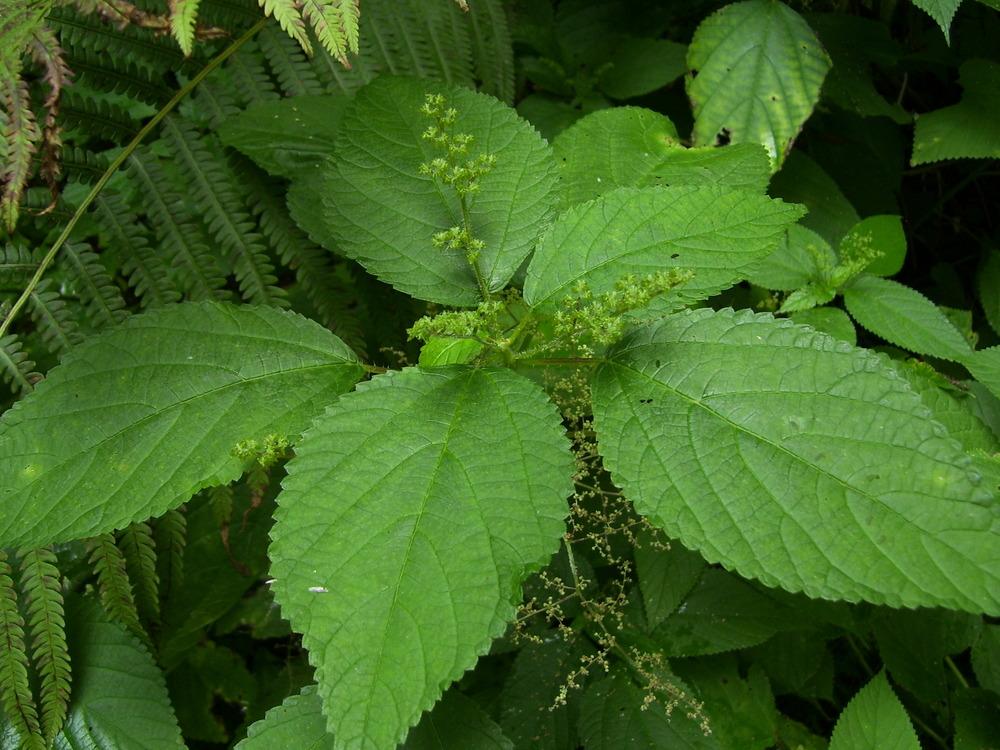
Laporta Canadensis, Canadian Woodnettle, photo by June Ontario.

Laporta canadensis is another plant that gets overlooked because of a famous relative, the Stinging Nettle. Called Canadian Woodnettle this plant also gets confused other plants called “wood nettle.”  So it’s in a relative’s shadow and has an overused common name. To muddy the nomenclature waters Laportea canadensis also used to be called Fleurya canadensis, Urtica canadensis and Urticastrum divaricatum. It got its current botanical bon nom in 1916. More confusingly the genus, Laportea, consists mostly of tropical stinging trees no where near Canada. (For a totally different stinging tree see Chaya.) 
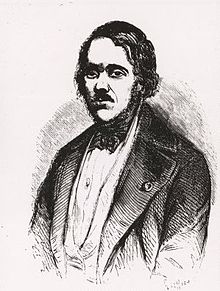
Francois Louis de la Porte

“Laportea” is Dead Latin for “of Laport.” The species was named for Francois Louis de la Porte, the wandering Count of Castelnau. He was a French naturalist born in London who visited North America between 1837 and 1841. An insect specialist, he started in Central Florida and worked his way north to roughly Ontario and Quebec. Then he went to the Amazon area for five years and was in Australia from 1864 to 1877 dying in 1880. He was also big in the bug world. Canadensis means of Canada. The plant is found in the eastern two thirds of North America. Locally it is reported in two western Florida counties, Liberty and Jackson. 

This species can sting mightily. Daniel Austin, author of Florida Ethnobotany, relates about teaching a class and wandering into a patch. He had long pants on so he was in the patch before he got stung. However, students with shorts who followed him actually began crying the sting bit so much. The plant was once used to flog people.
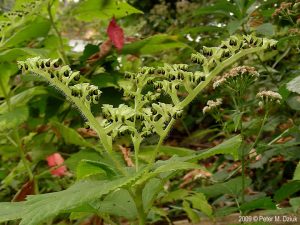
Canadian Woodnettle has distinctive blossoms. Photo by Peter Dziuk.

Although edible the plant has been used far more as fiber being some 50 times stronger than cotton of the same size.  Several tribes also used it medicinally. The Muskogean reported using it as a decoction to lower fever. The Iroquois employed it as a “love potion” and a tea to ease childbirth, the Meskwaki to treat incontinence and as a diuretic (which are actually opposite problems.) The Ojibwa used it for urinary issues. The stinging hairs break upon puncturing the skin and contain histamine-like substances. The Potawatomi ease the rash with juice of the Jewel Weed, the Rappahannock used urine or salt water. 

While the plant is edible published reports are few and it tends to not be in standard texts.  The nutritional value of Laportea canadensis is also generally not known. Most, if not all, internet references borrow nutritional values from its relative, the Stinging Nettle. Stinging Nettles have vitamin A, potassium, magnesium, and calcium. The latter comes in with 481 mg per 100 gram serving. Next is potassium at 334 mg, followed by phosphorus 71 mg and magnesium 57 mg. Vitamin A, as beta carotene, is at 2011 IU.There are traces of zinc, copper, manganese, selenium and some B3 and B6. In micrograms there’s 4178 mcg of the vision twins, Lutein+zeaxathin, and interestingly 498 mcg of Vitamin K, phylloquinone. Again, those values are for the Stinging Nettle. 

Green Deane Itemized Plant Profile

IDENTIFICATION: To four feet tall, branched or unbranching, stems light green covered with white hairs. Lower to middle leaves alternate, upper leaves are opposite, they are to six inches long, four inches wide, medium to dark green, oval to ovate, serrated. Young leaves are densely hairy, and wrinkled, older leaves less hairy. Stems up to four inches long, also covered with stinging hairs. Male and female flowers, greenish white, wind pollenated. Blooms mid- to late summer. While this plant has alternative leaves — the only nettle that does —  the Stinging Nettle, see separate entry, has opposite leaves only.  Do not confuse Canadian woodnettle with the non-stinging Rough Snakeroot, Ageratina altissima (which killed Abraham Lincoln’s mother, Nancy Hanks.) Rough Snakeroot has opposite leaves, where as Canadian Woodnettle has alternating leaves (leaves are in pairs.) Rough Snakeroot does not sting. 

TIME OF YEAR: Whenever there are young leaves (blooms between June and September)

ENVIRONMENT: Likes partial sun to medium shade, moist conditions and loamy soil. If cultivated it makes a good privacy fence. It likes to grow with Maples and Basswood perhaps because of nitrogen and or phosphorus provided by the trees’ leaves. They do not like clay. 

METHOD OF PREPARATION:  Cooked shoots, young tops  and or young leaves. Leaves usually picked before the species blossoms.  After blossoming its tea might be more medicinal. Older plants can be retted for fiber. If peeled the young plant is edible but bitter.  If you rinse the leaves before using dry thoroughly. Leaves can also be dried. Cooking reduces them significantly. My favorite way to prepare Stinging Nettle leaves (Urtica dioica) is to dry them next to a camp fire. That also takes the sting out. 

{ 1 comment }