
Not Edible
While some 93% of plants are not edible this page was created to show some of the more common non- edible plants I am asked about often or have been sent to me to identify. They are listed in botanical alphabetical order. Visit the Green Deane Forum to help get plants identified.
| NOT EDIBLE: Argemone mexicana, the Mexican Poppy, can be yellow or white. Used extensively in herbal applications but not edible. Locally a very limited season, usually winter. | 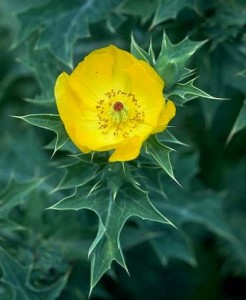 |
| NOT EDIBLE. The Harlequin Glorybower, Clerodendrum Trichotomum, has a very showy calyx. A native of Asia, Clerodendrum means fate tree, referencing questionable medical uses, and trichotomum which means three trunks, which it apparently has often. | 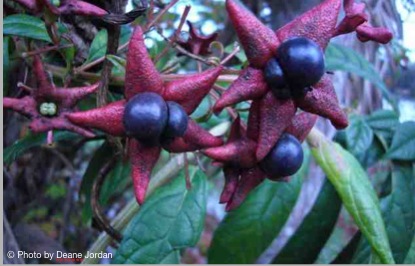 |
| NOT EDIBLE: Crotalaria spectabilis, the rattlebox because of the sound the seeds make in a dry pod. Quite toxic for man and beast. The entire genus is toxic, from little rabbitbells to the rattleboxes. | 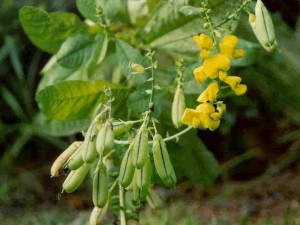 |
| NOT EDIBLE. Cynanchum laeve is also called the Honeyvine. I receive a lot of emails from folks who want to know if this is edible milkweed vine. It is not. The sap can irritate and damage eyes and mucus membranes and if consumed can stop your heart. To read about the edible milk vine, click here. | 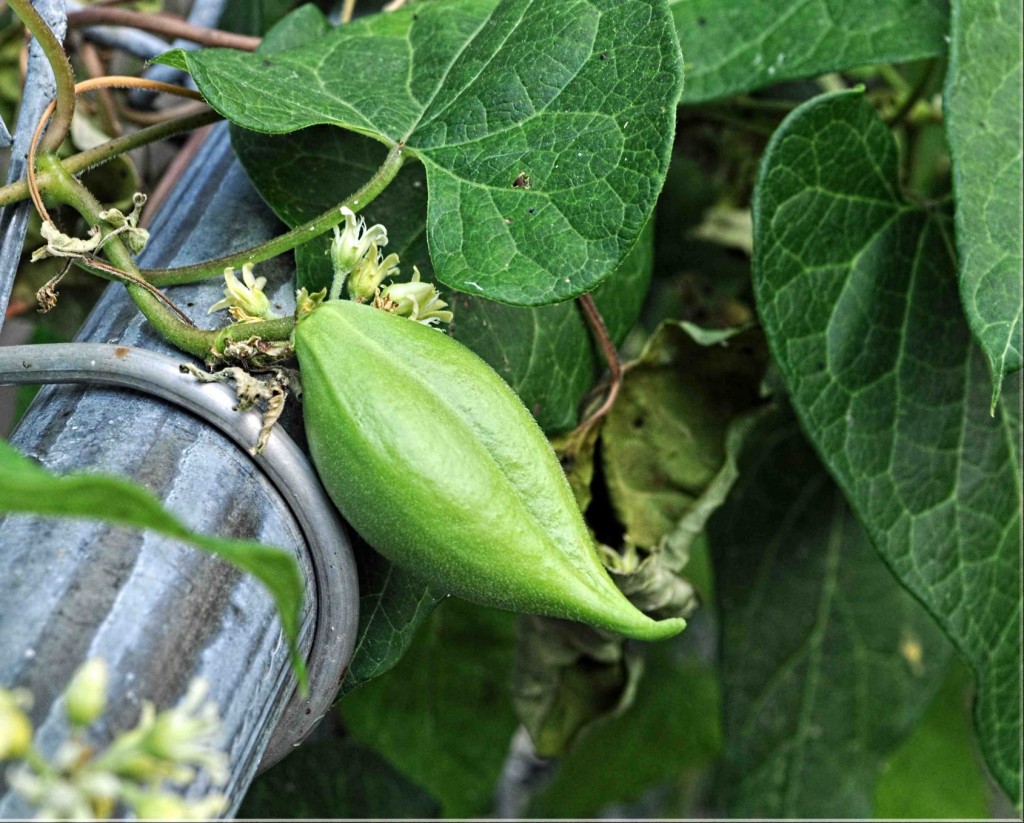 |
| NOT EDIBLE. Fatoua villosa, the mulberry weed, an import on nursery plants, was first noticed in Louisiana in 1964. It is controlled by mulching. It can cause mild itching. Also called the Hairy Crabweed. | 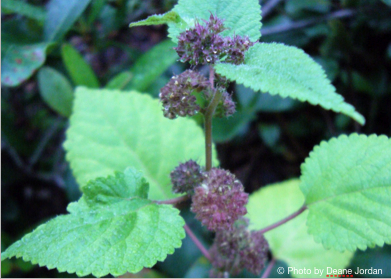 |
| Not Edible: Earth Smoke, or Ground Smoke, Fumaria officinalis. The native of Europe found in most of North America has many medicinal uses beyond the scope of this site. The flowers yield a yellow dye good for coloring wool. | 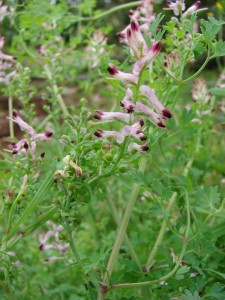 |
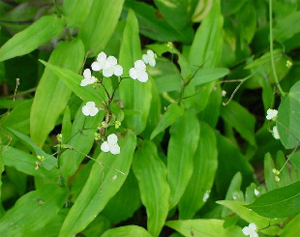
| NOT EDIBLE. Often confused with either a Commelina or a Tradescantia is the Gibasis geniculata, also called the Tahitian Bridal Veil though it is a native of Central America. To read about the Tradescantias click here. |
 |
| NOT EDIBLE: There are many toxic plants and one that causes nearly instant blisters even blindness is Giant Hog Weed, Heracleum mantegazzianum.Highly invasive it can produce 20,000 seeds per plant. Furocoumarins in the sap can cause a skin reaction called phyto-photodermatitis. This causes the skin to be very sensitive to ultraviolet light. It caues swelling and blistering and can lead to permanent scarring. Contact with the eyes can cause temporary or permanent blindness | 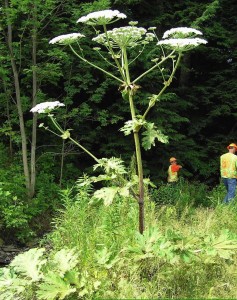 |
| NOT EDIBLE: Ligustrum lucidum, the Waxy or Glossy Privet. While there are not human trials to support this In vitro studies have shown that the fruits of Ligustrum lucidum have antitumor, immunostimulatory, antioxidative, antiviral, antimutagenic, hepatoprotective, and antidiabetic properties. | 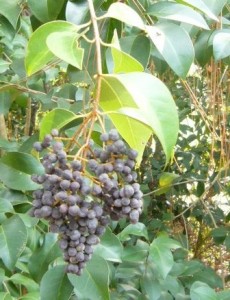 |
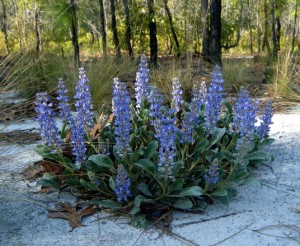
| NOT EDIBLE. Lupinus diffusus, endangered, also called Oak Ridge Lupine, Spreading Lupine, or Skyblue Lupine, grows in dry areas. |
 |
| NOT EDIBLE: Wavyleaf Basket Grass, or Oplismenus hirtellus ssp. undulatifolius. This is a a common ground cover locally usually found in shady areas. Originally from Asia it is found throughout the south. Folks are always wondering what it is. Now you know. | 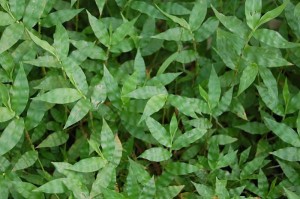 |
| NOT EDIBLE: Phoradendron serotinum, Mistletoe. While Mistletoe has been used in some herbal medications it is generally considered toxic. | 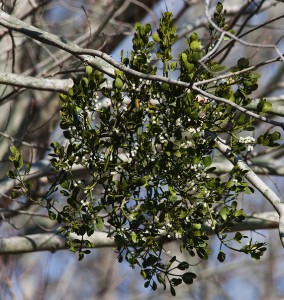 |
| NOT EDIBLE: Ricinus communis, the Castor Bean, is not a bean but it is one of the deadliest plant escaped from cultivation. While there are many species with palmate leaves it has eight radiating leaflets with small teeth. the Castor Bean grows soft-spine fruits with mottled seeds from which the source of the poison ricin. One milligram of ricin can kill and adult. If death has not occurred in 3-5 days, the victim usually recovers. | 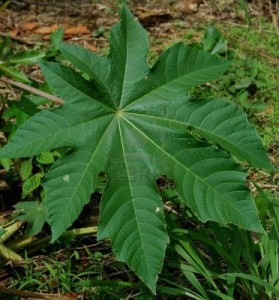 |
| NOT EDIBLE: Salvia cocinnea, the Scarlet Sage. It has several whorls of red flowers that form an interrupted flower spike on a square stem. It’s a showy southern native that has a sage-like aroma and is found in the hot sands of the South. Even a small amount of the blossomed consumed can make you quite ill. The blossom is red for a reason. Leave it alone. | 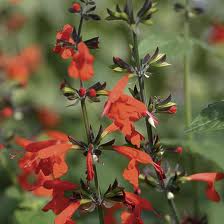 |
| NOT EDIBLE. Butterweed, Senecio glabellus, can from a distance resemble wild mustard or wild radish. On close inspection it does not look like them. The blossoms are not a yellow cross and the leaves are not sandpappery. It is also laced with pyrrolizidine which is an alkoloid that can damage your liver. To read more click here. | 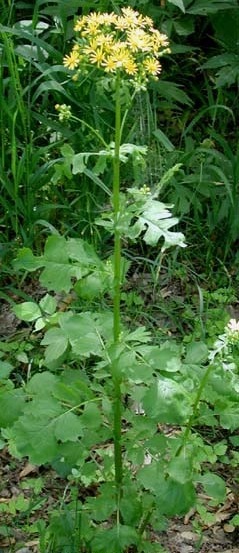 |
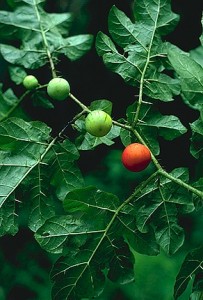
| NOT EDIBLE: Solanum viarum, Solanum ciliatum, Solanum carolinense, all called Tropical Soda Apple or Horse Nettle, the first two turn red when ripe, the latter yellow. They usually start out with mottle green fruit. Some are toxic when green, others more toxic when ripe. Edibility is doubtful, botantical references vague, identification difficult. Best avoided. Of the three ripe S. ciliatum, now called Solanum capsicoides, might not kill you. |
 |
I have not seen any of these except the horse nettle, but we do have lots of the french mulberry growing around here that looks similar to the Fatoua villosa
French mulberry… you mean Callicarpa americana?
Yes… I didn’t know it’s name and just found s but some pictures matching the shrub and found out some call it american beauty berry… It is pretty rampant in the sandy land where I am from, both in the sands of marengo county and the sandy-loamy dirt of dallas county… I have eaten the berries… only 10 or so at a time right off the bush… not much taste to me but a nice treat in small quantities… wouldn’t want to have to live on ’em… some even have it growing in their yard as an ornamental type bush… not sure if that was on purpose or it just came up and they decided to keep it..
I have made jelly with the Callicarpa Americana berries and it was yummy and no one died. 🙂 dont worry I did a lot of research before I tried it. Thanks Green Dean!
Many of us plant this Callicarpia; Beauty Berry as a landscaping plant. It serves a dual purpose; Winter interest with the beautiful berries, and the birds feast on the berries till they are gone. While the berries look good, I never knew them as edible.
One of my botany books lists them as “not food, but interesting to eat”, meaning you aren’t going to get much out of them but they aren’t dangerous.
There might be a difference between the mulberry weed and the mulberry bush.
The bush grows all over Ohio, in parks and on private property. Its more like a small tree, we used to climb up into it as kids and would eat all we could find “that were ripe”.
I feel the reason most never knew about it is because that don’t ship, they’re just to fragile.
Plus you have to get to the tree before the birds do.
Sounds like Russian Mulberry…the fruits are dark purple, with green stems. They make yummy jelly, and are good fresh too. The birds here in CT L-O-V-E love them, and beat us to the fruits most of the time. Then they crap out the seeds eveywhere. The germination success rate is ridiculous…every Spring I have to treat sprouts in the yard with what the Marines call “Extreme Prejudice”!
Groovy To learn:)
oh… and of course, plenty of mistletoe… i received several kisses over the years under mistletoe shot down with a 12 ga shotgun around the holidays
and I absoutely despise privet… it takes over the understories around here… not letting other natural plants grow… i wish it were eradicated as i have been trying to talk my mother into destroying two of hers planted as an ornamental for years… a few seeds already made it to the treeline .. uggg
The overwhelming smell of blooming privet gives me severe headaches, fatigue, and more. But the birds spread it all over with the seeds.
your mom
Hello,
I am truly enjoying reading through your website. Remarkable work!
One question however: I have found listed here many plants as edible that I have never yet seen listed on other reference websites or books (Myosotis sylvatica for one) and some warnings (Hemerocallis/daylilies-thanks for that by-the-way) that I had never encountered. Being that I am keenly interested in landscaping with edible plants as much as possible, I am left a little confused…
Many thanks for all your works!
Thanks for writing. I don’t use websites for information, except for journals that are posted on line or sites hosted by quality organizations.
Great website, as learning about edible wild foods is something I am keen on…you have a depth of botanical knowledge which is rare these does amongst us mere mortals .Just wanted to ask if you are selling a book about your wild food discoveries and such things, I know that a website is great because it can be frequently updated with info, but books are also gooder!
Cheers and Thanks 4 the site, Dave
Brazilian Pepper: I have seen Brazilian Pepper (Shinus terebinthefolia) listed as an ingredient in a dry pepper seasoning mix. When I taste-tested 3-4 berries and spit them out, I later noticed a dime-sized chemical burn on the tip of my “taster” which lasted for several days. Proceed with caution!
Yellow Poplar: (Liriodendron tulipifera) was planted out of range in my NSB front yard several years ago (maybe 20). After last winter’s hard cold I noticed that it bloomed for the first time in the Spring and again in the late fall! Strange! (This tree is going to be entered my BudBurst records this year.)
While I don’t have much experience with Brazilian Pepper, I do know someone who likes it so I don’t think it is really poisonous. I’ve tasted it and the iron-pepper taste stayed in my mouth for a long time. Supposedly you let them get so ripe they dry out and then you put them in a pepper grinder.
I had someone in my class yesterday who said they liked the flavor of the “Brazilian Pepper” and put it on this and that. Then she used a lot one and got quite sick, migrain, throwing up et cetera. I have an article on them.
I have been using dried, ground Brazilian Pepper corns for well over a year as my only pepper. My two kids eat it regularly. We have never gotten burned nor sick from it as far as I know.
A relative of Brazilian Pepper, Peruvian Pepper(Schinus molle), has been used in Mexico- but only the berries-dried and roasted, which is used as a pepper substitute. Ingesting too many peppercorns can cause intestinal inflammation
Salvia elegans (Pineapple sage) has red flowers somewhat similar to Salvia cocinnea but with broad green leaves, grows like a weed under the right conditions and is bitter but quite edible. Fall blooming.
It also has a pineapple scent.
Solanum carolinense:
I licked the inner juice from a ripe, yellow fruit. It tasted awful, but.. no ill effects at that exposure level. The darn thing is prolific though with well over 1000 seeds crammed into each fruit.
Location of plants: Jacksonville, FL – Westside Regional Park, Sal Taylor Preserve, and Equestrian Center woods (all on far west side of town).
There is also a solanum fruit that looks similar know as ground cherry which is quite edible. Just be sure of the difference.
Hi Greene,
Just want to thank you for your wonderful site! I feel so connected to nature by the information you provide. I haven’t received a newsletter from you yet. How often do you send them?
It was every week, then I went twice a month for a month, and now I am trying to go back to weekly. Its a chore but…
I picked several bunches of wild mustard greens from my son’t garden
I assumed they were safe because he has always cultivated the area and it had a few yellow mustard last year. These did not have the flowers opened yet…. I boiled a potful and when I tasted it was real bitter
I changed water but before consumming any more I wanted to check. I see that there is a look alike…senecio glabolus…which is not edible…maybe dangerous…if this is the case can it affect the other produce in his garden Presently there are many bunches growing around strawberry plants
Mustards, no matter where they are in the world have some flower parts that make them definitely mustards. First the blossom is either X-shaped or H-shaped, four petals, six stamen, four long two short.
The senecios have a yellow dandelion-like blossom, and yes they are toxic.
Thank You for telling me what Senecio glabellus is! I have been mowing around it and checking my books but couldn’t find any mention of it. I am glad I don’t eat what I don’t know but this explains why I couldn’t find it in my field guides!! 🙂
Wow ~ I’m so glad to have discoverred your site. I look forward to either a private class, or a group class. Meanwhile, I have what my local extensions office states is earth star; so glad it’s not the death angel. I’m not sure what rigorous process they’d sent it through, but I was told to eradicate it from my yard, and to pull all of my garden veggies from the yard, too, as the toxins could spread it’s spores to the veggies. I’m a bit confused with this, as it’s the death angel that’s so toxic, and I thought the earth angel, and truffles were actually edibles? Clearly, I will not consume anything unless I know for certain what it is, but I’d be so very appreciative to know you’re take on this situation, and by which method I should take to eradicate it? It’s alot of yard here, and I am looking for the simplist and least expensive method. I have fruit trees, too, and am definitely hoping you’ll offer me feedback that the release of the spores won’t be toxic to those, too? These stars or angels… They grow up after rains, atop woods, and release a cyenne pepper like looking powder. They’re are potentially a hundred or so after each rain. Yikes! What do you recommend? Thanks so much for your wisdoms, and I’ll be hoping to plan a class here, and look forward to watching your videos, too. Awesome work ~ thanks for helping make our beautiful planet greener. ~ K. Brown
Sorry, I avoid talking and teaching about mushrooms because of legal liabilities.
Hi Kathleen,
Simon & Schuster’s Guide to Mushrooms, items 362 (Geastrum fimbriatum) and 363 (G. triplex) are both colloquially called “earth star.” Both are listed as inedible or of no interest, because of their texture. No mention is made of them OR their spores being toxic. I would expect extreme toxicity from the Amanita clan (death angel, destroying angel, etc.), including their spores. I used to destroy any I found, when I lived in the mountains in Colorado. In this book, the first 16 mushrooms are Amanita species, nearly all of which are poisonous, many deadly, and the notation is made that many of them actually taste quite good, but some 8-10 (or more) hours later, you wind up deathly ill or dead! Even the ones that are listed as edible come with the warning that they closely resemble toxic species, so it just seems like an entire clan better off being avoided.
The puffballs, on the other hand, are delicious! I have harvested, cleaned, sliced and frozen, or prepared fresh, many puffballs, and the giants are the best – because they’re the biggest! They are also a favorite of assorted bugs (but so are all the edible mushrooms I’ve ever hunted), but the early shroomer gets the shrooms before the bugs have a chance to infest them.
The admonition in some “safe mushrooming” books to avoid ALL mushrooms with gills will cause you to ignore the wonderful Agaricus family – the familiar field mushrooms which you find in the grocery store, both fresh and canned. They are very easy to ID once the cap starts to open and you can see the pale-peach gills which darken to melon, brown and finally black as the cap ages. At the peach to brown-gill stages, the white cap and stem are delicious, with the typical flavor of the store-bought fresh mushrooms.
Get yourself a copy of this book and take it with you – or find someone who has hunted mushrooms safely for years and knows the local edible varieties. In Colorado I was blessed to have a neighbor who did, and she taught me the field mushrooms as well as the edible boletes, which are also superb and can be enormous! I sliced and froze gallons of them one year. Now I live in upstate NY and need to learn the edibles and where to find them, all over again.
Destroying mushrooms to rid an area is as silly as eating all the apples to get rid of the tree. The mushroom is just the “fruit” most of the “body” is either underground or in a host.
I wish I understood why a mushroom toxic or non toxic weighed differently in liabilities than any other of these even deadly plants, which you do not avoid discussions of, but I hope that the presence of such in my yard would not interfere with the opportunity of a personal yard class, in the future. I moved here with the presence of them already existing, and now ~ suddenly, I feel quite vulnerable to this oddity, that I’m sitting on some kind of freakish plane, while my intentions are to seek the most lawful and safest remedy and wisdoms to it’s regard. Please enlighten me with any resources of whom I may turn to for more information on this subject, who won’t shun me in my search to take the most responsible measures. Thank you.
A lot of something that is not edible is… a lot of something that is not edible. I prefer lichen over mushrooms (as a wild edible albeit famine food) because of the 19000 species of lichen perhaps two are bad for you, and of the many more thousand species of mushrooms/fungus some 96% are not good for you. The spread is from nearly no liability to extreme liability. I avoid the issue and sleep well at night. Let those who specialize in mushrooms teach mushrooms.
Well said.
Thank you. I have absolutely no intentions of eating any wild foraged mushrooms by the way. It’s just inquisitive of whether or not my veggies are safe. With no more furthur ado to the discussion of mushrooms, will you still accept a reservation to a personal class here for the six acres of other plants which may be truly edible? I’ve got tons and tons perhaps, of these growing around yhe circumference of my orchard, which I’d been using as a beneficial garden, and to my surprise, I’ve recently discoverred many may be edibles. I’ll still of course, continue contact with the wonderful professionals at the e tensions office for thier services; and am hoping to if not take a personal yard class, host a group class. I do hope that I have not alarmed you ha, to steering clear. I can rake stars up for the class, at least, and not discuss… Mushrooms lol. Anyway… I’ll be awaiting your reply as to how to reserve time and gather details of your costs and scheduling if you would be so kind. Anyway, your videos are amazing, and i plan to continue to learn by these as well as other authors on the subject, and as the extensions office suggested, is to bring to them any plant anyone hopes to consume prior to tasting to be 100% certain of it’s safety. I plan to learn the plants, eg true dandelion, by as many resources as I can find, then bring the one to them which I feel most certain is the one which is edible, not a cousin or look alike, etc., to learn with certainty that I have the understanding of it’s identification. I enjoy cooking and preparation, though it’s so fun and so awesome to k ow that my food is truly, truly, fresh and straight from natures garden. With over 90 videos which I’ve taken note of to the edibles, wow ~ that is an infinite combination of recipes to craft up. Okay… So, thank you very much for taking time out of your busy schedule, and I do hope to learn from you, what’s… That ~ that’s growing in my yard!? Much appreciation, peace, and blessings. Kathleen. =D
May I suggest that one should contact a mushroom expert for mushroom questions. Tradd Cotter and Olga Cotter of Mushroom Mountain have written books on mushrooms and teach on the subject. You can find a great forum with them as administrators on Facebook called SCUMS. They can steer you to the best solutions. No one can specialize in every field.
I also have two mushroom pages on facebook: Southeaster US Mushroom Identification, and, Florida Mushroom Identification Forum.
P.S… I have just today from your videos, recognzed that what I thought were regular trees, might be wild cheery ~ though, I’ll take every precaution first, as they’re not yet in bloom anyway, and wild grapes, which i’d never before thought might be edible. And those nuts ~ that drop of three huge matured trees are acorns, edible for flours. Very fun, if after my continued search I find that there’s not an unedible look alike to those. Beauty berry, plantains, lambsquarters, mustard, cloves and much more, are some other mentions which I will have tons of fun learning “what’s… That ~ really!?”. It’s fun. Just thought I’d share a little on the lighter side. Oh yeah, aha, if you do ever schedule it out for here, Bon appetit! Perhaps some fruits will even be harvesting then, too. Oh, pines and oaks too, and two maple trees ~ if those are maples, and more. No worries if you don’t want to, i’ll keep your videos and other authors and my books and the extensions office at easy access.
Finally… No more… I’ve take. Too much of your time, I do t want to be charged for it, aha. 🙂 Kathleen
Hey green, I was wondering if these mushroom type things were toxic our not, sorry I don’t know the name but as a kid in florida near ocala we used to pick them up and squeeze them and a huge puff of brown dust would come out I’m assuming the dust is its spores, but we used to kickem around and what not I just showed my nephew them and he had fun squeezing the brown dust out,but ive never had any problems touching them and just wanted to hear your knowledge on this little plant, its white and small maybe quarter size, grows in the shade usually and has a small hole in the top of its white dry dome, I’ve only seen them growing directly on the ground no stem or really any roots.is like to know what its name is if you know thank you so much for your website and by the way I don’t eat mushrooms
Hi Josh,
Your mushroom sounds like what we used to call puff balls when I was a kid. Don’t remember squeezing them, but do remember stomping on them & watching the soot fly from them.
A few years back I saw the biggest ones ever in my daughter’s yard in Springfield, Tn. They ranged from size you mentioned to almost as big as my head & firm and snow white in color. I left them be because they were not in the stomping stage. Later I was reding in a mushroom field guide that the puff ball is edible ( think the recipe
suggested was to slice them them, bread them and fry like chicken).
Don’t know how reliable this source is. but their beware was to be sure there was absolutely no semblance of a stem or stalk whatever on any you ate because there was a look alike non edible but it did have varying degrees of stems.
An interesting sidenote to puffballs: When the get to they puff stage, that powder is highly flammable.
Okay, wrapping it up to conclusion then: Plan “b”: i plan to order seeds of wild food foraging varieties, in garden form and labeled, to ensure that what I am discovering in my yard and abroad, is indeed a safe choice, as to not loose precious time in savouring the awesome wonders of delicious natures’ gifts, nutritious, fresh, and a great way to learn thier true identifications, in addition of course, to continuous learning before any outdoor foraging excursions such as the aforementioned plan “a”, saving grace of complexities, and enjoy a genuine and safe, natural wild food harvest.
Many thanks for your inspirations.
Good info! You sure know a lot bout plants!
Can you please advise me if Penstemons are poisenous, particularly Rocky Mountain Penstemon, penstemon strictus? Thanks.
They are listed as non-edible and poor forage for animals.
Great website.! I’ve looked through out the not-edible list and didn’t find the Smilax. I’ve searched a little bit on line and it looks like what we called Zarzaparrilla in Spanish and it’s supposed to have some medicinal applications. Our backyard here at the northwest of Florida is full of that weed and I just wonder if it can be somehow used.
Thanks for your work.
zuly, i love the smilax. On older plants, the young tendrils taste like asparagus. the root can be eaten, though don’t bother with the giant old ones, harvest the young bouncy ball sized roots that are often gwing off of the older roots, or off of runners from those older roots…the giant old roots stay hard as rocks even if you boil them for 24 hrs…i know, i tried….
Thanks for your constant attention to the plants and safety issues surrounding them. The information on privet is correct there are many medicinal uses for ligustricum but probably best left to knowledgeable herbalists, taken together with buffering herbs and other compounds reducing any toxic property. Interestingly, our ‘inkberry’ privet, Foresteria was considered a panacea by native peoples. This plant is actually oleaceae, olive species whose tropical cousins like the privet possess anti viral properties.
Hi–I am just learning to harvest wild from my yard in No. California. I loved your video on Sonchus, of which I have a lot. Am wondering about eating roots, as some of it I need to pull up very young? and flowers?
also, how about scarlet pimpernel? In my brief research, I find conflicting information.
many many thanks, Hallie
To my knowledge the roots of the Sonchus are not eaten. I have no reference to that. As for Angallis arvensis,it is used sparingly in salads and as a cooked green. But it is high in saponins and can be slightly toxic and also cause dermatitis in some people. Externally it is used as a detergent, as a medicine expoectorant, diuretic, cholagogue and laxative. It is a plant to be careful with.
hi, i recently ran across a vine that looks like a cross between solanum americanum and the horse nettle. it has the leaves, flowers ,fruit and fruit placement of americanum but has thorns on it’s leaves. top and bottom. the fruit look like tiny watermelons, if that isn’t what mottled means.
If it is a solanum and looks like little watermelons leave it alone. Whether a “horse nettle” or a “soda apple” they are all usually quite toxic.
Hi Ben,
My aunt showed me a plant that appeared in her yard a few yard a
few years ago and asked if I knew what it was. I didn’t but guessed it to be in the bull nettle family. Recently found what the identification might be in Eastern/CentralMedicinal Plants and Herbs (Steven Foster * James A Duke) page 47. It is tagged “hairy nightshade” or solanum sarrachoroides of the deadly nightshade family. Her volunteer plant had leaves very like watermelon, thorns like the bull nettle family, and globular fruits like the bull nettle family of a near lemon yellow color. Don’t know if they would have changed to black as described for the hairy nightshade or not, since she took my advice, which was, I don’t know what it is but my guess is the bull nettle family and unless you want a blue jillion of the blasted thorny devils next year, pick all its berries and dispose of them where they can’t spread. She promptly picked all of the pretty little round lemon balls off and got rid of them. They do have a medicinal purpose but don’t eat them.
Greetings Green Deane
I surfed across your fabulous site about an hour ago and I’ve been reading ever since. I signed up for your email list and I shall anxiously await your next visit to Port Charlotte FL, so I can attend your lecture! (I live near St Pete Beach)
Becca
I was looking at Lambsquarters/Goosefoot information online and I was shocked to see this Wordpress blog had a picture of a Black Nightshade plant and was saying that it is Lambsquarters. The leaf is somewhat similar in shape but the texture and color are different and the flowers are totally different. Black Nightshade? Scary. Never trust one website to tell you what to eat unless you want to die huh. I wish everyone came here first. This site is excellent and very reliable information. Thank you Dean. By the way, cooked up my first ever meal of Lambsquarters today and it was YUMMY!
I’ve been enjoying your videos and website for a few weeks Dean! Very nice! I’ve gotten back into eating my day lillies, dandelions, bee balm, and adding hosta and clover, purslane, etc., as I learn more. My garden greens production has decreased w/ the summer heat so am checking to see if the virginia creeper leaves are edible since I have lots of it.
Oh dear! I don’t know much but I’ve read that some people break out with a skin rash from exposure to Virginia Creeper. I certainly would never try to eat it. I sincerely hope Dennis didn’t.
I found my second grader eating leaves off some weed in the driveway. She urged me to try some. Because it is probably my fault she had these tendencies, I did. It was sour, green and good! Like sorrel. It was virginia creeper.
I suspect the sour is the oxalic acid. A little bit of this is ok, I think. I like rhubarb for its sour which is the same thing.
Creeper salad for dinner!
Does that mean it is safe? Dunno. If I have to go on dialysis I promise I will pst a followup.
No it is not safe. Don’t eat it. Leave it alone.
After seeing Giant Hog Weed, how would I identify Wild Carrot. They look so much alike.
Among many ways Hogweed is huge, as tall as an adult or more, Carrots are perhaps a little more than knee high.
Wild carrot (Daucus) is also known as Queen Anne’s Lace. But to be on the safe side, skip it. It looks a lot like poison hemlock (Conium) which is growing wild along highways in northern Illinois as does wild carrot. (The carrot seems to prefer dryer sites.) The Giant Hog Weed might be confused with Angelica, water hemlock (Cicuta) or cow parsnip (Heracleum), none of which are healthy for you.
Although Argemone spp. are quite valuable medicinally, its seeds are quite edible. Toasted first their flavor comes out and they make a nice wild replacement for poppy seed in breads and cereals and such.
What evidence do you have for that?
Sorry for the late reply, . . . just noticed your question.
Personal experience and my teacher, the late Michael Moore’s book, Medicinal Plants of the Desert and Canyon West.
Thanks for all the great work you do!
i have questions about some plants that are prolific in m area. Who do I contact with pictures to obtain information on their toxicity.
you are so cool my friend. f only I could shadow you for a year or two.
Toxicity is not my topic but you can post the pictures on the Green Deane Forum on the What Is It page.
“Wavyleaf Basket Grass” So thats what that is lol…
A non-edible lllicium anstum – looks like star anise – tends to grow in Japan. Leave this plant alone.
My husband and friend convinced themselves that butter weed was butterwort and ate several leaves. Both had diarrhea for almost two weeks. I suggest considerable vetting before eating unknown plants. (They agree now but who knows about the next time.)
We have a horse farm in brooksville,fl and our property and adjoining properties are prevalent for soda apple. Is there a proper way to dispose of them, since mowing just spreads the plant? How toxic are these for horses and cows?
I’m enjoying your website!
I don’t know about horses but they think the seeds came to Florida in the tummies of cows from South America!
Hi, does anyone know if there is anything which looks like Jack By The Hedge? I’m pretty sure it’s what is growing up our lane but not 100% and want to make sure there’s nothing similar that’s poisinous before I eat it.
Thanks
Lea
I’ve been reading that Crotalaria longirostrata is used as food in Mexican and Salvadorian cuisine. Wonder if you can find any information in any of your books, rather than just info off the web. TIA!
C. longirostrata is listed in Cornucopia II (page 103) as edible. The young shoots are steamed, leaves a blossoms are also eaten.
You must have a wonderful home library. Thank you so much for taking the time to look into that and sharing your source.
Mr. green, i was ( when i was younger) a bit of a survivalist and took interest in all kinds of edible and medicinal plaints. i used to go out for weeks at a time with a pup tent and a rifle living off the land in the back woods of greensbug Kentucky. i have not been in the backwoods in many years because of my job keeps me traveling. i have developed a bit of a memory problem in my not so younger years. but i do remember studying a type of cherp that grew on limestone rock that was edible,
probably not the most tasty in the woods but did offer some nutrition. i enjoy watching survival shows and picking out potential foods that most will just walk over and not recognise it as food. recently i saw an episode where one walked for miles and could not find anything to eat. but as the cam was panning around i recognized something growing on the rocks that looked like what i remembered as cherp. i may not have the right name with the wrong plaint. i tried looking it up but could not find anything on it or even a picture. would you happen to have any information about this type of edible. it could be a fungus or something else idk. please let me know if it rings a bell. thank you, thurman.
could it be Lichen you are thinking of Thurman?
Here is a link to merriweathers data on lichen.
http://www.foragingtexas.com/2007/07/lichen.html
and here is Green Deans link….
https://www.eattheweeds.com/usnea-food-and-pharmacy-lichen/
The dirt eaters.
“Chert” Gray clay, red clay. Folks in the country would have a mineral deficiency. Both white and black folk. It was very common to see them eat the clay. Very nutritious. Your body seeks out and finds what it needs!
Question…do horseweed and pokeweed look similar? My brotherinlaw picked some poke for my sister and got horseweed mixed in (my husband says they look very similar) and she cooked it all together but now is afraid to eat it. Please reply soon before she runs the risk of eating something poisonous, if it isn’t already too late.
Thanks in advance for the answer.
Betty
No they do not look alike. They are very different. Poke weed has large hairless almost plastic like leaves with little or no aroma. Horseweed has whorls of small long leaves that are fuzzy and have a strong aroma.
Hi Green Dean,
Hi Green Dean,
I was browsing the web trying to find why giant hogweed is called hogweed. My guess was that is was used as a kind of fodder. I didn’t find any mention of this anywhere but i did find that common hogweed (Heracleum sphondylium) was used as animal feed. Probably giant hogweed got its name because it looks a lot like common hogweed. I also found a couple of recipes for common hogweed and was wondering what your thought on the plant and taste are. Do you have the plant in Florida and if so are you going to do a page on common hogweed?
Steven
My site is about edible plants. Hogweed is not edible (by humans.)
I have aloe in my yard which I would like to eat, but am concerned because I once heard that you can’t eat aloe. This aloe grows as a weed in my yard, so I transplanted it to a nicer appearing location, but love it. Since I have so much of it, I’d like to skin it and put it in a smoothie. Will I make my smoothie dangerous or toxic if I do so?
Thanks!
Patty
I just came from the health food store (buying 88% dark chocolate.) There they had gallon jugs of aloe vera juice. I know people consume a little of it. Doesn’t taste too good.
Apparently the yellow and greenish portions of the plant beneath the ‘skin’ of the leaves is responsible for the unpleasant taste: http://www.youtube.com/watch?v=TkGM_xTR8rI
I have tried this method of preparation, and found the remaining clear gelatinous portion to be quite refreshing in flavor.
As always, deeply appreciate your videos and website.
That was without sugar cane juice or any other additive, by the way.
I have just discovered a new plant volunteer in my yard. It is Centratherum punctatum. I can’t find anything written about it’s useful properties. The leaves when squished smell very pleasant. Do you know if this plant is edible or medicinal?
No edible uses that I am aware of. I’m not an herbalist but the plant is not mentioned in any of my books.
I love your knowledge. I have been looking for a good source of edible
Wilds for a long time. My grandmother used to make maypop (passion
Flower cruise jam. However, she is gone and so are the vines she had.
I found the flower in FL recently, but how do I tell if it is the toxic one or
Not? Flowers are the same. ? And there is no fruit yet.
Lynn
Hmmmm… the blossom are not the same.
All passion flowers/may pops smell and taste very similar. I did git sick from may pop jelly at 9 years old- Just ate too much. lol,
Hello Mr Green Dean
I live in West Texas and sometimes I see the mesquit trees growing these long green bean pods I’ve often wondered if they were edible because I see the livestock here eat them but you know you trust eating the same thing animals eat.
We adn various animals have different systems. They can eat things we cannot and we can eat things they cannot.
Hello Deane, Your point about the differences between humans and other animals regarding what is, and is not, edible is well taken.
That said, mesquite is apparently a desirable edible: http://www.desertharvesters.org/mesquite-in-the-kitchen/harvesting-processing/
When I was a kid we spent our summers traveling and camping all over texas, new mexico and arizona and one of our favorite things to do was stop in at the native american run flea markets on the reservations. I can remember buying roasted and salted mesquite beans by the gallon-ziploc bag and gorging myself on them for weeks afterwards. They beat out sunflower seeds by a long shot.
I have Simpson Stoppers in my yard and they are dropping a lot of red berries. A friend once told me that the berries are edible, but I haven’t been able to find any information to confirm that. Are they edible for us humans? I planted the shrubs to attract birds, but they don’t seem to eat the berries.
Read my article on this website. Watch my video on You Tube.
I wanted to know how to contact you about several plants and or berries. I have photos of these and just do not know what they are.
How can I get these to you?
Lastly, can any of the berries of the viburnum shrubs be used?
You can post them on the Green Deane Forum’s UFO page, unidentified flowering objects.
hey green deane there are many plants around where i live and my sister took a chomp out of this strange plant and her mouth started to burn. the plant has large spade leaves, and has a stem that gets larger and splits at the bottom, and grows in bunches, it has large white lily looking flowers. please reply!
One never just eats a wild plant. The symptoms sound like something with calcium oxalates in it. If it’s not a go-to-the-hospital burn try some lime juice to ease the burn. Many ornamentals planted around homes are toxic.
I tell people all plants are edible but some may kill you once eaten. LOL.
Fascinating site, has given me some new edibles to look into. Could you add your reference for /Salvia coccineum/ toxicity?
(I’m not familiar with the botanical literature; is there a good publically-accessible index or do I go through a university library?)
I recently found wild sweet pea growing on the edge of a tree line and a field in seymour indiana curious i picked some pods to identify the plant I determined that I had found wild sweet. I was wondering if this plant is edible or not?
Hi folks from Kiev, Ukraine in Eastern Europe. I am a great forager and have just moved here from New Zealand. I was out near our river and was delighted to find what I initially thought was a big patch of stinging nettles fairly near the water. But they did noy sting. I brought them home and put them in the blender with assorted greenery. To cut a long story short I am still here! but I would like to know what they are. In the Northern winter foraging greenery is going to be scarce..does anyone have any ideas for me? The only stuff that readily springs to mind are pine needles which I wouldd love to experiment with knowing nothing about them. Can they really be juiced and what can be done with the result? Happy foraging Jackie
Post a picture of them on the UFO page of the Green Deane Forum (Unidentified Flowering Objects.)
You say that Waxy Privet is not edible, yet extremely medicinal (in vitro)? So, which is it…or medicinal, toxic or both?
To quote a doctor I know: “Anything can be a poison. What determines a poison is dose vs. time vs. host response.”
Hi Dean,
I attended your course in Winter Park last week with my 2 boys. Thanks so much for starting what I hope is a life long pursuit for my boys. Growing up in Wisconsin I knew of a few edibles but you opened up a whole new world for us.
Hope to see you again soon.
Erik
Sir,
I hope to be cross training into S.E.R.E. Sp. for the Cal. Air National Guard. When I get back state side I hope to pick up your DVD’s, but question, in the DVD’s do you also cover NON-EATABLE plants?
No, 93% of the plant life is not edible which is more than 100,000 species.
I know that the leaves of rhubarb have a high concentration of oxalic acid and that makes them “poisonous” however the stem of the bolting flower was quite tasty – a little tart like the rhubarb leaf stems but not overpowering. I peeled and prepared some as a pie filling/pudding and then a few days later passed a kidney stone. Do you think that my eating the rhubarb flower stem had anything to do with the kidney stone?
It might have been a tipping point. Who knows, I have no credentials in the medical arena. Does your family have a history of calcium kidney stones?
We obviously don’t know enough about plants.
Once I ate over 50 “Rattlebush” Beans, with no adverse effects, as a survival food. I gave them the cautionary poisonous plant test, and it passed. The beans tasted very good. Not even a mild tummy ache or anything. I do not recommend anyone eating them however, as different soils, seasons, age of plant, and unknown sub-species, can affect a plant’s toxicity. As a precaution, I don’t intend to eat any more. 🙂
Plants can have chemicals that take some time to do their damage, the tassel flower is a good example. You can eat it with no apparent problem but if continue to eat it it can kill you.
Hi Deane,
Looks like another website copied your work:
http://myzanestate.com/EdiblePlant/common-edible-plants-in-missouri
Happens a lot… which is why I don’t correct my misspellings… that way I know they copied word for word…
Looks like they copied the pictures too. Shame shame. Is that plagiarism?
Thanks for all the research that you do, Deane. You have helped so many to learn what to eat and what not to eat that lies around us. If there is ever famine for any reason, many of us will now survive/thrive who might have starved had we not known what wild things to eat and how to eat them.
The giant hogweed…is there another plant that is similar? In Pennsylvania, mostly along roads, a plant that looks exactly like this but not as high as the one shown on this website. I know a person who used to pick the flower heads off, stick them I
in water, and she never got blisters, blindness, etc from picking and handling them bare-handed. Or do those symptoms only occur if eaten?
There are many roadside plants that have those umbrella- shaped flower clusters at the tops of their stems, some of them are deadly. To distinguish one from another, examine the entire structure of the plant down to leaf shape, color, presence or absence of fuzz on the stem. If she used the flowers in arrangements, she may have been picking Queen Anne’s Lace. It’s very pretty if viewed without weed prejudice. It’s about waist high, with a fuzzy stem and ferny leaves. Looks and smells like carrot tops.
You need to add poison hemlock. It is easily confused with parsley.
I have a separate full page on that. Type hemlock into the search window.
just want you to know i love your youtube videos!! i noticed you dont make any more videos : ( ? i am new to foraging an i trying to learn as much as i can about wat i can eat an wat i cant.
im surprised you dont have hemlock or water hemlock? foxglove is another killer. do you think will do a video in the future on hemlock?
thanks for your great work, ive learned a lot from you already
If I did a video on hemlock someone would eat it. As it is I do show it on the soldiers creek video and I have a large article about it. Foxglove or the most part is a flower garden plant.
The national arboretum website said Koussa dogwoods have a melon tasting fruit. I have a dogwood that blooms a month later than native dogwoods (same time this harsh spring), and it has fruits that look like the arboretum’s pic of Koussa dogwoods EXCEPT the fruits stand up straight like a candle instead of hanging down. Also they are tasteless instead of tasting like melons. (And they may have made my head swim after putting 3 in mouth to try to get the melon flavor.) Can you enlighten me.
Have you read the articles on dogwood on the site?
I am so thankful for this list of non-edibles!! I have a plant in my yard that just appeared. It was rather pretty so I let it go and kept watching it. When it flowered and started producing fruit, I cut in open and it was full of seeds. I could tell by the color it wasn’t ripe because they got yellower as they ripened. When I cut the ripe one, I compared the seeds to every type seed I have in my cabinets. They looked almost exactly like Quinoa!! (I dump my kitchen and bath water on my outside plants). I looked up how Quinoa grows and realized what I have is not only not Quinoa, but dangerous. It is Solanum Carolinense! Or, horse nettle. Thank you for your awesome website!! JH
Hola from the tropical beaches of Costa Rica, Green Deane. I thoroughly enjoy the knowledge of plants you share with your readers…it so enriches my life. I grew up in North Florida and have always enjoyed wandering around in the woods exploring the flora and fauna. I wish I could attend your upcoming one-day workshop at Florida State College in Jacksonville, but I have been living in Costa Rica for many years now. If you are ever in my area, Guanacaste and would like to explore on our land, just contact me through my website and we will arrange it. We have SO many interesting areas around here to explore and I would love to learn about all the “naturaleza” in my area. Keep the faith and keep up the good work….your readers benefit SO much..!
What does elderberry fruit “smell” like? The berries I collected, (I am very nearly certain are elderberry) smell like “mold”.
They can smell moldy.
Hi Green Deane,
You have mentioned :
“NOT EDIBLE: Ligustrum lucidum, the Waxy or Glossy Privet. While there are not human trials to support this In vitro studies have shown that the fruits of Ligustrum lucidum have antitumor, immunostimulatory, antioxidative, antiviral, antimutagenic, hepatoprotective, and antidiabetic properties.”
Well, will this plant kill ? If not why it’s not use as antidote for cancer ?
Regards,
Carrie
Is there a non edible green bean. My daughter has recently moved to a new home and there are green bean looking plants growing on a fence in her back yard. I thought maybe they were purple hull peas but she said the dark ones are not purple but brown and dried with fuzzy beans inside. I could send a pic for identification if you need one. They definitely are not castor beans
Yes, there are non-edible green beans. Do you have a picture?
maybe strophostyles? They have fuzzy beans…
I found some blue berries with a dark red steam is this berry good to eat or bad
They are probably Virginia Creeper berry which are toxic. Do NOT eat them.
Virginia Creeper sap has calcium oxalate crystals in it. Crush the vines and it gets those horrid tiny crystals into your skin and you’re going to be covered in burning itching welts for weeks. Horrible horrible plants. And that’s not counting how they strangle other plants and trees.
Blue/black berries with dark red stems could also be Pokeweed….also not edible. Another example of fruit that birds love that’s not good for people.
You didn’t mention if the plant you’re asking about is a vine or shrubby.
The juice of ripe pokeberries is edible when cooked and makes excellent jelly (I use 1/4 pokeberry juice with other dark colored juice for each batch). Pokeberry juice has been used by Native Americans for arthritis relief and as a general tonic. Some also use it for wine. Many old timers swallow a whole berry (taking care to not crush seeds) a few times a week for it’s health benefit.
The seeds are poisonous and should be discarded.
i know a very good survival instructor with a video on pokeweed and the berries. He ate 5-8 berries on video and is fine in health.
just do not chew the seeds, swallow the berries whole.
Daryl Patton Alabama Herbologist and Survival school.
Sorry for the plug Dean.
I always recommend your web site and hope to see you one day at a foraging class.
Thanks… Daryl and I exchange emails now and then.
I also have a plant in my yard that looks like that. Come to find out it was nightshade. The inside almost looks like a tomato, except it is purple.
your picture of the NOT EDIBLE: Ligustrum lucidum, the Waxy or Glossy Privet. looks a lot like grapes, so my question would be is there a very good way to tell the difference if you don’t know for sure. Cause I’m sorry but that picture you have looks exactly like the grapes my grandmother had when I was growing up and we ate them all the time with no problems
Look at the seeds. Grape seeds are tear drop shaped.
Hi and thanks for all you do…I enjoyed your fine presentation at Fla herbal conference last year. While looking over the info on wax privet I decided to scan for some articles on the subject. I found 230 pages with appx 20 articles per page covering the broader genus, these are medical model studies not ag centric metrics.. There seem to be several notable effects probably making this a good one for invasives capture / product developments? Enjoy
http://www.ncbi.nlm.nih.gov/pubmed/25522524
http://www.ncbi.nlm.nih.gov/pubmed/25017491
http://www.ncbi.nlm.nih.gov/pubmed/23038995
http://www.ncbi.nlm.nih.gov/pubmed/19833363
In the book, Paradise Lot, the author describes a Crotalaria longirostrata as an edible species. Do you know anything about that?
Cornucopia II on page 103 says: The young shoots are steamed and served whole, the leaves and flowers having been stripped off and eaten separately for their pronounced snap-bean-like flavor. The leaves can be ground with garlic and brushed on bread or added sparingly to white sauce. When added to tamales that are made with butter instead of oil, the flavor combination is said to be unforgettable.
Why might a plant that is not poisonous, and that tastes good, still be classified as “inedible?” One doesn’t usually run across this with berries and fruits, pretty much all of which are classified as either edible or poisonous, regardless of what they taste like. But with foliage, this is quite a different matter. Case in point: There is a native Texas species, now sold as an ornamental throughout the US, called Gaura indheimeri, or “Whirling Butterfly” for its beautiful white or (in a new cultivar) pink blossoms. It is a useful insectiary, but it also has long thin leaves that have a bland but slightly nutty and pleasant taste that would make an excellent salad green, just thick enough to have a bit of a bite, like heavier leaved spinach. The plant is not poisonous to human or animals (according to standard botanical plant databases) but is also listed as being “inedible” pretty much everywhere. I’ve been conducting the traditional edibility test on the plant, and have had not difficulties. So I’m thinking about including this one as a potential food source in my permaculture gardens as a multi-use plant.
Is there anything that I am missing that I should be considering? Why the “inedible” label? Does that just mean that no one in modern agriculture has thought of considering it as a food source? Or is there something else at work here? (By the way, the plant also has no traditional medicinal applications – I already considered that possibility…)
As I wrote elsewher ethere can be many reasons why a plant can be non-toxic but inedible. They can be woody, fibrous, tough, lousy taste, very bitter, horrible texture, or does not respond to various ways of cooking… things like that. And… it can take up stuff which makes the adult plant non-edible whereas young plants might be. Another possibility is that it has a chemical or two that over time can cause problems if eaten regularly but appears fine if you eat it rarely. Also the roots of Gaura paravifolia — Velvetweed — were stewed or roasted and eaten by the Navajo.
The hog weed, we call it pushki (or wild celery)where I’m from (alaska) and the local’s love to eat it. You have to be careful when picking it and boil it before eating but it is a popular dish there. It’s not uncommon to see little children with scars around there mouths or on their hands from where they tried to eat it without adult supervision. Perhaps not worth the risk most places but on the Aleutians where there are less edible greens to eat it makes sense.
Isn’t castor bean the one that produces castor oil? I know of many people who have used the oil as a laxative without harm. So, how could it be poisonous? I enjoy reading your presentation. Very informative.
The toxin is processed out of the oil before it is allowed for human use.
Castor beans are the source of ricin poison.
Waxy or glossy privet. Not edible, but the description shows many positive and no negative effects…?
I have no literature on its edibility nor do I know anyone who has tried it. Thus it stays off the edible list.
I have been told long ago that if in the wild or lost in the wilderness you can tell if certain plants berries etc are edible or not by observing the birds and other wildlife. In other words if they consume it you can too……true or false
ABSOLUTELY FALSE. Whoever told you that did not know what they were talking about. Deer can eat poison ivy, squirrels can eat strychnine, chickens can eat arsenic, turtles can eat mushrooms that would kill us. Humans can eat avocados and most other living things can’t.
There are turtles, eastern box turtle is one, that eats poisonous mushrooms. It nearly wiped out an entire tribe of native American Indians. This has been said before, ‘If you cannot positively identify something, do not touch it, do not eat any part of it.’ Unless you want to join millions of dead folks who have done the same thing in the past, learn or die!
I think I mention that aspect on my page on edible turtles (for which I get monthly hate mail.)
Tina! Please don’t ever eat what the wildlife eats! Reference books and cross reference, then cross reference again! Take foraging classes.
Squirrels and other rodents eat the deadly amanita mushrooms. Among other poisonous fungi, plants, berries etc.
I’ve been gathering mushrooms for 45 years and I’m only confident about eating 7-10 species.
Be safe, not dead!
I think we saw a whole patch of those rattleboxes over at Riverbend Park. They were everywhere!
Tina, BIRDS eat poison ivy berries… Don’t watch birds! Don’t copy them at all.
There are more edible plants than we think. 93% not edible? HUH?
There’s no “huh” involved. Seven percent of 135,000 species is a lot of species.
I dont know whether thhis is angelica or not. If it is not Angelica, then what is it? It grows by and in ditches in south Louisiana. Thanks!!!
You might be describing deadly water hemlock.
Castor Bean plant: Every time I read about the castor bean I remember my mom ordering the seeds for this plant. We lived in upstate South Carolina. This would have been in the late 1950’s, they grew as tall as our house. Now I wonder if they were actually castor beans because none of us got sick or died. I remember picking the seed pods which had the soft sticky points on the pods. Is there another plant that could have been confused with what my mom ordered.
Did you eat them? Or just touch them?
Mosquito plants, look just like Castor Bean and grow very tall, even in 1 season. Even seeds look similar.
The ricin is pretty much confined to the outer skin of the very hard seed, and is water-soluble. The oil was used in ancient times as an emollient, and today as a biodiesel, in anti-fungal creams… and the oil is widely processed and used as a cheaper substitute for cocoa butter in candy. The seeds are drilled and used as beads, sling-shot ammo by kids, etc. and are generally not considered to be a contact hazard. But why have something around that is potentially so deadly? And attractive to kids…
Wow, I have some of that Castor Plant in my garden (well actually growing from my neighbours garden into mine). Should I remove it, or just manage it?
The Castor Bean plant is great for ridding mes in the yard also
The flowers of your Giant Hogweed look a lot like Wild Carrot or even Yarrow. How do you tell them apart?
It doesn’t matter if you can tell the difference, they are both bad, but i believe the flower for wild carrots always has 1 black dot in the middle but the other plant doesnt
This page of non-edibles is very useful, thank you.
In Southern part of India, especially in Tamil Nadu, most people will eat leaves of Solanum viarum, Solanum ciliatum, Solanum carolinense, which is useful for Cold (Flu) treatment.
What is it called in Tamil/Hindi/Sanskrit, if you know?
Much appreciated page. My Dr and I have been trying to figure out the blisters I’ve been getting recently. I’d thought chemical burns (decorating) she thought stress. Neither of us thought phyto-dermatitis from the hogweed that grows around the wild raspberries I’ve been collecting.
I only came here for a wine recipe!
Thank you for your hard work.
I love fried squash and pumpkin blossoms. I have a volunteer mellon growing in my garden and wondered if the flowers were edible. I haven”t found anyone that has tried them.
What about sickle pod senna? In some books it is poisonous, but according to others, the seeds and leaves have been used as food and medicine
Hi There,
I saw on another website that Jasmine Polyanthum flowers were edible too.
Do you know if this is true?
I have had trouble finding the plants of the offinale variety but I can find the polyanthum ones. It’s important that it is defiantly edible as we sell the edible flowers. I would hate to give people the wrong sort.
Regards Kelly Porter
I do not have any reference that says Jasminum Polyanthum blossoms are edible. Thus I would presume they are not edible.
We grow two varieties of Jasmine, for fragrance alone, Confederate Jasmine, and Carolina Jasmine – I once decided to taste the buds, and while the yellow didn’t taste horrible, it did not have the mouth-popping flavor that I got when I tried our heirloom roses (those make great rose-petal ice cream!) so I called it a no-go, and the white, which smells almosts intoxicatingly sweet, like a confectionery shop on a warm day, as soon as I bit into the flower, my tongue went numb.
So no, I’d say steer clear of jasmine flowers in general – it turns out “jasmine rice” is flavored/fragranced with something else entirely. *shrugs*.
Hi, Jasmine rice is named after the lustre of the grains, which is said to be like the sheen on a jasmine flower. It has nothing to do with the flavour.
Carolina jasmine, gelsemium sempervirens, can be fatal. This one has yellow flowers. Trachelospermum jasminoides, called Confederate Jasmine is a member of the Oleander family. Has white flowers.
Salvinia molesta. Is it edible in any way shape or form? One of those invasive species we’re having problems with. I found a study where they fed it to chickens, but that’s all I got.
No reference I have says it’s edible.
I enjoyed reading your article but you should have included the area where they can be found, I don’t recognize much here that might grow in the mid west to east coast
Stating geographically where plants grow, or do not, is a monumental task that borders on impossible. Plants that grow everywhere — wild mustard for example — is easy. Plants that grow in one area are easy, such as the Yellow Anise along the St. Johns Rive in Florida. Other plants can be spread far and wide, in 2000 counties, or five states, or 56 countries… it’s a staggering amount of information and research.
Yellow anise has a much larger range than the St Johns River. I had a 20 foot tall specimen growing beside my house in Summerville, South Carolina.
That is where it is native. It has been shipped around as an ornamental.
I have several of the plants and I am in Kansas, the belly button of the US. A couple are use in flower gardens, the rest grow wild especially near our wooded and watery areas.
Thank you so very much! Your website is so helpful.
I love your website! Plz keep posting newsletters.
Hi, mr. Dean,
I just started this May 2016, getting into herbs. I’ve dryed, grinned, hung, flat dryed. It’s been real fun for me. I’m having the time of my life. I’ve read a lot and studied a lot and I’m finding that it’s never ending learning.. There is an amazingly wide veriety of herbs. I’m mostly interested in the medicinall herbs. I feel so fortunate to land on your sight. Thank you for being so direct and informational…. The pics are great too. Thanks again, Linda.
Does anyone know about the Dessert Rock Rose? Is it edible? I was thinking about using it to add color to my plate , no sure. Thanks!
My neighbor is growing a vine that produces fruit that looks like tiny watermelons but if not picked turns red. What is it?
My guess would be Ivy Gourd, Coccinia grandis. I have an article on the plant.
I’m embarrassed to ask but it’s important; does anyone know what will happen to a human who eats 6-10 flowers of the Showy Crotalaria aka Rattlebox? Any info or reference will help. ?
Yes and it depends on how much consumed. The plant contains some pyrrolizidine alkaloids which clog up small veins in your liver. A little might might not be noticed. A lot will be or consumption of small amounts over time can cause the same problems. Too much at once or consumption over time can lead to death of the liver and death of the liver owner.
I have a book about Seminole Indian Medicine and wrote in collaboration with a knowledgeable Seminole woman . They use rattle box as medicine . I will find out for sure but I do believe its the root as well . Typical of most Native medicine they will collect 4 roots mixed with other plants and (people please dont confuse my quotes with advice) then drank.
Medicine not food for thought
Green Deane:
Regarding Crotalaria and your statement that the entire genus is toxic. I have learned of at least one that is eaten in small amounts – Crotalaria longirostrata aka Long Beak Rattlebox. My neighbors from Guatemala grow this and I was able to harvest some seeds for a trial grow-out; they call it Chipilín. (Not brave enough to eat it yet!) Link with photos and informaiton:
http://garden.org/plants/view/200032/Chipilin-Crotalaria-longirostrata/
Here is a link which lists a few other Crotalaria that are edible in some societies. http://www.leafforlife.org/PAGES/CROTALAR.HTM
Keep up the good work!
Is Sage Silverado really an edible sage? I got one from Lowes today on discount. I would like to know if the leaves are edible. I can find nothing about it on the internet.
Sage Silverado is a cultivar of Leucophyllum frutescens which is not a sage but in the figwort family. Leucophyllum frutescens is generally considered not edible. However, a medicinal tea has been made from its leaves.
I am glad to find a name for something I grew up eating. I saw it growing wild here in Tennessee and harvested some to cook, then went bak to get the dried seedpods and scattered them in my backyard so I do not have to go far to forage for it hahaha.
Though you classified it as inedible, the honeyvine is quite a sought after wild vegetable back home (rural Philippines). I remember going to the woods with my mother to look for them. We used bamboo poles to pick the green seedpods which we cooked in a brothy soup> usually mixed in with other vegetables like moringa leaves. The honeyvine seedpods are best when still tender as the outer skin can get fibrous and the inside develops a coarse lining as it matures.
My sister who married into a family who was from another region also tells me that in their community, the flowers were also cooked as a dish.
The problem is they could be two different species, one edible and one not. They are in very different areas of the world.
Yeah, like the “confusion” between paddy straw mushrooms in Thai/Lao and Amanita in North America. Amanita poisoning results in immediate need for liver transplant. Most poisoning is experienced by Thai/Lao immigrants who believe the Amanita to be safe to eat.
Hi Mr Deane, do you know if Callisia repens, creeping inch plant, is edible or useful for anything? Doesn’t look like you can kill it. It’s popping up in different parts of the garden and some I weeded still looks as fresh as the day it was pulled after some weeks sitting in a bucket on the veranda.
Kind regards
Triny
P.S. I like your website. Many thanks. I write articles on weeds for a local community newspaper and sometimes I quote you.
I do not have any information on that species. However, I would be careful in that many plant in the genus or related to it have calcium oxalates which can irritate the skin, but the mouth, and damage the kidneys.
Thank you for the information.
How about feeding the Callisia repens to crickets and then eating the crickets? Would calcium oxalates “break down” in the insect metabolism?
Cheers,
Tim
I don’t think so. It is a common trait among insects to eat toxic plants to make them toxic or distasteful.
Now i can take a test so i can learn more about the herbs
Assuming I were in a survival situation, would wildlife killed with a Ricin compound be safe to eat given proper preparation? It wasn’t until I read this article that I realized how common the plants are in my area. I would like to avoid such a method if I had to hunt, but there’s no harm in considering options.
Hi. My husband and I have been mushroom foragers for some time as we have easy access to two exceptionally easy to identify and delicious varieties. That led to stumbling upon others and then learning to identify those. For the last couple of years, we have been branching out into greenery and berries. We go slowly and always I.T.E.M.ize. You are my favorite youtuber, and I would love to see more videos if you find the time and initiative to produce any. I hope to attend a class with you one day and meet you in person. Thank you for all that you do. 🙂
I have a question about a weed, it grows in southern Alberta here and but i need an email to sen you a photo. If i could send it, i’m trying to decide if i want to tea this weed and it’s root
Thank you
Paul
You can send it to GreenDeane@gmail.com
I’m doing a web search for a Botany course, and would like to know where , in Central Florida,I suppose, you are based. Love this site!
Marty
I don’t know of any botany courses in the are outside college majors. I hold classes in identifying wild edibles, not exactly botany.
I’m curious about your reply stating stating that identifying wild plants is not exactly botany. Botany is, by definition, the study of plants, including the region and habitats in which they grow, their flower parts, their distribution, their economic importance which would relate to both their prevalence as a food and/or a medicinal source, and their classification in relation to other plants. It seems to me that all these areas of study are used either to find and identify wild edibles or to decide whether or not to eat or use them personally or to sell them. Though botany can also encompass very broad study such as computer modeling or detailed aspects of plant study involving lab work which resemble nothing in the wild edibles area, I’m wondering why you think identifying wild edibles is not botany?
Thanks for writing. Let’s compare foraging to playing music. You can play professionally without studying music or with studying music. You can forage for wild food without a degree in botany or with a degree in botany. Just as in music the more you study botany the more specialized you become. Most, indeed, nearly all the people who get a degree in botany would starve in the woods. In my 60 years of foraging I have met only three PhDs in botany that had any interest in wild food. Most either teach in schools or work in agriculture killing edible weeds. A tiny fraction of botanists go into ornamentals. I have met many top-notch musicians who could not read a note and I have known at least two people with masters degrees in piano would could not play even Happy Birthday without the music. By far nearly all the knowledgeable people I have met in the wild food area has no formal training in it.
Where can I get a copy of the WWII study on using cattails to feed the army?
Hi Deane, the Giant Hog Weed looks a lot like Queen Anne’s Lace. How similar do they look?
Queen Anne’s Lace (wild carrot) is about 2-3′ high with small delicate leaves, while Giant Hog Weed is +4-6′ high with massive wide leaves. They are not similar at all.
I’ve been cutting down a bone that my mother told me was a weed with poisonous red berries. I’m not sure how to upload a picture nor did I know the name of it. The leaves look like grape cone leaves. Any ideas?
Is the Callisia fragrans plant edible?
Thanks so much!
Donna
Not that I know of but they have been used medicinally.
Thanks for this page! Very important info. When i was in an ayurvedic clinic in India, they used Castor bean as a purgative for body purification. Don’t know the dosage, if you say it’s so poisonous maybe they were using other parts of the plant, not seeds?
The toxins are filtered out.
OMG!!!
In my ignorance I’ve been keeping and protecting the rattle box on my land ?
Because of its beauty. I’ve been taking pictures and pictures… sunset, rain drops insects on it… I even brought the rattle inside and everyone played with it and seeds went all over the floor…
How dangerous this plant is?
It is extremely prolific here.
Should I try to eliminate? Or is it enough to leave it alone?
I’ve read similar plant and name used as edible for its fiber content and starches…
Give me some light here, please.
At least where to look for clarification since your page is mainly about edibles I understand if I should look somewhere else. Thanks
From my research it looks like Lupines may be edible if prepared properly. There are some species that have been bred to have fewer of the toxic alkaloids but people eating them goes way back before that and it seems in europe the bitter ones may even be preferred. The key is preparation. Preparation seems kind of similar to olives and acorns. Does anyone have more information on the subject?
Just found a plant bordering an area of cypress wetland that looked a lot like Brazilian pepper (but the leaves weren’t as narrow and the bark was totally different – lighter in color – reminded me of florida holly – but it didn’t have holly leaves. Do you know what this is and if it is poisonous? Thank you! I have photos as well if you have a way for me to send.
Brazilian Pepper was sold as Florida Holly.
Hello there .
what I think is a Neolentinus ponderosus , a flat oyster mushroom shape mushroom that I found on my property growing on a pile of wood chips after yesterday’s surprised rain sprinkler, your help in exact identification would be appreciated , how can I send you a picture off it for possible identification ,?
thank you and have a very nice day