
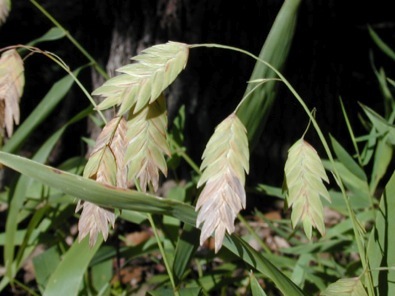
Oats worthy of sowing
Chasmanthium latifolium: Edible Wood Oats
Most people discover Wood Oats by mistake. They’re traipsing through the forest, come across a plant, and wonder “What are Sea Oats doing here?”
Wood Oats look very similar to Sea Oats except shorter, growing two to five feet tall, not three to eight. They are used the same way as Sea Oats, after windowed as a grain for cereal or ground for flour. Neither plant, however, is a true oat. They are also no longer in the same family, per se. They were both Uniolas but now Wood Oats are a Chasmanthium. Sea Oats (see separate entry) are still Uniola paniculata but some are moving it, too, into the Chasmanthium clan. Think of it as a botanical warlette.
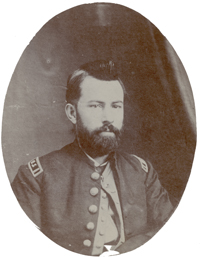
Edward Palmer (1831-1911)
Wood Oats are native to southeastern North America. They grows in rich woods, along streams, rivers, and in flood plains. They’re a common ground cover in bottomland forests, sometimes growing in colonies. They do not grow near the sea. Wood Oats are found from Arizona to Florida, north to Pennsylvania, west to Michigan, then southwestward through Iowa, Nebraska, and Oklahoma. Additionally a relative that was thought extinct, now called Distichlis palmeri, is being raised for commercial grain use in Australia. It was a staple of the Cocopah Indians in the desert southwest of the United States. The species named after plant explorer Edward Palmer not to be confused with Ernest Jesse Palmer who also had a lot of plants named after him.
Botanically, Wood Oats are Chasmanthium latifolium (kas-MAN-thee-um lat-ah-FOL-ee-um) which means “gaping flower fat leaf.” Chasme and athner are Greek for “gaping” and “flower.” Latifolium is Dead Latin for fat leaf. The plant used to be Uniola latifolium. Chasmanthium latifolium and Uniola paniculata have so many common names I made the decision to call them by where they grow, Wood Oats because they grow in woods, and Sea Oats because they grow by the sea. It makes things a lot easier to remember. Perhaps Distichlis palmeri should be called Desert Oats.
Should you like the flavor and want to grow your own, Wood Oats are easy to raise. Give them moist soil, plenty of sun, and stand back. There are about six Chasmanthium species in the eastern and central United States and northern Mexico. Three alone in Texas. Wood Oats are the only species under cultivation and none of the other Chasmanthiums look like Wood Oats (excluding Uniolas.) One should also note there are no toxic native grass seeds in North America but be on the look out for ergot infection and some toxic non-native grasses. Ergot manifests itself as a fungus spur on the seed head ranging in colors from black to pink to green.
Lastly,the Wood Oats’ leaves are a host plant for Linda’s Roadside Skipper, Amblyscirtes linda.
Green Deane’s “Itemized” Plant Profile
IDENTIFICATION: A perennial, clump-forming grass, wide leaves, nodding clusters of flat, oat-like seed heads, two to five feet, clump spread two or more feet, leaves are about one inch to eight inches long, flat, terminating in a sharp point. Leaves has distinct cross veining. Flowers flat clusters, spikelets, to two inches long, one wide, spikelets hang on thread-like stems in loose, open panicles above the leaves. Leaves and flower heads turn tan in autumn, reddish-bronze winter.
TIME OF YEAR: Blooms summer to fall, seeds summer to fall. Spikelets turn from green to tan to bronze
ENVIRONMENT: Moist but not water logged soil, full sun, will tolerate some shade.
METHOD OF PREPARATION: Winnowed grain as cereal or ground to make flour.

Thank you for this information. We have a beautiful bush of Tx Wild Oats. We borrowed some seeds from our State Park, and now have a large bush. I plan on using this falls seeds to make bread. Really enjoy your site.
Joanne, I would love to hear about how it worked! Were you able to harvest a decent amount of grain from the plant? How did it taste? Was it difficult to winnow?
when i take my dogs walking, they search this plant out and gorge on the leaves. is there something in it that they need? some say it is because they are wormy but i worm them regularly and check their stools. im thinking it is for roughage for certain vitamins they are lacking. any ideas?
Yes, Bob, my dogs do the same thing. There is a forest full of Inland Sea Oats at the Spring Creek Forest Preserve in Garland, Texas and munching on the spring shoots is at the top of the list for my dogs. It is not because they are wormy. Natural grass is a critical source of roughage for all dogs including wolves and coyotes. Think of it as lettuce. They need it daily so I have planted some in my backyard. Too bad it dies back in the fall.
Cool, I have harvested some of these Wild Wood Oats here in southeast Texas and I was wondering how to make flour with these. So when I saw you said they need to be winnowed I was Like “WHAT?!” and I found this neat video……
http://www.youtube.com/watch?v=oDr8VF2QIPM