
 As many of you already know I am highly critical of the Internet as a source of information on foraging. This is not to say there isn’t quality information available, there is. Journals, universities, research groups, dedicated institutions and credible individuals do a good job of bringing foragers good information. It is home-grown sites where most of the nonsense gets proliferated to the point that those of us who are deeply involved in this endeavor spend a lot of time debunking myths. Personally I have given up on Wikipedia. It is so wrong on foraging so often that it is a serious threat to a forager’s health.
Some of the myths are understandable, some of them are just plain ignorant. But they highlight what I see as the one of the main problems of the Internet: It is not self-correcting. I am not saying books are error free because they are not. But published errors tend to get corrected and certainly are not as proliferated as much as those on the Internet. I can think of several immediately:
Myth 1: Pine needle tea causes abortions.
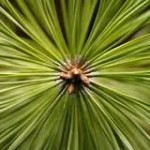
Pine Needles
The basis for this rumor is a veterinary study decades ago. If you are a cow and you eat many pounds of Ponderosa Pine needles you have a 5 to 8 percent chance out of 100 of having an abortion or still-birth. If you boil a huge amount of pine needles in water for hours down to a small amount of gross liquid and you drink it, then maybe it would cause an abortion. A few needles soaked in hot water is no threat to anyone except for possible allergies. Here’s what famous forager Euell Gibbons had to say: “When I was a boy we used to eat ponderosa pine for pleasure . . . called it “slivers”. In the spring the bark is really gorged with starches and sugars and tastes quite sweet. It’s also high in vitamins.”
Myth 2: The arils around the seeds of the bitter gourd (Momordica charantia) are toxic to children.
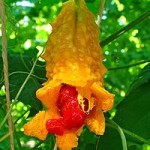
Bitter Gourd
This started with one website that provided no evidence. I have no idea where this came from because there is nothing in the literature or the history of this plant to suggest that. Professor Julia Morton, who wrote extensively about edible and toxic plants, never mentions any problems with the aril and children. Indeed, the aril is nearly all lycopene. Hard to see how that is life threatening. I knew a nursing mother who ate them with no effect on her or her child. The fruit, however, is toxic to dogs.
Myth 3: Eating old stinging nettles will give you kidney stones.
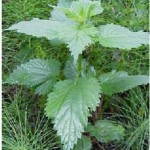
Stinging Nettles
They will give you a tired jaw but not kidney stones. The older nettles have cystoliths (Greek for cavity stones) which are clumps of calcium carbonate in the membranes of the nettles. Because they are “liths’ some took that to mean they can cause kidney stones and why one should not eat old nettles. The research shows just the opposite of the rumor, that intake of calcium carbonate decreases the chance of kidney stones.
Myth 4: Tiger Lily pollen makes people sick.
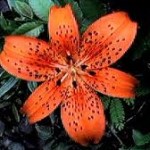
Tiger Lily
This one is rife on the Internet. It is absolutely absent from published sources prior to this century. Even books on poison fail to mention this whereas books published before 2000 say the pollen is quite edible. There is no research that shows tiger Lily pollen is toxic to humans. In fact, I know a well-known international expert who eats it. I know because I asked him. More controversial, however, all parts of the plant can be fatal to cats. If they lick the pollen off their fur it can cause kidney failure. Modern research has questioned this assertion
Myth 5 & 6: If a bird or an animal can eat it you can.
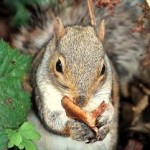
Squirrel eating a mushroom
Among the many shortcuts I hear these have to be the most common. I have raised both chickens and squirrels and happen to know some about them. Arsenic is a disease preventative in chickens meaning birds can eat arsenic. Squirrels can eat a mushroom laced strychnine whereas a small part of it would kill us. Land turtles can eat mushroom that kill humans (and can pass on those toxins.) Poison Ivy is a high protein food for deer. Enough said.
Myth 7: Only Tuberous Begonias are edible
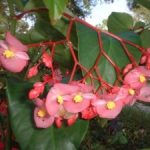
Wax Begonia
This one did start with a published source but the moment the Internet was invented this myth became institutionalized on the Internet. In fact I wrote to the main proliferator of this myth and provided research that it was not true. Indeed, I eat wax begonia leaves often and make them into delicious tartlets (the recipe is in the article.) If they ain’t edible they’ve had more than a decade to let me know and haven’t so far.
The Least Credible Is The Most Credible?
Not too long ago I was commissioned to do some research on who believed the Internet versus actual accuracy among the various popular media. Newspapers still came out on top as the most accurate, the Internet the least. Yet, those under 40 viewed the Internet as the most credible of all media. Therein lies the rub, the least credible media is considered by part of the population as the most credible.
Personally, I would not bet my life on it.
Hi!
Interesting article! I have foulnd lots of conflicting info on the Internet and am concerned about not publishing something that could harm anyone on my own site.
Just a couple of questions: First, I knew Begonia flowers were edible, but didn’t know about the leaves. Great to know about Waxes. How about the leaves and flowers of Rex types? Second, are the roots of typical hybrid Cannas like ‘Tropicana’ edible, or only C. edulis? I tried to research this, but there seems to be confusion about whether C. edulis and C. indica are the same, and whether both are edible, and whether the hybrids are actually C. indica or some other non-edible Cannas. I am trying to establish a back garden of mostly edibles and would like some foliage colors other than green and brown.
Thanks for your expertise!
All begonias above ground are to my knowledge edible, as are most canna roots. The problem with canna is they get woody quickly.
Thanks for confirmation on the nettles, especially! What do you think about oxalic acid?
Also curious to know your opinion on the accuracy/inaccuracy of Plants for a Future database (pfaf.org)
Thanks Green Deane, you rock!!
Always seek a second source. PFAF has some poor material in it.
I’ve personally witnessed (and encouraged) both of my young children eating the arils around momordica seeds. They love them, as do I. This is, just, such an intersting hobby. Made so much more possible by the teachings of Deane.
Thank You for your debunking of Ponderosa Pine Needle Tea being poisionus. I made some this mourning, and I liked it enough to consider it as a alternative to coffee. I also have it in abundance, as I live in the Sierras and a short walk out my door and wha-la.
“Voila”!
Thanks so much! I’ve tried to do similarly with plants toxic to livestock, goats in particular, as the same problems exist… the most popular sites repeat some myths, and you didn’t mention but I’m sure its the same problem, most don’t distinguish between those that will kill you and those that will just give you a tummy ache, they all wind up on the same “toxic” list. Thanks for a good example of a way to start addressing this more publically than just on the goat and farming lists that I mostly post on and the classes I teach.
I personally avoided being pumped full of chemotherapy drugs to terminate a pregnancy that turned out to be non viable. I drank pine needle tea and within 24 hours I started my period and the fetus was flushed from my system.
I don’t see this as a negative side effect. I am so grateful to have had an alternative to invasive medication.
I read about making tea from stinging nettles and the benefit. I took all the precaution about being stung. My plants have literally grown 3-4 feet tall. I pulled them up and took them to the basement to hang to dry. I crushed the leaves when dry (using gloves of course) and attempt to drink the tea. I’m sipping right now slowly as I read your site. Do nettles grow quite tall as these could be? I left my husband a note on the counter that just in case he finds me dead, it was the “nettle” tea.
Hello Green Deane! Thankyou so much for all your posts. Do you have Foraging Books that you recommend? Thanks also for letting us know PFAF is not always a reliable source. I travel a lot and would like to have more hardcopies that are trusted sources rather than just the internet.
There are some books but it really depends on where you are or will be.
Thank you for the info on Pinus ponderosa! I figured that one was false, and I’d certainly trust you to debunk that one. Side question: are there any species in the Pinaceae family which have toxic needles, seeds, or bark? Thanks!
Not that I know of.
Trying to look up yellow star thistle. can i eat them or medical or??? Please help. there is nothing i can find on them Except there invasive.
Thank you for your time.