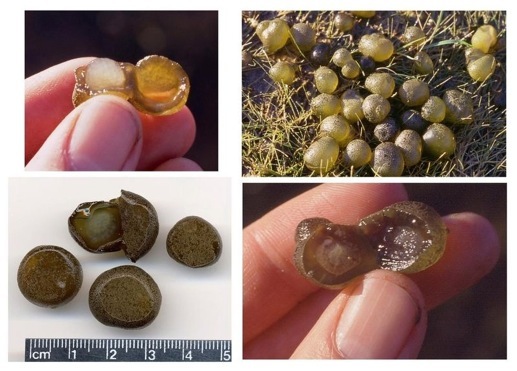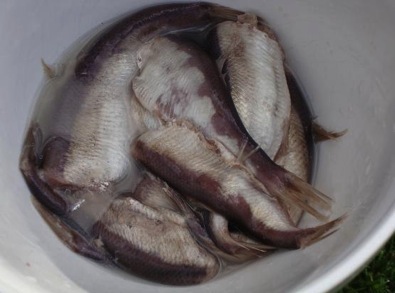
Intentionally rotted herring, surstromming

Fish Sauce, Rotten Meat, and Other Garbage

There was a great scene from an episode of Barney Miller, a popular sitcom in the 70’s based in a police quadroom. Sgt. Wojohowitz — Polish — is passing Sgt. Nick Yamana — Japanese — who is eating his lunch with chops sticks. Wojohowitz looks at what Yamana is eating and says it smells like garbage.

“Garbage?” replies Yamana. “That’s an ancient Chinese delicacy… it’s got fish heads, cabbage leaves, carrot peels, radish roots…[he pauses]… come to think of it, it IS garbage!”

Hunger no doubt drove ancient man to eat rotten food. But being the animal that he is, man also developed a taste for the same. Amongst northern latitude natives a wide variety of foods were buried to make them rot. The answer to “why” is different flavors and textures, nutritional changes and sometimes preservation. Fish heads and eggs, beaver tails, seal flippers, whale blubber, sharks et cetera were all subject to rotting when they could have been prepared more conventional  ways.  (See “Eggs.” )  Where I grew up many a deer taken in hunting season was hung from a tree for a few weeks to “season.” And some folks felt a pheasant was not good to eat until it was hung by the neck until the body dropped off from rotting.

Cheese is perhaps the best represented example of rotted food in modern society. Saurkraut is also well known. Kimchi, buried for months, is popular in the orient. Rotted fish, such as Surstromming (Herring) or Hakarl (shark) is not widely consumed.

Canned anchovies, which taste far different than fresh anchovies, are the best example of semi-rotted fish still consumed widely. They are, for example, the major flavoring in Pasta Puttanesca, disintegrating and disappearing completely in the dish.  Their preserving process gives them a particular flavor, one that goes back thousands of years.

Fish sauces range from ancient Roman recipes to Asian fish sauces to Worcestershire Sauce. What? You didn’t know Worcestershire Sauce is a fish sauce based on anchovies? Now you do. Worcestershire Sauce  is modern version of a very old sauce called Garum. Here’s a Roman recipe:

“Take small fatty fish (for example, sardines) and a well-sealed container with a 26-35 quart capacity. Add dried, aromatic herbs possessing a strong flavor, such as dill, coriander, fennel, celery, mint, oregano, and others, making a layer on the bottom of the container; then put down a layer of fish (if small, leave them whole, if large, use pieces) and over this, add a layer of salt two fingers high. Repeat these layers until the container is filled. Let it rest for seven days in the sun. Then mix the sauce daily for 20 days. After that, it becomes a liquid.”

Here is a second one:

Chop small fish into tiny pieces. Add fish eggs and the entrails of sardines and sprats. Beat together until they become an even pulp. Set the mixture in the sun to ferment (rot) beating occasionally.  Wait six weeks or until evaporation has reduce the liquid content of the pulp. Drain the pulp (called liquamen)  into the jars. Use sparingly. It is strong in taste and flavor.

The above is for primitive purposes. Here are a couple of modern versions.

JOSEP MERCADER’S “GARUM

560 g black olives, stones removed.
16 anchovy fillets, soaked in water for 1 hour and patted dry
1 hard-boiled egg yolk
90 g capers
1 clove garlic, finely chopped
1 teaspoon grainy mustard
1 tablespoon fresh parsley, finely chopped
1 tablespoon fresh marjoram, finely chopped
1 tablespoon fresh rosemary, finely chopped
1 tablespoon fresh thyme, finely chopped
1 teaspoon white pepper
60 ml olive oil

Mix all ingredients together in blender or food processor until light and fluffy. Puree the mixture in a food mill or push it through a sieve with a wooden spoon. Return to the blender or food processor and process briefly to obtain a smooth paste. Refrigerate.

Note: Do not substitute fresh herbs with dry as they will not puree properly, either omit, experiment with other fresh herbs, or increase the amounts of parsley.

 Quick Garum.

Cook a quart of grape juice, reducing it to one-tenth its original volume. Dilute two tablespoons of anchovy paste in the concentrated juice and mix in a pinch of oregano. (From A Taste of Ancient Rome.)

Perhaps I am being a stickler here but I have a hard time calling the intentional rotting of meat “fermentation.” Fermenting is usually the process of changing carbohydrates into something else, usually alcohol as in beer and wine or tartness as in yogurt and curdled milk. Rotting meat is the break down of proteins. There is no doubt that “fermented” sounds better than “rotting” and no doubt they are altering the original food. But, as a consumer I think we need to know the difference between the two.  Often. however, in some commercial operations a starch or a sugar is added to the meat so that bacteria can actually consume the added carbohydrates, which technically is “fermenting.” The reason for doing this, past flavor, is to insure a rapid growth of good bacteria which then reduces or shuts out the growth of bad bacteria.

Interestingly, the biggest health problem with rotting foods today is using modern utensils rather than doing it the way the ancients did. North America Indians who use plastic bags and glass containers to rot fish eggs or beaver tails rather than a grass-lined hole in the ground in the forest have suffered fatal cases of botulism. They also rot foods at a warmer temperature than in the past prompting botulism. Meats should be rotted below 40F or better 37F. You want to avoid growing botulism. It’s toxin is powerful. One gram can kill 1.5 million people.

There are several ways to inhibit the growth of botulism and subsequent toxin. High acid content (pH lower than 4.6 and use vinegar stronger than 4%) high sugar content (more than 50%) high salt content (7% or more)  high alcohol content, dehydration, and or refrigeration below 37F. You may ask how does one get temperatures below 37F long ago? The answer is the natives would rot these foods at the end of the harvest season, usually in the fall when in that part of the world winter was coming and temperatures dropping. Also, the permafrost was … ah… permanent frost so that helped a lot as well.

We have so many choices in food and flavor today that it is difficult to convey the diet of hunter gatherers. They had few spices and the menu just didn’t change much. You would have the same thing to eat for months at a time. Thus any change was welcomed, and that included rotted foods.  The point of this article is those little fish and cleaned bits you might toss away can be made into a condiment, one you might find tasty if you do it right.

The word “botulism” comes from the Dead Latin word Botulus which means sausage. The disease was called “botulism” because it was first reported in Wildbad, Germany  in 1793.  Thirteen people ate blood sausage there and got botulism. Six died. Incidentally there is the “Handbook of Fermented Meat and Poultry” by Fidel Toldra. A scholarly book for professionals, at last check it was selling for $240.
{ 5 comments }

Mole Crabs

Over looked seafood

Emerita: Mole Crab Munchy Crunchies

Mole crabs are probably the most common ugly food there is, though most people don’t know they’re edible.

Fishermen view the mole crab as great bait for such fish as pompano, red drum and kingfish.  Sea birds find them a tasty morsel. Rakes are sold to specifically dig them out of the swash zone where they hide in the sand snagging little bits of food floating by. Not too many folks, though, also eat the bait. The main reason is they are small, but, big flavors can come in small packages. I have a video on Mole Crabs and Coquina here  and an article on Coquina  here.

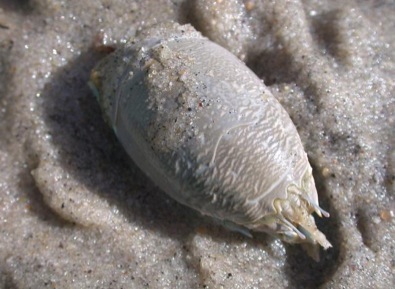
Mole crabs, also called the Atlantic Sand Crab, are certainly among the smallest of crabs. They are oval, usually some shade of beige, darker on top, lighter on bottom, and have five pairs of legs but no pincers. The females grow to about an inch long and the males half that size.  On the east coast of the Americas lives the Emerita talpoida (above) and the on the west coast E. analoga. Emerita is latin for retired female professor. Talpoida is from the Latin root “talpus” and classical Latin word “talpa “ which came from the longer Greek word of tiflopodikas. It means “mole” and very apt because these little crustaceans are quick diggers.  They dig into the sand butt first and face the incoming waves. Brave little beasts but they don’t want to be washed higher up the beach. When the wave recedes they pop up slightly to catch food in the outflow. Analoga means similar but slightly different. There are several species of Emerita and to my knowledge all edible.

Among the more interesting features of the mole crab is that some of them are bioluminescent when handled at night. Also, they eat bits of Portuguese Man of War tentacles. They wrap the loose tentacle around a leg like yarn and nibble away. While I have read of no warning it might not be wise to eat mole crab when there has been large seasonal numbers of those stinging jelly fish around. Incidentally, the mole crab is fastidious. It uses antenna to clean itself.

So, how do you eat them? Many ways but raw is not one of them. While most sea food is safe they can harbor parasites. Best to avoid any complications by cooking them. They are prepared three or four different ways.

One is to simply drop them into hot, deep oil and fry. When they float they are done and  just pop them in, shell and all (I eat shrimp shells and find them delicious.)   A second way is to pull off their small tail, which takes some of their digestive system with it, squeeze them to get more digestion out, wash them, and then fry them as is or in a batter.  Another way is to cover them whole (or cleaned) with fresh water and bring to a boil and boil for about 20 minutes. Then put them and the broth in a large container and mash the mole crabs with a potato masher or the like. Then filter that liquid and use as a basis for various soups. (One similarly cooks coquina — minus the mashing — and just uses the broth.) When you cook mole crabs they turn red just like crabs and lobsters do and you will detect the definite aroma of seafood.

In southeast Asia they are deep fried then dipped in honey. In Brazil, where they are called Tatui (Emerita brasiliensis) there are many ways to prepare them. The simplest is to just fry them whole in a little butter. Another way is to boil them until red and then toss them in a pan with oil, salt and pepper. After stirring to coat flour is added to coat and cook. Then they are arranged on the plate in a whole with the seasoned flour on top.  Natives also eat the roe raw off the large female3s.

The easiest time to dig them up in just before low tide or just after the low tide has turned and is coming in. They are found usually only on sandy beaches where the waves break. If you train your eye you will learn to see two little antenna popping up as the mole crabs senses the pressure of an incoming wave, and then disappearing as the wave recedes. You will also find them in the same spot as coquina who also use the wave action for food.

MOLE CRAB CHOWDER

1 to 2 pounds of live mole crabs

2 cups of water

2 to 3 red onions, chopped

1 tablespoon vegetable oil

1 tablespoon butter

½ teaspoon parsley, minced

2 to 4 more cups of water

1 cup noodles, rice, or potatoes, not cooked

flour or toasted wheat flour

Steam the crabs in a covered pan with 2 cups of water until they are tender, about 20 minutes. Remove from the stove and, with the crabs still in the broth, mash thoroughly with a potato masher. Strain through cheesecloth, retaining the broth and discarding the crabs. Next, fry the onions to a golden color in the oil and butter, and mix with the broth in a saucepan. Add the parsley and two cups of broth. Heat the broth and add either the noodles, rice, or potatoes. Remember to add sufficient water to cook the quantity of ingredient you add. The broth and chowder may also be thickened.

{ 39 comments }

Sauteed Mole Crickets

Mole Crickets: Digging Your Lunch

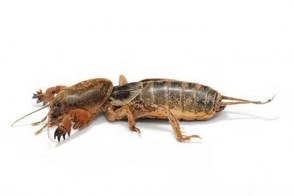
Nearly everyone knows crickets are edible — cooked — but few ever mention the ugliest of them all, the mole cricket.

Ugly good eats

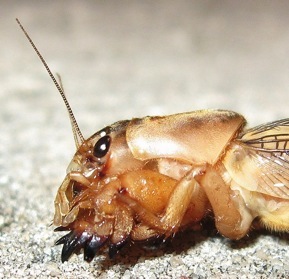
More crickets have a face only mothers could live. Designed like a shrew for digging, they live most of their lives in your lawn eating roots and killing grass. You can either look at that as a blight upon your personal putting green, or, where dinner awaits.

As many of my readers know I am not a fan of lawns. They are not green and are costly. Those who like decapitated grass spend hundreds — got that? — hundred of millions of dollars to get rid of mole crickets from their lawn. Can you say frying pan?

Locally there are three mole crickets, an inoffensive native and two imports. The imports  — Scapteriscus boellii and Scateriscus vicinus — hopped ship from South America about a century ago and landed in Brunswick, Georgia, the epicenter of mole cricket-dom. From there it was a brave new world. They live to eat.

There is a bit of debate about the mole cricket. Some say it is just a vegetarian and death on just grass. Others, perhaps with some green rehabilitation in mind, say they eat some grubs and just ain’t all that bad. It’s a matter of perspective. If we didn’t have lawns — the second largest crop in America after corn — mole crickets wouldn’t mean much except perhaps pass the hot sauce.

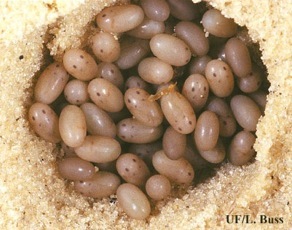
Mole cricket eggs

I’ve always found mole crickets just by rummage around infected areas of a lawn. You can stomp your feet to scare them out of their burrows and/or dig a little. They also like damp spoil and bright lights at night, look around patios and sidewalks. Mole crickets are also lousy jumpers and flyers so easy to catch that way as well.  But wear light gloves. They bite. They don’t break the skin, it really doesn’t hurt, but it is a distraction. Put them in a deep bucket. Put the bucket in the frig to cool them off. Rinse, pat dry, now you are ready to cook. Here opinions vary again.

In the Philippines where they are called Kamaro and are a sought- after delicacy, cooking styles range greatly, though there are a couple of themes. Some like to stir-fry them without any oil or flavoring, preferring a taste they give off that way, slightly like liver. Once cooked you can eat them totally but most folks prefer to take off claws, legs and wings.

Next comes cooking them in oil with garlic. Then  oil, garlic and onions.  Not to be outdone there is also oil, garlic, onions and vinegar. Some like to flavor them with soy sauce and vinegar. However oil for frying and soy sauce for flavor seems to be the most common restaurant way of serving them. Vinegar on the side.

Mole crickets bite

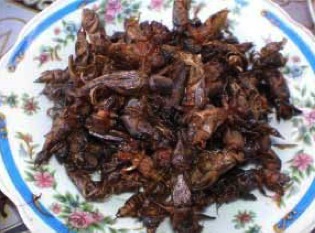
To make the classic dish of Kamaro boil them in vinegar and garlic. Drain, remove legs, wings, claws et cetera, then saute the bodies in oil, chopped onion and tomatoes until they are chocolate brown. They go very well with cold beer. They’re crispy on the outside, moist in the middle. If you like a scratchy texture, leave the wings, legs and claws on.

A second common recipe takes slightly different approach. Numb them, remove the scratchy parts, then saute in garlic and onions with soy sauce, vinegar and hot pepper. Option; Add coconut milk to thicken the sauce.

In the Philippines mole crickets are seasonal and many people check with their favorite restaurant first to make sure they are available before deciding to eat there. Five ounces of mole crickets  have 28% of the daily protein you need and 74% of the calories, according to a 2008 study.

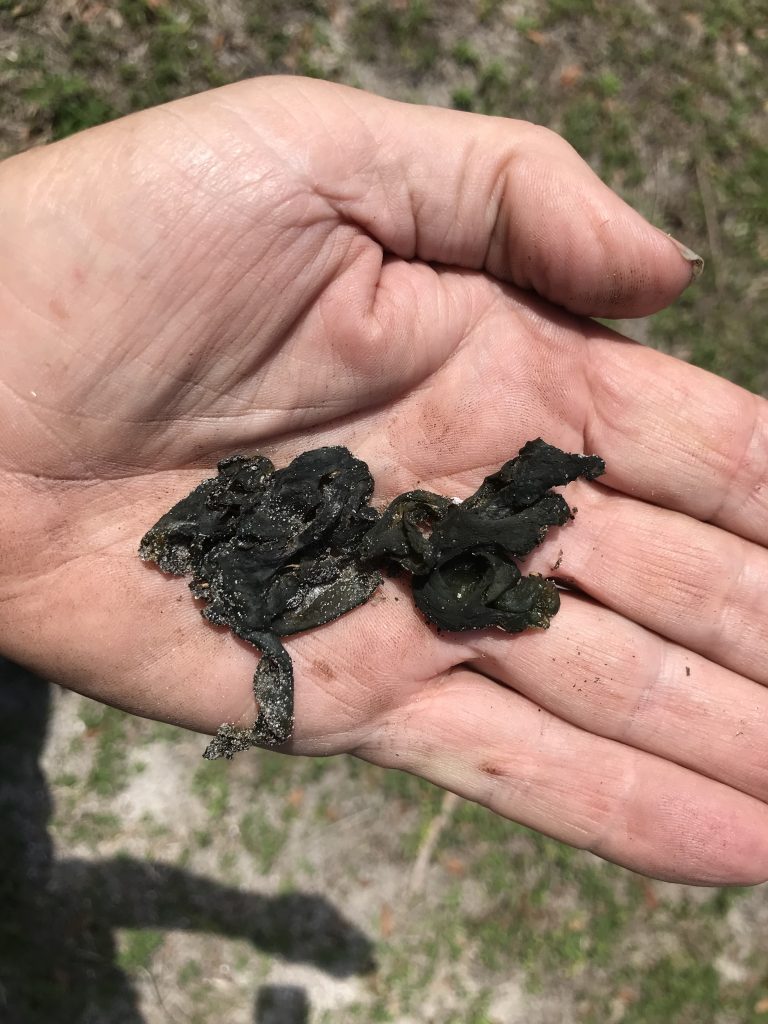
To the right is evidence of mole crickets in the grass. Above that are young nymphs, and over that eggs. Notice the four dots? The same adult mole cricket will have those four dots on its back.


{ 5 comments }

Nostoc Num Nums

Is Nostoc a no-no? Photo by Green Deane

Nostoc: Nasal Nostalgia and Edible, Too

My website is “Eat The Weeds and other things, too.” Well, this one of those other things. While I have put seaweed in the mainstream index, I thought best to put Nostoc in the “other edibles” index. Green slime shaped like marbles takes a little getting used to. (Read the concerns in the comments below the article) 

Nostoc is a freshwater bacterium in the Blue-Green family. This is important: NEVER eat any alga that is blueish-green in color. It can kill you. Nostoc is bright green, despite the family association. If you visually have a green blue color problem, this is a family to stay away from.

Nostoc marbles are made up of nostic filaments. The spheres are uniform size and usually green or olive green in color. Again void any blue-green ones.  The filaments are long and held together by firm mucilage. They form colonies often marble size but also as big as a baseball. They can also be leaf- or hair-like. They are used like other algae or sea weed but not without some controversy.
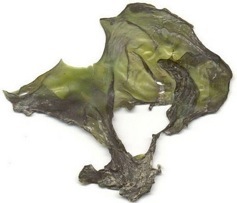
Nostoc has been eaten in Asia for thousands of years — is an essential ingredient in traditional bird-nest soup — but a recent study asserted it could contribute to Alzheimer’s Disease. Containing protein and vitamin C, N. flagelliforme and N. commune are eaten in China, Japan and Java, N. commune is served in the Andes. The preferred species in Central Asia is N. ellipsosporum. Dried Nostoc can be purchased in most Asian groceries, should you want a test taste run.

The aforementioned research team from the Chinese University of Hong Kong said “fat choy” (Nostoc flagelliforme) has no nutritional value and contains Beta-methylamino L-alanine (BMAA), a toxic amino acid that could affect the normal nerve cell function. Professor Chan King-ming said eating fat choy could lead to degenerative diseases such as Alzheimer’s, Parkinson’s, and dementia. A 2008 study in Peru also found BMAAS, now you have both sides of the food, eaten but potentially toxic or toxic.

While I have found Nostoc many times my main objection to it is I have not found it in wholesome water or soil. It has not so much been the Nostoc I don’t like as the environments I’ve found it in. I think mountain streams and meadows could be different. Among the known edible Nostoc are N. commune var flagelliforme, N. parmelioides (edule) N. ellipsosporum, N. verrucosum and N. pruniforme.  Dehydrated Nostoc is black but it can rehydrate quickly after storms and the like and appear to have grown seemingly overnight. This made those in the Middle Age think it fell overnight from the stars or planets. It wasn’t until 1727 that it was figured out that Nostoc wasn’t extraterrestrial and showed up around the roots of grasses after a lot of rain.

The genus name, Nostoc, was coined by “Paracelsus” which is a story unto itself. Auroleus Phillipus Theostratus Bombastus von Hohenheim, who later called himself “Paracelsus,” was born in Switzerland in 1493. He was the son of a well-known physician. Paracelsus became a physician, alchemist, professor and a heretic of much fame and controversy. He studied mineralogy, medicine, surgery, physics, astrology and chemistry, was a teacher by the time he was 16 and generally irritated the establishment with his intellect and ideas. Doctors often denounced him an impostor and his quick death in 1541 suggests someone got fed up with his arrogance and knocked him off.  Controversial to say the least it was said of him he “cured the incurable, gave sight to the blind, cleansed the leper, and even raised the dead, and whose memory could turn aside the plague.” He also gave zinc its name and was the first to describe tuberculosis as a disease of the lungs. His motto was “alterius non sit qui suus esse potest” which means “let no man that can belong to himself be of another.”
He is quoted as writing: “Nostoch … pollution of some plethoricall and wanton Star, or rather excrement blown from the nostrills of some rheumantick planet…. Nostoch understandeth the nocturnall.” “Nostoch” is a play on two words, one English and one German, each associated with nostril  and “extracellular polysaccharide (the stuff that comes out of your nose.) Nostryle was the English contributor of NOST and Nasenloch contributed the OCH, shorten today to OC. Paracelsus likened Nostoc to nose dribble and named it accordingly. I should add if it gets too much light it can smell like ammonia. Not all are palatable. One noxious version is Pwdre Ser (yes that is spelled correctly.) It is Welsh and means “rot of the stars.” The Chinese view of Nostoc is very different.

The Chinese know (Nostoc flagelliforme) as Fat Choy, Black Moss and Black Hair. When dried, it has the appearance of black hair. Because of that its name in Chinese means “hair vegetable.” This sounds the same as a Cantonese saying meaning “struck it rich” or “Kung hei fat choi” which is often proclaimed during the Chinese New Year. So Fat Choy is a popular ingredient in dishes used for the Chinese New Year. Its texture which is like very fine vermicelli. Because over harvesting has caused erosion the Chinese government has limited collection which has increased prices. To find use look for “fat choy recipes” on the internet.  See recipe below.

 Green Deane’s Itemizing Plant Profile

IDENTIFICATION: A jelly like green mass , spheres from the size of marble to baseballs.

TIME OF YEAR: Any time but usually warm weather after rain

ENVIRONMENT: In fields after it rains, especially among grass, bottoms of lakes or springs, on moist rocks, rarely on ice bergs.

METHOD OF PREPARATION: Dry, them use as is or as a thickener

Oysters and Nostoc

1 Chinese lettuce

1 Iceberg lettuce

8 jumbo oysters

2 Tablespoons vegetable oil

8 black mushrooms, soaked in water

1/2 pound black hair seaweed (fat choy)

1/3 cup chicken stock

2 tablespoons oyster sauce

1 Tablespoon sesame oil

1/4 Teaspoon salt  (optional to taste)

1 Teaspoon sugar

1 Teaspoon cornstarch

1 Tablespoon water

Soak the Fat Choy for a few minutes in warm water before you begin and drain on paper towels before you add to the wok.  Remove enough lettuce leaves from the two kinds of lettuce to line a large serving dish.  Place lettuce leaves quickly in hot seasoned water. You want to soften the lettuce and blanch it, but not cook it. Remove and line the serving dish with the leaves.  Poach oysters in the same water until about halfway cooked (quick – about 30 to 45 seconds).  Remove the oysters from the water.  Heat a Chinese wok or large frying pan and quickly saute the oysters with vegetable oil. Stir in the black mushrooms, pre-soaked fat choy, chicken stock and oyster sauce. Cook for a few minutes until the mushrooms are soft. Season the sauce with sesame oil, salt and sugar. Thoroughly mix cornstarch and water until it forms a paste. While stirring, add the cornstarch mixture to the sauce until it become slightly thick. You may not need all of the cornstarch so add slowly. Place oysters, black mushrooms and fat choy on top of lettuce in a nice grouping.  Serve and if you are preparing this for the New Year table, have a prosperous year!


{ 1 comment }


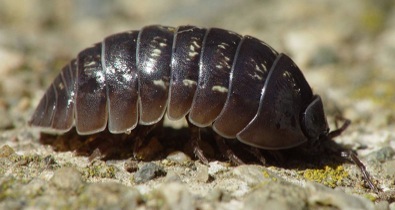
Armadillidium vulgare: Land Shrimp

What shall we call them? Roly Pollies? Rollies? Pill Bugs? Woodlice? Sowbugs, or a half a dozen other names?

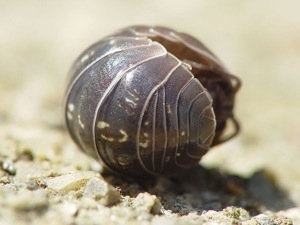
They are not bugs (more than six legs.) They are not lice, and not all of them roll. And their scientific name is a mouthful, Armadillidium vulgare. Land shrimp might be more accurate for these little creatures in the class of Crustaea are closely related to shrimp, crabs and lobsters, whose taste they resemble. There are land versions and water versions including large deep sea ones. In the world there is some 3,500 species of them and they tend to be parasite free.

Let’s stick with Pillbugs for two good reasons. Those are the only ones that roll themselves into a ball, and they are the most edible of the lineup (some non-rolling sowbugs are foul-smelling and tasting.) Look for them in moist places such as basements, under rocks and logs (but also look out of other more harmful creatures.)  They dry out easily so they are never far from moisture.

Besides being edible some people believed — not yet proven — that Pillbugs helped ease upset stomachs and complaining livers. There could be a hint of truth to that in that their shells are high in calcium carbonate, which counteracts stomach acid. To collect a lot of them effortlessly turn half a cantaloupe upside down in the shade near a moist area They will collect under it and feed as they are mostly vegetarians.  Note there can be as many as 10,000 of them per square meter and sometimes they are kept as pets, living up to five years (with good veterinary care no doubt.)

In his 1885 book “Why Not Insects” Victorian Vincent Holt wrote about Pillbugs on pages 58 and 59: “I have eaten these, and found that, when chewed, a flavour is developed remarkable akin to that so much appreciated in their sea cousins. Wood-louse sauce is equal, if not distinctly superior to, shrimp.

“The following is the recipe: Collect a quantity of the finest wood-lice to be found (no difficult task, as they swarm under the bark of every rotten tree) and drop them into boiling water which will kill them instantly, but not turn red, as might be expected. As the same time put into a saucepan a quarter of a pound fresh butter, a teaspoonful of four, a small glass of water, a little milk, some pepper and salt, and place it on the stove. As soon as the sauce is thick, take it off and put in the wood-lice. This is an excellent sauce for fish. Try it.” 

Among other Pillbug features is that they can change sex and do not urinate. They exchange ammonia gas through their exoskeleton and can drink through their anus. And their blood is blue when carrying oxygen, clear when not. Pillbugs are monogamous and dad helps with the chores.

Their scientific names translates into something more mundane than it sounds. Armadillidium (ar-mah-dil-LID-ee-um) means like an Amadillo, and vulgare (vul-GAR-ee) means common. Oh, nearly forgot: When Issac Asimov was a boy he filled his mouth with Pillbugs to see if they would tickle his tongue, giving his mother quite a fight.

In the recipes below Pillbugs were fed potato for several days before cooking, which always started with the desired amount first put in boiling water until cooked. Non-rolling pillbugs — sowbugs — can also be eaten also long as they don’t have a foul smell or taste.

Pillbug Fritters

*  1 egg

* 1/4 cup of creamed corn

* 1 cup of flour

* 2 tablespoons of boiled Pillbugs

Put egg in a bowl, add corn, flour, Pillbugs and milk. Lightly mix. Ingredients should be moist. Add more flour or milk as required to make mixture the correct consistency. Drop spoonfuls of the mixture into a thin layer of hot oil in a frying pan. Turn when brown on the bottom. Tastes like fish cakes.

Pillbug Semi-sushi

*  1 eggs

* 1 carrot

* 1 cup of dry rice

* 3/4 cup of water

*  seaweed sheet

* 2 tablespoons of vinegar

* 2 table spoons of sugar

* 1 teaspoon of salt

* 2 tablespoons of boiled illbugs

Add rice to the water and microwave for 10 minutes or until cooked. Add the vinegar, sugar and salt. Cut carrot into thin lengths. Cook in microwave with a small amount of water until tender. You can also use thin strips of egg omelette to add color. Spread rice in a thin layer over the seaweed sheet. Put strips of carrot, eggs, Pillbugs in the center of the rice.     Tightly roll up the seaweed sheet using a little water to seal the edges. Cut into short lengths with a serrated knife.

 Pillbug Scones

*  1 ounce of butter

* 2 cups of flour

* 2 teaspoons of baking powder

* 2 strips of bacon

* 1 small onion

* 3/4 of a cup of milk

* 2 tablespoons of boiled Pillbugs

Mix flour and baking powder in a bowl. Add butter and rub into dry ingredients. Add bacon, onion and Pillbugs, mix in and then add all the milk. Mix. The dough should be soft enough to roll out onto the bench top. Add extra milk or flour as required.     Roll/press out into serving squares, 425F for 10-15 minutes.

Scrambled Pillbugs

Add cooked Pillbugs to scrambled eggs. The amount varies with your taste for them.

Hog Lice Wine

Yeph…. was popular in the 1700’s. Take half a pound of Rollie Pollies and put them in two pounds of white port (this is right from the recipe.) Let them work for a few days. Strain, toss the Hog Lice, drink the port.

{ 23 comments }