Chinese Box-Orange, Tsau Ping Lak

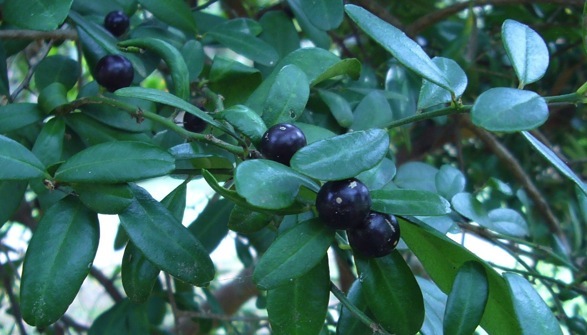
Atalantia buxifolia: Wine-Cake Thorn

The Chinese Box-Orange is one of my botanical mysteries. For a long time I thought it was an edible but…

If you Google the Atalantia buxifolia (formerly Severinia buxifolia) you will find several credentialed sites and publications with degreed authors saying the tree has an edible part. That makes sense. It’s in the greater citrus family. Most if not almost all the experts say the leaves are used to make a yeast roll in Chinese cooking. At least one book says the berries are used to make the yeast rolls. So I decided to ask some experts. I have a friend who’s Chinese and owns a Chinese restaurant and has several Chinese chefs. They have no idea. The leaves may be fermented, the berries may be fermented, or they may use one or the other totally differently. Or, it is not edible at all.

The problem might be language. The characters for the plant are similar to the characters for the spring roll, or so a linguist told me. Therein lies the problem which is the assumption based on characters (by linguists) that the plant has something to do with the spring roll.  But in the culinary world it does not appear to be used at all. Instead of guilt by associate it is edibility by association. Thus I cannot recommend it as an edible. If someone has some good evidence otherwise I’d like to hear from you.

The Chinese box-orange is native to Southeast Asia, Taiwan and southern China. In Cantonese know it as Tsau Ping Lak because they use some part of it to make a yeast cake. So, how did it get from there to here? It’s resistant to many of the diseases that attack citrus so it makes good root stock. It is also an ornamental. You’ll find it where citrus grows. A close relative, A. monophylla, has a lot of medicinal uses in India including using berry oil for relief of rheumatism and paralysis, a root preparation as an antiseptic and stimulant, and the leaves are used against snake bite.  A. buxifolia has two close look alikes, the Japanese Box (Buxus microphylla var. japonica) except the Buxus has no thorns, and the Bumelia retusa, which looks very similar but has red hair on the bottom of young leaves and not all the leaves are notched at the end.

Atalantia (at-uh-LAN-tee-uh) is from Greek mythology. She was daughter of King Schoeneus of Scyros and one of the Hesperides, the nymphs who guarded the garden where grew the golden apples Gaea gave to Hera as a wedding gift.  Buxifolia (buks-siff-FOH-lee-uh) means foliage like the box wood which is a Buxus (BUK-sus) the Roman name for the Box Wood. The Chinese Box-Orange is still called Severinia buxifolia (sev-ver-RIN-nee-uh buks-siff-FOH-lee-uh) which honored M. A. Severino (1580-1656) an anatomy lecturer at Naples.

Green Deane’s “Itemized” Plant Profile

IDENTIFICATION:

A low growing, irregular spreading shrub that grows to about four feet high and around. It’s dense and compact, with small, glossy, rounded dark green leaves about a half inch across and an inch long, indented at the tip. Young leaves are bronze. Older leaves are covered with glans on the underside. When crushed the leaf smells of oranges. Flowers are clusters of small, white, fragrant citrus-like flowers that appear near the end of the branch. Blooms all year. Fruit is a small black 1/4 inch berry, one or two seeds.

{ 0 comments }

Cyperus esculentus, C. rotundus: Serious Sedges

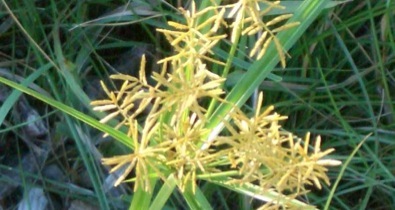
There are two edible Cyperus locally: One that tastes like hazelnuts and one that smells and tastes to me exactly like Vic’s Vapor Rub. Guess which one I happen to find more often?

Chufa, Yellow Nut Sedge, Cyperus esculentus

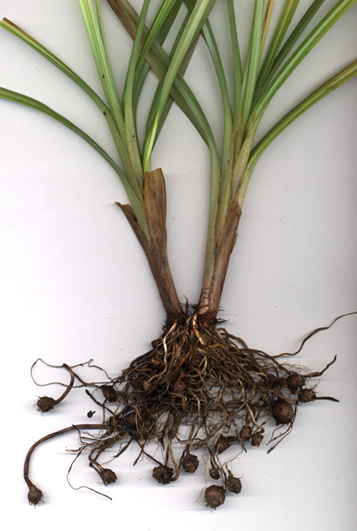
Cyperus esculentus, the yellow nut sedge, is native to warmer parts of the Northern Hemisphere. It has been in use since ancient Egyptian times and is cultivated around the Mediterranean. The roots reach the size of hazelnuts and have a similar taste. They are excellent raw right out of the ground, boiled or roasted. Its tops are yellowish.

Cyperus rotundus, the purple nut sedge, is also edible raw but is laced with the VIC’s aroma which lessen on drying. However, before that they can be used as an insect repellant, a case of wear outside this week and eat inside next week. Its tops are purplish.

Chufa with nutlets

Chufa (CHOO-fah) Cyperus esculentus, the yellow nut sedge, is listed as a noxious weed in many places and difficult to control. It can produce hundreds of thousands of seeds per plant per season. Researchers say a single nutsedge can produce 1900 plants and 7000 tubers in a year. That’s a lot of food. And remember sedges have edges and these sedges have three sides, like a triangle. All sedge seeds are edible, according to Ray Mears and Gordon Brown.

In Egypt and the Mediterranean nut sedges were used as sources for food, medicine and perfumes. The tubers were usually roasted. Dried ground tubers were used to extend coffee and chocolate. Chufa oil was an ingredient in perfumed soap and a lubricant for fine machinery. The leafy parts were  fed to livestock. A relative, Cyperus papyrus in Egypt, was the first source for paper there and is an escaped weed in many warm states. Here in Florida it is a common ornamental in water gardens. Interestingly, Chufas are very similar to olives in nutrition. The boiled nutlets are also good carp bait.

The genus name Cyperus (sye-PEER-us) is from Cypeirus which was the ancient Greek name for the plant. Esculentus (es-kyew-LEN-tus) means “edible” referring to the tubers.  Rotundus (roh-TUHN-duh) means round.

Green Deane’s “Itemized” Plant Profile: Chufa

IDENTIFICATION: Cyperus esculentus: Annual monocot to three feet tall, solitary stems growing from a tuber, stems triangular bearing slender leaves one to three inches wide, flowers a cluster of flat oval seeds surrounded by four hanging leaf bracts at 90 degrees. Tough, fibrous, mistaken for a grass.  It can be distinguished from other New World nutsedge by linear brown spiklets with overlapping scales

TIME OF YEAR: August to November

ENVIRONMENT: Old fields, cultivated ground, upland prairies, pond margins, stream edges, pastures, roadsides, railroads.

METHOD OF PREPARATION: Rub nutlet to loosen husk. C. esculentus edible raw or cooked. C. rotundus edible raw but better if allowed to dry a few days then consumed raw or cooked. Nutlets can be hard. Soaking in water eases that problem. All sedge seeds (on top) around the world are edible.

HERB BLURB

C. rotundus is used in Chinese medicine, especially pain associated with menstruation. It is also used for stomach aches and diarrhea, to treat impotence, bacterial infections, and dry or tired eyes. C. rotundus is also used as a diuretic and for high blood pressure. A paste of the plant is also spread on the skin as a bactericide and a fungicide to prevent infection of wounds. In two studies, compounds found in extracts from the root of C. rotundus were isolated and several have anti-malarial properties.

{ 30 comments }

Crossopetalums: Edible Berries & Medicine

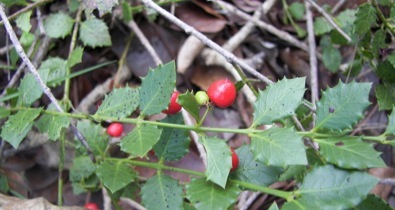
Christmas Berry, Crossopetalum ilicifolium

When I was an undergrad in music it was a revelation to learn that by studying music you also studied history: There’s no sense in writing a symphony when all the musicians are off fighting a long war. You write for small groups, perhaps of which the best known are string quartets. Music reflects what is going on in a society.

When you study plants you also study history, but through names. By tracing names and how they change you get hints as to the plants’ use and importance. My own observation about plants in the New World is that most Europeans who came over tended to be faithful to what the Indians called a plant or how they used it except English speakers. Anglos used their own terms. A berry that might be known in three Indian languages as Old Lady’s Earrings, The Earring Plant, or Monkey’s Earrings, becomes the Quail Berry in English, and not a quail within a thousand miles.  Often English-speaking families made make up their own names for plants proliferating such terms as “Mary’s Flower”  “Indian Root” and “Pig Weed.” At last count there were some 18 different “pig weeds” in the United States, some of them edible, many of them not.

I run into non-standard names all the time. I had a neighbor refer to a plant as “Indian Root” whereas the local Indians have probably not eaten it for well over a century, if not far longer.  While Indian, Spanish and French terms are often helpful, the English speakers also used a variety of terms that confuse things. For example, poison, snake, and horse have all been used to mean “wild.”  Sometimes a so-called local “Poison Berry” is not poisonous at all, just wild, or rank as in radish, horse radish. And so we come to the Christmas Berry and the Maiden Berry.

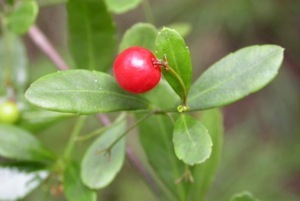
Maiden Berry, Crosspetalum rhacoma

Neither term seems to have been in use a century ago, and where they came from is anyone’s guess but they are for the Crossopetalum ilicifolium, upper left, and Crosspetalum rhacoma,  right. In fact, the Maiden Berry, right, appears to be a rather recent appellation but wide spread. And a word like “Christmas” is also new, for plants. It is but 900 years old whereas some plants have had the same name for thousands of years through different languages. The use of “Maiden” with plants dates back to 1589 and usually means a plant that has not budded or been trimmed or transplanted.

Both berries are somewhat rare and their drupes readily enjoyed by birds. And while the berries are edible the most common use for these plants have been to make a decoction from the roots to treat kidney stones. In Cuba a decoction of the root and leaves is made for use as a diuretic and to treat kidney inflammation. While it is fine to eat the berries and spread them seeds around they are endangered and digging one up now for a kidney stone would not be legally wise, at least in the United States.

Crossopetalum (kros-so-PET-ah-lum) comes from the Greek words krossos and petalon, meaning respectively fringe and petal, referring to the leaves.  Ilicifolium (ill-liss-ee-FOH-lee-um) means having leaves that look like a holly, and the Christmas Berry does. One easy way to remember its name. Rhacoma (rah-KO-ma) though often ascribed to Latin, comes from the Greek word rhakoma, meaning rags, or threadbare, rakos (RA-kos.)  The Romans used the word for rhubarb, which has wavy margins.  C. uragoga (oo-rha-GO-gah urine promoting) is also used as a diuretic.

Green Deane’s “Itemized” Plant Profile

IDENTIFICATION:

C. Ilicifolium: Low shrub with downy twigs, forming handsome mats on the ground. Leaves holly-like, oval or ovate, spiny-toothed, half inch long. Flowers reddish, small four or five petals, short talked clusters, fruit bright red, nearly round, mealy, one seed. C. rhacoma, shrub or tree, erect to 20 feet, leaves opposite, in whorls of three, oval to elliptical, with a few teeth towards tip. Flowers small, four petaled, fringed in red or purple, in long-stalked clusters. Fruit obovoid, red or maroon, to a quarter inch long, with a single stone holding many seeds.

TIME OF YEAR:

C. Ilicifolium in the warmer months, C. rhacoma all year

ENVIRONMENT:

Hammocks, pine lands for both, C. rhacoma also sand dunes and Everglades

METHOD OF PREPARATION:

Ripe fruit edible raw

{ 0 comments }

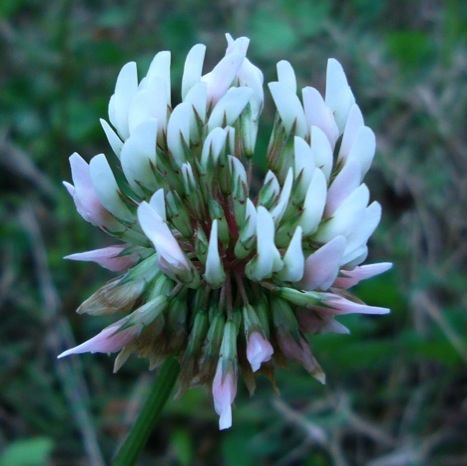
White Clover Blossom

 Clover, Available Around The World

Hay may be for horses, but clover is for people…well…. almost.

I was forever nibbling on clover blossoms when I was a kid. I suspect I did that because my mother did that. She did that because her mother did. I don’t know how far that habit stretched back, so I don’t know if the consumption it is by taste or by example.

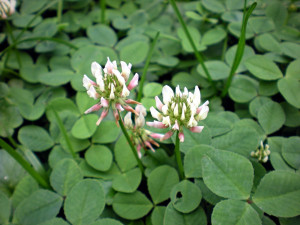
White Clover, Trifolium repens

White Clover, Trifolium repens

One of the more surprising sides of clover is that it’s in the pea family, and its blossom is actually a bunch of little pea-like blossoms, called ”wings and keels.”  Clover is also a native of Europe and western Asia but has been used as a pasture crop worldwide. And while there are few pasture in the Arctic, clover grows from the top of the earth to the bottom and all around, nearly every location on the rotation.  Though well-known as totally edible, from blossom to root, it is not choice “eating wild.” Some call it a survival food, and perhaps rightly so for only the blossoms are truly pleasant to human tastes. The leaves are an acquired or tolerated taste.

In reference to the blossoms, don’t select brown ones. You want young and fresh whether white or pink or red though white clover is the better tasting of them all.  Besides a tea you can pan roast the blossoms until nice and crispy. The leaves are another matter. Young ones are digestible raw in small amounts, half a cup or so. Older leaves should be cooked, but I think you’d have to be hungry to eat them. It is a survival or famine food. See Sweet Clover, or Melilotus.

While it may not be that good in taste, clover can be good for you. It is high in protein, has beta carotene,  vitamin C, most of the B vitamins, biotin, choline, inositol, and bioflavonoids. Clover does come with three words of warning, however: One is that quite a few people are allergic to it and don’t know it, so go easy at first until you know one way or the other. Secondly, NEVER …. did you see that word? NEVER ferment and eat any part of it. You want your clover either completely fresh or completely dried, Never in between. Lastly clover in warm climates can produce small amounts of cyanide. Here is the site address:   http://www.sciencedaily.com/releases/2007/10/071001151308.htm

The botanical name for white clover is Trifolium repens. (Trifolium tri-FOE-lee-um) means three leaves, and repens (REE-penz) means crawling but not rooting. Most of the plant crawls along, only the blossoms stand up. Now, one parting measure of how humanity is getting along with nature:  Clover is now legally discouraged in lawns and the like because it attracts bees and people might get stung. Frankly, I think we need less lawyers than less clover.

 Green Deane’s “Itemized” Plant Profile

IDENTIFICATION: An evergreen perennial growing to half a foot, famous for its three leaves, blossom can be white, pink and red.

TIME OF YEAR: Seasonal usually summer into fall

ENVIRONMENT: Likes sunny areas and moist soil. Usually found in lawns

METHOD OF PREPARATION: Numerous: Leaves – raw or cooked as a potherb, young leaves before flowering suitable in salads or soups, can be cooked and used like spinach. Dried seed pods and flowers ground into powder used as a flour, young flowers in salads. Cooked root edible. Dried flowers best known for making tea.  Dried leaves can have a hint of vanilla aroma.

{ 67 comments }
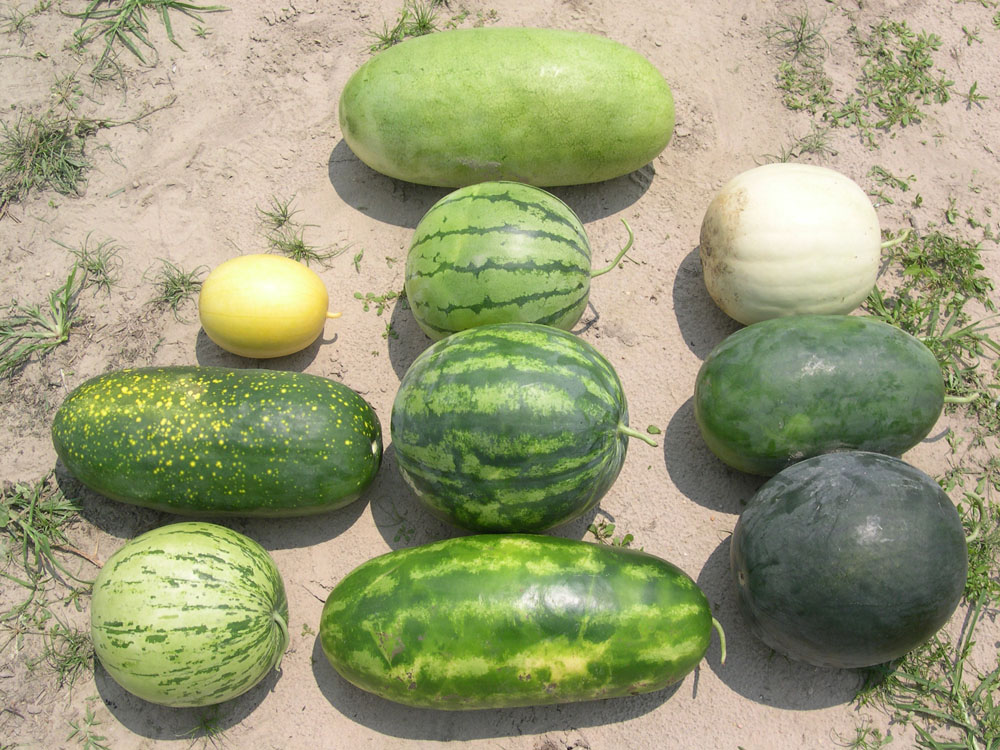
Wild Watermelons, photo University of Wisconsin.

Wild Watermelons, photo University of Wisconsin.

Citron Melons: Abandoned Preserves

Are they edible?

Even people who do not forage want to know if the little watermelons they see in citrus groves are edible. The short answer is no. The longer answer is yes.  What does that all mean? Well, that will take some explanation.
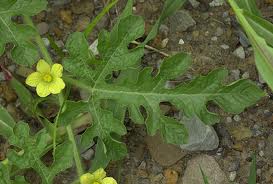
Tsamma melons (Citrullus ecirrhosus).

Tsamma melons (Citrullus ecirrhosus).

Usually non-bitter citron melons are used for preserves and are viewed by well-fed people as inedible raw. They are full of pectin so they are cooked up and used as jam and glaze and other sweet things. That said, in Africa, where folks are often not well-fed, melons are edible raw if they are not bitter. The tough pulp is pounded, the juice drank and the pulp eaten raw or cooked, preferably cooked.

So, if not bitter here in the American South it is viewed as something to be cooked for preserves and not edible raw. In dry, starving Africa if it is not bitter it is edible raw and cooked. What if it is bitter? If you have plenty of fuel and there is a famine you might be able to boil bitter melons in several changes of water and make them and their seeds edible. Starving people in Africa do that. The Beduins throw the entire melon onto the fire and cook it until it is totally dry. Then they grind it, make a paste out of it and smear it on a cloth, which they let dry. They don’t eat it but it will take a spark to light a fire.

By all rights, the bitter and the non-bitter ones should be two different species, Citrullus colocynthis and Citrullus lanatus var. citroides. But between the arguing of egotistical drunk botanists, the multitude of names, and hybridizing, what a citrus grove watermelon is, is anyone’s guess. Let your taste guide you. Bitter bad, non-bitter useable at least in part.

Citrullus lanatus var. citroides is native to the Kalhari Desert in southwest Africa, so is the Citrullus colocynthisCitrullus lanatus been in use for thousands of years and in cultivation for at least 4,000 years. Called Tsamma it its native range it is believed to be the ancestor of our common garden watermelon, Citrullus lanatus. We know watermelons were grown in the Nile Valley by 2000 BC, in India by 800 AD,  China in 1100 AD. They were in Cordoba by 961 AD and Seville in 1158 AD. They came to the New World with the Spanish in the 1500s or so. Now the fruit is naturalized from North Carolina to California. Locally it is seen in current, old and built-over citrus groves. In fact, in several places where there are hundreds of acres of now freeze-dead citrus trees, the citron melon is still surviving.

Also called the “pie melon” the edibility of the melon varies greatly because it hybridizes with cultivated watermelons. While it always smells like a watermelon the white pulp is often too bitter to eat but can also be fine to eat. I have found some quite edible in the field with no cooking needed at all.  Generally said, the smaller it is the more likely it is to be bitter. “Round” tends to be wild, “oblong” showing some cultivated genes. Also don’t confuse the Citron Melon with the Seminole Pumpkin,  Cucurbita moschata, which is found in old native campsites. Those are quite edible. What do those look like? Like a squash or a pumpkin you would grow in your garden or buy in the supermarket.

There is, as one might expect,  a lot of botanical fog with the citron melon. You will often read the flesh is inedible but the rind is, or all of it is edible, or all of it is inedible. That can be for different reasons. Some times it is bitter and not edible, other times it is just  tough and can be pounded up and made edible if it is not bitter. Some call these fruits Citrullus lanatus var citroides, others Citrullus colocynthis. Some want to call it Citrullus colocynthis var citroides. The Citroides is considered to be in between the primitive bitter watermelon — colocynthis — and the cultivated sweet watermelon — lanatus. Regardless, if bitter leave it alone, though it can have medicinal applications.

Beside eating or preserving the non-bitter flesh, the seeds are edible as well. They can be dried or roasted or ground into a paste and made into a meal with many applications. The leaves and flowers can be cooked and eaten as a vegetable. Citron melon leaves are palmate in the early stages of growth, and deeply lobed in later. They have a rough texture and visible white veins. It has solitary flowers with large with yellow petals. Tendrils are to the side of the leaves. The seeds are greenish with a pitted surface, and leaning towards being a C. colocynthis. However, depending upon its heritage the seeds can also fall into two other groups,  “wléwlé” which has glossy seeds with a tapered end or “bebu” which are flat and oval with rugged and thick ends. Harvest fruit when the vine starts to die back.

The next question is why are these things found in citrus groves? The answer is the grove is abandoned or not well care for.  Essentially, the citron melon came first as a cultivated crop, citrus fruit came second. From a melon’s point of view a grove is a great place to escape too… food, water, sun and other weeds kept out.  But, the melon is host to a bug that bugs citrus and a kept grove does its best to get rid of the opportunist melon. Where I personally see them a lot is in a pasture of well-fed cattle and horses. That tells me the citron melon there are either bitter or the livestock too well fed to eat them as large mammals do in Africa. Very few people raise the citron melon now so it is naturalized from centuries past, a reminder of when most folks still grew most of their food. More so, the melon was a the prime source of pectin to make jelly out of low pectin fruit, such as oranges.

Citrullus (SIT-rhull-us) is the diminutive of the Greek word citrus and means little citron. The Latin species name lanatus  (lan-NAY-tus) means wooly and calls attention to the hairs on the stems and leaves. Colocynthis (kol-OH-sinth-iss) if from the Greek word kolokunthis (round gourd, such as a pumpkin)

Lastly, let’s dispense with the idea that you will confuse a soccer ball sized watermelon fruit on the ground with a small citrus fruit in a tree, both called citron.  I have no idea why internet sites think you will ever get those two mixed up.

Recipes

Take some fine citron melons; pare, core, and cut them into long broad slices. Weigh them, and to every six pounds of melon allow six pounds of fine loaf-sugar; and the juice and yellow rind (pared off very thin) of four lemons; also, half a pound of race (root) ginger. Put the slices of melon into a preserving-kettle; cover them with strong alum water, and boil them half an hour, or longer, till they are quite clear and tender. Then drain them, lay them in a broad vessel of cold water, cover them and let them stand all night. Next morning, tie up the race ginger in a piece of thin muslin, and boil it in three pints of clear spring or pump water, till the water is highly flavored. Having broken up the sugar, put it into a clean preserving-kettle, and pour the ginger water over it. When the sugar is all melted, set it over the fire, add the lemon parings, and boil and skim it, till no more scum rises. Then take out the lemon peel, stir in the juice, and put in the citron slices. Boil them in the syrup till they are transparent and soft, but not till they break. When done, put the citron slices and syrup into a large tureen, set it in a dry, cool, dark place, and leave it uncovered for two or three days. Then put the slices carefully into wide-mouthed glass jars, and gently pour in the syrup. Lay inside the top of each jar a double white tissue paper cut exactly to fit, and close the jars carefully with corks and seal.

Preserved Citron

Pare off the outer skin, cut into halves, remove the seeds, then divide each half into a number of smaller pieces. Put them in a stone jar, add a half-cup of salt to every five pounds of citron. Cover with cold water, and stand aside for five hours ; then drain, and cover with fresh, cold water. Soak two hours, changing the water three or four times. Dissolve a teaspoonful of powdered alum in two quarts of boiling water, add the citron, and bring to boiling point. Drain. Make a syrup from two and a half pounds of granulated sugar and one and a half quarts of boiling water, boil and skim. When perfectly clear, put in the citron and simmer gently until you can pierce it with a straw. When tender, lift the pieces carefully with a skimmer, place them on a large plate, and stand in the sun one or two hours to harden. Peel the yellow rind from one large lemon, add it to the syrup, then add the juice of two lemons, and a small piece of green ginger-root cut in thin slices. Boil gently for ten minutes, and stand aside until wanted. When the citron has hardened, put it cold into the jars, bring the syrup again to a boil, and strain it over the citron. Watermelon rind and pumpkin may be preserved in the same manner.

Citron Preserves

Citron melons (about 5 pounds), 5 pounds of sugar, lemons.

Cut the citron in slices, peeling outer skin. Remove all visible seeds. Add sugar pound for pound to the citron. Cover and put in cold place overnight. The next morning bring the mixture to a slow boil. Add sliced lemons according to taste. Cook several hours until it becomes thick, clear and yellow. The longer it is cooked, the thicker and darker it will become. Therefore, if one prefers it thick and dark, rather than liquid and light yellow, it should be cooked for a longer period of time. Place in a stone crock or in sterile jars and store in a cool place. This recipe keeps very well in storage. This recipe is excellent when used as a replacement for maple syrup on pancakes, waffles and the like.

Citron

11 lbs. of citron, 7 lbs. of sugar, peel and remove seeds. Cut up citron and sprinkle with sugar. Add 1 lemon, a stick of butter (or oil) simmer until clear, then bring to a boil. Allow citron to stand over cinnamon and a dozen cloves. Pour into jars and cover.

Watermelon or Citron Preserves

* 10 lbs. melon rind

* 10 lbs. sugar

* 1 cup cinnamon bark

* 1/4 lb. ginger root

* 1/2 oz. alum

* 1/2 cup salt

* 7 quarts water

Instructions

1. Peel melon rind, cutting off green and pink, and cut in any shape desired.

2. Put rind into 1 gallon water, adding salt and alum and let stand until brittle.

3. Drain and put in vessel with enough water to cover.

4. Add ginger and cook until tender.

5. Make syrup of sugar water and cinnamon.

6. Drain the rind and add to the syrup with ginger.

7. Cook until syrup is thick, from 30-60 minutes.

8. Put in jars, let cool, cover with paraffin and seal.


Citron melon preserves:

3 quarts prepared citron melon

8 cups sugar, divided

2 quarts water

1 cup thinly sliced, seeded lemon

Cut the melon in half and remove meat and seeds. Then cut the rind in ¾ inch slices, removing the peel and discarding it. Cut the rind into 1-inch pieces. Remove the seeds from the meat and cut into about 1-inch pieces. Add 4 cups sugar to water and bring to a boil. Add citron chunks and cook rapidly until tender. Cover and let stand overnight.

The next day, add remaining sugar and lemon to mixture. Boil gently until melon is transparent and syrup is thickened. Stir frequently to avoid scorching. Remove from heat. Skim foam if desired. Ladle hot preserves into hot jars, leaving ¼ inch of headroom. Wipe jar rims clean and place hot, previously-simmered lid on jar and tighten ring down firmly. Process for 15 minutes in a boiling water bath canner. If syrup becomes too thick, add a bit of boiling water; if it is too thin and the citron is cooked and tender, remove the citron and continue boiling syrup until thick, then re-add citron.

Green Deane’s “Itemized” Plant Profile

IDENTIFICATION: Looks like a round watermelon with jagged stripes, up to soccer ball size. Young leaves palmate, older leaves deeply lobed, rough texture, visible white veins, solitary flowers with large with yellow petals. Tendrils are to the side of the leaves. Seeds greenish, pitted surface, or glossy with tapered end or flat and oval.

TIME OF YEAR: Harvest fruit when the vine starts to die back.

ENVIRONMENT: Old groves, unattended margins of current groves, pastures, fields.

METHOD OF PREPARATION: If  not bitter, rind and flesh for preserving, if not bitter pulp can be pounded and eaten, raw or cooked, preferably cooked. If bitter, leave alone.  Young leaves if not bitter can be boiled like a green, the flowers, if not bitter, are edible cooked with pistils removed.

{ 33 comments }