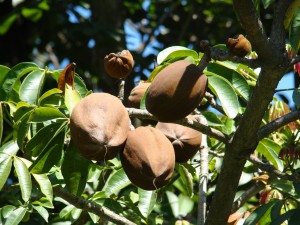
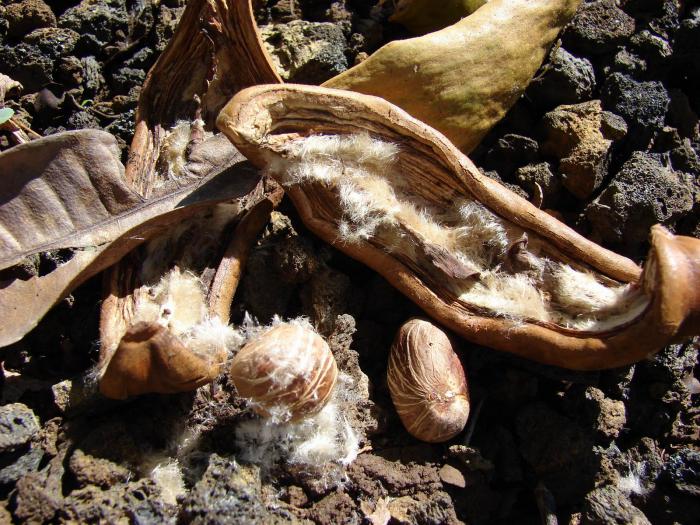
When pods burst open the seeds are ready to eat

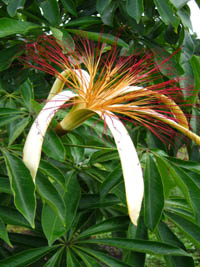
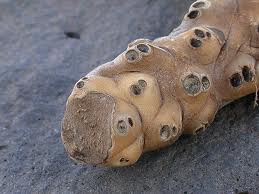
Resembles a peeled banana with red stamen

My foraging existence is slightly schizophrenic. I grew up in a northern climate, and I write about many northern plants, or it is accurate to say that the majority of the plants I write about are found in northern climes. Conversely I live in Florida, which is a different land altogether. Thus I am biclimatic, having spent ine third of my life in the north and two thirds in the south… thus far.

A 400-mile long state, Florida has three distinct climates, temperate, subtropical and tropical. I can go 200 miles north or south and find extremely different plant communities, species that will grow in one place but not the other. One reason why I expanded my classes into southern Florida was to learn more about the tropical there, and this tree is one of them, the Pachira aquatica, formerly Bombax glabrum and a few other scientific names as well.  The nomenclature nonsense does not stop there with several common names for the Mallow Family member:  Guiana Chestnut, Malabar Chestnut, Provision Tree, Saba Nut, Monguba, Pumpo, Money Tree and Money Plant.

Pods can grow larger than a football

Pachira aquatica (pack-EYE-rah ah-QUAT-tic-ah) is native to Central and South American and quite at home in southern Florida and Puerto Rico. It’s also cultivated in southern California and Hawaii. Growing close to 60 feet in the tropical wild, it’s cultivated for its edible seeds that grow in a large, woody pod.  Out of the pod the seeds are shaped somewhat like chestnuts and taste similar when cooked, hence the common name. They also are covered with many white stripes, making them fairly easy to identify. The seeds’ flavor when raw is similar to peanuts. They can be eaten raw or cooked, or ground into flour. The cooked young leaves and flowers are also edible.

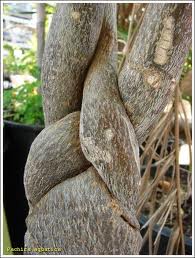
Ornamental trees are braided together

Calling the species the Money Tree or the Money plant is an innovation of the last 25 years or so. In 1986 a Taiwanese truck driver put five small seedlings into one pot and weaved them together as they grew. He inadvertently invented the next hot ornamental plant and business took off in Taiwan, Japan and most of eastern Asia. The braided tree is viewed as associated with profit and is a common plant found in businesses, often with red ribbons or other ornaments attached. By 2005 export of the braided tree was a $7 million business in Taiwan.

Eat out of hand or cook

Why think the tree brings good financial luck? Numerology is still alive and well. The leaves are palmate, with five large leaves which symbolize the five basic Feng Shui elements; Metal, Wood, Water, Fire, Earth. And there are five trees braided together to re-enforce the number 5.

The genus name, Pachira is a Guyana term and aquatica means water. The tree likes to grow in swamps.

Green Deane’s Itemized Plant Profile

IDENTIFICATION: A spreading tree to 60 feet. Greenish bark and shiny, dark green compound leaves resembling a Schefflera. Flowers from a foot long bud, usually hidden by foliage. Five cream-colored petals of the large flowers droop revealing red-tipped off-white stamens. Those change to football-shaped woody pods that can reach a foot in length and half a foot in diameter. Tightly packed seeds in the pod enlarge until about a half inch in diameter causing the pod to crack open. Easily started from seed.

TIME OF YEAR: Flowers late fall or early winter, fruits in the spring

ENVIRONMENT: Does best in areas of periodic flood, or if water heavily often. It does not like dry wind, may endure temperatures briefly down to 28F.

METHOD OF PREPARATION: Seeds edible when the pod cracks open, raw or cooked or ground into flour. Seeds raw taste similar to peanuts. Roasted or fried they taste similar to chestnuts.  Young leaves and flowers edible cooked, usually by boiling.

{ 20 comments }

A Matter of Attitude

“Yuck.”

That word has been in my mailbox lately, sprinkled through like spice on an entree. It reminds me of what a great language English is.

English is not some frou-frou language of genteel nuances or unique sounds. And while it might have started out as German Lite it has borrowed so much from other languages that it’s the largest and most predominate tongue on Earth. But beyond that English is fit. It’s muscular, punchy, to the point. English has brawn. It works out, demands attention, and gets things done. Try yelling EXTINGUISH THE CONFLAGRATION instead of PUT OUT THE FIRE, and see where that will get you. Latin just can’t hold a candelabra to English.

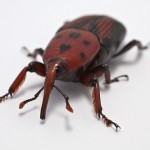
So yes, “yuck,” a taut, vigorous English word has been populating my emails of late. Why? The answer is the Acorn Grub film, the Bon Appetit film and my article on Palm Weevils. Eating insects or their lavae is, well, yucky. So powerful is that one word that several folks have sent just one word emails.  Yuck is succinct.  It tells me their mental state and their opinion. All of this reminds me of a commercial on the radio of late, in fact several times a day since we are entering our fall growing season.

After some typical radio machinations a woman announces that she puts (let’s say) Weeds-Be-Dead on her garden so her husband won’t have to weed it for six months. Now she says she can enjoy her garden rather than always watching him weed. You and I know that many of those yucky weeds he’s removing are quite edible and should be in the kitchen.  Weeding can be harvesting; the food is fresh, nutritious, and close to free.

I am sure some folks who are eating dandelions once viewed them as “yucky.” Eating weeds is more than knowledge and experience. It’s also a matter of attitude… just as eating insects is a matter of attitude. One yucky attitude down, one to go.

It’s not the destination that’s important but rather the journey.

{ 9 comments }


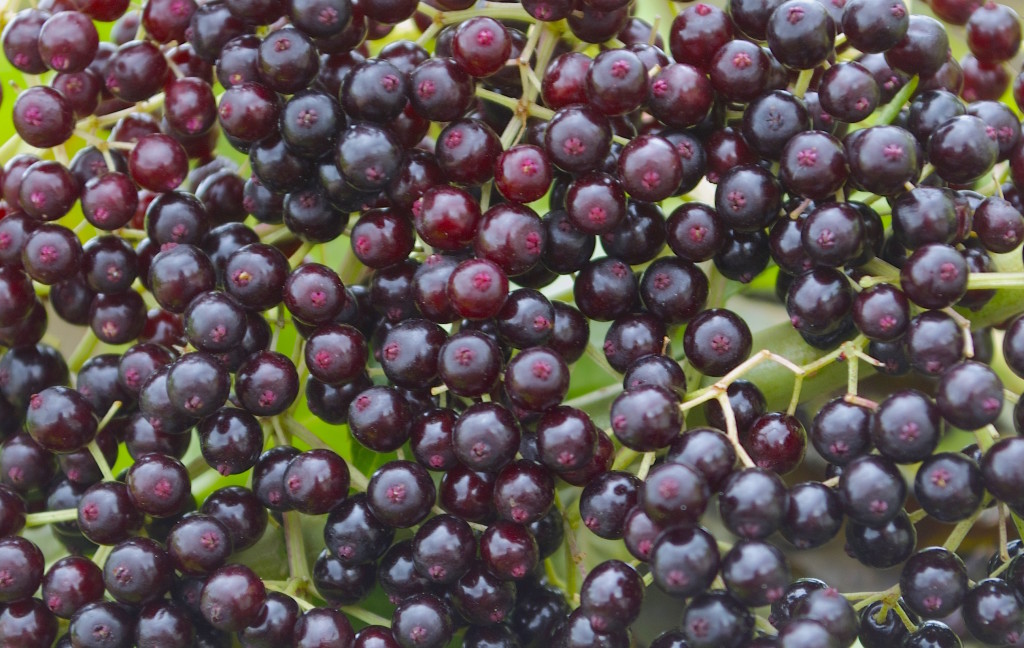
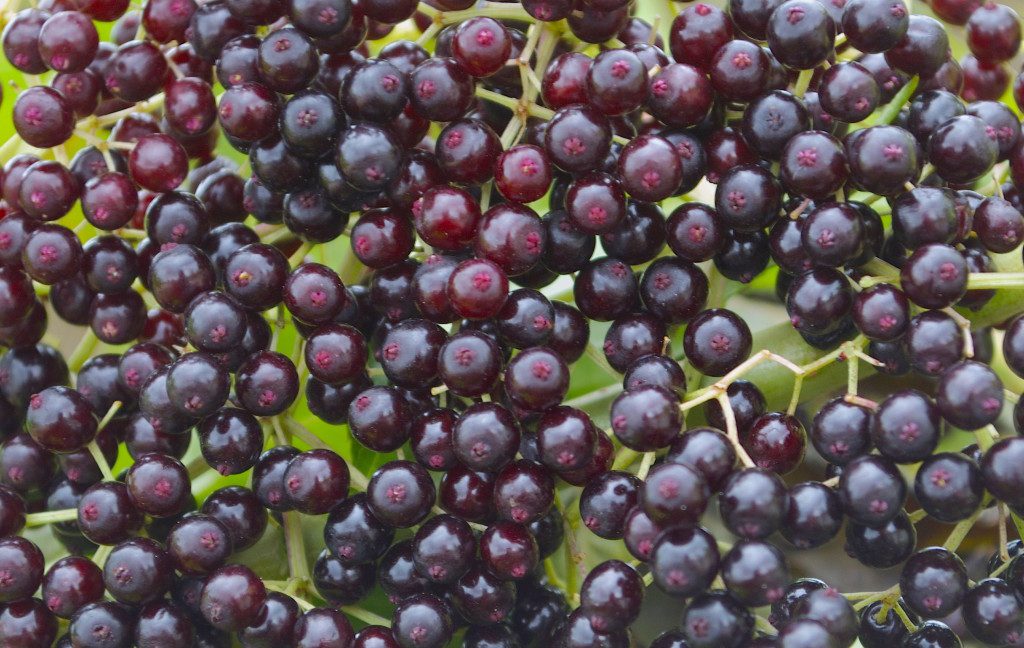
While some elderberries can be eaten raw some cannot and most improved with processing. Photo by Green Deane

While some elderberries can be eaten raw some cannot and most improved with processing. Photo by Green Deane

Sambuca’s Fine For Elderberry Wine

Start your New Year off right with a glass of elderberry wine or elderberry blossom champagne. Don’t have any? Well, next year then.

I started mine off right: I bottled six gallons of elderberry wine, six gallons of cherry wine, and a leftover gallon of apple wine this morning. Most of the wine, but not all of it, made it into the bottles… As it should be. After all, it is New Year’s, and I am cooking a goose with wild rice stuffing (mixed with chopped pecans and tangerines right off the tree.) Alas, bachelors dine alone but well. Back to elderberries… Incidentally, I am writing now about only black or deep purple elderberries. Read about red elderberries at the bottom of the page.

Elderberries are easy to like. They’re user-friendly.  Jam, jelly, pies, syrup, schnapps, brandy and wine can be made from them. The flowers are also edible and can be used in pancakes and muffins or just dipped in batter and fried. They also make a nice tea or a refreshing “Elder Blow Champagne.” Elderflower water is also used in perfumes and sweets.

Many writers say raw elderberries have an unpleasant taste. The ones in my yard do not, but that can change from location to location, shrub to shrub. Most agree that they do need to be cooked if you are going to eat more than just a few out of hand. That’s because they have a small amount of cyanide producing glycosides, which are released upon digestion, but so do loquats.
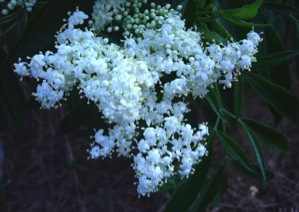
Elderberry blossoms, from fritters to champagne

Professor Julia Morton, who was the first, middle and last word about poisonous plants in warm climates, especially Florida, says the fully ripe black berries are not toxic and you can eat as many as you like. She adds, though, that their flavor is moderated by drying. And in fact, I have a large jar of dried elderberries and sprinkle them on and in many things when cooking. Boiling or baking certainly takes care of any “toxic” issue as does drying raw berries.  The Mikasukis Indians considered elderberries a scarcity food only. Incidentally, the elderberry bush sheds a lot of hollow stems that insects like to live in. Watch out for them on the plant and under your feet while picking elderberries.  Oh, elderberries do not have thorns. If you think you have an elderberry and it has thorns you have a Hercules Club. Don’t eat those seeds without reading about them first.

As for my personal experience with black elderberries ….I don’t have a sweet tooth —which makes my Greek relatives wonder if I am adopted — but my favorite immediate use for elderberries is pies, though you have to add an acid like vinegar or lemon juice. The great thing about elderberry pie is it is seasonal and rare. You can’t buy one. It is not processed, edible non-food stuff we call food. It’s the real deal, and delicious with a texture similar to blackberry pie. If I have enough elderberries, I make wine. If in between, I make schnapps.
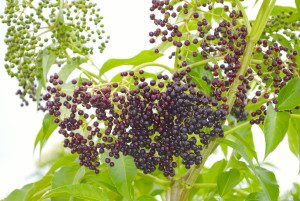
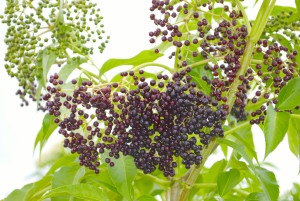
Green and partially ripe elderberries should not be eaten. Photo by Green Deane

Green and partially ripe elderberries should not be eaten. Photo by Green Deane

I might add that Dr. Morton agrees with a 14th century European comment that young elderberry shoots may be cooked like asparagus and eaten. I haven’t eaten any elderberry shoots but I have plenty in my yard. About twenty years ago I went to a vacant wet lot and dug up a couple of young elderberry shrubs. They have grown into a clump of them in my yard. The odd thing is they don’t live too long, just two or three years each. But, they are always sending up shoots so the clump is slowly moving as new trees grow and old trees die off. The clump is migrating at about two feet a year to the north.  There is a road in its path in about 10 years.

Elderberries are nutritious, are packed with antioxidants, and have more Vitamin C than oranges or tomatoes. They also have Vitamin A, calcium, thiamine, niacin, twice the calories of cranberries and three times the protein of blueberries. They put grapes to shame, and man is not the only consumer.  Over four dozen kinds of birds like elderberries as well as the occasional rodent and butterfly. Bears really like them — ripe or unripe — and deer and moose will nibble on them.

The elderberry is in the honeysuckle family and have too many medicinal uses to mention here. They are one of the mainstays of herbalism and home remedies. Where ever it grows it has been the local pharmacy. Interestingly bruised leaves in water and soap (stirred some) is a good insecticide for plants you don’t eat. By the way,  its botanical name is Sambucus canadensis (sam- BEW-kus  kan-uh-DEN-sis).

Playing a “Sambyke”

Sambucus comes from the Greek word “sambuke”, a musical instrument believed to heal the spirit (In Europe Elderberry wood was used for making musical instruments.)  Canadensis is from Canada, or northern North American.  As for Elderberry recipes, there are hundreds if not thousands of them on the internet — books in fact — and you can look them up as need be but I will give you a hint: Freeze the cluster of berries, they will separate from their branches much easier and cleaner. And to not leave you totally recipeless, here is a concoction from the 1400s:

Take elderflowers and grind them in cow’s milk, add flour, heat until it thickens.

Seems they liked their recipes short back then. If you have just a few elderberries,  a  pound or so, try this,

Elderberry Schnapps:

(This presumes you have already rinsed and cleaned the elderberries of all stems. Remember the freezing hint.) Weigh the elderberries  then put them in a clean glass jar with a tight-fitting lid. Whatever they weighed, cover then with half that weight in unflavored vodka, or more if necessary to cover. Tighten the lid. Let them seep in a dark place one to four weeks at room temperature, shaking now and then. Strain, discard the berries, and put the liquid in new, clean glass jar with a tight fitting lid. Age at least two months.

That is not unlike Loquat Grappa (see my Loquat article.) Now, if after all of this you are still with me a December 2006 study reported in the Journal of Medicinal Foods shows the elderberries in North America to have anti-cancer and antioxidant activity.

A friend surprised me one time by confusing in conversation the poisonous water hemlock with the elderberry. Since I know both plants well I never considered that they have a passing resemblance. One becomes a shrubby tree with berries, the other is a herb with a splotchy hollow stem. But, the leaves and umbrella-shaped flowers are similar to the new eye, especially young plants. While there are many differences the easiest one to remember involves the leaves. In the water hemlock the veins in the leaves run to a notch between the leaf’s teeth. The hemlock leaf is deeply serrated and the veins are very easy to see, and they run right to the bottom of a notch between two teeth. The elderberry has much finer serrations and veins in the leaves run towards the end of the leaf, or to a tooth tip, rarely to a notch. To read more about their differences click here.

Elderberry Wine

This is for one gallon of wine. For five increase ingredients except yeast.
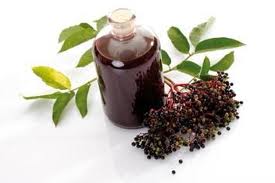
Elderberry wine is medicinal of course

3 lbs ripe elderberries

2 lbs fine sugar

3 1/2 qts water

2 tsp acid blend

1 tsp yeast nutrient

1/2 tsp pectin enzyme

1 crushed Campden tablet

Montrachet wine yeast

Wash the elderberries and remove the stems while rejecting the unsuitable ones. Boil the water and stir in the sugar until it dissolves. Put the berries in a nylon straining bag, tie it and place it in the first container.  Mash the elderberries while wearing sterilized rubber gloves. Pour the boiling sugar water over them and cover. When this mixture has cooled to a lukewarm temperature, add the acid blend, crushed Campden tablet and yeast nutrient.  Cover the primary container and wait for 12 hours. Stir in the pectin enzyme, cover the primary container once again and wait another 12 hours before adding the yeast.  Stir daily for 14 days and gently squeeze the bag while wearing sterile gloves, re-covering the container each time. Drip drain the elderberries without squeezing and add this juice to the primary container. Rack the wine into a second container and fit an airlock.  Store in a dark place and ferment for two months. Rack the wine again, top up and refit the airlock. Repeat this step two more times.  Stabilize the wine and wait for 10 days. Rack the wine again, sweeten to taste and pour into bottles. Store the containers in a dark place for one year.

Red Elderberries
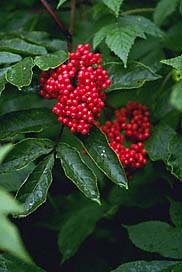
Red Elderberries, Sambucus racemosa

Some references say red elderberries are edible, some say they are not. Bradford Angier, a well-known Canada-based forager, said eating a lot of raw, whole, red elderberries gave him “digestive upsets.” Angier lived off the land for years at a time, so he is a man of practical information. Research does clarify this and says deseeded ripe, cooked red elderberries are edible. In Volume 30, Issue 6, of the June 2003 issue of the Journal of Archaeological Science, red elderberries are discussed.  It says:

“In this article, we examine the use of red elderberry fruit at site 35-TI-1, a late Holocene village on the northern Oregon coast, where more than 68,000 seeds from this fruit have been recovered. Despite the fruit and its seeds being somewhat toxic, red elderberry was widely used both ethnographically and during earlier periods. Its ease of harvest, nutritional value compared to other fruits, and the need to remove its toxic seeds prior to consumption result in red elderberry being well represented in the region’s paleoethnobotanical record. Also, toxins in the seeds may inhibit their decomposition, allowing uncharred seeds to survive for several hundred years.”

Other researchers into “first people” diet also show they ate a lot of red elderberries  — to the point of it being a staple —but removed the seeds. In another scholarly article for the Canadian Journal of Archaeology, vol. 28, 2004, pp. 254-280, it says:

Processing [red elder] berries follow[ed] operational steps including de-seeding, de-stemming, and mashing to a paste that was then eaten as a food, dried into cakes, or mixed with oil for storage (Grumet 1975: 299). Seeds of red elderberry have high levels of toxic cyanide producing glycosides and were removed after cooking or during consumption (Pojar and Mackinnon 1994: 70; Losey et al. 2003: 696, 701; Turner 1995: 14).

Three other authors say the Natives processed out the seeds before eating the cooked fruit, or spit the seeds out AND drank water to rinse the seeds out of their mouth AND drank more water than usual if they swallowed seeds. They also did not eat red elderberry “cakes” in the morning saying it created stomach ache. They waited until midday or later to eat them. And, if they ate non-ripe and or raw red  elderberries they ate salmon afterwards, believing that prevented stomach aches.  If this is all accurate, it suggests that ripe, cooked, seedless red elderberries are edible. The seeds contain cyanide-producing glycosides which in the gut change to hydrogen cyanide. This can cause upset stomach, diarrhea and vomiting. In large doses it can be lethal. You are on your own now, proceed with caution. Find a local expert through the Native Plant Society and ask about your local red elderberries.

Now, as if that is not enough know there is a “white” elderberry found in Australia. Its berries are white to yellow and unlike nearly all white berries they are edible. Botanically it is Sambucus (sam-BYOO-kus) gaudichaudiana (go-dih-shaw-dee-AY-nuh)

Oh….You can also make a pesticide from elderberry leaves. Boil half a quart of water and add about eight ounces of Elder leaves. Simmer the mixture for 30 minutes. Take another half a quart of warm water and mix with one tablespoon of castile soap or what soap you may have handy. Combine the soap water and the elder water and strain through a fine mesh or cloth. Use in a sprayer. It helps with attack from aphids, carrot fly, peach tree borers, and cucumber beetles. It can also  be used against mildew and blackspot disease

Green Deane’s “Itemized” Plant Profile

IDENTIFICATION: Shrub to small tree, woody stem, fIve lobed flowers in clusters, white, five stamen, leaves pinnately compound, five to nine, toothed, opposite. Berries round, 1/8 of an inch, glossy, black.

TIME OF YEAR:  Can blossom and fruit throughout the year in Florida but favors the spring and early summer.

ENVIRONMENT:  Roadsides, thickets, damp areas, low hammocks, marshes, canal banks.

METHOD OF PREPARATION:  When fully ripe black fruit can be eaten raw or cooked but go light on the raw ones. Drying berries moderates their flavor. See the warning above on red berries.

Elderberry leaves can be put in hot water with soap (be stirred) and then used as an insectide on plants.

{ 140 comments }

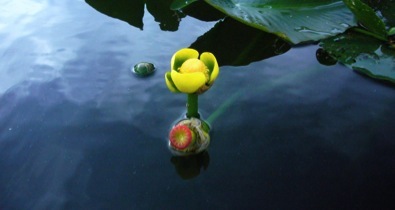
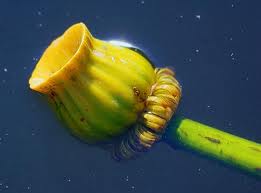
The blossom turns into a red-rimmed seed capsule

 Picking Pond Lilies: Nuphar Luteum subsp. advena

Once upon a time there was just one Nuphar luteum… and it was good.

The Yellow Pond Lily was native nearly everywhere: Europe, North America, South America, even parts of Asia such as Japan. And everywhere that people went, the Nuphar was sure to go…ah… be there.

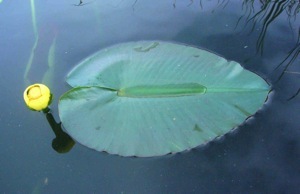
Note the yellow blossom and split oval leaf

But then scientists, those brilliant fellows that they are, finally noticed what everyone else had been noticing for centuries; that not all Nuphar looked alike. The Nuphar in Paris, France, is not the same Nuphar in Paris, Maine, or in Paris, Japan, if there is such a place. No problem, the science-types said, they’re just variations of the one Nuphar, subspecies as it were. But then the Imperial Empirical got better at analyzing plants on the molecular level and announced there are different species of Nuphar and different variations of the species.

Now the Nuphar has an identity crisis. Is it Nuphar Luteum subsp advena, or Nuphar advena? The important part is that we know it when we see it.

Botanists think there now may be some two dozen different kinds of Nuphar, maybe eight in the United States alone. The differences are often subtle, and not everyone agrees how many subspecies there are, or even how many Nuphar there are. But, most do agree the Yellow Pond Lily was a convenience store for the ingenious indigenous.

Ripening seed pod

One tribe of eastern American Indians reportedly ate the spongy roots, cooking them in stews, a point I doubt seriously if it is the same Nuphar I have locally. They also supposedly dried them and ground them into flour for baking. I greatly doubt that as well. There is only one old report — one — of that being done and I think the writer got it wrong, or it involved different species with different characteristics.  Nuphar roots are mentioned almost exclusively as a source of medicine not food. The seeds, however, were definitely esteemed and a major food source of western Indians, and they did not eat the roots.

Called “wokas” by the Klamath Indians, the seed pods were gathered and the seeds popped like miniature popcorn, or dried and stored, or ground into flour. They were also used to make gruel and thicken soup. Tens of thousands of acres of wokas were harvested by the Klamath, and presumably other tribes as well.

Young Nuphar leaves were added to soups and stews. Flowers were used to make tea. Older leaves and roots also contain tannin. The leaves were used to stop bleeding, as many astringents are. The roots were used in tanning and as an analgesic. They were also used as a staunching poultice for cuts, swelling, and other ailments. Dry root powder was used to stop bleeding, which is very believable considering how astringent they are.

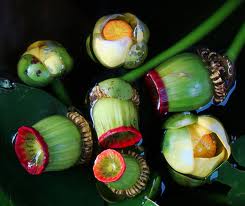
Ripe seed capsules have orange-red rings

My own experience with the Nuphar has not been as successful as the Indians, per se. I’ve collected many seed pods (see the red rimmed pod in the picture) and washed the slimy seeds for “popping.” They do “pop” when cooked like popcorn, and are quite tasty, but they barely pop. It is more accurate to say they crack open rather than puff up like popping corn does. The bitterness of the seeds vary.  Some are mildly bitter, some are not. They are worth collecting, and can easily be done wading, or from a canoe, or the like. To process the seeds put the pods in water and let them rot for three weeks. Not two weeks. Three.  The natural enzyme action removed the bitterness and related foul taste. Then removed the seeds and air dry. You now have a versatile staple. As for eating the roots….

I was canoeing on the lower Wekiva River in the mid 90’s when the water was low. I saw a Nuphar root for the taking. It was only about four feet long — they can grow four times that length. It was about four inches through, giving me plenty of root to experiment with. The main issue is tannin, the same problem one has with acorns. It has to be leached out. There may be other chemicals there as well.

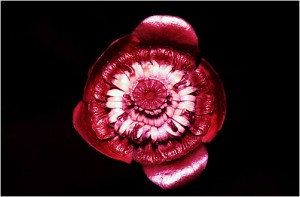
Nuphar as the insects see it, photo by Bjørn Rørslett-NN/Nærfoto

So, I cut off about a foot of root, peeled it, cubed it. It has the texture of eggplant on steroids. I put it to simmer in a very large pot, pouring off the water nearly every hour or so when it turned coffee colored. After two days of nearly constant simmering I gave up. The root seemed to be an endless source of tannin, and it remained too bitter to eat. If one had a flowing source of fresh water, the tannins might leach out naturally over time — as one can do with bitter acorns — but simmering in changes of fresh water for two days did not do it.

Then I considered that, like acorns, putting Nuphar roots in cold water and raising the water to boiling might bind the tannin to the starch. That would mean Nuphars might have to be processed in continuous cold water or continuous boiling water to be made edible. Or it may be that only young, short nuphar roots are edible. It was an inquiry I put off for several years.

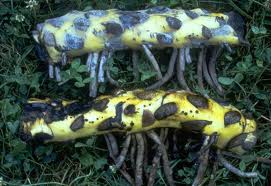
The roots remained forever bitter

A few years later I bought a house and put in a small enclosed water pond. I raised some Nuphar in it.  One spring I took out a piece of root, a foot long and three inches through, young by Nuphar standards. I peeled it. The flesh was a yellowy white and with dark mustard flecks. I sliced it 1/8-inch thin, and for a full week leached it 24 hours a day in warm water.  At the end of the week the slices looked the color of liver and root did not seem bitter. But it was also totally tasteless. What very little I ate didn’t seem to bother me but I don’t think it had much nutrition after a week and was a lot of work if it had any calories. Then I dried the pieces in my solar oven. They shrank some 90% and became very bitter, concentrating as it were the offending property. Nuphar might be a famine food if you had plenty of time, water and fuel to keep the water warm. The floating slices would not leech in room-temperature water. In warm water they would sink and leach. All in all I’ve never made the root edible.

I have never met an edible Nuphar root.

Among published professionals in the foraging community no one has found the Nuphar root worthy of being called an edible. Perhaps tellingly, the Nuphar is one extremely common plant that is not mentioned by the comprehensive professor, Dr. Julia Morton, in her regional book, “Wild Plants for Survival in South Florida.” And while it was known in Europe it was not eaten there.

The plant has many local names. Nuphar (NEW-far)  means nymph and comes to us from Arabic through Greek. Luteum (LEW-tee-um) means yellow. Pond collards refers to the edible young leaves and Brandy Bottle is in reference to the new flower — as in the picture on top— which has the aroma of brandy. Advena (add-VEEN-ah, means newly arrived.) Spatterdock is to the point; Dock is a word for a coarse weed and spatter is strewn about. It does look like it is spattered across a pond. Of course, Yellow Pond Lily says it all.

Environmentally, the Nuphar is important. It was green long before being green was keen. Its large leaves provide shade for fish and cover from predators. They are a home for all kinds of aquatic invertebrates which in turn are then eaten by fish. Here in Florida the Nuphar stem is a common place to find apple snail eggs, just above the water line, pink eggs exotic, white eggs natives. Beavers, muskrats, nutria and deer eat the leaves. The Indians used to capture deer when they were feeding on the leaves with their heads underwater. The roots, however, are supposedly toxic to cattle, no surprise there. Women reportedly did most of the gathering of the roots, particularly the eastern tribes. While they did wade or dive for them, they also took some from muskrat mounds, where they were stored. The western tribes focused more on the seeds. (And as an aside, the leaves can be pulped to make paper.)

In folklore, the Menominee Indians, who have been around the area of Wisconsin for some 5,000 years, said the Nuphar belonged to the “Underneath Spirits.” They thought is was the source of fog on lakes and that the plant represented “great medicine.” Perhaps they were right:  From a medical point of view, the Nuphar had many uses. The Peterson’s guide of medicinal plants says the roots were used for cuts, inflammation, blood pressure problems and “sexual irritability.” (One doesn’t think of Indians having sexual irritability, what ever that means.) Modern research shows the roots contain “nupharine” which was explored as an opium substitute.

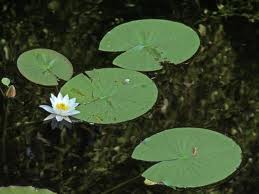
Don’t confuse the Nuphar with white pond lilly, Nymphaea alba

In 1910 the research team of A. Goris and L. Crete reported they had isolated a potential compound in the Nuphar, an amorphous, bitter alkaloid, C18H24O2N2,  which they called nupharine. That report is:  Sur La Nupharine, Bull.  Sci., Pharmacol 17: 13-15. Their report was of little consequence until WWII when war threatened to interrupt the medical derivatives of opium, such as morphine. That, and reports from early Africa explorers, suggested the water lily (Nymphaea) might be a source of something similar to opium — note, not the Nuphar, though similar. J. Delphaut and J. Balansard began to experiments on the water lily, Nymphaea albas. Their 1941 report is: Sur les properetes du Nenuphar (Nymphaea alba). Compt Rend. Hebd. Seances. Mem. Soc. Biol. 135: 1665-1670. Delphaut and Balansard found narcotic-like properties to the root of the Nymphaea alba, left. They were the ones who found the powdered roots would induce a deep sleep in mice, dogs and eels. This happened at the beginning of WWII, but there is no reference to the root being used during the war (see my Cat O’Nine Tail blog about another WWII plant experiment.)

All of that might have been almost interesting and dusted away in old journals if it were not for an article written by Prof. William A. Emboden, of California State University, in 1977, and printed 10 Nov. 1977 in Economic Botany, Volume 32, Number 14.  Emboden had an interest in the narcotic properties of plants.  His article was an attempt to identify which narcotic-like water lily was used in ancient Egyptian society by studying  hieroglyphics and other references. In review of the literature, he mentioned the above research. In some lilies the relevant narcotic-like part appears to be the root, in others the stalk, and in others the flower itself. Clearly the Indians, even with the Nuphar, were on to something, in some manner of medicinal preparation.

What this all suggests for foraging purposes is that the seeds of the Nuphar are the part of the plant to forage. They’re fairly easy to identify and collect. Try the leaves if you are desperate and like bitter. The root might have some medical properties but it is not food as I understand the word.

Green Deane’s “Itemized” Plant Profile

ITEMIZED: Mostly submerged, leaves alternate, up to 16 inches long with wavy edges, elliptical to heart shaped. Submerged leaves are very thin and grow directly from  rooted rhizome. Floating and erect leaves are attached to the stem. Yellow flowers, thick heavy roundish petals, blooms first appear in late spring and continue into early fall. Showy. Seed capsule ringed with red.

TIME OF YEAR: Leaves year round, flowers in spring. Seeds most of the year in Florida.

ENVIRONMENT: Ponds and still water area in slow streams.

METHOD OF PREPARATION: Young shoots and leaves cooked but might be too bitter to eat, seeds “popped” or otherwise cooked, tasty but labor intensive to clean from capsule. Instead of removing the seeds the capsules can be put in a bucket of water and the seeds allowed to rot out over three three weeks but the smell is formidable. The roots in my opinion are not edible.  Tea from the flower petals.

Lastly, the large leaves can be used to wrap other food for cooking or transportation.


{ 16 comments }

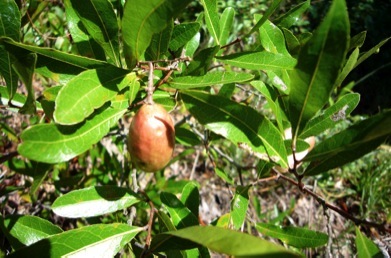
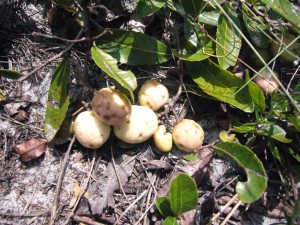
Gopher Apples are closely related to coco plums.

If you like the taste of pink bubble gum, you’ll like gopher apples, if you can find them

Why can’t you find them? Because nearly every woodland creature likes them as well, from tortoise to teenager. I identified the plant some 15 years before I saw a good crop of fruit. They fly off the leafy shelves, as it were

Blossoms are small and green

In all fairness, authors tend to be divided about the flavor and fragrance of the gopher apples. Some say they are odorless and flavorless. Other say they smell like a new, plastic shower curtain. To me, and other foragers, they taste just like old fashion, pink, baseball bubble gum, and have sweet and fragrant. There is also a hint of almond flavor in there as well. I cannot explain the difference in perceptions. It either has to be a plant problem or a taste issue, or both. The texture, however, is quite different from bubble gum. The dirty white or pink ripe fruit is very soft with a resistance similar to watery custard. You really can’t carry them in your pocket too far. It has one large seed about an inch long that has been likened to an olive pit which I think is stretching the definition a little. You’ll find gopher apples growing from Florida north to South Carolina and west to Louisiana. Here in central Florida they are common site on the Seminole Bike Trail in Longwood and Lake Mary. In Melbourne they are directly behind (south) the doggie showers at the dog park inside Wickham Park.

The plant, scientifically, is called Licania Michauxii, (lye-KAY-nee-uh miss-SHOW-ee-eye) and was named for the French botanist André Michaux, who might be that fellow to the right. The problem is father and son had similar names and both were botanists. Writers get them mixed up often. An early photograph identified as the elder Michaux has to be the son because the elder Michaux died 20 years before photography. The painting at the right could be the Younger or the Older. Judging by the handwriting my guess is it is the younger Michaux when he was younger. If you want to see him when he was older read my Maple Manna article. Anyway, the elder Michaux, personal botanist to King Louis XVI, traveled to the United States in the late 1700’s and described this plant in his journal (good thing is wasn’t witch hazel or we’d have “witch michauxii” not too easy to say.)

Ripe Gopher Apples In Melbourne, FL.

Licania is almost an anagram of what the Amazon natives called the plant family, Calignia. That is the best guess for where the word “licania” came from. Many calignia/licania are timber trees. The gopher apple, however, resembles an oak seedling, rarely more than a foot high but I personally saw them once some 30 inches high. The leaves are glossy, evergreen, 2-4 inches long,  narrow, alternating with rounded tips and easy-to-see veining. They have tiny clusters of yellow-green flowers in early summer. Usually they grow in a colony.

It’s a tough, wiry plant that spreads well even in poor soil but it is nearly impossible to transplant. If someone is selling well-established specimens in pots, buy ’em. Some say propagation is by seed, others say by rootings. Take your pick. They never grow from seeds that have dried out. Mine were a failure. Once established they can even survive a burn. A member of the greater Coco Plum family, chrysobalanaceae ( which is Greek for golden apple) the family has plants that are used for fruit and oils for candle making. Indeed, except for its small stature the Gopher Apple bears a resemlance to the white Coco Plum and one can taste a similarity to coco plum fruit

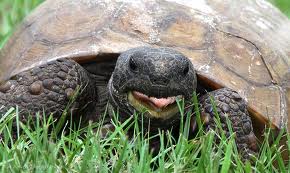
Gopher Tortoise, Gopherus Polyphemus, photo by B.A. Bowen

And yes, the gopher tortoise, Gopherus Polyphemus, which is becoming extinct, really likes them. Then again, if the tortoise does become extinct, then all the more gopher apples for the rest of us. I can see why the tortoise likes them; nice and low and tasty, hence the moniker. By the way, the tortoise’s name is Latinized English for a small burrowing rodent, the pocket gopher. Polyphemus was the name of the cave-dwelling giant in The Odyssey, a reference to ugly strength.

Addendum March 2018: A strapping, young, adult male reported to me that he ate about 20 Gopher Apples and 10 Tallow Plums at one sitting. They gave him temporary premature ventricular contractions which he verified by a heart monitor. And they went away in a short while. Thus we don’t which fruit might have caused said, or a combination of them, the amount, or if it was a personal sensitivity or something else entirely. 

Green Deane’s “Itemized” Plant Profile

IDENTIFICATION: A foot tall, oblanceolate leaves, glossy, evergreen, woody, 2-4 inches long, alternating, long and narrow, with rounded tips and easy-to-see veining, yellow-green five-petal flowers in tiny clusters early summer.

TIME OF YEAR: Fruits in fall but you have to watch  them and be quick or the forest denizens will get them

ENVIRONEMENT: Is native to dry sandy habitats, xeric sites, oak hammocks, sand hills, longleaf pine/turkey oak sand hills, sandy pine flatwoods, scrub, barrens, dunes and similar habitats. It is very fire resistant.

METHOD OF PREPARATION:  Out of hand as they come off the bush, don’t eat the seed. (I don’t know why they say son’t eat the seed as coco plum seeds are edible. I might have to experiment.)

{ 9 comments }