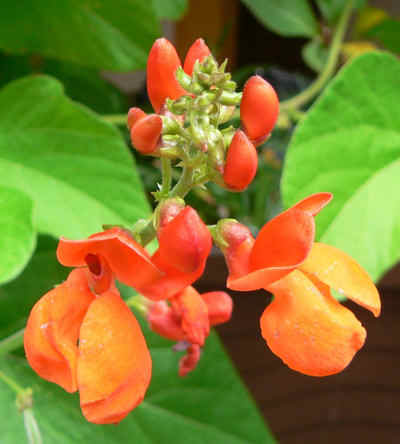
Two beans are grown for beauty, the Hyacinth Bean, edible with precautions, and the Scarlet Runner Bean, also edible.

It’s interesting that these two beans are so unlike the rest of the bean world yet so much alike. Both trail, that is, love to climb. They are showy, one towards purple the other red. They are perennials though are treated as annuals, and have starchy, edible roots. Their young leaves are eaten as well as their beans. Like the Hyacinth Bean the Scarlet Runner Bean also has tasty edible flowers. For the Hyacinth Bean go here.

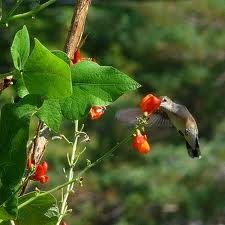
Botanically in Dead Latin the Scarlet Runner Bean is Phaseolus coccineus (fay-see-OH-lus koh-SIN-ee-us.) That’s the bastardization of two living Greek words that mean “Red Bean” though the seeds are multi-colored. (In Greek it’s:  fah-SO-lee  KOH-kee-no.) The Scarlet Runner Bean has also been called the Oregon Lima Bean, Aycoctl by the Aztecs, and Ayocote by the Spanish. It’s native to Central America and has escaped cultivation in many areas. This bean is still on the home kitchen menu in its original range but the rest of the world grows it as an ornamental. Lots of folks also use it as a nectar attraction for hummingbirds and butterflies. Historically, Scarlet Runner Bean was in English and early American gardens by the 1600s.

Edible Bean-flavored Flowers

There are some dozen and a half cultivars now. (Cultivars are made by man, varieties are made by nature.) The Dutch Phaseolus coccineus v. alba has white flowers. The “Butler” is stringless, “Painted Lady” has red and white flowers, the “Kelvedon Wonder” is an early variety with long pods, “Sunset” has pink flowers, and the “Scarlet Emperor” …has scarlet flowers. Under right conditions the Scarlet Runner Bean is the most productive of all the planted beans.

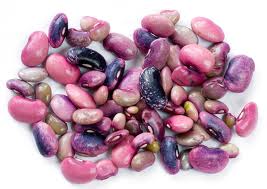
Scarlet Runner Beans produce many-color seeds

Like most beans the Scarlet Runner Bean contains small amounts of the lectin phytohaemagglutinin (figh-toe-hee-mah-GLUE-tin-inn.) The highest amount is in uncooked red kidney beans. It’s toxic in large amounts which is why kidney beans are always long-cooked. As few as five raw kidney beans can cause symptoms such as losing fluids and feeling lousy for four or five hours. While there are many people who report they eat Scarlet Runner Beans seeds raw it is a good practice to cook them. The young pods before beans truly develop are eaten raw.

I have planted both to climb guy wires near local telephone poles. It’s a win win win as they say. The ugly wire is covered with an attractive vine and blossom, I get to harvest the bean without having to give up any space or create a trellis, and the birds and bees are happy.

 Green Deane’s “Itemized” Plant Profile: Scarlet Runner Bean

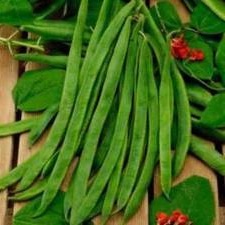
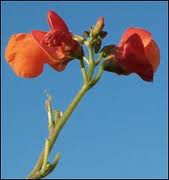
IDENTIFICATION: Phaseolus coccineus: Quick-growing vines, typical bean three-leaflet, dark green with purple tinged veins underneath, to 15 feet long/tall, red flowers borne in clusters like sweet peas, slender pods to a foot long. Seeds lima bean shape, color varies from shining black to violet-black mottled with deep red.

TIME OF YEAR: All year in warm climates, seasonally in temperate summer and fall

ENVIRONMENT: Fertile soil, adequate moisture, full sun, preferably something to climb on or it will ball up on the ground. Does better in moderate climates than either very hot or very cold.

METHOD OF PREPARATION: Young tender pods sparingly raw. Usually they are boiled, steamed, sauteed, baked, French-cut (in strips) before cooking; immature seeds used like shelled beans, read cooked; ripe, dried seeds used like dry kidney or Lima beans, long cooked; flowers have a bean-like flavor and are used in salads. Young leaves used as a pot herb, starchy root cooked. It is good food for cattle as well.

{ 67 comments }

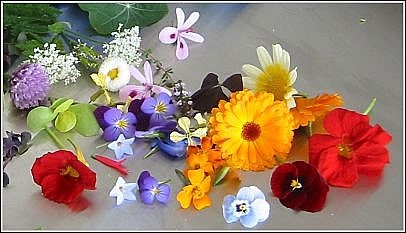
Edible flowers: Food for the Eyes and the Palate

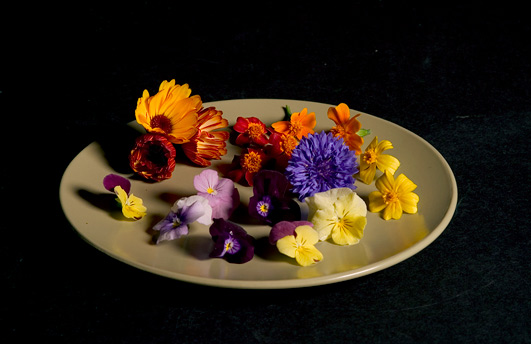
Spiderwort, Marigolds, Rosemary, Smartweed, Pineapple Weed, Chamomile, False Roselle, Lavender, Forsythia, Borage

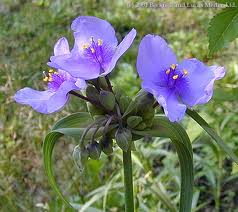
Blossoms are open only one day

Every time I see a spiderwort I think of Pocahontas, the 11-year old Indian girl who save the life of Captain John Smith (see my separate article about them and spiderworts.) There are many reason to praise the mild spiderwort. Its blossom can be candied or tossed plain into salads to add color. There are also ruby and white spiderworts. The blossom are open for only a day but that’s okay because the spiderwort has many blossoms waiting to open. With no particular flavor though with a hint of sweetness the flowers are available throughout their growing season. See separate article on site and video.

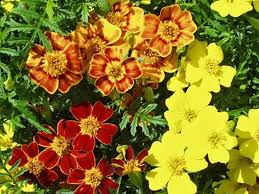
Some marigolds are better than others

There’s a lot of Internet misinformation about marigolds. All of them are edible from a non-toxic point of view. The more important question is which ones have an agreeable flavor? All of these get the culinary nod: Tagetes lucida, Tagetes patula, and Tagetes tenuifolia. Their flavor is citrusy. Usually only the petals are eaten. No green parts.  I also use them for yellow coloring in various dishes. Our three marigolds are called the “poor man’s saffron” along with the Calendula.

Rosemary’s sweet and spicy

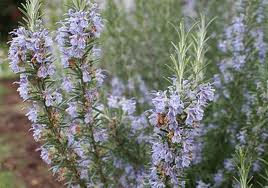
I can remember the first time I saw rosemary growing in the wild in North America. I was on a business trip to California. Of course it grows wild in its native Greece. There it is called ???????????? (then-dro-LEE-vah-row.) Students in ancient Greece wore it around their necks in garlands or braided it into their hair thinking it improved their memory.  In English Rosemary means “remembrance.” I have two bushes of it growing in my yard. The light blue blossoms are sweet, spicy, pungent and taste of rosemary.

Smartweed’s blossoms can be white or pink

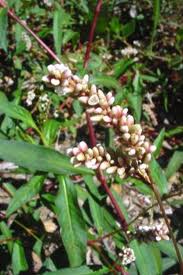
This next blossom is either love or hate in my foraging classes, the Smartweed, or Polygonum. I usually ask for a student volunteer to try a small amount. I also ask for someone who likes hot peppers. Once I’ve got the propert victim…ah.. volunteer I have them chew a very small portion of a leaf. It has a slow-to-get-started burn but then it grows like a red pepper heat rather than black pepper. The blossom are even hotter and fire up quicker. But, they have a bitter aftertaste and a perfume quality. Several of the Polygonum species heat up. The heat varies from species to species. In some the leaves can also be used as a green but they are a vasoconstrictor, read they can raise blood pressure in some.

Hardy Pineapple Weed

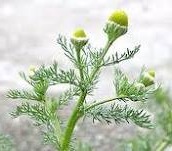
Most people don’t think of an edible wild flower growing in the middle of your driveway. Our driveway was hard-packed sand and gravel. Every summer it sprouted a determined crop of Pineapple Weed, Matricaria matricarioides. I noticed our horses, which doubled as our collective lawn mower, didn’t eat them. That led to my investigation. The weed is pineapply or applish and related to the next edible flower, Chamomile. Make a tea with the small flower heads. See separate article on site.

Chamomile: More than a sleep aid

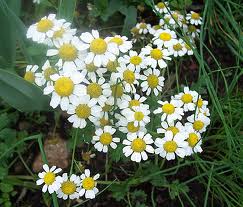
Three a.m. has to be the absolute worst time of any day. And when I’m awake then I make myself a cup of chamomile tea. The small flowers taste like the tea, on the sweet side and apple-ish. In a publication North Carolina State University warns that the flowers contain “thuaone” but that is a misprint which has since been proliferated over the Internet. I don’t cut and paste. I do my own research and write every word myself. That’s why there are so many typos. 😆 Chamomile has very low amounts of thujone, which is credited in significant amounts to getting people high. It’s one of the compounds in Absinthe. I’ve had Absinthe in Greece and the liquorish liquor did nothing for me. All chamomile tea does for me, and most, is make me sleepy. If  you are allergic to ragweed, however, you might want to avoid chamomile. The two plants are related and chamomile can bother some people with a ragweed allergy.

False roselle and edible leaves, too

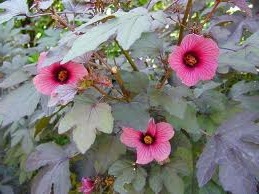
Many a hibiscus flower can go into salads and the like but I don’t know how many I’ll cover because most of them are virtually flavorless but they are pretty and add texture. I happen to like the False Roselle, Hibiscus acetosella, because beside the edible pink flower the leaves are edible as well, raw or cooked.  I use the young leaves for salads and stir fry. They keep their color. A close relative, Hibiscus sabdariffa is the real roselle and is also known as the “Florida Cranberry” or the “Cranberry Hibiscus.” A tart juice can be made from its fat calyxes. Its blossoms are edible as well. To see a related article click here.

Lavender has many uses

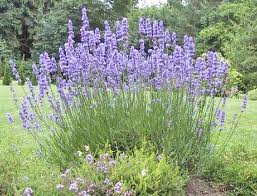
Lavender is an old stand-by found in many home gardens including mine. Its flavor is flowery, sweet and citrusy. Lavender has been used to flavor bread, cookies, jelly, beef, wine, sauces, stews, and custards. The blossoms are an attractive addition to champagne. The blossoms are also used around the house to impart a nice aroma from bedding to baths. It is also slightly diuretic.

Forsythia don’t last long

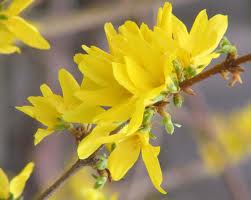
It’s easy to spot the Forsythia in the spring time. Just look for a naked shrub covered with yellow blossoms. You can find them in most urban areas and they escaped cultivation is several locations. The blossoms are spicy, minty, and slightly bitter. They add a cheery garnish to salads, particularly after a long winter. Very young leaves… very young leaves… are edible raw. Better boiled. See a separate article on site.

Borage flowers are sweet

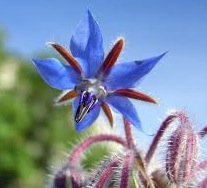
Where I live there are only two plants that smell like cucumber. One is a wild cucumber. The other smells like cucumber but does not taste like cucumber. But you can also cultivate a flower that has the faint taste of cucumber, borage. While it is naturalized in southern Europe most of us have to put it in our herb garden. Borage has a long history of medicinal and culinary use. Currently it is a source of gamma linolenic acid, GLA. The sweet blossoms and leaves have the taste of cucumber. The flowers are often used in salads or as a garnish and do well in many drinks. One technique is to put the blossoms in an ice cube tray and freeze them into ice cubes to be used in drinks.

Next: Edible Flowers: Part Five


{ 9 comments }


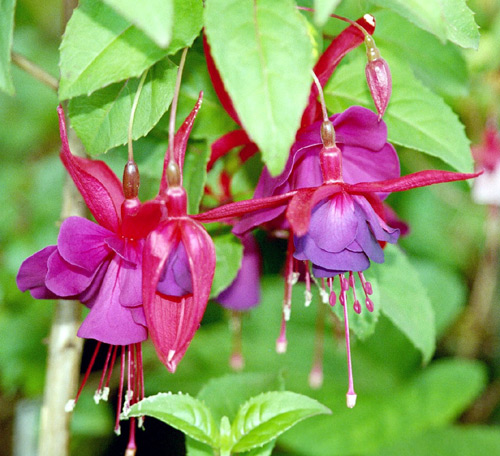
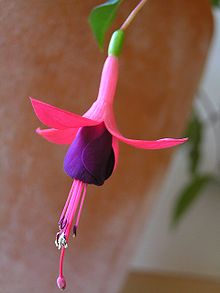
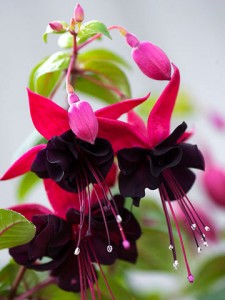
Double Blossom Fuchsia, Flower and Fruit Edible

Mention “fuchsia” and most folks who recognize the word will think of a bright color. Personally I think of Fuchsia’s edible fruit and flowers. It’s a landscape shrub employed everywhere.

As with many plants it was “discovered” by a European on the island of Hispaniola. That the natives there had long known about it doesn’t count. Perhaps because of the poor track record of Europeans in the New World we focus on their search for gold. But the historical fact is more explorations were launched for plants than gold and that is why we have “discoveries.” A discovery was a European learning of a plant that might have some use or value back home. It was also a way to justify the trip to your benefactors. Do you remember the story about 11-year old Pocahontas saving Captain John Smith’s life? Part of his mission in founding the Jamestown colony was to find plants, and the natives knew about plants. Explorers didn’t know if there was gold in North America but they certainly knew it had plants.

Charles Plumier, 1646-1704

Thus the French monk and botanist Charles Plumier discovered this colorful plant in 1696 or ’97 and published its description 1703, the year before he died at age 58 from pleurisy. The genus containing Frangipanis, Plumeria, is named for him. Plumier was one of the most important botanical explorers of his time making three trips to to the West Indies. It also helped that he was botanist to king Louis XIV of France. Plumeria’s publications brought not only knowledge of the Fuchsia to the Old World but hundreds of other plants as well. It is he who named the plant he discovered Fuchsia, to honor German physician cum botanist Leonhart Fuchs.

Leonhart Fuchs, 1501-1566

Fuchs himself had several publications under his academic robes and was long gone before Plumier was braving the Caribbean jungles. In 1530 Fuchs had argued that simple herbs were medically better than noxious compounds. He founded one of the first German botanical gardens. A student of the ancient the Greek medical writers Dioscorides, Hippocrates and Galen, and disliking Arabic medical writers, he produced an herbal guide of his own in 1542 which was translated into English in 1543. A medical professor he found the time to write over 50 books and papers including one on the eye and its diseases.  And what of the plant that honors his name and thankfully shifted from the hard German pronunciation to the soft Latinate? A lot of people like Fuchsia.

There is an American Fuchsia Society, a Fuchsia Forum — say that ten times fast — and literally dozens of local Fuchsia-inspired groups. They discuss just about everything you could possibly want to know about the Fuchsia except recipes. Apparently eating the plant de jour is …ah… verboten

Simple Fuchsia Blossom

Since the “discovery” just over 300 years ago there are now a little over 100 species of Fuchsia, some say 110. They are mostly found in the warmer Americas but also New Zealand. On first thought that would seem to be quite a distance spread. But, that tends to happen because we think the bottom of South America and the Antarctic, New Zealand, and Austraila et cetera were connected at one time. That’s the explanation given to how the Americas managed to get one still living native marsupial, the opossum. It also explains how New Zealand got Fuchsias. While most Fuchsia are shrubs one of the New Zealand specimens is a tree.

Cornucopia II on page 163 lists three Fuchsia specifically beyond the generic use of the flowers and berries including Fuchsia excorticata and Fuchsia splendens. Fruit of the F. excorticata, found in New Zealand, “are eaten raw, or may be used in pies, tarts, cakes, desserts, and dessert sauces. They have a unique flavor and like rose hips, should be combined with potato flour or corn starch to temper the slight astringency.” F. splendens is from Central America: “The fruits are eaten raw or made into preserves, having a pleasant lemon-like flavor with no noticeable after taste.” Lastly, he mentioned the cultivar “Karl Hartweg.” “Reportedly has the most pleasant flavor of any fuchsia fruit. The flavor is mild and somewhat lemon-like, and the fruits can be eaten in quantity.” Remember the blossoms are edible, too.

And in the for what it’s worth department the shift from the hard German to the soft Latin causes problems.  “Fuchsia”  apparently is difficult to spell. The British paper The Guardian had to run three corrections on 27 September 2011 regarding “fuchsia.”

“Not always is the Guardian faithful to the memory of Bavarian-born botanist Leonhart Fuchs (1501–1566), for whom the fuchsia is named. Latest case in point: a piece noted that cutting a figure against the general beigeness of the backdrop at the Labour party’s conference platform, was a speaker with hair “a startling shade of fuschia” (A star speaker, and Balls, 27 September, page 7). Other recent instances: Michelle Obama’s “fuschia” dress (President Obama’s jobs speech to Congress – as it happened, 8 September, guardian.co.uk); a reference to “Fuschia Dunlop’s restaurant” (London walks: a food trail around Soho and St James’s, 31 August, guardian.co.uk)”

Incidentally, Frangipani literally means to “break bread.”

Green Deane’s “Itemized” Plant Profile

Flowers and Fruit

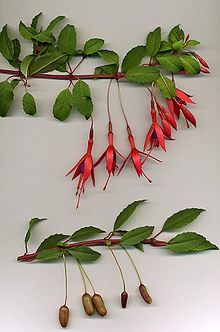
IDENTIFICATION: Fuchsia leaves are opposite or in whorls of 3–5, simple lanceolate and usually have serrated margins (entire in some species), 1–25 cm long, and can be either evergreen or deciduous varying from species to species. The flowers are pendulous, teardrop shape, in profusion throughout summer and fall in temperate climes and all year in tropical species. They have four long, slender sepals and four shorter, broader petals. In many species the sepals are bright red and the petals purple but the colors can vary from white to dark red, purple-blue, and orange. Some are yellowish with some hybrids being white. The ovary is inferior and the fruit small dark reddish green, deep red, or deep purple, a lot of  very small seeds.

‘Diva White’ fuchsia

TIME OF YEAR: Year round to fall depending upon climate and species

ENVIRONMENT: Varies with species, from shade to full sun. They blossom more in the sun and are more compact. They like to be fertilized a lot. Fuchsias don’t like their feet wet or dry. Will grow in containers and hanging baskets.

METHOD OF PREPARATION: The fruit can be eaten out of hand. It has a subtle grape flavor with black pepper tossed in. If your fuchsia fruit is pleasant it can be used as most fruit. Blossoms are edible raw.


{ 7 comments }

Flowers can be pretty, potent, and flavorful

Mayflower, Chrysanthemum, Cornflower, Rose, Daylily, Elderberry, Chicory, Johnny-Jump-Ups, Linden, Banana
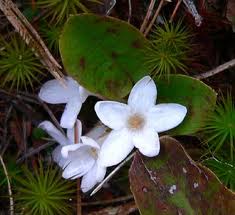
The aromatic and small Mayflower

A rite of spring in the frozen north, or at least the part I lived in as a kid, was to go looking for Mayflowers. Hardy little souls, they would blossom on the side of small Maine mountains and cope with bone-cold nights and reluctant-to-melt patches of snow and ice. They are the first to blossom after the frost leaves. My mother had her favorite haunts for the flowers and we would go clambering amongst boulders and hardwoods for them. Their intoxicating aroma, and the fact they are the only green thing growing that time of year, makes them easy to find. Epigaea repens, also called Trailing Arbutus, actually have the same aroma as citrus blossoms, or at least to my nose they do. Slow growing and in the Heath family they are salad fare but light and delicate. However, in many places they are rare, so pick accordingly. They’re also illegal to pick in some places. Check your local laws, or, have no witnesses and eat the evidence. See full article on site.
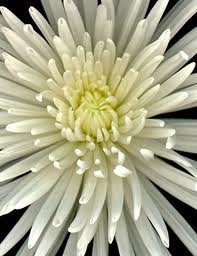
Bitter and pungent "mums"

Our next edible needs little introduction: The Chrysanthemum, also called Mums, one of my grandmother’s favorite. First cultivated in China perhaps 3,500 year ago, they have been on the menu for many millennia. Mums got to Japan in the 8th century and are the flower of the emperor’s family. Yellow and white “mums” botanically Chrysanthemum morifolium, are the ones usually found in the kitchen. The blossoms are boiled to make a sweet drink. In salads the raw flowers are pungent, if not bitter. Use sparingly. They are also used to flavor wine (remember lilac wine?)  The leaves are steamed or boiled and used as greens. I’ve grown them in my vegetable garden for that very purpose. The greens also dehydrate well. To Victorians  a red chrysanthemum means “I love” a white one, truth, and a yellow one “slighted love.”
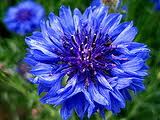
Cornflower, spicy with hints of cloves

When you’re a kid you’re told everything is poisonous, and for me that included Bachelor Buttons. Also called the Cornflower, they have been tossed into salads and used for a garnish for a long time. They got the name cornflower because the hardly species grew in English grain fields when all grain was called “corn.” Long before wedding rings were common bachelors indeed did wear Bachelor Buttons in their jacket button holes to let the ladies know they were single. How did she let them know the same thing? Curiously, she showed cleavage. Married women covered up, single women advertised.  Another version is that if the flower retained it color while worn his love was true, but if it faded it was not… sounds a bit rigged to me… Then again, I might not have been a lifelong bachelor if I had picked a few of these flowers. Bachelor Buttons were the favorite flower of President John Kennedy. His son John John wore one at his wedding to honor his father. The flower also reaches way back into history. It was used in the funeral wreath made for Pharaoh Tutankhamun, about 3,300 years ago. Their flavor is spicy, sweet, reminds one of cloves. In the language of flower a Bachelor Button means “single blessedness.”
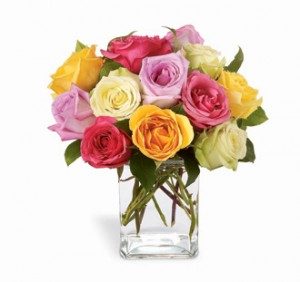
Roses have many flavors

Long ago and far away I got accepted to law school… Another story for another time. The job I had stopped before classes began so to tide me over I delivered flowers. One could tell several stories regarding that including how most women are very suspicious when they get roses from him on other than Valentine’s Day. I even had some deliveries refused! Beyond that, however, the roses I delivered had no scent. None. Zip. Zilch. Nada. No rose aroma at all. Just before I would deliver them I’d take them out of the van and spray them with an artificial rose aroma. The roses were raised for their look and in the process the scent was bred out (and you did not spay them in the van or you smelled roses for weeks.)  Less purebred roses are known for their rose hips and edible petals. The flavor depends on the type, color and conditions of raising. They can range from tart to sweet, spicy. Darker ones have stronger flavors. Remove any white portion of a petal. That will be bitter. All true roses (genus Rosa) are edible.
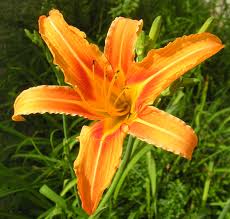
Use Daylilies in moderation

A foraging standby in all but the southwest desert and northwest Canada is the daylily. But first a couple of  precautions. I am writing about only the Hemerocallis genus. Also go sparingly, they can be diuretic or laxative. That said day lilies are on the sweet side, vegetable-ish. Like squash and gladiola blossom they’re used to hold tasty finger food but like other blossoms cut them away from the white bitter base. I used to enjoy them often but the only local patch is now under a highway exit. See full article on site.
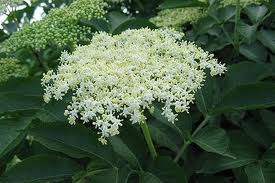
Elderberry's blossom is flat topped

No compendium of edible wild flowers is complete without mentioning Elderberry blossoms. Small, aromatic, they have been used for tea for centuries with some recipes 600 years old. They can also be put into pancake batter and the like to sweeten and give a nice texture. Another use for the blossoms is to flavor a light summer time sparkling wine, or as my friend Dick Deuerling would call it “Elder Blow Champagne.” The dark purple to black berries have been used medicinally — particularly for colds and flu — and in the kitchen. I like Elderberry pie and to use the dried berries as a spice such as on ham. Approach red elderberries with caution. See full article on site and video.
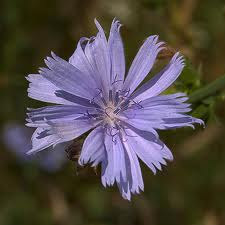
Chicory blossoms and buds are on the menu

I can remember the first time I saw Chicory in blossom. I was in Alexandria, Virgina, visiting a dear friend for a couple of weeks and wandering amongst parks, monuments, and museums. The mower had somehow missed it and I noticed it immediately. The blue pretty Chicory is a close relative of the dandelion but not sweet at all. In fact it runs towards bitter and earthy. Think radicchio. You can eat the flowers and the bud, or pickle the buds. The root has been roasted and used to extend and flavor coffee. See full article on site.
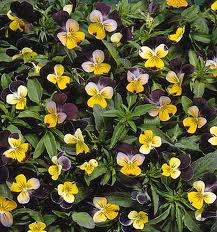
Wintergreen flavored Johnny-Jump-Ups

I don’t know if I should tell you about Johnny-Jump-Ups or not. Botanically Viola tricolor, they are among the first flowers I can remember my mother picking from the wild and eating on the spot. She did it because her mother did it (and she also never missed harvesting a cowslip either.) Johnny-Jump-Ups like moisture and can tolerate shade so… here goes… Our house was in the country had a septic system with drain field. That drain field was moist and shaded and Johnny-Jump-Ups grew there in profusion. And that is where my mother picked them, one after another, eating them on the spot. She’s now 86. Maybe they primed her immune system. Johnny-Jump-Ups have a mild wintergreen flavor and a variety of uses.  They’re added to salads, desserts, soups, served with cheese and used to decorate confections. Incidentally they are the ancestor of the common Pansy. To see an on site article about violets click here.
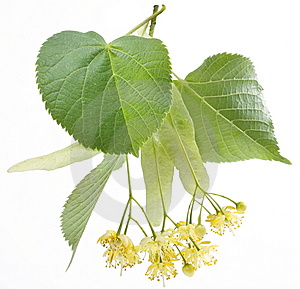
Note the tongue depressors

My first association of the Basswood tree was not with flowers but its soft young stems. My father used to make homemade pipes out of apple wood then use a basswood stem for the pipe stem. (Read about it in “Dad’s Applewood Pipes.”) If the cattail is the supermarket of the swamp the Basswood tree is the supermarket of the forest. However, its blossom are edible and make a well-known tea though you may know of it by its other name, Linden tree and Linden tea. The Linden tree is nearly impossible to misidentify in that it is the only one in North America that has what looks like a large tongue depressor under the blossom. The flowers are delicate and have a honey flavor. Mix them with basswood seeds and the combination tastes like chocolate. See full article on site and video.
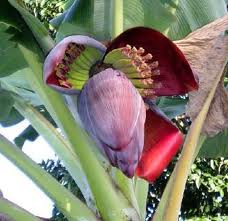
Banana blossoms are usually cooked

Few people in temperate North America ever think of eating a banana blossom, but a lot of folks in warm areas do, and it does not prevent your banana tree from producing fruit. The entire flower/fruit arrangement of the banana is odd with the blossom being a purplish torpedo. Look closely at the stalk end of the blossom and you can see what will eventually become a hand of bananas. The blossom can be eaten raw (bitter-ish) or cooked, less or no bitterness. Usually it is peeled to get the more tender parts then shredded or sliced thin and soaked to reduce the bitterness. The flavor is not of the banana but rather more of a vegetable. See full article on site and video.

Be sure to read Edible Flowers: Part Four

{ 0 comments }

Poison Ivy Ponderings

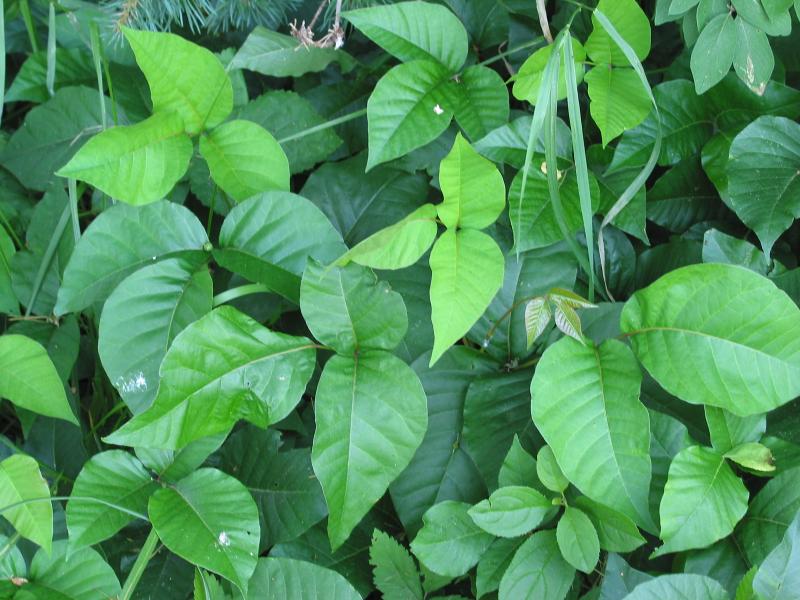
Three leaves, no spines, can be trouble

I did something this past week I have not done in some twenty years:  I got poison ivy.

Given what I do for a living, running around the wild all the time in a state smothered with poison ivy, I suppose two cases 20 years apart is a good record.

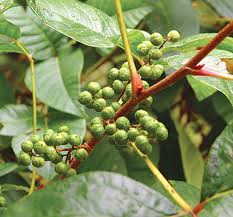
Berries range from green to white

It’s a small rash with a big itch, on the front of my right knee. Clearly I kneeled in it. That I didn’t notice is perhaps a professional embarrassment or a statement to my enthusiasm. But I really didn’t get off the beaten path so where I actually got exposed is a tad of a mystery. As for other irritants I’m assaulted by fire ants often, which is why I wear long white socks while teaching. They are my first line of defense against those amazingly painful creatures. And wasps are also in the occupation hazard mix. Fleet of feet helps with those, and avoiding three places where they love to nest: Folded palm fronds, and inside sculpted podocarpus or elaeagnus bushes, occasionally southern cedars as well.

When I knowingly get exposed to poison Ivy I quickly wash — within the minute — with Fels Naptha soap. That has seemed to have worked for the last two decades. Of course the key word is “knowingly….”   Fels Naptha is an inexpensive industrial strength laundry soap sold by the bar in most grocery stores, costing somewhere around a dollar per. My mother used it as well. Experts say immediate washing is good, even with just water. You want to remove the offending oil urushiol (you-RUE-she-all) before it penetrates the skin. The woodlore of using Jewelweed juice on skin exposed to poison ivy might stem from the plant’s saponins, a natural soap it contains. The important point to remember is don’t use a soap with oil in it as the oil will just spread the urushiol around making things worse. You want a non-oil soap that breaks surface tension and helps wash the urushiol away, as quickly as possible. I always have my “poison ivy” soap and water with me when in the field.

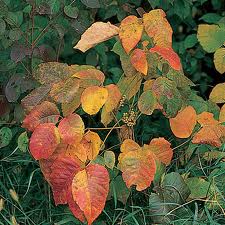
Poison Ivy In Fall

There’s an amazing amount of misinformation about poison ivy on the Internet, even on medical sites that should do better. While there may indeed be three people among the seven billion of us who are absolutely immune to poison ivy, the 6,999,997 rest of us are not. It is more accurate to say we differ in our resistance and rate of expose. Said another way, nearly everyone will get poison ivy if they are exposed to it long enough, including the 20 percent who are really resistant.  For some that is one exposure, for others dozens. The folks who say “I’m immune to poison ivy” are the prime candidates because they are not avoiding it. Over the years I have spoken to many a person who was extremely surprise when they got their first case of poison ivy because they were “immune.” The point is you will get poison ivy at some point if you keep getting exposed to it so the best course of action is to avoid it and keep that day as far away as possible, if ever. Dr. John Kingsbury, who was an expert on toxicology, says the plant cells have to be breeched to release the oil, that just rubbing the plant would not cause a problem. He added, however, that an insect chewing part of a leaf would release the oil so even a small amount of crushed cells can release enough oil to cause a reaction.  He was adamant that soap did no good and that the contamination was immediate. Other views have disagree in the 47 years since he wrote his book saying that non-oil soaps, even plan cold water helps if used immediately.

Incidentally, there is little difference between Poison Ivy and “Poison oak.” There’s no agreement whether they one or two species. Best guess is different varieties of the same species. From our point of view it doesn’t matter. It, or they, are bad.  In fact there are six related species that can give people rashes or other allergic reactions: Mangoes, cashews, pistachios, poison ivy, poison sumac, and Brazilian pepper.

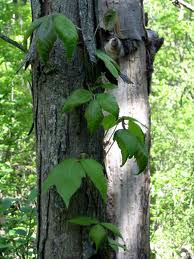
Poison ivy can climb and cover trees

All that said there are some interesting facts about poison ivy. Only humans, some other primates, and guinea pigs can get it. Your dog and cat can’t. But they can carry the oil, urushiol, on their fur and give it to you, and that oil is active for years. Poison ivy is also a very nutritious food for deer as well as rabbits. Some 60 birds eat the fruit and bees visit the blossoms.

What is fascinating is how poison ivy works. The oil “locks” onto your skin cells, essentially interrupting the chemical signal from the skin to the rest of the body. Thus the area expose is viewed as foreign, so the body attacks it. The result is sores, itching and bleeding. As bad as that is it also has a positive side. Native Americans would put poison ivy sap on warts so the body would get rid of the warts. That’s some interesting thinking. Unfortunately poison ivy can also be systemic. You can get it on your knee and have it crop up on your back. In fact, the only other time I got poison ivy the first blisters appeared in my right elbow. Then they showed up in my left elbow then behind both knees.

What irritates me the most is not my current itching but that I am so good at recognizing it that it managed to get me anyway. There is one other possibility. I’m quite sure I did not come in contact with the plant. However, it did rain and the oil can wash off damaged plants with the water carrying the oil. I could have knelt in that, a more feasible explanation, or at least one my ego likes it.

Euell Theophilus Gibbons 1911-75

There is also a controversial side to the plant: Eating poison ivy to confer immunity. No doctor would recommend it nor do I. However, Euell Gibbons, the previous generation’s back-to-nature guy, wrote that he ate some every spring and never had a case of poison ivy there after. I know an herbalist who does the same thing in the spring every year. And I personally have seen one person eat it, again in the spring. There are three theories:

One is they all eat the plant in the spring when perhaps urushiol production is low. Or, two, the mucus that covers our insides protects us and we just digest the oil. A third possibility is it does somehow confer a protection. Kingsbury was firm in his thinking that eating it was very dangerous and that the plant was dangerous all year long.  I think I will leave the experimenting to others. I’m not compelled to try it, not sure why… ah pardon me a moment while I scratch my knee…

For me avoiding poison ivy has worked fairly well thus far so no sampling in spring needed though I am pondering switching to long pants, maybe a tight body suit… nawh…

{ 56 comments }