Butomus umbellatus, the Flowering Rush

In one area of its native range — Israel — it’s endangered becauses of dwindling habitat. In another part of the world it is an invasive weed, and you can bet where it is an invasive weed — the Great Lakes area — no official mentions that, oh by the way, it’s edible.

James Burke

I am going to date myself but I was an intense fan of the original production of Connections with James Burke, circa 1979. An extremely accomplished science writer he’s still famous for his live walk on and narration of a rocket launch at Kennedy Space Center that I also saw. Perfectly time he talked down to the last second and lift off without a mistake. It is regarded not only as one of the best performances by a science reporter but among the gutsiest. In these days of digitization and retakes the mundane can become the remarkable. Burke did the remarkable the hard way decades ago. If you watch this video remember that from the waking part on it was done live in one take.  What you don’t see is off screen is an assistant silently doing the count down with hand gestures. The camera crew in the final shot were also standing on a fire ants nest and had to endure some 15 seconds of their stinging attack. After you watch that here’s a follow up some 35 years later with Burke in the last five minutes talking about that famous shot.

When Burke started to write Connections he said he just followed the trail. He had a non-linear view of history. I did the same thing when I wrote “Indian Pipes, Gold and Emily Dickinson.” Botany in isolation will put you to sleep. When I decided to create a post called the “Only Plant In Its Genus” I wanted to find all of the edible plants that were the only plant in their genus, just to see where it would take me. Along the way I found some unexpected things, among them the Flowering Rush.
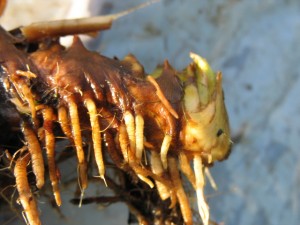
Root is more than half starch

Let’s start with the fact that the Flowering Rush is not a rush. And as you might guess as a member of a monotypic genus botanists had and have a hard time classifying it… When in doubt, a cat washes, when botanists are in doubt they make it monotypic though there is some debate about that. Some argue the version in North America has some subtle differences than those in Eurasia and that there should be two species, Butomus umbellatus and Butomus junceus. Others say the differences are either not differences or just plain don’t exist. In the decades to come perhaps a decision will be made on that. Historically the Flowering Rush  was a common food in Northern Europe particularly Russia where food sometimes was scarce.
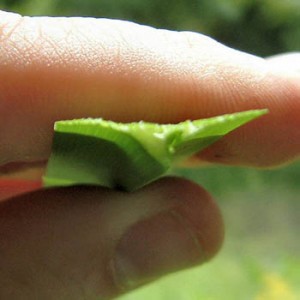
Flowering Rush has a distinctive cross section

The perennial was first collected in North America near Laprairie on the St. Lawrence River in 1905 but it was seen as early as 1897 (not 1879, that’s an internet replicated typo.)  It was officially collected near Detroit in 1930 by O. A. Farwell who noted it had been there since before 1918. Now the Flowering Rush, also called the Water Gladiolus,  is basically found in the northern half of the United States and the lower half of Canada. Humans, moving water, ice and muskrats help spread the plant, the latter because they use it to build their mounds. The root has edible starch, a point no doubt not missed by the muskrats.

Butomus (BEW-toe-mus) is bastardized Greek from bous meaning ox and temno meaning to cut. The leaves are sharp enough to cut a cow’s muzzle. Umbellatus (um-BELL-ah-tus) means with umbells, a reference to the flowers. We are told that in Dead Latin it was called Buxus but Buxus is now a totally different genus altogether.

Green Deane’s “Itemized” Plant Profile: Flowering Rush

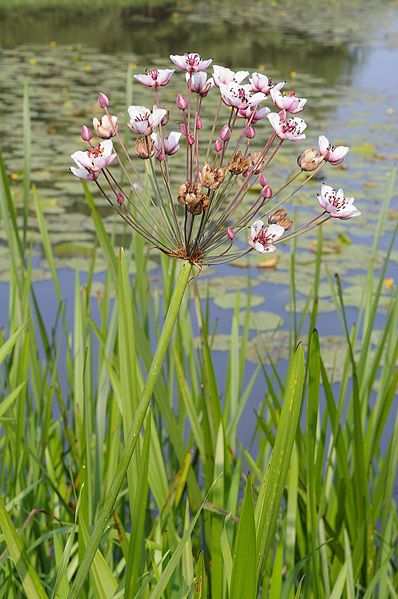
IDENTIFICATION: Butomus umbellatus: Flowering aquatic plant to five feet. Leaves are thin, straight, sword-shaped, triangular, pointed up to 40 inches (one meter long.)  They grow in two rows from a rhizome. The leaves are also untoothed, parallel veined and twisted, submerged leaves however are limp. The flowers grow on tall, cylindrical stalks with umbrella-like clusters of twenty to fifty flowers. They have three large pale pink petals each — sometimes white — and three lower, smaller sepals that are also pale pink and resemble petals. Blossoms have six pistils that are simple, whorled, united at the base. The fruit is an indehiscent, many-seeded capsule. The plant looks like a bulrush when not flowering but is missing the bulrush’s tuff of seeds. Base of flower stalk can have bulbils (tiny bulbs) and the rhizome rootlets.

TIME OF YEAR: Flowers from June to September

ENVIRONMENT: Mud, ponds, canals, ditches, edges of still or slowly moving water to about 10 feet deep. Will not grow in shade.

METHOD OF PREPARATION: Removed bubils and rootlets, peel rhizome, boil, changing water helps. They can also be roasted. Alternatively cleaned rhizome can be dried then ground. Check to make sure it is not acrid after drying or roasting. Used as a thickener or added to flour. Is more than half starch. Harvested also plants make excellent compost.
{ 5 comments }

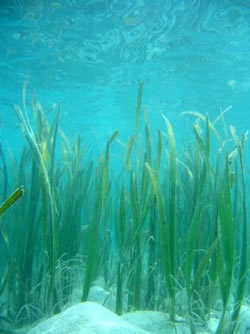
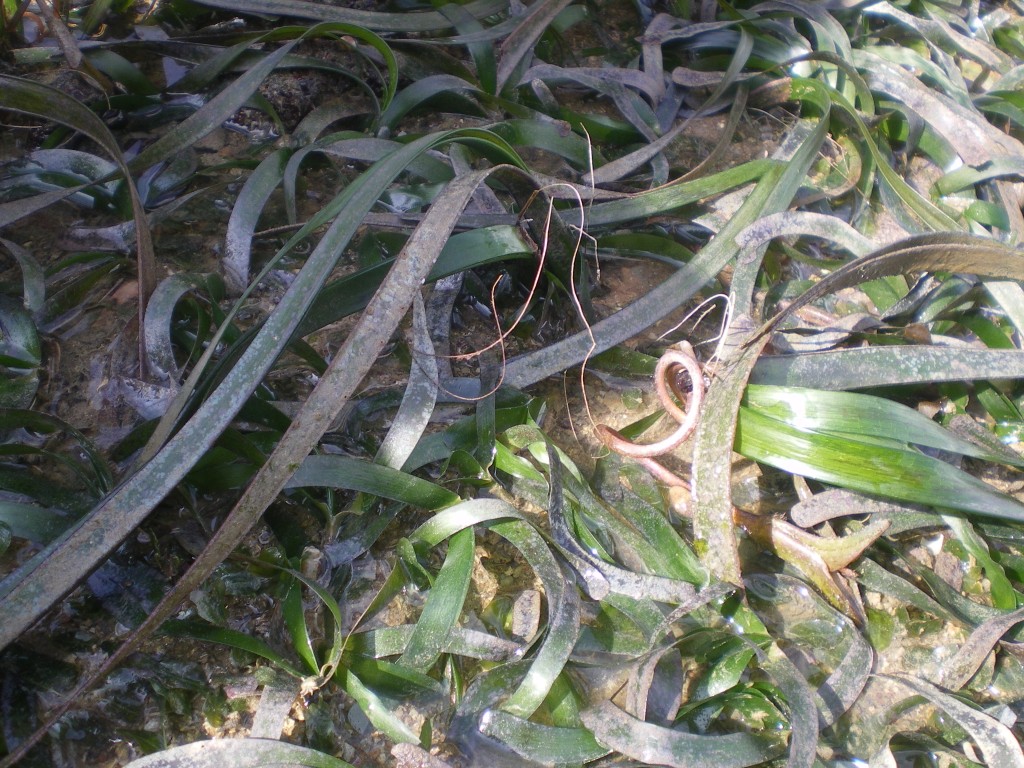
Tape Seagrass at low tide

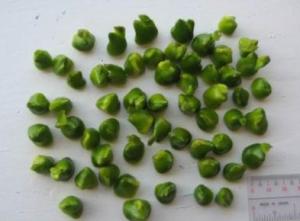
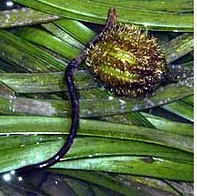
Seed Capsule

It is said that all seaweed is edible but that’s not true. There’s at least one species that is not, Desmarestia ligulata. Why? Because it is laced with sulfuric acid though it is used to make pickles.  While most seaweed is edible — I said nothing about being palatable — there is at least one edible sea grass, Tape Seagrass.

Actually one does not eat the Tape Seagrass but rather its large seeds, which taste like chestnuts when cooked. What drew my attention to Tape Seagrass is that it is a monotypic genus, that is, there is the only species in its genus. Some genera have hundreds of species if not thousands. Monotypic genera have one species each. You can read about monotypic genera here.

Uncooked seeds

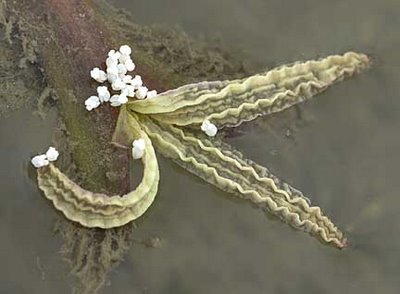
Tape Seagrass is found basically between Southeast Asia and Australia. Where it grows it provides a habitat for numerous sea creatures besides human food. It’s method of reproduction is a bit odd. Male flowers, looking like bits of Styrofoam, surface, aggregate, then float off looking for a receptive female blossom. It is a littoral species, that is, it lives on mudflats, or sand flats, part of its life submerged and part out of water. This does not necessarily mean Tape Seagrass seed pods are easy to collect. I dug many clams when young and slogging across mud flats for food is hard, exhausting, smelly work… though that does remind me of a line from a comic strip called B.C. by Johnny Hart: “The bravest man I ever saw was the first one to eat an oyster raw.”

White Male Flowers Floating To Larger Female Flower

Where Tape Seagrass grows it’s a wave breakers, protects some beaches, and is a preferred food of the Dugong, the only living relatives of the Manatees. Unexpectedly where it does grow is called “meadows.” Worldwide there’s some 72 species of sea grass. As mentioned Tape Seagrass provides good hiding places for small species, oxygenates the water, and is good at carbon sequestration to reduce any effects of global warming.

Botanically the species is Enhalus acoroides. Enhalus (en-HAL-us) is Dead Latin’s bastardization of Greek en halo meaning in salt. Acoroides (ah-koh-REE-these) is more obtuse. It means resembling Akoron or Akoros. Those were ancient names for Sweet Flag and Yellow Flag, strap-like plants that resemble the leaves of a cattail and grow in water.

 Green Deane’s “Itemized” Plant Profile: Tape Seagrass

When the tide is in

IDENTIFICATION: Enhalus acoroides: The leaves are very long and ribbon-like (30-150cm long, approximately 1-2cm wide) with many parallel veins and air spaces, generally dark green in colour and thick. Rolled leaf margins make the leaves tough (hard to tear), the rhizome are thick, with long black bristles and cord-like roots. Fruits are round and large (4-6cm in diameter) with dark, ribbed skin and 6-7 white seeds. When the ripe fruit bursts, the seeds are released and float for only about five hours before they start to sink. The seeds are estimated to be able to travel 25 miles.  When the seeds settle, roots develop rapidly and the seeds germinate quickly.

TIME OF YEAR: Flowers year round

ENVIRONMENT: Littoral land, shore exposed at low tide often adjacent to mangrove forests. Widely distributed in the tropical parts of the Indian Ocean and the Western Pacific and very common in the Indo-Malay Archipelago and in the Philippines.

METHOD OF PREPARATION: The white seeds are eaten raw out of hand. Or they can be boiled or roasted, if the latter they have a chestnut like flavor. The plant itself smells sulphurous. If allowed to ret a strong, saltwater resistant fiber can be made from the remains.

{ 5 comments }

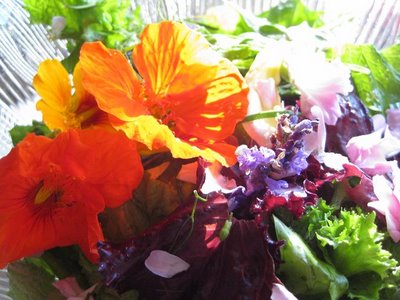
Edible Flowers Have a Rainbow of Flavors

Scarlet Runner Bean, Peony, Hyacinth Bean, Clover, Jasmine, Chervil, Water Hyacinth, Plantain Lily, Meadowsweet, Perennial Phlox

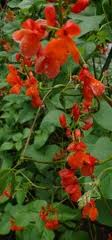
Scarlet Runner Bean

Scarlet Runner Bean is not your run-of-the-mill bean. It has bright red flowers, multi-colored seeds and puts on a root to be a perennial though most folks view it as an annual. Depends where you live, I suppose.  The root is edible, the young pods are edible before they get fibrous, and the beans in or out of their pods are edible either cooked fresh or after shelling and drying. Read the beans have to be cooked no matter how you prepare them but young pods don’t. The blossoms are under an inch across, grow in clusters, and are available all season. The flavorful flowers are favored by hummingbirds and butterflies and make excellent garnishes for soups and salads. There are at least 18 varieties of the Scarlet Runner Bean.  Usually the vine is used to cover fences, guy-wires and trellises. Here’s an article on it.

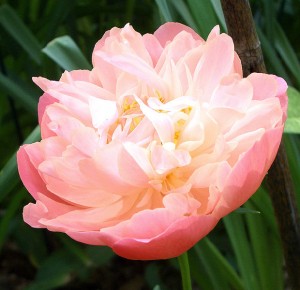
Peony have large blossoms

When my father passed on six years ago he left a small peony garden that still has 18 bloomers, one red and a wide variety of pink shades. They’re quite hardy and don’t like to be moved. Peonies have been been cultivated in home gardens since about the time Columbus sailed the ocean semi-blue. Of course there are no good ones where I live because they like temperate climates and need winter chilling. Originally from China they were and still are used for medicine. Petals can be added to salads or will happily float in drinks. Another option is to parboil them, add a little sugar, and use them as a sweet treat.

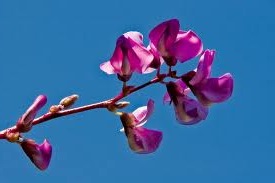
Hyacinth Bean Blossoms

I could almost make an identical entry for the Hyacinth Bean from that of the Scarlet Runner Bean because they have so much in common and are so  unlike other beans. They’re annuals, ornamentals, have edible roots, leaves, pods, beans and flowers. The difference is the Hyacinth Bean seeds themselves have a different toxin and in a greater amount so they have to cooked far longer. The bean-flavored flowers, however, are edible raw or cooked. To see a separate article on the Hyacinth Bean click here.

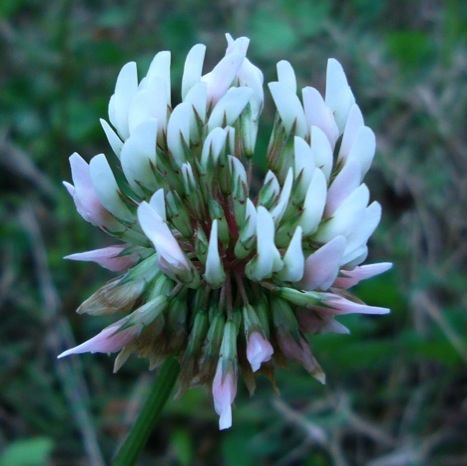
Clover's wings and keel pea blossoms

My mother told me there wasn’t a time when she couldn’t remember not eating white clover blossoms, Trifolium repens. That’s interesting because raw clover blossoms aren’t the easiest to digest. In fact, the entire clover family is on the cusp of edible not edible. It’s high in protein and the flavor of the blossoms is alright but eating clover leaves is more on the famine food side of life. As for the blossoms, they are usually made into tea which brings a precaution. This is caution usually about sweet clover but should be remembered for all clovers. They should be used totally fresh or totally dried, not wilted and never moldy. In fact, moldy clover is how they discovered the “blood thinner” coumadin, read after it kill a lot of cows. So when you use clover, particularly sweet clover, make sure it is either totally fresh, or totally dried and has no mold. And yes, you can eat red clover blossoms, too. It tastes like hay. To read more about clover click here.

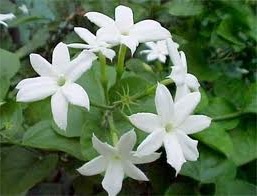
Jasmine's waxy-white blossoms

You knew Jasmine was edible. Of course you did. That’s how we get Jasmine-flavored tea. But make sure you are getting the right Jasmine, Jasminum officinale not plants in another genus or family falsely called Jasmine. The real Jasmine has tubular white flowers, waxy, and shiny oval leaves. Jasmine is from Asia but because it has been used for so long no one really knows where it got its cultivated start. There are mentions of it in 9th century texts in China and by the 1700s it had spread so well some folks thought it was native to Switzerland. The famous aroma comes from an oil in the petals and it is those petals you use to flavor your tea. If you live in the Old South do not mistake “Carolina Jasmine” for real Jasmine. It is the offensive and odorous Gelsemium Sempervirens, a significant allergy plant and quite toxic.

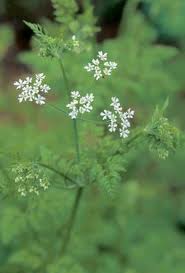
Chervil's Tiny Blossoms

One of my favorite dishes uses chervil as a flavoring. In a casserole you put alternating layers of thinly sliced potatoes and sliced onions, a layer of one then a layer of the other. Dab each separate layer with real butter and then a pinch of tarragon and a sprinkling of chervil. Then a bit of salt and pepper on each layer to taste. You fill the casserole that way. On top you spice it up one more time, add more butter, and a sprinkle of paprika. Into the oven it goes around 325º F until tender. It also makes great hash. The chervil is a subtle flavor, and loses much to heat. That is why when you use the flowers for flavoring in a dish or a salad you usually add them last, just enough to heat, in a salad just before serving. Their anise flavor is subtle but the nose knows all.

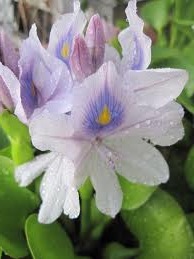
Water Hyacinth, note the yellow spot

The most “noxious” weed in the world has edible flowers, and leaves and bottoms. It is also illegal to possess. Follow my motto: “No witnesses, eat the evidence.” I doubt anyone would be prosecuted for eating a weed nearly every regulatory agency wants to get ride of, the Water Hyacinth. Depending upon your perspective it is either a usable biomass that can replace itself in three weeks or its a horrible weed to be done away with. The state of Florida estimates that if it did not spend millions annually and stopped fighting it the aquatic denizen would within three years clog all freshwater bodies and rivers in the state to the point of not usable. Do your civic part by picking the blossoms and cooking them like a vegetable. Their flavor is mild.  Note one easy identifying characteristic is that the blossom’s top petal has a yellow spot. To read more click here.

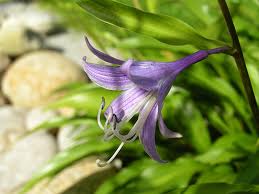
Plantain Lily Blossom

How many Hosta’s there are is a matter of taxonomic debate. Maybe 45. While the flowers of all of them are reported to be edible, according to the Montreal Botanical Garden, at least the young leaves of one, Hosta  lancifolia, the Narrow Leaf Plantain Lily, are eaten cooked or preserved in salt. It’s a common home and landscaping plant that can tolerate shade and has naturalized in several states from Massachusetts to all states touching a straight line west to Indiana. I’m sure you have seen its distinctive leaves.  It’s a good thing you are interested in the flowers because just about every woodland creature loves to eat the leaves, from deer down to insects. In temperate climes look for blossoms at the end of summer or early fall.

Meadowsweet

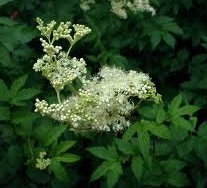
What shall we call it? Meadowsweet or Queen of the Meadow? I grew up calling it Meadowsweet so I’ll stick with that. From the old world it is naturalized in the northeast quadrant of North America, New Jersey north as far as you can go and west to Illinois and then as far north as you can go. And for a botanical hiccup, it is also naturalized in one western state, Colorado. We had multiple horses when I was growing up and subsequently hayed in the summer. I remember many times mowing Meadowsweet and smelling its sweet aroma. Scientifically Filipendula ulmaria, it always grew in the damper areas of the fields. The entire plant is used herbally and in the kitchen to flavor this or that. The blossoms are equally sweet and make a pleasant additions to soups and salads or make a tea, one of the few medicinals teas that’s easy to get down.

Perennial Phlox

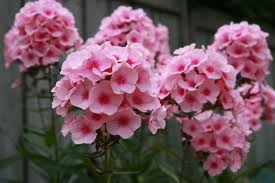
There are two Phlox, so to speak. One that gets one to two feet high and shows up seasonally in fields, particularly here in Florida. That’s not the one you want. You want the perennial phlox that grows to three of four feet tall, Phlox paniculata. I’m sure you’ve seen it. Like the Meadowsweet above it is an old world plant found in many home gardens and yards. It has escaped into the wild and can be found in the eastern half of North America plus Oklahoma, Kansas, Nebraska, Utah and Washington state. The slightly spicy blossoms range from red to pink to white. They go well with fruit salads.

See Edible Flowers Part Eight.


{ 7 comments }

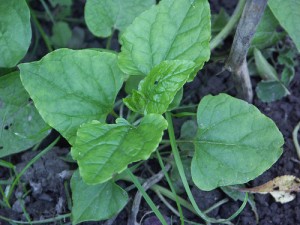
Leaves and flowers of the cold tolerant Spinach Vine

I like to think of myself as biclimatic, living 42% of my life (thus far) in a cold climate and 58% in a warm climate. There are virtually thousands of wild edibles and I’ll never be able to write about all of them. Most of the foraging books strike a temperate balance which is why I add a higher percentage of warm species to my pages. They just aren’t covered. This plant, however, is for all my relatives who are still in love with snow, ice, frozen pipes and frostbite.

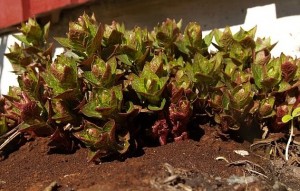
Shoots are ruddy

The Spinach Vine is a native of the Caucasus Mountains where it thrives in dappled forest sunlight. The growing season is short, the winters polar bear cold at higher elevations. It is there that this wild edible vine takes advantage of every no-frost day to put on a fine display of edible leaves. Closely related to Chenopodiums — Lamb’s Quarters, Fat Hen — it’s edible raw or cooked. That makes it a hot item in vegetable gardens and permaculture plans particularly in cooler climates.

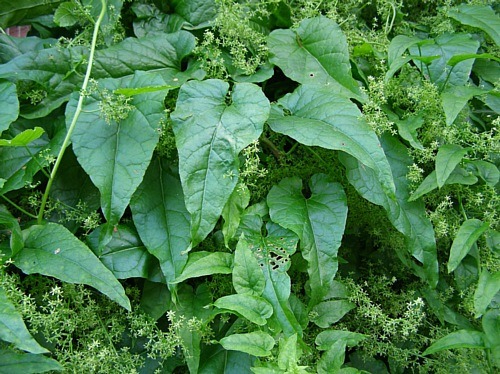
Young leaves are heart shaped, older leaves more arrow shaped

Not surprisingly this wild edible is a cultivated sensation in Scandinavia which is known for having a chilly night or two (the coldest I ever experienced was 53 below zero. We went ice skating just to say we did. The bonfire and hot coffee did not keep us warm. Twenty feet from the fire you would freeze to death. Personally, I would live on the Equator if I could.) In the northern growing season the Spinach Vine will manage nine to twelve feet of bushy growth. Interestingly, like our local milkweed vine (Morrenia odorata) the lower leaves are heart-shaped on long stems, older leaves more arrow shaped, flowers small and green. Seeds are black and shiny.

Botanically the plant is monotypic, which means it is the only plant in its genus (read it has the botanists confused.) As for the name, Hablitzia tamnoides… (hab-LITZ-ee-uh tam-NOY-these.) If you remember from my Botany Builder lessons in my weekly articles, “oides” OY-deez means resembles or looks like. In this case tamnoides means looks like the edible Tamus communis, or the Black Bryony (which oddly is in the yam family.) Hablitzia honors Carl Ludwig Hablizl, aka Karl Ivanovich Gablitz, a naturalist in the late 1700s and early 1800s who also happened to be a vice-governor in Crimea. That’s supposed to be handsome Carl on the upper left according to a Russian website but I doubt it. His dates are 1752 to 1821. He’d have to be 69 in the photo and photographing people didn’t happen until the late 1830s. Perhaps a son. Carl was born in Prussia but moved with his father at age six to Russia in 1758. From 1769 to 1773 he participated in a scientific expedition to southern Russia, exploring the lower Volga (as if no one had before him.) Carl became the caretaker of the treasury garden in Astrakhan in 1781 then took part in a Caspian expedition for Count Voinovich in 1783 looking for plants, animals and artritocratical birthplaces among lowly Greeks (a long story best left to baptismal intrigue.) Called an academic Carl wrote The Natural history of East Tartary, 1789, a book of some 216 pages available on line for about $12, used. Not sure how his name of Gablitz, same as a town in Austria — Vienna Woods in fact — got transliterated into Hablizl. Here’s a guess, though: When you’re Germanic and but working for a Russian count perhaps it was prudent to change the spelling of your name. Would Gablitzia tamnoides be much different than Hablitzia tamnoides?

 Green Deane’s “Itemized” Plant Profile: Spinach Vine

IDENTIFICATION: Perennial, small its first year, needs a trellis, vine to about 12 feet, many branches, green five-petaled flowers, shoots green and red, ruddy, wrinkled heart-shaped leaves when young, more arrow shaped when older. Seeds, kidney shaped, flattish, biconvex, edge rounded, smooth, glossy black.

TIME OF YEAR: Summer, start in a hotbox, it can take some frost in the fall. If you are going to grow it in a warm climate the seeds need to be kept in the frig for a while, chill hours improve germination.

ENVIRONMENT: In its native range it likes Spruce and Beechwood forests, gullies and ravines.

METHOD OF PREPARATION: Leaves and shoots, raw or cooked. Tastes similar to musky nettles.

And for the heck of it, the name in several languages:

BULGARIAN :  Кавказий шпинат  Kavkazii shpinat.

CHINESE :  高加索菠菜   Gao jia suo bo cai.

DANISH :  Spinatranke.

DUTCH :  Kaukasus spinazie.

ENGLISH : Spinach Vine, Caucasian spinach, Caucasus spinach, Climbing spinach, Hablitzia.

FINNISH :   Köynnöspinaatti.

FRENCH :   Épinard grimpant du caucase.

GERMAN :  Kaukasische Spinat.

GREEK :  Καύκασος σπανάκι  Kuvkasos spanaki.

ITALIAN :  Spinacio del Caucaso, Spinaci di Caucasi.

JAPANESE : コーカサスのホウレンソウ   Kookasasu no horensou,  コーカサスのほうれんそう  Kookasasu no horensou,  コーカサスの菠薐草   Kookasasu no horensou.

POLISH :  Szpinak kaukazki.

PORTUGUESE :  Espinafre de Cáucaso.

RUSSIAN :  Габлиция тамусовидная   Gablitsiia tamusobidnaia.

SPANISH :  Espinaca del Cáucasia, Espinaca del Cáucaso.

SWEDISH :   Rankspenat.

TURKISH :  Ispanak Kafkasya.

{ 14 comments }

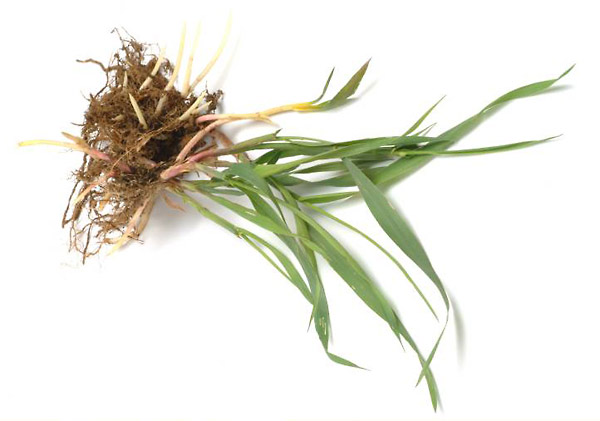
Quack Grass, a source of grain and root flour

Plants of little use often have only one common name, or not even that. Plants that are valued or are a pest usually have too many names such Quack Grass.

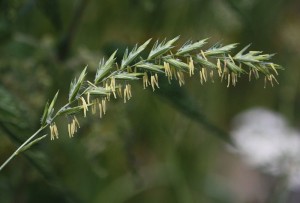
Quackgrass Seed Head

Quackgrass Seed Head

Most people today know Quack Grass,  Elymus repens, as a pest, a hard-to-get-rid of weed found in corn and soybean crops, persistent and resistant to a variety of herbicides. To the Internet population Quack Grass is an herbal medicinal employed as a diuretic. Forgotten between reduced agricultural cash flow and increased urinary flow is Quack Grass as food.

In Edible Wild Plants of Eastern North America, Merritt Fernald, the grand botanical man of his day, wrote: The ubiquitous Quack-Grass or Witch-Grass (with scores of other colloquial names) is usually known merely as a persistent and obnoxious weed, most difficult to eradicate and completely eating up the good of the land; but it was shown in the 18th century that it might be eaten if one cared to utilize it. Thus the British botanist, Withering, wrote: ‘the roots dried and ground to meal have been used to make bread in years of scarcity.'”

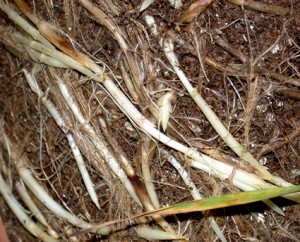
Quack Grass Roots

Flour from the roots, not exactly what one might expect to learn. Daniel Moerman in his Native American Food Plants mentions seven species used as grain by the natives including E. repens. Also listed were: Elymus canadensis var. candensis, Elymus elymoides, Elymus glaucus, Elymus glaucus ssp. glaucus,  Elymus multisetus, and Elymus sibiricus. Dr. Couplan in his Encyclopedia of Edible Plants of North America adds Elymus condensatus, Elymus triticoides, and Elymus canadensis (without the variation.)  In Cornucopia II E. canadensis is reported as an important food for the Paiute. It also reports E. triticoides were parched and ground into a fine meal called pinole. It was eaten as porridge or in cakes and drinks. The book also warns that hair on the grain must be singed off before it is used as food. Quack Grass  is not a large producer of grain, perhaps only 25 seeds per plant. The starchy root is more attractive from a foraging point of view.

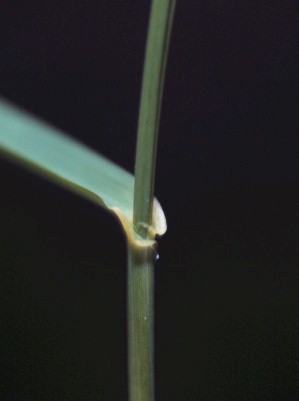
Notice how auricles wrap around the stem

Also called Couch Grass, Quitch, Twitch, Witchgrass and a couple of dozen other common names, it came to North America from Europe around 1818. Botanically, as one might expect, it has has several names: Agropyon repens, Elytrigia repens, Elytrigia vaillantiana, Triticul repens, Triticum vaillantianum, and most recently Elymus repens (EL-ih-mus REP-inns) which understandably translated means Low Growing Wild Millet. Elymus is Dead Latin’s version of an old Greek word for Millet (Elymos) which comes from Elgo which means to cover referring to the lemma and palea which tightly cover the seed. In botanical English it is often referred to as Wild Rye.  In Greek mythology Elymus is also the natural son of Anchises and brother of Eryx; one of the Trojans who fled from Troy to Sicily. With the help of Aeneas they built the cities of Aegesta and Elymé. The Trojans who settled in that part of Sicily called themselves Elymi, after Elymus. He was also a man from Lemnos killed by Gorge when the women there killed all the males on the island. I know a family from Lemnos. So the he’s and she’s must have patched things up since then.

Grains must be singed of hair

Quack Grass seed is some 12% oil and has 3 to 8% triticin, which is related to inulin which might make it suitable for diabetic use. On digestion triticin releases fructose; mucilage (10%); saponins; sugar alcohols (mannitol, inositol, 2% to 3%); essential oil with polyacetylenes or carvone (0.01% to 0.05%); small amounts of vanilloside (vanillin monoglucoside), vanillin, and phenolcarboxylic acids; silicic acid; and silicates.

Green Deane’s “Itemized” Plant Profile: Quack Grass

IDENTIFICATION: Elymus repens: A perennial grass from rhizomes reaching 3 1/2 feet in height.  Leaves, 1 1/2 to 12 inches long, very skinny, under 1/2 inch.  Blue green leaves may or may not have hairs on the upper surfaces, lower leaf hairless.  Short membranous ligule, narrow auricles that clasp the sheath, the quickest and easiest element of identification. Seed head a long, narrow spike with many individual spikelets arranged in two rows along the stem.  Spikes 2 to 8 inches long, seeds with awns. To separate it from other grasses look for the auricles, rhizomes, and a long, narrow spike for a seed head.

TIME OF YEAR: Can flower spring to fall.

ENVIRONMENT: Crop fields, turfgrass, lawns, nurseries, moist meadows, urban landscapes, disturbed areas.

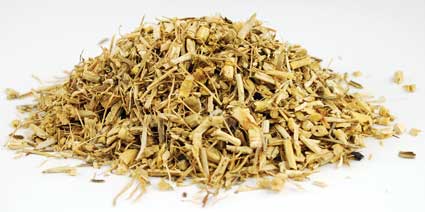
METHOD OF PREPARATION: Grain winnowed, singed, used for flour porridge. Roots dried and ground, used like flour.


{ 16 comments }