Mugwort best reproduces from rhizomes

Like some other plants with famous relatives Mugwort gets lost in the negative publicity.
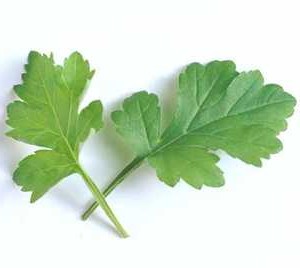
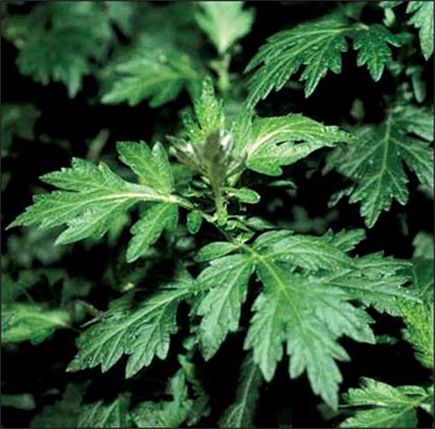
Tops of leaves are dark green and hairless

Mugwort, Artemisia vulgaris, is completely over shadowed by Artemisia absinthium, the original narcotic ingredient in the liquor Absinthe. I have had the liquorice-like real Absinthe several times in Greece and I have no idea how 1) anyone could like it let alone 2) become addicted to it. It reminds me of extremely bad sweet Ouzo. That bring me to a bit of history.
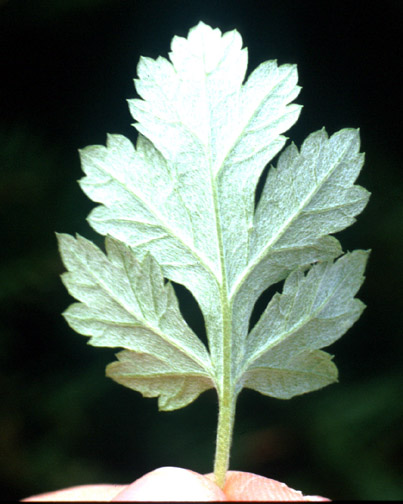
Bottom of the leaf is silvery-white because of a covering of wooly hairs

Decades ago I studied cooking with a retired chef who claimed to have taught Chef Boyardee, Ettore Boiardi 1897 – 1985, the finer art of cooking. (Green Deane has the credentials to cook on ships.) This chef liked the original Oysters Rockefeller which was made with then-banned in the U.S. and still-banned original Absinthe. In his retirement community there was a retired chemist. So these two very old fellows helped each other out. The chemist distilled the Wormwood to add to the sanitized Absinthe and the chef made the original Oysters Rockefeller for them. I often wondered what the headline would have been if they had been arrested for making the illegal dish. Some 40 years later I still use that chef’s (legal) recipe to make Strawberries Romanoff at Christmas. Incidentally the word “Absinthe” comes from the Greek word apsinthion which can mean “undrinkable” a description I totally agree with.
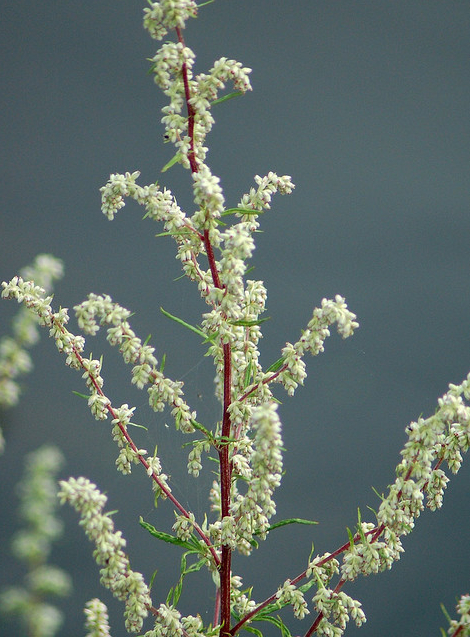
Mugwort has a sage-like aroma

While Mugwort is not as powerful as its genus sibling it has its own chemical calling card: Cinceole, or wormwood oil, thujone, flavonoids, triterpenes and everyone’s favorite rat killer Warfarin aka courmarin also known in medical circles as coumadin. Despite all that the leaves and buds are used as a flavoring or a potherb. There is also an edible cultivar called the White Wormwood or Ghost Plant. It has a floral taste similar to chrysanthemums and is used in soups or fried as a side dish.

A native of Eurasia Mugwort is found in most of North America except the desert southwest and northern plains states. Artemisia vulgaris is said ar-tah-MIZ-ee-ah vole-GAR-us. Vulgaris means common. Artemisia is Dead Latin’s version of a Greek name for wormwood after the goddess Artemis for whom it was sacred. Artemis’ Roman equivalent is Diana.  She was the twin sister of Apollo, a goddess of transitions, a hunter, a virgin, and one of the goddesses who assists at childbirth. She also got really irritated with the love affair between Krokus, a human, and Smilax, a wood nymph. Such things were frowned upon. But even in her anger Artemis was romantic. She turned Krokus into the saffron crocus and Smilax into a brambly vine so they could be forever together… ain’t love grand. There are several real people named Artemisias in Greek history but the pronunciation is ar-tah-mah-SEE-ah.
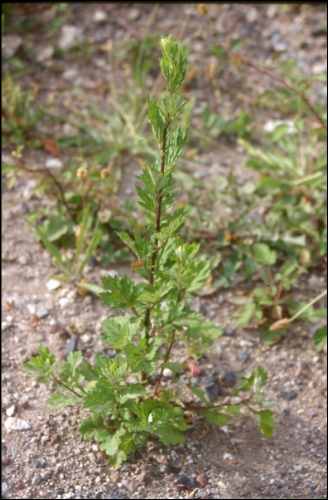
Mugwort prefers poor soil

As one might guess the plant has many common names. Among them are:  Moxa, Traveler’s Herb, Artemis Herb, Felon Herb, Muggons, Old Man, Sailor’s Tobacco, Motherwort, Greenfinger, Bulwand, Chrysanthemum Weed, and Cingulum Sancti Johamis which means St. John’s Plant not St. Johnswort. Just where “Mugwort” came from is a lingusitic nightmare but the best scholarly guess is “mug” meant “midge” and wort “plant” or midge plant, to ward off insects. Indeed, you can make smudge sticks out of Mugwort.

Take a few branches, arrange into a small bouquet, and lay on it side. With string tie the stem end then wind the string up the bouquet like the stripes on a barbershop pole. Once at the top, wind back down and also tie at the bottom. Take the now bundled branches and roll in something like a sushi mat to tighten the roll. Let dry. Light when needed to keep irritating insects away.

To dry Mugwort for other uses clean branches (without water) and remove dead or damaged leaves. Make into a bundle and tie at the stems. Hang in a dry, dark area for a few weeks.

There are about 19 other Artemisias used in different ways around the world. They include, besides the two already mentioned: Artemisia abrotanum, Artemisia afra, Artemisia annua, Artemisia asiatica, Artemisia dracunculus, Artemisia dracunculus sativa, Artemisia frigida, Artemisia genipi, Artemisia glacialis, Artemisia japonica, Artemisia judaica, Artemisia ludoviciana, Artemisia maritima, Artemisia pallens, Artemisia princeps, Artemisia stelleriana, and Artemisia umbelliforme.

Green Deane’s “Itemized” Plant Profile: Mugwort

IDENTIFICATION: Artemisia vulgaris: Perennial weed with persistent rhizomes, may reach five feet tall, often reddish-brown in color, and become woody with age. Leaves two to four inches long, one to three inches wide, simple, alternate, deeply lobed, and have a distinctive aroma.   Leaves on the upper portions of the plant are more deeply lobed and may lack petioles.  Leaf undersides are covered with soft, white to gray hairs, while upper leaf surfaces may be smooth to slightly hairy. Flowers are inconspicuous occuring in clusters at the top of the plants.  Individual heads are very small and on short stalks. Mugwort looks similar the garden chrysanthemum as well as ragweed seedlings, which lack the distinctive aroma typical of mugwort.

TIME OF YEAR: Flowers summer into fall, greenery available most of the season.

ENVIRONEMENT: Waste ground, roadsides, railroads, fallow agricultural land with a lot of nitrogen still in it, sandy, open ground, prefers lime-rich soils.

METHOD OF PREPARATION: We will let Cornucopia II do that: “young shoots and leaves are an indispensable condiment for fatty poultry such as geese and duck as well as fat pork, mutton, and eel. In Japan they are boiled and eaten as a potherb, or used to give flavor and color to festival rice-cakes… Dried leaves and flowering tops are added to country beer, or seeped into tea. At one time in China the leaves were used for wrapping glutinous rice dumplings eaten during the Dragon Boat Festival.”
{ 21 comments }

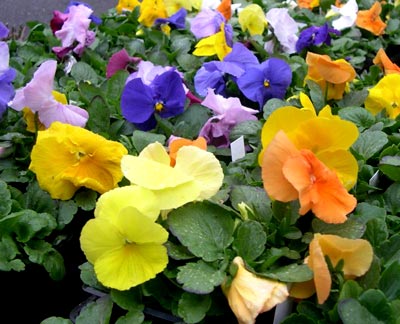
Pansies are among the edible flowers, go easy on the yellow ones.

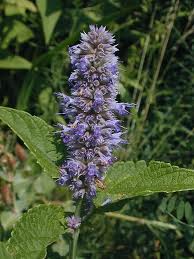
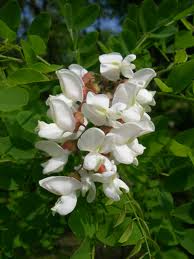
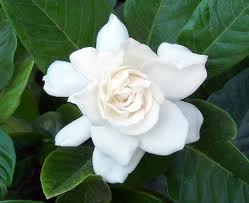
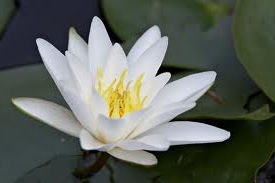
Society Garlic, Anise Hyssop, Black Locust, Gardenia, Fragrant Water Lily, Strawberry, Marsh Mallow, Maypops, Milkweed, Hollyhocks

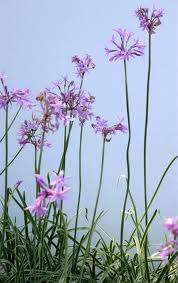
Society Garlic, Flowers on long stalks

It’s clearly not wild. It’s clearly a planted ornamental. But I get asked about it all the time. Is Society Garlic edible? The short answer is yes. The blossoms smell and taste far more like a vegetable than a blossom. Their flavor is sweeter than garlic, more like of an onion but still peppery. They’re actually a native of South Africa and only a distant relation to regular garlic. European settlers to South Africa considered it a more polite spice to eat at social functions than real garlic. It’s probably safe to say that there is more Society Garlic growing locally than real garlic. Garlic does not like the hot weather whereas Society Garlic thrives in it. If well-established they’re drought resistant, too. The leaves are also edible, and are the bulbs on many species. Use the flowers in salads or soups, any place you want a bit of garlic, pepper and onion. To read more click here.

Anise Hyssop

The native Anise Hyssop aka Giant Blue Hyssop, is a flower that’s hard to miss. It’s tall, in the mint family with anise scented leaves and blossoms though some say its aroma reminds them of root beer. Anise Hyssop has long been used to make tea and lend ambiance to potpourris. Native Americans used it medicinally for coughs, fever, wounds and diarrhea. The flowers are edible. They’re a garnish, great in salads and are often used in Oriental-style entrees. Botanically it is Agastache foeniculum and is found basically in the northern two thirds of North America, think Kentucky latitude north.

Black Locust

No accounting of edible flowers would be inclusive without mentioning the Black Locust, Robinia pseudoacacia. Just about the entire tree is useful in some way including the flowers. Fragrant, they are made into fritters in America, Europe and Asia. For a tree native to the Southeastern US it gets around. The white flowers are also made into tea. Incidentally, the pink flowers of the Robinia neomexicana are also edible. The Black Locust is sometimes called the False Acacia, which is what its species name means in Dead Latin. Planted in France, it is the source of that country’s Acacia Monofloral Honey even though it is not an Acacia. In fact the Black Locus actually produces more honey than the Honey Locust.

The evergreen Gardenia

Is there a flower garden in America without a Gardenia in it? They are so common they are called the Common Gardenia, Gardenia jasminoides. In bastardized Greek via Dead Latin — all Latin is dead whereas Greek is still alive — –oides (OY-deezs) means “look like” or “similar to.” In this case jasminoides means like the Jasmine and indeed Gardenia blossoms are also used to make Jasmine tea. It seems a little like bait and switch but since the pallet doesn’t know the difference your Jasmine tea may be flavored with Jasmine or Gardenia. As for the Gardenia flowers they are eaten raw, pickled or preserved in honey. The fruits are also edible and used as yellow coloring for other fruits.

Fragrant Water Lily

One of the more difficult things about the Nymphaea odorata is what common name to call it. Fragrant Water Lilly and American White Water Lilly seem to be in the running. We’ll go with Fragrant Water Lilly, and it is! Actually the unopened flower buds can be collected and boiled as a vegetable. Once opened the raw blossom can be used as a garnish or nibble. Whether the plant’s rhizome is useful is something of a debate. Some think our local yellow native Nymphaea mexicana can be used the same way.

Wild Strawberry

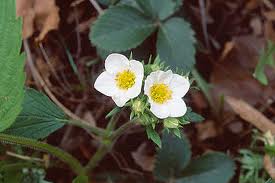
There’s a real good reason why almost no one knows this next flower is edible. And that’s because nearly everyone eats the fruit! Strawberries are prime food. Botanically Fragaria ananassa, or if wild, Fragaria virginiana, Strawberry blossoms are edible raw though most folks wait for the fruit. Of course, you can be different and toss the flowers on salads just to surprise folks. The leaves are edible as well but are on the astringent side. As with many cultivated crops harvest carefully because as a commercial crop they are often doused with this or that chemical to keep them living and looking well until they get to market. The cultivated blossoms are pink, the wild white.

Marsh Mallow

Yes, at one time marshmallow, the white, sweet sticky stuff you buy in a jar and mix with peanut butter to make a Fluffernutter, was made from the Marsh Mallow. The commercial product, however, is much different than the original. A native of Europe it has been naturalized in eastern North America for centuries. It was brought here mainly as a medicinal plant, and has many uses still.  Nearly the entire plant has something to offer. In this article we only focus on the flowers. They can be eaten raw or cooked. When cooked they are on the viscous side. Grayish, velvety leaves helps you identify this mallow from its scores of kin.

Maypop

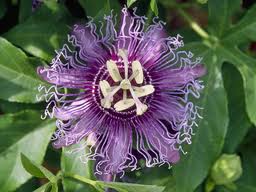
Maypops are edible, and they look great on the plate. As for flavor… well, the entire plant smells like an old gym shoe, the flowers less so. Let’s call it an acquired taste. They are really too insubstantial to cook. In fact, most of the plant above ground is useful. The leaves can be cooked as a green, and the water they were cooked in as a sedative. The green fruit can be sliced and cooked like a green tomato, and the yellow ripe fruit pulp and seeds can be eaten out of hand or made into a refreshing, tart drink.

Milkweed Blossom

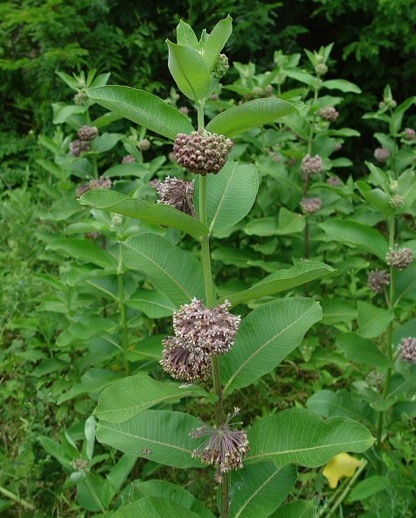
When I was a kid  back in the Dark Ages I was always covered with Milkweed sap, or Asclepias syriaca juice, and it was sticky! The plants grew everywhere and at the time were taller than me. I was always picking blossoms, snapping shoots, tearing apart green pods and later throwing the fluff everywhere. The spongy, cellular structure of the pod was fascinating, and the final seeds parachutes so silky. I can still remember seeing butterflies on the Milkweed blossoms. They knew something I did not. There is sweet nectar in the blossoms… kind of. Milkweed blossoms are an acquired taste and to really get the nectar out they have to be long boiled. However, you can eat the blossoms raw if you like the flavor.

Hollyhock Blossoms

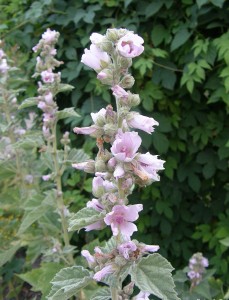
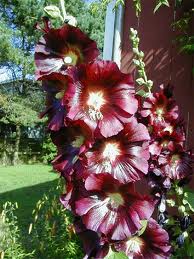
Hollyhocks look great on a plate, and their taste is bland for those who want strong colors rather than flavors. They have also been used to color wine in the distant past when such things were not regulated. The leaves are also edible raw and it’s still a cultivated vegetable in Egypt (the root has starch.)  Besides plating and salads you can also make a refreshing tea from the Hollyhock. Botanically it is Alcea rosea and related to the Marsh Mallow above. There now many colors to choose from.

See Edible Flowers Part Nine.

{ 12 comments }

The cookbook’s title says it all. South Florida, parts of Texas and Hawaii have iguana issues. While teaching a class in West Palm Beach one time I could not help but think of Iguana a la Carte when a 30-inch lizard slithered into a pond next to me. No, they don’t taste quite like chicken, nor like alligator which can be swampy. Think chicken and crab combined, soft, sweet moist and easy to flavor with delicate spices.

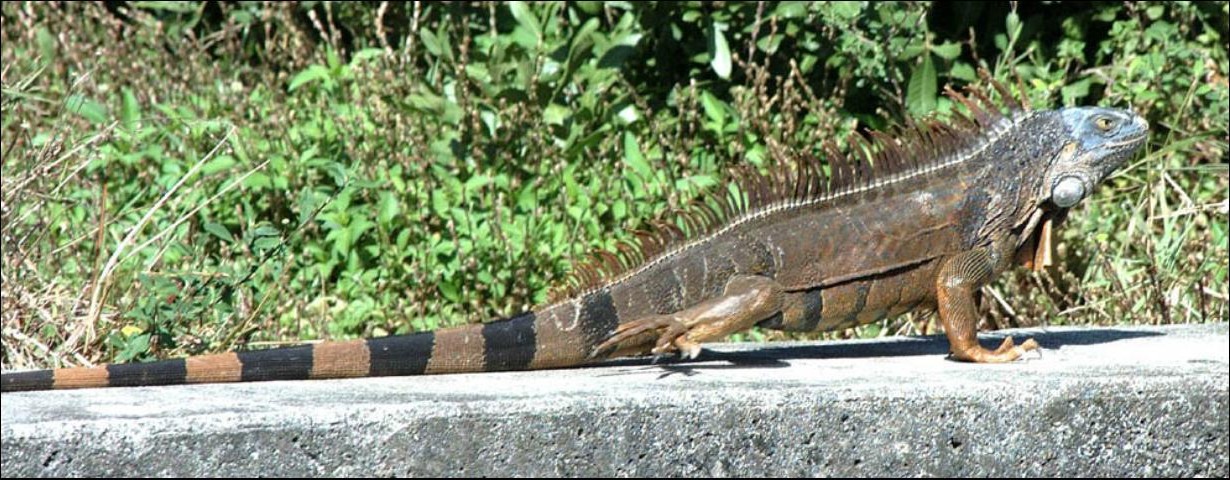
Adult Green Iguana

Iguanas are not native to any of the three areas mentioned. They got there the way exotic weeds do, by man. More specifically self-liberated pets, pets intentionally released, and poor control at pet stores. In one example a few pets let loose on a key turned into several thousands in just a few short years. In Florida there are no doubt hundreds of thousands of them flourishing. Cookbook author George Cera has captured or killed over 16,000 of them. Guess what’s in his freezer?

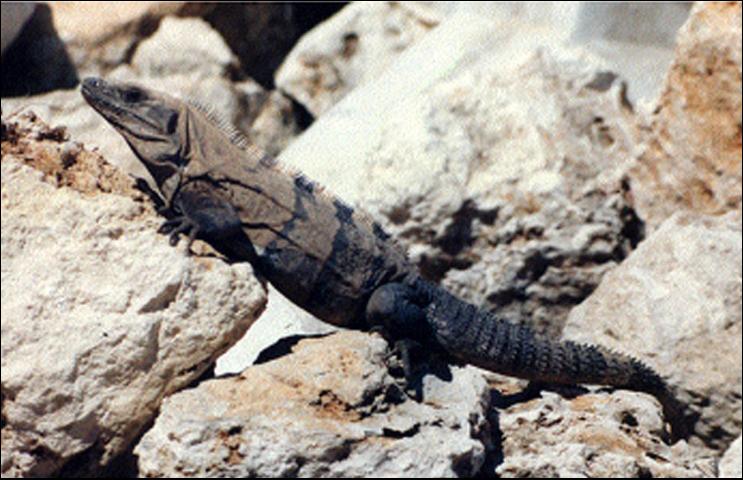
Male Spiny-tailed Iguana

The edibility of the iguana is not an issue though the Green Iguana is preferred over the other species. In its native range they are called Chicken of the Trees. Iguanas can be cleaned then ah…peeled… and cooked on the spot, or grilled, or made into delicate soups. Usually, however, the meat is parboiled in salted water first, skinned, then used in various recipes. Iguanas can be caught in traps or in cool weather the cold-blooded denizens actually drop out of trees, stunned by the chill. The hard part is sorting them out. You see, Green Iguanas are not always green, and there are other large lizards as well, and I don’t mean alligators.

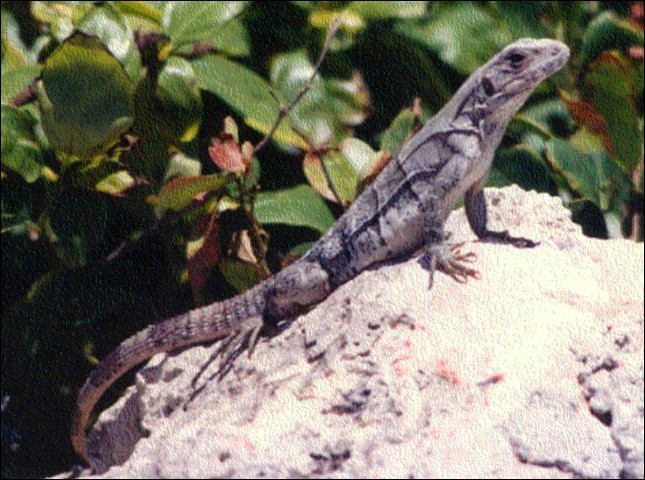
Female Spiny Iguana

Green Iguanas are Iguana iguana are indeed green when little but then they grow up and change color. In the same areas you will find the Mexican spiny-tailed iguanas which is Ctenosaura pectinata and Black Spiny-Tailed Iguana, or Ctenosaura similis. Large male spiny-tailed iguanas (C. pectinata) are often mistaken for alligators by startled homeowners because they are dark in color and have low dorsal spines, making many a person think they are small alligators. 

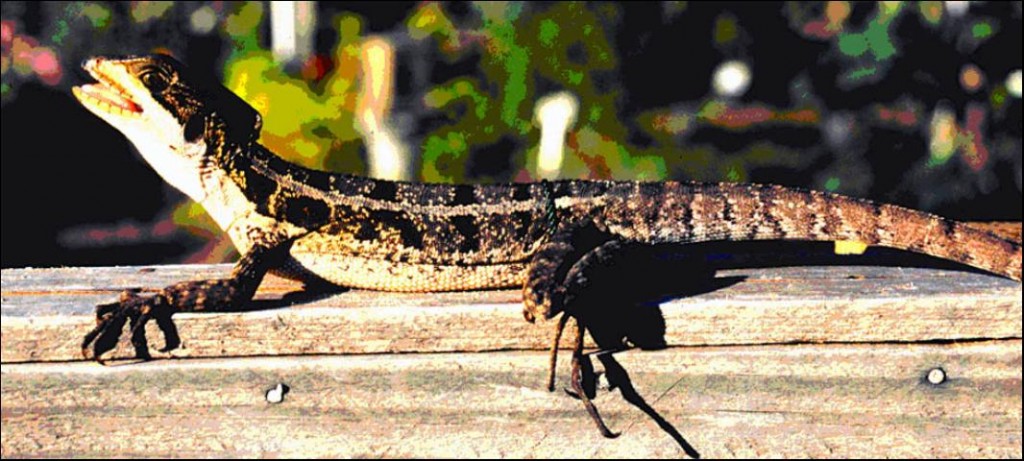
Female Brown Basilisk

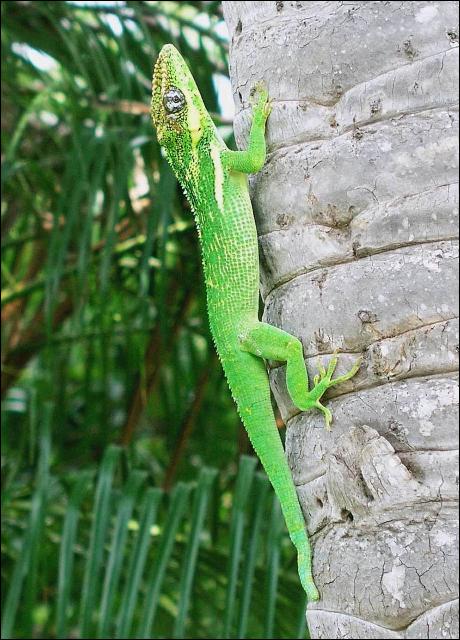
There are also several other  other large lizards now calling Florida home that some people misidentify as iguanas. The Brown Basilisk,  Basiliscus vittatus, is a large lizard (up to 2 feet) often mistaken for an iguana and is found in the same areas as introduced iguanas. Knight Anoles,  Anolis equestris, reach between a foot to a foot and a half and are green. The Jamaican Giant Anole, Anolis garmani, can reach a foot long. Incidentally, deep fried little Cuban anoles usually taste like bacon. Occasionally other self-liberated pets have established breeding populations and are spied. These include large lizards like the Nile Monitor Lizards, Varanus niloticus, the Giant Whiptail, Cnemidophorus motaguae, and the Tegu, Tupinambis sp.

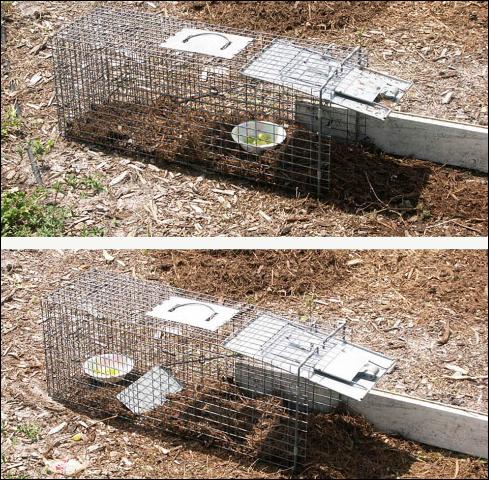
Traps are prebaited, top, to attract and then later are set to capture, bottom

Where do you find them? They usually find you, often nesting in attics. Adult iguanas feed on landscape plants, shrubs, trees, orchids, many flowers, figs, mangoes, tomatoes, bananas, lychees, and similar fruits. Iguanas do not eat citrus. If they did, speaking cynically, the state would have eradicated them long ago. Occasionally they’ll eat small animals such as  insects, smaller lizards, nestling birds and eggs. Basilisks and Anoles generally eat insects and small creatures whereas Knight Anoles occasionally eat small fruits and flowers as well. Iguanas like to bask in open areas; sidewalks, docks, seawalls, landscape timbers, gutter, or open mowed areas. When scared, they  dive into water (Green Iguanas and Basilisks) or scurry into their burrows (Mexican Spiny-Tailed Iguanas). The habit of diving into the water to escape makes Green Iguanas difficult to capture thus traps are required. Mexican Spiny-tailed Iguanas disappear into burrows which undermine sidewalks, seawalls, and foundations often leading to structural collapse.

Knight Anole

And while most folks think the Muscovy Duck is the most foul at dropping droppings iguanas are the all time champs… more and worse. Iguanas are also a possible source of salmonella bacteria, a common cause of food poisoning so they have to be handled carefully. (One reason to boil the meat in brine first, to assure all bacteria ia dead.) Adult iguanas are more powerful than they look and can bite, scratch severely, and deliver a painful slap with their muscular tail. Iguanas usually avoid people but will defend themselves against pets and people that try to catch them or corner them.

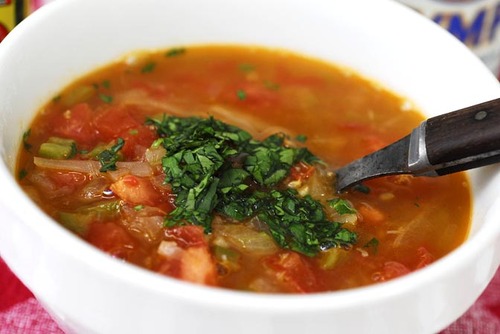
Iguana Soup

According to the state of Florida: “Iguanas can be captured and removed from private property at any time without special permits. They are considered exotic unprotected wildlife. They may be caught by hand, noose pole, net, or traps. Only live traps and snares are legal in the State of Florida. Check with local authorities for any local ordinances that may limit control options.” The state adds: “It is illegal to release iguanas in Florida (39-4.005 Florida Administrative Code). Iguanas are not native to Florida and so are not protected in Florida, except by anti-cruelty laws. Green iguanas are listed in the Convention on International Trade in Endangered Species II because of their economic importance and over-harvest for the international pet trade in their native range. In Florida, all captured iguanas must be kept in captivity as pets or captive breeding stock, or must be destroyed. Feral adult iguanas rarely make acceptable pets. They never tame sufficiently and are dangerous.”

The state would like to see iguanas disappear for many reasons including the fact they munch on rare plants that are food for even more rare butterflies and the like. And for the record, just in case you’re hungry, there’s also an estimated 25,000 edible pythons in the Everglades. Their meat is chewy but sweet. Curiously, it is illegal to use rifles or shotguns to harvest iguana, air guns and B-B guns are encouraged.  Personally I use a surfing rod equipped with a noose.

Iguana Gourmet George Cera

George, right, used to sell his book from his own site.But now you will have to go to Amazon or the like to order it currently $126.  Or, for information about the cookbook Save Florida, Eat an Iguana, you can e-mail George Cera at theiguanahunter@yahoo.com.

Basic Iguana

1 Iguana
1 large Onion
2 Cloves Garlic
3 Tomatoes
2 Green Peppers
4 teaspoons oil
1 small  hot pepper
Salt  to taste

Kill the iguana. Open the belly lengthwise and remove all the entrails. Cook in salted water until the meat is tender (take care not to let it get too soft). Peel and cut in portions. Season with all the above ingredients and cook with about 1 cup water, until almost dry

Or…., remove the four legs, cut off the feet, cut each limb in two at a central joint, remove the tail, cut off spines. Skin all nine pieces (tough work.) Dispose of the body, or skin and gut, cook in brine. Be careful in the cleaning process not to spread any possible salmonella bacteria.

Less Traditional Iguana

1 Iguana
2 onions
1 tablespoon of salt
6 to 8 carrots
1 tablespoon of cilantro
1 small ball of recardo (optional)
1 cup vinegar
1 lime
1 sweet pepper
1 tablespoon of black pepper
1/2 head of cabbage
2 cloves of garlic or to taste
two cups diced tomato
coconut oil
Skin and clean iguana, then wash it in a mixture of vinegar and lime. After that, mix all seasonings and spices together in a bowl and rub them into the meat. Leave the rubbed meat for half an hour. Pour coconut oil in a pot, just to cover the bottom and place it on the fire.

When the oil is hot, put in the iguana meat, then cook it for another half an hour, turning a few times and adding a bit of water if needed. During that time slice the carrots, tomatoes and cabbage. Add them to the meat and cook for another half an hour. Serve with rice and beans.

Iguana Stew

Here’s one of Cera’s iguana recipes:

Remove head, organs and tail.

Dip in hot water and scrape off scales or skin. Practice safe food handling. Iguana, like chicken, can carry salmonella.

3 to 4 pounds of iguana

1 teaspoon salt

3 peeled and sliced potatoes

1 large sliced onion

1 cup lima beans

1 cup canned tomatoes

1 tablespoon sugar

1 cup frozen corn

Salt and pepper to taste

1 tablespoon ketchup or Worcestershire sauce

1/4 cup of butter

Place iguana in Dutch oven with enough boiling water to cover. Add salt and simmer for 45 minutes.

Add potatoes, onion, lima beans, tomatoes and sugar. Cover and simmer for 30 minutes or until beans and potatoes are tender.

Add corn, cover and simmer for 10 minutes.

Season with salt and pepper and add ketchup or Worcestershire sauce if desired.

Add butter and stir well.

Serves 8.

Source: Save Florida, Eat an Iguana


{ 12 comments }

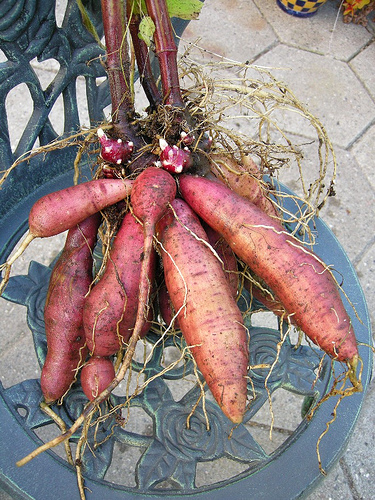
Fresh Yacon roots resemble sweet potato roots, photo by Soren Holt

Is it a Polymnia or a Smallanthus? Botanists took some 70 years to make up their minds. Let’s call it Yacon like the natives.

In publications before 2000, particularly the Journal for Economic Botany in 1991 and Cornucopia II 1998, it’s Polymnia sonchifolia, poh-LIM-nee-uh son-khi-FOH-ll-uh. Polymnia is Latin for the Greek goddess of sacred poetry, hymns, eloquence, agriculture, pantomime and sometimes geometry and meditation. She was often shown with a pensive finger touching her mouth as in thought. That really helps us in identifying the species.

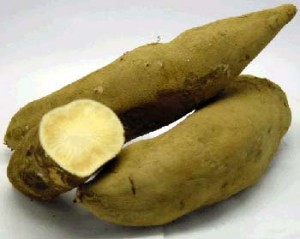
Cured roots darken in color outside

Smallanthus (small-ANN-thus) in use more on the Internet and after 2000 and in recent professional journals. The genus name was first proposed in 1933, advocated in 1978, and as the botanists say “currently preferred” some 79 years later. It means “small flower” which is certainly more descriptive than a “pensive goddess.” The flowers aren’t really that small but the plant grows rather large so they look smaller than they are. When the genus was switched from PolymniA to SmallanthUS the species name had to follow Dead Latin endings and went from sonchifolia to sonchifolius. That reminds me of a scene from the movie Life of Brian in which the Centurion does not arrest Brian for writing anti-Roman graffiti until Brian corrects the Latin endings.

Whether a Polymnia or a Smallanthus  sonchifolius make more sense. It means like a sow thistle. In practical terms that usually translates into meaning the leaf has no stem and attaches directly to the main stem of the plant, often nearly wrapping around it. Emilia sonchifolia, another edible, was so named for the same reason. An older name for Yacon, Polymnia edulis (Edible Goddess) is sometimes still seen.

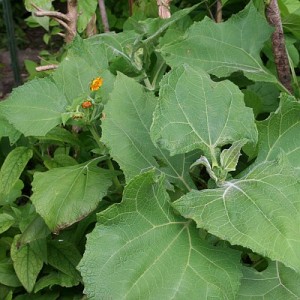
Yacon resembles Jerusalem Artichokes

Yacon (yah-KON) also Llacon, Strawberry Jicama, Bolivian Sunroot, Ground Pear, and Apple of the Earth, grows wild in areas of South America. They can be eaten raw, cooked or pickled. The flavor is between an apple and a pear. Very tolerant of sun and drought they are often “cured” for a week or two before eating, as one does with sweet potatoes. You can, however, eat them immediately out of the ground. “Curing” activates an enzyme process which increases sweetness significantly. Specifically prebiotic oligofructans (indigestible sugars) are converted into fructose, glucose, and sucrose. This would mean right out of the ground they would feed your gut bacteria. Once cured the roots has more available sugars.

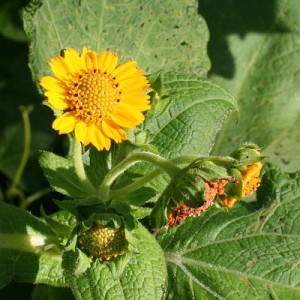
Yacon flowers are only about an inch across

At the end of the plant’s reproductive cycle the top starts to wither. From that point on the root is increasing in sweetness. Said another way when fresh out of the ground the roots are at near-optimum stage for diabetic consumption, the non-digestible sugars are high and the roots is not overly sweet. As it sits for several days, particularly in the sun, enzymes change the non-digestible sugars into digestible ones such as fructose and sucrose. While this increases the sweetness it also increase the kinds of sugars diabetics should avoid. Thus if you are making diabetic sugar or syrup out of the roots they should be processed immediately. If you are a diabetic raising them they should be eaten sooner than later. In a related issue  the probiotic strains Lactobacillus acidophilus, Lactobacillus plantarum, and Bifidobacterium bifidumare able to ferment Yacon root in the gut.

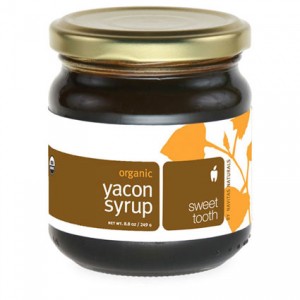
Yakon syrup tastes similar to molasses

About the only drawback to the plant is it needs about 200 frost-free days to complete its annual cycle thus it has been imported to other warm areas of the world. In areas with shorter growing seasons they can be started inside indoors. A common grocery store item in New Zealand it has also been actively cultivated in Japan, Korea, Taiwan, the Czech Republic, Germany, French, Russian, Estonia, the United States, China, where it is called Snow Lotus Root, and Italy where it is used to make alcohol and inulin. Depending upon the variety the roots can be white, crystal white, violet, orange or yellow. The white fleshed ones are not as sweet as the others.

Green Deane’s “Itemized” Plant Profile: Yacon.

IDENTIFICATION: Smallanthus sonchifolus: Under right conditions the plant can grow to some seven feet tall producing two kinds of roots, small ones near the surface (the little red caudices in the top picture) which are used to propagate more plants and larger storage roots below, used for food. The main stem is covered with dark green leaves and violet-colored hairs. Blossoms are about 1.25 inches (30mm)  in diameter, yellow or orange, growing on top fo the main stem and on other stems from lower nod buds. Flowers are limited as the plant reproduces via caudices. Fruit is black, 2mm achenes. It looks similar to a relative, Jerusalem Artichoke.

TIME OF YEAR: Where frost free they can grow or and be grown year round. Roots are available when the flower top withers.

ENVIRONMENT: Likes sun and water and good, drained soil. Fertilize like a potato or you will get a lot of leaves and small roots. When raised properly roots average about 10 ounces each. Can be much larger.

METHOD OF PREPERATION: Peel the root before eating raw. Eaten out of hand, or sliced and added to salads to add sweetness. Curing the roots in the sun increases sweetness but reduces crispness. Grated pulp from fresh roots can be squeezed in cloth to produce a refreshing drink, juice can be reduced to sugar or syrup. The root can be boiled, baked, fried, pickled. Young leaves and stems can be boiled and eaten as a green. Not all that good. More often leaves are used to make a tea that is good for diabetics to reduce oxidative stress and control blood glucose levels. The foliage is good forage for livestock.

Yacon seed stock can be ordered from B&T Seed.

{ 17 comments }

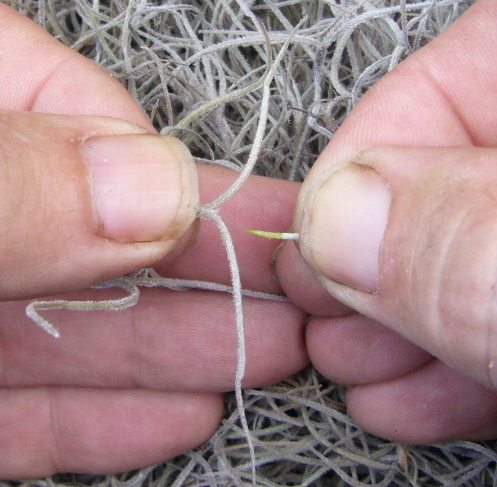
Young and tender growing tip is edible. Photo By Green Deane.

Spanish Moss is not edible. Well, barely an edible. The bottom of the growing tips (pictured above) provides about one eight of an inch of almost tasteless green. It probably takes twenty or thirty calories to get that little green tip which probably only provides less than a calorie of energy. It’s really not food. It’s a “hey, watch me eat this” kind of thing, a Boy Scout nibble. But it does have uses and since I am asked about Spanish Moss all the time here’s an article about it.

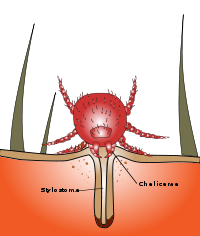
Chiggers eat skin cells.

First let’s talk about red bugs and chiggers, microscopic irritations said to live on Spanish Moss. They might inhabit Spanish Moss but to be utterly frank I have never gotten chiggers from Spanish Moss in trees. I have handled it and been in it many times over the decades and not once have I gotten chiggers from Spanish Moss from trees. Where I have gotten chiggers is in open fields with knee-high grass. I’ve gotten also them in knee-high brush.  I have gotten them in knee-high grass and knee-high brush often enough to avoid said. But not from Spanish Moss in trees. I am not saying it’s not true. I am saying it has never happened to me.  You can, however, get chiggers from Spanish Moss on the ground. When I do get chiggers I cover the wound with clear fingernail polish. Yes, it stings and but it works for me and has for over 40 years. A thick skin lotion might work as well. Treating chigger bites is a surprisingly controversial topic involving a lot of hardcore angry fanatics. Some authorities say the bug bites and hangs around thus smearing something on it is a good idea. A vote for fingernail polish.  Others say nonsense, the bug bites and is gone and simple washing will do. Thus fingernail polish or any ointment is wives’ tale and nonsense. Frankly I am weary of the derogatory emails I get about it.  Getting rid of the itch is what’s important and that is what I do. Now, what of Spanish Moss?

Spanish Moss and Owl

Spanish Moss — which isn’t a moss — was used to stuff car seats and furniture not only in the United States but Europe as well. It was chemically stripped of its outer gray bark and use for that purpose up until about 1960. In 1939, for example, 10,000 tons of it was raked from trees in Florida and Louisiana. It is not a parasite but an epiphyte so it doesn’t harm the tree unless it grows so prolifically to shade the tree from sunlight. Natives used it to make bedding and emergency clothes when cloth was unavailable. The inner black core was spun and used as thread. A bundle of stripped moss also makes excellent tinder. One can find them easily in local woods.

Spanish Moss is in the Pineapple family. Oral extracts of Tillandsia usneoides in a few studies have reduced blood glucose in laboratory animals. The chemical responsible is  3-hydroxy-3-methylglutaric acid. Called HMG it’s found in some diabetic supplements.  Traditionally T. usneoides was brewed into a tea to treat fevers, chills, rheumatism and contraction pains of childbirth. Other claims for it include treatment of infant epilepsy, estrogen substitute, and antibacterial uses. In 2004 a Japanese company reported an extract strengthen and protects skin capillaries and slows skin cells decline. I don’t know if that is true but they took out a patent on it.

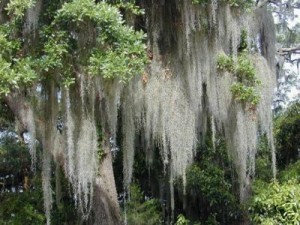
Spanish Moss usually doesn’t harm the tree

Why is it called Spanish Moss? There is an explanation but it’s on linguistic quicksand. It is said the Spanish had beards and the moss looked like their beards so it was called Spanish Moss. But… the term “Spanish Moss” seem to be rather late day innovation. As early as 300 years ago it was called Old Man’s Beard, White Beard and Spanish Beard. Detect a theme there? Other names included Florida Crape and Wool Crape. It’s found in the southern United States, the Caribbean, Hawaii and Australia, where it was introduced.

The botanical name, Tillandsia usneoides (til-LAND-sia oos-knee-OY-deeze) has an interesting background. Usneoides means “looks like usnea” which is a small, edible lichen. Tillandsia honors Erici (or Elias) Tillands, 1640-1693, a physician and professor who was extremely frightened of water. He would take a long journey on foot rather than take a short boat trip to the same destination. Linnaeus — the guy who started naming plants — was told Spanish Moss only grows in dry areas so he named it after Tilland. The irony is that in only grows in humid areas.

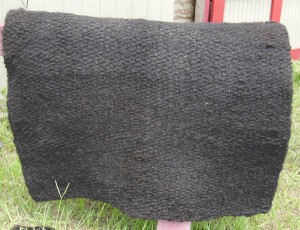
Spanish Moss Horse Blanket, at glennpierdepot

Other uses for Spanish Moss include: Lids for cooking pots, emergency blankets, insulation, mixed with clay to strengthen plaster, used to fire pots, used in tanning and to skim scum off cooking liquids, fiber woven into floor mats, to make string, rope and sacks, fire arrows to destroy invaders’ forts, doll decorations and Voodoo doll stuffing. It can be soaked — a natural sponge — and used as a covering to keep things from drying too fast, such as dug out canoes and cement. It also makes excellent mulch and the water it is boiled in is excellent fertilizer. Spanish Moss is often draped on chain link fences to create privacy. To easily clean the bark off the fiber soak the Spanish Moss in water for six weeks. Or, you can throw it into a pile for about six months where it will rot naturally. A third option is to rub Spanish Moss with Spanish Moss to get rid of the coating.

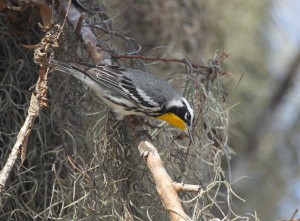
Wablers Like To Nest in Spanish Moss

Birds like to nest in it, particularly Warblers and the Baltimore Oriole. Rat Snakes and at least three bats call it home. Some livestock will eat Spanish Moss. One jumping spider, Pelegrina tillandsiae, is found only on Spanish Moss. Jumping spiders, by the way, are bight little creatures with at least two large eyes out of the eight. They are hunters, colorful, and often kept as pets. I used to feed one using tweezers and blind deceased mosquitoes.

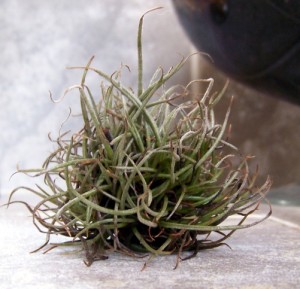
Ball Moss also has edible tips

There is also Ball Moss. Tillandsia recurvata, right,  is similar to Spanish moss except it is compact and has larger growth, which also makes it easier to get an edible nibble. It blooms in the spring with a blue-violet flower and tends to be about the size of a baseball but can be smaller or much larger. Sensitive to freezing Ball Moss can be found from the southern United States to Argentina and Chili. Medicinally an extract has shown the ability to cause death of tumor cells.

Green Deane’s “Itemizing” Plant Profile: Spanish Moss

IDENTIFICATION: Tillandsia usneoides: Spanish-moss is a fibrous, perennial, epiphytic herb. It hangs from trees in long, thick masses that may reach 20′ in length. The leaves are grayish-green, narrowly linear, and up to two inches long. It looks like filaments with many branches and is covered with silvery-gray scales. The flowers are tiny with pale greenish-blue blossoms. They form in the axils of the leaves and may give off a light fragrance at night. Te flowers lead to tiny capsules which split open to release even smaller seeds.

TIME OF YEAR: Year round

ENVIRONMENT: Spanish Moss grows well in full sun but endures partial shade. It prefers moist environments 50 to 90ºF but can survive well in dry habitats too. Spanish Moss is usually found on oaks or cypress trees — it likes the chemicals that leach form the trees’ bark — but can be found on other species such as pine or sweet gum.

METHOD OF PREPARATION: Growing tips are pulled out of their sheath. The tiny green tip can be eaten raw.

Lyrics to Spanish Moss by Gordon Lightfoot

SPANISH MOSS
Let go darlin’
I can feel the night wind call
Guess I’d better go
I like you more than half as much
As I love your Spanish moss
Spanish moss hangin’ down
Lofty as the southern love we’ve found
Spanish moss
Keeps on followin’ my thoughts around
Georgia pine and Ripple wine
Memories of Savannah summertime
Spanish moss
Wish you knew what I was sayin’
So I’m rollin’ north thinkin’
Of the way things might have been
If she and I could have changed it all somehow
Spanish moss hangin’ down
Lofty as the sycamore you’ve found
Spanish moss
Keeps on followin’ my thoughts around
Georgia pine and Ripple wine
Kisses mixed with moonshine and red clay
Spanish moss
Wish you knew what I was sayin’
So I’m rollin’ north thinkin’
Of the way things might have been
If she and I could have changed it all somehow
Let go darlin’
I can feel the night wind call
The devil take the cost
I like the way your kisses flow and I love your Spanish moss

{ 46 comments }