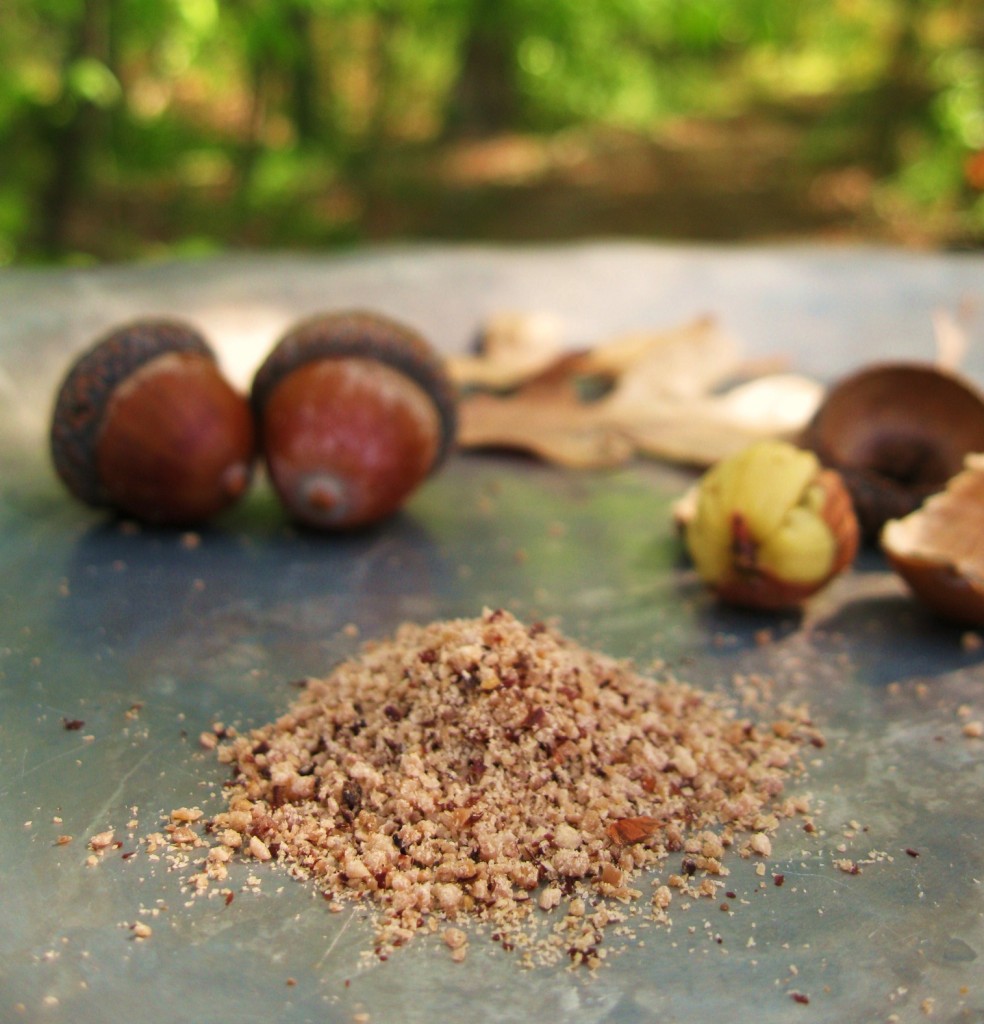
Acorn flour has fat and protein

A wild flour is different than a starchy root. The Spurge Nettle has a starchy root that tastes like pasta but it does not lend itself to being processed into flour or starch. Below are many sources of flour or starch in five large categories… okay, six categories. Material you can bake by itself is referred to as a flour; material that is usually added to something else is referred to as a starch. While those definitions satisfy culinary needs they are not highly scientific and are used inconsistently. The energy required to get the material to a usable flour/starch stage has also been considered and in fact is a very limiting factor. A food that might be an outstanding wild edible can be listed as “poor” here because of the work required to make a “flour” out of it. This list is not definitive and will be added to and edited from time to time.

Outstanding
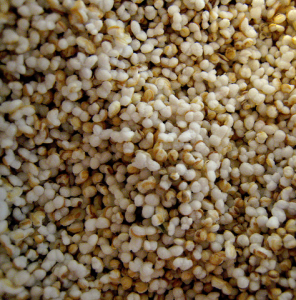
Puffy amaranth seed

Amaranth is a grain that has been used for some 8,000 years. It’s rich in amino acids and higher in protein than most grains, some 16%. It was one of the staple foods of the Aztecs. Amaranth is usually added to other flours or materials and is gluten free. You can collect your own seeds and process them into flour or buy it at health food stores. The latter is a good idea to see if you like the flavor which is nutty and slightly peppery.  While you can collect seeds from nearly any Amaranth, three species are commonly used: Amaranthus hypochondriacus, Amaranthus cruentus and Amaranthus caudatus. Four ounces of amaranth grain provides 100% of an adult’s daily protein need. It can be combined with wheat flour for yeast breads. Nutritionally 100 grams or about 3.5 ounces of Amaranth grain has 374 calories, 14.45 grams of protein 6.5 grams of fat, 15 grams of fiber, 4.2 mg of vitamin C, 153 mg calcium, 366 mg of potassium, 455 mg phosphorus, and 266 mg magnesium. You can collect it by putting the seed head in a bag and shaking the seed head. Amaranth grain does not have to be soaked before use.
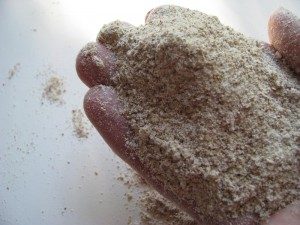
Quinoa flour produces a crumbly texture

Chenopodium, quinoa is another staple used like Amaranth. It is 11.2% moisture, 13.5% crude protein, 9.5% crude fibre, and 58.3% carbohydrate. Quinoa has a high proportion of D-xylose (120.0 mg in 100 gram sample) and maltose (101.0 mg in 100 gram sample) but is low in  glucose (19.0 mg in 100 g sample) and fructose (19.6 mg in 100 g sample.) The protein content is as high as 18% and it contains a balance of amino acids. The seeds are high in saponins. Think of saponins as soap which is why the seeds need to be soaked. After soaking in two changes of water to reduce the saponins, quinoa can be used similar to rice, that is use twice as much water as grains when cooking. It has a light, fluffy texture with a slightly nutty taste. It’s not a true grain but is an excellent substitute for grain flour.

Good
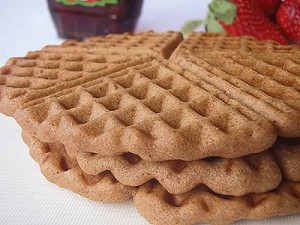
Acorn Waffles

Acorn flour has sustained millions for thousands of years, from the Ancient Greeks to the Japanese. During World War II Nipponese school children collected acorns daily in season to feed the nation. Today oak flour is still a common food in Korea and can be purchased in local markets. The main problem with acorn flour is collecting, shelling, and leaching the acorns. They have varying amounts of tannin which has to be removed though a few species have no tannins. Once the acid is removed and the nuts dried and ground, the flour is tasty and nutritious. It behaves more like corn starch than a cooking flour but can be used as flour. An ounce of acorn flour has 140 calories, 15 grams of carbs, 8 grams of fat (one of those saturated, 1.5 polyunsaturated) and 2 grams of protein. It also provides 1% of your daily need in calcium and 2% of iron, thiamine, riboflavin and zinc, 3% niacin and phosphorus, 5% folate, 5% magnesium, 6% vitamin B6. Acorns are gluten free and their oil can be used for cooking.
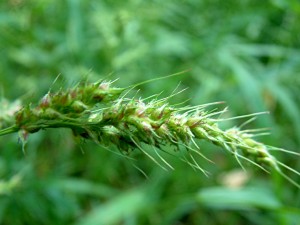
Barnyard Grass

Barnyard Grass:  Echinochloa crus-galli, winnowed seeds used as a staple grain. They can be parched, roasted, boiled, or ground into flour. Seeds can be popped like popcorn. In Japan Barnyard Grass seed is used to make macaroni and dumplings. Seeds are also roasted and used as a caffeine-less coffee substitute. In North America the Cocopa, Paiute and Tubatulabal tribes used it for food and stored it for winter use. The Yuma, however, really liked it. They pounded the seeds, winnowed them, ground them and made a meal and mush out of it. They also preferred to cook fish with the grain. It is not emergent but it likes its feet damp. Eastern Gamagrass can also be used.
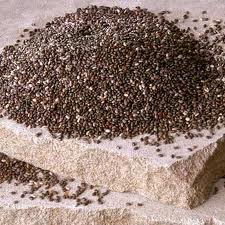
Chia seeds sans pet

Chia flour is not totally chia flour unless you make it yourself. The commercial version is made from brown rice flour and chia seeds (yes the ones you use for your Chia Pet.) Chia seeds are chock full of nutrition. They contain lots of Omega-3 fatty acids, calcium, fiber, and protein. Commercial chia flour, which is gluten free, can be used as a one to one replacement for wheat flour. Sift chia seed flour before using, use small pans when baking, and increase baking time by five percent.
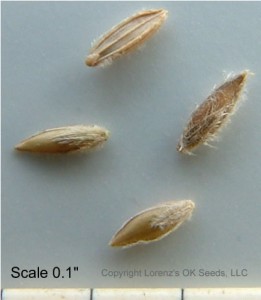
Crabgrass seeds and hull

Crabgrass would be listed as outstanding if it weren’t a big pain to dehusk. In parts of Africa crabgrass (Fonio) is a staple grain, and under cultivation it can produce a whopping 17 tons per acre. Crabgrass seed can be used as a flour, couscous or as a grain, such as in porridge or fermented for use in beer making. Now that’s another label I’d like to see: Crabgrass Beer. Crabgrass is not only nutritious but one of the world’s fastest growing cereals, producing edible seeds in six to eight weeks (excellent for short-summer northern climes.)  It grows well in dry areas with poor soils and fantastically well in watered lawns. It’s a horrible weed if you own a lawn and a wonderful edible. Husking the small grains can be time-consuming, however. Traditional methods include pounding in a mortar with sand then separating the grain and sand (not advised.) Another method is  “popping” seeds over a flame and then pounding said which produces a toasted grain. If you have a LOT of crabgrass you can even buy a crabgrass husking machine.
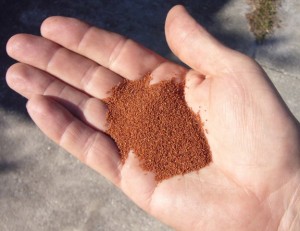
Crowfoot Grass browns as it ages

Crowfoot Grass is a staple grain in some areas of Africa used to make unleavened bread — Kisera — and often beer. It’s a very small grain, even smaller than amaranth or quinoa. Indeed, if it were larger it would be an outstanding source of flour. Fortunately it grows in larger colonies and is easy to harvest so from a “calories-in-calories-out” perspective it’s certainly worth your while. You can collect about two quarts an hour. Seed heads that are ready to give up seeds come off easily. I collect a large amount of seed heads then rub them over a colander to dislodge the seeds and sift out larger pieces. Then I winnow the rest. The grain is the size of sand but is fragile so it can easily be ground into grain that has a flavor of buckwheat. I usually mix it 50/50 with regular flour. There are some precautions so read the full article.
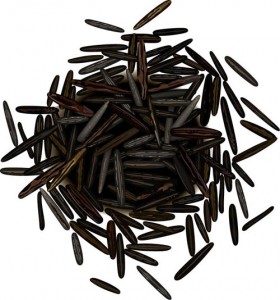
Wild rice requires long cooking

Wild Rice (Zizania aquatica) is not really a rice. It’s an aquatic grass seed which can be cooked and eaten as is. Wild Rice was important to the survival of many Native American tribes. A subsistence food, it’s very dark brown to black in color and is tan when ground into flour. It does require some collecting technique and a canoe or the like but from an energy in/out perspective it is certainly worth ones while. Wild rice flour is usually added to other flours or used to thicken dishes.

Yam flour (Dioscorea alata) is made from yams dried and ground. Yam flour works great in cookies and pie crusts. It is not good for sticky or doughy applications. As a flour it stores very well and is more than 5% fiber.

Acceptable

Arrowroot flour is closely related to Canna, below, and is used in similar ways. It is easy to digest and is one of the few wild flours with calcium ash in it. Most people know it know as a thickener for gravies and it’s neutral flavor and color when used as a thickener. Like Canna it’s from warm region plants whose roots have to be ground to release the non-gluten starch. Read work.
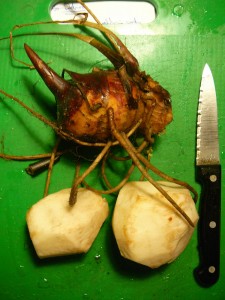
Canna Root

Canna flour has more starch in it than grain flours and has the highest swelling point, good for thickening. It is high in amylose and is slowly digested so it doesn’t spike blood glucose levels. Canna, however, suffers the same problem as cattails; it requires a lot of work to get the flour. Roots have to be dug up before the plant flowers, ground up, the starch settled out then dried. It is just easier to cook the root though that takes about 12 hours.
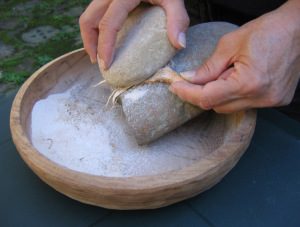
 

No plant produces more starch per acre than cattails.

Cattail flour has long history, from feeding primitive man to armies. The starch is trapped in fibers much like kudzu but is easier to get out than kudzu but still requires processing. There are several ways to extract it. Chopped roots (rhizomes actually) can be pounded in a mortar with some water, the fiber removed and the gloop dried. You can also hand crush the roots in a lot of water, let the starch settle and pour the water off slowly drying the starch.  This essentially produces flour but requires time and many hands such as one would find in a camp or village. A different way is to just rub the rhizome with the back of a knife and eat the starch off the knife. However, it’s like eating plain flour. If I am on the move I prefer to take the rhizome with me. Later I will roast the root on coals then pull the cooked starch off the fibers with my teeth. It tastes like chestnut. Cattail, or as the Brits call it, the greater reed mace, is certainly prime as it is nearly impossible to misidentify, is very common, and an excellent source or calories. The down side is it grows in water so harvesting can be an issue. That water can also be polluted. Cleaning the muck off roots can be a long, smelly chore, and the rhizome requires processing. Bulrush has similar uses as cattails.

Chestnut flour is popular in Italy. Like many foods that can be prepared simply. First roast the chestnuts then shell, dry, and grind. That takes time and energy for a food that can be eaten after simple roasting. The flour is gluten-free, low in fat (1%) but high on the glycemic index, for a nut (78% carbs.)  Chestnut flour can be used by itself but is usually mixed with other flours.

Lotus Root

Lotus Root:  The lotus root is not really a root but a stem swelling and the flour isn’t a flour, but neither are several “flours” listed here. Think starch. Lotus root doesn’t need much processing. Simply slice, dry, then grind into a powder. If you add hot water you have a gelatinous paste. Like many root starches it is added to wheat flour or used in cooking. Often it is used to make batter for frying. The problem is the “root” is often several feet underwater and hard to locate. While it is tasty and full of energy and nutrition it can take a lot of energy and time to harvest. Indeed, lotus seeds require less work and are nutritious as well. Lotus roots tend to be buried in deep mud. Getting them can be foul and smelly.
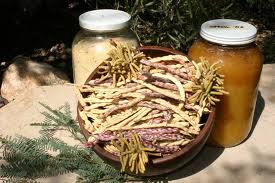
Mesquite flour is sweet and used as sugar

Mesquite flour is made from mesquite pods by milling and sieving the grind. The flavor is rich and deep, often compared to chocolate or coffee. Sounds good but the pods have to be cleaned, usually with chlorinated water then dried at 125° F for at least 6 hours, including the “dry” ones you pick up off the ground. Lastly they have to be milled into a powder. It is sweet with a pleasant aroma and often is used like sugar than flour. Normally up to 17% of regular flour can be substituted with Mesquite flour in recipes.

Peanut flour is made by grinding up peanuts. They have to be shelled first. Whether one roasts the peanuts first or not depends on how quickly you are going to use the “flour” and whether the peanuts will be squeezed of oil first. Roasting the peanuts first creates a stronger peanut taste to the final product. Another method is to dip raw peanuts in boiling water for 10 seconds before drying and grinding. Don’t use salted peanuts. In its raw state a peanut contains 18 different amino acids, including 8 essential amino acids. I had to debate whether to include peanuts because one doesn’t find them in the wild much. I did grow them one year, however.
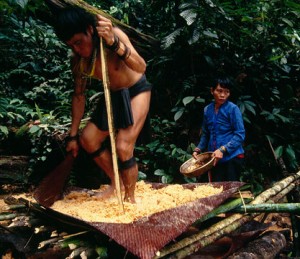
Processing Sago Palm Pith

Sago palm trunks are used to make a flour. Ancient plants, the Sago Palm saves up starch for many years in anticipation of reproducing. When around 15 years old they are cut down, the trunk/stem/bole is ground and the starch washed out. It take time and many hands but production is large. The flour is commonly used in Indonesia and Malaysia to make noodles and bread. Don’t confuse the Sago Palm with the common ornamental also called Sago. The latter is a cycad is very toxic. The cycad can kill you, or perhaps, give you Alzheimer’s Disease decades from now. Very old books say cycad seeds are edible but research into folks who ate said during WWII shows high rates of various dementia later in life.

Poor
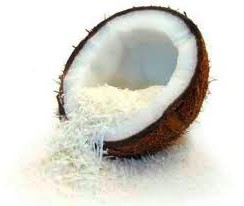
Coconut flour should be defatted

Coconut flour is mildly sweet and commonly used in quickbread recipes and some desserts. It contains a high amount of fiber, protein and fat. In fact it is some 19 percent protein, very nutritious. The main problem is the energy and time required processing the nut meat into flour when the nut is readily edible without processing. One has to separate the oil from the nut’s meat, usually by pressing, then dry and grind it. Coconut “flour” is usually added to grain flour in a 3 to 7 ratio. It takes a lot of work to get the flour. Eating the coconut takes far less energy.
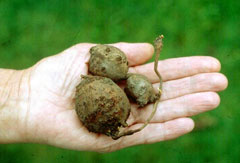
Groundnuts have latex

Groundnuts, Apios americana, can be made into flour. Like the coconut above it is high in protein. But, they have to be cooked, dried, and ground. It is easier to just dig up the roots, cook them and eat them. More so, groundnuts as a vegetable taste great when warm but are tasteless when cold.  When warm the flavor is slightly like a turnip, not exactly a flour flavor.
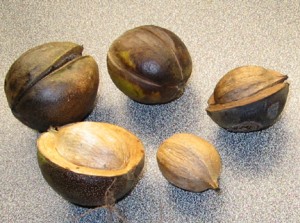
Hickory Nuts

Hickory, pecans, walnuts:  Most nuts can be made into “flour” depending upon the oil content; the less oil the better for storage. Again while these nuts can be eaten out of hand getting enough nutmeat to grind into flour would be very time consuming and require much energy. What Native Americans did was crush the entire nut, add water, pick off the floating woody bits, and drink the milky liquid they called ee-koh-RAH which got changed into Hickory.
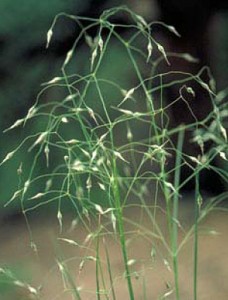
Indian Rice Grass

Indian Rice Grass, Oryzopsis hymenoides, is nutritious and at the right time and place is easy to harvest. It was a staple of many tribes of Native Americans. What the down side? The seed is very tough and often the plant loses its seed so easily it falls on the ground before you get a chance to harvest it. Also the seed often needs to after-ripen one to five years. It’s found in the western half of North America almost as if it has been planned that way. A commercial version has been grown in Montana since 2000 and is sold under the name “Montina.” The botanical name means “rice like.”
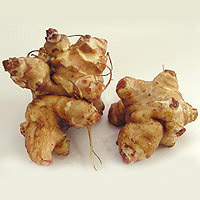
Sunchoke flour does not store well

Jerusalem artichoke flour takes some processing, does not store well, and usually has to be mixed with some other flour. Why bother? Peel the roots, slice them into chips and dry. Then grind and use. It make as bread that is as heavy as a brick. The flour has inulin which the human body cannot digest but the bacteria in your gut can. That explains the gas production you could fill a blimp with. Stored for any length of time it takes on a dusty, musty taste. That’s a lot of work for a root that can be eaten raw right out of the ground.
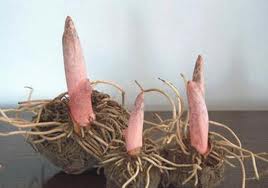
Konjac roots and shoots

Konjac. What can one expect of a plant whose botanical name means poorly-formed penis, Amorphophallus konjac. The corms of this tropical plant have a lot of edible starch. However, to get the starch the corms are washed, peeled, grated, rinsed many times then boiled. The starch is settled out, dried, then treated with dissolved lime, much like corn. Then it can be used. Lot of nutrition and food value but a lot of work as well.
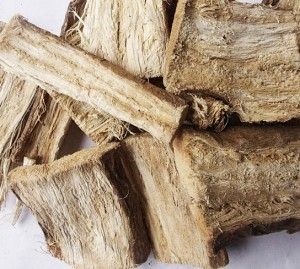
Kudzu root is very tough

Kudzu roots are full of starch but getting the starch out is a caloric- or energy-intensive chore. They either have to be pounded for hours or ground then steamed. If you have a water wheel and volcanic heat for energy then you could craft mechanical means to get the starch out. Either way, by hand requires much time and energy. By hand extracting Kudzu starch is a calorie deficit proposition. Want to lose weight? Eat only kudzu starch you process yourself.

Macadamia flour is very soft and has the same feel and look as white flour but has a high oil content and should be used immediately. It is made from ground up raw macadamias. It works well in recipes that do not require the mixture to rise. Sunflower seed flour is similar.
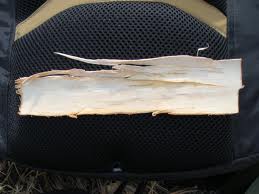
Pine cambium is nearly flavorless

Pine cambium is actually quite nutritious. A pound of it is the equivalent of nine cups of whole milk. It’s not too difficult to get. It is, however, surprise, nearly flavorless. Frying improves the flavor some. Boiling does not. Pine cambium can be dried and ground into a “flour.” It is added to other flours or to soups and stews and the like.
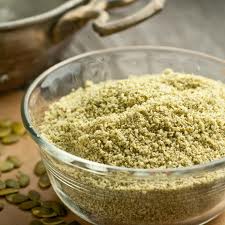
Pumpkin seeds make a poor flour

Pumpkin Seeds are 61% protein and most of the rest is fat. As a flour it does not play well with others in the oven. Low on carbohydrates as a flour it is used sparingly, usually added to other things or as a protein drink. As pumpkins seeds are quite edible roasted one is not sure why some folks are compelled to make seeds into flour.
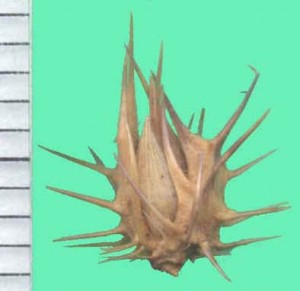
 

Burn off the spines or dehull

Sandspur seeds are nutritious and easy to find. They are nutty and tasty and make a good porridge. The problem, as with several foods in this class, is making them into flour. Like any grain they have to be dehulled, dried, then ground. Whereas the grass itself can be held over an open fire to burn the spines off and then consumed then and there. Very little energy expended. The cooked seeds do make a good source of starch for making beer, or sake.
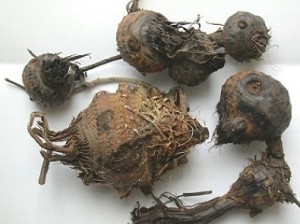
Sea Club Rush is tough

Sea Club Rush, Scirpus maritimus, has a bit of disconnect. We are told by those who study such things they were widely eaten in the past. Yet the work required to make them edible is excessive.  They have to be collected, pounded to remove the bark, then crushed into flaky bits or ground into powder. You can however, peel them and eat them raw. Has a flavor similar to coconut. The seeds can be parched and ground into “flour” as well, but they are tiny.
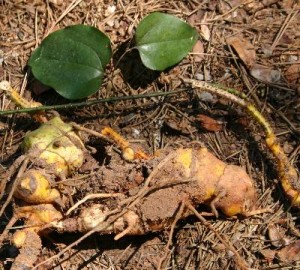
Smilax roots can pound nails

Smilax roots suffers the same fate as Kudzu. The root is 10% pink starch but it requires much pounding or grinding to get the starch out, which is washed out then settles in water. A better choice is to find the roots when finger size and cook them for eating. Better still, eat the growing tips in the spring. They are among the best spring vegetables.

Sorghum: The flour is gluten free. It’s mildly sweet with an aftertaste many don’t care for. It’s used to make beer and animal feed… One out of two isn’t bad.

Famine

Black medic seeds are very tiny and unless cultivated it might be difficult to find enough plants to get enough seed to make flour. There is also some reports it can stimulate or make worse auto-immune diseases.
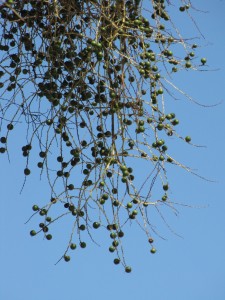
Tough cabbage palm seeds

Cabbage Palm:  The prune-flavored fruit have pea-size kernels of starch. If you put them in your coffee grinder raw they will destroy it… I warned you…  They can be ground but they are exceptionally hard and require much work. Better to roast them. They grind easily then and have a flavor similar to coffee. The inner core, the heart, is edible but it, too, requires much work by hand. A chain saw is better.

Cactus/prickly pear:  The seeds are very nutritious and also extremely hard. Do to try to eat them whole. If they don’t ruin your teeth they will strafe your hemorrhoids. Cactus fruit seeds have to be milled and that takes time and energy.
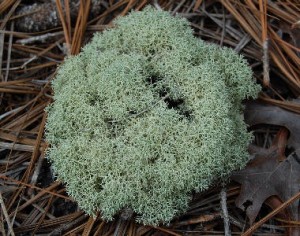
Reindeer Moss is really a lichen

Lichen is a well-known famine food. There are around 20,000 lichen of which only two, or two families are near toxic; Wolf Lichen — which looks like a lime green beard — and Sunshine Powder lichen that is yellow like a school bus. The rest have to be thoroughly soaked in water to remove stomach-upsetting acids. Then when dried they can be turned into an edible “flour” that is usually used to thicken soups and stews or to extend bread.
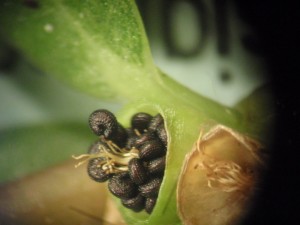
Minute Purslane Seeds

Purslane seeds are quite edible and can be dried and ground into a flour. But they are so tiny it is difficult to find them in quantities large enough to make a flour out of them. It’s better to just throw the seeds pods into the salad and enjoy. Think of them as bland poppy seeds.


Truly Desperate

Golden club, Orontium aquaticum Native Americans pounded the root into flour.

Buck Beans, Menyanthes trifoliata, dry, crushed, leeched, settled starch makes an edible but disgusting flour.

Wild Calla, Calla palustris, thoroughly dried roots and seeds can be ground into an unpalatable flour.

Blue vervain, Verbena hastata, seeds soaked in several changes of water then roasted and ground make a bitter but edible flour.
{ 24 comments }

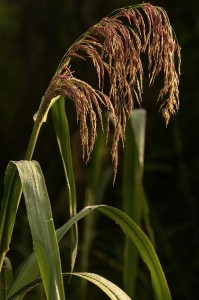
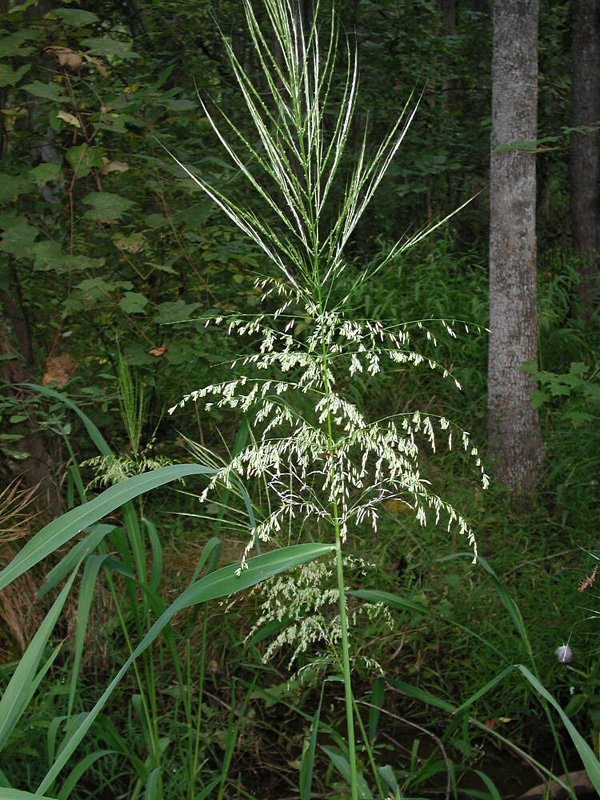
Wild Rice: Male flowers droop, the female flowers are erect.

Love and marriage, horse and carriage, Zizania and canoe… not exactly lyrical but you get the idea. If you want Wild Rice you have to go where the Wild Rice is, and that’s in water, not greatly deep water, but water nonetheless. Emergent is the word.

Truth be known Wild Rice, Zizania aquatica, is not rice and often not wild particularly if you buy it in a store. But those are quibbling points. It’s a popular and delicious grass grain, fairly easy to collect — if you know the technique — and nutritious as well. It was the staple of many Native America tribes, particularly in northern climates.  They fought wars over it. Wild Rice is one of my favorite wild foods though locally we are on the very end of its range.

Zizania palustris

There are at least three species of Zizania maybe four. Botanists argue over that (think of it as a swamp turf war.)  Z. aquatica is along the Atlantic Coastal plain from right here — Central Florida — to the northeast end of North America. From that same northeast land’s end west and southwest along the Great Lakes one finds Zizania palustris (which is either a separate species or a variation of Z. aquatica.)  Both of those are annuals. Zizania texana is found only in Hays County, Texas, in the San Marcos River area, and is a perennial. There’s also a perennial Wild Rice in Japan, Taiwan, China and much of eastern Eurasia called Zizania latifolia. Incidently the latter becomes infected with  Ustilago esculenta which causes the lower stem to swell. The Chinese parboil the stem then saute it with meat or other vegetables.

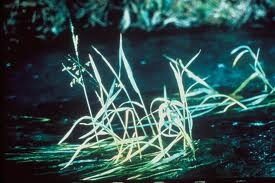
The entire flower on Giant Cut Grass Droops

Locally the object de forage is Zizania aquatica, see top photo, not to be confused with Zizaniopsis miliacea, Giant Cut Grass, left, which also grows here. Z. aquatica is a very large grass to ten feet tall. Its stems are thick and spongy. Leaves are strap-like up to four feet long and two inches wide, smooth. The leaf’s edge is sharply toothed. The inflorescence is erect, very large up to two feet long and a foot across with spreading branches. The lower branchlets (male) droop, upper branchlets (female) are stiff and upright. Numerous spikelets and flowers, grain ovoid, yellow to reddish, up to an inch long. The flower is the quick key to separating the Zizania from the Zizaniopsis which resembles Wild Rice. The entire inflorescence — male and female parts — droop on the Zizaniopsis. The female parts of the flower on Wild Rice are stiff and point up.

Zizania texana

Several first foragers use the Zizania species. Captain John Smith of Pocahontas fame said of the Wild Rice that it “groweth as our bents do in meadows…. seed is not much unlike rye, though much smaller… this they use for dainty bread buttered with dear suet.”  Most folks don’t realize that Smith was a close friend of the king’s gardener and was in North America to basically find plants. His prowess with the barely pubertic Pocahontas seems to have captured historical fame more than his penchants for pokeweed. Smith was a swashbuckling kind of guy and probably the most famous of men who share his common name. He’s the first among John Smiths and was going to be executed when the ship he was on landed. However, papers labeled ‘only open in North America’ put him in charge of everyone including the captain who was going to execute him. That has to be the world’s sweetest reprieve.  The “bent” he was referring to is probably some speices of Agrostis.

As for the Wild Rice, the Menominee, who take their name from the plant in Ojibwan, manoomin, cooked the grain with deer broth, pork, or butter and seasoned it with maple syrup. The Ojibwa used it to make muffins as well as stuffing for duck and other birds. They steamed it to fluff it up and had it for breakfast with sugar and cream. Popping it was common. And… prepare yourself for this… No, I really mean it. Steel thyself, ’cause this ain’t pretty: TheOjibwa also boiled it with rabbit excrement and considered the concoction a delicious luxury. Other tribes that consumed the grain included the Dakota, Meskwaki, Omaha, Ponca, Thompson, and Winnebago.

Several early writers mentioned how the grain was harvested with the use of two sticks and a canoe. Basically the plant is leaned over the canoe with one stick and brushed with the other. After parching some tribes trod on the grain to winnow it. Not the best method as even just a little grit makes the grain difficult to consume. Sand is not an edible. Incidentally, the Zizaniopsis miliacea has edible seeds as well and the growing tips of its white rhizomes are edible cooked . Zizaniopsis means looks like Zizania. Miliacea is millet-like.

Aquatica means in the water, palustris means in the swamp, texana in Texas and latifolia wide leaf. Zizania is a bit more involved. It’s from the Greek word ζιζάνια  (zee-ZAH- nee-ah) or singular in modern Greek  ζιζάνιο (zee-ZAH-nee-oh.)  It was a weed that inflitrated wheat fields. In Dead Latin it is said zye-ZAY-nee-ah. The word in modern Greek also means dissension or a mischievous person or tare (said tear which is a vetch.) Linguistically you have a choice: You can use Dead Latin and say zye-ZAY-nee-ah or use Living Greek and call it zee-ZAH-nee-ah. I’ve made my choice…

Nutrionally Wild Rice is about 77% carbohydrates and between 15 and 17% protein. The grains are rich in glutelins and essential amino acids, especially lysine and methionine. It is a good source of B vitamins and is low in amylose, only 2%.

Green Deane’s “Itemized” Plant Profile: Wild Rice

IDENTIFICATION: Zizania aquatica: Annual, erect, aquatic grass  to ten feet. Stems hollow; leaves flat, to four feet long, two inches wide, leaf-markings purple with thick midrib often nearer one leaf side than the other. Flowers cross-fertilized and wind-pollinated, large, open, terminal panicles, two-feet long a foot wide. Male flowers on lower portion of the flower droop; female parts of the flowers are stiff and erect, twisted barbed awns; kernels (seed) closely adhering to thin brown hull, shallow-grooved the entire length of one surface, long, nearly cylindrical, purplish-black when ripe. Roots slender, fibrous, penetrating shallowly.

TIME OF YEAR: Late summer, mid-August into mid-September. Grains are collected by using two sticks the length of your arm. One is used to bend the plant over the canoe. The other stick is used to gently brush the plant to knock off ripe seeds. Successive visits to the same plant are possible as not all the seeds ripen at the same time. Harvesting can start as early as after 4.5 months of growth. Grain is harvested when the plants are still green. If they are brown, you’re too late. Collected grains should be sun dried for at least a couple of days. An alternative is parching the grains which is heating them in an open pan, stiring until they are dry. Hull parched rice immedately or they will remoisten. Keep away from sand. A little grit goes a long ways.

ENVIRONMENT: Wild Rice is completely absent from strongly alkaline waters and avoids stagnant water. The current must not be perceptible but a constant change of water is desirable. Fresh water plant, not growing successfully in water with a salty taste, thrives in brackish water in low marshes bordering tidal rivers, and in no more than two feet of water, and where the annual change of water level is not more than two feet. Grows wild in shallow freshwater lakes and edges of lakes and streams. It requires slow-flowing water through the rice bed or field, with depth of water from one to four feet with constant or slightly declining water levels through the growing season. Raising water uproots the plant.

METHOD OF PREPARATION: Cleaned grains are usually boiled. They can also be popped or ground into a flour used with other flours or added to stews as a thickener.

{ 12 comments }

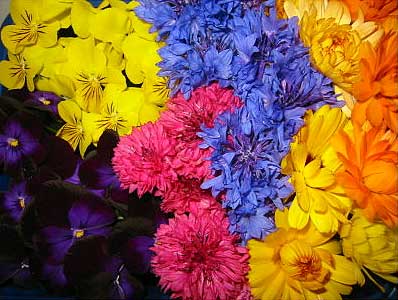
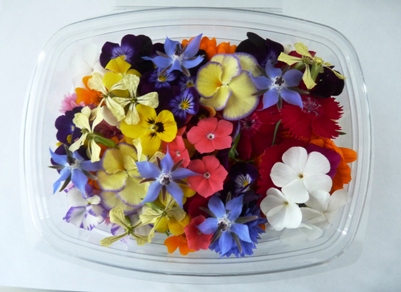
Colorful as well as edible

Forget-Me-Nots, Calamint, Mimosa Silk Tree, Clary Sage, Petunia x hybrid, Balloon Flower, Yarrow, Corn Poppy, Daisy, Sweet Alyssum

Foreget-Me-Not

The story I heard from my mother, not the best source of romantic literature, was that he was in Alaska and braved rushing waters to get some wild flowers she requested. He got the flowers but was swept away by the current and as he was about to meet his watery fate over a falls he yelled “Forget Me Not.” Hmmmm… Guy dies, woman doesn’t get flowers, has to walk home alone where she meets a Paul Bunyan type… Let’s start with the fact Forget-Me-Nots aren’t native to Alaska but they are in England and… In exile from England in 1398 Henry IV adopted the flower as his symbol and retained it when he returned from the hinterlands a year later. Perhaps that is why historically Forget-Me-Nots represent faithfulness and enduring love. They are found sporadically in the wild in the northern half of North America and cultivated elsewhere. As most folks see them only in gardens we’ll call them cultivated though surprisingly they are invasive in Wisconsin. Botanically Forget-Me-Nots are Myosotis sylvatica, which means Mouse Ear of the Woods. Properly they are Wood Forget-Me-Nots. Five petals, flat face, a yellow eye, usually blue but can be pink to white.  The blossoms are added to salads as a garnish and make excellent candied blossoms. However, the plant does contain some pyrrolizidine, a chemical not to eat a lot of so use only occassionally and not to excess.

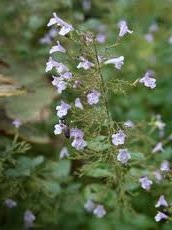
Calamint

Think mint. Now think oregano. Put them together, mint and oregano and you have the Lesser Calamint. Important to Italian cooking, it’s an Old World plant found in flower gardens and a smattering of states from the Old South northeast to New York.  A hardy perennial to two feet, it is said to be indispensable in bean and mushroom dishes. The regular Calamint also has edible blossoms as well though its flavor is a cross between mint and majoram, read not quite as strong. They have been cooking with it in Rome since the Romans, particularly meat dishes. Toss the pink to lavender blossoms in salads or use to flavor dishes.

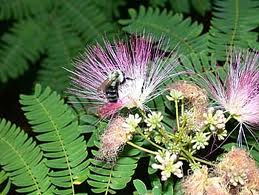
Mimosa Silk Tree, Albizia julibrissin

The Mimosa Silk Tree, Albizia julibrissin, is native to southern and eastern Asia. From there it was carried to Europe by the mid-1700s. Soon after it was introduced to North Carolina by the French botanist Andre Michaux. From there it spread north to New England, down around the Old South west to California and up the west coast, all except the northern plain states.  I have a separate article on site. To read it click here. Young leaves are edible cooked or dried to make a tea. The blossoms are edible like a vegetable or crystallized.

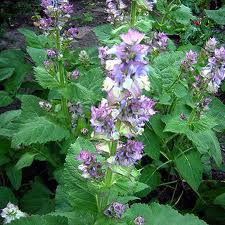
Clary Sage

Clary sage has been in the medicinal bag of tricks for at least 2,400 years. Theophrastus in the 4th century BCE wrote about it. Dioscroides did in the first century CE as did Pliny.  A native to the Old World it is naturalized in 14 states and Ontario with no apparent reason to the distribution. Like many edible flower it is found mostly under cultivation. It’s called “clary” because the sticky seeds were used to help get small foreign objects out of the eye, to help on see clearly.  Young and tender leaves are dipped in cream and fried, often eaten with an orange sugar sauce. They can also be dipped in an egg batter and cooked into fritters. The pleasant-flavored flowers are sprinkled on salads.

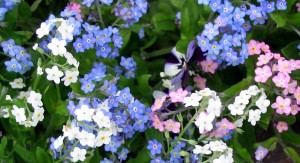
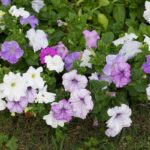
Petunia x hybridaOne wouldn’t think so but there is an edible petunia species. Petunias are in the solonace family which has some famous edibles and poisons members. This is not just any petunia but Petunia x hybrida first sent to Paris from South America in 1823.   The P. hybrida was created out of several Petunia species and comes in two types, grandiflora (larage flowered) and multiflora (many flowered.) Grandiflora have trailing stems and tend to spread with blossoms up to five inches.  Multiflora petunias are bushier and have smaller flowers from two to three inches in diameter.  Many colors and patterns are available. The mild-tasting flowers are used  in salads or as a garnish. The blue one is shown here because experts think if man did not continue to hybridize them only the blue species would continue.
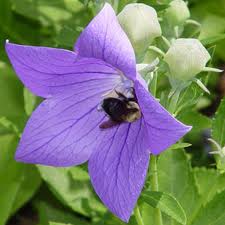
Balloon Flower and Bee

Let’s start at the bottom and work up. Our next plant is known for its root. In the greater Campanula clan, the root of the Balloon Flower, Platycodon grandiflorus, is very popular in Korea where it is cut into strips, seasoned with chili’s, vinegar, sesame oil and soy  sauce and eaten as a salad (which also tells one you can can get the root still alive in Korean markets, plant it, and get blossoms.) It is also used in soups, stews, dishes with vinegar, and is one of the ingredients in Toso, or sweet Japanese sake. Boiled young leaves are eaten in salads. Its blossoms are sweet in taste, have a bit of texture, and are used in salads, stuffed, candied or dipped in butter. The Balloon Flower is so called because before the petals open are fused at first making the blossom look like a balloon.

Yarrow

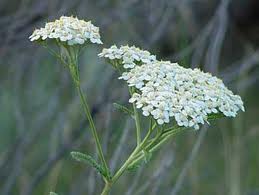
This plant is used so much it’s surprising the flower has managed to put itself nearly everywhere, field and farm. Yarrow (Achillea millefolium) is found throughout North American and many parts of the world. Young leaves are eaten in salads, or cooked as a vegetable, or added to soups and stews. The leaves and flowers are brewed into a tea. Sometimes in beer making it is substituted for hops. An oil from the flowers is used in flavoring a variety of commercial drinks and alcoholic beverages. Yarrow’s primary use for our purposes is blossoms to make tea.

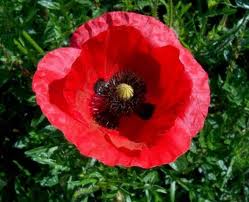
Corn Poppy

They used to be far more common than they are now, paper red poppies around Veterans Day, sold to raise money for disable veterans and the like. Aside from the veteran connection, mention Poppy and opium is usually the next topic mentioned. That’s a different poppy so hold the email please.  Our poppy is Papaver rhoeas, common name is Corn Poppy, sometimes Flanders Poppy.  From Athens Greece to Athens Georgia, you can find Corn Poppies. In fact, they are the flower of profusion about the Agora down from the Acropolis.  Young leaves are cooked and seasoned like spinach, or used for flavoring in everything from soup to salad. Syrup is made from the red petals is used to add flavor and color soups as well as wine. The seeds are used in confections and bread and the oil is an excellent substitute for Olive Oil. Originally from Eurasia they are found in most areas of North America.

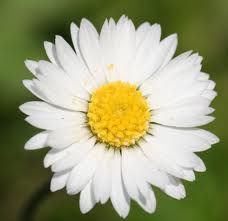
Daisy blossoms are actually many flowers not one

If I remember correctly Jean Kerr titled one of her humerous books, “Please Don’t Eat The Daisies.” The daisy was Bellis perennis, or the English Daisy but now just called Daisy as it is the common flower of farm and field in North America, and South America. For a widespread plant in multiple uses it is not high on the flavor list, if not bitter. However, its leaves have been used as a cooked green, usually boiled or as a pot herb. Flower petals are eaten in salads,  remember bitter. Flower buds are eaten in sandwiches, soups and stews, or pickled and used like capers. The entire flower open in the day and closes at night. “Daisy” is from Day’s Eye, meaning open only during the day. And, while it looks just a center blossom with a lot of rays around it, each ray is a separate flower, and every tiny yellow section in the middle is a separate flower.

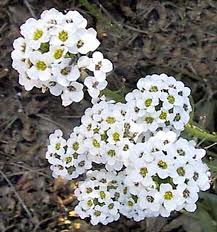
Alyssum

Mat-forming Alyssums recently underwent a genus and species name change. They were Allyssum lobularia and now they are Lobularia maritima. A native of the Mediterranean areas it has traveled far and is found 41 states most of Canada.The genus name lobularia comes from dead Latin and means small globe, referring to the shape of the flower cluster. Maritima refers to its habitat, meaning it likes to grow near the seashore and is somewhat salt tolerant. Leaves, young stems, and flowers are used for flavoring in salads or any dish where pungency is desired. The flowers candy well.  The blossom are honey-scented.

See Edible Flowers Part Thirteen

{ 15 comments }

Edible Flowers, a cheery way to start the day

Coral Vine, Citron Melon, Milkweed Vine, Dayflower, Evening Primrose, Kudzu, Stock, Dame’s Rocket, Freesia, Dendrobium phalaenopsis

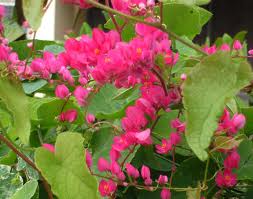
Coral Vine Blossoms must be cooked

The Coral Vine has dozens of names, not only as a cultivated blossom but an escapee on the most noxious list. Botanically it is Antigonon leptopus. A native of Mexico it has edible roots, leaves and for this series, flowers. To read more about it go here. The vine can climb to some 40 feet and blossoms nearly year round in warm area.  Butterflies and bees like it (you’ve been warned) because over 40% of its blossoms are open at a time. The blossoms, like the leaves and roots, have to be cooked. The roots, while edible, are hard to find and dig up.

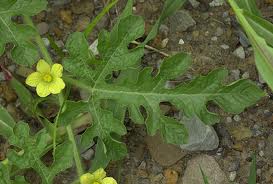
Citron Melon

The two plants non-foraging people ask about all the time are Society Garlic (covered elsewhere) and those small watermelon like fruit seen in old citrus groves and abandoned fields. The short answer is they are Citron Melons. They used to be cultivated for to make preserves and I have a separate article about that here. However, their blossoms are edible if they are not bitter. The blossoms should be cooked though usually one never sees the plant until the late fall and winter when one can see the fruit from the seasonal die back. The blossom might be edible raw, I just haven’t tired them.

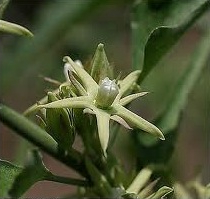
Milkweed Vine, Morrenia odorata

By looking at the names of this vine and the attitude of the state of Florida one would never suspect most of it is edible including the flowers. It’s called the Milkweed Vine, the Latex Vine, the Strangler Vine, the latter because it tends to climb on trees and cover them. Botanically it is Morrenia odorata. Literally from the ground up this plant is edible and the fruit has more Vitamin C than citrus (an industry that fights to get rid of it.) The flowers are very sweet and floral and can be eaten raw. This vine is only found in warm areas. Don’t try confuse it with the cool climate Honeyvine, Cynanchum laeve, which is not edible. Also Hemp Vine (Mikania Scandens) before it blossom looks vaguely similar as well.

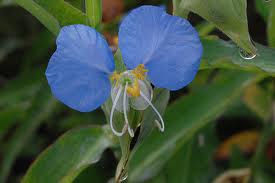
Dayflower, a Commelina

My love affair with Dayflowers is over. They don’t like me anymore. Well, the raw stems don’t. The raw blossom still do. In the Commelina clan there’s quite a few of them and while the blossoms are fine to toss in a salad, candy or use as a garnish — just like their relative the Spiderworts,  I am beginning to think the stems and older leaves are overrated. Raw they irritate my tummy these days.  The blossoms can vary in size depending on which species and can have three blue petals, two blue petals and one small white petal or two large blue petals and one smaller blue petal. Their flavor is an inoffensive green. The Yellow Commelina, Commelina africana, is edible cooked. They both are closely related to the tiny Doveweed.

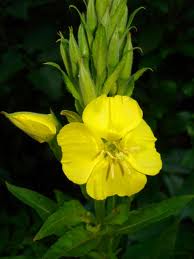
Evening Primrose, Oenothera biennis

Every climate has its good and bad points and one of the bad points locally is that the tall, northern Evening Primrose does not grow here. I think the the most amazing specimen I ever saw was in Vathia, Greece (Vathis is literally the end of the road on the central peninsula of southern Greece, deep in The Mani.)  The Evening Primerose was at least six feet tall and totally covered with flowers. Here in Florida we have a very scraggly ground hugging one. I have not tired its flowers. On my list of things to do. However, the common Evening Primrose of northern climes does have edible blossoms. They are sweet and can be used in a variety of ways raw or cooked if you prefer, salad to soups to garnish. They can even be pickled.

Kudzu’s blossoms smell like grapes

You never have to go looking for kudzu blossoms. When kudzu is in bloom there is no mistaking its scent. It is smells exactly like the cheap grape bubble gum kids chew. And intense? You can detected it on the wind from 100 yards away, or more. Kudzu is the bane of the Old South. Introduced by the government which paid farmers to use it for land reclamation, it can grow a foot a day and covers some 120,000 new acres every year. Goats love to eat it and all of it is edible except the seeds. The blossoms are quite edible recipes abound in their use, jelly to wine. While the smell like grape they do not taste like grape. They are sweet and have a flavor of their own.

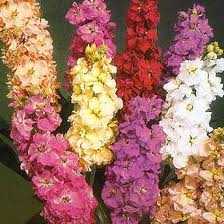
Stock is bred in many colors

Some like it hot, and some do not, and Stock does not. It’s a fragrant, two-foot tall, attractive flower that likes full sun, good, well-drained soil, and temperatures under 75 F°. They can even tolerate a light frost. There are some 140 species of Stock. The one we are interested in is Matthiola incana, common stock as it were though it comes in many colors. It’s native along the Mediterranean from Greece to Spain and was a mainstay of European gardens in the 16th and 17th centuries. The Elizabethans called them “gillyflower” and the Victorian allowed them in their cottage gardens. Even Thomas Jefferson got some for Monticello in 1771 and in fact one can still buy seed from Jefferson’s stock…of Stock. Stock flowers are usually added to salads  raw or a garnish to sweet desserts. They can be candied. Their flavor is perfume-ish. The plant’s pods are edible as well. A common cultivated flower in North American it is naturalized in North Carolina, Illinois, Texas, California and British Columbia usually in a few isolated areas but rather well-distributed in coastal southern California and San Francisco. It is also called Tenweeks Stock.

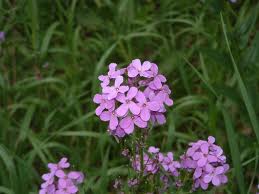
Dame’s Rocket is a mustard

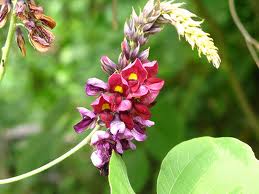
Dame’s Rocket is a declared invasive species in several places. It’s your civic duty eat the weed. Originally from Eurasia some 400 years ago it’s a mustard that at first glance looks like Phlox. Dame’s Rocket has the typical mustard family four petals, Phlox, five. It’s found essentially everywhere in North America except the Old South. Botanically known as Hesperis matronalis, it is cultivated, escaped and is included in wild bird seed mix. Young leave collected before flowering are eaten like cress. Seed pods can be added stews and soups. Seeds are a source of oil and can be sprouted and eaten. The flowers are used to add spicy flavors to fruit dishes and salads.

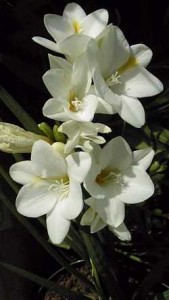
Freesia blossoms point the same way

As a forager one of the first things you learn is that there isn’t much to offer in the Iris family, or, if it is an Iris beware. Freesia is an exception.  A native of South Africa and Australia, it’s an Iris to about 18 inches tall and grows from a bulb. The stem branches once giving it a classic Y shape. One odd thing about the Freesia is that they grow in a helicoid, that is the flowers attach to the stem in a spiral fashion but they all point the same way.  Fragrance varies with the variety. And the usual debate is whether it’s a wild plant as it is in its native range or a cultivated plant as most of these readers will find it. I opted for cultivated. So far I have put only one flower in both wild and cultivated and that’s Dame’s Rocket. Freesias colors include white, purple, yellow, orange and red. In the language of flowers they represent “innocence.” The highly scented blossoms are used in salads raw or as a garnish. They are reported to be excellent infused with a sugar syrup, and are used in sorbets for flavoring.

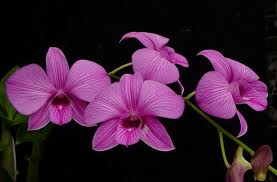
Dendrobium phalaenopsis

If you go to a Thai restaurant often a Dendrobium phalaenopsis is put on your plate. No that not a creature, it’s an orchid unfortunately without a common name in English. Said Den-DROH-be-um fal-en-NOP-siss their flavor is light, if any, but they are pretty with a crisp texture. This also brings up the debate if all orchids are edible. Personally I think that is impossible for one person to say as there are more than 20,000 of them, maybe 26,000, in some 800 genera. Many do have edible roots. Edible flower information is sketchy. One would like to think orchids used as garnishes would be edible just to avoid liability. However garnish writers seem to skip over issues of orchid edibility. Kind of like writing about flying and leaving out the airplane. Dendrobium phalaenopsis comes in a variety of colors and are native to southeast Asia. They are not difficult to grow. Use in salads and as a garnish.

See Edible Flowers: Part Twelve

{ 6 comments }

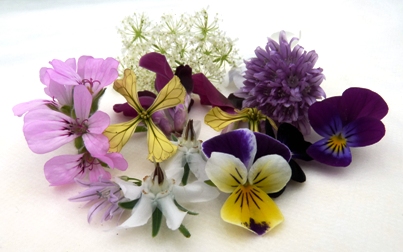
Tangy mustard and sweet violet flowers

Alliums, Oregano, Pinks, Peas, Okra, Galium, Ginger, Scented Geraniums, Primrose, Mustard/Radish

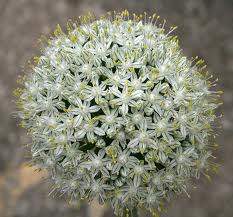
Onion Blossom

The author of “Florida’s Incredible Wild Edibles” Dick Deuerling, now in his 90s, taught me decades ago: If it looks like a garlic and smells like a garlic it is a garlic and you can eat it. If it looks like an onion and smells like an onion you can eat it. They must have both, however, look and aroma. We have a lily here in Florida, for example, that looks like an onion but no aroma, and raw it can be deadly.  Look and aroma, like horse and carriage and love and marriage. Together. Alliums can also be deceptive. Locally the “wild onions” (read really garlics) grow their cloves on the top of the plant, not underground. And if I remember correctly, an onion always has a singular bulb per plant where as the garlic has sectioned cloves. At any rate there are some 400 species if you include onions, garlic, chives, sallots, and closely related ramps/leeks, the latter having wide leaves. Usually the flowers have a stronger flavor than the leafy parts, and the developing seed head even stronger flavor. Blossoms are usually white but can also be pink. Onion stems are round, as are chives but smaller. Garlic leaves are flat. And since you know what those look like I’ll put up a picture of ramps, unfamiliar to some.

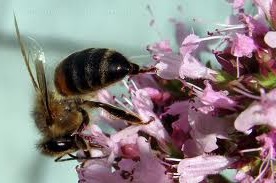
Honey Bee and Oregano Blossom

Where would Greeks be without oregano, or the rest of us? And is it a wild plant or cultivated? In most of the New World it is a cultivated plant. In the land of my ancestors it grows wild, particularly on the lopes of Mt. Taygetos (said tah-EE-gah-tos) south of Sparta in The Mani (and from where we get the word “maniacs” in English because of how the Maniotes fought.) Taygetos means “joy of mountain.”  Oregano is similar. It’s from two Greek words, oros, which means mountain, and ganousthal meaning delight in. “Delight in the mountain is” translates into good eats and where the oregano prefers to grow. There should be some truth to that because oregano also grows in Sanmaria Gorage on mountainous Crete, where I love to hike. We are told Aphrodite, the goddess of beauty, created oregano as a symbol of happiness. Ancient Greeks would crown newlyweds with garlands of oregano to bless happiness on their marriage.  Oregano’s blossoms are a milder version of the plant’s leaves Incidentally, marjoram is in the same genus as oregano. Oregano is Origanum vulgare, and marjoram is Origanum majorana. Think of marjoram as oregano lite and used the same way. In many place in the Mediterranean area oregano is called Wild Marjoram.

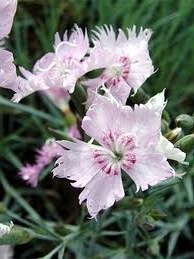
Pinks

Carnations (Dianthus caryophyllus) were covered earlier in this series but let’s revisit the genus Dianthus’ miniature versions such as Pinks and Sweet William, respectfully Dianthus plumarius and Dianthus barbatusDianthus means God Flower… Hmmm… would diandros be godfather? Anyway… These little carnations don’t like heat or alkaline soil which made them perfect for the cold acidic landscape of Maine’s summer. They don’t even like to be mulched. Curiously the name “Pink” does not refer to the color but a 14th century verb “to pink” meaning to perforate or create a punched patten. Apparently I grew up in the Dark Ages because it was a verb I heard around the home and every seemstress had pinking shears. Why Sweet William is called that is anyone’s guess but the term for the flower first showed up in 1596. (There were no King Williams at the time but William Shakespeare was mid-careerit’s a guess.) To use the blossoms cut away the bitter white base. The petals are sweet with a clove or nutmeg like scent.  Often used in salads, aspic and soups.

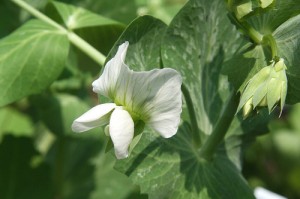
Garden Pea Blossom

There is a progression, I think. When  you are a kid you hate to eat your peas. You get past that then run into your first pea pod, usually at a Chinese restaurant. You get past that when you eat your first pea blossom. Note, eating pea blossoms will reduce your production of peas but a pea blossom here or there is pleasant. They are crunchy, slightly sweet, and taste like peas. That does vary some with what variety you have planted. Also the pea shoots and tendrils are edible as well. All usually consumed raw though you could cook them. A word of caution. I am referring to edible peas, the genus Pisum, not ornamental peas. Those can be toxic.

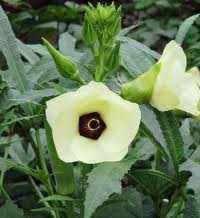
Okra Blossom

While we’re raiding the garden let’s not forget about okra blossoms. Like many edible flowers already mentioned it is in the hibiscus clan. I have grown okra in my garden and there are dozens of  cultivars to choose from that produce some variety of blossom colors.  Like most hibiscus blossoms they are shy on taste but add color and texture to salads as well as an attractive garnish. Of course you could also let them go on to produce okra which is a kitchen vegetable of many uses. In fact, growing okra is for the blossoms is perhaps the quickest and easiest way to get lovely large blossoms to your table quickly. And there are “dwarf” version for patio pot use. One word of warning, some okra plants have spines… big spines.

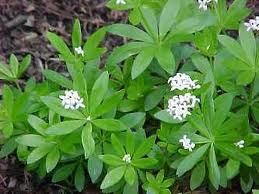
Sweet Woodruff

Several Galiums grow here in Florida, one of which can be used for dye, Galium tinctorium, and one of which is edible, Galium aparine. It’s easy to sort out the two. If you can find whorls of five leaves or less it is the G. tinctorum. If you can find whorls of seven leaves or more, its the G. aparine, among other characteristic. Their blossoms are really too tiny to attend to but edible. The favored Galium, however, does not grow here but I have run into it elsewhere, Galium odoratum. Imported from Eurasia and now naturalized it grows roughly in the northeast quadrant of North America and is commonly called Sweet Woodruff, or Wild Baby’s Breath. It’s been used a lot in Europe as a flavoring particularly in German May wine. Its flavor is sweet and vanilla-like which brings us to a warning. One of the chemicals that gives it a sweet smell is coumarin. Taken in large quantities it reduces the blood’s ability to clot. Flavoring and a few blossom here or there is not a worry unless you are in frail health and already taking blood thinners.

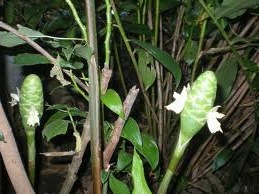
Ginger Blossoms

Right outside my kitchen window grows ginger, the kind we get ginger root from and use in cooking, Zingiber officinale. I planted it several years ago and when I need ginger for cooking, I did up a piece.  The word ginger comes from French gingembre which was borrowed from Medieval Latin ginginer which was bastardized from the Greek: zingiberis (ζιγγίβερις). Going back further it comes from the Indian subcontinent word inji ver. We just call it good, and a home remedy for motion sickness. Ginger blossoms are gingery and fragrant. They can be eaten raw.

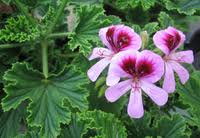
Lemon-scented Geranium

Because of an early botanical screw up — among the first of many — the Geranium group can be confusing. Initially all Geraniums were in one group. But by the late 1700s it was decided they were in two different genus but both were called commonly Geraniums. Got it? Folks have been trying to keep it straight ever since. Generally speaking they fall into two groups, bitter Geraniums usually not consumed, though some can be, and scented geraniums, whose flowers we can use. The latter genus is Pelargonium. The name comes from the Greek word πελαργός, pelargós, which means stork because part of the flower looks like a stork’s beak. Scented geraniums have different scents, among them almond, apple, coconut, lemon, nutmeg, old spice, peppermint, rose, and strawberry. The flowers tend to agree with the plant’s name. They are used in salads, desserts, and drinks.

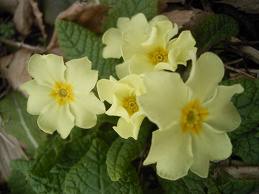
Primrose

The Primrose suffered the fate of several plants. Petty, edible and showed up very early in the spring after folks had spent a long winter with no fresh food. This wasn’t an issue when there were more primroses than humans. The primrose as been so harvested in the wild that it is illegal in many of its native places in Europe to pick it. However, it is also a common garden flower and a commerial product so getting some primrose legally really isn’t an issue. In the genus Primula the Primula vulgaris blossom reminds me very much of a small magnolia blossom. Several colors are available now. Also know as Cow Slip the blossoms are bland in flavor but sweet. They can be added to salad, the bud pickled, or cooked as a vegetable. They have even been used to make wine.

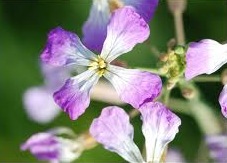
Radish Blossom

Perhaps I have been remiss in these last 99 blossoms to not mention mustards more. But they are a huge family and have been touched upon, such as with arugula. They all have yellow to white blossoms, sometimes pink, usually a simple cross which is there the family names Cruciferae comes from. They range from the mustard that produces the seed that makes the condiment to the radish in our salad to the plant that produces what eventually is cleaned and deodorized into Canola oil. In northern climates they are a spring and summer plant, here in Florida they are wintertime fare, showing up after Thanksgiving and usually totally gone by St. Patrick’s day. Wild radish and wild mustard look similar but have small differences. One is that mustards grow tall, radishes like to serpentine. Radish blossoms cluster and have noticeable veins, mustard blossoms are singular and the veins are not obvious. The seeds pods are different as well. Mustard’s pod is smooth, the radish jointed and why the mustard is called the charlock and the radish the jointed charlock. Their blossoms are both peppery and mustardy. They work best in cold salads or hot soups, the latter they can be tossed in just before serving. And of course mustard and radish leaves can be cooked up as greens.

See Edible Flowers: Part Eleven

{ 1 comment }