Edible Flowers Tempt the Palate

Mango, Catnip, Pignut, Lovage, Salsify, Hairy Cowpea, Fritillary, Mint, Cow Slip, Birch
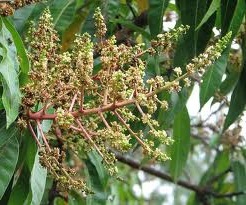
Mango blossoms

Did you know mangoes and poison ivy  are botanical kissing cousins? And a sensitivity to one can be a sensitivity to the other? In fact there several related species, all in the Anacardiaceae family: Mangoes, poison ivy, poison sumac, Brazilian pepper, cashews, and pistachios. You can see the spread, three edibles, one on the cusp of edible/toxic, and two toxics. Some folks might be allergic to all, some to only a couple. Many people get a rash on their mouth after eating mango, called Urushiol-Induced Contact Dermatitis. The fruit is originally from India, cultivated for some 4,000 to 6,000 years. It is reported to be the most produced tropical fruit…. yah know…. I question that statistic. I would have thought bananas would have claimed that title. Incidentally, bananas are dying off. Your grandkids may never get to eat a banana. Anyway… when first exported around the world mangoes were pickled because of the distances and time involved. In fact “mangoed” became a verb meaning pickled. Mango blossoms grow on long panicles and have a scent similar to Lily of the Valley. Not only are they edible but young leaves as well… as long as you don’t have an allergy. Young leaves and flowers boiled. You can make a natural mosquito repellent by burning dried mango flowers, or use them to make a tea high in tannin. Oh, never burn mango wood. It’s like burning poison ivy. The urushiol gets in the air then your lungs then you’re in the emergency room with poison all over your outside and insides.
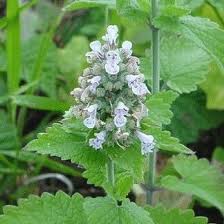
Catnip

Catnip: Most cats love it, a few don’t. The difference is genetic. The active chemical is Nepetalactone. It’s a mild hallucinogenic that produces euphoria in many cats. In humans it makes you sleepy, like chamomile though in large amounts it is emetic. Catnip (Nepeta cataria) is an herb of the mint family and at one time was a spice found in the kitchen. Although a native to Europe, it has been exported to the rest of the world and in some places is considered a weed. It is naturalized in every state except Florida and all the first tier providences of Canada. Even though it is considered a weed most folks still think of it as a cultivated plant because most buy it for their cats. Indeed, growing catnip can be a problem because feral cats and domestics on the roam won’t leave it alone. When protected catnip grows to about a yard high, branches much, and is topped by small white flowers with purple spots, a common trait of the mint family. The leaves can be candied or brewed into a mint-like aromatic tea. In Europe the leaves and young shoots are put into salads or seasoning for sauces, soups and stews. While the flowers can be sprinkled on salads they are usually used to make tea, often along with leaves. Catnip is also high in Vitamin C.
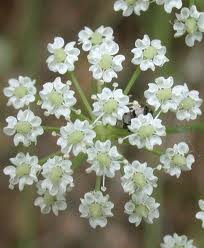
Pignut blossoms for flavoring

Do you know where the islands of St. Pierre and Miquelon are? Do you know what they are? Among other things they’re the only place in North America where Bunium bulbocastanum is naturalized. The islands are situated at the entrance of Fortune Bay off the southern coast of Newfoundland, Canada. The odd part is they are not part of Canada but still part of France, a tiny toehold still in the New World. Residents are French citizens and vote in French election though the home county is more than 4,000 miles away. It was from these islands that a large amount of Canadian whisky was smuggled in the the United States during prohibition. Easy to grow B. bulbocastanum is called Pignut and Earth Chestnut. It has lacy white flowers similar to Queen Ann’s Lace and attractive foliage. Pignut sets large clusters of small tubers that taste like sweet chestnuts. They are eaten raw or boiled as a vegetable. Leaves can be used like parsley. The seeds and flowers are used for flavoring. British forager Ray Mears included the Pignut in one of his early television series but not in his subsequent books because they taste so good they’re becoming scarce in England.
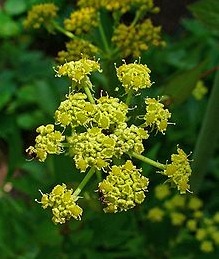
Lovage

Botanists can’t agree exactly where Lovage came from, though the Old World is close enough for our purposes. Lovage’s beginnings may be humble but it has risen to high esteem for its many usages. Native to perhaps the Mediterranean or southwest Asia, Lovage is cultivate throughout Europe and North America. Highly aromatic it is similar looking to flat-leaf parsley only much larger. The flavor is similar to parsley and celery combined with a notes of anise and curry. Botanically Levisticum officinale leaf stalks and stem are blanched and eaten like celery, or peeled and eaten. They can also be candied. Young leaves are chopped and added to salad, soups, stews, seafood, and omelets. The seeds are used for flavoring, often in breads and confections. An aromatic tea can be made from dried leaves or grated roots. And the flowers are edible.
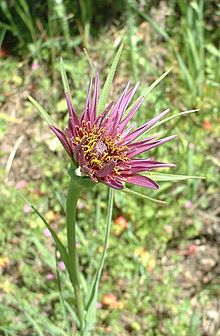
Salsify, Tragopogon porrifolius

This plant’s other names include Goatsbeard, Oyster Plant, Vegetable Oyster, Jerusalem star, Purple Oyster Plant, and Meadow salsify. Commoningly called just Salsify, botanically it is Tragopogon porrifolius. As you might have surmised to some the root tastes faintly of oysters, to others parsnip, and probably to some like oystery parsnips. Native to the Mediterranean area it has been introduced to Great Britain, northern Europe, South Africa, Australia, Canada and the United States. It is found in almost all the states including Hawaii but excluding the Old South except Georgia which has it. Roots are eaten raw in salads, or they are boiled, baked, and sauteed. They are added to soups or can be grated and made into cakes. Flower buds and flowers are eaten raw in salads or cooked then cooled and added to salads. The flowers are also pickled. Young flower stalks are cooked and dressed like asparagus. Sprouted seeds are put in sandwiches or in salads. The sap can be used as gum. Bradford Angier, a well-known Canada-based forager, says the yellow salsify is also edible.
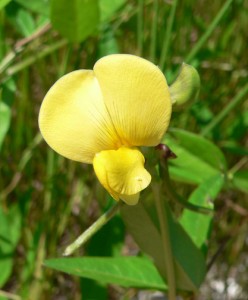
Hairy Cowpea, Vigna luteola

Hairy cowpeas like water. Not exactly in water but certainly near it, water’s edge. You’ll find them in the same places you find the Ground Nut, Apios americana. When you’re near water, fresh or salt, look for pure yellow pea-like blossoms though it’s not really a pea but a bean, and related to the Mung Bean and the Black Eye Pea, which is also a bean. While the Hairy Cowpea blooms and fruits all year locally it prefers the fall for seed production. It’s usually at that time collecting them is a calorie-positive activity because you can get a lot of the seeds at one time. Of course, the rest of the year is a good time to collect the blossoms and boil them with other potherb fare. The roots can be chewed to extract their sweetness, the seeds can be shelled and cooked and as mentioned the flowers cooked.
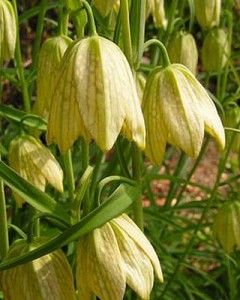
Fritillaria's Bell-shaped blossoms

Originally from China but now grown around the world the Fritillary makes an interesting addition to a flower garden. Soft bell-shaped blossoms with a pale green netting on the outside of the petals and a pale red netting on the inside makes this Lily family member easy to identify.  The particular species we’re interested in is Fritillaria verticillata. Their name comes from Dead Latin for dice box, fritillus, a reference to the check patttern the veining makes. And while we like fritilaries rodents and deer do not. Young plants, peals and flower buds are eaten after parboiling. They are used in soups or as a herb or cooked with soy sauce. The bulbs are eaten fried or candied. Another members of the genus with edible bulbs is Fritillaria camtschatcensis. The buds might remind you of the Daylily and indeed while in different genera they are botanically standing next to each other. One more point: Do not experiment with fritilaries. The two listed here are known edibles. Others may contain toxic amounts of various alkaloids.
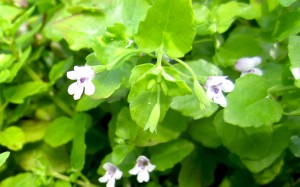
Wild mint, this one is Micromeria brownei

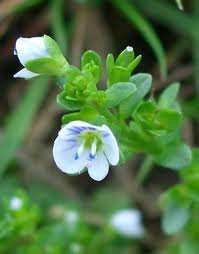
Mint is such a common edible I almost didn’t include it. Also, which one do you use and do I put it in the cultivated edible lineup or the wild edibles? There’s over 200 genera and some 7,000 species in the mint family. The largest is Salvia with some 900 members. It would be a lot easier if we were talking about Florida Pennyroyal which is a monotypic genus, a family with one member, not thousands. I am going to opt for a local mint as you  probably already know about your local mint. I learned this mint as Micromeria brownei. Now it is Clinopodium brownei.  Ahhh… botany always trying to improve itself. The mint went from Small Flower Parts Brown to Slope Footed Brown. I’m sure you can see the immediate and dramatic nomenclature improvement…. I was also told all those decades ago it had no common name. When the Internet was born the aquarium trade starting calling it Creeping Charlie (which many different species are called.)  Later I saw St. John’s Mint… hmmm not too bad as the St. John’s River runs north through the peninsula of Florida.  Only recently has it been called “Florida Water Mint” not a name that inspires me as it can be found in much of the Old South… Maybe Old South Mint is in the offering. This little plant can be found anywhere I teach in the warm south near fresh water. In fact it also grows in Interstate medians leaving a mint aroma in the air for days after cars careered off the pavement during accidents. A one-inch part of any of it, blossoms or stem in a cup of hot water makes a minty tea. The entire plant can be used as mint. Warning: It is a strong, no wimpy mint it. Start sparingly until you get your gauge of use.
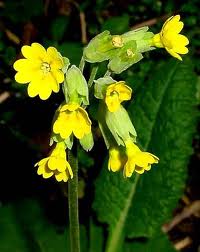
Cow Slip

One of my grandmothers loved Cow Slip greens. Cow Slip is from the old English word “cuslyppe” which means cow dung. Apparently the species has the same feeding preferences as some famous mushrooms. So my grandmother would make my mother go out in the cow-containing pastures to pick the Cow Slip greens. And from the way my mother tells the tale my grandmother didn’t care whose pasture she spied the plants in. They were destined for consumption after my mother fetched them. From temperate Europe and Asia originally, Cow Slip, Primula veris, is in the same genus as the (English) Primrose mentioned earlier. Flowers are used in salads, conserves, or as pickles and a garnish. They have also been used to make cow slip wine and vinegar. Leaves are eaten raw in salads or used to make a tea. It is found in northeastern North America.
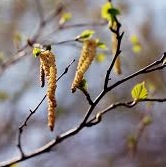
Paper Birch Catkins

There are several advantages to living where it never snows, and a few disadvantages. Many plants need cooler weather to reproduce or fruit or just thrive. Birches do not like Florida though they can be planted in the northern bounds of the state. Birches were a common tree of my youth, white birch, golden birch and paper birch. Birches can be tapped like maples. The twigs and catskins have been used as a wintergreen-ish flavoring for as long as we have written records about North America. And of course there were the famous birch bark canoes. What you also might not know is that an epoxy-like tar can be extracted from birchwood. The original super glue. While most birches have edible parts the birch we are interested in this overview in the Paper Birch, Betula papyrifera. Very young leaves, shoots and catkins can be eaten in salads or stir fried. The sap makes a drink, a syrup or a sugar, depending upon how long you heat it up. It can also be used to make birch beer and vinegar. A tea can be made from the leaves and the wood is used to smoke meat.

See Edible Flowers: Part Sixteen


{ 4 comments }

Ilex vomitoria, Yaupon Holly

History has many layers and shades. It’s not a straight timeline of great clarity but more like a meandering muddy river with much confluence, influence and effluents. During the European 100-year war composers wrote a lot of quartets because there weren’t enough musicians around to play the larger symphonies. Carburetors for primitive cars came from perfume sprayers and those developed out of the brewing industry. And Europeans didn’t go to the new world to move there, at least not in the beginning. They were looking for plants. Gold was low on the list until explorers got to Mexico.

Captain John Smith

Sassafras was the first export from the new world. Ground nuts, Apios americana, were second. Captain John Smith of Pocahontas fame (1607) was mainly interested in plants and wrote about them extensively. Some of the earliest writings on North American species and their use are from the notes of Smith, right, who is still referenced today. Plants are intertwined with history including Ilex vomitoria. Whether we know about Ilex vomitoria because of Billy Powell, below left, or we know about Billy Powell because of Ilex vomitoria is a good debate. It’s difficult to have one without the other.

Osceola, Black Drink Shouter

Billy Powell’s great-grand father was one James McQueen, a good Scotsman. His grandmother was Ann McQueen, grandfather Jose Coppinger. His mother was Polly Coppinger, probably christened Mary as Polly was a common nickname for Mary. His father was an English trader called William Powell. Now you know where the name Billy came from. And his uncle was Peter McQueen, a well-known fighter. While Billy’s genealogy is interesting, what’s more important is that he was born with a cast iron stomach. And in part because of that we know him as Osceloa, a Seminole warrior.

It was a complicated time three hundred years ago as the 1700s gave way to the new century. The natives knew there was no way of stopping the Europeans. In 200 years the white men from the east went from a trickle to a tidal wave. The Creeks, Billy’s  “Indian” heritage, chose a strategy of intermarriage to Europeans to form alliances. The Seminoles, with a higher percentage of runaway slaves and free blacks, forbade intermarriage with Europeans.  The Creeks were also matriarchal so McQueen’s kids stayed in the Creek Clan with his wife.

The intermarriage approach didn’t work well (nor frankly did forbidding it.) When Billy was 10 General later-to-be-president Andrew Jackson defeated the Creek. Billy moved with his mother from their native Alabama to Florida to live with the Seminoles. “Seminole” is Creek for “wild people” or “run-aways.” They were essentially Lower Creeks who went south to avoid Upper Creeks. They also included run-away slaves. The Seminoles had a religious purging ritual that took an every day refreshing drink (“Yaupon tea”) and turned it into an emetic. Drinking a lot of it and holding it down longer than others moved one up in tribal leadership, along with other skills. We presume Billy held the black drink down well, that is to say, it took a lot to make him hurl and when he did it was a lot (thus he was very clean.) It was there in Florida, in an adopted tribe, where Billy Powell became Osceola and in time a leader of warriors.

“Osceola” is anglicized Creek for Asi-yahola which is usually translated into “Shouter of Black Drink” or “Black Drink Singer.” But Yahola was also the name of a Creek sky deity revered for his immaculate nature, read purity. Among some tribes only high-status males were allowed to drink the brew. For special ceremonies it was brewed extra strong. That’s where the vomitoria part of Ilex vomitoria came from. Ceremonies that included fasting and drinking large amounts of Yaupon “tea” and subsequent vomiting demonstrates how important spiritual purity and cleanliness were to the natives before assembling for important meetings or military action. It was not unlike some rituals of the Spartans. Also the phrase “If the Creek don’t rise” is referring to rebellion, not a flooded waterway.

Osceola Death Mask

While some of the many Seminole tribes signed a peace treaty, which meant abandoning their Florida land and relocation to west of the Mississippi, five did not including Osceola’s. He supported powerful Chief Micanopy’s opposition which culminated in some ambushes that led to the Second Seminole War. The names of people involved in that upheaval are still heard in historical echos. Osceola County, Marion County, Payne’s Prairie, the town of Micanopy, Lake Jesup (now incorrectly spelled with two S’s) and Jacksonville.

Captured by deceit under a flag of truce by Gen. Thomas Jesup in October 1837 Osceola was taken to Fort Moultrie, South Carolina. It was there after much persuasion he posed for paintings. The by-gone cigar store “Indian” was fashioned after him. Ocseola died there of malaria on 30 January 1838, age 33, perhaps 34. He left behind two wives, one white, one black, and at least five children. Besides relocation the second reason Osceola went to war was he opposed enslaving free-born blacks. In the long run he lost the battle but won the war. And if there had not been a warrior like Osceola might there not have been a Second Seminole War and the continuing festering of racial issues in early America? 

While hollies in general are covered in a different article — click here — there is so much interest in Ilex vomitoria (EYE-lecks vom-ah-TOR-ee-uh) as a beverage that it was time to craft a separate article about it.

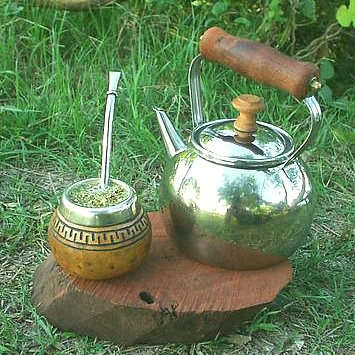
Yerba Mate’s from South America

The Yaupon Holly is North America’s version of Yerba Mate, which is Ilex paraguariensis. Preparation of Yaupon (YAH-pon) ranges from putting four or five leaves in hot water — not boiling — for five or six minutes to elaborate drying, steaming, roasting and percolation. Some brew leaves and twigs. Not only does Yaupon have more caffeine than any other species in North America it also is high in antioxidants. A 2009 article in the Journal of Economic Botany recommended it become a commercial crop. Not surprising, a 1919 journal article recommended it as well. Spanish colonists in early Florida drank Yaupon tea. One priest in 1615 wrote: “There is no Spaniard or Indian who does not drink it every day in the morning or evening.”   They called it “Indian Tea” or Cacina (a name that confounded botanists for a few centuries.)  In the 1700s English settlers in the Carolinas drank the “Indian tea” daily. It was very popular in the second half of the 1800s but fell out of favor. Scholars don’t know why but one would think the proliferation of coffee might of had something to do with it.

Left on its own the Yaupon Holly is a spindly understory tree, never growing much presence or height. The best examples of the species I know are cultivated ones in the landscaping of what used to be the Winter Park Library, in Winter Park, Florida. It’s easy to miss the native tree in the forest. However, two of its cultivars are very well known.

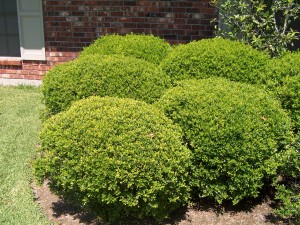
Ilex vomitoria var. nana, a common hedge plant.

If nature makes a slight variation in a species it is called a variety. If man makes a variety it is called a cultivar. Two cultivars of the Ilex vomitoria are quite common. The most common is Ilex nana, or Ilex vomitoria var. nana. It is the ubiquitous hedge plant of the south. In fact there are some 17 different varieties of it. Thus finding a caffeine substitute is not difficult at all. The only question is how wholesome is the water and the environment where the hedge is located.

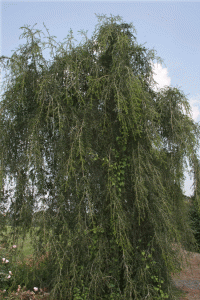
Ilex vomitoria var. pendula

The second cultivar is more dramatic, the Weeping Holly, or Ilex vomitoria var. pendula. It makes a very attractive statement in landscaping growing into a mid-sized tree with red berries (not edible.) Sometimes it is also trimmed to look like an upside down bowl. Researchers report that under controlled agricultural conditions the pendula variation produced the most caffeine of all. The amount of caffeine in the “vomitorias” varies depending upon how much nitrogen they are fed. More nitrogen, more caffeine.

More than 50 years ago in the Orlando Public Library I found a crumbling old book written Dr. William A. Morrill. a plant PhD. He wrote in 1940 the best Yaupon “tea” was made by using an equal mix of chopped brown dry roasted leaves and chopped steamed green leaves.  While Yaupon Holly tea does have a caffeine it is practically free of tannin, which reduces bitterness considerably.

The odd finding, according to the researchers however, was the presence of anti-oxidants in the leaves. This was influenced by sunlight. The more sunlight the plant received the more anti-oxidants, or perhaps said correctly, the less shade the more anti-oxidants. While the researchers said more testing was needed it would appear that an Ilex vomitoria var. pendula grown in full sun and fed a high-nitrogen fertilizer would produce the maximum amount of caffeine and anti-oxidants. They recommended it become a commercial crop. A company in Daytona Beach, the Yaupon Brothers, sells it.

Available cultivars include: `Folsom’s Weeping’, `Jewel’, a female plant with heavy fruit production; `Nana’, a dwarf, compact shrub form, male plant, no berries; `Pendula’ (`Grey’s Weeping’), large weeping specimen, sparsely foliated, to 35 feet tall; `Pride of Houston’, medium-sized shrub with heavy fruit production; and a low shrub called `Schelling’s Dwarf’ (`Stroke’s Dwarf’), more compact than `Nana’. Yellow-fruited cultivars include `Aureo’, yellow berries; `Otis Miley’, small leaves, yellow fruit; `Wiggins’ Yellow’, yellow fruit.

Two more tid-bits: Yaupon leaves are a good browse food for white-tail deer, and cattle. And some 4,000 people still speak Creek. It was the first “Indian” language to be standardized and written down. There was even a Creek newspaper.

Green Deane’s “Itemized” Plant Profile: Yaupon Holly

IDENTIFICATION: An erect, slow-growing, evergreen shrub or small tree forming dense thickets about 25 feet  (8 m) tall in some areas. Usually much smaller. Many stems, low, dense, rounded crown. Thick leaves, simple, alternate, leathery, varying in size and shape from plant to plant. Flowers inconspicuous, male and female flowers on different trees, bark thin, gray, and smooth. Toxic red fruit is a small, shiny drupe.

TIME OF YEAR: Evergreen, leaves year round.

ENVIRONMENT: Grows best in climates with mild winters and long, hot, humid summers. It is found on coastal dunes, maritime forests, upland woodlands and pine flat woods. For the most part Yaupon inhabits well-drained sites but also occurs on stream banks, in wet woodlands, and floodplains. Found in southeastern coastal plains of the United States from Virgina to Florida and westward to South Central Texas. Drought and disease resistant, salt tolerant. Fast growing. Not native to south Florida.

METHOD OF PREPARATION: Ranges from seeping a few leaves a few minute in hot water to elaborate preparation of leaves and twigs, roasting, steaming, percolating.

Keying out Ilexes in Florida:

Leaves thin, membranous
Leaves evergreen, entire or rarely denticulate, fruit dull purplish
to black, plants of south Florida only ….. Ilex krugiana
Leaves deciduous
Leaves pubescent on most of the upper surface, margins serrate
Leaf blades elliptic with a rounded leaf base, 6-9 cm long
….. Ilex amelanchier
Leaves smooth on the upper surface, margins crenate to serrate
Leaf blades oblanceolate to ovate, 2-6 cm long, margins crenate
….. Ilex decidua
Leaf blades elliptic to ovate, margins serrate to crenate
Leaves with conspicuous veins, flowers and fruit appear singly or
in clusters up to 3, in the leaf axils
….. Ilex verticillata
Leaves without conspicuous veins, flowers and fruit appear
clustered from spur shoots ….. Ilex ambigua

Leaves coriaceous, evergreen
Fruit red to yellow
Leaf blade with sharp pointed teeth, these are usually regularly
spaced ….. Ilex opaca
Leaf blade entire, crenate or serrulate
Leaf blades with a rounded apex ….. Ilex vomitoria
Leaf blades with a sharp, pointed apex
Leaf blades 1-4 cm long and usually less than 1.5 cm wide,
margins entire, tip sharp pointed ….. Ilex myrtifolia
Leaf blades generally longer than 4 cm and wider than 2 cm,
may have a few teeth at the tip or with a single sharp
point ….. Ilex cassine
Fruit black
Leaves crenate, leaves often cupped, 3-5 cm long
….. Ilex glabra
Leaves with a few small teeth, leaves somewhat cupped, 4-7 cm long
….. Ilex coriacea


{ 40 comments }

Edible flowers are a treat on a winter's day

Manzanita, Rose of Sharon, Tea, Campanula, Artichoke, Saffron, Samphire, Sage, Parsley, Common Mallow

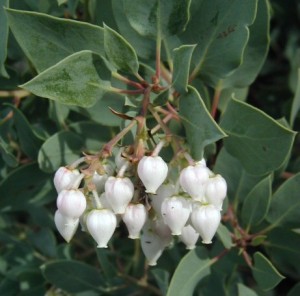
Manzanita blossom become red berries

Western states often seem to get short-changed in the foraging realm because most of the edible foreign weeds landed on the east coast. They’ve been slowly working their way west for centuries, which from a botanical point of view is a small amount of time. The West, however, has its own wild edibles including the Manzanita of the Arctostaphylos genus. Both Manzanitas and Bearberries are in the same genus. Of the Manzanitas several have flowers worthy of nibbling on including Arctostaphylos glauca, Arctostaphylos manzanita, Arctostaphylos nevadaensis, Arctostaphylos parryana, Arctostaphylos patula, Arctostaphylos pungens, and Arctostaphylos tomentosa. Besides the blossoms, the berries are edible as well.

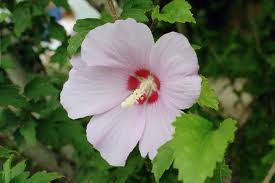
Rose of Sharon

South Korea is crazy about The Rose of Sharon, Hibiscus syriacus. It’s their national flower. The Blossom’s on everything, and it’s native to Korean and much of Asia. So why is it called syriacus, which means “from Syria.” They got it wrong a few centuries ago. They thought it was from Syria. Oddly mistakes like that cannot be changed. That it is wrong in not enough. There has to be a botanical reason to change a plant’s name once given, not a geographical one. Called mugunghwa in Korean — which translates into “flower of eternity” or something close to that — it has been a garden staple in that country since there were gardens hence the eternity spin. The leaves are made into tea and the flowers eaten, usually raw. The hibiscus made it to Europe by the 1500s and was in most English gardens by the 1700s. The American colonies followed suit. It’s also my mother’s favorite flower. Had to mention that or I wouldn’t hear the end of it.

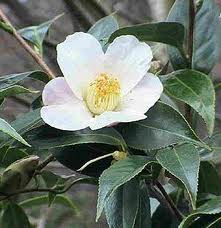
Tea Blossom

Our next plant is known by billions. Wars were fought over it, an empire built and fortunes made, Camillia sinensis, better known as tea. Yep, the tea in your cup. When I first bought land I planted a C. sinensis knowing it was iffy. It was. Didn’t make it. Too warm, too humid. And it is an understatement to say tea change the course of history. Read about Robert Fortune in my article on Forsythia. He was sent by the British government to China, undercover, to steal tea seeds and the like to start a tea industry in India, a thef and resulting Indian tea industry that China has only recently surpassed. Besides a beverage, tea makes a marinade for fish and meat, mixed with anise blossoms it is used to make “tea eggs” which are tasty and wonderfully marbled (you crack the shells to pattern the eggwhite with brown lines.)  Kombucha is basically tea cider, leaves are used to smoke meat, its fruits are eaten, leaves are chewed to remove the odor of garlic and onions, and the blossoms are cooked. One favorite way is to make tempura out of them, deep frying them.

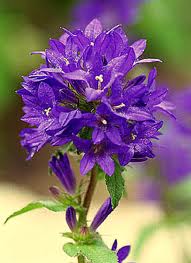
Clustered Bellflower

Campanulas are not a small clan. There’s some 500 of them in the genus. Some are eaten for their roots, leaves or flowers. The rampion, or Campanula rapunculus was widly grown in Europe for its radish-like roots and leaves. In fact, “rapunculus” is Dead Latin for “little turnip” and was the Brothers Grimm’s inspiration for the fable name Repunzel. The Clustered Bellflower, Campanula glomerata, has bluish flowers that are eaten raw. They are sweet in flavor as are their leaves. Usually used in salads. Campanula punctata flowers and leaves are cooked like a potherb. Campanula rapunculoides, Rover Bellflower, roots and leaves are eaten (remember, in Dead Latin -oides means looks like or resembles. So the C. rapunculoides looks like the C. rapunculus.) In parts of Greece the Campanula versicolor, Variously Colored Bellflower, are eaten and cooked like a vegetable. The leaves are used in salads and taste similar to peas. The flowers are also very good.

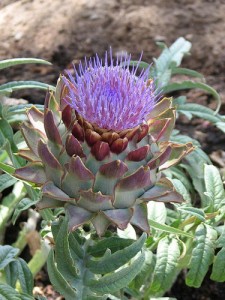
Artichoke blossom

If I don’t include artichokes among the edible flowers several will gleefully write and tell me I missed one. No doubt I have missed many. That said we really don’t eat the blossoms of the artichoke. They are actually bitter but if you want to have at it. We eat the floral bracts, read fat leaves below what will become the flower. We eat them raw, boiled, steamed, baked, fried, stuffed, and marinated. When marinated they are called artichokes hearts. In Europe they are dried and used in soups. The inner portion of the flower stalk is also edible, much like true thistles. The flowers themselves are used for a substitute for rennet, meaning they will curdle milk. I said they were bitter. Young artichoke leaves are fed to snails to improve their flavor. Yum. Artichokes have been around for a long time. Zeus (said Zeff in Greek) turned a scorned lover into an artichoke. It doesn’t pay to irritate a god. And young Norma Mortenson got her start in 1948 when she became the first “Artichoke Queen.” You know her as Marilyn Monroe

Three Saffron Stigmas

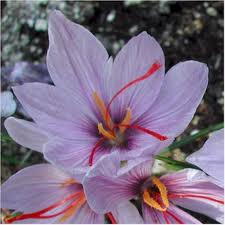
As of this writing the best price I can find on the Internet for saffron is $92.95 an ounce, free shipping, marked down from $144. Why is it expensive? Because “saffron” is the three red stigmas of the flower and must be picked by hand. Limited amount, labor intensive. It is the most costly spice by weight. Then again, one uses very little of it. Saffron is acually a crocus, Crocus sativus. It does not grow in the wild and is totally cultivated by man. Technically it is a monomorphic clone and believed to be a mutant form of Crocus cartwrightianus. The Greeks were the first to cultivate it, probably on Crete. Historians tell us it has been bought and sold for over four thousand years. Ninety percent of the world’s saffron comes from Iran. The styles are used to flavor and color sauces, creams, breads, preserves, curries, rice, soups, caked, puddings, eggs even butter and cheese. It can be a tea substitute and the roots roasted. It’s not a spice you keep on hand. Usually purchased for a dish specific. It takes about 13,125 dried stigmas to weigh an ounce. Oh, I forgot to mention: In large amounts saffron is deadly. That’s an expensive way to go.

Samphire Blossoms

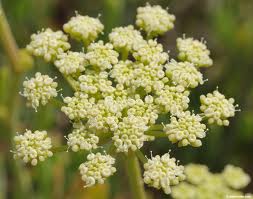
I have a soft spot for edible plants that grow that can grow in salty places. They are usually fleshy, salty greens edible raw or cooked. A traditional seaside green is Samphire, Crithmum maritimum. At one time it was sold under the name of “Crest Marine.”  It has fleshy, aromatic leaves that are spicy, peppery.  The stems, leaves and pods can be pickled and the leaves are used fresh in salads. They can also be boiled as greens. In Italy and Greece the leaves are cut into small pieces, mixed with olive oil and lemon juice making a salad dressing. The raw blossom are used in salads. Very high in Vitamin C. The name, Samphire, is a French corruption of St. Pieere, (St. Peter) patron saint of fishermen.

Sage Blossoms

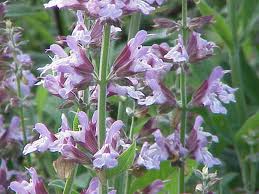
Where would poultry seasoning be without sage? Or sage cheese? Or Paul Simon’s song Scarbrough Fair? Sage is used for seasoning meats, fowl, stuffings, soup, stews, sausages, sauce, beans, corn, mushrooms, and butter. Young leaves and flowers are eaten raw, boiled, pickled or on bread and butter sandwiches. Leaves are used to make a tea. Flowers can be sprinkled on salads to add color and flavor. It’s been in the kitchen and the herbalists medical kits for a long time. The Greeks were writing about sage some 2200 years ago.  Sage blossoms are violet to blue, pink to white. They are not as strong flavored as the leaves. Botanically it is Salvia officinalis for the moment. There have been six attempts to change the name in the last 70 years. Though a native of the Mediterranean, it is naturalized in many northeastern states though it has a short growing season. Not the best performer either in the herb garden but a powerhouse in the kitchen.

Parsley Blossom

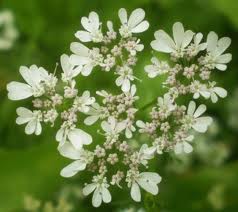
Like so many of our spices Parsley is a native of the Mediterranean. While for this article we are interested in the flowers there are actually two major divisions within the parsley realm, leaves and roots. Among the leaves there is curly or flat leaf. Interestinlgy the flat leaf is closer to the wild parlsey than the curly. Flat leaf is easier to grow, more tolerant of agricultural abuses, and has a stronger flavor. Curly leaf is more decorative and milder in flavor. It is the one used mostly for a garnish. There is also a root parsley, not common outside of central and eastern Europe where it is used in soups and stews. It has a nutty celery/parsley taste and is often fried like potato chips. From Argentine salsa to a tea Vitamin C rich parsley has multifold uses in the kitchen. Even the stems can be dried and added to dishes. The blossoms are salad fare or can be added to anything the leaves are used for. Parsley, incidentally, means “forked turnip” though parsely and turnips are not related.

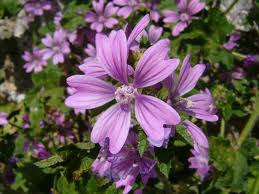
The Common Mallow

How many names does this mallow have? There’s Common Mallow, High Mallow, Tall mallow, Mauve des Bois, Cheeses, and botanically Malva Sylvestris, which means mallow of the woods. Native to western Europe as the plant moved with colonialists it picked up various names. It’s an annual in cool areas and a perennial in warmer areas. It is found in most states save the Old South and Nevada though it does grow in South Carolina. the mucilaginous leaves are eaten like spinach, added to soups to give them texture, or used to make a tea. Flowers are used like a vegetable or as a garnish. Unripe fruits are called cheese because they look like a small wheel of cheese. They are a nibble. Look for blossoms from June to September.

See Edible Flowers: Part Fifteen

{ 4 comments }

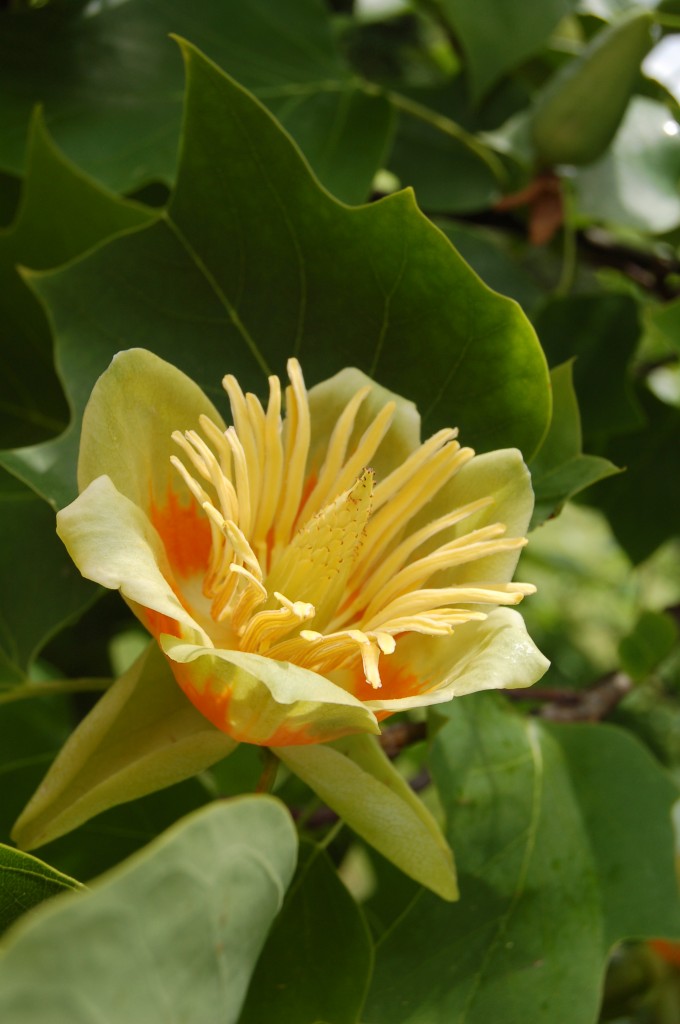
The Tulip Tree Sweet Blossom

Not every edible plant has to be a nutritional powerhouse. Some are “edible” by the barest of means. A good example is the Tulip Tree, Liriodendron tulipifera, said leer-ee-oh-DEN-drawn too-lih-PIFF-er-uh.

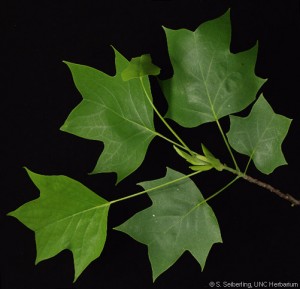
Note unusual tip of leaf

What if you read that a native plant was “used to make honey.”  What would you think? Probably that the plant was cultivated for bees to make honey. Unfortunately that is not what my reference says. It say the Native Americans made honey from the Tulip Tree. That’s rather doubtful. First people don’t make honey, bees do. And more specifically honey bees are not native to North America. They came with Europeans. It doubtful until perhaps late in the game did Natives cultivate the Tulip Tree for honey. They didn’t have the bees.  However, when the bees got here the flying nectar mavens did discover Tulip Trees.

Some references say Tulip Tree roots were used as a flavoring to take the bitterness out of Spruce Beer. I’ve had Spruce Beer and it does need something to make it more palatable. But one expert on Native Americans lists under “sauces and garnishes” that Tulip Trees were used to make honey. As mentioned above that’s not probable but here’s a possible answer that fits nicely with our foraging interests.

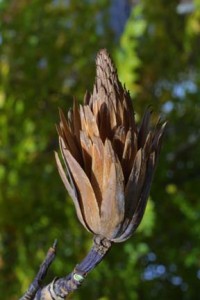
The flower quickly turns to non-edible seeds.

For just a short time while the tree is blossoming there is a small amount of very sweet nectar in each blossom. It is heavy and honey-flavored. You can drink it directly from the blossom. The expert was relying on old reports that probably didn’t describe how the natives used the tree. They weren’t collecting honey, they were collecting nectar. The tree was also called the Sap Poplar, perhaps because its sap is consumable. I don’t know and have not found any reference to said but it wouldn’t surprise me. As a source of nectar the tree also attracts hummingbirds, squirrels and is a host plant for tiger and spicebush swallowtail butterflies.

The genus name is bastardized Greek via Dead Latin. Liriodendron. Lirio is a Greek derivative for Lily, dendron Greek for tree, Lily Tree.  Tulip is the English version of a Turkish word Tuliband. That is bastardized Persian for dulband which means turban. “Ifera” is Latin and means producing. Liriodendron tulipifera thus is “Lily Tree Producing Tulips.” The tree is also called Yellow Poplar, Tulip Poplar, White Poplar, and Whitewood.

Related to the Magnolias, the Tulip Tree can be found in eastern North America plus Texas. To see a good video on the Tulip Tree by my foraging colleague Blanche Derby, click here.

Green Deane’s Itemized Plant Profile: Tulip Tree

IDENTIFICATION: Liriodendron tulipifera, 100-foot tree, sometimes to 150 feet. Leaves alternating, simple, palmately veined, orbicular (circular and flat) 4-lobes, no teeth, 4 to 8 inches long, notched to flat top. Somewhat shaped like a tulip, light green to green. Blossom, monoecious; perfect, showy, resembling a large tulip, but high in the tree, 2.5 inches long, with yellow-green petals and an orange corolla.  Fruit is cone-like with many samaras (2 inches long) falling off at maturity; each samara is 1-winged, 1.5 inches long, and curved upwards resembling the front keel of a boat, maturing August to October and falling through late fall and winter. The base whorls of samaras persist into following spring and resemble wooden flowers high in the tree.

TIME OF YEAR: Flowers appear in late spring to early summer.

ENVIRONMENT: Grows in a wide variety of soil. The effects of temperature and moisture extremes are mitigated some by the lay of the land. At the northern end of its range, yellow-poplar is usually found in valleys and stream bottoms at elevations below 1,000 feet. In southern Appalachia, it can grow on a variety of sites, including stream bottoms, coves, and moist slopes up to an elevation of about 4,500 feet. Toward the southern limit of the range, where high temperatures and soil moisture probably become limiting, the species is usually confined to moist, well-drained, stream bottoms. Optimum development occurs where rainfall is well-distributed over a long growing season.

METHOD OF PREPARATION: The blossom can be tipped and the nectar sipped out.

{ 27 comments }

Edible flowers, tasty and nutritious

Sesbania Grandifolia, Lemon Verbena, Szechaun Buttons, Horseradish, Tea Olive, Tiger Lily, Currants, Honewort, Thyme, Indian Paint Brush

Sesbania grandifolia

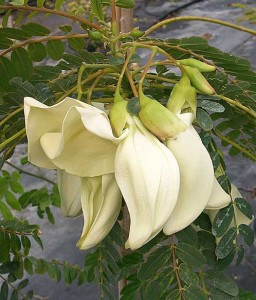
Sesbania grandifolia, also called the Vegetable Hummingbird Tree and the Scarlet Wisteria, has managed to work its way into warmer areas of the world. If you have a frost you might be able to pot it but you won’t find it out in the field. Originating in either India or southeast Asia, it grows best in hot, humid areas including south Florida. The shrub’s long narrow pods are eaten as a vegetable dish, similar in use as string beans.  The seeds are fermented into a tempeh turi. Young leaves and shoots are eaten in salads or as a pot herb or in soups and stews. Sesbania grandifolia flowers are eaten raw in salads, boiled, fried or use in curries, stews and soups. They taste like mushrooms and are rich in iron and sugar.

Lemon Verbena

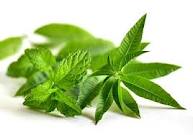
There is hardly an established garden that doesn’t have a Lemon Verbena in it. A native of South America it was “discovered” in 1785 in Buenos Aires. By 1797 it was the rage of England and has been exported around the world since around 1785. It’s in a well-known association with a lot of plants used for seasoning and antioxidants.  The Aloysia triphylla was named to compliment the morganatic wife of Infant Lois Anonio de Borbon, prince of Asturias  and brother to King Carlos III of Spain. The Infant was a supporter of the arts and botany.  Young leaves are eaten as spinach. they are also used to flavor fruit cups, jellies, cold drinks, salads, omelets, salad dressings, and vegetable dishes. The leaves or tiny, citrus-scented flowers, are brewed into a refreshing tea. Tea from just the flowers is sweeter.

Szechaun Buttons

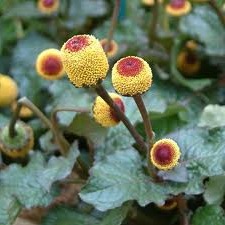
Szechaun Buttons. No, they’re not from China but Brazil. This is an edible flower you will likely want to grow yourself rather than order. Right now a 30-blossom order is selling for $39.95 not including shipping. Why would you order them? Because they are the current party favor but they have other uses as well. Spilanthes acmella, aka, Acmella ocleracea, grow in Brazil. They are peppery like capsaicin, hence their name because of a heat similar to Szechuan peppers… well almost. The active chemical is spilanthol. That used to numb gums for toothaches. It causes a reaction with the trigeminal nerve pathway controlling the control motor and sensory functions of your mouth. The result is a tingling, popping sensation in the mouth. Kind of a cross between Pop Rocks and a 9-volt battery. Besides that, they are cooked and used in salads, sauces, soups, sorbets and as cocktail garnishes. You can add shredded uncooked greens to your salad, sparingly, or sprinkle some uncooked petals on your salad. The taste is herbal and slightly bitter. One high end restaurant uses them in a cheese plate.  At another eatery the tiny petals and some lemon thyme are infuse a small pot of honey that accompanies roasted kabocha squash, sweet peppers and toasted walnuts. A third offers patrons a Concord grape soda float with lemon verbena sorbet into which shreds of Sechuan buttons are dispersed through a soda siphon. Did I mention they use Szechaun Bottons to flavor chewing tobacco in India?

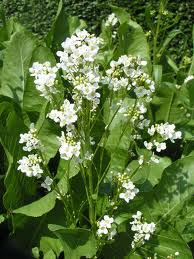
Horseradish blossoms

My cousin in southern Quebec… actually first cousin once removed, Beulah Knudson nee Smith, grew the largest horseradish I ever saw. The winters are harsh thereabouts and that horseradish, Armoracia rusticana,  was making the most of their very short growing season. Here in flat iron Florida it is too hot to grow horseradish except perhaps in the most extreme northern counties. Most everyone knows that horseradish is a hot root. In fact, the root is rather cleaver. The two chemicals that make horseradish hot have to be mixed to be hot but the plant keeps them in separate cells so they don’t bother the plant. Only when the cells are crushed together is a hot chemical created. It’s called “horse” radish because “horse” is also used to describe anything big or rough. Young leaves can be added to salads, pickled or cooked as a potherb. Sprouts can be added to salads, or the roots can be cooked as eaten that way. The flowers are edible, quite mild compared to the root. Sprinkle them on salads, throw them in when pickling or cooking string beans and the like.

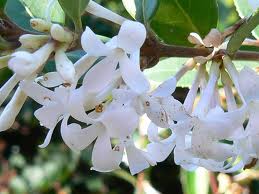
Tea Olive, aka Fragrant Olive

If you go to an Asian market and buy “Cassia Blossom Jam” it is not from the Cassia clan at all but rather Osmanthus frangrans, the Tea Olive, also called the Fragrant Olive and Sweet Olive. Its name(s) gives you a good idea what it is used for.  It a glossy evergreen with little white blossoms that bloom almost all year long, making it a favorite landscape plant where it is warm all year. The blossoms smell deliciously fragrant of ripe peaches or apricots. It tends to bloom in autumn, winter and spring. Fruit follows about six months later. The unripe fruit are preserved in brine like olives. The flowers are used to make tea fragrant as well as wine, liqueurs, and confections. The blossoms are either preserved in a salty brine or made into a sugary paste. The Osmanthus americana, the American Olive, is used a similar way.

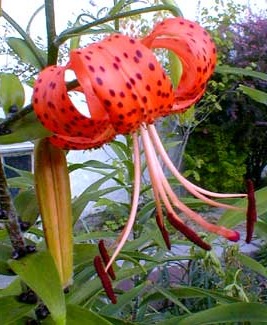
Lilium lancifolium

Many lilies are called the Tiger Lily but botanists argue there is only one, Lilium landifolium, a native of Asia and Japan but naturalized in the northeast quarter of North America, among other places. Almost all of the Tiger Lily is edible, bulb to flower. In fact it is a cultivated crop in Asia and Japan turnips or parsnips in flavor. Flower buds are eaten raw or cooked, as are the flowers. The pollen is edible as well. Yes, I know there are dire warnings on the Internet that it is poisonous for humans but evidence of that is absent. Dr. François Couplan, author of the Encyclopedia of Edible Plants of North America told me “…Lilium bulbs and Hemerocallis flowers are commonly sold as food on eastern asian markets. And I’ve had lilium pollen myself, albeit in fairly small quantities, and never suffered any wrong effect…”  It IS toxic to cats. One way to identify this lily from the natives is small black bulbils on the stem. While it is naturalized it usually does not go far from urban areas. When I used to traipse around the countryside in New England I always found these and daylilies near old or abandoned farms. In fact, out in the country they were usually right across the road from the farm house. See full article on site.

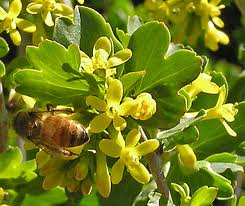
Ribes aureum, the Golden Currant

We used to ride our horses on abandoned roads, of which there were plenty. One was still passable if you had a vehicle with a high suspension because the road went over washed out ledge. It was no problem for the horses. At the top of the ledge were high bush blueberries, some eight feet tall. Just beyond the crest were two fallen-in farms, across the road from each other which usually meant the same family. Still growing at one of the homestead was currants. Currants, gooseberries and Kiwis are related to each other. Currants were made into jellies and jams as well as wine… very good wine. The natives dried them and use them in making pemmican. Some species, perhaps most, have edible flowers. At the top of the flower list is Ribes aureum, or Golden Currant, found in most of North America except the Old South. Another currant noted for flower edibility is Ribes cereum. Wax Currant, found in the western half of North America. Black Currant (Ribes nigrum) flower buds are used in ice cream and liqueurs. I would suspect the open flowers would be usable as well. And of course, the berries have many uses and have antioxidants. Incidentally, R. aureum is not Ribes odorata.

Canadian Honewort, cryptotaenia canadensis,

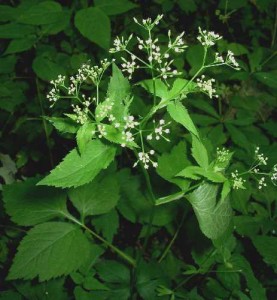
The Canadian Honewort, Cryptotaenia canadensis, grows all the way down to Florida, and covers the eastern two third of North America. A member of the carrot family, it can be found growing along streams and creeks or in low, wet ground. The entire plant is edible, cooked, root to flowers. Flowering season is May to August and the blossom are small. Also called Wild Chervil, the roots are usually boiled in salted water and served with oil; young leaves and stems are soaked in water to moderate flavor then cooked as a pot herb. Cooked flowers are edible as well.  You can add a small portion to salads for their aromatic quality. Seeds are used for flavoring and the stems candied. Cryptotaenia japonica can be used in a similar way but needs far less cooking, usually just blanching. In warmer areas don’t mistake Tripogandra multiflora for it. The latter has black stems, large flowers, and is not edible.

Thyme blossoms are tiny but flavorful

I went to Crete in the spring once to hike Sanmaria Gorge, said to be the longest gorge in Europe if you count extreme southern Greece as geographically part of Europe proper. There was, however, a late season snow storm and the gorge was closed. So I hiked down Embrose Gorge, much smaller but not without its charms. I remember three things well from the hike. The first was the wonderful scent of wild thyme growing throughout the gorge. Next was literally being run over by a large heard of sheep and goats. And lastly later that evening discovering the local taverna-made rose smelled just like the sheep. Without thyme the chef and the herbalist would be hard pressed to find a suitable substitute. In the kitchen thyme has so many use including the blossoms. Thymus vulgaris, leaves and blossoms are used to flavor stuffing, fish, meat, fowl, cheese vinegar, gravies, sauces, bouquet garni, herbs de Provence, brine for olives, eggs, bread, tea and honey. Shoots are a garnish.  The blossoms are milder than the leaves. And yes, later I got to hike down Sanmaria Gorge, a hike of a lifetime.

Wyoming's Indian Paint Brush

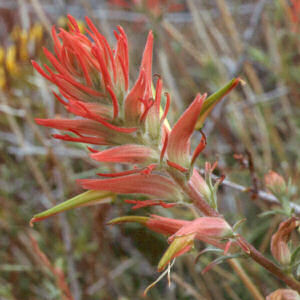
While recreating my foraging instructor page for the new website I considered using the state flower next to each separate state entry. Unfortunately few states have state flowers that are edible. Wyoming is the exception. Its state flower is the Indian Paint Brush though it is found in most western states and has a huge variety of common names including  — no surprise here — the Wyoming Paintbrush. By statute, however, it is officially Indian Paint Brush. It was adopted as the state flower 31 January 1917 beating out columbine and fringed gentian. There was heated debate from the opponents, however. One said the Indian Paint Brush was not common in the state, had too many varieties only an expert could tell apart, was parasitic by feeding on the roots of others, wasn’t generally liked and that the fringe gentian had been already chosen by Wyoming school children as the sentimental favorite. He left out the Indian Paint Brush encourages foraging but no doubt would have if he had known it. This particular paint brush, Castillija linariaefolia, is the best tasting in its genus. Maybe that’s why it won. Flowers are eaten raw. However the plant can accumulate selenium making it toxic to cattle.

See Edible Flowers: Part Fourteen

{ 3 comments }