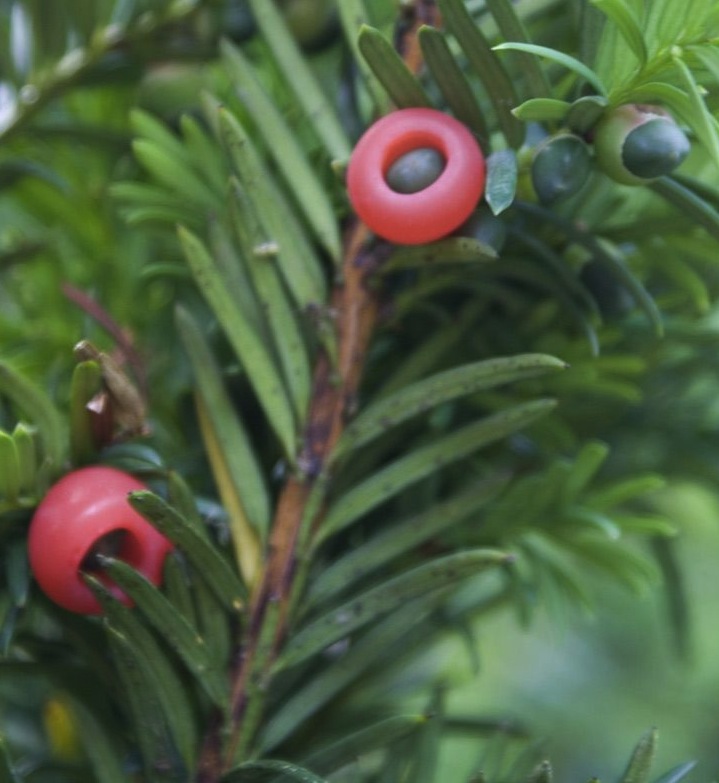
Only the red part is edible, not the seed inside.

The Yew can kill you, very quickly.

Did that get your attention? Good. It should. There is only one safe, small part of the tree that is edible. The rest is toxic. What’s edible? The fleshy aril around the seed. The seeds are NOT edible though those who have eaten them have said before they died that the seeds had a good flavor. The same has been said of deadly mushrooms and fatal water hemlock. What do chewed seeds do? They stop your heart. Any questions? The leaves are toxic as well killing, besides humans, horses, cattle and pigs. Taxine alkaloids (A and B) are thought to inhibit heart depolarization. The largest concentration is in the seeds. 

Yew Bow

While the aril has a firm texture it falls apart once removed from the seed, it is watery and sweet but with almost no flavor. Get your fingers messy: Don’t even think about putting it all in your mouth then spitting the seed out. That’s too dangerous. Take the aril, which looks like a little cup, off the seed, throw the seed away, then eat the aril. I would not be surprised to learn the arils has antioxidants. While the aril is edible the flavor and texture are not WOW. They’re okay… barely. It’s a lot of danger to approach for little pay off.

Now, what if you swallow one seed whole? Those who know say it will probably pass through without a problem. Personally, I would rather throw up than take the chance, or have the stomach pumped out. Chewed seeds or a few ounces of leaves will definitely kill you, or a horse. How toxic is the tree? It is favored by bow makers, and has been since ancient times. However there are reports of some bow makers being killed by the tree’s toxins because they handle the wood so much. Oh… did I mention the yew is a common landscaping ornamental? Surrounding ones house with a deadly hedge is not a good idea.

Poisoning symptoms can include difficulty walking, muscle tremors, convulsions, collapsing, difficult breathing, coldness and heart failure. However the toxin works so quickly some of those symptoms might be skipped.  Dead animals are often found with twigs or leaves still in their mouth.
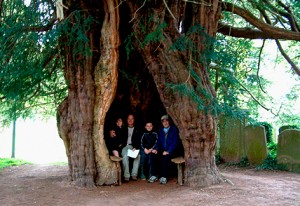
A yew near Ledbury, Herfordshire, England

That said the Yew tree has a lot of history behind it. The word itself is ancient Germanic and means brown, like the bark. The oldest piece of worked wood in the world is a Yew spearhead dated 450,000 years old. Within written times the European Yew was dedicated to the Erinyes or Furies, goddesses of vengeance for human punishment.  Caesar referenced a Celtic leader named Eburones who poisoned himself with Yew rather than submit to Rome. The Roman historian Florus said that in 22 BC the Cantabrians on the coast of northern Spain killed themselves by sword, fire or Yew rather than surrender to the legate Gaius Furnius. The Astures, also of Spain, when under siege at Mons Medullius also chose to die by Yew than be captured. Yews are among the oldest trees in Britain with several over 1,000 years old and one perhaps 4,000 years old.

Cornucopia II lists two Yews. Of the Taxus baccata (the English Yew) it says on page 240 “the bark is used as a substitute for tea. Fruits are sometimes eaten, however the seeds are considered poisonous.” And of the Taxus cuspidata (the Japanese Yew) it says: “the sweet aril, or fruit pulp, is eaten raw, made into jam, or brewed into wine. Caution is recommended, as the seeds of many species are poisonous.”

All that said Ethnobotanist Dr. Daniel Austin reports the native species were used by Indians for medicine. Eastern tribes used the Taxus canadensis in minute amounts for tea to treat rheumatism, bowel ailments, fevers, colds, scurvy, to rid clots, as a diuretic and to expel afterbirth. However, Dr. James Duke in 2002 wrote T. baccata, T. brevifolia and T. canadensis are too toxic to be used as medicine.

Badger, Taxidea taxus

The study of plants is also the study of language and history. The yew genus is Taxus. That comes from either taxic or toxic which in Greek means “that in which arrows are dipped.” Interestingly the Greek word for bow is toxon and for the Yew taxos. One can see and hear the connection of these words for over 4,000 years. By the way the animal called the Badger is Taxidea taxus, which means” the badger hides in the yew forest.” I think it is one of a few or the only case in which a plant and an animal have similar scientific names. And while the little fellow to the left looks cute Badgers are renowned for their ill-temper and brass.

Most Yews used in landscaping are either the European Yew or the Japanese Yew. There are three native Yews to North America, T. brevifolia, T, canadensis, and T. floridana.

Green Deane’s Itemized Plant Profile: Yew

IDENTIFICATION: An evergreen, bark reddish-brown, thin, flaking in thin scales; leaves linear, stiff, one-half to one inch long, two ranked, on twigs; upper surface dark green, lower surface yellow-green, midrib prominent. Fruit comprised of a single stony seed mostly surrounded by  a bright scarlet, thick, ovoid, fleshy cup, the whole .5 to .75 inches long.

T. baccata, the European yew, hardy north to New York, T. cuspidta hardy into southern Canada, T. brevifolia, the western yew, to 75 feet high, forests, wooded slops and ravines, central California to Montana, British Columbia and Alaska. T. canadensis, ground hemlock,  likes marshes, spreading shrub rarely more than 5 feet high, deep woods, Kentucky north to Canada. Taxus floridana is so rare we’ll leave them alone. Yews are mostly found in yards as an ornamental.

TIME OF YEAR: Summer to fall

ENVIRONMENT: Varies by species

METHOD OF PREPARATION: Aril raw. The seeds are deadly.  Read that sentence again: The seeds are deadly. Indeed, the entire plant is deadly except for the aril. I have also eaten yellow yew aril.
{ 87 comments }

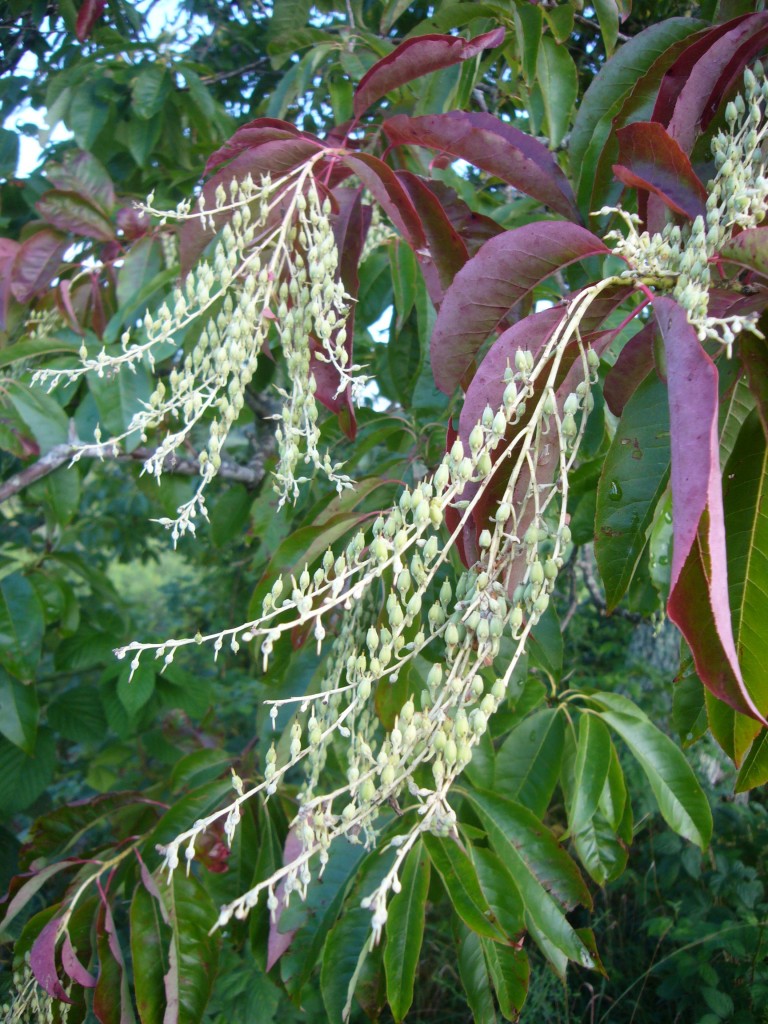
Sourwood blossoms with green leaves and fall color. Note how they fold. Photo by Kelly Fagan

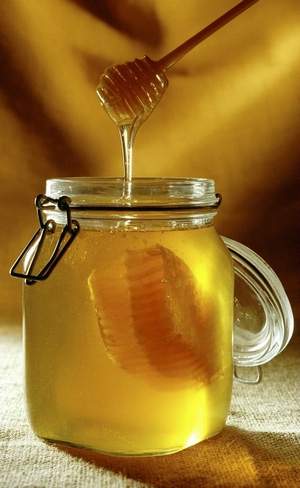
Sourwood honey is considered by some to be the best-flavored honey in North America, perhaps the world. Carson Brewer, a conservationist who wrote about life in Appalachia, mused that “Most honey is made by bees. But sourwood is made by bees and angels.”

Sourwood Honey

Honey connoisseurs say there’s an excellent crop of sourwood honey about once a decade making it rare as well as good. This rarity is as much dependent on weather patterns as it is timing and bee-keeping expertise. The honey’s color can be white to amber sometimes with a light gray tint. Its texture is smooth, caramel-esque, buttery.  The flavor is similar to gingerbread with a bit of kick in the aftertaste.  I have two bottles of it squirreled away. And while sourwood honey is famous, the tree has more to offer. However, like many trees, it just barely slips into the edible range.

The small blossoms can be used to make jelly, and the leaves chewed to quench thirst (chewed not swallowed. They’re a laxative.) In years when there isn’t enough good blossoms for honey jelly is an option. The urn-shaped blossoms grow along terminal panicles and resemble Lilys-of-the-valley. While some writers call them aromatic I find their scent pleasant but barely detectable. During my last August trip to the Blue Ridge Mountains of North Carolina I saw altitude-stunted sourwoods blossoming on the top of mountains and yet-to blossom large trees in the valleys.

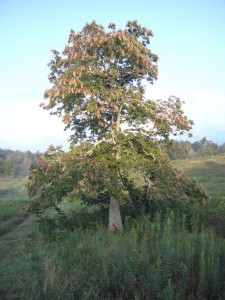
Sourwood tends to have a pyramid shape

Sourwood, Oxydendrum arboreum, grows from southwest Pennsylvania down the Appalachian chain just dipping into panhandle Florida.  It can be a tall tree in the middle of its range, smaller on each end.

Because of its acidic taste (from oxalic acid) the Cherokee Indians occasionally used it to cook food for the flavor. Spoon and combs were made from the wood as well as sled runners, arrowshafts and pipe stems. As for the edibility of young leaves there is some controversy.

Food Plants of North American Indians

Elias Yanovsky wrote a book in 1936 for the US Department of Agriculture called Food Plants of North American Indians. It was in part a response to the food shortages of the Great Depression in the 1920s and the Dust Bowl era of the 30’s. At least two of his entries have been criticized as doubtful. One is that he said some tribes ate Virginia Creeper. That is highly doubted. Virginia Creeper is considered toxic. In another entry Yanovsky said tribes in the southeast ate young sourwood leaves in salads. That is doubted. Ethnobotanists like Dr. Daniel Austin say southeastern tribes did not as a matter of course eat raw vegetables, that is, they did not eat salads. In fairness to Yanovsky he was not an ethnobotanist and could have copied misinformation from other sources, not unlike the Internet today.

Dr. Francis Porcher

The sourwood, however, did have many medicinal uses among the various tribes. The Catawba used it as an infusion for menstrual issues and menopause. The Cherokee used sourwood infusions to stop diarrhea. They also made it into a tonic for indigestion, nervousness, asthma and spitting blood. Francis Porcher, mentioned many times in my articles, was an American Civil War doctor and botanist. He wrote: “The leaves when chewed allay thirst. A decoction of the bark and leaves is also given as a tonic.” In the Old South it is a folk remedy for kidney and bladder issues, fevers, diarrhea and dysentery.

Related to the blueberry and in the Heath Family, the Oxydendrum arboreum is a monotypic genus, that is, it is the only member in its genus. Oxydendron (ox ee DEN drum) is from two Greek words, Oxy- meaning  “acid” or “sharp” and Dendron which means tree.  Arboreum ( ar BOR ee um or ar bor EE um) means “tree form” or tree-like. The sourwood is also called the Sorrel Tree and the Lily-of-the-valley-Tree because its blossoms are similar to the flower’s.

Carson Brewer

Carson Brewer, who so aptly described sourwood honey, was a columnist for the Knoxville News-Sentinel, a daily newspaper in Knoxville, Tennessee. He wrote for them for some 40 years then retired and wrote for 18 more before dying of pneumonia in 2003 just shy of his 83rd birthday. Brewer wrote several books. His best known is Hiking in the Great Smoky Mountains. The Tennessee Valley Authority, which eventually flooded the Little Tennessee River valley with the Tellico Dam, hired Brewer and his wife, Alberta, to write a history of the valley and those who lived there. That valley is now underwater. Their work, Valley So Wild: A Folk History, was published in 1975. It was the Tellico Dam project that made a small endangered fish called a snail darter famous and a household word at the time.

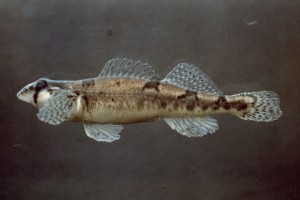
The damn busting, infamous Snail Darter

During the second half of the 20th century attitudes began to change about the use of dams and flooding valleys for power. The Tellico Dam was the turning point and the first dam halted (for a while) because the flooding would wipe out a species, the snail darter (Percina tanas) found only at that time in the Little Tennessee River. More to the point the three-inch fish was federally protected by the Endangered Species Act of 1973. The minnow had its day in court, the Supreme Court no less, and won. So the dam could be built — $100 million had been spent by then — the act was amended to specifically exclude the snail darter and it was moved to the Hiwassee River. The fish was upgraded from endangered to threatened on 5 July 1984. The case was instrumental in the development of environmental law. If you want to read more there’s a book about it: The Snail Darter Case.    And as you might expect, Carson Brewer covered the story.

Green Deane’s Itemized Plant Profile

IDENTIFICATION: A deciduous, medium-tall tree growing to 30-60 feet, slender pyramid shape, some times oval, often with a curved or leaning trunk. Bark rusty-brown, smooth when young becoming rough and furrowed. Simple, alternating oblong leaves to 10 inches, rich green and glossy on top, sour taste, appear to fold in the sun and hang like weeping. They turn brilliant red, scarlet and purple in fall. Blossoms white, on long drooping stalks to 10 inches.  Small flowers are urn shaped, upside down, resembling blueberry blossoms.  Some find the blossoms fragrant.

TIME OF YEAR: Blossoms spring to summer, altitude can make a difference.

ENVIRONMENT: Prefers rich soil, mixed hardwood and softwood forests but is adaptable. Prefers full sun, some shade.
Hardy USDA Zones 5-9.

METHOD OF PREPARATION: Flower used to make jelly. Chewing leaves can reduce thirst.

{ 10 comments }

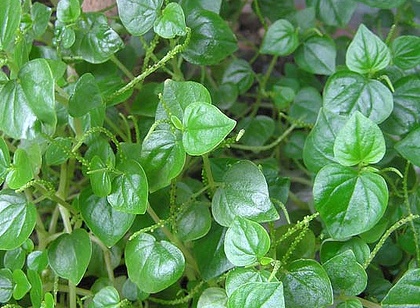
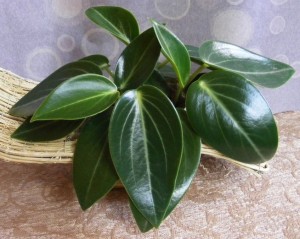
Peperomia pellucida, used for salads or tea.

Snowy Corthell Hall, then at the University of Maine, Gorham. where I spent most of my college years, photo by My View From Maine

I went to undergraduate school in Maine where winter lasts from about November 1st to October 31st. I’m fond of telling people I love summer in Maine… both days of it. With the majority of the year cold and green plants scarce I made a lot of terrariums to have greenery around. I was always raiding Skillins Greenhouse in Falmouth for plants. (Nice to know some 40 years later — 2012 — they are still in business. Then again they opened doors in 1885.) And if you have never lived in snow you truly don’t realize how wondrous greenhouses are in the wintertime. Ten degrees outside and snow to your knees, warm and humid and earthy inside. Alive! Greenhouses were a source of joy and depression because they were beautiful and the promise of warm weather always months away.

Terry Skillins owner of Skillins’ Greehouses being interviewed on gardening tips.

A plant I used often in my terrariums for a tropical look and got at Skillins was Peperomia. I got the houseplant version and there’s about a thousand species in the genus, two of which are commonly eaten, Peperomia pellucida (Greenhouse Tea Plant, Shiny Bush) and Peperomia maculosa (Cilantro Peperomia… guess what it tastes like?) Most of the species are from the tropical Americas but 17 hail from Asia. Most have flower spikes similar to a Plantago but are more showy, think inverted catkin.

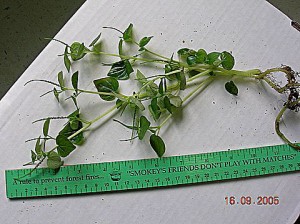
Peperomia pellucida is not a tall growing plant.

While the P. maculosa is used as a spice the P. pellucida is main fare for salads and as cooked greens.  This Peperomia has a good nutritional profile. A 100 grams portion of P. pellucida has approximately 277 mg of potassium. It also has: 1.1 grams carbohydrates, 0.5 gram protein,  0.5 gram fat, 94 mg calcium, 13 mg phosphorous, 4.3 mg iron, 1250 mg beta carotene and 2 mg ascorbic acid. Its leaves have also been used to make tea. Besides food the Peperomia pellucidahas quite a medical legacy.

Peperomia maculosa is used as a spice similar to cilantro.

Historically the plant has numerous ethnomedicinal uses as an anti-inflammatory and analgesic properties. Peperomia pellucida has shown antibacterial activity against Staphylococcus aureus, Bacillus subtilis, Pseudomonas aeruginosa, and Escherichia coli. It is approved by the Philippines’ Department of Health for various uses. One of them is a decoction used to decrease uric acid levels (as a remedy for rheumatism and gout) and to treat renal problems. Boil 1 ½ cups of the plant with 2 cups of water for 15-20 minutes.) It is also used topically for skin disorders such as acne and boils. See Herb  Blurb below.

As for botanical name, Peperomia (pep-er-ROM-ee-ah) is two Greek words mashed together —  “Pepper” and “Same” — read it means “like peppers.” Pellucida (pell-LOO-see-duh) is Dead Latin for small and translucent, a reference to the leaves. Maculosa (mack-ule-OH’-sah) is Dead Latin for spotted or mottled, referring to small black dots on that species’ stems. Two related species that have edible leaves are Piper umbellatum and Piper stylosum.

Green Deane’s ITEMIZED Plant Profile: Peperomia 

IDENTIFICATION: Pereromia pellucida: Grows to one foot tall, stem initially erect, smooth, no hair, leaves fleshy and heart-shaped, smooth like candle wax, shiny light green, translucent, resemble pepper leaves but smaller. It has a very small bisexual flower growing from cord-like spikes from the leaf axils.Fruit as very small, round to oblong, ridged, green turning to black. One single seed with longitudinal ribs and ladder-like reticulation. The plant has a mustardy odor.

TIME OF YEAR: Year round in native habitat. Seasonal when temperatures are over 50/55 F.  Can bloom all year but favors the spring.

ENVIRONMENT: It likes damp woods, coastal plains, niches in rocks, plant nurseries and greenhouses. Best cultivated in a light, well drained rich soil with plenty of humus. Does well in shallow containers, likes terrariums. Coming from tropical rain-forest habitats, it prefers warm, humid conditions and needs a minimum temperature of 50 – 55°F  Besides it native range it can be found in Puerto Rico, the Virgin Islands, Alabama, Florida, Georgia, Louisiana, Texas (Houston area) and Hawaii; Mexico, West Indies, Central America, and South America. Peperomia maculosa is naturalized in Puerto Rico.

METHOD OF PREPARATION: P. pellucida: succulent leaves and shoots can be eaten in salads, used as a potherb, or cooked as greens. The leaves are also brewed into a tea. P. maculosa: The coriander-tasting leaves are used for seasoning usually with legumes and meats.

HERB BLURB

J Ethnopharmacol. 2004 Apr;91(2-3):215-8.: Anti-inflammatory and analgesic activity of Peperomia pellucida (L.) HBK (Piperaceae). de Fátima Arrigoni-Blank M, Dmitrieva EG, Franzotti EM, Antoniolli AR, Andrade MR, Marchioro M.
Source: Laboratório de Farmacologia, Departamento de Fisiologia/CCBS, Universidade Federal de Sergipe, Campus Universitário, São Cristóvão, SE CEP 49100-000, Brazil.

Abstract: An aqueous extract of the aerial part of Peperomia pellucida (L.) HBK (Piperaceae) was tested for anti-inflammatory (paw edema induced by carrageenin and arachidonic acid) and analgesic activity (abdominal writhes and hot plate) in rats and mice, respectively. Oral administration of 200 and 400 mg/kg of the aqueous extract exhibited an anti-inflammatory activity in the carrageenin test, which was based on interference with prostaglandin synthesis, as confirmed by the arachidonic acid test. In the abdominal writhing test induced by acetic acid, 400 mg/kg of the plant extract had the highest analgesic activity, whereas in the hot-plate test the best dose was 100 mg/kg. The LD(50) showed that Peperomia pellucida (5000 mg/kg) presented low toxicity.
PMID:
15120441
[PubMed – indexed for MEDLINE]

Introduction: Peperomia pellucida (Linn.) HBK (Fam. Piperaceae), locally known as Luchi Pata, is an annual herb (1) that is widely distributed in many South American and Asian countries (2-5). The plant is refrigerant; its leaves have been used traditionally in the treatment of headache, fever, eczema, abdominal pains, and convulsions (1). Evaluations of  antibacterial, antiinflammatory, and analgesic activity of P. pellucida were reported in literature (2, 6-7). Isolation of antifungal and anticancer constituents from this plant was also reported (8-9). Although the leaves of the plant is used traditionally in the treatment of pyrexia and its antipyretic related activities (such as antiinflammatory and analgesic activity) were found experimentally, its antipyretic potential has not been explored yet. In the present study an attempt has
been made to establish the antipyretic effect of petroleum ether and ethyl acetate soluble fractions of ethanol extract of the leaves of Peperomia pellucida. Pyrexia or fever is caused as a secondary impact of infection, malignancy or other diseased states (10). It is the body’s natural function to create an environment where infectious agents or damaged tissues can not
survive (10). Normally the infected or damaged tissue initiates the enhanced formation of proinflammatory mediators (cytokines, such as interleukin 1?, ?, ?, and TNF- ?), which increase the synthesis of prostaglandin E2 (PgE2) near hypothalamic area and thereby trigger the hypothalamus to elevate the body temperature (11). When body temperature becomes high, the temperature regulatory system, which is governed by a nervous feedback mechanism, dilates the blood vessels and increases sweating to reduce the temperature. When the body temperature becomes low, hypothalamus protects the internal temperature by vasoconstriction. High fever often increases faster disease progression by increasing
tissue catabolism, dehydration, and existing complaints, as found in HIV (12). t
Turk J Biol
32 (2008) 37-41
© TÜB‹TAK
37
Antipyretic Activity of Peperomia pellucida Leaves in Rabbit
Alam KHAN, Moizur RAHMAN, Shariful ISLAM
Department of Pharmacy, University of Rajshahi, Rajshahi 6205, BANGLADESH
Department of Animal Husbandry and Veterinary Science, University of Rajshahi, Rajshahi 6205, BANGLADESH
Received: 08.05.2007
Abstract: Antipyretic effects of petroleum ether and ethyl acetate soluble fractions of ethanol extract of the leaves of Peperomia pellucida (Linn.) HBK (Fam. Piperaceae) were investigated. Intraperitoneal administration of boiled milk at a dose of 0.5 ml/kg body weight in albino rabbit leads to pyrexia. Intraperitoneal (i.p.) administration of petroleum ether and ethyl acetate soluble fractions of ethanol extract of the leaves of P. pellucida at a dose of 80 mg/kg body weight significantly reduced the elevated body temperature of rabbit. This antipyretic effect has been compared with antipyretic effect of standard aspirin and the solvent used . Peperomia pellucida (Linnaeus) Kunth, Nov. Gen. Sp. 1: 64. 1816.

{ 24 comments }

Musseling In

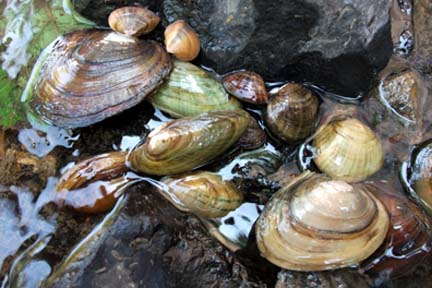
North America has some 300 species of freshwater clams and mussels.

His name was Hap Davis, gardener, woodsman, hunter, fisherman, teller of tall tales. I heard a neighbor of his say one day that the only way to ever catch a fish bigger than Hap was to tell your story last. He had a huge, half-way-to-the-knees, low-slung dewlap belly, a cancerous bump in the corner of his nose, rolled his own cigarettes, and was almost always lying down taking a nap. Hap was also the father of my first serious girlfriend, Edie May.

That notwithstanding Hap and I did a lot of fishing and clamming together. We would troll for sea bass among the islands of Casco Bay in a small motorized canoe, and he couldn’t swim. Many times when the tide was out during daylight we’d be clamming, backbreaking work that produces a multitude of tiny cuts on your hand from shell fragments. When the tide was right, we’d see mussels but leave them alone. Inland we’d fish the rivers, the Royal a common one. There Hap would shuck freshwater mussels to use for bait and look for black pearls. Edie May and her mother, Florence (Brown) had quite a collection of them.

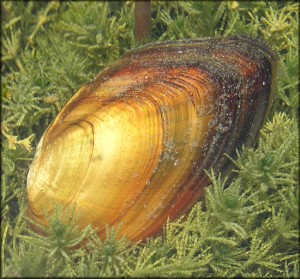
Florida Shiny Spike (Elliptio buckleyi)

Hap was the first person I ever saw eat a clam raw. Actually it was a quahog, a really big clam. But he never sampled or harvested the salt water mussels nor did he eat the freshwater mussels. Now days salt water mussels are gourmet fare. I used to walk over thousands of them in mounds when the tide was low. Freshwater mussels are edible, too, but preparation and cooking is required. Locally there are several species one can harvest for dinner.  There are some 300 native species in North America, seven west of the Continental Divide, none in Hawaii though the later has one invasive species, the Asian Clam, which is a mussel. Some 200 North American species are endangered or extinct, many of those surviving are protected.  Identify your local freshwater mussels and follow appropriate regulations. Make sure your identification is correct. Fresh water mussels are one of the most threatened groups of animals in North America. The given reason for the decline in their population is sedimentation caused by land use which means look for them in clean water not silty or polluted water. They can live to 200 years old, more than enough time for these filter feeders to collect some nasty chemicals in them.Regardless of where you harvest freshwater mussels they must be thoroughly cooked to kill of serious parasites. Handle them like contaminated chicken. Gather them only from pristine waters. Younger is better than older.

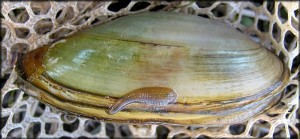
Paper Pondshell (Utterbackia imbecillis)

If you go collecting mussels in Florida remember the tune Suwannee River. North and west of that river are seven federally protected species; Gulf Moccasinshell, Ochlockonee Moccasinshell, Chipola Slabshell, Shinyrayed Pocketbook, Fat Threeridge, Oval Pigtoe, and Purple Bankclimber.  Don’t harvest them. The fines are substatial. Two mussels that were harvested in Florida up to a couple of years ago, the Choctaw Bean and the Tapered Pigtoe, are up for consideration this year to be protected.

South of the Suwannee six freshwater mussels are regulated in varying degrees. They are, when the article was written: The Florida Shiny Spike (Elliptio buckleyi) which must be 3-inches long. Bag limit is 20-half shells per day. The Paper Pondshell (Utterbackia imbecillis) must be 3.5 inches long, bag limit 20-half shells a day. (Isn’t that a great name, Utterbackia imbeciles? It’s also fairly common in North America.)

Asian “Clam” (Corbicula fluminea) the best of freshwater mussels.

There are no bag or possession limits for unprotected species which includes the forementioned Asian Clam (Corbicula fluminea) which must be 1.5 inches across. Three other species have no harvesting restrictions beyond size: The Atlantic Rangia (Rangia cuneata)  3 inches, the Carolina Marschclam (Polymesoda caroliniana) , 3.5 inches, and the Fingernail Clam (Pea Clam) (Musculium, Sphaerium or Pisidium) half-inch.

How do you collect freshwater mussels? Locally by hand. Specialized tools are not allowed. You will find them in shallow, sandy lake, river and stream bottoms, and shorelines usually half buried, head and foot end down. A bucket with a clear bottom or snorkeling is a common method of location. Never select mussels that are chipped, broken, or damaged in any way. Also never take one that is open. It’s probably dead already. If you plan on collecting some regulated freshwater mussels the easiest thing to do to make sure they are the right size is to go to a hardware store and buy a metal ring that has the inside diameter of the mussel you want to collect. As an example, for the Asian “Clam” the ring should be 1.5 inches across on the inside. If the mussel drops through, it’s too small. If it wedges or won’t go through, it’s legal. Or you can make one by drilling a 1.5 inch hole in a small piece of wood or cutting off a small ring of PVC pipe with a 1.5 inch inside diameter.

Tiny Fingernail Calm

The Fingernail or Pea Clam is a half-inch or smaller in length. They’re creamy grey on the inside, light brown on the outside. If your collecting in the coastal fresh/brackish waters of Tampa Bay look for the Atlantic Rangia (bluish white interior) and the Carolina Marshclam (white and purple interior). Both have yellow to brown exteriors.  Limpkins, by the way, eat freshwater clams and Apple Snails so look for Limpkins. To learn more about Apple Snails, click here.   Don’t try this but in the Philippines small freshwater clams (Tulya) are tossed in garlic, salt and chili and allowed to die and semi-dry in the sun. Then they are eaten for a snack.

Tulya, Corbicula manilensis

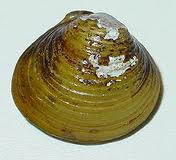
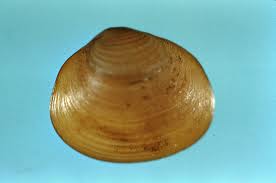
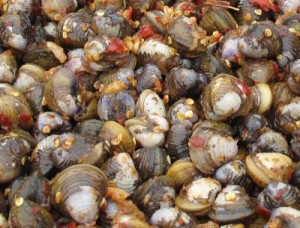
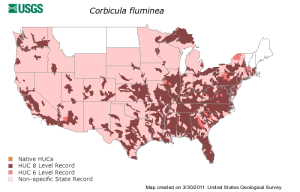
In fact, the Tulya mentioned above and pictured left. is Corbicula manilensis, is closely related to Corbicular fluminea, the Asiatic Clam  that is invasive in the Unites States and the tastiest of the freshwater mussels on this continent. The Asiatic clam was reported in Washington state in 1938 though it might have been introduced in the 1920 as food by Chinese populations. Since then it has spread across a significant portion of the United States, particularly the south, Midwest, and Mid-Atlantic states. That is good news and bad news. Bad that it is invasive but good in that there’s at least one freshwater mussel worth the effort of collecting, and, since it is an invasive species not likely to be protected any time soon. It also lives only about three years so it’s likely to be low on chemical contaminants. Of all of mussel in this article the Asian Clam is the closest to common table fare. It can grow to around two inches, has a ridged shell, is purplish inside and yellow to brown on the outside.

Distribution of the Asian Clam

I recently saw some “Asian Clams” on an island in Lake Maitland in Maitland Florida. Most of the clams were small, half-inch across but were all around the island which is build on sand. While Lake Maitland is connected to several other small lakes in the area it’s about as far as possible from Washington State as possible. Yet over seven or eight decades the non-native mussel managed to make its way across country. Mussels have a larval stage in which they adhere to fish gills. Move the fish you move the mussel. As birds carry fish, and drop them, perhaps that is how the mussel spread across the nation, or at least river to river then to lakes.

Asian clams prefer quiet fresh water and sandy bottoms. But they can also grow in brackish water and on silty bottoms. They like sunlit warm areas near shore avoiding cold deep water with a low oxygen content. because of how they are built usually one-third of the mussels is always sticking out of the bottom of the sand or silt. They can withstand freezing conditions but it slows down their reproduction.

Atlantic Rangia (Rangia cuneata)

In theory all mussels are edible — Native Americans ate a lot of them — but taste and texture can be challenging, particularly in ribbed mussels. Mussels have to be cleaned thoroughly before cooking and always check for pollution possibilities. Mussels collected in the Everglades have mercury and pesticide contamination.

Carolina Marschclam, Polymesoda caroliniana

Mussels in Round Lake near Tampa have high levels of radiation caused by water management practices. Best leave those alone, too. The foot is the best part of the mussel but chewy because unlike salt water version most freshwater mussels move around. They can be grilled, steamed, baked or fried. Boiling in salted water improves the flavor and texture. Then further cooking in a sauce or the like, such as white wine and butter, makes them palatable. To improve the taste and help remove any grit keep them in a bucket with fresh, clean water.  Change the water twice a day for a couple of days. You can also add corn meal to the water. (A better way is to move the clams to new water each time rather than disturbing the dirty old water.)  Incidentally, a fishing license is not needed in Florida to harvest mussels, clams, crawdads or frogs for personal use.

Green mussels, Perna viridis

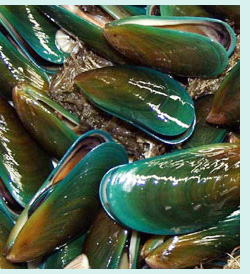
As for salt-water the Green Mussel which recently invaded Florida’s coastal marine waters, while it is edible in its native environment the state has not yet decided if it is fit for human consumption here because of either pollution or algal blooms. Zebra Mussels, from Europe and scourge of the Great Lakes, are not reported in Florida but some think it is only a matter of time. While that mussel is dreaded commercial species, however,  are being raised in Florida, particularly Brevard County in Indian River Lagoon.

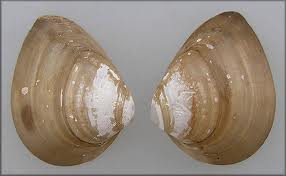
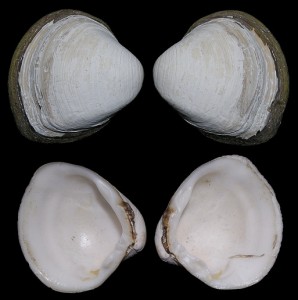
And if you are wondering what are the difference between a clam and a mussel all fresh water bivalves are mussels, even though some of them are called clams, like the “Asian Clam.” Salt water clams have wide, circular, light colored shells and live in the sand or mud. Salt water mussels have long, oval shells that are usually dark and live attached (from the back of the shell) to projections in the water such as  rocks, boats, docks.  Freshwater mussels attach to things when young but then move around, albeit not much. They can also be found in sand.

Last I knew it was illegal to harvest any freshwater clams or mussels in Oregon, Pennsylvania, Minnesota and Michigan. North Carolina restricts harvesting to man-made bodies of water. One would think they would allow harvesting of the highly invasive Zebra Clam. Idaho has no regulations on bivalves as of this writing. And in Florida as mentioned the “Asian Clam” has a size limit, which is odd for an invasive species.

There are some 50 species of freshwater clams/mussels in Australia. One that the Aboriginals ate a lot of is the Floodplain Mussel, Velesunio ambiguous. Lastly, here’s a link to a Google Book on Edible Mollusks of Great Britain and Ireland (with recipes) printed in 1867.

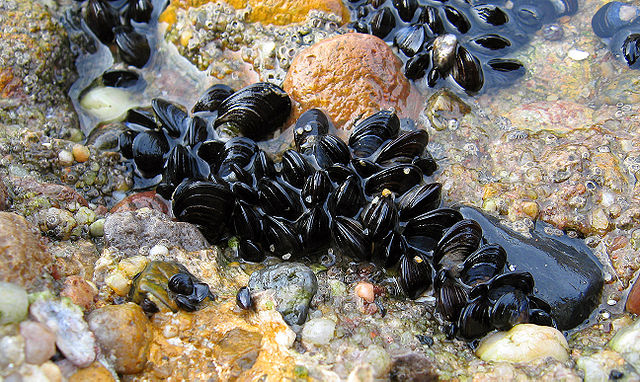
If you are inclined to harvest salt water mussels first check with local authorities regarding not only local regulations but to avoid contaminated shorelines or red tide issues. One you’ve done that go to the tidal area at low tide. Mussels will usually be found attached to rocks or other items. You should have a tool like a small crowbar to free them. Clean them thoroughly externally before cooking, which is usually steaming or boiling. As with freshwater mussels, don’t use and damaged mussels or ones that are open before cooking. While Blue Mussels (Mytilus edulis) can be harvest any time of the year (if sanitary conditions are acceptable) they taste best when collected in the spring. NOTE: It is recommended that you do not eat any bivalves locally during the warmer months that do not end with an “R.”

Salt water Blue Mussels, Casco Bay, Maine

{ 8 comments }

Litchi Tomato

Foraging is a treasure hunt because with perhaps 6,000 edible species in North America there is always a surprise now and then such as the Litchi Tomato.

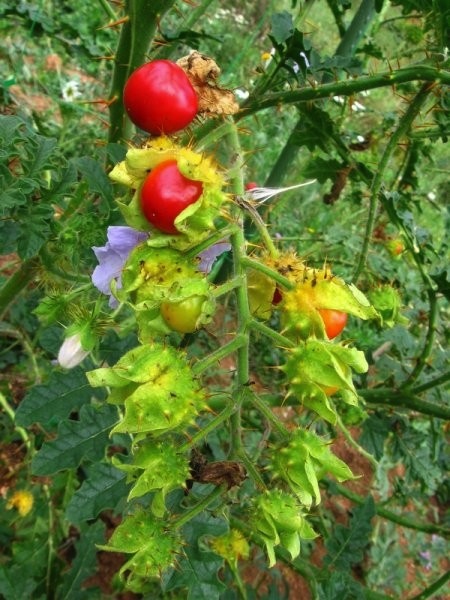
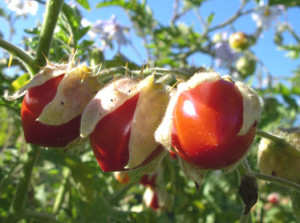
The husk (calyx) shrinks as the fruit matures

The husk (calyx) shrinks as the fruit matures

Some people call it a wild tomato, others say it’s naturalized or an escaped crop. Some refer to it as an “heirloom.” Common names include Sticky Nightshade (not at all original)  Morelle de Balbis, and Fire & Ice Plant (I have no idea why.)  It can be found not only in gardens but in the wild around the world. A native of South America, particularly Paraguay, it’s a hardy nightshade that reseeds itself and gets along quite nicely without man’s attention. So even though you may cultivate it, the wandering botanical often strikes out on its own.

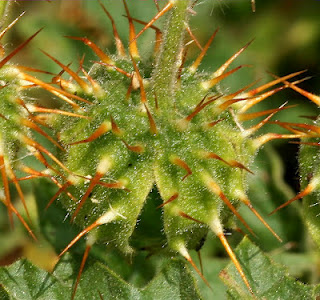
Young husk (calyx) with typical yellow/orange thorns.

In North America its distribution is rather unconventional. Going around the rim states of the US it is found from Oregon south and east to West Virginia excluding New Mexico. Then it goes to the mid-Atlantic states skipping Maryland. It is also recorded in Massachusetts and Ontario. You will have to look at specific state maps to identify the counties the Litchi Tomato has been found it. A tough member of a fragile family it can take a light frost even temperatures down to 25F. In warmer climes it overwinters (and gets more spiny!) A bushy indeterminate, it does, however, need more than one plant to cross pollinated.

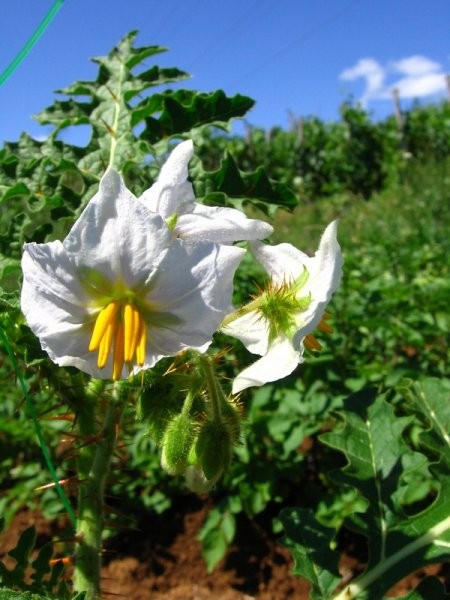
Blossoms can be white, light blue or mauve.

In its native South America the Litchi Tomato has been used in local dishes since before written records. And most unusual for this genus it has spines yet is still edible. Usually plants in this genus (Solanum, aka Nightshades) with spines are very toxic if not deadly. This is also why, particularly here in the southern United States, one must not mistake the Horsenettle — Solanum carolinense –for the Litchi Tomato. The results could be much illness if not death. Interestingly, since the Litchi Tomato does have spines (technically prickles*) it has also been use as a hedge around gardens, to keep animals out. It’s also a trap crop for potato cyst nematodes and has been in cultivation in Europe since the 1700s. The plant, however, is banned in South Africa. In Australia it is found in New South Wales, Queensland, Western Victoria and possibly Victoria.

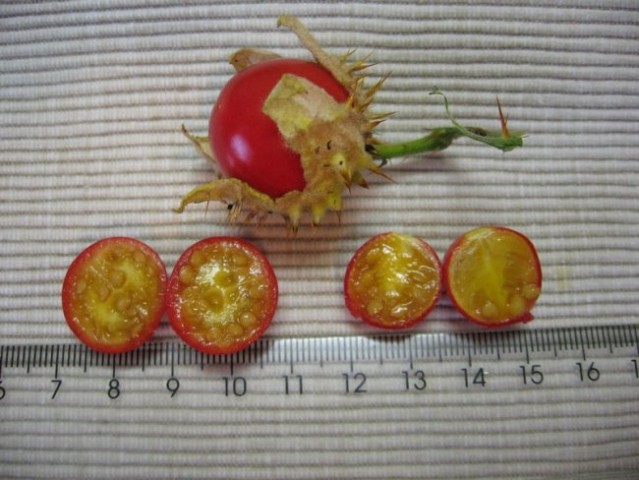
The fruit, red when ripe, is one-half to inch, yellow inside with many seeds.

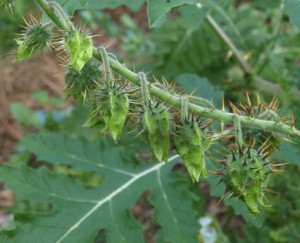
The fruit develops in a husk (calyx) that is totally covered with spines (unlike the Horsenettle which has spines but no husk.) Then the husk, which is slightly bullet shape, folds back to reveal a bright red cherry-tomato like fruit. Interior flesh is yellow and seeds resemble cherry tomato seeds. Its texture is similar to a raspberry and the taste is tart like a sour cherry. The fruit is ripe when it can be removed easily. If it resists it is not ready to eat.

In small amounts the dried roots, with that basal part of the stem, were used as a diuretic to treat kidney issues and high blood pressure. The roots were also chewed to induce abortions. See Herb Blurb below.

Unripe fruit are slightly bullet shaped

As for the botanical name this is going to be a little confusing.  Part of its name is part easy and part difficult. Solanum (so-LAY-num) is the easy part and means sun. Sisymbriifolium ( sis-sim-bree-ee-FOL-lee-um) is more convoluted.  Sisymbrium is from the Greek sisumbrion and means sweet-smelling plant. It’s what Greeks called the bergamot mint. A Tumbleweed Mustard, which is not sweet smelling at all, was named Sisymbrium because the mustard leaves looked similar to the bergamot’s leaves. The Litchi Tomato’s leaves look similar to the Tumbleweed Mustard so it was called Sisymbriifolium, meaning leaves that look like the mustard that look like the bergamot … And botanists think they really make it clear and easy for us mere foraging mortals.

Other common names include: Alco-Chileo (Spanish), arrabenta cavalo, dense-thorn bitter apple (English), doringtamatie (Afrikaans-South Africa), espina colorada (Spanish), fire and ice plant (English), jeweelie (Argentina), joão bravo, jua das queimadas (Portuguese), jua de roca (Portuguese), klebriger nachtschatten (German), litchi tomato (English), liuskakoiso (English), manacader, morelle de balbis (French), mullaca espinudo, ocote mullaca (Spanish), pilkalapis baklazanas (Lithuanian), puca-puca (Spanish), raukenblatt-nachtschatten (Austria), red buffalo-burr (British Isles), revienta caballo (Spanish), sticky nightshade (English-United States, United Kingdom), tomatillo (Spanish), tutia (Spanish), tutia o Espina Colorada, uvilla, viscid nightshade (English-United States, Australia), wild tomato (English), wildetamatie (Afrikaans-South Africa.)

World wide, it is reported in: Australia, Austria, Belgium, Canada, China, Congo Republic, Czech Republic, Denmark, Finland, France, Germany, Hungary, India, Ireland, Italy, Japan, North and South Korea, Latvia, Lithuania, Mexico, Netherlands, New Zealand, South Africa, Spain, Swaziland, Sweden, Taiwan, Turkey, United Kingdom, and the United States.

*Prickles are outgrowths of the epidermis and not modified branches, which are spines.

 Green Deane’s ITEMIZED Plant Profile: Litchi Tomato

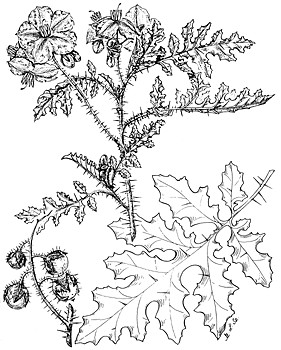
IDENTIFICATION: Solanum sisymbriifolium is an annual or perennial erect to about a yard to one meter in height. The stem and branches are sticky, hairy, and armed with flat, yellow-orange spines up to half inch (15mm) in length. The oval to lance shaped thorny leaves have stems a half inch to two inches long (1-6cm) and are hairy above and below with stellate and glandular hairs. The leaves are pinnately divided into four to six coarse lobes and may be up to 15 inches long (40cm) and half as wide. Flowers emerge from the foliage and are internodal, unbranched racemes composed of one to ten perfect (staminate) flowers. The five-parted flowers are white, light blue, or mauve, about an inch (3cm) in diameter, and have a hairy calyx a quarter of an inch (5-6 mm) long. They smell like fish. The fruit is a red, succulent, globular berry from a half inch to an inch (12-20 mm) in diameter with pale yellow seeds.

TIME OF YEAR: Similar to tomatoes depending on the climate.

ENVIRONMENT: Similar to a tomato, rich soil, ample sun, moderate, steady watering. Treat them like a tomato except set them out a bit later when its warmer. In exchange they fruit a little longer. The Litchi Tomato is found along roadsides, waste places, landfills, and disturbed fields. A good place to look in farming country in around manure piles or compost bins. In Australia it likes eucalyptic woodlands

METHOD OF USE:  Like tomatoes. A healthy plant will produce about a quart of fruit each. Some folks like to put them thought a sieve to remove the seeds. From a culinary point of view they respond well to some sweetness which then gives them a sweet and sour appeal. Surprisingly I could not find the plant mentioned in Cornucopia II, which is kind of the forager’s Bible for edible plants around the world.

 Hot and Spicy Litchi Tomato Chutney: Recipe from  Mother Earth News

Four cups green tomatoes, sliced into small shreds, measure after slicing;

2 1/2 cups whole Litchi tomatoes, hulls removed;

6 dates, seeded and coarsely chopped;

4 garlic cloves, each sliced into 4 pieces lengthwise;

zest of 2 limes;

1 tbsp or more hot pepper, finely minced;

1/2 cup white vinegar; ?2 tsp mustard seed, crushed to meal-like consistency;

1 tsp fennel seed, preferably Indian Lucknow fennel;

1/2 tsp ground cinnamon;

1 tsp cumin seed;

1 cup green raisins;

1 cup chopped mango or under-ripe peach;

1 cup slivered almonds;

2 1/2 cups honey or 3 cups sugar.

Combine all ingredients in a deep pan and cook over medium-high heat for 20 minutes, or until thick. Remove from the heat and lift out the fruit mixture with a slotted spoon and put it into hot, sanitized preserve jars standing in hot water. Reduce the remaining syrup over high heat until thick like honey, and then pour this over the hot fruit and seal. Allow to mellow two weeks before using. Yields approximately four 12-ounce jars.

Herb Blurb

J Ethnopharmacol. 2000 Jun;70(3):301-7.
Isolation of hypotensive compounds from Solanum sisymbriifolium Lam.
lbarrola DA, Hellión-lbarrola MC, Montalbetti Y, Heinichen O, Alvarenga N, Figueredo A, Ferro EA.
Source
Pharmacology Department, Faculty of Chemical Sciences, National University of Asuncion, PO Box 1055, Asuncion, Paraguay.
Abstract
The crude hydroalcoholic root extract (CRE) of Solanum sisymbriifolium Lam. has formerly been shown to have hypotensive activity both in normo-and hypertensive rats. Hypotensive activity-guided fractionation of the CRE was performed in anaesthetized normotensive rats, which led to the isolation of the active principles. The intravenous (i.v.) and intraperitoneal (i.p.) values of the CRE in mice were found to be, respectively, 343 and 451 mg/kg, and no lethal effect was caused by doses up to 5.0 g/kg when administered by oral route. Depression of locomotion, increase of breathing rate and piloerection was observed in a general behavior test with doses up to 200 mg/kg i.p., and 1000 mg/kg p.o., respectively. Increase in the gastrointestinal transit was found using 0.1 g/kg, whereas at doses of 0.5 and 1 g/kg, no significant activity was observed in comparison with the control mice. Hexanic and butanolic fractions induced a remarkable hypotension in anaesthetized normotensive rats in doses of 1, 5, 7.5 and 10 mg/kg i. v. Two compounds isolated from the butanolic fraction induced a significant decrease of the blood pressure, HR, amplitude of the ECG and breathing rate when injected in a dose of 1 mg/kg i.v; and both systofic and diastolic, blood pressures were affected in a proportional mode. The hypotensive effect of the two compounds were not influenced by pretreatment with atropine and propranolol; and the pressor response to noradrenaline was not affected by any of them which suggests that neither a direct muscarinic activity, beta-adrenoceptor activation nor decrease of sympathetic vascular tone (sympatholitic activity) are probably involved in the mechanism of hypotension. The present study shows that the CRE of S. sisymbriifolium contains at least two hypotensive compounds whose characterization is under way.
PMID:
10837991
[PubMed – indexed for MEDLINE]

1996 Oct;54(1):7-12.

Hypotensive effect of crude root extract of Solanum sisymbriifolium (Solanaceae) in normo- and hypertensive rats.

Source

Research Department, Faculty of Chemical Sciences, National University of Asuncion, Paraguay.

Abstract

The hypotensive effect of the crude hydroalcoholic extract from root of Solanum sisymbriifolium Lam. (Solanaceae) was investigated both in normotensive and hypertensive rats. The intravenous administration of the extract (50 and 100 mg/kg) produced a significant decrease in blood pressure in anaesthetized hypertensive (adrenal regeneration hypertension + deoxycorticosterone acetate (ARH + DOCA)) rats. Oral administration of the extract (10, 50, 100 and 250 mg/kg) also produced a dose-dependent hypotensive effect in conscious hypertensive animals. In anaesthetized normotensive rats, the extract (50 and 100 mg/kg, i.v.) also induced hypotension in a dose-dependent manner. Lastly, no significant effect on blood pressure was produced by the extract when administered orally (10, 50, 100, 250, 500 and 1000 mg/kg) to conscious normotensive rats.

PMID:
8941862
[PubMed – indexed for MEDLINE]
{ 16 comments }