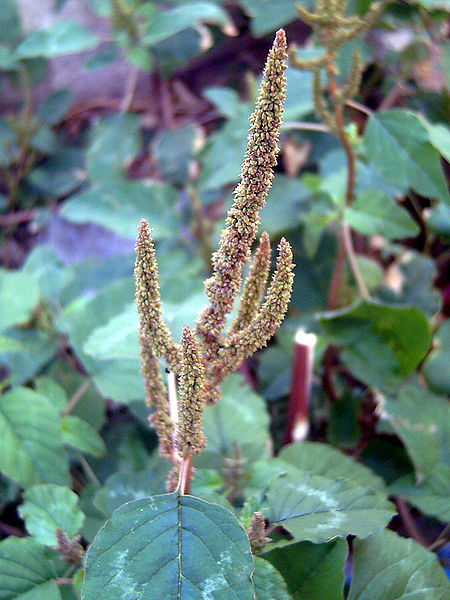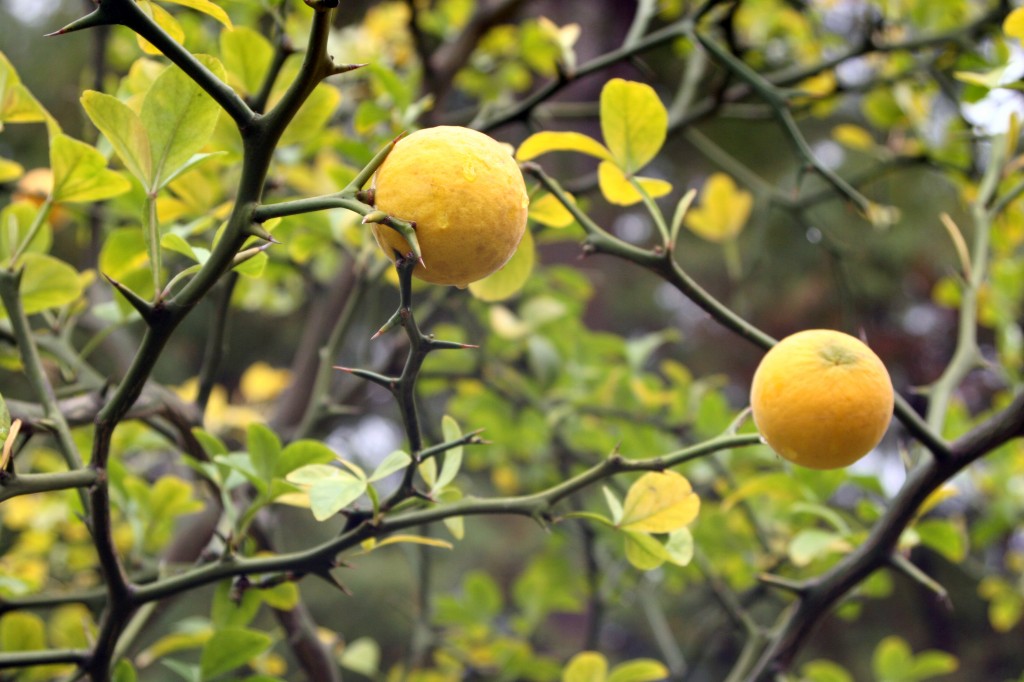
Hardy Orange, sometimes in the citrus clan, sometimes not. Photo by Aubree Cherie

Is the Hardy Orange edible? That depends on how hungry you are, or which century you live in.
The Hardy Orange is well-armed with thorns.

A native of China, Hardy Orange (Poncirus trifoliata) aka Trifoliate Orange, was once grown in northern Europe where the fruit rind was candied and dried. As a cold-hardy pseudo- citrus American colonists also grew the Hardy Orange because the fuzzy fruit has pectin which was used in making jams and jellies. The fruit, minus, seeds, was also made into a not-sweet marmalade. In China the bitter fruits were used as seasoning (dried and powdered) and young leaves are occasionally boiled and eaten. Fresh fruit allowed to sit for two weeks after picking yields about 20% juice which can be diluted and made into a drink. The flavor is a cross between lemon and grapefruit. A slice of it is good in a gin-and-tonic. Do note that processing leaves a hard-to-wash off resin on utensils. The University of North Carolina, which I think believes every plant is toxic, lists the Hardy Orange as “poisonous.” It says the fruit can cause “severe stomach pain and nausea, prolonged contact can cause skin irritation.”  But it also says “causes only low toxicity if eaten, skin irritation minor, or lasting only for a few minutes.” The fruit may also have some anti-allergic activity. In Chinese medicine it has been used to treat typhoid, toothache, hemorrhoids, conjunctivitis, colds and itchy skin.
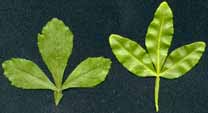
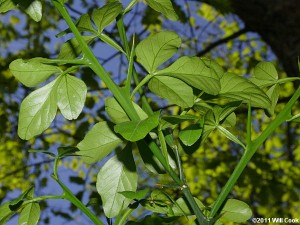
Leaves are arranged in threes.

The Hardy Orange is naturalized in the United States from Pennsylvania south and west to northern Florida and eastern Texas. In recent times Poncirus trifoliata has been used primarily as root stock for citrus along with at least three developed cultivars: Barnes, Rubidioux, and Flying Dragon, the latter of which has curved thorns.  Interestingly while the original species came with the colonists the Flying Dragon was introduced from Japan to the U.S. in 1915 by American botanist Walter Tennyson Swingle (1871-1952). Swingle’s first major job was not far from here in Eustis, Florida, in 1892. He and Dr. Herbert John Webber experimented with citrus and formed the basis of much of what is known about citrus. They created Tangelos including the Minneola and crossed the Poncirus trifoliata with Citrus sinensis to create the Citrange, common in many landscaped gardens.  In 1943 Swingle wrote “The Botany of Citrus and Its Wild Relatives of the Orange Subfamily.” Webber, by the way, was no botanical slouch either. He wrote over 300 research papers and created many cotton species that are still used in the clothes you wear.
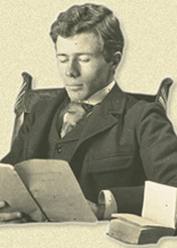
Walter Tennyson Swingle

Like many thorn-ladened trees, birds select the Hardy Orange to make their nests in as the two-inch thorns dissuade predatory creatures.  The tree can be used as a natural fence and have often been used to corral livestock. The thorns are sturdy enough to puncture a tire or use as a tooth pick. The wood is extremely is hard and dense, the bark striped with green, stems are triangular. Early spring flowers are popular with bees and butterflies. Deer don’t like it nor rabbits. The aromatic fruit, ripening in the fall,  can also be dried and used in potpourri mix. Fall foilage is butter-yellow.
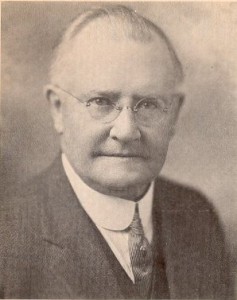
Herbert John Webber

The Hardy Orange grows to about six feet (sometimes 20 feet!) and starts bearing around 12-years old. They are a common bonsai specimen. It loses its leaves in winter and can be grown in protected areas as far north as Canada. It has been cultivated in China for thousands of years and in Japan since the 8th century. As mentioned above it came to North America in colonial times and was introduced into Australia in the late 1800s. It is also commonly used in Argentina. Hardy Orange prefers low-lime soil.

The botanical name, Poncirus trifoliata, is said  pon-SEER-us try-foh-lee-AY-tuh, some say pon-SIGH-russ. Poncirus is from French meaning a citron. Trifoliata means three leaves.

Green Deane Itemized Plant Profile: Hardy Orange

IDENTIFICATION: Poncirus trifoliata: Tree to 20 feet, leaves alternate, compound, three leaflets, 1 to 2 inches long, may be finely wavy toothed, thickened, petiole winged, shiny dark green, flowers white, cup-shaped, fragrant. Vicious thorns, small fruit. Self-fertile, propagate by planting fresh seeds from ripe fruit. If you are going to store the seeds keep them cool (35-40F for at least 30 days) then warm for 24 hours in warm water. Chilled seeds germinates in two weeks if kept around 70-80F, a month at 60-70F. Poncirus is a monotypic genus with the only member the trifoliata.

TIME OF YEAR: Flowers in early spring, fruit in late fall.

ENVIRONMENT: Not too picky about soil but does not like line-heavy soil, prefers full sun but can tolerate some shade. Likes moist soil but will not tolerated being water logged.

METHOD OF PREPARATION: Fruit as marmalade, dried as seasoning, juice diluted for a drink.

Hardy Orange Marmalade
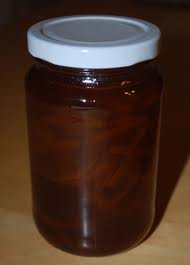
Adding stick cinnamon is optional

Use 30 to 50 fruit depending upon their size. Wash well.  Cut each one equatorially and twist the halves apart. Squeeze the pulp, seed and what juice there is into a bowl. Remove the seeds. This is helped by adding a little water. You can slice the peelings or leave them whole.

Add the peelings to a jar holding 2.5 cups of water and 1/8 teaspoon of baking soda. Bring to a boil and simmer for 10 minutes. Pour off about 2 cups of the water. Add the juice and pulp and simmer for 10 more minutes. Meanwhile put enough jars (lids and screw-caps) for eight cups of marmalade into a big pot of water and bring them to a boil. Continue to let them boil very gently until the marmalade is ready to can.

Measure 4 cups of sugar then take 1/4 cup of that sugar and mix it with one package of pectin in a small bowl.  In the large bowl add enough water to the juice/pulp mixture to bring the volume to 5.5 cups and put it in a gallon pot for cooking. Add the sugar/pectin mixture from the small bowl and a 1/2 tablespoon of oil. Bring  a full boil stirring constantly as it heats. Then add the rest of the sugar and heat this till it again reaches a full boil. Boil for one more minute only. Turn off the heat and quickly put the marmalade into the sterile jars. Fill each jar to within 1/4 inch of the top, wipe off any marmalade that touches the rim. Set the lid, tighten, then do the next jar. Sealed jars should keep for months.

If you want to reduce the bitterness of the peelings first you can parboil them in as many changes of water as you like until the water is not bitter or of a bitterness of your liking. Cooking will leave a resin on your utensils. Alcohol will remove it quickly.

Herb Blurb

1996 Nov;54(2-3):77-84.

Antianaphylactic activity of Poncirus trifoliata fruit extract.

Source

Department of Oriental Pharmacy, College of Pharmacy, Wonkwang University, Seoul, South Korea.

Abstract

The effect of an aqueous extract of Poncirus trifoliata (L.) Raf. (Rutaceae) fruits (PTFE) on compound 48/80-induced mortality associated with anaphylaxis was studied in rats. PTFE inhibited compound 48/80-induced anaphylaxis 100% with a dose of 1.6 mg/g body weight (BW) 1 h before or 5 min after injection of compound 48/80. PTFE inhibited compound 48/80-induced anaphylaxis almost 100% with doses above 0.4 mg/g BW intraperitoneally administered. PTFE (1-1000 micrograms/ml) also dose-dependently inhibited the histamine release induced by compound 48/80 (5 micrograms/ml) in rat peritoneal mast cells. The level of cAMP in peritoneal mast cells, when PTFE was added, increased transiently, and significantly increased 53-fold at 10 s compared with that of basal cells. Moreover, PTFE inhibited intracellular calcium release induced by compound 48/80. These results suggest that PTFE has antianaphylactic activity by stabilizing the peritoneal mast cell membrane.

1999 Apr;22(4):422-4.

Anti-Helicobacter pylori activity of the metabolites of poncirin from Poncirus trifoliata by human intestinal bacteria.

Source

College of Pharmacy, Kyung-Hee University, Seoul, Korea.

Abstract

Poncirin was isolated from water extract of the fruits of Poncirus trifoliata and metabolized by human intestinal bacteria. The inhibitory effect of poncirin and its metabolites by these bacteria on the growth of Helicobacter pylori (HP) was investigated. Among them, ponciretin (5,7-dihydroxy-4′-methoxyflavanone), the main metabolite most potently inhibited the growth of HP, with a minimum inhibitory concentration (MIC) of 10-20 microg/ml. However, poncirin and its metabolites except ponciretin did not inhibit the growth of HP, nor did they inhibit HP urease.

Anti-inflammatory effect of Poncirus trifoliata fruit through inhibition of NF-?B activation in mast cells

Toxicology in Vitro, Volume 20, Issue 7, October 2006, Pages 1071–1076

Abstract

Mast cell-mediated allergic inflammation is involved in many diseases such as asthma, sinusitis, and rheumatoid arthritis. Mast cells induce synthesis and production of pro-inflammatory cytokines including tumor necrosis factor (TNF)-? and interleukin (IL)-6 with immune regulatory properties. We investigated the effect of the fruits of Poncirus trifoliata (L.) Raf (Rutaceae) (FPT) on expression of pro-inflammatory cytokines by activated human mast cell line, HMC-1. FPT dose dependently decreased the gene expression and production of TNF-? and IL-6 on phorbol 12-myristate 13-acetate (PMA) and calcium ionophore A23187-stimulated HMC-1 cells. In addition, FPT attenuated PMA and A23187-induced activation of NF-?B indicated by inhibition of degradation of I?B?, nuclear translocation of NF-?B, NF-?B/DNA binding, and NF-?B-dependent gene reporter assay. Our in vitro studies provide evidence that FPT might contribute to the treatment of mast cell-derived allergic inflammatory diseases.

Poncirus trifoliata fruit induces apoptosis in human promyelocytic leukemia cells

Volume 340, Issues 1–2, February 2004, Pages 179–185

Abstract

Background: Substances inducing apoptosis have shown efficacy in the treatment of cancers. Poncirus trifoliata (L.) Raf. (Rutaceae) fruits (PTF) has been used for the treatment of various cancers among Korean Oriental Medical doctors. Methods: PTF-induced cytotoxicity of human leukemia HL-60 cells was monitored by the MTT assay. The apoptosis was determined by (a) apoptotic morphology in microscopy; (b) DNA fragmentation in electrophoresis and FACS analysis; and (c) activation of caspase-3 and poly-ADP-ribose polymerase (PARP) cleavage assay. Results: The cytotoxic activity of PTF in HL-60 cells was increased in a concentration- and time-dependent manner. PTF caused the cell shrinkage, cell membrane blebbing, apoptotic body and DNA fragmentation. PTF-induced apoptosis is accompanied by the activation of caspase-3 and the specific proteolytic cleavage of PARP. However, PTF did not show cytotoxicity in normal peripheral blood mononuclear cells. Conclusions: Our novel finding provides evidence that PTF could be a candidate as an anti-leukemic agent through apoptosis of cancer cells.
{ 48 comments }

lkjuio

A flower is a flower is a flower. But in Victorian England, one of the most self-repressed societies in modern times, the practice of using flowers to communicate was developed. Over time a bouquet could visually speak of feelings and thoughts one could not or would not say in person to another particularly one you might be in love with. Of course anyone else familiar with the floral code could also know what the message was, or maybe even alter it…. sounds like a nice plot for a Victorian novel…

Several segments of society developed this language of flowers. The list below is probably incomplete and opinions may vary on this or that particular flower. They are not all edible by any means. If you want to read about edible flowers, click here for edible cultivated flowers, here for edible wild flowers.

And while we may say “how quaint” of the Victorians to put such meaning into individual species a shadow of that practice is still with us with certain flowers for certain occasions or certain flowers not used on certain occasionals such as never send carnations to a funeral but do send red roses on Valentine’s Day. Oddly the practice of sending a dozen roses on Valentine’s Day is only about a century old. The previous flower of choice was violets, which are still left on Chopin’s gave in Paris even in winter. The day Chopin was buried one of his students, Jane Sterling, bought all the violets she could find in Paris to cover is grave thus starting a tradition.  Here is the Language of Flowers.

Acacia: Secret love
Acanthus: Art
Aconite: Misanthropy
Agrimony: Thankfulness
Aloe: Grief
Almond: Promise
Amaranth (Globe): Immortal love
Amaryllis: Pride
Ambrosia: Love is reciprocated
Anemone: Forsaken, sickness, unfading love
Anggrek: Royalty
Apple blossom: Preference
Arborvitae: Everlasting friendship
Arbutus: “You’re the only one I love”
Arum: Ardor
Asparagus: Fascination
Asphodel: My regrets follow you to the grave
Aster: Symbol of love, daintiness, talisman of love,trusting
Azalea: Take Care, temperance, fragile, passion, Chinese symbols of womanhood
Baby’s breath: Innocence, pure of heart
Bachelor button: Single blessedness, celibacy
Balm: Social intercourse or sympathy
Balsam: Ardent love
Balsamine: Impatience
Bay wreath: Glory
Bumblebee Orchid: Industry
Begonia: Beware, a fanciful nature
Bellflower: “Thinking of you”
Bells of Ireland: Luck
Bird’s-foot Trefoil: Revenge
Box: Constancy
Broom: Humility
Bulrush: Docility
Buttercup: Riches
Cabbage: Profit
Camellia japonica: Unpretending excellence
Campanula: Gratitude
Canterbury Bells: Gratitude
Carnation: Fascination; distinction; love. Red carnation: Deep romantic love, passion, “My heart aches for you,” “Alas; for my poor heart!” Green: secret symbol of the followers of Oscar Wilde. White: Sweet and lovely, innocence, pure love, faithfulness. Pink: A woman’s love, a mother’s love, “I’ll never forget you,” “Always on my mind. Yellow: rejection, disdain, “You have disappointed me.” Purple: Capriciousness, whimsical, changeable, unreliability. Mauve: Dreams of fantasy. Striped: No, refusal, “Sorry I can’t be with you.” Solid color: Yes, affirmative.
Celandine: Joys to come
Cherry blossom: A good education, Transience of life, Wabi-sabi, gentleness, kindness (in Japan)
Feminine beauty (in China)
Chestnut: “Do me justice”
China aster: Love of variety, fidelity, “I will think of you”
Chrysanthemum. Red: “I love.” Yellow: lighted love.
Coreopsis: Always cheerful
Cowslip: Winning grace
Clover: Red: Industry. White: “I promise”
Coriander: Lust
Cypress: Death, mourning, despair, sorrow.
Daffodil: Uncertainty, chivalry, respect or unrequited love
Dahlia: Elegance and dignity
Daisy: Innocence, loyal love, purity, faith, cheer, simplicity. Red: Beauty unknown to possessor
Dandelion: Coquetry
Delphinium: The ability to transcend the bounds of space and time.
Eglantine Rose: A wound to heal
Elderflower: Compassion
Fennel: Strength or, as in Shakespeare’s Hamlet, flattery and deceit
Forget-me-not: True love
Fungus: Resilience, loneliness, solitude, disgust
Gardenia: You’re lovely, secret love, joy, sweet love, good luck
Geranium: Gentility
Gladiolus: One means strength and moral integrity, a bunch of them means infatuation
Gorse: Love in all seasons
Grass: Submission
Heliotrope: Devotion
Hibiscus: Rare beauty, delicate beauty
Hollyhock:  Ambition
Honeysuckle:  Devoted affection, bonds of love
Houseleek:  Domestic economy
Hydrangea:  Frigidness, heartlessness
Iris:  Good news
Ivy:  Dependence, endurance
Jonquil:  “Return my affection”
Laurestine:  A token
Lavender:  Devotion, distrust
Lemon blossom:  Discretion
Lettuce:  Cold-hearted
Lichen:  Solitude
Lilac: Purple,  first emotion of love. White,  youthful innocence, memories
Lily: White, purity. Scarlet, high-souled aspirations, orange, desire, passion
Lily of the Valley:  Sweetness, Humility, Returning Happiness, Trustworthy
Lime Blossom: Fornication
Lobelia:  Malevolence
Lotus:  Purity, chastity and eloquence
Love lies bleeding:  Hopelessness
Magnolia:  Love of nature
Mallow: Consumed by love
Marigold:  Pain and grief
Mayflower: Welcome
Mignonette:  Worth
Mint:  Suspicion
Moonflower:  Dreaming of love
Morning glory:  Love in vain
Mullein:  Good-nature
Nasturtium:  Patriotism
Oak leaf:  Strength
Oats:  Music
Olive:  Peace
Orchid:  Refined beauty
Ox eye daisy:  Patience
Peach blossom:  Long-life, generosity, and bridal hope
Pear blossom:  Lasting friendship
Peony:  Shame, bashfulness,  Prosperity, honor (in China)  Masculinity, bravery (in Japan)
Pitch pine blossom:  Philosophy
Plum blossom:  Beauty and longevity
Plumeria:  Perfection, springtime, new beginnings
Primrose:  Eternal love
Poppy:  Eternal sleep, oblivion, imagination. Red, pleasure, white, consolation, dreams, modern, peace. Yellow
wealth, success.
Rose: red, true love. Blue,  Mystery, attaining the impossible, love at first sight. White, eternal love, silence or innocence, wistfulness, virtue, purity, secrecy, reverence and humility. Black, death, hatred, farewell, rejuvenation or rebirth. Yellow, friendship, jealousy, infidelity, or apology, a broken heart, intense emotion, dying love, extreme betrayal. Pink, grace. Dark pink, gratitude. Light pink, desire, passion, joy of life, youth, energy
burgundy,  unconscious beauty. Coral or orange, desire, passion. Lavender (violet) love at first sight. Red and white together, united. Red and yellow together, joy, happiness and excitement. Thornless, love at first sight.
Rosemary:  Remembrance
Rue:  Regret
Sensitive Plant:  Sensitivity
Snowdrop:  Consolation or hope
Star of Bethlehem:  Hope
Straw: United
Sunflower:  Pure and lofty thoughts
Sweetbrier:  Simplicity
Thorn-apple:  Disguise
Thistle:  Nobility
Thyme:  Thriftiness
Tulip-tree:  Fame
Tulip: Red, declaration of love. Yellow, hopeless love. Violet/blue faithfulness,  white, modesty
Viscaria (Lychnis viscaria):  Invitation to dance
Willow (creeping):  Love forsaken
Winged seeds (any kind):  Messengers
Witch-hazel:  A magic spell
Wheat:  Wealth and prosperity

{ 2 comments }

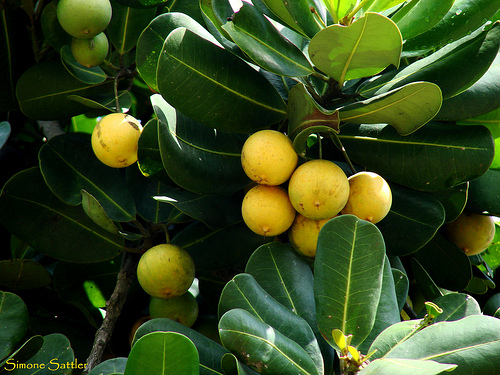
Barely Edible Monkey’s Apples, note notch in leaves. Photo by Simone Sattler.

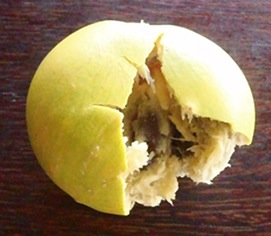
Monkey’s Apple is proof kids will eat anything.

Many people who grew up with them recall eating a lot of the fruit as a child but can barely stand one as an adult. What was a fun outdoor snack at 10 turns into a mealy, acrid famine food at 30 which is not unusual because the plant comes from the Sapotaceae family one known for producing barely edible fruit.  But, it is edible.

Fruit has tough skin, sticky, mealy flesh

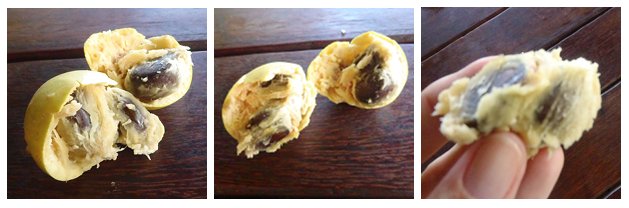
Originally from Madagascar, Monkey’s Apple is well-established in the tropics from Southern Florida to Northern Australia. The leaves are leathery thus the name of the plant, coriacea. Fruit are yellow when ripe with three or so (2-4) non-edible seeds, dark brown, very hard, full of tannin. The yellow flesh is sticky, one of reasons why children are attracted to it. When very  ripe the tree rains golf-ball sized fruit that approach being sweet. Birds usually won’t eat them but rodents squirrel them way and giant tortoises like to eat the fruit. However, at the famous Fairchild Tropical Botanic Garden in Miami they just call them “inedible.” They are not on the top of the foraged food list.

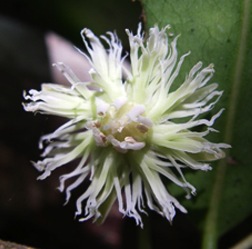
Mimusops coriacea blossom

Botanically the tree is Mimusops coriacea, MIM-you-sops kor-ee-uh-KEE-us. The genus Mimusops comes from  the Greek words, mimo meaning ape, and ops meaning resembling. In English we would say “looks like a monkey.” No one knows why that is the botanical name. As mentioned coriacea is Dead Latin for leather. The Creole call it Pomme Zako, from the French Pomme Jacquot. That might have been Pomme d’accot originally that got mutated into Pomme Jacquot (then Pomme Zako.) And while that means Apple of Sheltering in English we might call it Mulch Apple, a tree producing mulch. Perhaps that is a fitting name for a tree that has made it way onto the Global Compendium of Weeds. Its spread in south Florida is of great concern. West Palm Beach, where I teach classes, specimens have been found.

As for eating the ripe, tough skinned fruit they are squeezed between the fingers. Don’t eat the seeds and avoid white globs from the skin. The flesh is sticky and leaves a coating in the mouth. Seed have been made into necklaces and the seed oil sued used in paint. A close relative that can be found in south Florida is the Spanish Cherry.  The Spanish cherry looks appetizing, small persimmon colored, and disappointing.

Green Deane’s Itemized Plant Profile: Monkey’s Apple

IDENTIFICATION: Mimusops coriacea: Evergreen tree to 70 feet, twisting trunk, dense crown, used as a timber wood. Leaves simple, alternating, usually grouped towards the end of the branches, elliptical or obovate or oblong to eight inches long, five inches wide, leathery, hairless, bright green, strong midrib. Flowers in bundles, eight stamens. You can tell it from another related species, Spanish Cherries, Mimusops elengi, by notched leaf tips and larger fruit. Also Mimusops balata may be M. coriacea. Botanists can’t agree.

TIME OF YEAR: In the northern hemisphere, fruits late fall

ENVIRONMENT: Coastal tropical regions, disturbed ground. Rarely cultivated.

METHOD OF PEPARATION: Fruit pulp raw.

{ 1 comment }

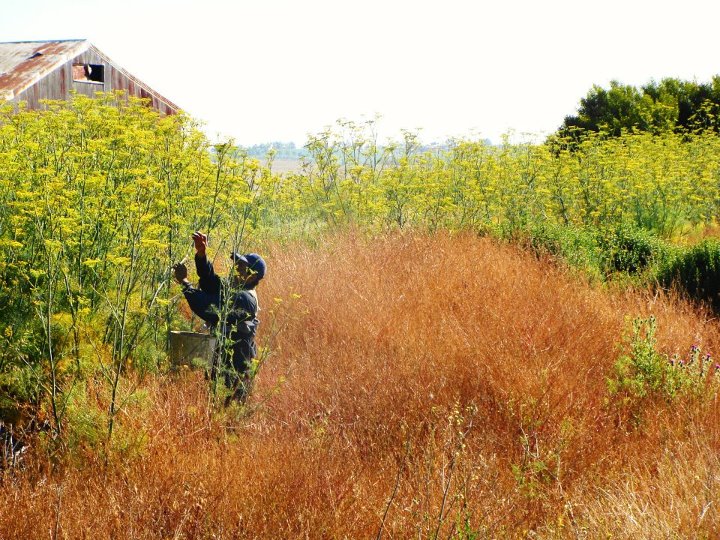
Collecting Fennel Pollen, photo by the Pollen Ranch

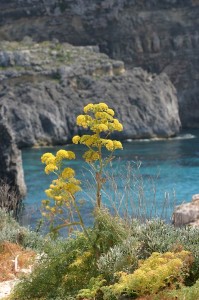
One of the outstanding sensory experiences of hiking in Greece is smelling the wild herbs one usually buys in little plastic containers. Thyme makes a strong aromatic presence. And while the nose does not notice Wild Fennel the eyes do. It can grow dramatically tall. I was in southwestern Crete to hike Samaria Gorge when I first saw this wild fennel in its native habitat.

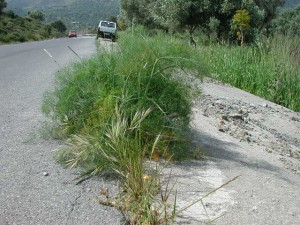
Fennel in the road, southwest Crete

Home to the Mediterranean basin, Wild Fennel (Foeniculum vulgare)  is naturalized over much of the temperate world including North America. Its preferred habitat is rocky shores and adjoining hills making little distinction between rock crevasse or a crack in the road. In other parts of the world we find it growing in empty lots, beside the road, in fields, on hillsides and ocean cliffs.

Wild Fennel Like Rough Terrain.

Wild Fennel Like Rough Terrain.

Very hardy, green fronds sprout in the spring from last-year roots. They grow until fall producing tall cane-like stems. Blossoms are an explosion of yellow. It can reproduce by seed or root. As roots have been  mentioned Wild Fennel is not the fennel you buy seasonally in the grocery store.  Cultivated fennel has a large, edible bulb and nearly flavorless greens. Wild Fennel does not produce a bulb but has flavorful greens and seeds. If you like the flavor of sweet licorice you will like fennel. Preparation is easy: To cook the young fronds bring a large pot of water to roiling, boil the fronds for 10 minutes or so, drain, use whole or minced. You can also save the cooking liquid for flavoring.

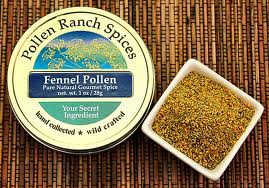
Wild Fennel pollen is used as a spice.

The cooked fronds are used in several ways. Some folks eat the fronds mixed in with other greens. They are a bit overwhelming on their own. They are used with pasta as in  pasta con sarde or added to soups for flavor. The seeds are used to flavor olives and most of us have tasted fennel seeds in sausage. Medicinally Wild Fennel has been used to treat colic, gas, and upset tummies. It also increases milk production in nursing mothers

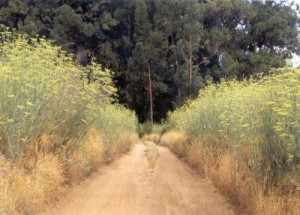
Wild Fennel in California

From a foraging point of view Wild Fennel fronds resemble dill; thin, feathery, and brightly green. The leaves, however, are usually a light yellow green occasionally a bluish purple. You should know there is a distant relative to Wild Fennel that is deadly, the Poison Hemlock. Don’t get them mixed up. Wild Fennel has a very strong licorice aroma. Poison hemlock does not. Also Poison Hemlock has large leaves and the veins on the leaf terminate between the teeth. Wild Fennel leaves are much smaller and the veins do not terminate between the teeth.

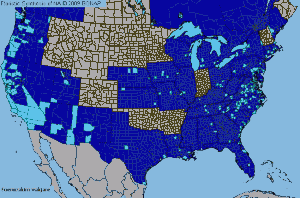
Common in light blue, absent in gray areas.

Wild Fennel is naturalized in isolated areas in most of the United States and Canada except the high plains states and middle Canada. It is particularly common in California where it has been established for well over 120 years.  It’s an invasive “weed” in southeastern Australia and parts of western Australia.

Linguistically Foeniculum is from Dead Latin’s foenum which means  ‘hay’. It’s a reference to the sweet smelling plant. Vulgare is also from Dead Latin meaning ‘common.’ Foeniculum vulgare is said fee-NIK-yoo-lum vul-GARE-ee. “Fennel” comes from the Old English fenol or finol which is from the same Dead Latin feniculum or foeniculum which is a diminutive of fenum or faenum, again hay.

There are certainly hundreds if not thousands of ways to use Wild Fennel, and its domesticated relative. Still, it is difficult to find better uses than those developed over time by native foragers and passed down through the family. Here’s a tasty Italian recipe by Rosetta Constino, chef, author. Visit her site.

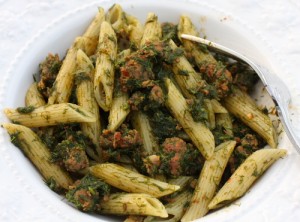
Penne with Wild Fennel and Sausage

Pasta con Finocchietto Selvatico e Salsiccia

by Rosetta Constino, 2006

Penne with Wild Fennel and Sausage

1/4 pound (115 grams) wild fennel fronds, leaves and slim, tender stems only

3/4 pound (350 grams) fresh sweet or hot Italian sausage or Fresh Homemade Fennel Sausage Calabrian Style

1/4 cup (60 milliliters) extra virgin olive oil

Coarse salt

1 pound (450 grams) penne rigate or rigatoni

Wash the fronds well in hot water as they can harbor small insects. Bring 5 quarts (5 liters) of water to a boil in an 8-quart (8-liter) pot over high heat. Add the fronds and boil 10 minutes, then lift them out of the water and into a colander, reserving the water to cook the pasta. Drain the fronds well and finely mince. You should have 1/2 to 2/3 cup minced greens.

Remove the sausage from its casing. Break the sausage into small clumps with a table knife.

Heat the olive oil in a 10-inch (25-centimeter) skillet over moderately high heat. Add the sausage and cook until it is no longer pink and begins to brown lightly. Stir constantly with a wooden spoon, breaking up the clumps into smaller bits. Add the fennel greens and stir well to distribute them and coat them with the oil. Season with salt. Reduce the heat and keep warm.

Add 1/4 cup (35 grams) salt to the water in which you cooked the fennel. Return to a boil and add the pasta. Cook until al dente. Set aside 1 cup (250 milliliters) of the pasta water, then drain the pasta and return it to the skillet with the sausage and fennel greens. Cook, stirring, over moderate heat for a minute or two to flavor the pasta, moistening it with some of the reserved pasta water. Serve immediately.

Serves 6

Green Deane’s Itemize Plant Profile

IDENTIFICATION: Fennel (Foeniculum vulgare) is an erect perennial herb, four to ten feet tall, with finely dissected, almost feathery leaves and characterized by a strong anise scent originating from stems and leaves. The flowers are yellow and small (one-quarter inch across), and are clustered in large, rounded, umbrella-like groups (compound umbels), roughly four inches across, that are conspicuous from April through July. During the growing season plants usually include a mixture of living and dead hollow stems (canes). Branches arise from the stems at conspicuously jointed nodes, and leaves arise both from the root crown and from the stems. Leaves sheath the stems where they meet. Seeds oblong, dorsally compressed, and ribbed.  Stems: 10-20 stems originate from a basal cluster in late winter, then die back the following September-November. Leaves: petioles 2.8-5.6 in (7-14 cm) long sheaths hug the stem; leaf blades triangular-ovate in outline and 0.3-2 ft (10-60 cm) long, 1-1.3 ft (30-40 cm) wide, finely dissected into nearly thread-like segments. Inflorescence: compound umbel with 15-40 spreading-ascending rays, each 0.4-1.6 in (1-4 cm) long. Flowers: no sepals, yellow petals with narrowing tips, 5 small stamens, inferior ovary topped by two short styles. Fruits: 0.1-0.2 in (2.5-4.5 mm), oblong-ovate, dorsally compressed, with thick, prominent ridges.

TIME OF YEAR: Fronds in spring, seeds mid-summer to fall

ENVIRONMENT: Mesic locations with a Mediterranean climate from sea level to 2,000 feet. Colonizes disturbed areas,  adjacent to fresh or brackish water, pastures, abandoned lots, and roadsides. Common in grasslands, coastal scrub, savannas, and the banks of creeks, estuaries, and bays. Prefers sandy, acidic soil. Can tolerate clay.

METHOD OF PREPARATION: Young fronds as greens and or flavoring, older greens and seeds for flavor. Wild Fennel pollen is also a spice. To collect it either cut off flowering heads, place in a paper bag and store in a dry place, or as with cattail pollen shake the flowerhead inside a paper bag. The first way produces dry pollen, the second way fresh pollen, a stronger flavor.

{ 10 comments }

Sorting out some amaranths


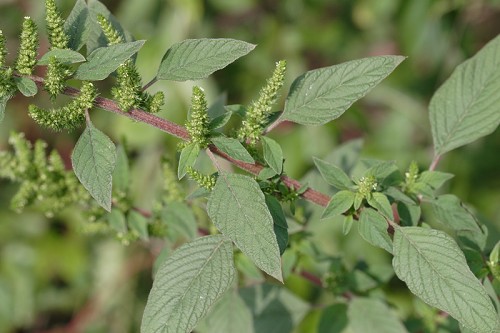
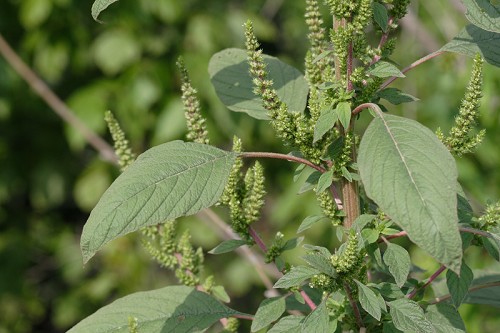
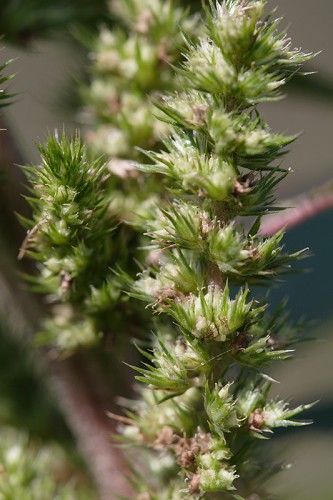
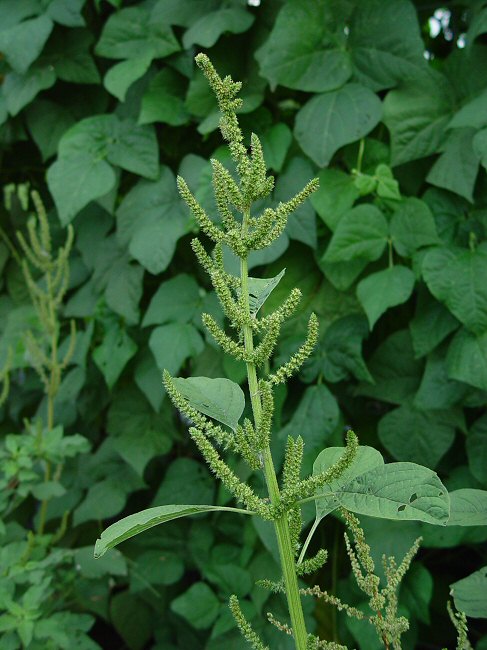
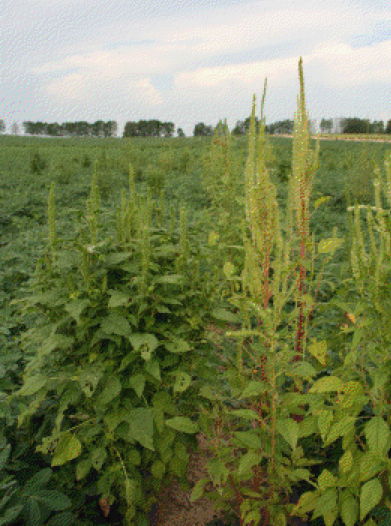
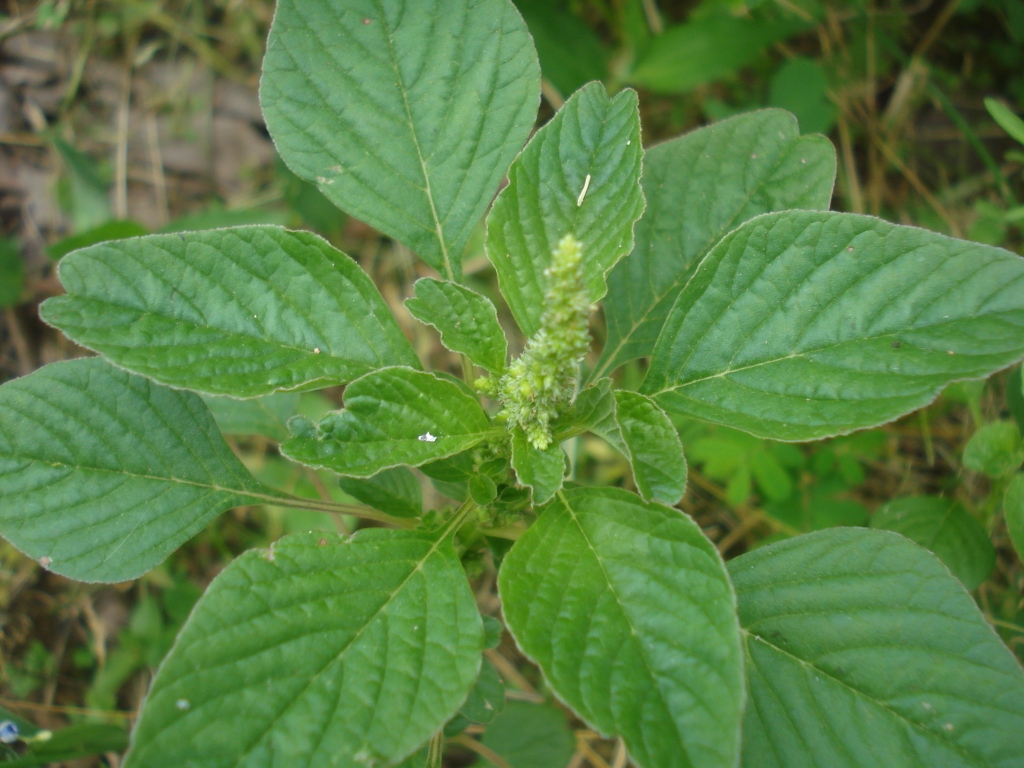
Amaranthus hybridus, aka Smooth Amaranth, stems can be red or green
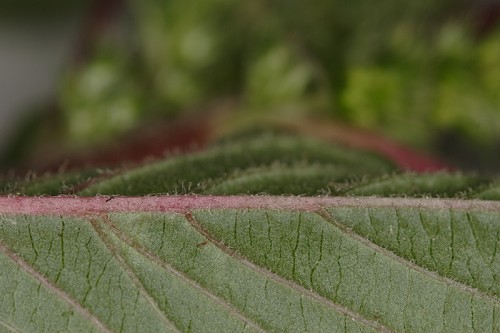
Smooth Amaranth red leaf  hairy, green can be hairless.
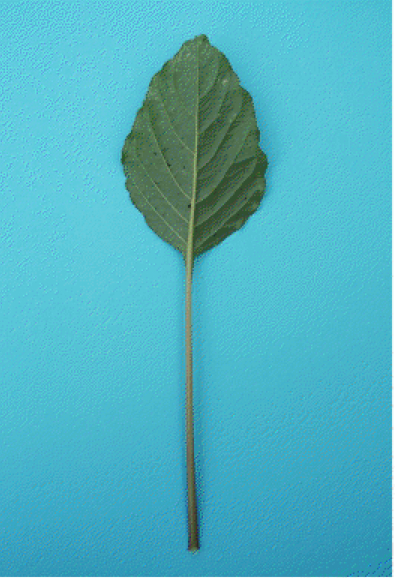
Smooth Amaranth flowers are short, petiole one half the lenght of the leaf to as long as the leaf.
Smooth Amaranth flower
Smooth Amaranth, green form.  
Amaranthus palmeri, Palmer Amaranth: Female left, Male right
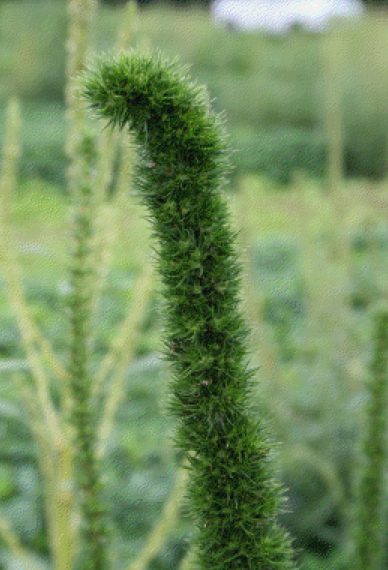
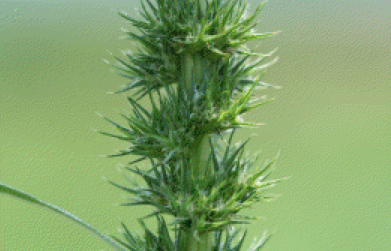
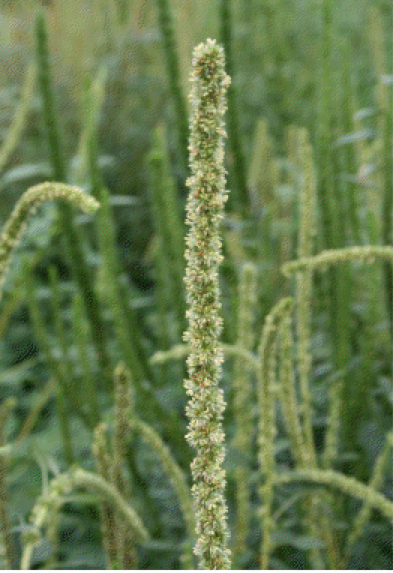
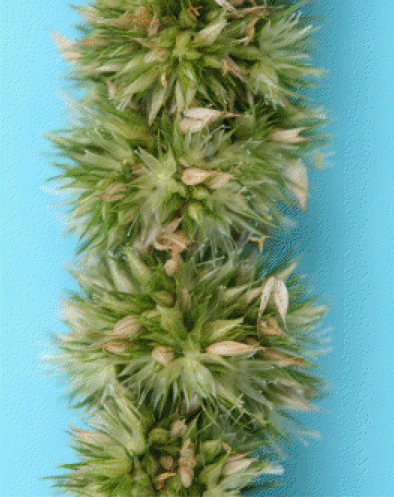
Palmer Amaranth, female flower is very long. Photo by Univ. of Fla. EDIS
Palmer Amaranth, female flower is bristly. Photo by Univ.of Fla. EDIS
Palmer Amaranth, male flower is also long. Photo by Univ. of Fla. EDIS
Palmer Amaranth, male flower is soft. Photo by Univ. of Fla. EDIS
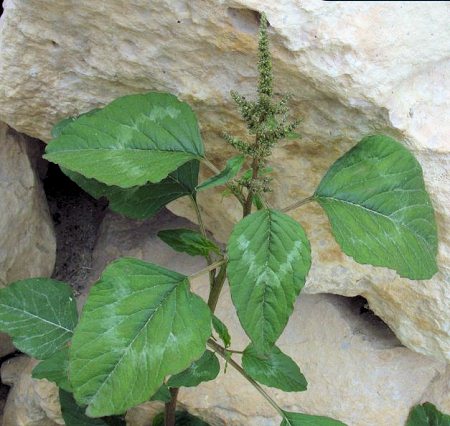
Palmer Amaranth, leaf petiole is as long as leaf or longer. Leaf also has white ribs on back. Top of leaf may or may not have a white chevron watermark. Photo by Univ. of Fla. EDIS
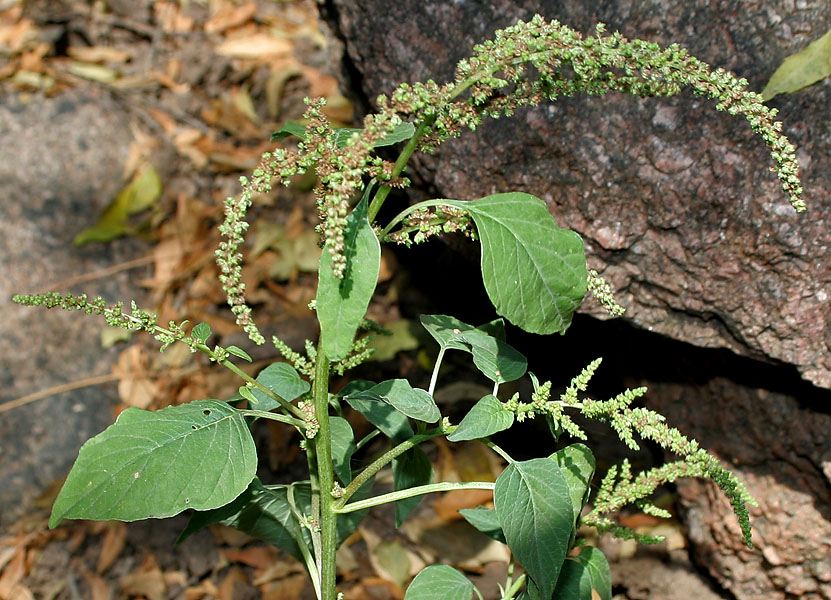
Amaranth viridis, Calalu, Smooth Amaranth, leaves can notched. Vlita (βλήτα) in Greek
Smooth Amaranth’s leaves can have chevrons. It can also have many branches
Smooth Amaranth flowers can be very long a droopy
Smooth Amaranth, note red coloring of flower.
{ 36 comments }