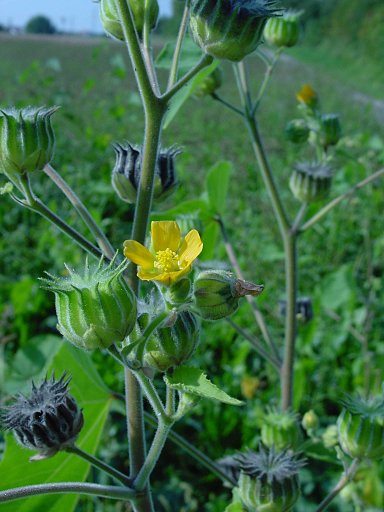
Abutilon theophrasti

Abutilon theophrasti, photo by Precision Crop Protection

Velvet Leaf is a commercial failure but a successful foreign invader. A flop as a fiber plant and cursed for its infiltration of food crops, it was first cultivated in China some 3,000 years ago. From there Abutilon theophrasti made its way nearly everywhere on earth. First the Mediterranean area, then Europe. It was introduced into North America before 1750 to make rope but never became popular for that. Instead it became an agricultural pest. That is has edible parts went by the wayside.
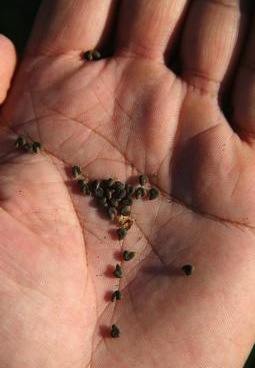
Velvet Seeds, photo by Robert Videki

Velvet Leaf Seeds, photo by Robert Videki

The unripe seeds are edible raw. Where the plant is native its seeds are a common outdoor snack of children. Ripe seeds, however, must be leached until not bitter. Then dried they are ground into flour. Usually the flour was used to make noodles. The seeds contain between 15 and 30% oil. Even though the plant has edible seeds — young seeds taste similar to sunflower seeds —  it ends up on the bottom of surveyed edible species in China because there are better alternatives. Worldwide there are some 160 species in the genus with several being used for food in various ways among them Abutilon guineense and Abutilon megapotamicum. With A. guineense the flowers are consumed raw and leaves are eaten like Marsh Mallow. The seeds are also cooked and eaten but it they are more valued for their expressed oil. A. megapotamincum’s flowers are eaten like vegetables.
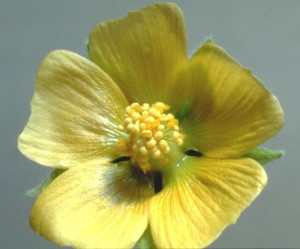
Velvet Leaf Blosssom

Velvet Leaf Blossom, photo by King County

Usually Abutilon theophrasti is found near farming activities: gardens, crop fields, nurseries, orchards, groves and the like. It’s significant problem where corn, cotton or soybeans are grown sometimes displacing 35% or more of the crop causing losses in the hundreds of millions of dollars. As a fiber source in Asia it has been used for rope, bags, coarse cloth, fishing nets, paper stock even caulking boats.
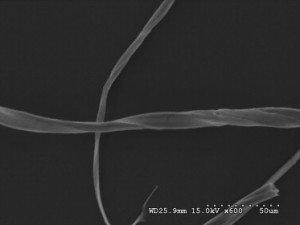
Single Velvet Leaf Fibers

Single Velvet Leaf Fibers, photo from Bioresource Technology

In today’s world of artificial fibers it is difficult to imagine how important the plant fiber was to society hundreds of years ago, not only for clothes but for every day life. Consider sailing: All shipping relied on rope. Most ships carried several 120-fathoms (720-foot) long ropes. The USS Constitution had seven such ropes. A large ship could have 3.5 miles of rope that had to be replaced every two to four years. Companies that made cordage were called “ropewalks.” The first one opened in Boston in 1641. By 1794 there were 14 ropewalks in that city alone. In 1810 there were 183 ropewalks in the young United States. During those early years fiber for rope making was imported from Europe or Russia, which concerned the U.S. Navy then just as critical materials from hostile sources are a concern today. In 1825 it was reported that:

In answer to the resolutions of the Senate of the United States, of the 17th of May last, that the President of the United States be requisitioned to cause a report from the Secretary of the Navy to be laid before the Senate at the commencement of the next session of Congress showing the reasons, if any, why canvas, cable and cordage, made of hemp, the growth of the United States, may not be used in the equipment of national vessels with equal advantage as if of foreign fabrics or materials.
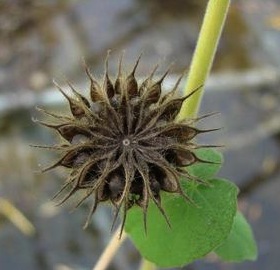
Ripe Seed Pod, photo by Invasive.org.

Ripe Seed Pod, photo by Invasive.org.

In 1751 the Gardener’s Dictionary by Phillip Miller describes Abutilon as: “The first sort here mentioned is an annual plant, which is hardy enough to come up in the common ground, and will perfect its seeds without any trouble; but does not bear to be transplanted, unless when the plants are very young, so that the seeds should be sown where the plants are designed to remain; and if the seeds are permitted to fall, they will come up the following spring without any care. This is very common in Virginia and most of the other parts of America; where it is called by some of the inhabitants Mash-mallow, because the leaves are soft and woolly. There is not great beauty in this sort.”  There’s actually a little more to that story. Miller (1691-1771) chief gardener at the Chelsea Physic Garden from 1721 until his death, didn’t like Carl Linnaeus’ binomial system even after meeting Linnaeus in 1736. Thus Miller didn’t create the Albutilon genus until 1768, three years before he died getting it into his seventh edition of his Gardener’s Dictionary. Theophrasti was added some 21 years later by Friedrich Casimir Medicus (1736-1808) director of the garden at Mannheim during the late 18th century. He, too, had a bit of a naming snit with Linnaeus.
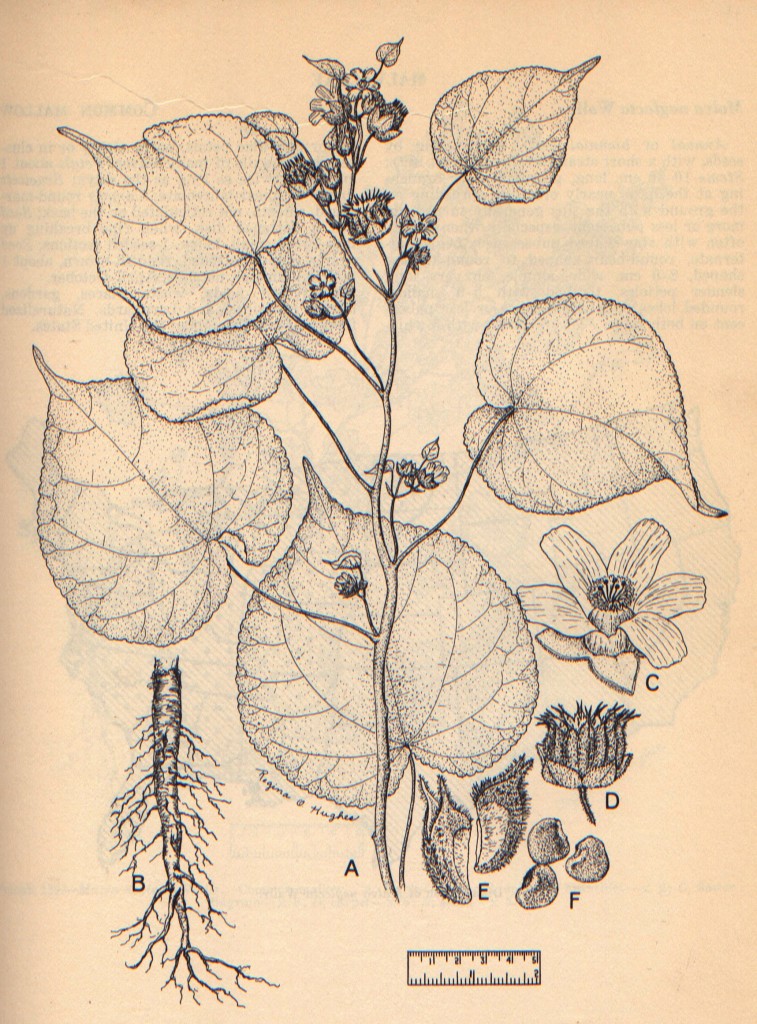
Velvet Leaf, drawing by Regina O'Hughes for the USDA

Velvet Leaf, drawing by Regina O’Hughes for the USDA

Over the next 120 years much effort was made to create a home-grown fiber industry in the United States. Meanwhile Velvet Leaf was becoming an agricultural pest in food crops. An Illinois committee report in 1871 alluded to the growing problem. The committee said it had: ” … examined the fiber as exhibited on the stalk, and as dressed for use, in its various colors and qualities and as made into thread, cordage and ropes, and consider that its promise of permanent utility is indeed quite flattering. We have no doubt but that this detestable weed will be found far more valuable in (the) future, in our ropewalks, than it has heretofore proven in our corn fields.”  The committee added it hoped: …  Illinois and the great Northwest may yet find, in this hetherto most common and noxious weed, a plant of great profit to their people…” In the end Velvet Leaf never became the great promised fiber plant in North America because of the lack of machinery to economically process it.
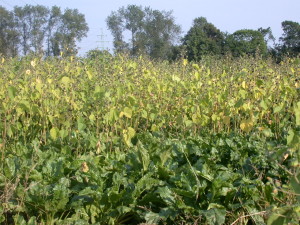
A stand of Velvet Leaf, photo by Precision Crop Protection

A stand of Velvet Leaf, photo by Precision Crop Protection

In the greater mallow family Abutilon (ah-BLEW-tee-on) is from an Arabic name for a similar plant, which is not much help in identification. The word was created around 900 B.C., by Avicenna-or Ibn-Sina for plants resembling a mallow or mulberry. The species name isn’t much help either, Theophrasti. That means  “of Theophrastus.”  Unfortunately Theophrastus is not a place but a Greek, born around 370 BC who lived to be 82 or so and is considered the ‘father of botany.’  He wrote several books on the history of plants and six books on “The Causes of Plants.” A student of Aristotle, he might have mention the plant or something like it in one of his books. Guineense means ‘of Guinea’ and megapotamicum is Dead Latin for Rio Grande which means big river. A. megapotamicum grows near the Rio Grande. Other common names for Velvet Leaf include: Buttonweed, Indian Mallow, Butterprint, China Jute, Abutilon Hemp, Manchurian Jute, American Jute, Tientsin Jute, Piemaker, and in Chinese Ching-ma. It’s debatable whether the plant is native to India or China.
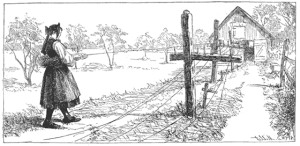
A reversed pen drawing entitled "A Rope-walk" by Frank Millet shows a Vierlande maid crafting rope in the traditional way.

A reversed pen drawing entitled “A Rope-walk” by Frank Millet shows a Vierlande maid crafting rope in the traditional way.

Besides North America Velvet Leaf is native or naturalized in China, India, Iran, Israel, Japan, Kazakhstan, South Korea, Pakistan, Turkey, Bulgaria, Croatia, Denmark, the Former Yugoslavia, France, Germany, Greece, Hungary, Italy, Netherlands, Poland, Portugal, Romania, the Russian Federation, Slovenia, Spain, Sweden, Switzerland, Ukraine, United Kingdom. Eritrea, Ethiopia, Morocco, Canada and the United States.

 Green Deane’s “Itemized” plant profile: Velvet Leaf

IDENTIFICATION: Abutilon theophrasti is a subshrub to about six feet, or two meters, often just a few feet. The stem and twigs are covered with fine hair. Leaves are heart-shaped and alternate. They are very fuzzy and have just a hint of teeth around the edge. One flower per leaf axils is produced, yellow, five petals, slightly notched. Self-pollinating each plant can produce up to 17,000 seeds and the seeds can remain viable for 60 years. One researcher reported 43% seed germination after 39 years of burial. Seed pods are usually densely covered with soft bristles. Nearly black at maturity. The seed capsule has a cup-like ring formed by 12 to 15 woody segments that remain intact at maturity. Each segment releases one to three seeds through a vertical slit on the outer face of the capsule. Seeds range from kidney shaped to almost triangular, have a notch, are flattened, and about one eighth of an inch long, purplish brown, brown, or black, smooth or have tiny star-shaped hairs

TIME OF YEAR: Leafs out in spring, flowers in the summer, seeds in fall, hardy to zone 4 and is found in North America between 32 and 45 degrees north.

ENVIRONMENT: Likes well-drained neutral soil high in nitrogen (read agricultural land.)  Moist. Full sun, will tolerate some shade. Seeds, adult plants, and decaying plant  contain or produce allelopathic chemicals limiting the growth of surrounding crop plants.

METHOD OF PREPARATION: Unripe seeds raw, ripe seeds leached of bitterness, dried, then ground into flour. In other species flowers and or young leaves are edible. Oh… one last thing. The leaves can be used as toilet paper.

To see a short video on the plant as a source of fiber go here.
 

{ 47 comments }
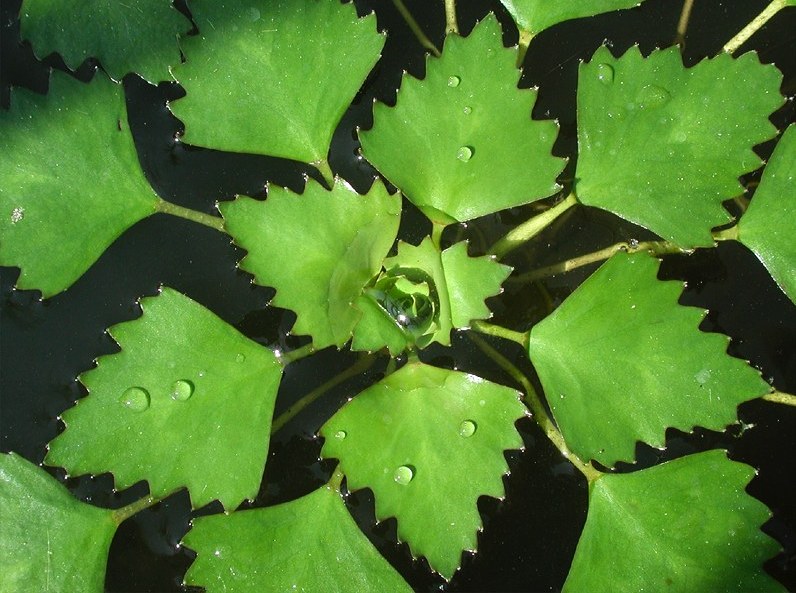
Floating Rosette of Water Chestnuts

Floating Rosette of Water Chestnuts

The Water Chestnut is a plant of contradictions. It is rare in parts of Europe where it’s native thus “endangered.” Europeans want to see more of it. But it’s “invasive” in North America where officials want to eradicate it. In its native range it’s rare because people ate most of it. Where it’s invasive officials say it not edible. That’s probably because a lawyer someplace is telling people not to mention it is edible or all kinds of liability could ensue (the same reason why our local zoo had to stop giving away manure.) By the way this “water chestnut” is not the water chestnut (Eleocharis dulcis) you find in Asian restaurants. That’s a sedge. This is a different species altogether, Trapa natans. They do, however, share a common name.

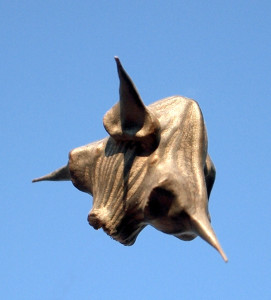
The Water Chestnut seed is well armed.

The Water Chestnut seed is well armed.

Here’s why plant officials don’t like the Water Chestnut in America: One acre of Water Chestnuts can turn into 100 acres in one year (and that’s including winter down time.) Without any local counter balance it does all the things some folks wish an invasive would not do: Drives out native species, hogs water surface, changes a body of water from thriving to near dead, makes waterways unnavigable and reduces recreation. (It has pointed seeds that can puncture a shoe and inflict painful damage to a bare foot… There’s that lawyer sweating liability again.)

Why did it become so endangered in some parts of Europe? Changes in climate for one thing, but also the sweet seed kernels can be eaten raw, roasted, boiled, or fried like a vegetable. They are also preserved in honey and sugar, candied, or ground into flour for making bread and confections. These water chestnuts have a tasty, delicious flavor similar to tree chestnuts. It was the main ingredient in traditional Italian risotto. Water Chestnuts have been eaten since antiquity and cultivated in Asia for some 3,000 years. The opposing European and North American views are best explained by a line from the 1967 movie Cool Hand Luke: “What we got here is a failure to communicate.”

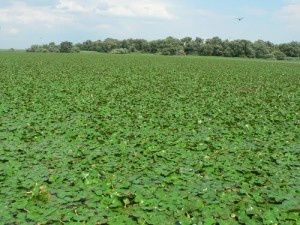
Water Chestnut covering a lake

Water Chestnuts covering a lake

Water Chestnut is found in Connecticut, Delaware, Virginia, Maryland, Massachusetts, Pennsylvania, New Jersey, New York, New Hampshire and Vermont. It is fiercely banned in many other states particularly the south with huge fines in place. The Water Chestnut’s introduction to North America is as muddy as some of the ponds it grows in. Best guess is it first came to the United States in 1874, perhaps at Harvard’s botanical gardens.  It was first noticed by botanists outside the gardens near Concord, Massachusetts in 1879 (reports that it was found in 1859 are mistaken.) It was intentionally put in a pond near Sudbury River near Concord by a gardener who also put it in many other ponds including the Fresh Pond of the botanical gardens in Cambridge. By 1884 it was in Sanders Lake near Schenectady NY and had reached had reached western Massachusetts by 1920. In 1923 there was a two-acre patch on the Potomac near Washington D.C. From Massachusetts it spread to Lake Champlain in Vermont, the Nashua River in New Hampshire and the Connecticut River in Connecticut.  Special problem areas today are The Bird and Sassafras rivers in Maryland, the Hudson River, the Connecticut River valley, and Lake Champlain. It has also been reported in Ontario and naturalized in Australia in New South Wales. Control measures can be expensive, such as the $5.25 million spent from 1982 to 2005 to clean-up Lake Champlain where there was a 300-acre infestation.

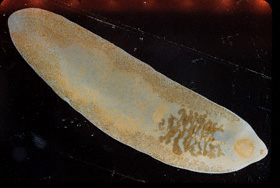
Fasciolopsiasis, a parasitic fluke

Fasciolopsiasis, a parasitic fluke

One reason why officials might be reluctant to mention that it is edible is that the plant easily picks up a variety of toxic metals. According to one report from India “despite varying levels of metals found in various fruit parts of T. natans, the metal accumulation in (the) kernel was alarming. However, metal content decreased significantly in various parts after boiling…” The report went on to say that using boiling to reduce the metals is important in the “exploitation of these aquatic crops to meet the demand of food and health perspectives for human beings…” So, grown in bad water it collects toxins but boiling reduces the problem. There is another reason to boil the seeds even though they can be eaten raw: Fasciolopsiasis. It’s a disease that can be transmitted from the surfaces of Water Chestnuts and other water plants. During the larval stage of their life flukes leave their water snail hosts. They swim away to form cysts on the surfaces of water plants, including the leaves and fruit of water Water Chestnut. If infected water plants are consumed raw or undercooked, the flukes can infect humans, pigs and other animals. It’s very common particularly where people and pigs live together and share similar water resources.

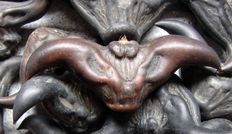
Trapa bikornis nut

Trapa bikornis nut

While the Water Chestnut seed has four horns its edible relative Trapa bikornis (Horn Nut) has only two. Still painful to step on though. As for the botanical name Trapa comes from Dead Latin’s calcitrappa, a four-pointed weapon (as the seeds have four points.) But that term came from a Dead Latin word for “thistle.”  Natans means floating. Bikornis means two horns. The other common name, Water Caltrop, also comes from calcitrappa. A third species, Trapa rossica, is endangered. Should you be interested in having your own illegal kiddie wading pool of T. bikornis they are usually found fresh in Chinese markets in October and November. The seed is rich in carbs, fat, protein, sugar, and vitamins B1, B2, C, calcium, phosphorus and iron.

Green Deane’s Itemized Plant Profile: Water Chestnut

IDENTIFICATION: Water chestnut are a rosette of floating, fan-shaped leaves, each leaf having a slightly inflated stem. The roots are fine, long, profuse; the small 4-petalled flower is white The fruit is a large nut produced under the rosette having four sharp spines, or two depending on the species. The “chestnut” usually weights about six grams. They don’t float.

TIME OF YEAR:  Seeds overwinter at the bottom of water bodies and germinate during warmer months producing stems that reach the water surface and produce rosettes. In the northeastern United States flowering starts in July and continues until the plants are killed by fall frost. Fruits ripen in about a month and can remain viable for up to five years some report twelve years. Each seed can produce ten to fifteen rosettes and each rosette may produce as many as twenty seeds.

ENVIRONMENT: An aquatic weed, it is found is ponds, lakes, and slow portions of rivers.

METHOD OF PREPARATION:   Shelled seeds (nuts) are eaten raw, roasted, boiled, or fried. They are also preserved in honey and sugar, candied, or ground into flour for bread and confections.

HERB BLURB

WATERCHESTDIAETIC


{ 25 comments }
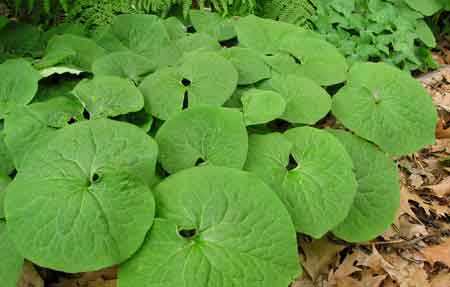
Wild Ginger grows in colonies.

Wild Ginger grows in colonies under deciduous trees.

Wild Ginger is cantharophilic, sometimes myophilic or sapromyophilic.

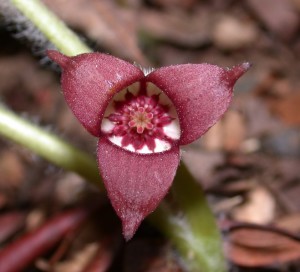
Wild Ginger Blossom does not have petals only sepals.

Wild Ginger Blossom does not have petals only sepals.

If that’s all Greek to you it should be because it is Greek bastardized via Dead Latin into English. Canthrarophilic means pollinated by beetles, myophilic or sapromyophilic pollinated by flies. I suspect bees (melittophily) occasionally get in there as well. Wild Ginger grows close to the ground so the beetle has a chance.  The plant is also myrmecochoric meaning its seeds are disbursed by ants. We are told 11,532 species of angiosperms have seeds disbursed by ants.  Busy little beavers they are. An explanation:

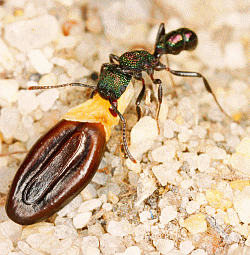
Ant grabbing seed by its elaiosome.

Ant grabbing seed by its elaiosome.

Seeds that are spread by ants usually have a fatty appendage or attachment called an elaiosome, which the Wild Ginger seed has. It looks tasty to an ant so the ant carries the entire seed back to the nest. Then it detaches or eats the elaisome, or figures out the appendage is not edible and dumps the seed outside the nest. Ants are tidy. Soooo…. when picking wild ginger and any one of the 11,532 ant-distributed species expect to find ants nearby.

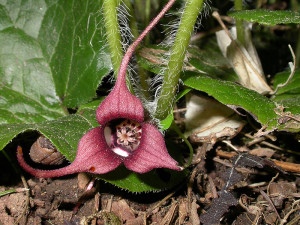
Asarum caudatum

Asarum caudatum, Long-Tailed Wild Ginger.

Wild Ginger, Asarum canadense, is found in eastern North America, Manitoba south excluding Florida, Texas and Nebraska. In western North America one finds Asarum caudatum, or Long-Tailed Wild Ginger, note flower at left. It’s roots can be used as a ginger substitute and leaves brewed into a tea. There is also something of a misnomer with the plants. Their roots are actually rhizomes, which grow horizontally where as true roots are usually vertical. There’s also some schizophrenia regarding its use, particularly Asarum canadense. Touted as an herb and flavoring et cetera there are also warning of toxicity. All things in moderation, see the Herb Blurb below. Its basic use is as a ginger substitute in cooking, a flavoring agent, and for making some candy. There are numerous medicinal claims.

Asarum canadense is said ah-SAR um  can-nah-DENSE, or ass-AIR-rum  can-nah- DENSE. Asarum is from the Greek Asaron which means hazelwort (Asarum europaeum.) Hazelwort is a common wild ginger in Europe. It is not consumed because it is an emetic and cathartic. Canadense means North America and was where the species was first located.  Caudatum (kaw-DAH-tum) means “tailed,” referring to long sepal appendages.

Green Deane’s Itemized Plant Profile: Wild Ginger

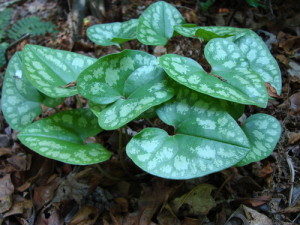
Don't confuse Wild Ginger with Hexastylix arifolia

Don’t confuse Wild Ginger with Hexastylix arifolia

IDENTIFICATION: Asarum canadense: A stemless colony-forming plant 4 to 6 inches high with two velvety, heart-shaped to kidney-shaped, attractively veined, dark green, basal leaves. Urn-shaped, purplish brown flowers to one inch wide on short, ground-level stems growing out of the crotch between the two basal leaves. Flowers (with three sepals and no petals) are often hidden by the leaves.  Don’t confuse it with a similar plant with greenish-purple flowers Hexastylix arifolia, which has more a triangular, evergreen leaf.

TIME OF YEAR: Flowers April to May, roots used anytime

ENVIRONMENT: Easily grown in average, medium to wet, well-drained soil, in part shade to full shade. Prefers constantly moist, acidic soils in heavy shade. Spreads slowly by rhizomes to form an attractive ground cover for shade areas. Found under trees but usually not conifers.

METHOD OF PREPARATION: Flowers and rootstock used as flavoring. Roots, fresh or dried, can be a ginger substitute. Candied by boiling the roots in sugar water until a syrup forms. Root then rolled in sugar. Syrup can be used on desserts and ice cream. Can also be made into a beverage to settle the tummy.

Herb Blurb

moerman_d

Prof. Daniel E. Moerman

Moerman (1986) says Native Americans used Asarum canadense medicinally to treat poor digestion, swollen breasts, coughs and colds, typhus and scarlet fever, nerves, sore throats, cramps, heaves, earaches, headaches, convulsions, asthma, tuberculosis, urinary disorders, venereal disease; as a stimulant, birth control, seasoning and charm. It was also used to strengthen other herbal concoctions and increase the appetite.

Some species of asarum also contain aristolochic acid. It is used in rat poison. The United States Food and Drug Administration and Health Canada warn against consuming Wild Ginger. Significant amounts can damage kidneys. Professor Merritt Fernald, wunderkind at Harvard for some 50 years, thought in moderation as a flavoring and spice it was okay.

{ 15 comments }
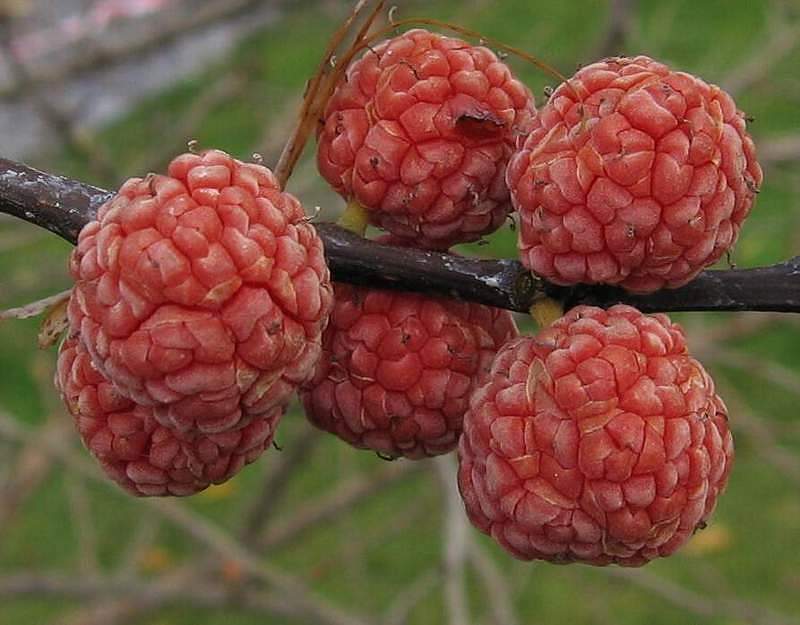
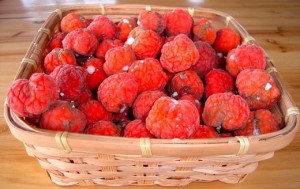
Che berries are related to mulberries

Che berries are related to mulberries. Photo by Michale Kesl

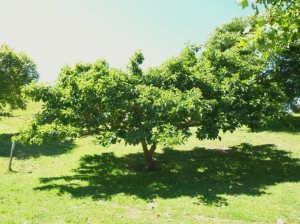
Che is not the tree it used to be.

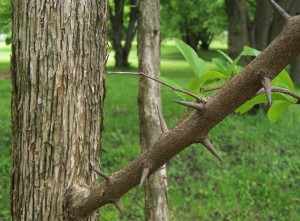
Che's thorns are inconsistent

Che’s thorns are inconsistent

At one time there were just he and she Che trees. Then a few decades ago along came a self-fertile seedless Che then Ches grafted onto a close relative the Osage Orange. The he’s and she’s have also escaped from cultivation in North Carolina and coastal Georgia. I don’t think the seedless escape. Ches are planted from about New York south and west. Your best chance of seeing one is in landscaping in the southern half of the United States and up the west coast. Whether to include Che as a wild edible was a bit of a debate. It’s wild in Asia and has been around North America for more than a century thus it was included. One reason why you might not have seen a Che is birds. They aren’t too interested in the berries so they don’t spread the tree around.

Leaf shape can vary from 3 lobs to none

Leaf shape can vary from 3 lobes to none

The Che is native from the Shantung and Kiangson Provinces of China to the Nepalese sub-Himalayas. It was naturalized in Japan many years ago which is where I first saw one back in the early 70’s. Che (Cudrania tricuspidata) was introduced to France in 1862, England in 1872 and to the United States about 1909. There was one growing at the P. J. Berckman’s Nursery in Augusta Georgia by 1912 and fruiting, which is another issue. Both male and female trees can fruit, she more than he while the grafted seedless fruits the most.

Che benefits from pruning

Che benefits from pruning

The seedless Che is a small tree. The natural species is shrubby and can produce many suckers. By grafting the Che onto an Osage orange a superior single-trunk fruit tree is created. It bears a large crop of red, juicy fruit clusters reminiscent of round mulberries about an inch through, ping-pong ball-ish in size. The flavor is a cross between a mulberry and a fig, which it not remarkable as it is related to both. It is also distantly related to Breadfruit (Artocarpus altilis), Jackfruit (Artocarpus heterophyllus), Fig (Ficus spp.), Mulberry (Morus spp.), African Breadfruit (Treculis africana), Paper Mulberry (Broussonetia papyrifera) and the aforementioned Osage Orange (Maclura pomifera.)

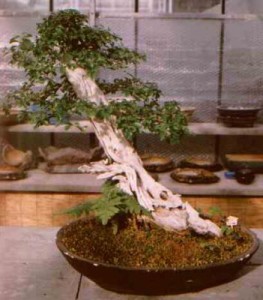
Bonsai Che

Bonsai Che

While the Che has been promoted outside of China as the up-and-coming fruit tree for decades in China its reputation varies from valuable to intolerable. This might be because of erratic thorns. The tree is backup food for the silkworm and the leaves have to be picked by hand which means braving thorns. Worse, the tree is not consistently thorny so there’s no pattern to help you avoid them. Silk made from the leaves, however, is reported to make high quality lute strings of pure tone. The Che is also a favored tree of for bonsai. (On a personal note a life time ago I visited Bonsai Machi in Japan, the heart of the bonsai culture. There were amazing specimens there. There was also a small city laid out with miniature buildings and bonsai tress for landscaping. The effect was to be a giant walking down the street. And when I see specials about bonsai they show specimens I saw some 40 years ago, still alive and craggy.)

_3828404

Che berris store well

Besides “Che” the tree is called Cudrania, Chinese Mulberry,  Cudrang, Mandarin Melon Berry, Silkworm Thorn, and Storehousebush (why it is called that no one knows.)  As for the botanical name Cudrania tricuspidata no one knows where Cudrania came from either or what it supposed to mean. It was named by one Dr. Hance in 1877 and he left no clue as to why his chose that name for the genus. I suspect it has something to do with the common name of Cudrang. Tricuspidata means three pointed as in the leaves though even Dr. Hance said the leaves vary so much calling it Tricuspidata was inaccurate. “Che” (said like the Cuban revolutionary) means “stony ground,” a reference to the tree’s natural habitat of poor, dry soil. But it likes warm, rich soil as well.

Incidentally an intergeneric hybrid exist between the Che (Cudrania tricuspidata) and the Osage Orange (Maclura pomifera) called Macludrania hybrida. Mostly from France they were planted in the US National Arboretum in 1960 and have large orange-like fruit and no thorns.  Other than that planting the hybrid seems to have been largely ignored by everyone.

Green Deane’s Itemized Plant Profile: Che

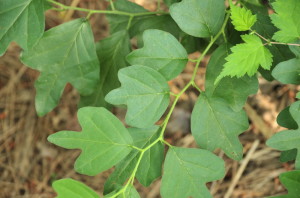
IDENTIFICATION: Cudrania tricuspidata. Deciduous trees to 25 ft. height, often a broad, spreading bush or small tree.  rarely to 60 feet. Immature wood thorny, female trees larger than males. Leaves alternate, resemble mulberry but smaller, thinner, pale yellowish-green, trilobate, with central lobe sometimes twice as long as the lateral lobes, frequently unlobed. Flowers dioecious, male and female flowers on different plants, green, pea-sized. Fruit is aggregate, looks like a round mulberry crossed with a lychee, knotty, ripens to red or maroon-red, juicy, rich red flesh, 3 to 6 small brown edible seeds per fruit. Flavor varies from fig/mulberry cross to watermelon.

TIME OF YEAR: Flowers in late spring or early summer, fruit in early fall in cooler areas, later in warm areas. In warmer areas it is an evergreen. In cooler areas the leaves turn red in the fall and persist.

ENVIRONMENT: Likes a sunny, warm location with rich, well-drained soil but can grow in rocky dirt. Planted in zones 5-9, can tolerate -20F. Treat them like a mulberry tree. Fruit stains like mulberries.

METHOD OF PREPARATION: Trees mature early and can produce up to 400 pounds of chewy fruit. Let the fruit stay on the tree until they are soft and dead ripe. Ripening is continuous for about a month. Fruit is eaten out of hand or used like mulberries or figs. Good shelf life.

Grafts are better than raising trees from seeds. Seed planted immediately from ripe fruit germinate at a high rate. Stored seeds must have a period of cool, moist stratification. Plants from seeds can take up to 10 years to fruit. Cloned plants bear very young.

{ 27 comments }
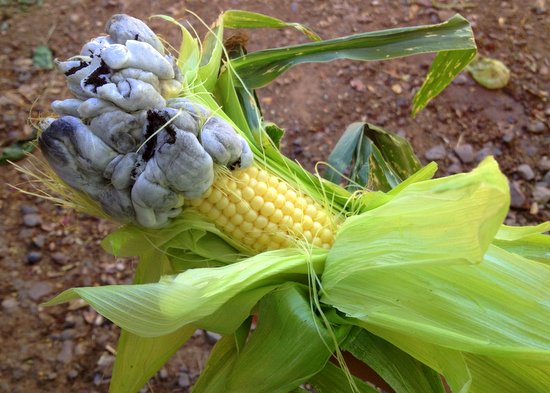
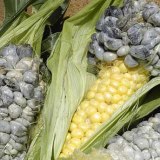
Corn smut cause infected kernels to swell

Corn smut cause infected kernels to swell

Mexican Truffles. Corn Truffles. Corn Smut. Raven Scat. Ustilago maydis gets more unappetizing the further one goes down its list of names. The Aztecs called it huitlacoche.  The Mexicans call it a delicacy.

CornSmut31c

Edible Corn Smut is used like cooked mushrooms

Corn smut is a fungus that grows on young maize. When the corn is in silk kernels become infected. They swell to golf-ball size galls and discolor. Loaded with soluble fiber, the amino acid lysine and the antioxidant anthocyanin, the moist young galls are collected two or three weeks after the corn becomes infected. If not harvested the galls will grow hard and spore-filled looking a smutty dark blue or black. The flavor of young galls is musty, earthy if not smokey. Less expansively they taste like a cross between mushrooms and corn. While the fungus is used like expensive mushrooms and served in elegant restaurants in Latin America it is considered a plant disease in other countries. If you can’t find any fresh locally you can order canned corn smut over the Internet. Perhaps not surprisingly fresh infected corn sells for more than uninfected corn. In the U.S. an ear of huitlacoche costs some 41 cents to produce and sells for about three times that, $1.20. An ear of sweet corn costs about a dime to produce but sells for only a few pennies more.

The Aztecs intentionally inoculated their corn with spores by scratching the base of corn stalk with a soil-smeared knife. In Midwest America hail scratches corn plants allowing spores to enter. The fungus can live up to three years in the soil. The intentional infection is usually manifests itself ten days to two weeks later.

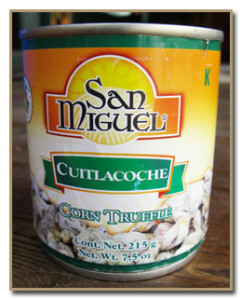
Smut is canned for international sale. A 7 oz. can sells or about $11 plus shipping.

Smut is canned for international sale. A 7 oz. can sells for about $11 plus shipping. Fresh in Mexico it’s about $1.50 a pound, $20 a pound in the U.S.

Though highly nutritious there are reports of toxicity and effects such as fungal skin infection, hair loss and allergic reactions in people. There is little evidence to support that. However when digested Ustilago maydis is known to produce ustizein, guanacine, itaconic acid, ustilagic acid, and the alkaloid ustilagine, which may have similar effects to ergotamine which is from ergot (Claviceps purpurea). Efforts to use corn smut medicinally like ergot has not worked well because it is weaker. See Herb Blurb below. As a fungus corn smut is a distant relative of Boletus and Agaricus mushrooms. Also, out of 1,000 smut species it is one of two commonly eaten. The other is Ustilago esculenta, which grows on rice stalks in China.

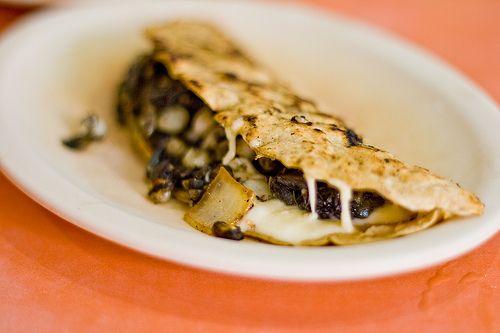
Taco with "Mexican Truffles"

Taco with “Mexican Truffles” photo by Hexodus

Corn smut is widespread. While native to Central America it now has almost worldwide distribution. It is rare, however, in tropical regions and is not found in New Zealand. Corn smut was first noticed in Australia in 1911 but was eradicated around the beginning of World War II. It reappeared in Australia in 1982.  It’s common in Europe wherever corn is grown. Corn smut is intentionally grown in limited quantities in California, Georgia, Virginia and in nearby Groveland, Florida. In the United States up to 5% of the corn crop can be unintentionally affected with some species of corn more susceptible than others such as sweet corn. A larger problem is when one infected ear is mechanically harvested the inky spores cover many other good ears picked at the same time making them unusable plus the machine needs to be cleaned. Millions have been spent trying to control it.

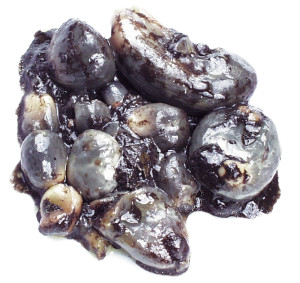
Raw corn smut

Cooked corn smut

As one might expect there are disagreements on what huitlacoche means exactly.  While authorities agree huitlacoche (week-la-KOH-chay) comes from the Aztecs there are two or more interpretations which are variations on a theme. Some say it means “sleeping excrement” others “raven excrement.” Regardless, you get the idea. As for the Dead Latin name Ustilago (oos-TILL-ah-go) it means “burnt” because of the way the smut  can look as it ages. Maydis (MAY-diss) is the local reference to the corn. Huitlacoche is also written cuitlacoche.

Green Deane’s Itemized Plant Profile: Corn Smut

IDENTIFICATION: Ustilago maydis: Look for large irregular swellings up to 7 inches (20 cm) across on the stems, leaves and ears.  Young galls are silvery-white covered by a thin grayish skin. The gall darkens then ruptures exposing a dark brown, powdery spore mass. Spores are rounded and pale brown, densely covered with small pointed spines.

Chef Rick Bayless

Chef Rick Bayless

TIME OF YEAR:The local corn-growing season.  Rick Bayless, author, chef of Mexican cuisine, owner of Frontera Grill in Chicago says “Pick it when it feels like a pear starting to ripen, when there’s a little give to it. Too firm and it will be bitter. Too late, when the thin skin of the gall breaks if you rub it, and it will taste really muddy.”

ENVIRONMENT: Huitlacoche grows best during times of hot weather in a 78°F to 93°F (25°C–34°C). Prefers nitrogen-rich soil, dry conditions after rain.

METHOD OF PREPARATION: Collected when young and still moist, they are usually cooked like mushrooms. One common simple use is to flavor scrambled eggs. See recipes below.

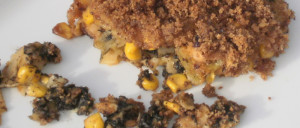
Mac & Cheese a la Corn Smut

Mac & Cheese a la Corn Smut

Smutty Mac and Cheese with a Pecan Crust

Ingredients Pecan Crust
•    Half cup (118 ml)  butter
•    One cup (237 ml) pecans
•    One cup (237 ml) panko

Instructions Pecan Crust
•    In a small sauté pan melt the butter
•    Add the pecans and sauté until the nuts are slightly browned – about 5 minutes
•    Strain the nuts, reserve the butter
•    When cool mix with panko in a food processor and grind finely

Ingredients Smutty Mac & Cheese
•    One cup (237 ml) coarsely chopped huitlacoche
•    Quarter cup (60 ml) butter
•    Quarter cup (60 ml) flour
•    Two cups (or 500 ml) grated old Cheddar cheese
•    Two cups ( or 500 ml) grated Gouda
•    Two cups ( or 500 ml) grated marbled Cheddar
•    Three cups (700 ml) milk
•    Bay leaf
•    Salt, pepper
•    Two cups ( or 500 ml)  corn kernels
•    1 sweet onion, diced small
•    3 garlic cloves, chopped
•    13 ounces (341 g) pasta, macaroni type

Instructions: Remove the smut off the cob.Coarsely chop the huitlacoche.  Cook pasta, reserve.  In a large sauté pan use the reserved butter and heat until it bubbles.  Add the flour, stir until the roux darkens.  Add milk, bay leaf, salt and pepper, simmer for 10 minutes. Fold in cheeses, stir until melted. Add corn kernels. Caramelize onion and garlic, add to cheese mixture. Fold in pasta. Butter a baking dish. Spread half the mixture in bottom layer.  Spread the huitlacoche on top. Add the rest of the mixture, concealing the smut.  Top with the pecan mixture. Bake at 350 F. for 1/2 hour or until bubbly and the crust is browned.

Huitlacoche Soup

Recipe from Ellen and Tom Duffy

In damp weather corn frequently becomes infected with corn smut–Ustilago maydis–which when fresh occurs as pearly gray globules and ovoids displacing the rows of kernels. They should not be used when old and dried and powdery. At this time the black interior is widely exposed and the gleaming surface gone. It may cause uterine contractions in pregnant women when old and decayed. It is considered a great delicacy in parts of Mexico and here is a soup we have developed. It is delicious with a slight gray color. (There are black spores in the fresh globules also.)

A.

  • 1-1/2 cups (354 ml) milk
  • 3 Tablespoons (44 ml) flour
  • 3 Tablespoons (44 ml) butter
  • 2 Tablespoons (30 ml) Worcestershire sauce
  • 4-6 drops Tabasco sauce

B.

  • 1 cup of huitlacoche (or slightly more)
  • 1 small yellow onion
  • 1 clove garlic
  • 2 Tablespoons (30 ml) bland oil or margarine or ghee
  • 1 cup (354 ml) chicken broth

Whirl together all ingredients in group “A” in a blender or food processor until mixed. Cook slowly, stirring until white sauce thickens. Chop finely all solid ingredients in group “B” and sauté until tender–add the huitlacoche last as it cooks a little quicker. Whirl in blender or food processor with the chicken broth, add to the cream sauce, heat and enjoy.

Herb Blurb

Trends Cell Biol. 2008 Feb;18(2):61-7. doi: 10.1016/j.tcb.2007.11.008.

Ustilago maydis, a new fungal model system for cell biology.

Source

Max Planck-Institut für Terrestrische Mikrobiologie, Karl-von-Frisch-Str., D-35037 Marburg, Germany; School of Bioscience, University of Exeter, Stocker Road, Exeter, EX4 4QD, UK. G.Steinberg@exeter.ac.u

Abstract

The use of fungal model systems, such as Saccharomyces cerevisisae and Schizosaccharomyces pombe, has contributed enormously to our understanding of essential cellular processes in animals. Here, we introduce the corn smut fungus Ustilago maydis as a new model organism for studying cell biological processes. Genome-wide analysis demonstrates that U. maydis is more closely related to humans than to budding yeast, and numerous proteins are shared only by U. maydis and Homo sapiens. Growing evidence suggests that basic principles of long-distance transport, mitosis and motor-based microtubule organization are conserved between U. maydis and humans. The fungus U. maydis, therefore, offers a unique system for the study of certain mammalian processes.

[PubMed

Crit Rev Food Sci Nutr. 1995 Jan;35(3):191-229.

Huitlacoche (Ustilago maydis) as a food source–biology, composition, and production.

Source

Centro de Investigación y de Estudios Avanzados del IPN, Departamento de Biotecnología y Bioquímica, Gto., México.

Abstract

Huitlacoche is the ethnic name applied to the young fruiting bodies (galls) of the fungus Ustilago maydis, which causes common smut of maize (Zea mays L). Biologists and agronomists have historically used U. maydis as a model to study a wide array of genetic, physiological, ecological, and phytopathological phenomena. In Mexico and other Latin American countries, huitlacoche has been used traditionally as human food, being highly regarded as an interesting dish or condiment. The food potential of huitlacoche is described here in terms of its chemical composition, which includes carbohydrates, proteins, fats, vitamins, and minerals. In addition, essential amino acids (especially lysine) and fatty acids (linoleate) are present in huitlacoche in considerable levels, adding to its nutritional attributes. The feasibility of growing U. maydis in submerged agitated culture has yielded a variety of fermentation products, including essential amino acids, proteins, vitamins, and flavorings, among others. Recent interest in developing huitlacoche as a cash crop has come from increasing acceptance by the North American public, who prize it as a new delicacy. However, research efforts are still needed to determine the biological factors involved in the establishment of U. maydis as a pathogen on the maize plant. This review deals with the role of huitlacoche as a food source, implicating the biological components that will determine the development of technologies for large scale production.
PubMed

Farming Fungus In Florida

By the Organizations of American States

Grown in Groveland, Florida

Grown in Groveland, Florida

FORTY-NINE-YEAR-OLD Roy Burns of Burns Farms Huitlacoche, Groveland, Florida, has something growing in his field that most farmers dread the sight of–corn fungus. In the last six years Burns has almost cornered the U.S. market for this latest ethnic food fad known by its Latin taxonym, ustilago maydis, but more commonly by its Nahuatl name, huitlacoche.

While other farmers fear outbreaks of the crop-killing plague they curse as “corn smut,” Burns hopes to get rich off it. “People think I’m crazy for trying to grow this stuff on purpose,” he says. “But one of these days I’ll get it right and then I’ll be the huitlacoche king.”

Huitlacoche is a delicacy in Mexican cooking, but its availability in the market is an unforeseen accident of the growing season. Rain, temperature, and wind all play a role in making the fungus break out in any given field at any given time. If an outbreak does occur, a farmer in Mexico might lose his corn but can sell his huitlacoche to any number of buyers.

It is not so simple in the U.S., however, where huitlacoche is not as well known as, say, mushrooms–still every bit the fungus as the Mexican variety. But Mexican chefs, cookbook authors, and restaurants north of the border call increasingly for this hard-to-find ingredient. It has even found its way onto menus of many non-Mexican eateries as an exotic garnish. Legend has it that Emperor Maximilian rolled huitlacoche in his crepes, turning it overnight into a rare French treat.

Josefina Howard, owner of New York City’s Rosa Mexicana restaurant on the tony East Side, has done more than anyone to popularize huitlacoche in the U.S., serving up about one hundred pounds a week. “Huitlacoche has a wonderful earthy corn taste–and cooks into the most elegant black color,” she says. “It’s so adaptable, it can go in anything–soup, sauce, ice cream, you name it.”

The Burns farm is located in Florida’s citrus belt within sight of DisneyWorld, but Burns is completely on his own when it comes to growing huitlacoche. He and his brother have been experimenting hit-or-miss to mix and apply fungus spores to individual ears of corn in order to produce a big crop at the right time.

“Our county extension agent doesn’t know the first thing about growing a crop fungus,” says Burns. “All he cares about is eradicating it. And no one on the agricultural trade board will give me the time of day. They all think I’m nuts to be trying to sell corn smut.”

Burns sold almost seven thousand pounds last year, grown on just seven acres of corn. With demand soaring and he the only grower, he plans to push the price past ten dollars per pound on his next crop. That comes to a nifty profit per acre.

But growing huitlacoche presents plenty of pitfalls. El Nino’s torrential rains wiped out all his winter corn, and with it his fungus crop. Timing the harvest is also critical. Picking by hand, ear by ear, requires strict crew control. Getting into the field just a day late means losing this highly perishable crop.

Marketing too can be a problem. If he can’t supply customers in a timely fashion, they threaten to switch to a canned Mexican product, albeit with a far inferior taste. For this reason alone, Burns has many chefs rooting for his success. This year he plans to harvest his summer crop through July and hopes to have enough in the freezer to last until the winter crop comes in October.

{ 29 comments }