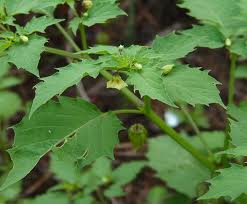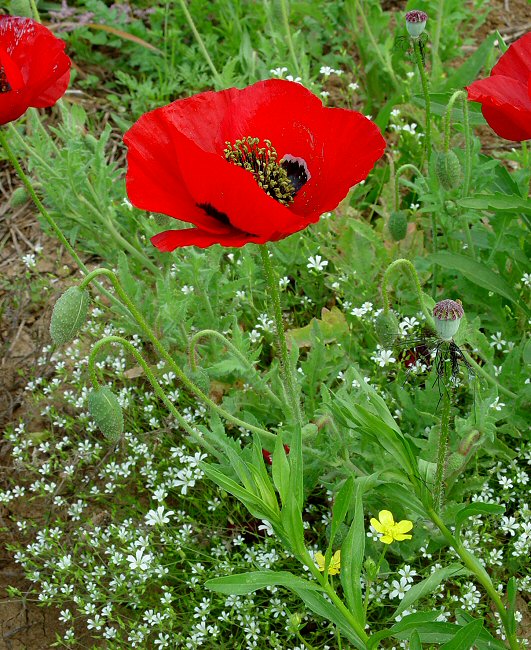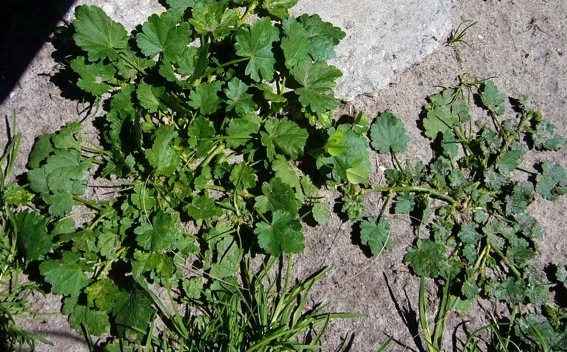
Carolina Bristle Mallow. Photo by Green Deane

Modiola caroliniana:   A Bristly Drink

No one knows how many species of edible plants there are in the world, or in North America. In the former the guess is around 135,000, in the latter between four and six thousand, a margin of 50%. Of those perhaps 3,000 are reasonably well-known. There is still a lot to discover.
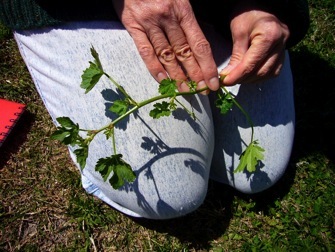
Resembles parsley but low growing. Photo by Green Deane

I would not be surprised to find close to two thousand edible species in Florida as it ranges over 400 miles from hilly temperate to nearly flat tropical.  In fact I know of a survey that listed 1,700 edibles in the local area but that included subspecies and varieties including ferns and mushrooms. The point is one can always find an edible plant one had not known before, and that was my case about a decade ago with the Modiola caroliniana (moe-DYE-oh-lah care-row-lin-knee-ANN-ah (or AIN-ah.)

I don’t lead many foraging classes in large state parks because they usually are not where the common weeds or the people are. The edible plants are also few and far between, sometimes a half a mile or more whereas in an old city park one can often find a half-a-dozen edible within a square yard.

While scouting Lake Woodruff Wildlife Refuge for a suitable foraging class site an odd plant presented itself under the bird observation tower — read a plant that follows man’s feet rather than traveling solely by nature. Deep green, kind of looked like plump parsley, maybe a mallow of some kind. Low growing, alternating leaves, in a wet area but growing high and dry on a dirt road in partial sun.
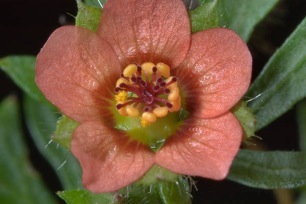
Tiny mallow blossom

Such discoveries can sometimes take months, if not years to identify. This time, however, I knew exactly where to look first: Weeds of Southern Turfgrasses by the University of Florida. I am very sure I use this book far differently than the authors intended. The book was put together to help home owners and businesses identify weeds in the lawn or golf courses so as to eradicate them. While they don’t say so, about half the plants in the book are edible, with good photos and descriptions. And there on page 152 was the object of my search, the Bristly Mallow, except it isn’t a mallow… well, that depends on how you use the word. It is in the greater Malvaceae family but its genus is not Malva. In fact, the Modiola caroliniana is the only species in its genus so there are no siblings to account for.
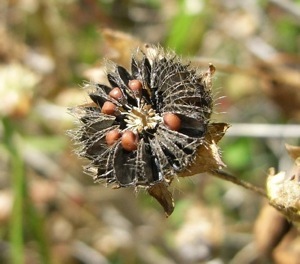
The seed head helps in off season identification.

Whether the Modiola is edible is a bit of definition as well. Cornucopia II says on page 148: “Cajuns make a refreshing drink by soaking a handful of the leaves in a quart of water for two or more hours. Many drink it every day.”

That’s good news but elsewhere the information is not so encouraging. Dr. Daniel Austin in his  huge tome, Florida Ethnobotany, says on page 442 it was used as a gargle for sore throats, tonsillitis and diphtheria; as an emollient  and sedative, and to treat edema. One would presume it is a diuretic, and perhaps “refreshing” means relaxing.  A cold water extract was used for a “healing bath” and it was also used for menstrual issues. It is suspected in the poisoning and paralysis of sheep, goats, and cattle. If it is troublesome to livestock in some degree or amounts it might be nitrate toxicosis, which is sometimes caused by Malva species.

It would seem on one end of the Modiola’s spectrum we have a … refreshing… drink and on the other a strong herb for medicinal uses. Approached correctly it’s probably a good plant to add to the bank of foraging knowledge.
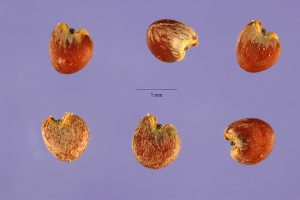
Carolina Bristle Mallow seeds. Not edible.

Where the plant came from originally is not certain. Most think South America then naturalized into tropical and warmer temperate parts of the world. In the US it is reported in Massachusetts, Pennsylvania then south to Florida and west to California, up to Oregon and in Hawaii. Nevada and the northern half of the US haven’t reported it (save for Pennsylvania and Massachusetts.) Elsewhere it is found from northern Argentina north, in northern Spain, northwest Portugal, northern Morocco, South Africa, southern peninsula India, Java, New Zealand (common in the Auckland area), the Chatham Islands, Australia (southern Queensland to southeast South Australia) Tasmania, southern Swanland, Norfolk Island, the Caribbean and Atlantic islands, including Bermuda, Hispaniola and Jamaica. (On a personal note it is all over my cousin’s farm in South Carolina.) 

Modiola is from Greek and means the center of a wheel, a reference to the seed pod. Caroliniana means from Carolina, read the eastern North America (though we now know that not to be true.)

PS: If you are thinking of buying Weeds of Southern Turfgrasses purchase it through the University of Florida. The cost is around $22 including shipping. Some folks on the Internet are charging $100 for the same book. Read about it here. 

Green Deane’s “Itemized” Plant Profile

IDENTIFICATION: M. caroliniana has prostrate, hairy stems, rooting at the nodes, which is also where flowering stems also grow. The leaves are variable, being up to 3 inches long to two inches wide, delta to kidney shaped, varying from shallowly toothed, to deeply toothed,  3- to 7-palmately lobed, and the lobes themselves often pinnately lobed. The small, long, hairy, persistent, stipules are leafy. Roots are tuberous.

TIME OF YEAR: Year round in warmer areas, summers in temperate areas

ENVIRONMENT: Orchards, vineyards, crop fields, gardens, urban sites, roadsides, dike roads and other disturbed, unmanaged sites.

METHOD OF PREPARATION: A drink: Soak a handful of leaves in a quart of water for two or more hours.
{ 15 comments }
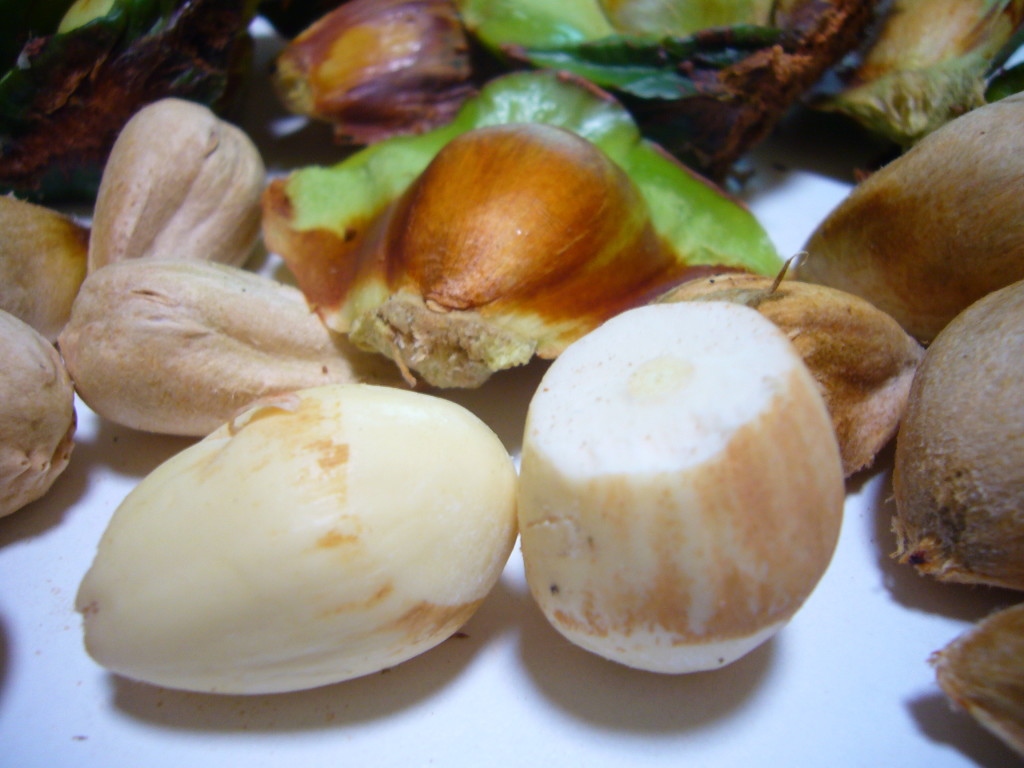
Raw Bunya nuts taste similar to raw peanuts.

Raw Bunya Pine nuts taste similar to raw peanuts. Photo by Green Deane

The Australian Aboriginals knew a good thing when they tasted it. So did the immigrants. It’s hard to find anyone who doesn’t like the taste of Bunya Pine nuts. But you will find people who don’t like to clean up after it because the ancient species sheds sharp leaves and heavy cones.

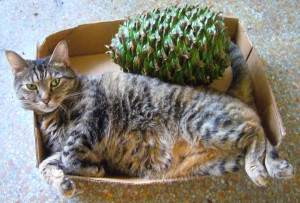
The Bunya cone may be prickly but Cous Cous holds her on to her prime napping box real estate. Photo by Green Deane

The Bunya cone may be prickly but Cous Cous holds on to her prime napping space. Photo by Green Deane

As a well-fed kitty Cous Cous, right, doesn’t get too excited over wild food that can’t run. She weights 10 pounds and sharing the box with her is a 6.5 pound edible Bunya Pine cone. The Bunya Pine is a close relative to the Monkey Puzzle Tree which produces a similar edible fruit except rounder and more pocupine looking. And it’s a stretch to call them pines or the fruit “cones” but it will do. The tree, Araucaria bidwillii  (air-ah-KAIR-ee-uh  bid-WILL-ee-eye) is native to Australia and was prominent in Aboriginal culture. They would stop wars for its harvest.  the Bunya has been exported over the world for a few centuries. It’s naturalized in south Florida but can be found in landscaping in warm areas of the United States and elsewhere. None have made the official maps locally though they are naturalized locally.

My friend Marabou (see Yam Harvest on You Tube) tipped me off to where there was one dropping cones so I had to take a look and taste. And dropping is the lethal word. A six-pound cone dropping 50 feet or more easily has enough impact to kill a person. A couple in New Zealand in April 2012 were hit by a watermelon-size cone as they strolled hand-in-hand in a botanical garden there. It fortunately landed between them damaging shoulders and arms rather than causing fatal concussions. They did require some hospitalization.

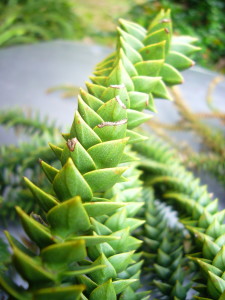
Bunya Pine leaves spiral geometrically.

Young Bunya Pine leaves spiral geometrically. Photo by Green Deane

In its native range the tree can grow taller than 150 feet. Around the age of 14 begins to produce cones which take up to 18 months to mature. They fruit every two to three years though three years is favored. Like the Monkey Puzzle Tree, which reportedly grows locally, when the cones are dropped the seeds inside are ready to eat.  There’s 30 to 100 seeds per cone whereas 50 is closer to average. They can be eaten raw,  boiled or lightly roasted (be careful if you roast them in their shell, they can pop!) The nuts can be deep fried or used in stuffing.  Raw the texture is crispy-ish with a soft crunch. Cooked the texture is like a cooked chestnut as is the flavor. Uncooked they taste more like raw peanuts to me.  The left-over shell (and wood) is used to grill fish and meat. Indeed, when you roast the nuts in the shell they smell delicious with hints of cinnamon and spice. The germinated seed also produces an underground “earth nut” which has a crisp coconut like flavor. Somewhere I also read the roots are edible but I can’t refind the reference. Seeds weigh around half an ounce each and have about 30 calories. Unlike most nuts they are more starchy than oily. If roasted a long time the become very tough but then they can be ground into a flour-like powder. You can used the shelled nuts like pine nuts and they freeze well for later use.

To see my video on the Bunya Bunya go here.

Green Deane’s “Itemized” Plant Profile: Bunya Pine

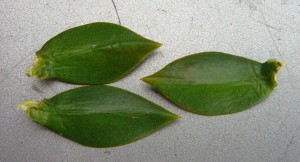
Bunya Pine leaves taper on both ends.

Bunya Pine leaves taper on both ends. Photo by Green Deane

IDENTIFICATION: A tall tree with an egg-shaped dome, whorls of gangly branches covered with very sharp leaves. They can draw blood. It is tempting to misidentify the Bunya Pine for the Monkey Puzzle Tree. But there is a fairly easy way to tell them apart besides their cones which are different enough not to be confusing. The Monkey Puzzle Tree has sharp triangle-shaped leaves, pointed at the tip wide at the base. The Bunya Pine leaves, right, are not diamond-shaped but they have a pointed tip and a tapered base and not too wide in the middle. Young leaves tend to be oval and can align themselves in geometric rows. Older leaves tend to be longer and linear.

TIME OF YEAR: In the northern hemisphere around July, in the southern Hemisphere around January, read the beginning of hot summer.

ENVIRONMENT: Good soil and sun. Originally a rainforest tree it will not survive deep cold.

METHOD OF PREPARATION: Nuts raw, boiled, roasted, dried, and sprouting roots as well.

{ 23 comments }
l;kj;lj;j

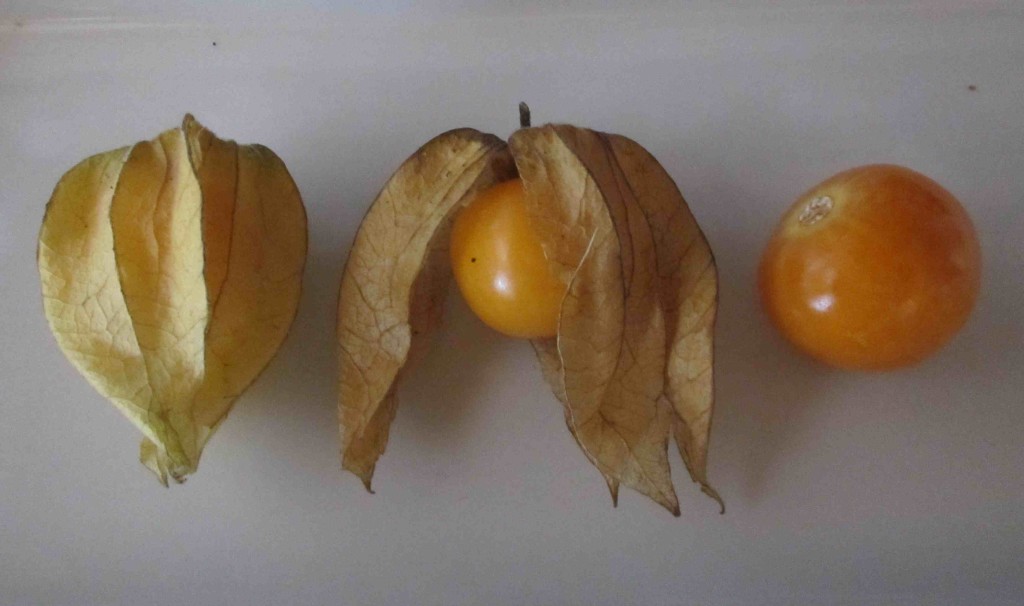
Only the ripe fruit in the husk is edible

Physalis: Tomato’s Wild Cousin

I discovered ground cherries quite by accident.

Ground Cherry, P. walteri & P. viscosa

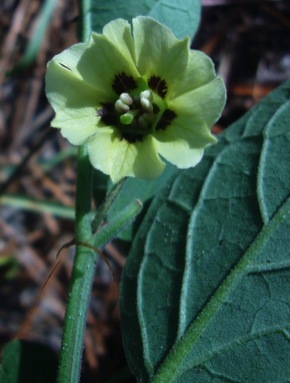
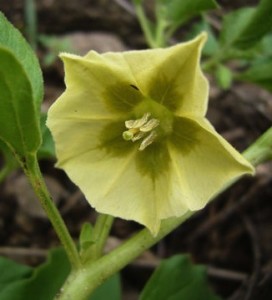
It was back in the last century. I raided a particular field annually for smilax tips and noticed the ground cherries in blossom. That prompted me to returned later in the season to collect them. Unfortunately that field is now a residential neighborhood. While ground cherries are a common plant one has to look for them. They blend in well and don’t announce themselves. Even their blossoms are sotto voce. The blossoms like to look down and this one, right,  had to be coaxed into a picture.

Ground cherries, locally Physalis walteri, (FEE-sa-lis wall-TEER-ee) are  related to tomatoes and tomatillos. Physalis means “bladder” referring to the enclosed fruit.  The Physalis is found in the Old World as well as the New World. There are nine species in here in Florida and you would be hard pressed to tell some of them apart. The local Indians used them interchangeably.

Don't eat them if they are bitter

Don’t eat them if they are really bitter

After discovering my local ground cherry inland I then noticed some on the east coast of Florida. They looked similar (both had blossoms with and without purple throats.)  Inland they were P. walteri, and on the coast P. viscosa. I had two different books of Florida wild flowers with good descriptions. Yet I could not tell these two species apart, even after taking into account the blossom variation. I went to a third book and found out why. They are the same species. One book called it P. walteri and did not mention any other names, and the other book called it P. viscosa and also did not include any other names. Sometimes you want to strangle botanists…

That  would mean Physalis viscosa means “sticky bladder” and P. walteri means “Walter’s Bladder.” Who “Walter” was I do not know but many such plants are often named for  Thomas Walter, an 18th century South Carolina botanist. Another ground cherry I’ve found tasty is the Coastal Ground Cherry (Physalis angustifolia) that I have found on the west coast of Florida.

kjgkjgkg

Not all blossoms have a ruby throat

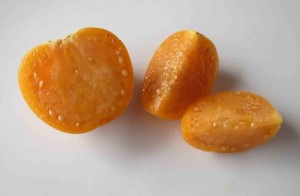
The fruit is edible raw or cooked, as in pies or preserves. The fruit can fall from the plant before it is ripe. That usually takes a week or two or more until the husk has dried and the fruit a golden yellow to orange. Each fruit is wrapped in a husk that is NOT edible. The fruit will store several weeks if left in the husk.  Unripe fruit — light green — is toxic.  Ripe fruits are light to golden yellow. If any ripe fruit has a bitter aftertaste it should be cooked first. If it is still bitter after cooking, don’t eat it. A wild species that takes to home gardening very well is Physalis angulata, the Cutleaf Ground Cherry. It’s tall and prolific under cultivation.

P. walteri/ P. viscosa

Linguistically the plant has had quite a diverse journey with nearly every country and language having its own (or several) names for the encased fruit. The ancient Greeks used halikakabon and pheesalis (bladder and swelling) the latter was translated into Dead Latin as visicaria. The Italians used halicacabo uolgare and the French halicacabon comun, both of which mean “common bladder.”  In Italy they are now called Coralli (coral) and Palloncini (balloons.) Farther north they were called winter chirir ((winter cherry) Judenkirsen (Jew’s Cherry) and Schlutten (ground cherry in 1542 German) They were also called Judendocken (Jew’s bundle) Judenhutlin (a variation of Jew’s hat) and that got mangled into the English Jerusalem Cherry, which is still used. The Aztecs called it tomatl (source for the words tomato and tomatillo.) In Hawaii it is called Poha.

Coastl Ground Cherry

Coastal Ground Cherry, Physalis angustifolia

Other names used include Alkekengi (which is cultivated and perhaps the only one you don’t eat)  Barbados Gooseberry, cherry tomato, Chinese Lantern, husk tomato, Japanese Lantern, strawberry tomato, tomatillo, wild cherry, winter cherry and Cape Gooseberry. Several other Physalis fruits have been used for food: P. ixocarpa, P. fendleri, P. heterophylla, P. lanceoleta, P. longifolia, P. neomexicana, P. pruinosa, P. pubescens, P. turbinata, P. virginiana, and P. angulata , the latter which is also found locally, growing to more than two feet tall and wide.

Fruit photos by Sybaritica.

 Green Deane’s “Itemized” Plant Profile

Physalis angulata

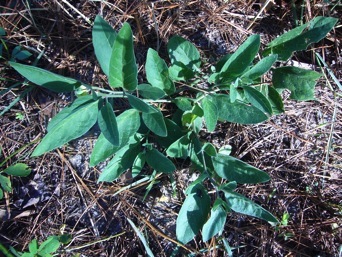
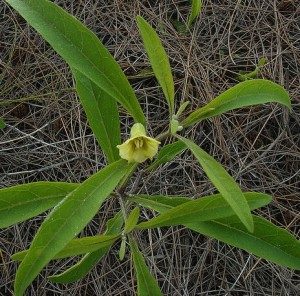
IDENTIFICATION: P. walteri/P.viscosa: Fruit is a yellowish sticky berry that does not fill the husk, solitary growing from the leaf’s axil. Leaves are entire or wavy and angled, sometimes toothed. Flowers are yellow with dark centers, purplish antlers, or no dark centers. Entire plant covered with fine hairs, entire plant sometimes appears gray. All the P. angulatas I’ve seen had toothy leaves like the photo at left and strong branching stems.

TIME OF YEAR: Blossoms in late spring fruits towards fall, however in Florida it can have two seasons, summer and fall.

ENVIRONMENT: Old fields, sunny woods, bordering streams, cultivated fields, waste ground, railroads, road sides; full sun to some shade. Low growing, often overlooked. It likes water and humidity.

METHOD OF PREPARATION: When ripe raw or cooked like any fruit, pectin needs to be added to make jelly or jam.  Species with a bitter after taste are better cooked. If bitter after cooking do not eat.  Some foraging books say the fruit does not ripen on the plants but I have found and eaten many that were. More so, like a tomato while it will ripen off the plant it will not improve in sweetness off the plant. Only ripening on the plant accomplishes that.

{ 67 comments }

The Memorial Poppy, Papaver rhoeas

(Yes, I am a veteran. Thus on this Memorial Day let us think of friends and relatives and everyone’s loved ones who did not come home alive. More than a century ago the Poppy became that reminder.

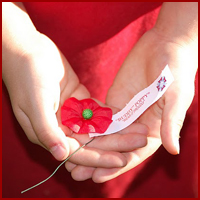
Several plants have relatives whose reputations are difficult to live down. The Natal Plum is one. Related to the Oleander the delicious plum suffers from its deadly kin’s reputation. The Corn Poppy shares a similar fate. Mention poppies today and folks think opium. Mention poppies 90 years ago and people thought World War I. The Corn Poppy is the memorial flower of veterans. Silk and paper poppies are handed out for donations to veteran causes and worn on Memorial Day. The practice began with a poem.

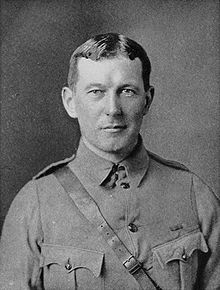
Col. John McCrae

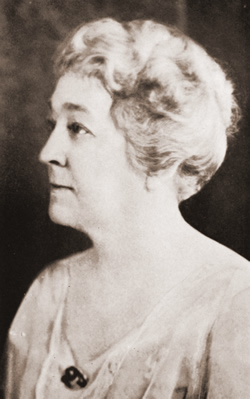
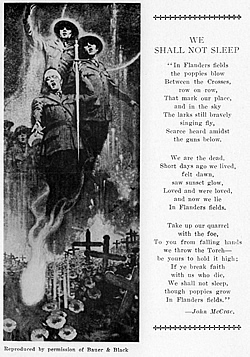
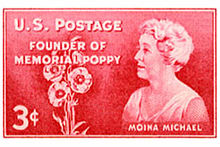
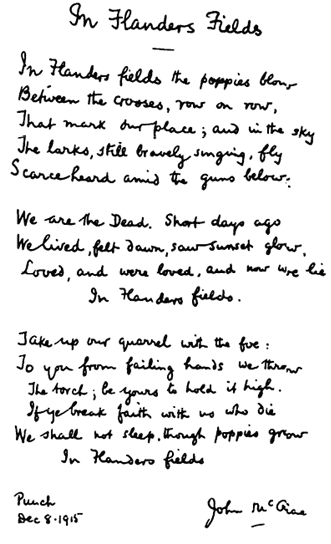
Canadian John McCrae was a poet who was also a surgeon and medical officer on the front lines. Sitting in an ambulance on 3 May 1915, he wrote the poem “In Flanders Field” the day after personally conducting a burial service for a friend, Alexis Helmer. At the service McCrae mentioned the poppies. After writing the poem with a pencil stub he showed it to a couple of soldiers then reportedly tossed the poem away but it was recovered by those who read the first draft. After revisions and one rejection by The Spectator it was published 8 December 1915 in Punch Magazine. The poem begins with: In Flanders fields the poppies grow.* It became the most quoted poem of the era. In 1918 an American Young Womans’ Christian Association worker (and college teacher) Moina Belle Michael was attending a YWCA Overseas War Secretaries’ conference in New York City. She saw a copy of the Ladies Home Journal with the poem in it with its ascending illustration (below left.) Though she had read the poem many times she was struck by accompanying artwork. In her autobiography, ”The Miracle Flower, The Story of the Flanders Fields Memorial Poppy” written in 1941 on the eve of World War II, she wrote:

Moina Michael, the Poppy Lady

“I read the poem, which I had read many times previously, and studied its graphic picturization. The last verse transfixed me — ‘To you from failing hands we throw the Torch; be yours to hold it high. If ye break faith with us who die, we shall not sleep, though poppies grow in Flanders Fields’. This was for me a full spiritual experience. It seemed as though the silent voices again were vocal, whispering, in sighs of anxiety unto anguish, ‘To you from failing hands we throw the Torch; be yours to hold it high. If ye break faith with us who die we shall not sleep, though poppies grow in Flanders Fields’. Alone, again, in a high moment of white resolve I pledged to KEEP THE FAITH and always to wear a red poppy of Flanders Fields as a sign of remembrance and the emblem of ‘keeping the faith with all who died’. In hectic times as were those times, great emotional impacts may be obliterated by succeeding greater ones. So I felt impelled to make note of my pledge. I reached for a used yellow envelope, turned the blank side up and hastily scribbled my pledge to keep the faith with all who died.”

The artwork that move Michael to start wearing the poppy

So moved Michael went out that afternoon and managed to find some artificial poppies and handed out 25 keeping one herself. The tradition was born. Later Michael wrote a poem herself,   “We Shall Keep The Faith.” It had the verse: We cherish too, the poppy red, that grows on fields where valor led, It seems to signal to the skies, that blood of heroes never dies.”

In 1920 Anna E. Guerin, another YWCA secretary visiting from France, learned of the custom while attending an American Legion convention which was supporting the sale of poppies. Guerin decided when she returned home to hand-make the poppies and raise money to benefit orphans and widows of the war. It was she who sent a

The “Memorial Poppy” Stamp, 1948

delegation of French widows to visit British Field Marshal and former Commander-in-Chief Douglas Haig in 1921. They had poppies with them and suggested selling them to raise money for the injured and unemployed veterans. Haig, who by then was 1st Earl Haig, lent his support to the cause and himself set up the Haig Fund that still supports veterans. The practice was firmly established when several countries officially recognized the veterans’ poppy. To this day, paper poppies are assembled by needy and disabled veterans in hospitals and raise millions of dollars each year. But why the Corn Poppy? To answer that you have to know somethings about the species.

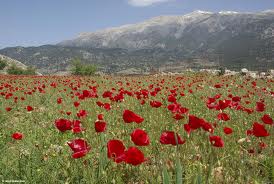
A Field of Poppies in Western Crete

Poppies thrive on disturbed ground and can tolerate high amounts of lime. The plant also produces millions of seeds. The seeds can lie dormant in the ground for years until disturbed. The shelling and the trenching of the war brought them out of slumber. More so they grew where nothing else would grow, the lime-rich blasted ground of no man’s land and make-shift graves. The bright red poppies reaching out of blood-soaked ground made a lasting impression upon the generation.

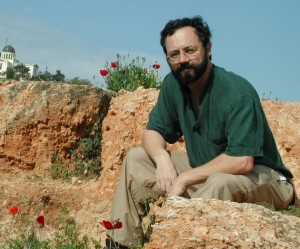
Green Deane in Athens with Poppies

Green Deane, then 50,  in Athens with Poppies near the Acropolis.

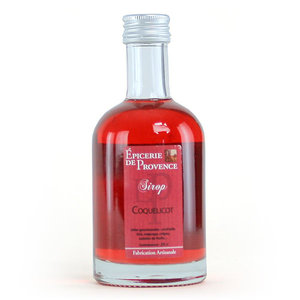
For a plant with such a notorious relative the Corn Poppy has many uses. Young leaves are cooked and used like spinach, or raw as flavoring in soups and salads. The petals are used to make a red syrup used in soups or for coloring. The seeds can be used in cakes, bread, rolls, or  pressed for their oil which is an excellent substitute for olive oil. Who as a child (or older) played with the poppy seeds falling off a roll? The rosette of basal leaves before the plant flowers is excellent raw as well. The unripe ovaries are also edible raw.

Poppy with petals folded back

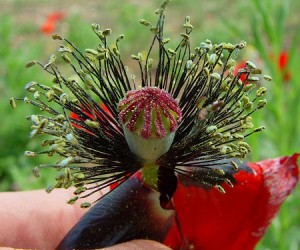
Like its genus mates the corn poppy has a white sap but no particular hallucinogenic qualities. It got the name “corn poppy” from a time when all agricultural grains — oats, wheat et cetera —  were generally called corn. The flower grew in the disturbed ground of “corn” fields. As for the botanical name Papaver (Pap-PAY-ver) is Dead Latin for milk, in reference to its sap. Rhoeas (ROH-ee-as) is Latin bastardized Greek for red, referring to the color of the blossom. Poppy is an Old English variation of Papaver. Other common names include Flanders Poppy, California Red Poppy, and Shirley Poppy.

Green Deane’s Itemized Plant Profile: Corn Poppy

Poppy Syrup

IDENTIFICATION: Papaver rhoesa: Stems from a large tap root, white to yellow sap, many stems, branching, green with some purple at the base; leaves alternating, lower leaves with stems, upper leaves without stems, serrated teeth, small hairs with glandular base; Flowers have four to six petals, scarlet with a black splotch (can be white) 1.5 to 3 inches wide, many stamens exceeding the pistil, anthers yellow grown.

The Buddy Poppy

TIME OF YEAR: May to October

ENVIRONMENT: Waste ground or disturbed ground, neither hot weather or cold weather.

METHOD OF PREPARATION:  Young leaves cooked, or raw in salads; petals edible, seeds edible.

* The original poem said “where poppies blow” but it was changed to where poppies grow with both words being used. The debate on how the first line should end continues. Here is the first published version:

in-flanders-field-copy-of-original-signed-001


{ 4 comments }
Vaccinium myrsinites DSC_0362

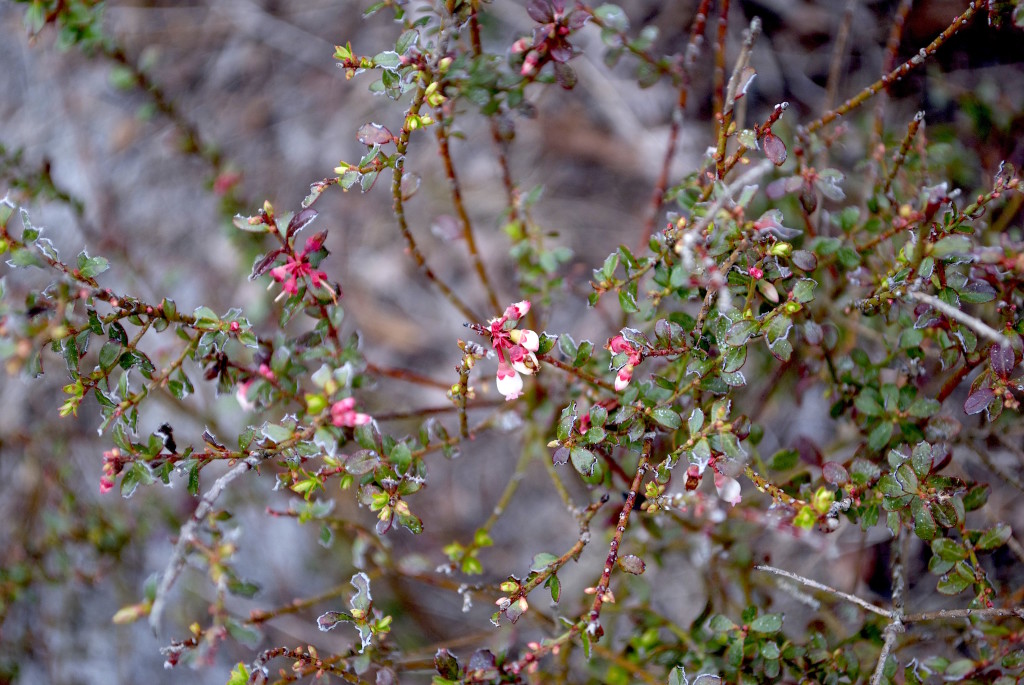
Vaccinium darrowii is redder than Vaccinium myrsinites

Vacciniums: Am I Blue?

Blueberrying was a family tradition. The only debate was did you pick them clean, or did you pick leaves, bugs and all then clean the haul later? My mother preferred the clean method, so clean it was. Why did she prefer the clean-picking method? Because as a child she and her mother visited a friend who had just finished picking a lot of blueberries. My mother was asked if she wanted some, she said yes a big bowl. The bowl of blueberries were delivered then milk poured on them. That caused all the twigs, leaves and bugs to float to the surface making the berries not possible to eat. We picked clean. 

vector-of-a-cartoon-man-about-to-whack-a-fly-on-his-nose-coloring-page-outline-by-ron-leishman-14178My most enduring memory, however, was when I was 14 and had just started high school. I was picking away late one season on a Sunday afternoon when a bee came up and stung me right on the end of my nose. Yes, it did swell up. Yes, I did look ridiculous.  Yes, I was forced to go to school the next day, putting Cyrano de Bergerac to shame.

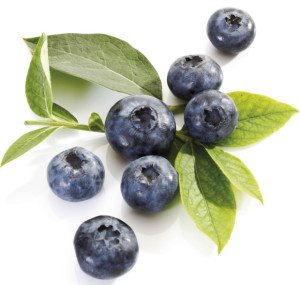
We berried in two very different areas with two very different kind of blueberries. Low-bush blueberries were extremely common, covering huge fields, hundreds of acres. The fields were burned every year to ensure a good crop of blueberries, which prefers poor acid soil and ashes. In late summer rows were marked by string. Pickers with hand rakes would come in and strip a field in a couple of days. They always focused on the productive center of the field, leaving the edges. We used to raid those edges on the weekend, collecting quarts of ignored fruit. But, there were other blueberries as well.

High on a ridge, west of the Libby Road where it intersects with the Witcher Road, in Pownal Maine, there’s a north south granite ledge showing here and there. On that ledge were the best specimens of high-bush blueberries I’ve ever seen. Tall shrubs, they were six to eight feet tall and loaded with large, sweet blueberries. Picking was fast, if there weren’t bears around, which brings me to a short story about my Great Aunt Myrt, born in the 1880’s. She loved blueberries.

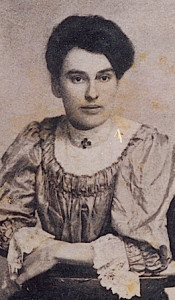
Great Aunt Myrtie May Putney circa 1900

Great Aunt Myrtie May Putney circa 1900

Like all eight of her siblings born in the late 1800s, Myrt caught scarlet fever when she was in her teens and as a consequence was nearly stone deaf. That presented some problem, of course, but life went on. One day she was out with other members of the family picking blueberries. While they were picking a bear came along and started eating the berries right next to Myrt. Everyone but Myrt apparently saw the bear and moved away. Myrt kept right on picking. As you may imagine, the mostly deaf members of the family trying to get Myrt’s attention by yelling did not work nor did it scare the bear. Myrt was focused on filling her berry bucket. When her bucket was finally full she left the patch and joined the others.

“Didn’t you see that bear?” my grandfather shouted? “Yes,” said Myrt, shouting back, “but I wasn’t going to let that damned bear have my blueberries.” Myrt, a feisty, tall, good-looking woman, lived into her 90s. No doubt the healthful blueberries helped.

When picking off high bush blueberries it was not unusual to come home with a washtub full of them. You could eat fistfuls of blueberries and still have gallons left. In fact, the only way we ever ate them were either fresh or in muffins. Gallons of blueberries in the frig was a good feeling. The quantities of blueberries hereabouts are more modest, and sporadic.

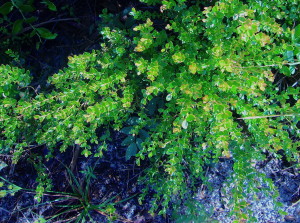
Vaccinium myrsinites, dwarf blueberry.

Vaccinium myrsinites, dwarf blueberry.

The most common blueberry locally where I live now is Vaccinium myrsinites. There are no fields of them or even large patches that I’ve ever seen, always just a few short bushes here and there, usually around 18 inches high though they can get to three feet.  Another local is the Vaccinium stamineum, Deerberry. It’s taste varies from tart to sweet. Deerberry is the easiest of all the blueberries to identify with leaves are egg-shaped and whitish underneath. The fruit can be green to deep ruby when ripe. 

The high bush blueberry of my youth, Vaccinium corymbosum doesn’t quite get to Florida, or if so one foot across the state line. There is, however, a high-bush blueberry in Florida that grows to 20 feet or more, the Sparkleberry, aka Farkleberry, Vaccinium arboreum. It is edible but not too palatable. The bottom of its leaves have a net of gold-colored veins.

As you may infer, numerous birds and mammals like the blueberries. Among the creatures that like them are grouse, partridge, quail, robins, blackbirds, thrushes,  chipmunks, deer, elk, rabbit and bear.  Deer are quite fond of the leaves, a point not lost on hunters. Medicinally, decoctions of the leaves have been used for sore throats and diarrhea but if too strong can be toxic.

The experts tell us there are no toxic crown berries.

The experts tell us there are no toxic five-point crown berries.

Vaccinium myrsinites is said vak-SIN-ee-um  mur-sin-EYE-teez. Myrsinites is from Greek and means looking like the myrtle. What vaccinium means is more of a debate. One idea is that it goes back to a prehistoric European language called Thraco Pelagian, a precursor to Greek. A competing idea is that it is from the Latin word “vacca” meaning cow (frankly, both could be right since half of Latin is bastardized Greek, and the other half is misappropriated Etruscan.)  The cow berry, Vaccinium vitis-idaea was common where plant namer Linnaeus was born, so…. we’ll never know. No doubt blueberries have been eaten for thousands of years and can be found in all lands circling the north pole then south. The oldest find is from a Bronze-Age grave in Denmark, a few thousand years ago. Two-hundred year old frozen blueberries have also been found in Northern Canada.  In the Heath family, all Vacciniums — all 450 or so species — have a five-pointed, star-shaped calyx that remains on the fruit. Some Native Americans believed that in times of starvation “the Great Spirit sent the star berries down from the night of heaven to feed the children.”

If you have black blueberries with large leaves you may have huckleberries…. read that article here.

Green Deane’s “Itemized” Plant Profile

IDENTIFICATION: V. myrsinites is a small shrub, one to three feet, leaves alternate, ovate to elliptic, to 3/4 of an inch long, sometimes with fine, sharp teeth and spine-tipped. Leathery. Young grayish foliage often purple tinged. Flowers red or red-purple, in small compact clusters, bell-shaped, berries blue or blackish, round. V. darrowii looks similar but the base of the blossom is redder as are the tips of the blossoms. 

TIME OF YEAR: Blooms in late May, fruit in the summer, June to August depending on area

ENVIRONMENT: A small bush with small fingernail sized leaves in saw palmetto prairies and pine flat woods

METHOD OF PREPARATION: Uses nearly too numerous to mention, jelly to wine, pies to confit, full of antioxidants.

{ 2 comments }