Experience and Judgment

Sometimes a toxic plant can give even an experienced forager reason to pause.
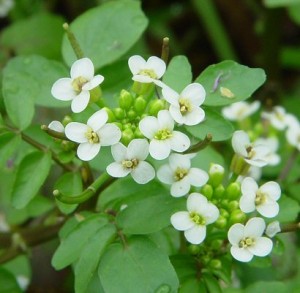
Nasturtium officinale

When I was making a video last week I saw a beautiful growth of watercress, Nasturtium officinale (though names can vary.)  Like all the wild plants in the mustard family, it is a short-lived resident here in Florida, one to two months under the best of cool conditions. It lasts longer father north. As I write this is late February and the water cress is starting to blossom so it will soon be gone.
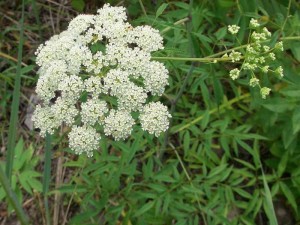
Cicuta maculata

The cause for the pause was… it was growing in and among Water Hemlock, Cicuta maculata, which is about as close to sudden death as a plant can get. How sudden? You have 40 minutes to get your stomach pumped out. The last death on record from eating Water Hemlock — based on non-identification — was only last year. One brother died and another sickened in the 90s, and two died in 1975, a forest ranger who should have known better and a boy who made a whistle out of the stem. Three people avoided death that same year via a bystander who came upon them eating the hemlock. A high-speed 45-mile drive to the hospital and stomach pumping saved them all.

Water Hemlock and Watercress grow in similar environments.  I like watercress. Cooked it’s a delicious and wholesome green. It does not look like Water Hemlock and does not have the same growth pattern. The Water Hemlock tends to be a yellow green and tall, the Watercress is a deep green — rare for Florida — and low growing. The leaves are different et cetera but… when one is picking Watercress in and among Water Hemlock one picks carefully because you are only one leaf away from death. One leaf. And, when it comes time to cook, inspecting every stalk of Watercress is imperative.

Now … all of that seems quite reasonable. Eat the right plant and avoid the deadly one.  Yet, one of the hardest aspects of foraging is having good judgment and trusting your judgment. Desire is a strong drive and there is a tendency even among experienced foragers to make a plant “fit” a description.  “Arriving” as a forager is, in my opinion, the ability to want that plant to be what you think it is but being able to admit it is not.

So when one is picking Watercress among Water Hemlock it is an act of judgment and caution that puts your life on the line. Whenever a life is on the line by a judgment — your own or others — it is indeed time to pause for the cause and be certain.

(Incidentally, the deadly Water Hemlock is the only member of its family whose veins on the top side of the leaves go to the notches between leaf teeth rather than to the end of the teeth.)
{ 0 comments }

Ravishing Radish Greens

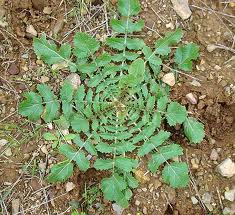
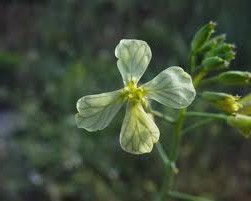
I didn’t cut the mustard this morning. I cut the radish… radish greens to be specific, Raphanus raphanistrum, said RA-fa-nus raf-an-ISS-trum.

The only bad thing about the Wild Radish is it is around for only a few weeks in spring. But I can understand why: A green that delicious would be eaten into extinction if it were available all the time. Well, that might not be accurate. Humans like the deep green tops but it gives livestock tummy aches, and some of them have several tummies to ache. But, I certainly eat more than my fair share.

The best place to find Wild Radish greens here in Central Florida is orange groves that till the soil. That is exactly where not only wild radish likes to grow but also its close cousin, the wild mustard. They can be used the same way though mustard can be a little more peppery.

My introduction to mustards happened when I was around 10. My step-father build a house in Maine. To create a lawn he sprinkled hay chaff from the barn on the area of the lawn-to-be. That summer the lawn was 90 percent mustard and 10 percent lambs quarters, Chenopodium album. That mustard grew six feet tall, and ended up on the dinner table.

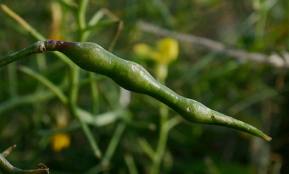
Here in Florida one can find both wild radish and wild mustard, now. How do you tell these plants apart once you think you’ve got one or the other? First look at the blossoms. If they are solitary and the four petals have veins, you’ve got a radish. If they are in clumps and they do not have veins, you’ve got a mustard. Also, the radish seed pod is segmented and the mustard seed pod is not. This is probably why the mustard is called the Charlock and the radish the Crooked Charlock or Jointed Charlock. Lastly, the wild radish tends to grow low with a bushy rosette of leaves, its stalk bend over and it rarely gets more than a yard high. Mustards like to grow up and can be up to two yards high, though smaller is common.

It took me about 20 minutes this morning to collect four pounds of radish wild tops. It used to be an old orange grove that is now being turned into another empty business center. There are no buildings yet and no landscaping. Weed and feed chemicals only go down after inedible grass and toxic ornamentals are planted.

What I will do is blanch these and toss them in the freezer in meal size portions. When I want some I’ll boil them for about 10 minutes. I love them with olive oil, butter, salt, pepper and a dash of balsamic vinegar… In fact… Enough writing… it’s time to to have me a mess of greens.

{ 5 comments }

Foraging in Florida

Of all the “survival” skills foraging is probably the most difficult to learn, or certainly the one that takes the most time and personal fortitude. It is one thing to say “yeph, that plant is edible.” It is another to eat it with confidence.

Where you learn to forage makes a difference as well. The closer to the equator you go the harder it gets. (And if I remember correctly almost everything that grows in the arctic circle is edible, should you end up there.) When I say it is harder to learn I mean is harder to learn the way we do it now, more from books than growing up in the wilderness. The natives did not need books or botanists.

Florida, and perhaps Hawaii, are among the most difficult states to learn about wild edible plants. That’s the bad news. The good news is if you learn to do it in Florida everywhere else is very easy.

Why is Florida difficult? Two words, climate and geography.  Some 450 miles long Florida, has temperate plants to tropical. Sixty miles wide on the peninsula brings influence from both coasts. Rain and geography can produce swamp plants where there are no swamps, and cactus in seasonal swamps. Hot summers distort common plants making them absolutely unlike descriptions, photos or drawings. Occasional light freezes modify tropicals. Then there are the ornamentals…. what a headache… hundreds if not thousands from far flung places, some edible, many of them toxic, several deadly, and a couple sudden death. Unlike up north an acre in Florida has totally unpredictable flora.

What I personally enjoy is wandering around any patch of ground in a northern clime. It’s quite thrilling and very consistent: The plants actually look like what they are supposed to look like and exotics are rare. That is so rare here in Florida. Oh bananas look as they should but not dandelions. If you didn’t know blackberries here were blackberries you might never eat one here. The up side is if you can forage in Florida you can forage with confidence anywhere. Florida is tough and probably has more wild (and escaped) edibles than any other state. I know of several hundred and I know there are at least a couple hundred more on the south end of the state that I haven’t explored. I’m still cataloging imported edibles on the warmer end and have a long ways to go.

How do you learn them? One at at time in season, season after season. Even here in Florida the demands of foraging require you should be able to pick a plant out of a landscape just as you would pick the face of a friend out of a crowed picture. You must come to recognize them.  Watching a video or reading a book really isn’t enough. Find someone local who knows the plants and study them as they arrive each season. Knowing a few very well is better than knowing a lot poorly. Besides, in every locale there will be just a few prime plants. A local person can help you learn those quickly. Again, I recommend contacting the Native Plant Society in your area. They know what you want to know and the training is often free. More so, now is the time to arrange it so when your spring arrives you’ll be ready.

{ 21 comments }

To Field Test or Not To Field Test

I ruffle some foraging feathers with this position but I am dead set against field testing of edibility because it can kill you.

“Field testing” is running through a procedure to purportedly learn if a wild plant is edible. It’s found on a lot of survival sites and is popular with young men who don’t want to bother to learn how to forage for wild plants. In their survivalist scenario they will head for the hills with all the guns and ammo they can carry and after shooting a zoo full of animals will field test plants for edibility should they want to eat greenery now and then.

You can live a month without food, easily two weeks with little threat to life or health even under harsh conditions. That’s part of our design. Under good conditions, if you have water, you should be able to easily live three or even four weeks without food. Under medical care you can go twice as long without food.

Food is good while in the field but it is not an immediate necessity. Why after only one day or three would you risk your life over a plant you know nothing about? Several fatal plants taste great: Hemlock (leaf and root)  the rosary pea get thumbs up from the deceased. Yew nuts are described as extremely delicious, just before they stop your heart. And we all know of some tasty mushrooms that will liquefy your liver. I know of at least one plant that readily passes the “field test of edibility” yet can make you permanently sick and or kill you. As they say, pick your poison. Taste is not a good indicator of toxicity. Some of these plants can kill you in 15 minutes, some will take a week, others longer. It would be ironic to survive the crisis only to die later from eating a plant you really didn’t need to eat. Some of these plants can be eaten in the emergency room and you will still die. Some have no antidote. You’re on  your way out and it will not be pleasant.  One mushroom makes you deathly ill then cruelly make you feel almost as good as new just before you die. In fact the clinical sign of impending death via that mushroom is after several days of illness the victim is suddenly feeling let-me-go-home better.

Even if we take death off the field testing table, you can still get sick from field testing. More so, since one can go quite a while without food why introduce illness into a situation? Plant poisoning can range from a mild headache to having your stomach ache for months, or having bloody diarrhea for weeks, or burning your throat and mouth which will make you give up food. Pick the wrong berry and your kidneys will fail and you will be on dialysis the rest of your life, if you survive. Field testing in the field is the last resort after cannibalism. You should know every plant you put in your mouth. No exceptions. Now, is there a small argument for field testing? Yes.

I did field test the controversial S. americanum, which had professional reports of edibility and toxicity. But it would be more accurate to say I kitchen tested it, and not over a few days but a few weeks. After extensive research and positive identification of the plant (and having health insurance, a hospital nearby, and no emergency to contend with) I consumed one quarter of one ripe berry. The berries are slightly bigger than a BB. The next day it was one-half a berry and so forth. I knew the plant  well, had absolute identification, and over an extended period consumed incrementally larger amounts. The plant is edible and I had to prove it to myself. That is far different than eating a leaf off a plant you don’t know out in the middle of no where. That is exactly how a forest ranger in Idaho died in 1975. He sat down for a lunch with a homemade sandwich. He saw a nice looking plant nearby and put a leaf of it in his sandwich. He was dead in just over two hours. Socrates was executed by a member of the same plant family.

Plants are very powerful chemical factories. A quarter square inch piece of some flower petals can make you sick for weeks. A grain, read a speck no bigger than this asterisk   *  of the rosary pea can kill you. It is 1,000 times more toxic than arsenic.  If you field test, never field test a plant you do not know absolutely, as well as all the warnings.

I had a reader write me and say his method of deciding if a plant was edible or not was if it tasted good he ate it and if it didn’t he didn’t. He asked me what I thought of that. I said I hoped he had good life insurance. If you do field testing in the field I hope you not only have life insurance at the time but are also not responsible for others as well.

{ 8 comments }

Bad Descriptions

What do you do when the description of a plant doesn’t fit? The answer depends on how far off the description is: You might have the wrong plant.

If it is supposed to have five-petaled yellow flowers and you have white flowers with three petals, it is probably the wrong plant. What if it is the right plant but still off a little? What you come to learn is you subconsciously put together a picture of a particular plant that takes variations into consideration once you know the plant. That picture will serve you well.

Trianthema portulacastrum, maybe edible, maybe not

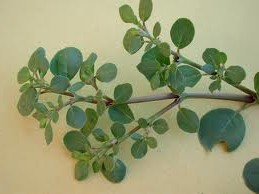
I’ve noticed a plant nearby that looks like purslane. Now I have foraged purslane and I’ve grown it. This plant is similar but it is not quite purslane and it is very tempting to make it fit. You must avoid that.  The look of purslane that I have in my head lets me see similar pattens in this new plant but also told me it is not purslane. I think it might be Trianthema portulacastrum, a possible edible.

A few days ago I was keying out a different plant, that is, comparing what I had in front of me to a very exact botanical description. Everything fit except minute papillons.  Papillons are tiny nipple-like structures.  This plant was supposed to have them at the nodes and on the back of its sepals. Look as I may I could not find any papillons on the plant anywhere but I was reasonably sure I had the right plant and not a relative. What were the possibilities?

1) Perhaps I had the wrong plant and this minute difference was the only difference between related plants. That happens a lot. That’s how we get variations in species or a new botanical name altogether (after the discoverer of that minute difference.) 2) Another possibility was the plant the person was describing had a disease that created little papillons. 3) And yet another possibility was the describer saw papillons whether they were there or not. That, too, is not unheard of.  What to do?

With most plants that is easy: Find a couple of more descriptions. I did, and neither of those mentioned papillons. I had the right plant.  I was not so lucky with the Chinese Elm.

Ulmus parvifloia, Chinese Elm

There are several Chinese Elms near here, Ulma parvifolia. Every description I have read of them on-line says they have tiny hairs on the leaf stem, or underside of the leaves. I have never seen such hair on any of them. Ever. Never. No way. Yet they are Chinese Elms and quite edible. What to do?

First it was rather a moot point since I was already consuming the tree. But more to the point, it is also in a family of no known toxicity so these missing little hairs were a mystery — still are a mystery — but not a party spoiler. These particular trees have been cultivated for centuries and there are many varieties and the ones near me, all planted at the same time long ago, maybe of a hairless variety.  More so, this is a common landscape plant so there are a lot of them around and none of them that I can see have such tiny hairs. Maybe I need a microscope. At any rate, they certainly taste good, and I’m still here to relate the mystery.

{ 4 comments }