Looking for Lettuce

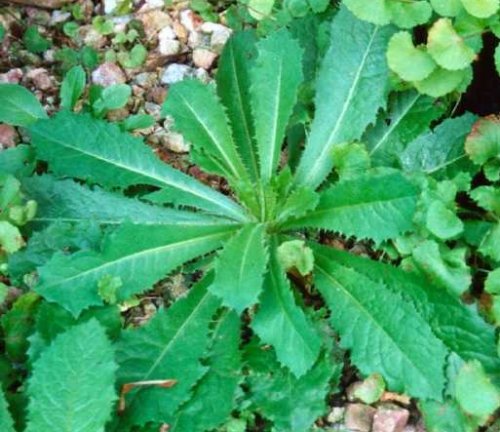
Lactuca virosa, much overrated

I like my hundreds of thousands of subscribers, and the email I get. Many of the questions I can answer or I can refer the writer to where the answer can be found. But….

One question I have answered hundreds of times — if not thousands — still constantly lands in my mail box daily. It’s about getting high off wild lettuce. I used to cut and paste an answer. Now I just delete the emails. Why the interest in this species? It can be traced to an exaggerated entry on Wikipedia (which if you remember correctly is not authoritative. I have found so many plant mistakes in “Wikipathetica” I have stopped correcting them. Forager Beware!)

Here’s the bottom line. The species in question is Lactuca virosa. It is a native of Europe, not North America. Officially grows wild in six places in the United States: One county in Alabama, Washington DC, and four counties in California. It could be more wide-spread that that. I’ve one subscriber tell me it grows in Georgia.  If you collect a lot of Lactuca virosa sap — not easy — dry it and ingest it you might take the edge off a toothache and fall asleep. A shot of vodka will do the same thing, is a lot easier to find and much cheaper in the long run. It does have medicinal uses but it is mostly a minor player.

Consider this: The U.S. military looked into it as a pain killer during WWII. It flunked. Lactuca virosa is so weak no one wants to outlaw it, even in Europe where it grows everywhere. On the other hand, there is a mint species growing near me that has a chemical in it that is the most abused chemical by physicians and nurses. No one is selling it as a high so it’s not plastered all over the internet….wait… how could I have been so stupid?

Maybe I can make some money here…This other plant is legal, but it grows all over the place locally…. I’d have to make it a scarcity somehow… I know… I could solar dry it (cheap) and call it “naturally processed to retain all of its potency” …. I could call it a little-known “ethnobotanical” (that’s what the lettuce sellers call their stuff.) I could hype it as a native and say this “mood enhancer” is the preferred recreational drug of choice among medical professionals…. and they know drugs! I could make a fortune…. Dang! I shoulda thought of this years ago….

I also know for a fact that many have considered making this mint member illegal — the drug in it is controlled — and the plant would be illegal if not for the fact it grows wild all over the place. That would be my financial downfall… I can’t realistically corner the market. The plant is prolific…. And the moment you educate your customers they’ll  be gone, picking their own stuff.  Oh well… one can dream of riches….

As for those of you who want to go find the European lettuce in the U.S. have at it… if you want to know where that lettuce grows, find a Google search window, type in Lactuca virosa USDA then scroll down and look at the map. Happy hunting… and please don’t ask me about it again….I’m going to go make me a cup of special mint tea… and relax…..

Recap: The Internet is rife with a multitude of pathetic claims that wild lettuce is akin to opium. That is nonsense. It is so good as an opium substitute at that wild lettuce is not illegal anywhere. Ponder that. A lot of dried sap might make one a little sleepy, but an aspirin — or willow — is better at pain relief. Research from the 1930s through the early 2000s shows it is lousy as a significant pain killer. If you are disparate and have nothing go for it. But if you are expecting pharmaceutical-grade relief it ain’t happening.

{ 11 comments }

It’s About Time

I spend a lot of time in the woods, and also afloat. Three things you should always know in such environments are the cardinal directions, time of day, and the weather.

I happened to have gotten the gene for divining time, distance and direction.  I can guess the time within 15 minutes, usually less, and estimate large distances to within a mile or so. I usually know which way is north, east, south and west. I’m definitely a vector person. I am well-grounded in time and space. About the only time I am ever befuddled is when I’m first in a building with no windows. (Yes, I know men don’t ask for directions, but that’s because we don’t want to be told where to go by women.) Minds, however, can get mixed up by events or trauma. Or one may have the responsibility of others. So I always carry a time piece. With that — digital or other wise — I always know for certain the time of day and which way is north.  I also keep my eye on the clouds. On a 24-hour basis you can be as accurate as the weather bureau just by watching the clouds.

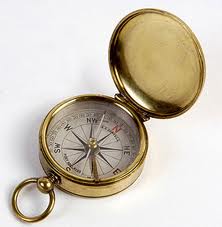
You can tell the compass directions with any watch but I like my 24-hour wrist watch. I point the hour hand towards the sun and 12 o’clock is south, 24 o’clock is north, 6 east, 18 west. It is the opposite in the southern hemisphere. Simple, unless it’s daylight savings time, the subject of this rant.

I so dislike the time change that a few years ago I simply stopped doing it. I refuse to change times seasonally. I no longer leap forward in the spring and fall back in the fall. I do not change my schedule at all.  I eat at the same time, go to bed and get up at the same time, in short I do not change with the rest of the world. Personally, I really don’t care if we use solar time or daylight savings time permanently. It’s the flipping I can’t stand. After all, there are only so many hours of daylight and changing a clock does not create any more, or less.  So I stay on solar time, and I remind myself that the rest of the world is delusional thinking its an hour ahead of me.

I don’t watch TV so that doesn’t influence me. When worked for a company I simply went to work an hour earlier for half a year. I did not eat lunch on their schedule but rather mine. If I have appointments I do accommodate the “flippers.” But in my personal life, habits, and space, I don’t change. My clocks do not change. As I write my computer, slave to its programming, tells me it is almost 1900, or 7 p.m. The sun tells me nonsense, it’s six p.m. and time to feed Oliver Whitecat, my ever-faithful assistant and supervisor. More so, the atomic clocks that regulate time down to the millionth of a second don’t leap forward or fall back. They stay on solar time. The animals stay on solar time. Mother nature stays on solar time. Only humans play the silly game. Only the government would cut the bottom foot off a blanket, sew it on the top, and then argue the day is longer.

It feels good that the sun and my watch are in agreement. If I change it to daylight savings time, south would 11 instead of 12….truly bizarre, and then it would change again, even more nonsensical.  I am not a perfectionist but the sun at 11 just doesn’t work for me. 12 is just right. So I stay on solar time…. in tune with the cosmos and my location on the rotation. And when interacting with the world gone flipping mad, I just tell myself they are wrong. It all works out rather well….. almost.

The only problem is O. Whitecat. He knows when the rest of the world leaps forward, prompting him to demand to be fed an hour earlier. I don’t know how he knows but he does…. since he’s my laptop maybe he intercepts the time signal like the other computers do….

{ 1 comment }

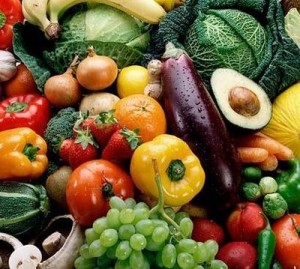
The quick answer by most would be yes, the presumption being man ate raw vegetables for a long time and is better suited to them, and them to him. But, whether you are an evolutionist or a creationist the answer might be no.

I have a lot of vegetarians and raw food advocates among my subscribers and in no way is this meant to criticize the practice. A thought simply crossed my mind the other day — or was it a thought crossed my simple mind the other day? …Any way, it was about the topic and it raised a question I thought worth exploring. That led to two interesting possibilities. Setting aside the meat/no meat debate for the moment, let’s focus on vegetables.

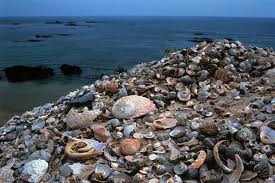
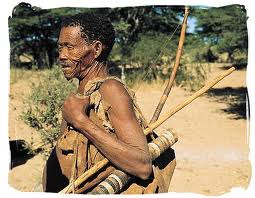
We know from mesolithic fire pits, middens, bathrooms, and chemical tests what ancient man ate in general some 8,000 years ago. Or if you prefer, what he was eating after he was created by God 8,000 years ago.  (That should take care of most time frames and religious sensibilities.)  We also know from grave remains ancient man’s general state of health (better than ours.)

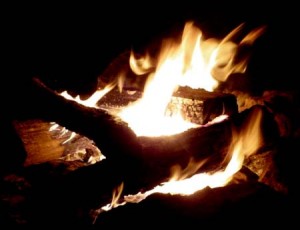
What we know is he used fire and he ate the food with the most energy return for energy expended. Calories in, calories out. If he didn’t get more energy from the food he ate he had to call upon fat stores, and if no stores, he moved a little closer towards starvation. We also know foods he could have eaten raw, sea kale for example. It is more nutritious cooked because cooking breaks down the plant and makes the nutritional elements more accessible. From what evidence we have, he preferred cooked food over raw if he could cook it.

Man has been using fire for at least a quarter of a million years to close to million years, cooking with it for 200,000 years. (Or if you are a creationist, he’s been using fire since he was created 8,000 years ago.) Either way cooked food is part of the warp and weave of man, either genetically over hundreds of thousands of years, or by creation’s intent. I am not sure there is a scientific or a creationist basis for eating raw vegetables, or that they are better.  Consider:

If you are a creationist raw vegan the argument is rather shaky: Man had fire from get go. He ate most of his food cooked then and now. For the creationist there isn’t much evidence man was a raw vegetable consumer.  For the evolutionist it is quite easy to see how those who ate more cooked food prevailed over hundreds of thousands of years and the raw food humans didn’t. During that time humans drifted physically towards being more suited to eating cooked food. Perhaps that is why we no longer have an active appendix: We’ve cooked food for so long it has no active second-stomach function. Looking at it either way I am not sure there is an “ancient” justification to eating vegetables raw. Which leads me to the raw vegetables, my original thought.

I receive a lot of emails from raw food advocate who want to expand their choices. Unfortunately I have some but not a lot to offer. There are a handful of wild vegetables one can eat uncooked but most of the ones we collect get cooked, particularly roots. I also noticed that nearly all raw vegetarians, or raw food advocates even if they are not vegetarians, eat almost exclusively modern foods raw. Carrots, bell peppers, cauliflower, scallions, cukes et cetera, all modern vegetables compared to what vegetables were eaten  8,000 years ago.  Not only that but the usual vegetables are modified and grown under modern chemical conditions, a debatable state as well.  So I ended up with:

1) An unsupported presumption that man evolved (or was designed) to eat raw vegetables, leading to 2) folks eating modern vegetable raw presuming they are good for you.  It may be that man 1a) used to eat raw but evolved to be better suited to cooked food, or 1b)  was designed to eat cooked foods,  and 2) that modern vegetables may not be that good for you. Indeed, most of the modern vegetables are the least-offensive descendants of ancient vegetables and as such might be inherently far less nutritious. I am sure the root of a Queen Ann’s lace has far less sugar than a modern carrot, its cultivated descendant.

Behind the raw food movement is the good idea we should not eat “processed foods.”  Processed foods tend to be found in the middle of the grocery store. Real food — not processed — if found around the edges of the grocery store. I am a strong advocate of eating like our great grandparents who ate real food compared to people today. Today most folks eat mostly processed foods. I know several young couples who never cook. But more to the point: Are raw vegans eating like their great grandparents, or their ancient ancestors? I don’t think so. It might indeed be healthier to eat raw modern vegetables but I don’t think the justification will be found in the past.  And while modern vegetables are not “processed” in the conventional sense, a modern hybrid bell pepper is as much a manufactured food as a box of cereal; wild apples are sour, not sweet like the domestic ones, ancient corn not sweet et cetera.

So where does this put this forager? Looking for wild food that has less chemical contamination than the agricultural product, and more nutrition. I am sure the sow thistles I eat off my lawn are wholesome, but I most certainly would not eat any off my neighbor’s lawn, a patch of decapitated grass pretending to be a putting green.  I’ll fight the ants for a persimmon or two if they’re not down hill from the interstate. “Wild” does not automatically mean “wholesome.” You need to exercise some judgment in our polluted world. Yet, despite the ravages of man, wild food is usually far more nutrition than their cultivated counterparts.

As for foraging, it puts my diet closer to that of the hunter gathers of some 10,000 years ago, a diet that we know was successful because we are here.  It is low in carbs, includes a variety of meats (lean and fatty) fish, seafood, wild fruit, roots, nuts and greens in season, grown with the help of Mother Nature not the chemist. And I tend to avoid white-colored food; rice, potatoes, pasta, white bread, just as I avoid white berries.  It’s a mesolithic diet, like my 300th great grandparents ate. They’re not alive now, so I know the diet is not prefect. But, I think it’s better than what nutritionists recommend now.

So, are raw food advocates really eating better? It’s a point to ponder.

{ 28 comments }

I saw a religion-themed movie once that actually holds an instructive point for us foragers.

In it a Catholic priest is facing a moral decision that could lead to his death. In his anguish he cries out that it just isn’t fair. He says Christ knew he was the son of God and could go to his death assured things would work out for the best. The priest said everyone else has to guess about what’s going to happen. I feel that way about a particular plant, the Rosary Pea.

Deadly Rosary Pea

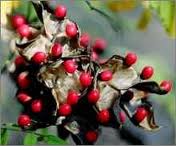
I read from credible authorities — folks with PhD’s behind their name — that in at least two places in the world the seeds of this plant are boiled and eaten. When one considers it is also the most toxic seed in the world that gives one a cause to pause. The Rosary Pea (Abrus precatorius) grows abundantly in the southern United States (and other warm areas of the world.) If it were an edible it would be a common one. If fact if it were edible it is so common it could be a staple. But then there’s that toxic side. How toxic? That depends how it gets into your system.

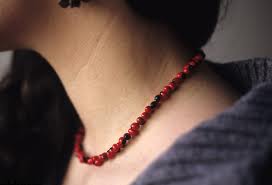
Not Advised, necklace breaks seeds with holes consumed, death follows

At the moment I weigh 165 pounds or 73,920 grams. One fifteen thousands of your body weight of the seed can kill you by ingestion. 73,920 divided by 15,000 is 4.9, or five grams. About five seeds would be a fatal dose for me if ingested. One seed would make me emergency room sick and require hospitalization. One seed will kill a child.  If you inject me with it, however, the poison is incredibly more toxic. Only 3 micrograms are needed, that’s three millionths of a gram. That ain’t much, that’s on the order of less than the tip of a needle. And indeed that is exactly how some accidental deaths have occurred, putting the seed on a thread with a needle and the needle pricking the finger. This is also why one seed sharpened to a point and jabbed into someone causes death and has been used for homicide. There is no antidote only the symptoms can be treated.

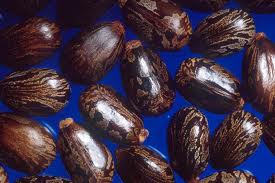
Deadly Castor Beans

If you remember the Bulgarian writer Georgi Markov was killed in a similar fashion. As he stood at a bus stop in London one day in 1978 he felt a sharp jab in the back of his leg. When he turned, a man with an accent apologized for poking him with his umbrella. Three days later, Markov was dead. During the autopsy, doctors removed a metal pellet the size of a pin head from Markov’s leg. The pellet was hollow in the center and contained traces of ricin from the castor bean tree. Abrin is 75 times more toxic than ricin.

In fact Abrin is so toxic that contact between an open or crushed seed and an open wound, like a cut, is also fatal, as is rubbing your eyes after you have touched a broken or powdered seed. However, unbroken a whole mature seed can pass through the system without harm  — think boys and pea shooters — though I think I would still get washed out from stem to stern as soon as possible and the seed accounted for. There is no way around the fact the seed is deadly.

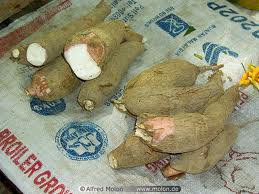
Tapioca must be processed or it is deadly

Then one reads people boil the seeds for an hour and eat them. That’s not without precedence. We eat pokeweed, which can kill. We boil it two or three times and then enjoy it. Tapioca, before it is processed into tapioca, is deadly. Raw cashews are toxic. Even the common taro cannot be eaten raw. To be specific the toxic protein in the Rosary Pea, Abrin, is reportedly detoxified at 65º C, or 149º F. Boiling, which is quite above that, is probably to make sure the entire seed all the way through is cooked.  All of that kind of leaves me in the position of the priest.

Dick Deuerling

The natives who do eat this grow up knowing it is edible. They don’t have to worry about identification or reference secondary sources. I’m 10,000 miles away depending upon the comments of some professionals none of whom say they ate some. That does not exactly instill confidence. Call me old fashion but when a few grams of something can take me out I want to meet someone alive who says they eat it. Better, I want to find someone who does it so I can watch then go back in a few days later to see if they are still alive. I call that the “Dick Deureling” method named after the first forager I studied with in Florida. He would say to a questionable food advocate “let me watch you harvest it, prepare it, cook it and eat it, and if you’re alive a week later I might consider it.”

But I do have an idea… The seed grows everywhere locally. I need to find someone from the two areas of the world where it is reportedly eaten and find out if they eat it here. There is a local grocery that carries food from a part of the world where these seeds are supposedly eaten. I think I’ll get a bottle of Rosary Pea seeds, go there, and see what conversations I can start. Original research. Who knows, maybe they’ve been looking for some…. for cooking, of course….. Stand by.

{ 1 comment }

Take Things Lying Down

A sunset over Pringle Bay, Cape Town, South Africa.

Early in life I settled on a hobby I can do on a summer’s day, in a hammock, on my back….. No, it’s not napping. I watch clouds. Call it reclining research.

What does that have to do with plants? Quite a lot, actually. And in fact, if one has an interest in clouds and plants one always has something to do everywhere in the world. Looking down or looking up, I’ve always got something of interest to bemuse me. I am not a lazy man. I inherited from one grandfather the tendency to always be busy, all the time, even when relaxing. Clouds and plants allow me to be busy and not busy at the same time, and that’s relaxing.

Cold Weather Clouds

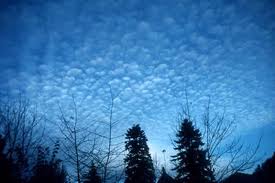
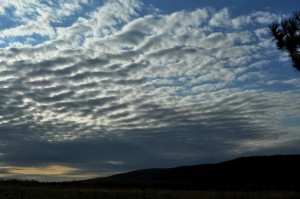
Did you know by studying clouds you can be as accurate as the weather forecasters on a 24-hour basis? They’re better at telling you what’s going to happen in five days but on a day-by-day basis cloud watching is just as accurate as the weather bureau (no doubt you have suspected that all along.) Will it be cooler or hotter tomorrow? Look at the clouds. Will you get a thunder storm today? The clouds will tell you, as will jet condensation trails. They’re clouds, too. The way the clouds swirl tell you different wind patterns aloft, their direction, altitude and temperature. And for those sayings? They are mostly true, red sun in the morning is a warning. Red sun at night is a delight.

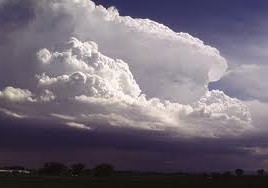
Here in Florida many a dramatic front moves through seasonally, a dynamic clash of hot and cool air. And have you ever watched a thunder storm grow? They have cells each caused by an updraft. The cells form usually rectangular columns. The columns fight to become the column that rises the highest then flattens out on top….King of the Thunderstorm!  In the early spring we get them from the west, then in early summer from the east. In the middle of summer they blossom over the middle of the state and can go anywhere. Interestingly the pop up along a diagonal ridge across the state from Daytona Beach to Tampa, the same path the interstate takes (and sinkholes. In fact, roads always follow the high ground between bodies of water if only to avoid the cost of building a bridge.)

Weather changing clouds

By watching clouds I can answer such questions as: Do I need to take in my seedlings? Will there be hail? Do my tomatoes need to be picked to avoid damage? The clouds tell me. If you’re a camper, hiker, boater, forager, survivalist, watching the weather is a skill you need to develop. If you want to see some great cloud pictures visit the Cloud Appreciation Society. So much for looking up, now let’s look down…

We always find ourselves waiting in modern society, waiting for a friend to arrive, waiting for a meeting, traffic to move, something to open. I use that time to look at plants. I identify edibles, I study the landscaping for ideas, and I ponder unfamiliar plants that look like they might have some use.

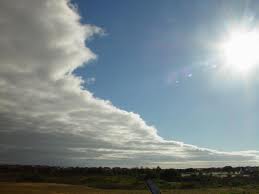
Cloud Front

Yesterday I went to Outdoor World in Orlando. It’s a large sporting good store. Unintentionally I got there a few minutes before they opened. While the crowd of mostly obese men waited for the doors to open I walked around the building and identified 16 edibles species.  The more-then-pleasingly-plump guys waiting for the doors to open should have taken that walk with me. I doubt any of those “outdoorsmen” ever get out of their truck or boat to identify an edible plant.

As for the clouds, mine today say there is a front coming. That means rain then cooler weather by tomorrow. Guess I had better go size up some wood for the fire place.

{ 0 comments }