Prepared for Life

We met by accident in the woods. I had hiked for a few miles already and he had just entered the trail.
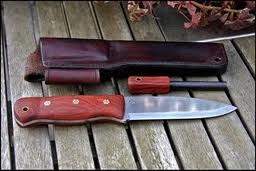
Knife and Fire Steel

Whenever I go into the woods, or on water, I am prepared to stay 72 hours if need be. Why 72 hours? Almost everyone injured or lost today is found alive, or dead, within 72 hours.  So the goal is to have enough means and knowledge to sustain and or treat yourself if injured for three days. Even if I am going out just to take one picture I have all the important things with me to make three days in the woods uneventful, or a rescue possible should a rattle snake get me or a broken ankle.  I always have a back pack on, or stowed in the canoe or kayak. And always around my neck a good bushcraft knife and fire steel.
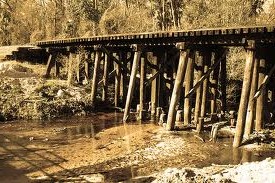
Soldier”s Creek, Seminole County, Fl.

My be-prepared list includes, beside cameras and the like, mosquito spray, extra watch, compass, a little fishing kit, some food, a small flash light, a couple of quarts of water, a poncho, and, if a long hike, a lightweight tarp and nylon hammock with bug net to suspend between trees, or crawl into on the ground.  I always carry several ways to make a fire and locally an elderberry spindle and basswood base can be used to make a bow drill fire. If I am in predator country I include pepper spray and a firearm. I also have a cell phone, a back up on a different network, and a GPS. While I can get by in the woods with next to nothing — after all that is what I teach — I prefer not to. Be prepared, even more important at my heart-attack age.

As I said, we met by accident. He was a young fellow in a short-sleeve shirt and slacks. His equipment was a camera. He was prepared to take pictures (and in fact later did take one of a 13-foot alligator the small stream of Soldier’s Creek.) Our paths crossed when I happened to slip on a sand-bagged bank. He asked me if I was all right. Only my dignity was injured though later I would be black and blue in selected spots. As he was pleasant, late 20’s-something, we walked along together. Like the fellow who was the last expert on the slide rule I like to tell younger folks about the edible flora around them. I also knew the trails through the swamp and he did not. I thought him completely unprepared, a potential accident in the making; yet another reason to hike in tandem.

When I first pointed out a wild edible he said he would never eat a wild plant and didn’t know anything about them. That seemed like a common response to me. Yet, as we walked along he was quite astute and knew about many other things regarding the woods, such as camping techniques. He was actually quite insightful and well-informed about many things. All in all he was the kind of young man you’d wish your 25-year-old daughter would meet and marry. After a few miles I found out why.

He was an Eagle Scout, and had bested his two older brothers who were also Eagle Scouts.  Now that was a family aiming kids in the right direction. It was very clear he was launched well, prepared for life by his scouting experience. What trouble me was that someone could become an Eagle Scout and not know any edible wild plants. He also did not know the toxic ones. When I pointed out poison ivy he said he had never seen it before… a boy scout who did not know what poison ivy looked like. He took a picture.

I realize scouting needs to change, keeping up with the times and all that. But, I would have thought wild foods would have been on the curriculum as much as a half a dozen ways to make fire.  An Eagle Scout who does not know even a few edible plants almost seemed, to me, a contradiction in terms. Edible wild plants was something I presumed we should have had in common. However, on reflection I realize the problem was with me, not him, or scouting.
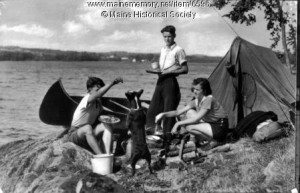
When scouting started a century ago its purpose was to make good men out of boys, and back then engaging them in bushcraft was the at-the-ready means.  Said another way, the goal was to produce good men more than it was to go camping. Camping was just the then-contemporary vehicle to carry that out that cause. I presume the goal today is still as it was then; to produce good men out of boys. So maybe an Eagle Scout today does not have to be really good at knowing the wilderness. Maybe an Eagle Scout today does not have to know an edible plant. After all, my hiking companion turned out to be a very good young man. And that’s more important than eating a dandelion.

President-to-be Gerald Ford

He’s also in good company. Here are some well-known Eagle Scouts, a few of whom you might find surprising: Henry Aaron – baseball player, home run king; William Bennett, former Secretary of Education; Michael Bloomberg – Mayor of New York City; Bill Bradley, basketball star and U.S. Senator; James Brady, press secretary to President Reagan;; Stephen Breyer – U.S. Supreme Court Justice; Walter Cronkite, journalist and commentator; William C. DeVries, M.D., transplanted the first artificial heart; Michael Dukakis, governor of Massachusetts, presidential candidate; Gerald Ford, 38th President of the United States; Steven Fossett, aviator, flew solo nonstop around the world in a hot air balloon and in an ultralight airplane; James Lovell, astronaut; Richard Lugar, U.S. Senator; J. Willard Marriott, Jr., president, Marriott Corporation; Michael Moore, author and filmmaker; Oswald “Ozzie” Nelson, big band leader (made Eagle at age 13); Sam Nunn, U.S. Senator; Ellison Onizuka, Challenger astronaut; H. Ross Perot, Chairman, EDS Corp,

Ozzie Nelson, big band leader and father of singer Ricky Nelson

presidential candidate; Rick Perry, governor, state of Texas, presidential candidate; Mike Rowe, star of “Dirty Jobs”; Donald Rumsfeld, Secretary of Defense; Harrison Salisbury, Pulitzer Prize winning author; Jeff Sessions, senator from Alabama, Steven Spielberg, film director/producer; Jimmy Stewart, actor; John Tesh, TV celebrity and pianist; Sam Walton, founder, Wal-Mart; Edward O. Wilson – Pellegrino University Professor and curator of entomology at the Museum of Comparative Zoology, Harvard University; and Elmo R. Zumwalt, Jr., admiral, Chief of Naval Operations.

I would call that a good track record.
{ 5 comments }

Is This Plant Edible?

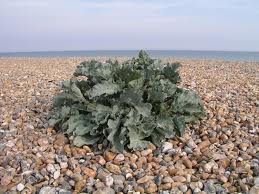
Sea Kale

For a surprisingly simple question there is often a complicated answer. If it’s sea kale, then the answer is yes, top to bottom. It is edible. It is doubtful anyone has ever died from eating sea kale. If the plant is poison hemlock, then no it is not edible. You’ll be dead before it leaves your stomach for the small intestine. Between these two are all the other plants.

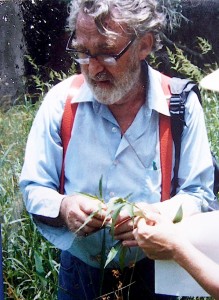
Dick Deuerling, 1990, co-author of “Florida’s Incredible Edibles”

I had a foraging friend, Dick Deuerling, who passed in July, 2013, at at 92.  When it came to wild plants he would say “I only eat the good stuff.”  Well… like the word “edible” what is “good”? And how many wild plants are edible, and good and how many are toxic? It depends upon the definitions.

If you were to look at an average 20 acres on an average place on earth with average rainfall and temperatures you might find an average of 5 to 10 percent of the species edible. Shall we split the difference at 7.5%. This will vary with more edibles at the equator and much less in the tundra but nearly every plant in the tundra is edible. It is far more efficient to learn the edible plants than the non-edible ones. Then there is the issue of poisonous ones. Again it depends upon the definition (though I have read there are no poisonous plants in the tundra.)

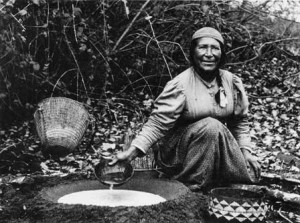
Mrs. Freddie, a Hupa, leaching Acorns

I can remember the first time I heard someone refer to acorns as poisonous. To me they were just bitter because of tannic acid. Yet, if you did manage to eat a lot of acorns with tannic acid you would be sick, probably not deathly sick but ill nonetheless. (Incidentally, man has not been totally successful at breeding the bitterness out of the acorn.) So there is a range with “toxic” plants, those that make you mildly ill to those that can kill you within a few minutes, seconds if refined. Which brings me to a plant like the Urena lobata.

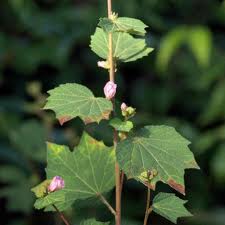
Urena lobata, famine food, medicine

I debated whether I should to put the U. lobata on my site or not, whether to do a video on it or not. Even when cooked the young leaves have disagreeable texture. It is like eating sandpaper that turns to sand and then is finally swallowable. Edible, nutritious, but not good or tasty. Yet it sustains people and its roots are very medicinal. So I put it in the famine food category.

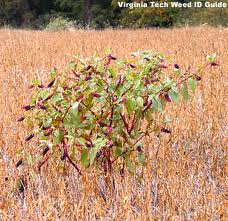
Let’s take this a step further. Pokeweed is a good example of a common plant which if prepared incorrectly will kill you. There is no way to sugar-coat that reality. Harvest it wrong, prepare it wrong and you can easily be dead. Yet, it is a delightful green of spring when prepared correctly. It is September as I write and I still have poke in my freezer from last April.

Last night I read that the American Natives showed settlers how to cook pokeweed. I’d like to know if that is a fact or an assumption. The natives called the plant “red” because of the color of its stalk. They also used it medicinally. Eating it was a different issue. The Alabama tribes noted that white settlers ate the young leaves but the Alabamans did not. So, why doubt whether the American Indians taught the white man how to cook the pokeweed?

Did Native Americans Eat Pokeweed Before European Metal Pots?

Poke should be boiled at least twice to get rid of the toxins. Boiling has not been among man’s cooking choices for too long. Before metal most boiling was done in dug out logs or skin bags with hot rocks. In North America clay pots for boiling didn’t come into being until about 2,000 years ago. No matter how done boiling was a laborious affair usually reserved for big game. Cooking pokeweed, which required two boilings for very little caloric payoff, was doubtful. Pokeweed as a food did not come into its own until humanity had a relatively quick and easy way to boil water. Metal pots was the foremost request the Europeans had from the native population. If natives did not boil much before that it would mean that pokeweed has been a “food” for man for only a split second of his history. Said another way, if we were hunters and gathers from 10,000 years ago we probably would not be eating pokeweed, or cashews, or tapioca, or cassava or even many beans. In fact, we probably were not eating dandelion tops — too bitter — but were roasting the roots in the fire.

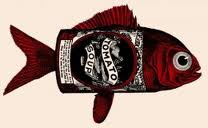
Thus we eat many wild foods that were not eaten long ago in the absence of boiling. We also eat a lot of contemporary plants there were not food in the past: Orange carrots, sweet apples, red peppers, cauliflower…tomatoes with flounder genes…. the list is long. We eat a lot of things — wild and cultivated — we did not eat 10,000 years ago. While perhaps not toxic is this food we were designed or evolved to eat? Might our ancestral diet be important? 

That all makes the question like “is this plant edible?” rather tough in many cases. A few are clearly yes, a few are clearly no, and in between there there can be a lot of fog. What about a tomato with a flounder gene? (So it can withstand cold better.) Has it been eaten by large numbers of humans for many centuries to prove it is safe? How about the pokeweed for that matter? Is there a higher cancer rate among pokeweed eaters like those who boil and can fiddleheads? Pokeweed has mitogens and those promote cell division. Then again, I eat poke only a few times every year, where as I can eat a fish tomato daily, or a diet soda, or processed cheese food with more additives than a Christmas chemistry set.

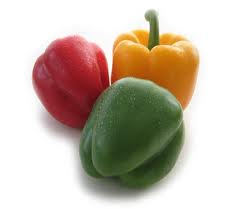
What about the foods that are considered really safe, a yellow pepper for example. How long has it been around? It actually comes from a rather toxic family. How many people have to eat it over how many years to prove it’s actually safe?  Much produce is now hybrids, meaning if man did not make them they would disappear off the grocery shelf. Nature rarely hybridizes. Are these hybrids really safe? Indeed, most of the produce in a produce section was not around in its current form a few centuries ago. They are not as estranged from the human diet as the fish tomato but they are not what our ancestors ate. And if that is not confusing enough we get products taken off the market as toxic when that is very doubtful. Sassafras is an excellent example. The amount of safrole in an old fashion glass of root beer was less harmful than the alcohol in a glass of real beer. Yet safrole is now highly controlled. In short, our foods are highly manipulated, and what is good may not always be good and what is bad may not always be bad. I am mighty doubtful of the chemist in the kitchen.

Now when I am asked is that plant edible I say humans have been eating it for a long time, or a short time, almost no time, or not at all. Occasionally I can say they ate it in the past but not today.  The longer I study plants, and forage, and the more I eat and the older I get, the more I am convinced how they ate thousands of years ago, and what they ate, was better and healthier than today.

{ 6 comments }

Hit With A Plank

There’s an old joke. A man had a mule sit down under a load. Mules can be very stubborn. And despite all his efforts the man couldn’t get the mule to get up. I won’t go through the entire joke but a second man ends up hitting the mule over the head with a plank. He then talked to the mule and it got up. When asked how he did it, the man said he was successful because he first used the plank “to get the mule’s attention.”  I sometimes feel that way about state officials, that they need to be hit over the head with a plank to get their attention.

Around seven out of 10 native “weeds” on a given state’s hit list is edible. Numerous “invasive” and or “noxious” weeds are also edible, usually 12% or so. If anything governmental agencies go the opposite extreme and say some weeds which are edible are not edible. Florida reports in one paragraph a weed was brought to the state to be studied for food but in another paragraph says it is an escaped non-edible. Shear brilliance, that is

Perhaps it is inevitable specialization. Centuries ago when president-to-be John Adams and wife Abigail went to Paris she fumed over the number of servants she was expected to hire and their refusal to do other work. The maid who made a bed would never dust the furniture or help in the kitchen. There were two other maids who did that. The fellow who took care of the grounds would never work in the garden or the stable. There were other servants to do that.  State botanists and biologists are like that. They are hired to tell us weeds are bad. That the weeds may be edible does not fit into their job description. Most of them don’t know about edible weeds. And if they do It’s treated like a dirty little secret. I find it appalling that I know more about edible wild plants than many botanists and biologists with PhD’s and years of experience.

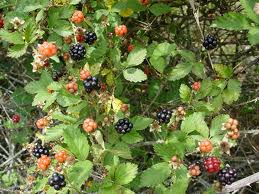
What we are witnessing is not only a loss of knowledge but also a fundamental shift in attitude. In places where starvation is common — Ethiopia, the Sudan — everyone knows which wild plants are edible, and there is no such thing as a “invasive” edible weed. It is food or it is not. In Tasmania the dewberry (a blackberry that grows horizontally) is listed as an invasive noxious weed. The Ethiopians wouldn’t see it that way at all.

In the United States, and probably in most developed countries, we have hundreds of millions of people whose families and cultures have lost the knowledge of edible wild plants. We also have a professional cadre of degreed officials whose job is to demonize non-cultivated plants. In less than a century a plant like the sow thistle went from a prized spring green to a weed to be chemically executed. Meanwhile we are encouraged to eat cultivated plants that have been biologically molested. The chemist in the kitchen, I think, is doing us more harm to our health than good. We have millions eating carbohydrate-based processed non-food food. Then we wonder why there are epidemics of heart disease, diabetes and cancer.

It is amazing to think that for 99.99 percent of their tenure on earth every man, woman and child was on an intimate, life-sustaining relationship with the flora around them. Plants were their grocery store, hardware store and pharmacy.  Indeed, finding new plants was as important in exploration as finding gold. In basically the hundred years of the 20th century we shifted from being self-sufficient plant-based people to technology-dependent mouths to be fed. A century ago nearly every 10-year old could identify all of the edible wild plants in the neighborhood. Today none can. The only blackberry they know takes pictures.

People no longer know plants. Humanity is fed by agri-business that essentially grows simple carbohydrates: wheat, rice, corn and potatoes. That makes us very vulnerable. Society is not only technology dependent but chemically dependent, limited-crop dependent, and agri-business dependent as well. You can only grow carb crops on a massive scale to feed billions by keeping weeds at bay. Thus weeds are bad, so bad their edibility is information non grata.

So where’s our plank? What’s the wake up call? What do we hit them on the side of the head with? Do we make the bureaucrats walk the plank? Somewhere out there in time there is a finite point. There won’t be enough chemicals, carbs and technology to feed us all. That could do it. Or if the economy worsens and there are food shortages. That could be the slap in the head, too. Maybe then we will have an attitude shift and again there will be no such thing as an “invasive” edible weed.

{ 4 comments }

Who’s Manipulating Whom?

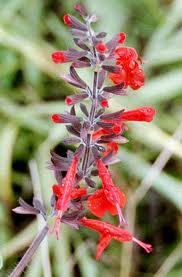
Pretty but not edible

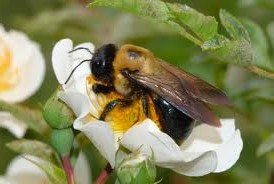
I don’t care for Salvia coccinea. It’s not edible and it likes to crowd out my herbs. I’m forever removing it from flower pots. The other day I was about to rescue my tarragon from it when a bumble bee made a fueling stop. Bumble bees are native and solitary. They do the same pollenating job as honey bees, but think of them as independent contractors.

As the bee hovered from scarlet blossom to scarlet blossom I was struck by the thought that we need far more blossoms than bees, not only to keep the bumble bee flying but honey bees producing. Blossoms are important. So I let the Salvia be.  Here in Florida the third most common nectar plant is a despised weed, the Bidens Alba. But, without its blossoms bees would be worse off, and so would we.

Solitary Bumble Bee

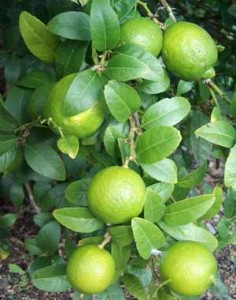
The most common nectar plant in Florida is citrus, cultivated by man. Next is saw palmettos and third, the Bidens Alba.  The saw palmetto and the Bidens Alba got to their positions naturally, by offering something bees wants or needs and thus they succeed in reproducing more than other plants. Citrus is king only because humans intervened.

In our self-centered, brain-driven view we, of course, say citrus is serving us. But Mother Nature does not have to be conscious to succeed. It is also reasonable to say citrus is using us and we are serving it. Consider:

Key Limes

Citrus is a non-native that has managed in a very short time to take over a rather large land mass. That sure beats the old way of moving slowly over millennia. Clearly citrus won by giving man something he wanted, just as the Salvia coccinea gives the humble bumble what it wants. I’m sure if the bumble bee had an imagination it would think of itself as man does, in charge of the flower. But, the flower is clearly getting the bee to do what it wants. The tail is wagging the dog, so to speak. This view is not limited to plants.

There are, for example,  some 40 million dogs in the United States. However, there are only some 10,000 wolves. Dogs, as a species, are clearly doing something wolves are not. As a species dogs are wildly successful compared to their canine cousins.  So who is manipulating whom? Just as the bee thinks it is the prime agent with the blossom we think we are the prime agent involving dogs. But maybe its the dogs who’ve got it figured out, just as the citrus does, and yes, even the Salvia coccinea.

Because we are conscious we tend to put ourselves in the driver’s seat, the primacy position. But if you look around, non-humans seem to be winning…. citrus, lawn grass, dogs… We are taking care of them not them us.  And let’s not even get into the issue of cats…. Clearly they all are offering us something that makes us work just like the bee going flower to flower. So, who is manipulating whom?

{ 0 comments }

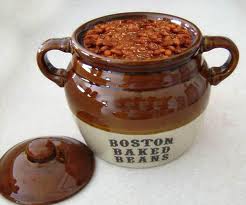
Baked beans is about as traditional a New England meal as one can get… That and boiled dinners. Every Sunday for decades we had boiled dinner. Potatoes, onions, carrots, cabbage, some piece of meat, boiled in water until falling apart. It was health food before its time, and about as bland as possible. Then it came back to haunt you several days the following week as hash.

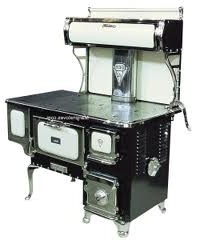
Baked beans were seasonal, usually made in the winter, in a wood cook stove in the basement.  They took several hours to cook and it was too hot in the summer to make them. But in winter they were perfect, usually accompanied by homemade bread baked in the same stove. Those were among the few foods my mother, an absolutely horrible cook, excelled at. Her cooking was so bad I learned to cook in self-defense. I used to joke she thought I was a Greek god, every meal was either a burnt offering or a sacrifice… except boiled dinners and baked beans.

But consider, what if  you had no pot, or no water too cook these foods with? With the root vegetables that’s quickly answered. They can be roasted, near a fire or in sand in the ground under a fire. And what of beans? There is a good amount of evidence that raw beans are not that good for people. They are almost a famine food uncooked. So, how do you cook beans if you do not have water, or a pot?

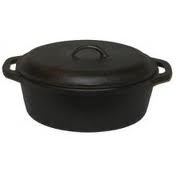
If you have a cast iron pot, but no water, you can put sand in the pot and the beans in the sand. Put that next to a fire and the beans roast nicely. In fact, in some laboratory work that is how the beans are cooked to reduce the amount of nutritional loss when measuring said. It must be sand, however, not earth. Sand is usually pulverized quartz, granite, or the like with no organic material in it. It distributes heat evenly. The beans roast nicely.

If you don’t have a pot you can put the beans in sand and then build a fire over the sand. This was often done to roast hazelnuts. The sand shuts out oxygen keeping the nuts or beans from charring. Like in the pot with sand, the beans get roasted and lose little or no nutrients in the process. Long before ancient man had pots or pans but was collecting or growing beans roasting them was the standard way to make them edible.

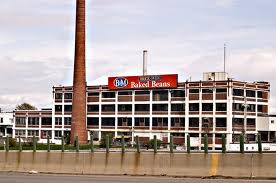
Lastly, while I will admit to growing up in the Dark Ages at least we had pots and pans and B&M Baked beans, or more specifically one of their cookeries near by. I can remember driving by them often in Portland, Maine, and the aroma of baking beans could be detected for miles. In some form or another it’s an aroma that man has enjoyed for thousands of years.

{ 2 comments }