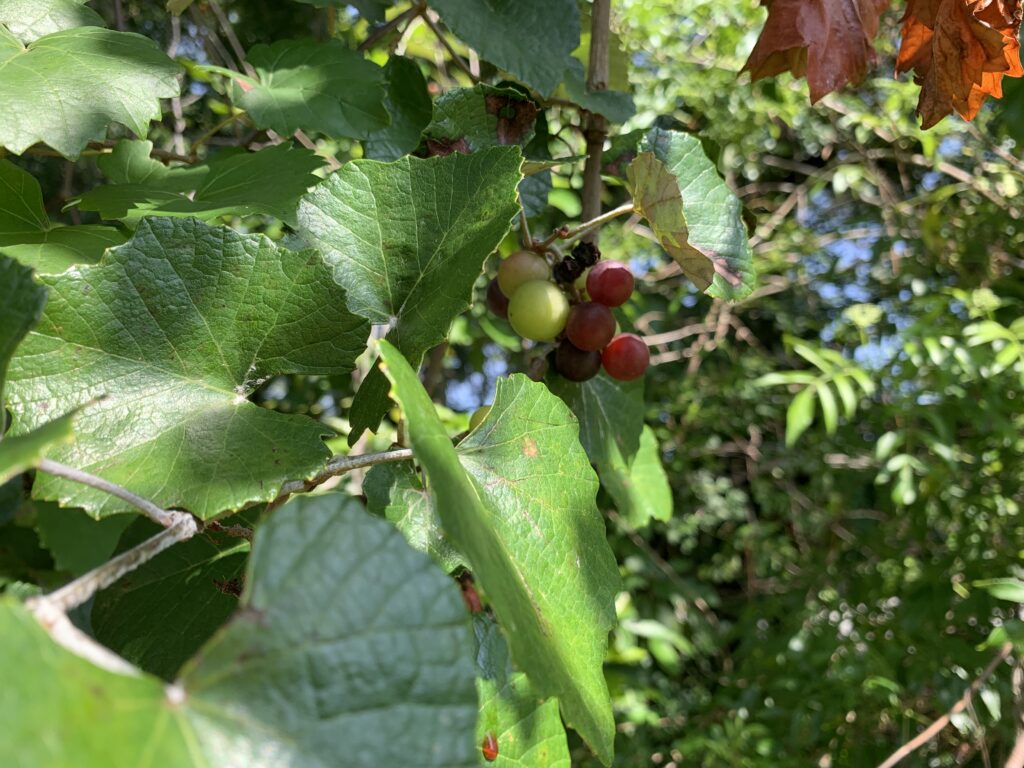
Early ripening forked-tendril grapes. Photo by Green Deane
Grapes revisited. If you garden or forage, you know Mother Nature has a mind of her own. Grapes usually ripen around the first of September. In my foraging classes lately we have been picking ripe Vitis aestavalis and Vitis munsonia fruit, 12 weeks ahead of the usual.
From a snacking point of view or occasional dessert, that’s not a problem. If one were dependent on harvesting a lot of fruit at one time, this stretches out the season and the labor of collecting.
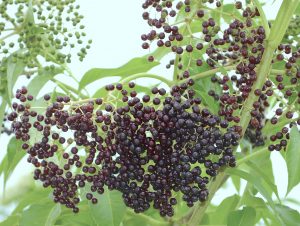
Elderberries always look better than they taste. Photo by Green Deane
We’ve also seen elderberries ripening while some trees are still blossoming. Again this can effect harvesting, depending upon what you are using the elderberries for, food, dessert, or medicine. What we don’t know is whether an early harvest is some indicator of upcoming weather, such as a very rain summer, or an early cooler winter.
Besides consumption Elderberry has a little-known use. During WWII in England, farmers would put elderberry leaves in soapy water then beat the mixture and use it for an insecticide spray on food crops. Others would simmer a cup of dried elderberry leaves in a quart of water, drain and strain then use the cooled liquid for insect control and fungal infections.
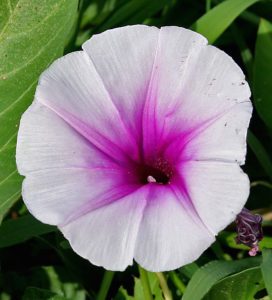
Look for large Morning Glory blossoms that are white or white with ruby throats. Photo by Green Deane
After about 40 years of foraging I was organizing my Morning Glory information one day. Some are edible, some are famine food — eaten now and then or in small quantities. A few are mind altering. I did not have a flash of brilliance but one of color. Species of Morning Glories with blue blossoms are usually not edible, often they can make you ill while simultaneously getting you high by having the lysergic adid part of LSD. Species of Morning Glories with pink or read blossoms are usually not edible and or are a famine food, kind of 50/50 thing, some edible in small amounts for a while, some not edible at all. They also tend to be coastal or ornamental. And I ignore small white Morning Glory blossoms or small white Morning Glories with a ruby throat. They might have a bit of cyanide in them, such as the Alamo Vine. However… large white Morning Glory blossoms or large white Morning Glory blossoms with a ruby throat usually have something edible. Large in this case means blossom at least three to four inches long or longer. Which part is edible with big white blossoms depends upon the species. It might be the blossom, leaves, root, or the entire plant. With this rough guide you can glance at a Morning Glory blossom and know whether to inquire further. To read more about Morning Glories go here.
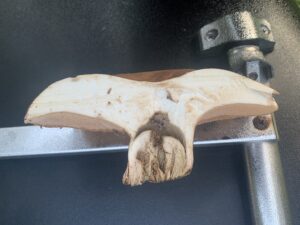
Unidentified non-bitter bolete. Photo by Green Deane
It has to be the rhythm… A song by the group “America” has been on my mind of late. The lyrics are “I’ve been through the desert on a horse with no name.” Except I hear “I’ve been cookin’ in the kitchen a Bolete with no name…” There are many Boletes locally, most if not all are edible. The only reason not to eat them — besides caution — is you don’t like their taste or smell. One group is informally called Bitter Boletes, edible if you like bitter. I found a large non-bitter bitter bolete so identification was ambigious. Unless you’re an advanced mushroom hunter you can use the following rules to eliminate any Boletes that might make you sick (not counting for the wild card of allergies.) Do not eat any Boletes with pores that are red or orange, do not eat any Boletes with an orange cap, do not eat any Boletes that stain blue or green. Do not eat any bitter Boletes. There are some edible blue staining Boletes but that is a more advanced challenge in more northern parts of the country.
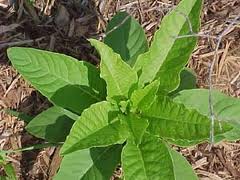
Poke leaves must be cooked before eaten. Photo by Green Deane
When is a salad not a salad? When it’s poke sallet. Though they sound the same (both pronounced “salad” and spelling can vary) the one in English means raw greens. The other in French means cooked greens. Unfortunately a popular song in 1968 spelled it the wrong way on the record label and people have been getting sick ever since. (In fairness in the song the lyrics say Annie cooked the greens. She was so poor that was all she had to eat.) Pokeweed has to be cooked, preferably boiled at least twice in two changes of water. In fact I got a message this week from a writer who thought poke sallet meant salad and got ill from eating a salad of raw poke leaves. Don’t do it. This brings up another aspect of pokeweed. People ask me if boiling it twice reduces the nutrition. The answer is hardly at all. The only vitamin pokeweed has is vitamin A which is a fat soluble vitamin. Boiling it doesn’t have much effect on the vitamin A content. Also, boiling the poke weed carries away the toxins and makes the magnesium in the green chlorophyl more available. Cook your poke! My videos on Poke Weed are here and here. To read more about pokeweed, go here.
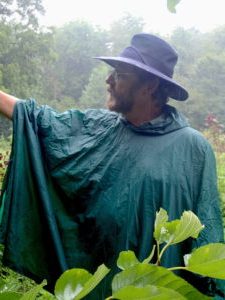
Classes are held rain or shine or cold. (Hurricanes are an exception.) Photo by Kelly Fagan.
Foraging Classes: Because of several early tropical weather system, there will be only two foraging classes over the next two weeks hoping to dodge heavy rains.
June 24th, Lori Wilson Park, 1500 N Atlantic Ave, Cocoa Beach, FL 32931 9 a.m. Meet at the middle bathroom, 9 a.m.
July 1st, Eagle Park Lake, 1800 Keene Road, Largo, FL 33771. Meet at the pavilion near the dog park.
Bring cash on the day of class or click here to pay for your class
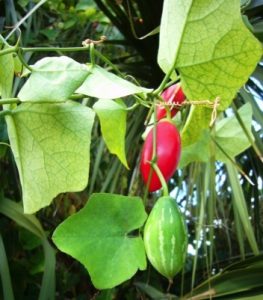
Ivy Gourd fruit ripens to red. Photo by Green Deane
Part of foraging for wild food is also preserving it. As the Ivy Gourd (tindora) is a prolific producer. What to do with all its stubby cukes is a challenge. A lot of them go into salads, and many become pickles. Lacto-fermenting is easy and a traditional way to preserve a wide variety of food. It works well with the Ivy Gourd because it soften their skin which is slightly tough. The basic fermenting process could not be simpler. The “pickles” are made by putting them unwashed in a jar with a pint of water and two tablespoons of sea salt. You then partially fill a plastic baggy with water to put on top of the gourds to assure they are totally covered with the solution and there’s no air space. Cover and wait a few days, no need to refrigerate. The high salt content in the water inhibits bad bacteria but encourages the right (lacto) bacteria. Within a few days to a couple of weeks — usually just days — you have pickles and they’re probiotic. Not only have I planted this food-producer in my backyard but I have found three more in the wild near where I found this one originally. I think they might come home with me this fall. You can read more about the Ivy Gourd here.
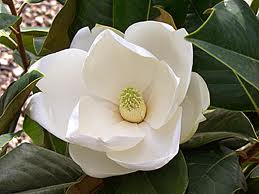
Magnolia virginana blosson. Photo by Green Deane
Is it time to rethink Magnolias? The leaves of Magnolia grandiflora can be used like a bay leaf and the blossoms lacto-fermented into a condiment (quite popular in England.) M. grandiflora is not the best leaf in the wild for flavoring, however. That distinction goes to a relative, M. virginana, also known as the Sweet Bay. It’s among the easiest of trees to identify. As I have been making wine lately — see the article below — I pondered making a test gallon of Magnolia Blossom Mead… Magnolia scent and honey… It temps the senses nicely in theory but… The first point is mead. It’s made from honey and takes a long time to ferment. What materials you have in the mead stay in there for a long time. So, if you are going to add cinnamon you only need to add a little because it all gets extracted over time. I am making some Juniper Berry Mead now. Maybe it will be ready next year. Wine can be much different. If you make a fruit wine the fruit is in the “must” for about a week only. It’s an overlay flavor not the total focus. Wine is today, mead is tomorrow. With Magnolia Blossom Mead in mind I picked 580 grams of M. grandiflora blossoms. As I didn’t want them sitting in the mead for months or years I brought them to boil in a gallon of water then let them cool. The resulting tea was exceptionally bitter and vegetative tasting. Not the best candidate for mead or wine. Plan B: Magnolia Blossoms sparingly might be a good hops replacement in making beer and give a nice nose, too. The bitterness of the M. grandiflora raised another possibility: The Sweet Bay blossoms might be a better choice. That is Plan C. I’ll collect some of those blossom and give them a go.
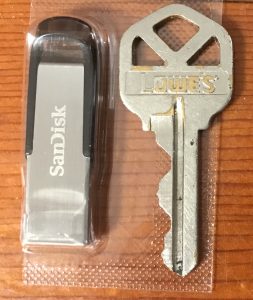
You get the USB, not the key.
150-video USB would be a good spring present and is now $99. My nine-DVD set of 135 videos has been phased out. The USB videos are the same videos I have on You Tube. Some people like to have their own copy. The USB videos have to be copied to your computer to play. If you want to order the USB go to the DVD/USB order button on the top right of this page. That will take you to an order form. I’d like to thank all of you who ordered the DVD set over the years which required me to burn over 5,000 DVDs individually.
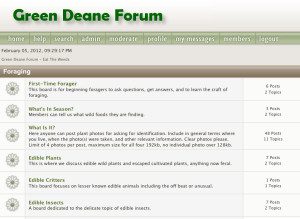
Green Deane Forum
Want to identify a plant? Perhaps you’re looking for a foraging reference? You might have a UFO, an Unidentified Flowering Object, you want identified. On the Green Deane Forum we — including Green Deane and others from around the world — chat about foraging all year. And it’s not just about warm-weather plants or just North American flora. Many nations share common weeds so there’s a lot to talk. There’s also more than weeds. The reference section has information for foraging around the world. There are also articles on food preservation, and forgotten skills from making bows to fermenting food.
This is weekly newsletter #563. If you want to subscribe to this free newsletter you can find the sign-up form in the menu at the top of the page.
To donate to the Green Deane Newsletter click here.