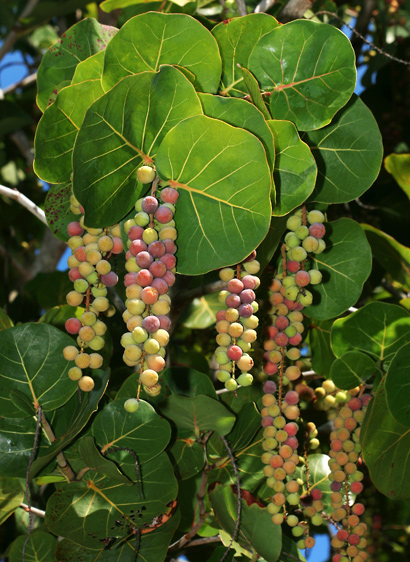
Ripening Sea Grapes

 Sea-Grapes: Coastal Caterer
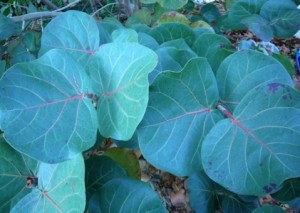
Notice the red veins in the leaves

A lifetime ago I spent many a night on a dark Florida beach near the Space Center sleeping out under Sea-Grapes. Now they would arrest you for trespassing if not threats to national security, one of the disadvantages of more people and more lawyers. But, oh what fun we had.

I can well remember the first time I saw Sea-Grapes: How exotic looking! Huge round leaves, racemes of edible fruit, large, dense stands with natural canopies underneath. Great sites for romantic rendezvous full of promise. I even wrote a few love letters on the dry leaves…composed on the spot, of course….
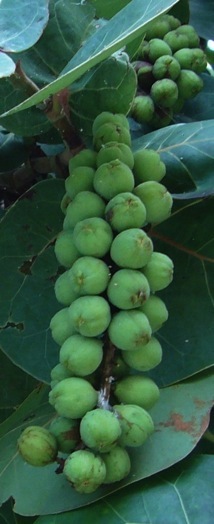
More a string of fruit not a bunch

Sea-Grapes (Coccoloba uvifera  koe-koe-LOE-buh yoo-VIFF-er-uh) are gangly, sprawling bushes or small trees found near beaches throughout tropical America and the Caribbean, including mid- and southern Florida and Bermuda. They’re also landscapes plants inland with ambitious growth. I have two species in my yard at least 90 miles outside of their accepted range, a carambola and a sea-grape. Sea-Grapes reach a maximum height of 50 feet or so under prime conditions but most are around 10 feet tall locally. The bark is smooth and yellowish. In late summer it bears green fruit, about the size of a large marble, in large skinny grape-like clusters that turn purple (think of two elephant ears and a nose, except the ears are leaves and the nose a long, skinny string of grape-like fruit.)  To say the fruit has a pit is an understatement. The fruit is mostly pit. When ripe the fruit can be eaten right off the tree or used for jelly. Besides jelly, the fruit can also be made into wine. A gum or resin from the bark has been used for throat ailments and the roots used to treat dysentery.

Officially the tree is unable to survive frost. But mine has survived several and two light freezes of just 32 degrees for a few hours. It is moderately tolerant of shade, but will grow towards the sun. It’s very tolerant of salt so it is often planted to stabilize beaches. The wood of older trees is highly prized for cabinet making and boiling the wood yields a red dye. Sometimes leaves veins are red.
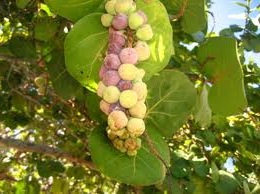
Sea grapes ripen irregularly

Dr. Julia Morton, who wrote “Wild Plants for Survival In South Florida” said of the Sea-Grape: “Shrub forming clumps on exposed beaches, or large trees… branched close to the ground acquiring broad, massive rounded head…. young leaves silky bronze, old leaves turn yellow or red and fall a few at a time. Flowers whitish, tiny, in “rattail” spikes four to 12 inches long, fruit, greenish-lavender or reddish-purple, slightly velvety, plump-oval or pear-shaped, 3/4 of an inch long, in compact, grape-like clusters. Flesh thin, juicy, acid to sweet, musky, covering single, plump, sharp-pointed, hard, brown seed with ivory tip… Leaves are useful as plates or, pinned together with twigs or thorns, can be made into hats, also serve as emergency notepaper.”

Nikolaus Joseph von Jacquin, 1727-1817

A member of the buckwheat family, Sea-Grapes were named twice. Its first botanical name was Polygonum uvifera, in 1753, reflecting that it is in the buckwheat family.  The Coccoloba genus was created in that family and the Sea-Grape was slightly misnamed Coccolobis uvifera by Nickolaus Joseph von Jacquin — must not have known his Dead Latin. Linnaeus, the original namer, came back in 1759 correcting the name to Coccoloba uviferaCoccoloba comes from “cocolobis” a type of Spanish grape; uvifera means “bearing grapes” or “like grapes.” Jacquin, incidentally, started out as a professor of Minerals and Mining at a Mining Academy in Slovakia. In 1768, he was appointed Professor of Botany and Chemistry and became director of the botanical gardens of the University of Vienna. For his work, he was knighted in 1774, made a baron in 1806.  His youngest son, Emil, and his daughter, Franziska, were close friends of a hot composer of the time with several big hits, Wolfgang Mozart.

Three more things: Sea-Grapes are an important honey source, they make a good bonsai candidates, and a patent was filed in 1999 to use leaf extracts to control blood sugar levels in diabetics. Oh, and the tree is protected in Florida. It is illegal to destroy them. More specifically, you cannot harvest from public land. On Private land you need the owner’s permission. Here is the statute:
 

State of Florida seal

161.242 Harvesting of sea oats and sea grapes prohibited; possession prima facie evidence of violation.—

(1) The purpose of this section is to protect the beaches and shores of the state from erosion by preserving natural vegetative cover to bind the sand.
(2) It is unlawful for any purpose to cut, harvest, remove, or eradicate any of the grass commonly known as sea oats or Uniola paniculata and Coccolobis uvifera commonly known as sea grapes from any public land or from any private land without consent of the owner of such land or person having lawful possession thereof. Possession of either Uniola paniculata or Coccolobis uvifera by other than the owner of such land shall constitute prima facie evidence of violation of this section. However, licensed, certified nurserymen who grow any of the native plants listed in this section from seeds or by vegetative propagation are specifically permitted to sell these commercially grown plants and shall not be in violation of this section of the law if they do so, as it is the intent of the law to preserve and encourage the growth of these native plants which are rapidly disappearing from the state.History.—s. 1, ch. 65-458; s. 1, ch. 67-150; s. 280, ch. 71-136; s. 1, ch. 71-153; s. 1, ch. 73-258; s. 16, ch. 85-234; s. 11, ch. 2000-197.

Green Deane’s “Itemized” Plant Profile
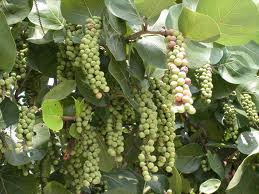
Sea-Grapes can be prolific

IDENTIFICATION: A seaside, warm-climate tree with huge round leaves with red veins, a shrub near the north of it range, a tree in its range.

TIME OF YEAR: Bears fruit in late summer or fall.

ENVIRONMENT: Native to coastal areas such as Florida and the West Indies. Can be grown inland in freeze-protected areas. In Florida rarely north of Daytona Beach on the east coast and St. Petersburg on the west coast. It is also found in Puerto Rico, the Virgin Islands and Hawaii. It is not reported in Mississippi but is found on the coast of Alabama. Naturalized in Mexico south to northeastern Brazil and on the Pacific south to Peru.

METHOD OF PREPARATION: Ripe red fruit out of hand off the tree or made in to jelly or wine.
{ 49 comments }

Sassafras tea drinkers have less colds

Sassafras Albidum: Beaux Gumbo

Bet your sweet sassafras!  If you’re on the young side ask anyone not on the young side: Root beer used to taste a lot better, a whole lot better. Why?

Because it used to be made from the Sassafras tree. Nowadays the root beer flavor is concocted from “artificial ingredients.” Why?

Dried leaves are gound to make “file”

Because some researchers force fed some lab rats excessive amounts of sassafras oil —safrole — and they got ill.  That people didn’t get ill from drinking root beer was irrelevant. Safrole was ordered off the market and the state of Louisiana nearly left the union. One can’t have file gumbo without file (fee-LAY) and file comes from the sassafras tree (Sassafras albidum.) A compromise was reached with the gumbo foes:  The leaves have barely if any safrole (SAFF-roll) in them so file was allowed but nearly all other consumed uses of the sassafras tree were out.

Non-edible fruit

In all fairness, safrole is a strong oil — also found in the yellow anise tree and the camphor tree. It was used to induce abortions, perhaps a muted reason why research was conduced on safrole in the first place, and why a reason was found to ban it. The lab rats who got extremely high doses ended up getting tumors in their livers and we got root beer tasting like bubble gum.  But, as Dr. James Duke, below left, the author the Handbook of Edible Weeds, has written, safrole has to be put in perspective: Root beer with safrole was 1/13 as cancer-causing as alcohol in beer.

Dr. James Duke, author of the Green Pharmacy

Several thousand tons of Safrole are produced yearly outside the United States in China and Brazil. Distilled Safrole is used in perfume manufacturing and in natural insecticide products. Safrole shipments, however, are  highly monitored internationally because Safrole is also used in the manufacturing of the illegal drug Ecstasy. Another reason to ban it. In high doses Safrole is also hallucinogenic. Said another way, sassafras is unhealthy if you abuse it. File, fortunately, is still legal, so you can buy it or make your own, if you can find a tree.

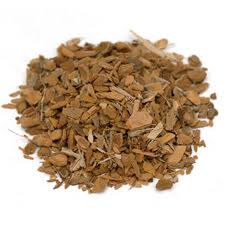
Sassafras Root Bark

Depending where you live the Sassafras tree —which can live to 1,000 years old — is one of the most common tree you never see, along with the Hercules Club, another topic de blog here. In Florida it’s easier to find marijuana growing in the wild than a sassafras tree… No, that’s not what “eat the weeds” is all about. But, if you do look you can find sassafras They reportedly grow as far north as Maine but I grew up in Maine and never saw one. If anyone knows where there is one in New England, please take a picture and send it along. At least one grows in Connecticut, according to a friend of mine. The usual given range is Massachusetts south to central Florida, west to Iowa and Texas. Locally — Central Florida — I know of one patch of them. One. That said when I take a month off in the summer to go hiking in the North Carolina mountains sassafras is everywhere, nearly a weed.

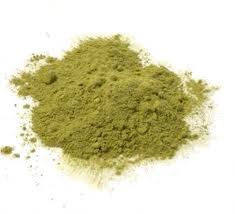
File gumbo powder

If you tear or crush sassafras leaves, they smell like root beer. You can make tea from the leaves by pouring boiling water over a small handful and letting them seep off heat for a few minutes, straining out the leaves. The roots of a young sapling make a better tea. It also makes a great jelly. Brew three strong cups and follow the Sure Jell recipe. Incidentally, the sassafras fruit resembles a blue berry in a red cup. It is NOT edible.

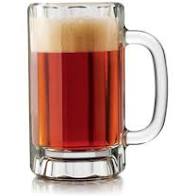
Mug of Root Beer

The name Sassafras (SASS-uh-frass) has been around for over 400 years, and there are several notions of where it came from. The leading contender is that it is a corruption of “saxifrage” which is Spanish from Dead Latin  for “stone breaker” a reference to using sassafras for the treatment of kidney stones. It is diuretic. Albidum (AL-bih-dum) is also from Dead Latin and means white, referring to the tree’s white roots.  Perhaps out of political correctness, many sites say Sassafras and Albidum are American Indian words but there is little evidence to support that.  Incidentally “Root Beer” was originally called “root tea” by its inventor Charles Hires. A friend, however, suggested he would do better if he called it  “root beer.” Hires, a pharmacist, was on his honeymoon when he came up with the formula for root beer.  I’m not sure what that said about his marriage.

Sassafras has no natural enemies and its oil has been used as an antiseptic, a pain killer, and externally to treat lice and insect bites. It was once used in soaps, perfumery and toothpaste. The twigs were used as toothbrushes. Before WWI, research reportedly showed people who drank sassafras tea had fewer throat infections and colds. The wood is heavy, strong and aromatic and was used in boat and bed building. The bark can yield an orange dye.

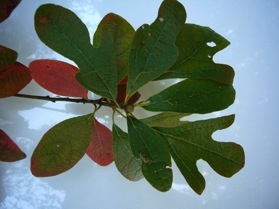
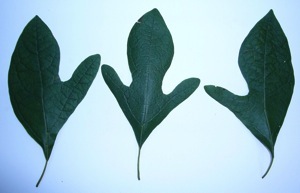
Sassafras has three “mittens”

The sassafras is nearly unique among trees by having different shaped leaves on the same tree: Right-hand “mittens,” left-hand “mittens” and double-thumb “mittens.’ On rare occasion, there will be a full glove leaf with five lobes. The leaves have no teeth. The only other “edible” tree that can claim different shaped leaves on the same tree is the Mulberry, but those leaves have teeth. In fact, my red mulberry has only oval leaves and no “mittens” at all. However Paper Mulberry trees do have very large, sand papery mitten leaves with teeth. Paper Mulberry leaves, however, are two to three times larger than sassafras leaves.

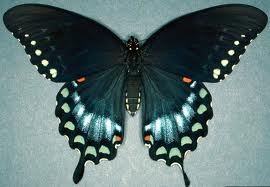
Spicebush Butterfly

Besides having an attractive scent for human bird watchers, the sassafras’ deep blue berries are eaten by some 28 birds including bluebirds, robins, red-eyed vireos, pileated woodpeckers, bobwhites and turkeys. Bears like them too. Beavers like the bark ( and apparently are made of sterner stuff than cancer-catching lab rats.) Sassafras was one of the first exports from the new world to Europe. As early as 1584 entrepreneurs were sailing to the Americas exploring and looking for sassafras.  In 1603 two ships left England for North America for the singular purpose to take home sassafras. By 1610 sassafras was so prized that providing sassafras oil was one of the conditions of the Virginia Charter.  (See my Pocahontas and Gamma Rays article.) Back then, in today’s money, a ton of sassafras was worth more than $25,000. I got my sassafras tree, however, for free.

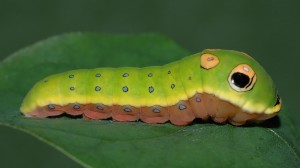
Spicebush butterfly larva

In fact,  got my little sassy sassafras tree from feeding a goat. I stopped along a rail trail one day to feed a milking goat some grass that was just outside her reach — I like goats a lot — and noticed a  sassafras sapling. I transplanted it to my yard because I thought it would be an unusual tree to have and I wouldn’t have to go looking for the next 1,000 years for leaves to make file. File, by the way, is not put in a gumbo, but is a thickening flavoring sprinkled on top, but I will leave those details to the Creole cooks. To make file:

Cut small branches from the tree in the fall when the leaves are starting to turn color. Wash them with water, a spray from a garden hose will do. Hang them to dry in a cool, dark place, at least out of the sun. Sun drying will fade the leaves.  When dry remove leaves from the branches, and if you want, the stems from the leaves.  Crush the leaves by hand. Put in a blender in small batches and blend until a powder.  Sift the powder to get out any large pieces and store in a well-sealed container. A little goes a long way.

Sassafras in autumn

The state, national and world champion Sassafras tree — so named in 1951 — is in Owensboro, Kentucky. It is some 23 feet around and 78 feet high. Only 300 years old, it survived centuries of harvesting only to be threatened with a road widening in 1957. Then owner of the tree, Grace Rash, would have none of that. Her late husband, Dr. O.W. Rash, nominated the tree for the national register. She met the bulldozers with a shotgun and held everyone at gunpoint until a call to the governor, A.B. “Happy” Chandler, produced a pardon for the tree. The road was widened and the tree stayed, thanks to Grace, and Happy. Nowadays a governor would first take an opinion poll before acting, Grace would be locked up and on psychotropic drugs, and the tree dumped in a land fill replaced by a spindly designer picked Chinese elm sapling.

Oh, paleobotanists say the sassafras is like the ginkgo, a living fossil, going back some 100 million years…. They should’ve stuck a label on the tree:  CAUTION: Eating sassafras may produce cancer in dinosaurs.

 Green Deane’s “Itemized” Plant Profile

IDENTIFICATION: Leaves, 3 to 6 inches long with 1 to 3 lobes; 2-lobed resembles a mitten, 3-lobed leaf resembles a trident; green above and below and fragrant when crushed. Flower small showy, fruit, dark shiny blue ovoid in a red cup attached to a red stalks, maturing late summer. Twigs slender, green and sometimes hair, spicy-sweet aroma. Usually a shrub in the north, can be a tree in the south but usually a small scraggly tree.

TIME OF YEAR: Available year round.

ENVIRONMENT: Dry sandy spots, full sun to some shade. Here in Florida it likes to grown like a persimmon, along the edges of woods, fields and roads.

METHOD OF PREPARATION: Dried leaves for file gumbo, fresh leaves for tea, shoots and boiled roots for tea, twigs for trail toothbrush. A cup of bark in a quart of hot water seeped for 10/12 minutes can also make a good tea.

HERB BLURB

Native American Indians sassafras the local drug store. Sassafras tea served as a pain reliever, stimulant, and diuretic. Safrole used to be called, by some, Shikimic oil. Interesting. Shikimic acid is the active ingredient in the influenza preparation Tamiflu

{ 148 comments }

Sandspurs: Cenchrus’ Secret

If I were ever to invent a torture it would be dragging someone naked through a field of sandspurs.


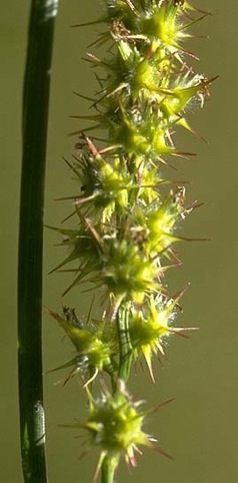
Cenchrus spinifex


One of my uncle in the United States — Wray — was a professional when it came to lawn maintenance on a grand scale. But as with the case with many professionals, he never maintained his own lawn. While I agree with that in spirit, his sandy acre in Mims, Florida, grew nothing but sandspurs; big, mean ugly ones that reached out and impaled you. Sandspurs was my first big hint that Florida was not all paradise. Those and fire ants are rites of initiation to the Sunshine state.


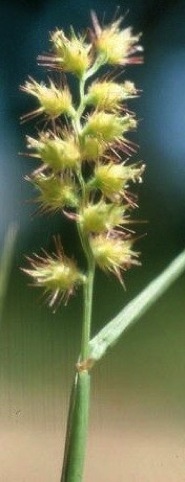
Cenchrus echinatus

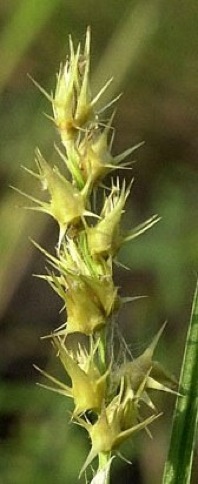
I got my revenge, however, because sandspurs are edible. It really doesn’t make a difference which of the three local species I exact my revenge on because they’re all edible. The only issue is how to get at the seeds. There are four ways. You can burn the spines off in a fire using the rest of the stalk as a handle, kind of a semi-roasting. Eat the seed and hull then and there. While you do get a little charcoal this is by far the quickest and least energy-expending way to eat the sandspurs. Don’t let the spike of spines catch on fire because it will quickly burn to a crisp (they have a high oil content.)  You want to just singe the spurs off. The second way is you can burn off the spines, pound the burned hulls off in a mortar, and winnow to get clean seeds. The freed grain parches well, makes a good porridge. Third you can put them raw in a big mortar and pound away until the spines and hulls are separated then winnow the pain away (to put in someone yard perhaps….) A fourth way is to rub the sandburs between two stout pieces of leather, separating the seed from the spines.


Cenchrus incertus


Sandspurs is one of those wild edibles that finds you, usually by getting in a shoe or grabbing onto your clothes.  When I’m going out in grassy, sandy areas I always take with me a small pair of needle-nosed pliers. They are an excellent way to remove the offeners… er… edibles… In bad years I’ve been tempted to make a beer out of them… Sandspur Beer, sticks it to ya…

As for the name, Cenchrus (SENCH-rus, KENCH-rus):  It’s from the Greek word kechri, meaning millet.  Spinefex (SPY-ne-feks) is from the Dead Latin word spina, meaning spines.  Echinatus (ek-in-AY-tus) means armed with spines. Incertus (in-KER-tus.) means uncertain, which is botanists admitting they are a bit confused by the plant and not sure what to call it. I suggest C. esculenta, (es-kew-LEN-tuh.) which in Dead Latin means edible.


Green Deane’s “Itemized” Plant Profile

IDENTIFICATION: Annual with stem tips from the lower nodes which bend and root, seed heads are spiny burs and are one to five inches long, to a half inch wide. There are two kinds of spines, flattened spines that are spread over the body of the bur and fine bristle-like spines on a ring around the base of the bur.

TIME OF YEAR:  Year round in Florida, in summer and fall in northern areas.

ENVIRONMENT:  C. echinatus grows in turf, cultivated and disturbed areas throughout warmer areas of the United States, from North Carolina to California; Mexico; Central America; South America; the West Indies; Pacific Islands; and Australia. Other versions grow as far north as Maine. Research to find your local Cenchrus.

METHOD OF PREPARATION:  Grain, parched or winnowed, then cooked like any grain. Can be used to make a beer-like drink, porrage or mixed with other grains to make bread, or used to make a thin bread itself. Can have ergot-like fungus infections so watch for that.  Ergot can look like black grains of rice.

{ 15 comments }

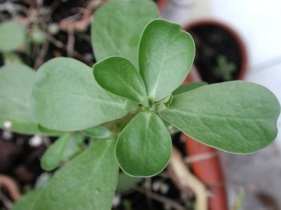
Fleshy, succulent looking, wild purslane

Purslane: Any Portulaca In A Storm

Her name was Zona. She was a grand friend-in-law

She had been a friend of the family for about a century. To be exact, her oldest son married the youngest daughter of my grandmother’s lifelong, met-as-kids, best friend. I went to high school with Zona’s granddaughter, which in a small town was closer than kissing cousins with expectations of marriage. Zona also had weeds, lots of weeds. While visiting relatives, I was asked to take a look at her weeds.

Leaves are crunchy and viscous

She was a spry widow and her house sat on a hill amid fields. The lowest field was also the local alluvial flood plain for the Royal River, which if it had been named for its true size would have been called the Royal Trickle.  Every spring, however, melting snow swelled it to near regal proportions and flooded Zona’s lower field, leaving it with rich, friable soil.  So, I looked at her black-earth garden. What Zona had was the most beautiful and ambitious plot of self-seeded purslane I have ever seen, before or since, truly an incredible bounty; deep green, plump, healthy and about as full of life and happy as any plant or weed ought to be or can to be.

As I stood there in amazement, she asked me if I knew what it was. I said yes, that it was the most nutritious green on earth and how fortunate she was.

“That?” she asked, pointing incredulously at her garden. “You can eat that? It’s a weed!”

“That,” I said, “is esteemed around the world” to which the crust crusty old gal said, “I ain’t goin’ to eat no god damned weed” and that was that.

Too bad. Purslane, sold in produce markets at every location on the rotation except the United States, is a nutritional powerhouse. It has omega 3 fatty acids and antioxidants as well as a Fourth of July parade of vitamins and minerals. I think there’s even an anti-cancer color guard in there as well. According to experts at the University of Texas at San Antonio, purslane contains 10 to 20 times more melatonin, an antioxidant, than any other fruit or vegetable they tested. It’s a fine addition to the dinner table in many forms, and it is truly difficult to understate this plant’s amazing qualities. Let me sing in praise of purslane:

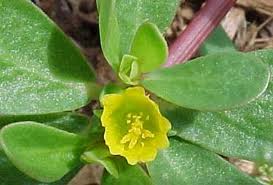
Small blossoms are open only for a day.

Regardless of what one calls it, purslane contains more omega 3 fatty acids than any other plant source in the solar system, and an extraordinary amount for a plant, some 8.5 mg for every gram of weight.  It has vitamin A, B, C and E — six times more E than spinach — beta carotene — seven times more of that than carrots — magnesium, calcium, potassium, folate, lithium — keep you sane — iron and is 2.5% protein. Two pigments, one in the leaves and one in the yellow blossoms, have been proven anti-mutagenic in lab studies, meaning they help keep human cells from mutating, which is how cancer gets started. And you get all that for about 15 calories per 100 gram (three ounce) serving. As a mild diuretic, it might even lower your blood pressure as well. Mexicans call it Verdolagao and its name in Malawi translates politely as “buttocks of the chief’s wife”, a possible reference to the plump leaves.

Henry David Thoreau

Over the centuries, many have written about purslane. Even the original Back-to-Nature Guy, Henry David Thoreau, knew of it, penning in 1854 at Walden Pond: “I learned from my two years’ experience that it would cost incredibly little trouble to obtain one’s necessary food, even in this latitude; that a man may use as simple a diet as the animals, and yet retain health and strength. I have made a satisfactory dinner . . . simply off a dish of purslane … which I gathered in my cornfield, boiled and salted. . . . Yet men have come to such a pass that they frequently starve, not for want of necessaries but for want of luxuries.”

This fantastic “weed” is virtually underfoot everywhere, including Walden Pond, apparently. One can even find it surviving in places like inner New York City. The strain I grow in my garden came some eleven years ago from a sidewalk crack in Tarpon Springs, FL., a coastal Greek community. There had been a freezing cold snap and it had survived nestled next to a restaurant. I thought something that hardy would be a good addition to my garden. Now I don’t have to plant it. When it comes up I just move to a convenient spot and it re-seeds itself.  I have tried cultivated versions and they simply are not as tasty or prolific as my survivor purslane. By the way, the seeds have a 30-year viable shelf life.

Portulaca oleracea, (poor-two-LAY-ka oh-ler-AY-see-a) whose name means “milk-bearing cultivated plant” or “little door cultivated plant” is a native of India and the Middle East, but is naturalized throughout the world. Sediment deposits in Canada strongly suggest it came to North American before Columbus, either with Leif Erickson and raiding party, or earlier with humans from Asia to Alaska. It is found as early as 7th century BC in Greece, and Greek texts from the fourth century BC say it’s a plant no respectable Greek kitchen garden, or medicine cabinet, is without. Theophratus called it  “andrákhne” — which might mean “man weed”… any ancient Greek experts can correct me  —  and said April was the best time to plant it.  Slightly sour and mucilaginous — that’s where “milk-bearing” comes in — purslane can be used in salad to soups to omelets. The stems can be pickled. Australian aborigines used the minute seeds to make seed cakes and the Greeks made bread from the seed flour.  Contemporary Greeks call it “Glistritha.”The words “purslane” and “porcelain” have the same source and similar development. Latin for sow (pig) was porca. It was also the Roman slang for the vulva, and the plant was used for uterine complaints.  A diminutive of that, little vulva, became porcillac in Italian to porcellana in old French then to English as purslane. For porcelain, it went from porca to porcella which was the nickname of the cowrie shell because of its vulva-like appearance. In Italian the shell became porcellina. When a glaze was developed for china, it was named after the cowie shell because of its similar shiny appearance and became porcelain then into English as porcelain.Small barrels of edible seeds make the plant extremely prolific

Crete, an island I have come to enjoy and traipse around, is well-known for this purslane salad, flavored with locally-grown capers. The yogurt dressing makes this a cooling repast in hot weather.

* 2 1/2 cups of strained, thick yogurt

* 1 cup of purslane, coarsely chopped

* 1 cup of romaine lettuce, chopped in chunks

* 1 teaspoon of mashed or minced garlic, about one

* 1/4 cup of olive oil

* 3 1/2 tablespoons of red wine vinegar

* 2 tablespoons of capers

* salt

* freshly ground pepper

Combine all ingredients in a salad bowl and refrigerate for a half hour to an hour


The following recipe is from Diane Kochilas, a well-known Greek chef and writer. She has several publications including “The Greek Vegetarian” for those of you who are. She’s an attractive lass… I wonder if she’s single?

Potato-Purslane Salad

Ingredients

3 medium waxy potatoes, such as Yukon golds or fingerlings, sliced into chunks, about ½ inch thick

salt to taste

1/3 cup olive oil

3 tablespoons lemon juice (from about 1 ½ lemons); alternatively use red wine vinegar

About 1 cup purslane, thoroughly washed, torn or chopped (stems are tangier than leaves, taste first to see if you like)

½ cup red onion, thinly sliced (alternatively, use a few chopped scallions)

Other options:

½ cucumber, peeled and thinly sliced, into half moon shapes

1 large tomato, roughly chopped

½ cup fresh herbs – mint, parsley, chervil – whatever suits you

Method

Bring a medium saucepan of water to a boil and add salt and potatoes. Cook until tender, about 10 minutes. Drain thoroughly and then pour into a serving bowl, spreading even to cover bottom surface. Combine olive oil and lemon juice in a small dish, whisking until well emulsified, then pour over potatoes. In a layered fashion, add purslane, onion, plus any additional ingredients. With a wooden spoon, stir to combine, and taste for salt. Makes enough for two or three as a side dish.

This recipe from Florida’s Incredible Wild Edibles by Dick Deuerling and Peggy S. Lantz

Purslane leaves and stems may be boiled well with just enough water to cover the herbs then discard the first water and pour a smaller amount of hot water over the greens and again boil them. Reduce heat and simmer until tender. Finely chop the herbs and add salt, pepper, vinegar, cinnamon or nutmeg. You can add oil, butter, or bacon fat, and mix with diced hard boiled eggs and put them in a casserole with cheese and bread crumb topping, then bake until cheese melts. 

Pickled Purslane

1 quart purslane stems and leaves

3 garlic cloves, sliced

1 quart apple cider vinegar

10 peppercorns

Clean the purslane stems and leaves by rinsing with fresh water. Cut into 1″ pieces and place in clean jars with lids. Add the spices and pour the vinegar over the purslane. Keep this in the refrigerator and wait at least two weeks before using. Serve as a side dish with omelets and sandwiches. You can pickle the purslane raw or blanche it for two minutes in boiling water first, but cool off quickly in ice water.

Green Deane’s “Itemized” Plant Profile

IDENTIFICATION: Smooth, reddish, mostly low-growing stems, alternate spatula leaves clustered at stem joints and ends, yellow flowers, capsule seed pods. Very fleshy. NOT HAIRY. CLEAR SAP. Those are important, not hairy, and clear sap.

TIME OF YEAR: Any time in season, spring and summer in northern climes, year round in warmer areas.

ENVIRONMENT: Nearly any disturbed grass, likes full sun, often grows two crops in Florida, spring and fall, tolerates the summer heat.

METHOD OF PREPARATION: Leaves and stems raw in salads, cooked in soups, thick stems pickled. Wild version invariably tasted better than cultivated versions.  Has a slightly sour/salty taste.

{ 139 comments }

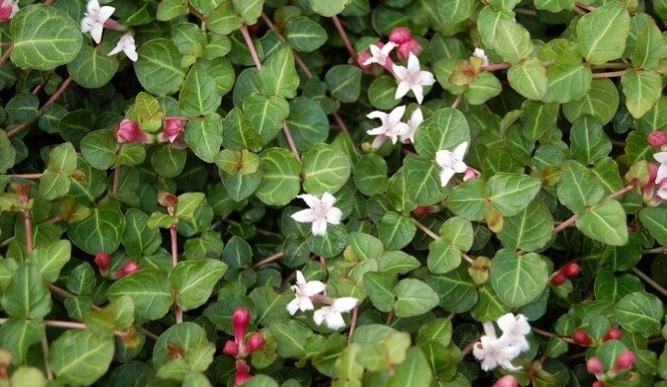
Double flowers a yellow mid-vein aid identification

Mitchella repens: Madder Berry

The Partridgeberry will not save you from starving but it can make your salad prettier and might keep you alive or ease your pain.

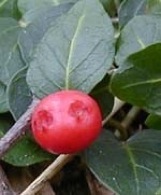
Two-dimpled berries

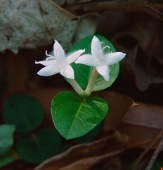
Partridgeberry, Mitchella repens (mit-CHELL-ah REP-enz) has its supporters and detractors, some call it insipid, others call it sour like a cranberry. My friend, forager Dick Deuerling, liked to use them to garnish salads. I found them juicy, if not messy, and very mild in flavor, nearly none. It has up to eight seeds and is nearly impossible to misidentify. There is also a version that grows in Japan. Besides a distinctive leaf, green with a yellow mid-vein, all partridge berries have two dimples because each berry grows from two hairy flowers. Not only does one berry come from two flowers but one flower has a short pistil and long stamens and the other a long pistil and short stamens. They should have called it the Mirror Berry. The plant flowers between April and June and sometimes again in the fall. The berries ripen from July to October and because they are low in fat often persist for several months if not snatched by woodland creatures.

Double flowers are not identical

By far the greater calling of the Partridgeberry in North America has been medicinal. A tea from the leaves has a very long and extensive history for easing childbirth and menstrual cramps. That tea is also diuretic, which can lower blood pressure. In the Madder family, the genus Mitchella honors John Mitchell, 1711-1768, a Virginia botanist who actually misidentified the M. repens. Repens means low growing.  M. repens is a vine that does not climb. It does make an excellent ground cover. The berry is favored by the ruffed grouse hence the name Partridgeberry. It was also called Squaw Vine for its use by women.

Green Deane’s “Itemizing” plant profile

IDENTIFICATION: A low-growing non-climbing vine often found under leaf litter in deciduous forests.  The fruit is a bright red berry, oval, 1/4 to 3/8 inches across, persist through the winter if not eaten. Never abundant. Flower half- inch long, four or five white to faint pink fuzzy petals, appearing mid-summer.  Leaves opposite, evergreen, oval to heart-shaped, half inch across, parallel veined, dark green above with a paler yellow-green midrib, pale yellow below.

TIME OF YEAR: Depending upon climate, July to October

ENVIRONMENT: Moist woods, usually among trees that lose their leaves in winter.

METHOD OF PREPARATION: Trail side nibble, salad garnish, sauces, pies and jams. Use like cranberries. Leaves and berries make herbal teas of various applications.

{ 10 comments }