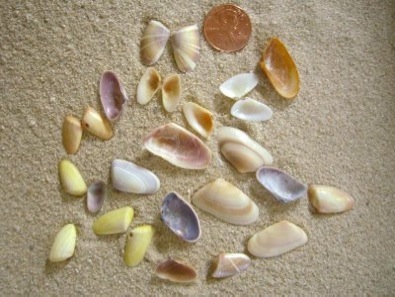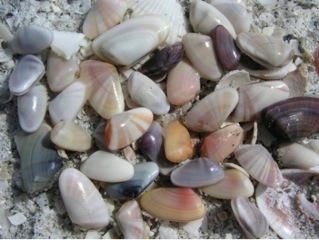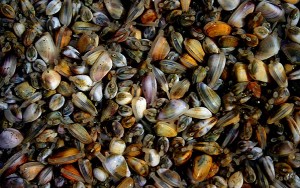
Coquina’s pastel shells render and delicious green broth

Coquina: Donax: Good Eats

Ounce for ounce there is probably no more delicious seafood than Coquina. The problem is getting an ounce of it, so we usually settle for its fantastic, green broth.

Coquina are usually harvested at exactly low tide

Coquina (ko-KEE-nah) is a Donax (DOE-aks) a small, edible marine bivalve found through out the world. In the Americas, Natives collected them off the beaches, most notably along the Atlantic southeast and California coast, but they are also found from Long Island to Washington State to France, Australia et cetera. If you have a natural sandy beach with surf, you can have Donax.

The clam is rarely longer than half of an inch. It has two siphons that look like snorkels. One takes in oxygen and food, the other off loads waste. They live in colonies just below the surface of the sand in the area of the beach called the littoral zone,  the area that’s usually exposed to the sun twice a day. Donax burrow into the sand at the edge of the surf so each incoming or outgoing waves can bring food.  You’ll find them with Mole Crabs, which are also edible. (See a separate article on Mole Crabs. I have a video on both.)

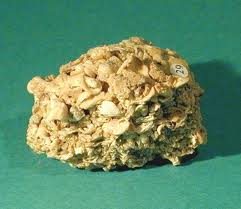
Over time the shells form a rock called coquina

In Florida the species is Donax variabili, locally called Coquina, whose shells make a soft rock for building. On the American Pacific coast it is Donax gouldii, locally known as Bean Clam or Wedge Clam. The Donax trunculus is found in France and is called Tellin, or Telline. The Australian Donax had a name change. It was Donax deltoides but is now called Plebidonax deltoides, known locally by many names: Pipi,  Goolwa Cockle,  Coorong cockle, Ugari and Eugarie. No matter what you call it, it still tastes great.

The only warning is they are subject to red tide like other mollusks, so don’t collect them if there has been a red tide until authorities say its safe. The next question is, how do you collect them, since they are tiny, usually about the size of your little fingernail.  I’ve tried many ways and an old colander, a small shovel, and a bucket work the best.

Tidal changes are not great in Florida, so it has wide beaches that tend to be flat. That is where one finds Coquina, not where the waves crash ashore, but where they wash gently between high and low tide. In fact, each Coquina’s has what

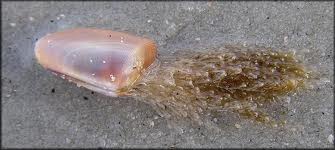
Coquina showing beard

looks to be a little bit of seaweed attached to one end and that pops up when a little water is over them and stays for a few seconds after the wave retreats. That is how one finds a bed of them. The smooth sand will be clear, a small wave comes in and recedes and you will see a multitude of tiny tuffs dotting the sand that then disappear into the sand. A shovel full of that sand usually produces hundreds of Coquina. Dump the sand into your colander, rinse the sand away, and dump the Coquina into your bucket, which has sea water in it. Of course, two people with two colanders works the best, one filling and one rinsing. You can easily collect gallons of them. The only odd part is they live in colonies, so you will go from patches of beach with them to patches without.

Californias’s “Bean Clams” Donax gouldii

As for cooking….Rinse them very well; place in a pot with enough cold fresh water to almost cover the shells. Bring to a boil; reduce the heat and simmer a few minutes, 10 to 15 will do. Drain off the broth and serve. Cream and or butter enhances the flavor and it’s also great chilled. I think it is also the basis for a great potato puree. As for the tiny bits of meat…. they are edible, but it’s hard to separate from the little shells and often gritty. But I have eaten a lot of that, too.  In Australia they apparently separate the meat commercially. I’d like to find an easy at home way of doing that.

Lastly, there is some humor in the naming of the Donax. It is among the smallest of edible shellfish, but Donax usually means a giant reed. There are two possible explanations. One is the donax was a large split reed (in two) and the little Coquina has two siphons. A more poetic view is “donax” means “a thing of beauty” and indeed the little shells are pretty. The species name, variabili means changeable, referring to coloration.

{ 32 comments }

Usnea

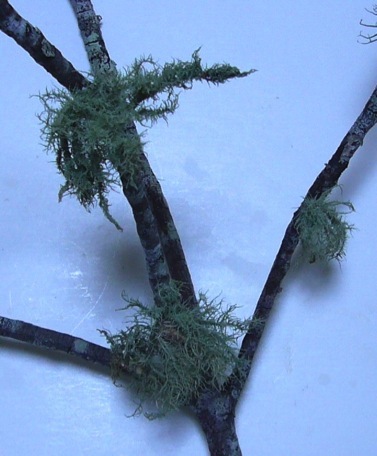
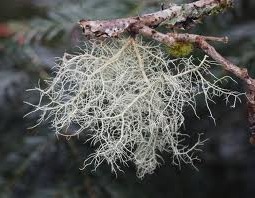
Usnea has only one attachment to a tree

USNEA is not an international committee created by the United Nations. It’s a likable lichen. In fact all but two of the 20,000 or so lichen are forager friendly, if you prepare them correctly. Of the bunch, Usnea gets the Miss Congeniality Award, or the Most Likely to Succeed.

First, Usnea (OOS-nay-ah) is relatively low in acid (7% tops) and in small amounts can be eaten as is without soaking, and I have a tender tummy so it is quite compatible. Next, it is mostly carbohydrates, often 96%. It’s nearly all food and high in Vitamin C.  Everyone from Native Americans to Europeans to the Chinese used it to dress wounds. What more could you ask for? Here in central Florida it is seen most often on oak trees, but in other areas it can be found on conifers as well as hickory, walnut, apple, mulberry, and golden rain trees. Recently I found some on sumac. Here it is one or two inches long, farther north it can be four or five inches long or more.

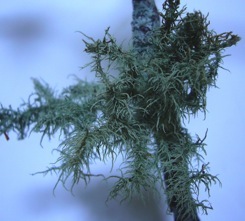
Usnea is round, hairy looking, not flat

All lichen, including Usnea, should be soaked in several changes of water if one is going to eat more than a small amount of it. The leaching reduces the acid level and bitterness. Still, for legal purposes, everything comes with a warning these days. This lichen has been promoted for weight loss via an increase in the metabolism rate. There is no research on the safety or efficacy of eating Usnea for weight loss. I know I like it right off the tree in amounts about one/third to one half the size of a cotton ball, eating it as an occasional trail-side nibble.  Larger amounts should be leached of the acid or it will irritate your lower digestive track. Individual results can vary, try cautiously. Some times it is sweet off the tree, some times bitter. Of the weight loss claims I know nothing.

Usnea has a white, elastic inner core

Usnea is not hard to identify if one makes sure to look for specific markers. First it resembles hair, round, and is known as “Old Man’s Beard” and “Beard Lichen.” Technically it is a fruticose lichen, or a hanging hair lichen.  It also resembles Spanish Moss, which was named after Usnea because Spanish Moss looks like it. Here is the big difference between the two:

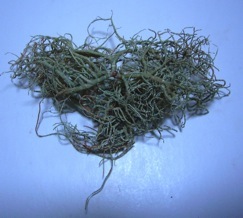
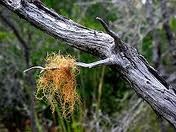
Usnea has a white, elastic core going though its main trunk. If you gently pull it apart you will see a white core, it might even stretch. Spanish Moss has a black core. In fact, to my knowledge Usnea is the only lichen with a white core.  Also most Usnea is gray green and does not change color through the season (there are exceptions. There is a red Usnea but also usable.) The point is, always pull apart the largest piece you can find and check for a very clear, very definite, white core.

Florida Ramalina, photo by Michael Drummond

Florida Ramalina, photo by Michael Drummond

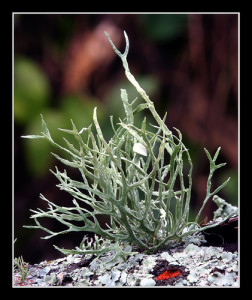
Another lichen Usnea gets confused with is Ramalina, which also grows locally and often in profusion. From a distance they can look the same. However, Ramalina like Usnea attaches with one point but its branches are flat, Usnea is round. It’s branches do not look hairy, Usnea looks hairy. And as mentioned, Ramina does not have a stretchy, white inner core. When you pull on a piece of Ramalina apart it breaks. Usnea usually stretches though old and dry Usnea can break but you will still see a white core.

In northern climes Usnea grows larger

The value of Usnea cannot be understated. For external wounds is can be a lifesaver to prevent infections and gangrene. Internally it is a pain reliever, broad spectrum antibiotic and works well against all gram-positive and tuberculosis species of bacteria (which reminds me … the roots of the Caesar Weed, a totally different plant, are good against gram-positive and gram-negative bacteria.) In modern times Usnea has been used to make skin creams, vaginal insertions, douches, and mouthwashes.  Because it is also absorbent it has been used for diaper material and menstrual applications. It has been credited with stopping by decoction gangrene. When used externally or put in a tincture it turns rust-colored.

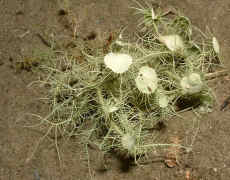
Usnea in reproductive mode

How many species of Usnea there are is anybody’s guess. There are at least several hundred though the number keeps changing. All you really need to know is how to identify your local Usnea. Usnea is Latin for the Arabic word ushnah, meaning ‘moss’. How Usnea is said is a bit of debate: OOS-nay-ah or oos-NAY-ah are common as is US-nay-ah. Which ever way you say it is not important: Just make sure you have the right plant.

Usnea rubicund

It is usually said there are only two known toxic lichen out of 20,000, but no one knows for sure. One of those two is like a florescent lime-yellow green beard (no white core) and the other powdery, wrinkled yellow. In fact, you should avoid any lichen that is yellow or has yellow parts. That’s vulpinic acid best avoided. Also, while lichen have a lot of carbohydrates, the availability of it varies from lichen to lichen.

And in the “for what it’s worth department” Usnea is excellent bait for deer. And if you are in northern climates, really northern climates, lichen and human urine are even better deer bait. Apparently the deer in the frozen north crave salt and can detect it in human urine.

Green Deane’s “Itemized” Plant Profile

IDENTIFICATION: Resembles tuffs of hair or a beard, short or long, gray/green though some species yellowish or red. Has unmistakable white core when main stem is pulled apart.

TIME OF YEAR: Year round around the world.

ENVIRONMENT: Everywhere but prefers some moisture as well as growing on hardwood trees, conifers, and fruitwoods. Very sensitive to sulfuric acid and won’t grow in polluted areas.

METHOD OF PREPARATION: Small mounts raw, larger amounts need to be soaked in changes of water to remove acid, or with bicarbonate of soda or hardwood ashes.  Externally, simply applied to a wound. Soaking water can be used for irrigation and rinsing.

HERB BLURB

As for internal applications herbalist say one can make a tea or better still a tincture ahead of time. Collect it and cover with vodka. To read a study on usnea as an antibiotic click here.


{ 9 comments }

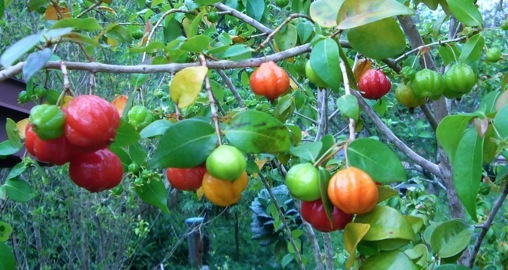
The shrub’s fruit ripen over several weeks, Photo by Green Deane

Surinam Cherries: You’ll love ‘em or hate ‘em

The Surinam cherry is not a cherry nor is it exclusively from Surinam. It’s also not from Florida but it’s called the Florida Cherry because it’s naturalized throughout the state and real sweet cherries don’t grow well there.

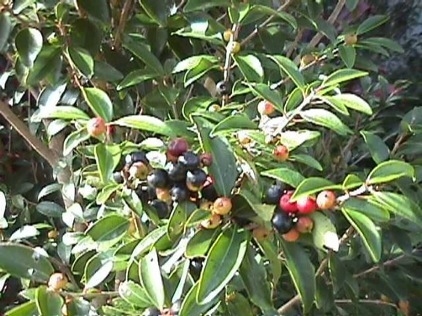
Eugenia axillaris, a second and darker species that grows locally

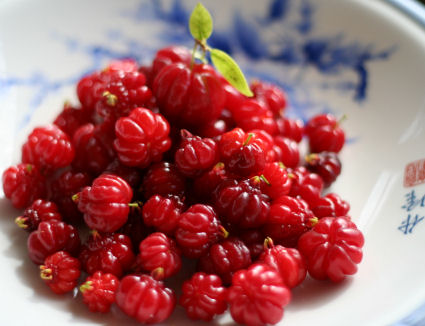
I will freely admit these little red pumpkins are an acquired taste. Most folks are expecting some kind of cherry taste and they don’t have that. No matter how ripe, there is a resinous quality. To be blunt, you either like them or you definitely do not. More so, they must be picked when absolutely ripe or they are a very unpleasant edible experience.  What is absolutely ripe? There is orange red, the color of cars, and here is blue red, the color of old-time fire trucks and blood. Surinam cherries are edible when they are a deep blood-red. Let me repeat that: A deep blood-red. An orange red one won’t harm you but you’ll wish you hadn’t eaten it. And I know you will push the envelope and try one that is not deep, blue-blood red. Don’t blame me. I warned you. You won’t die or throw up or the like but your mouth will disown you and the next time you will pick a very ripe one. The only one in the picture above that near ripe is the red one on the lower right, and perhaps the one on the lower left, and only if they drop into your hand. When fully ripe they are very sweet and juicy.

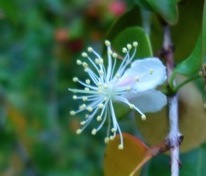
Surinam Cherry is closely realted to the Simpson Stopper with similar blossoms

The plant is native of Surinam, Guyana, French Guiana, southern Brazil, Uruguay and Paraguay where it grows in wild thickets  on the banks of the Pilcomayo River. It got to North America the hard way. Portuguese voyagers carried the seed from Brazil to India then to Italy and the rest of southern Europe and then to Florida.  It is cultivated and naturalized in Argentina, Venezuela and Colombia, along the Atlantic coast of Central America; the West Indies, the Cayman Islands, Jamaica, St. Thomas, St. Croix, Puerto Rico, Cuba, Haiti, the Dominican Republic, the Bahamas, Bermuda and Florida. It is grown in Hawaii, Samoa, India, Ceylon, Africa, China, Philippines, the Mediterranean coast of Africa, Israel and the European Riviera. If you’re in a warm area, that is, you don’t hit 30F too often, there is probably one near you.

Make sure they are deep red, otherwise the taste is very offensive

It was introduced as an ornamental and edible fruit before 1931 in Florida. By 1961 it was widely planted in central and south Florida, especially for hedges. A decade later it was seen escaping cultivation and invading hammocks in south-central and south Florida. In 1982 it became a target of eradication in southern Florida.  It is now reported in 20 wildlife areas as well, and threatening rare scrub habitat. Thus, by eating the fruit and destroying the seeds you are helping the environment. EAT THE WEEDS!  In fact this very day I saw it along a bike trail and did by civic duty and ate as many  ripe ones as I could find.

Prince Eugene of Savoy, 1663-1736

In the mediterranean area it fruits in May. In Florida, depending upon the winter, the fruit begins to ripen around St. Valentine’s day and should be available by the Ides of March and in full fruit by April Fools Day. There are two prime varieties, the common blood-red and the rarer dark-crimson to black, which is sweeter and less resinous. In Florida, the Surinam cherry is one of the most common forgotten plants and over runs many back yards.  In Florida and the Bahamas, there is a spring crop and a second crop, September through November. Some times a third and fourth crop, depending on weather.

Besides being blood-red, the fruit should drop effortlessly into your hand when you touch it. If it doesn’t want to let go, let it be. Collecting should be done twice a day and often the best ones are the ones you have to fight the ants for.  The “cherries” are an addition to fruit cups, salads and ice cream. They can be made pies, preserves such as jelly, jams, syrup, relish or pickles. Brazilians ferment the juice into vinegar, wine, and a liquor. The fruit is extremely high in vitamin C and A. Don’t eat the seeds. One probably wouldn’t kill you but if you think the unripe fruit tastes bad the seed is distaste on steroids. The fruit, I have been told but do not know, can be made into a fine wine.

The scientific name is Eugenia uniflora (yoo-JEE-nee-uh yoo-nif-FLOR-uh.) Eugenia is named for Prince Eugene of Savoy, 1663-1736, a patron of botany and horticulture. He was a great general and spent most of his life fighting in wars, constantly. Apparently it agreed with him. When he died in his sleep at age 72 he was the richest man in the world. Yet if it wasn’t for a fruit would we ever hear of him? Uniflora is from Latin unus, one or single and folium, to bloom, read one leaf.

That said, there are in other warm areas several edible Eugenias and at least one more naturalized in Florida, but it isn’t that tasty. The other edible species include: Eugenia aggregata, Eugenia cabelludo, Eugenia dombeyi, Eugenia klotzschiana, Eugenia reinwardtiana, Eugenia Smithii, Eugenia stipitata, Eugenia uvalha, Eugenia victoriana and Eugenia axillaris, the other one found in Florida.

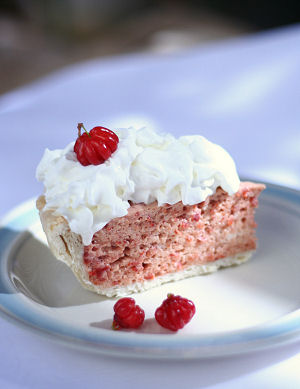
Surinam Cherry Chiffon Pie

Surinam Cherry Chiffon Pie

by Rowena

The original recipe calls for surinam cherry juice, but  this was made with some fruit pulp. Rinse the cherries and remove stems and flowery ends. Using quick pulses, process a few times then pick the seeds out. The flecks of cherry throughout the pie makes for a pretty presentation when cut and served.

1 pie crust, 9-10 inch diameter, baked and cooled
1 tablespoon unflavored gelatin powder
¼ cup cold water
4 large eggs, separated
1 cup granulated sugar
3/4 cup surinam cherry pulp (about 1½ cup fruit)
1 cup whipping cream, sweetened with powdered sugar and whipped to soft peaks

Soften the gelatin in 1/4 cup water. Beat the yolks together with HALF of the sugar and add the fruit pulp. Cook over medium heat until thick, stirring constantly. Add the softened gelatin and stir until dissolved. Cool and set aside.

Whip the egg whites until frothy then gradually add the remaining amount of sugar, beating until peaks begin to hold their shape. Fold beaten whites into cherry mixture and fill pie shell. Chill until firm. Top with prepared whipped topping just before serving. Serves 8-10.

 Green Deane’s “Itemized” Plant Profile

IDENTIFICATION: Evergreen, multi-branched shrub or small tree to 30 feet, can be busy, usually shrub size in Florida; young stems often with red hairs and dark red new foliage. Leaves opposite, simple, short petiole, oval to lance shaped,  Flowers white, fragrant, half in across, with many stamens; occurring solitary or in clusters. Fruit  fleshy, juicy, red berry to inch and a half wide, looks like a little red pumpkin, 1-3 seeds

TIME OF YEAR: February to April, September to November in Florida.

ENVIRONMENT: Naturalized in urban areas, a border plant backyard escapee, vacant lots, untended area. In native central America range  it is a thicket tree.

METHOD OF PREPARATION:  Ripe berries raw or cooked. One unripe berry can taint the rest. Learn to identify the ripe ones.  If you slice ripe ones open, take out the seeds, and the fruit sit in a refrigerator for a couple of hours they lost much of the resinous tang.  In Brazil they ferment the juice into vinegar or wine, and sometimes a distilled liquor.

HERB BLURB

Research shows native concoctions of the tree do help in the control of Paracoccidioidomycosis (PCM), a yeasty disease endemic in Latin America, where up to 10 million may be infected.  The smelly leaves can be use as an insect repellant.

{ 162 comments }

When the seeds in the center are ripe just take the entire blossom inside and let dry

 Sunflowers: Sun Sentinels

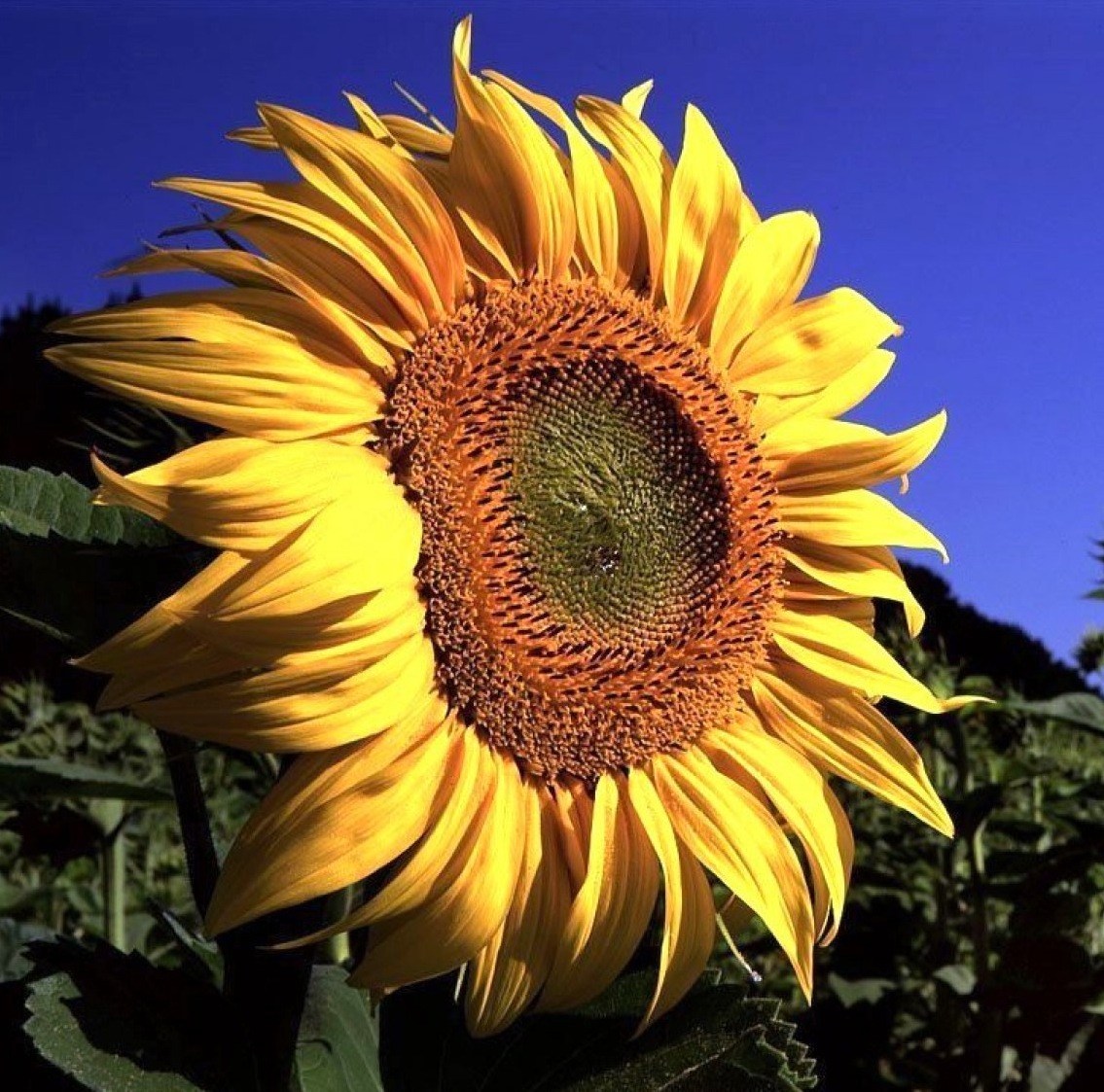
His name was Bob Davis and he grew sunflowers some 15-feet high.  I dated his niece, Edie May. I remember her and the flowers with affection though it is approaching a half a century ago.

More so, he managed to get these gigantic flowers up and fruiting in the very short Maine summer, which from frost to frost, can sometimes be less than two months. In fact, I once saw it spit snow on the Fourth of July, a prime reason why I have lived in Florida since 1977.

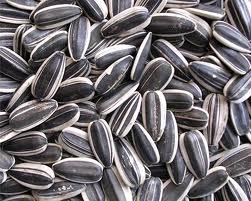
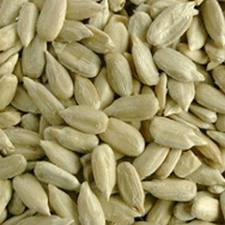
Striped-hull seeds are for eating

Despite the fact sunflowers sometimes have a head a foot across they are not the largest native blossom in North America. That distinction goes to the much smaller American lotus. Apparently petal size is the issue, not seed bed. None the less, sunflowers look like they should be the largest flowers in North America, certainly the tallest.

One Florida summer I grew seven or so of these mammoth plants and managed to keep the gigantic heads away from the birds long enough to harvest them. I put them in my Florida room to cure. Looking in on them three weeks later they were all eaten. Squirrels, and perhaps a few other creatures. They  came in through a small dog door and dined. At least the sunflowers went to a good cause.

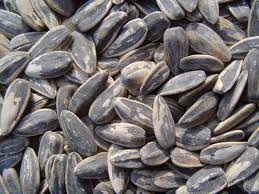
No-stripe hull seeds are for oil

Sunflowers have been under cultivation more than 4,000 years, starting perhaps in central Mexico and moving northward and now throughout North America. While the seeds are edible, the roots of some sunflowers other than the Jerusalem Artichoke are also edible. For information on the Jerusalem Artichoke see a separate entry on this site.

Harvest your own snack food or make oil

Sunflowers have also been part of many pre-Columbian sun religions. That the young plants will follow the sun across the sky and then return to facing east during the night was not lost on ancient cultures. The scientific name, Helianthus annuus (heel-ee-ANTH-us AN-yoo-us means annual sunflower. Russia is the largest producer of commercial sunflowers with Argentina second and the United States third. Thus you will find two kinds of wild sunflowers, those that escaped cultivation long ago, reverting back to smaller forms and some that escaped last season still big and brassy.

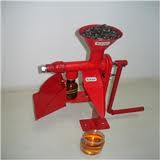
Hand-operated oil expellor

Sunflowers have many uses. The seeds can be roasted and eaten as a snack or, raw, ground into a meal to thicken soups and stews. Roasted hulls can be used to make a brew similar to coffee.  Dye can be extracted from hulls and petals and face paint can be made from dried petals mixed with pollen. Dried stalks can also be used to build shelters. The oil is used for food, cooking, medicine and cosmetics. You can even make your own oil with an expellor. One warning, some people have contact dermatitis with the sunflower.

Two types of sunflowers are grown in the United States, oilseed and confectionery. Oilseed sunflowers seeds are small and black with a high oil content. They are processed into oil and meal. Confectionery seeds are large black and white seeds which are roasted and for snacks and breads. But, the offering does not stop with the seeds,.

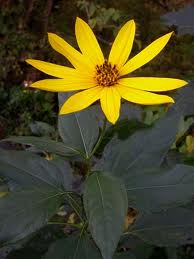
Helianthus strumosus also has an edible root

Helianthus strumosus, like its cousin the Jerusalem Artichoke, Helianthus tuberosus, has an edible root. You can tell the strumosus from the rest by a stem that is very branched. It also has a waxy layer that rubs very easily. Its leaves are lighter colored hence its common name, Pale-Leaved Woodland Sunflower. It is found throughout eastern North America. Helianthus means sunflower, annuus, annual, tuberosus, tuber growing, and strumosus a tumor or swelling, in reference that that species edible root.

Incidentally, the sunflower, H. annnuus,  is the state flower of Kansas. Also be careful where you collect your wild sunflower. They will take up toxins in the soil and were in fact used after the Chernobyl accident to clean the ground.

Green Deane’s “Itemized” Plant Profile

IDENTIFICATION: Tall, annual or perennial plants, to 12 feet or so. Rough, hairy stem, branched on top. Toothed leaves often sticky. Lower leaves opposite, ovate or heart-shaped. Upper leaves are alternate and narrower. Flower heads with bright yellow rays. Young flower heads follow the direction of the sun, turning east to west during the day turning back to east overnight. Older plants stop turning but face east.

TIME OF YEAR: Seeds and roots in the fall.

ENVIRONMENT: Prefers rich soil and good watering

METHOD OF PREPARATION: Numerous; Seeds raw or roasted, roots  raw or roasted. Seed oil has a wide variety of uses and applications.

{ 13 comments }
In this species, note the "wings" between the leaf pairs. Photo by Green Deane

In this species, note the “wings” between the leaf pairs. Photo by Green Deane

Sumac, Rhus Juice, Quallah: Good Drink

Sumacs look edible and toxic at the same time, and with good reason: They’re in a family that has plants we eat and plants that can make you ill.
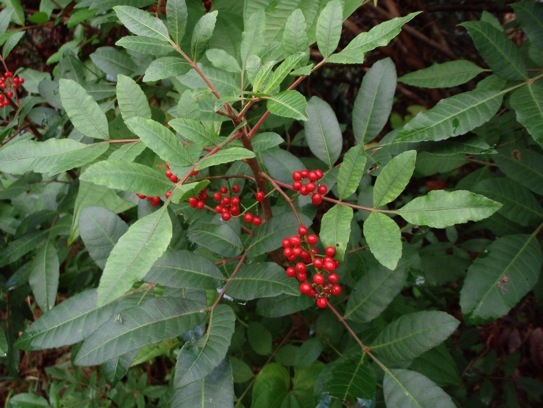
Brazilian pepper does not have terminal clusters

Sumac, poison ivy, Brazilian pepper, cashews, mangoes and pistachios are all related. Poison ivy, of course, is a problem. The Brazilian pepper is on the cusp of toxic/non-toxic. Some people mistakenly call the seeds “pink peppercorns” but true “pink peppercorns” come from a Madagascar relative, not the Brazilian Pepper found in the New World. Cashews have a poisonous shell. Pistachios taste good. Many people are allergic to mango and or the peeling. Often they will also be allergic to other plants in the family as well as sumac or the sap of the sumac. Proceed accordingly.
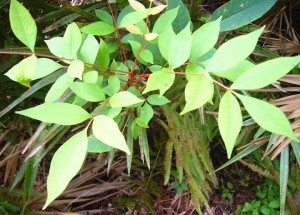
Note the different shaped leaves of the poison sumac and the bright red stems.

Note the different shaped leaves of the poison sumac and the bright red stems. Photo by Green Deane

There are some 250 sumac species in the genus. All the berries of the red sumacs are edible. I know the ones I’ve encountered in Maine and Florida are edible. Acid on hairs on the berries is used to make an ade. The berries themselves can be used to make a spice, sometimes a tea. Sumacs are found throughout the world, with many species in North America. You’ll find them across all of the United States and Canada except for the far north. Sumacs are a shrub or small tree that can reach from four to 35 feet. The leaves are arranged in a spiral and the flowers are dense spikes, an inch to four inches long, on the end of branches called terminal clusters. The fruits are technically drupes and collectively are called “bobs.”
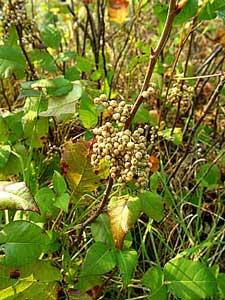
Poison Ivy has green to white berries

Sumac species tend to be regional. However, one species, Rhus glabra,  (Roos GLAY-bra) the “smooth sumac” is found in all contiguous 48 states. The Indians used the shoots of the Rhus glabra in “salads” though many ethonobotanists say the natives never really made “salads” as we know the term.  In the northeast the staghorn sumac (Rhus typhina, synonym: Rhus hirta) predominates. It’s the largest of the sumacs and the one with the least tart berries. In Florida the predominant sumac is Rhus copallina, also known the shining sumac, the winged sumac, dwarf sumac, flame leaf sumac and the mountain sumac (curious as there are no mountains in Florida.)  The multitude of common names is why botanical names are important. Rhus is what the Greeks called the sumac and it has come to mean red. Copallina (rhymes with Carolina) means gummy or resinous, referring to the sap which turns black when exposed to air and has been used for varnish, particularly in Japan.
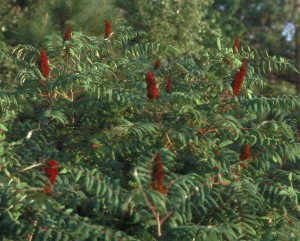
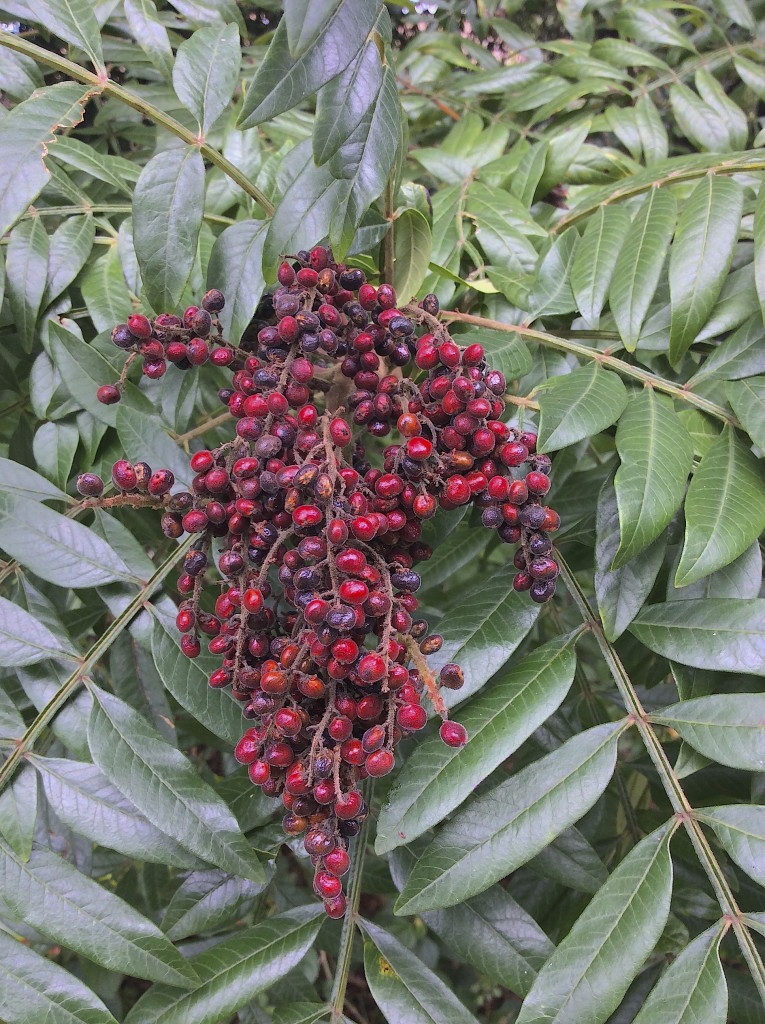
Collect terminal clusters before a rain

Rhus copallina is an attractive bush that turns flaming red in the fall before losing its leaves. Flowers are yellow and green and small, in clusters at the end of branches. Fruits are BB/pea-sized berries with hairs and are covered with malic acid, which is what makes grapes and apples tart. Inside the berry is one seed. You know the berries are ripe with they give a tart taste. (Touch your finger to a berry then your finger to your tongue to test, but not right after a rain, which washes off the malic acid. )
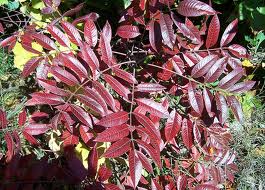
Sumac turns ruby and maroon in the fall

Soaking the unwashed berries in faucet-hot water releases the acid to make a drink, after being filtered twice to get rid of little, irritating hairs (through cloth then a coffee filter or the like.) The Cherokee called the juice Quallah. The seeds of the sumac have tannic acid in them. Putting the berries in boiling water will release the tannic acid. It can make a tea but it can quickly become too bitter to drink. To make an ade, use one to two cup of berries per quart of water. I prefer two cups and less water.  The “bobs” of berries can be cut off and dried for later use.
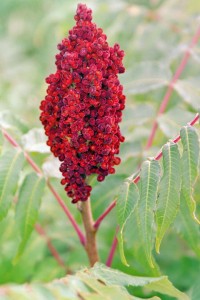
Staghorn Sumac

Externally cleaned seeds, when ground, add a lemon-like flavor to salads or meat and is used often in Levant cuisine.  They make a purple-colored spice, which is very handy where there are no lemons. Native Americans also mixed the leaves and berries of the smooth and staghorn sumac to extend their tobacco. The leaves of many sumacs yield tannin and leather tanned with sumac is flexible, lightweight, and light in color. Oddly, dried sumac wood is fluorescent under long-wave Ultra Violet Light

The fruit of staghorn sumac is one of the most identifiable forming dense conical clusters of small red drupes at the terminal end of the branches. I can remember them growing all over southern Maine and to this day can still go to a stand of them where we used to play. I can remember marveling at their shape. Sumacs flowers from May to July and fruit can ripen from June to September. The fruit often lasts through winter and into spring. While many birds eat sumac berries apparently they are not a preferred fruit in that they are amongst the last to be eaten after a long winter.  Deer nibble on the branches, as do people, kind of.
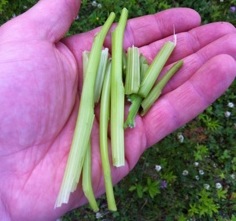
Peeled perfume-ish sumac shoots

There is another edible part to the sumac: Young shoots, peeled. First year shoots off old stumps are the best, but the spring-time tips of old branches are also edible but not as good. Look at the end of a shoot after you break it off. If you see pith, which is an off-white core, it is too old. Break off that part then look again. You want a shoot stem that is all green inside. Then strip off the leaves and peel the shoot. You can eat it raw or cooked. They very purfume-ish and slightly astringent.

As for other uses of the sumac some landscapers remove all but the top branches to create a “crown” effect making it  resemble a small palm tree. All parts of the stag horn sumac, except the roots, can be used as both a natural dye and as a mordant. The seeds have an oil that can be made into candle wax. Even the sap of the poisonous white sumac makes a black varnish.
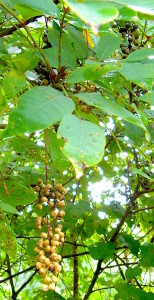
Poison sumac berries are off white. Photo by Green Deane

Poison sumac berries are off white. Photo by Green Deane

Yes, there is one poisonous sumac but you probably won’t ever see it and it really doesn’t look like the rest of the sumacs. It resembles an alder, has white berries that grow out of leaf axils and prefers to live deep in swamps, meaning you will have to wade to find it. That might be an exaggeration but it likes to be in wet spots. In my many years of foraging I have seen it in two places. You should avoid it though because it is like poison ivy on steroids. It is the most toxic contact plant in North America. And without going into a long story I did get poison sumac once.

So, to get that straight: The edible sumacs have red berries in cone-shaped clusters at the end of main branches. They have skinny leaves and like dry ground. The poisonous sumac has roundish leaves, pointy on the end, has white fruit that grows out from where a leaf meets the stem, and grows only in very wet places.

Now that you know about the poisonous white sumac, also avoid when looking for sumac the Brazilian Pepper which to the unfamiliar eye can look similar in growth pattern to the regular sumac. The edible sumac has terminal clusters of garnet, purse-shaped berries with a fine coating of fuzz (often gray.)  The leaves are skinny, lance shaped. The Brazilian Pepper has long ovalish leaves and clusters of bright pink/red smooth, hairless berries growing off stems.

My video on sumacs is here.

The following three recipes are from fellow foragers Dick Deuerling and Peggy Lantz and their book “Florida’s Incredible Wild Edibles.”

Sumac Jelly: Take prepared juice and use the Sure-Jell recipe for elderberry jelly, 3 cups juice to 4.5 cups of sugar. Leave out the lemon juice.

Sumac Jello: Mix the prepared juice with unflavored gelatin per instruction on package.

Sumac Rubber Candy:  Take on cup of sweetened juice, add two envelopes of gelatin, mix. Pour into an 8×8  or 8×10 inch baking pan and refrigerate for an hour or more. Cut and serve.  Dick credits that recipe to his wife, long involved with the Girl Scouts as Dick was with the Boy Scouts.

Green Deane’s “Itemized” Plant Profile: Sumac

IDENTIFICATION: Rhus copallina: Shrub, or small tree in Florida,  leaves large, divided into 11-23 leaflets, midrib has thin “wings.” Twigs and leafstalks velvety, round, with raised dots. Fruits, red, short and hairy.

TIME OF YEAR: In Florida flowers summer to fall, fruits summer to fall, fruits in fall in northern climes.

ENVIRONMENT: Sunny to shady dry areas, often found on banks.

METHOD OF PREPARATION: Ripe berries soaked in warm water, filtered then sweetened into an ade. Sometimes the ade will be clear, other times light pink. A drop or two of food coloring can make it any color you want. Whole berries can be made into a tea but the hot water can make the tea very bitter very fast so proceed carefully.   Peeled shoots, raw or cooked.

{ 99 comments }