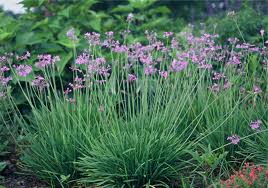
Society is a very common landscape plant

Because I am asked about it all the time I decided to do an article on it: Yes, you can eat Society Garlic… well… most of it, maybe all of it.

The flowers and leaves are edible raw, no debate there. The peppery leaves can be used like garlic in salads and other dishes. The flowers are on the peppery sweet side, onion-ish. The bulbs, however, are more medicinal though there are reports of them being eaten as well. A native of South Africa it is a favored food and medicine of the Zulus. The botanical name is Tulbaghia violacea (tool-BAG-ee-uh vee-oh-LAY-see-ay or vie-oh-LAY-see-ay) Tulbaghia honors Ryk Tulbagh, 1699-1771, governor of the Cape of Good Hope. Violacea means violet-like, referring to the blossom.

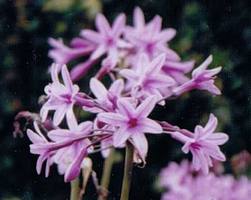
Blossoms resemble violets

One of the odd aspects of the most of the plants in the genus is that they are pollinated by moths at night when the plant manages to be lightly scented. T. violacea however is scented in the day and pollinated by bees and butterflies. (Moths are out only at night and butterflies only in the day.)

A second species, Tulbaghia alliacea, Isikhwa or Wild Garlic, is used in a similar fashion except its bulbs are cooked with meat or roasted and eaten. There are at least two cultivars, “John Rider” and “Silver Lace.” Their leaves and flowers also edible. The Silver Lace cultivar has a white stripe on each side of the leaf. Also edible is Tulbaghia ciolacea.

It’s called Society Garlic because Dutch settlers to South Africa thought it was a more polite spice to use for flavoring dishes than true garlic particularly for social events. Oh… and alliacea… (al-lee-AY-see-uh) means like onions.

Green Deane’s “Itemized” Plant Profile

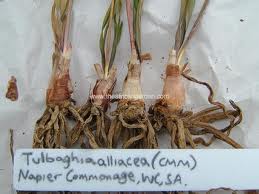
Tulbaghia alliacea bulbs are eaten

IDENTIFICATION: Society Garlic is a fast-growing, bulbous plant about two feet tall. Leaves are long, narrow, strap-like, slightly fleshy and smell strongly of garlic when bruised. They grow from fat, tuberous roots which spread to form clumps of plants. The pinkish to mauve, tubular flowers, clustered into umbels of up to twenty flowers are on flower stalks above the leaves. They smell of garlic when picked. Triangular capsules replace the flowers and are grouped into a head. When ripe they split to release flattened, hard black seeds.

TIME OF YEAR: Your local summer or all year round in warm climates

ENVIRONMENT: Drought resistant, most soils, sunny or partial shade.

METHOD OF PREPARATION: Leaves and flowers raw, or cooked. Bulbs are reportedly edible but I have not tried them. Medicinally the crushed leaves have been used to treat sinus headaches, the fresh bulbs are boiled in water and the decoction taken orally to clear up colds and coughs. They have also been used for pulmonary tuberculosis and intestinal worms. The aroma also repels insects.

Herb Blurb

Posted here as published: Aspergillus flavus and Aspergillus parasiticus are important plant pathogens and causal agents of pre- and postharvest rots of corn, peanuts, and tree nuts. These fungal pathogens cause significant crop losses and produce aflatoxins, which contaminate many food products and contribute to liver cancer worldwide. Aqueous preparations of Tulbaghia violacea (wild garlic) were antifungal and at 10 mg/ml resulted in sustained growth inhibition of greater than 50% for both A. flavus and A. parasiticus. Light microscopy revealed that the plant extract inhibited conidial germination in a dose-dependent manner. When exposed to T. violacea extract concentrations of 10 mg/ml and above, A. parasiticus conidia began germinating earlier and germination was completed before that of A. flavus, indicating that A. parasiticus conidia were more resistant to the antifungal effects of T. violacea than were A. flavus conidia. At a subinhibitory extract dose of 15 mg/ml, hyphae of both fungal species exhibited increased granulation and vesicle formation, possibly due to increased reactivity between hyphal cellular components and T. violacea extract. These hyphal changes were not seen when hyphae were formed in the absence of the extract. Transmission electron microscopy revealed thickening of conidial cell walls in both fungal species when grown in the presence of the plant extract. Cell walls of A. flavus also became considerably thicker than those of A. parasiticus, indicating differential response to the extract. Aqueous preparations of T. violacea can be used as antifungal treatments for the control of A. flavus and A. parasiticus. Because the extract exhibited a more pronounced effect on A. flavus than on A. parasiticus, higher doses may be needed for control of A. parasiticus infections. J Food Prot
. 2011 Jun;74(6):1007-11. doi: 10.4315/0362-028X.JFP-10-434.

{ 53 comments }

Edible Flowers can be more than just lightweight additions

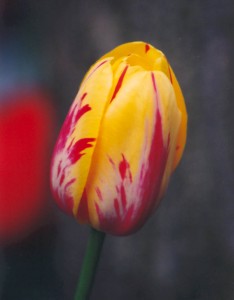
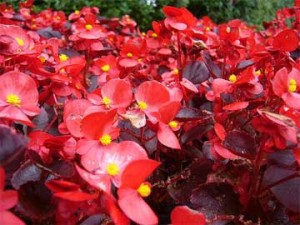
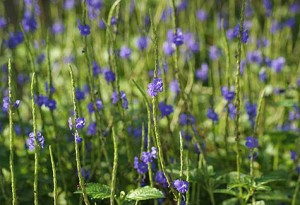
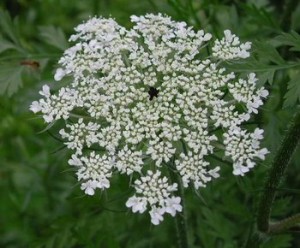
Tulips, Yucca, Begonias, Blue Porterweed, Queen Ann’s Lace, Dill, Gladiolas, Wapato, Impatiens, Citrus

Tulips’ flavor vary with color

Tulips are one of those wonderful flowers you hear that are toxic. The answer is yes and no. The petals are quite edible raw or cooked though they loose their color on cooking. They can have many flavors: Beans, peas, cucumbers and none. Pink, peach and white blossoms are the sweetest, red and yellow the most flavorful. While you can use them to garnish salads their more common use is to hold appetizers or dip. If you use the entire blossom cut off the pistil and stamens from the center of the blossom. The bottom ends of the petals can also be bitter so cut them off as well when used individually. So what is toxic? Not the flower. It’s the yellow inner core of the tulip bulb. It has to be cut out before the rest of the bulb can be cooked and eaten. Also know some people are quite allergic to tulips. Just touching them will cause n allergic reaction. See full article on site. In flower langauge the red tuliup is a declaration of love, a yellow tulip hopeless love, a variagated tulip beautiful eyes.

Crunchy and sweet but try one first

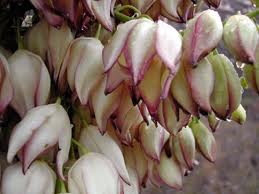
If tulips have a bit of a reputation then Yucca blossoms should as well. I have read in many a foraging book that yucca blossoms are edible raw. The problem is some are and some are not. The ones that grow in my area, Yucca filamentosa,  are not, which is unfortunate. They have a wonderful crunchy texture, and a sweet taste. You really want to eat them. But the Y. filamentosa also has saponins, call it plant soap. After eating one you soon get a bitter astringency in the back of your mouth and throat, like you got when as a kid you uttered a dirty word and mom had you taste a bar of soap. It brings back those days. So yes, yucca blossoms are edible raw, but try yours first, just a little. Then wait half a minute to a minute. If all is well, enjoy. My local blossom while not pleasant raw does cook up nicely. I boil them for a few minutes and then use them in several dishes. See full article on site and video.

Begonia flavor also varies with color

My video and separate article on Begonias got me mentioned in the national New Zealand magazine about them. It’s a small electronic world. Begonia blossoms are edible raw or cooked, as are the leaves of most of the begonias, particularly the wax begonias (websites that say wax begonias are not edible are repeating a significant mistake from an earlier book.) The flavor, like the tulips, varies with the color. It can range from swampy to sweet. The biggest problem you are going to run into with begonias is since they are usually cultivated they are also sprayed with pesticides if not other materials. You either have to raise them specifically to eat or be a lazy gardener. Either will do. Fortunately for me, and not for the state of Florida, begonias have become naturalized so I can find them in the wild. Indeed, it was some 20 years ago when I was canoeing on Rock Spring Run — read in a spring-fed swamp — when I saw a begonia and wondered what it was doing in the modern urban equivalent of the middle of nowhere. The leaves reduced to a paste and mixed with sour cream, a little sugar, and then baked make a delicious tartlet. And of course, the blossoms are an attractive and tasty addition to salads, as are the leaves. You can also fry the leaves into crisps, add a little salt… tasty… See full article on site and video. In the languge of flowers Begonias are “dark thoughts.”

Blue Porterweed tastes like raw mushrooms

I do believe I was the first to publish anywhere in modern times, Internet or otherwise, that Blue Porterweed blossoms are edible. Even the venerated Cornucopia II doesn’t mention it. No doubt their edibility was known long ago because the flower has been used for at least a few hundred years to make tea, beer and as a flavoring. I am sure somewhere along the way someone tried the flowers. Locally we have two versions, a native which grows low, and a tall cultivated one. The flowers on both are edible, and the odd part is they taste like raw mushrooms. As with many delicate flavors the nose is quite involved and it takes a few moments for the flavor to come through. Tasters find it amazing. The flavor does not survive cooking. Incidentally, the leaves are used to make a tea and beer and the stem is used for flavoring. See full article on site and video. I have also eaten the blossoms of red-flowered porterweed, to no bad effect.

Queen Ann’s Lace, carroty, strong

Among the wild flowers I played with as a kid was Queen Ann’s Lace, the wild carrot. Its bird’s nest blossom with a red hue in the middle was easy to identify. It’s also hairy and smells of carrots. Perhaps surprisingly, it’s not native to North America but an import from Europe.  Centuries ago the modern carrot was cultivated from the Queen Ann’s Lace, and by the way, the green tops of the cultivated carrot are edible as a flavoring or a green, if they are raised in a wholesome environment.) The blossoms of Queen Ann’s Lace is carrot flavored and strong. Use sparingly until you are used to it. Also make sure you are not picking poison hemlock blossoms. The wild carrot smells of carrot, the stem is hairy, and look for a red spot in the middle of the blossom. Poison hemlock has none of these. See full article on site.

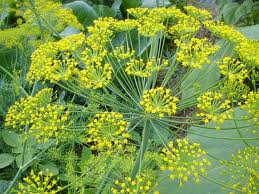
Dill blossoms, stronger than the herb

As is often said, travel is a broadening experience. When you go to a different land it’s exciting to see plants you don’t know specifically but you know what family they are in. The first time I went to Greece I saw wild dill growing everywhere, besides wild figs. Then years later on a business trip to extreme south southern California there was dill again. Wouldn’t you know I happen to live in a state where it’s not found in the wild. Oddly dill blossoms are stronger flavored than the leaves. Tangy, use the flowers as you would the herb and seeds.

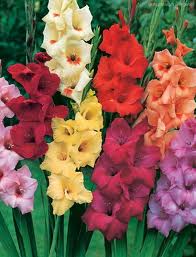
Remove glad blossoms centers

When you live where the ground freezes annually — called winter — you have to wrap some plants and take others inside. That was an annual assignment when I was growing up and on top of the list was digging up gladiola bulbs every fall. And every year my mother had a huge gladiola garden with boxes of bulbs overwintering in the basement (also not found in the South.) Had I known gladiola blossoms were edible it might have made the childhood chore more bearable. Glads (Gladiolus) blossoms are bland, lettuce like, and you must remove the anthers… take the middle of the blossom out.  Basically eat the petals. They can also be cooked. Like squash glad blossoms are often used to hold tasty tidbits. And in the language of flowers gladiolus means “strength of character.”

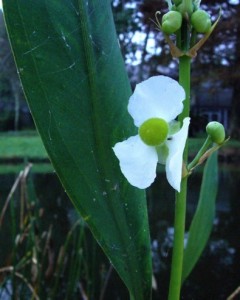
Wapato petals only

Among the wild flowers I have tasted the white petals of the Wapato are a first-rate delicacy. The plant itself is known for its egg-sized tubers that arrange themselves around the base like numbers on a clock. Its blossoms are very distinctive. The only problem getting to Wapato, or Wapati, is as they like to grow in water but you can often find them close to shore. Take only the petals of the blossom. They are sweet and fragile, tasting a bit like marshmallow. No cooking here. If you use them in a salad put them on top or they will get lost. See full article on site and video.

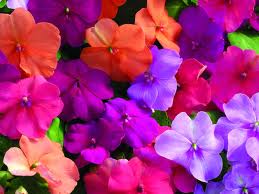
Only cultivated impatiens

I hate to admit it but the only place I can find this next edible flower is in cemeteries because it doesn’t grow in the wild here, Impatiens wallerana. The cultivated Impatiens are from Africa and their blossom is edible, sweet. There are few reports on edibility on our native North American impatiens, called Jewelweed. Indeed, Jewelweed is edible after two boilings but there are no references to any parts edible raw. Just the opposite, all kinds of warning not to eat our native Jewelweed raw. So this is one case of where the cultivated blossom is on the raw food menu but the wild one is not. As the species is known as a wild soap, eating it unprepared is ill-advised.

Citrus, use sparingly

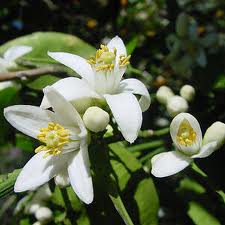
For the home crowd one has to mention Citrus blossoms. Orange blossoms, lemons, grapefruit, calamondins, kumquat… The whole citrus club. They are, no surprise, citrusy and in fact the flavors are used often in Mediterranean cooking. When I first moved to Florida back in the Dark Ages I can still remember the first time I detected the wonderful aroma of a citrus grove in blossom. I thought it was Mayflowers, a blossom from my past, and what I will start Edible Flowers: Part Three with.


{ 12 comments }

Not only are flowers tasty and pretty but many have antioxidants via their color

 Nasturtium, Calendula, Spanish Needles, Arugula, Squash, Cilanto, Bee Balm, Carnation, Dandelion, Lilac

Which blossom will be your favorite edible flower?

The question is not rhetorical. Which flowers come to grace your dinner table for food is a result of preference, taste, and opportunity. There are dozens of edible flowers, wild and cultivated. Which ones are right for you? In this 18-part series on Edible Flowers you will find  over 170 to choose from. This series includes cultivated and wild flowers for food and tea. If you are interested only in edible wilds flowers or only edible cultivated flowers see those articles on site. They are a compilation of this series in just two articles.
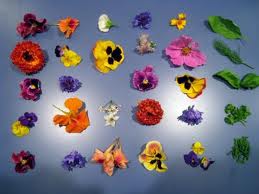
There are many flowers and flavors to choose from

If you are a forager, you might favor wild flowers as they come into season. If you’ve got a green thumb you can grow them in a garden. City dwellers may choose to raise some in balcony pots or use commercial varieties.

While preference, taste and opportunity are three general categories to keep in mind there’s other aspect: Message. Message? Yes, there is more to a blossom than edibility. A century ago, and in some places now, edible flowers also carry subtle suggestions, not only on the dinner plate but in arrangements, too. In the Victorian Era, flowers were specifically used to send messages under the moral radar.

Edible flowers have been on the menu for as long as man has been eating. In recent times they go in and out of vogue, on the restaurant plate for a few years then off for a few, at least as far as chefs are concerned. To those of us who like edible flowers the blossoms never go out of season.
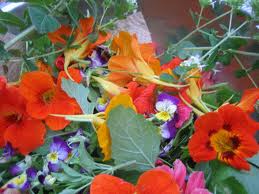
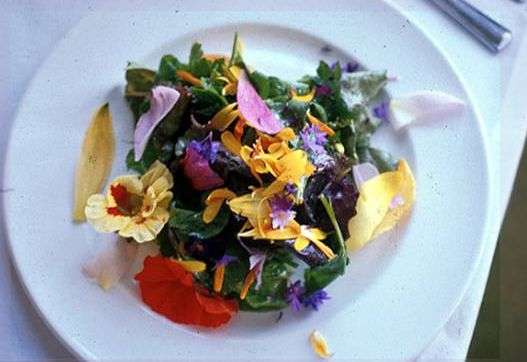
Salads are a common use but entrees, too

As a general rule edible flowers are usually a delicate flavor. There are notable exceptions such as the peppery-piquant of a nasturtium blossom or almost any plant in the greater mustard family  Also usually one eats just the petal parts of the blossom. Dandelion rays are sweet but the green base is bitter. That said there can be exceptions. The tart base of the Roselle blossom is used to make a lemonade-like drink and wild flower Spiderwort blossom is tossed in the salad whole. Where relevant preparation requirements have been included.

There is a word of caution. If you are a person who has allergies, try only a small amount of a blossom the first time, a very small amount, such as a quarter inch square of the blossom. While blossoms might be delicate they can still pack a chemical punch. I know form personal experience. Introduce them gradually into the diet if you are not sure. Also, some flowers have known effects, such as yellow violas are laxative in quantities.
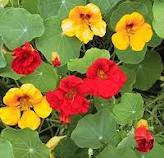
Since Nasturtiums were mentioned let’s start the series with them. A favorite nibble of my mother, the blossoms are peppery. The entire plant is edible, even the seeds can be pickled and used like capers. Nasturtium in Latin mean literally to “twist the nose” because of their pungency, and have been praised for their flavor for at least 2,000 years. Often Nasturtiums are used in kid projects because the seeds are large, they’re fast to germinate and grow, safe, and edible. Leaves and flowers are added to salads or as garnish. Leaves can be cooked but rarely are. See separate article on site.
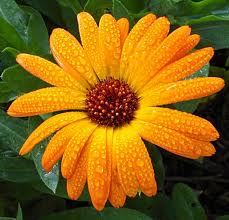
Calendula has been called the poor man’s saffron. There are 12 to 20 species in the family, depending on who is counting. They are native from Micronesia to the Mediterranean area to Iran. Often lumped in and confused with marigolds — which can be used for coloring, too — the name Calendula comes from the Latin kalendae, meaning the first day of the month, and where we get the English word “calender.” It is believe they are called that because in warm regions they are always in bloom and always on the first day of every month.  The Calendua’s flavor is similar to saffron, bitter to tangy.
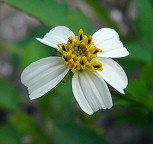
Spanish needles, piny

Spanish Needles aka Begger’s Ticks, botanically Bidens Alba, has a piny flavor, resinous. There are several daisy-like Bidens around the world, white or yellow, few petals or many. Flowering year-round in warmer climates, the plant was recommended some 50 years ago to become a commercial crop. Because it grows in so many places for free that never happened. While Spanish Needles blossoms are salad fare, they hold their flavor while cooking and can be added to a variety of dishes. I have a chicken recipe in my article on Pines in which Spanish Needles flowers work well. Also see separate article on site about Spanish Needles and my video. See full article on site and a video.
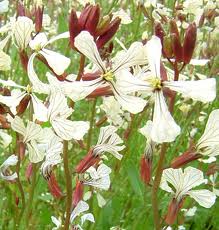
Among the more peppery blossoms of the garden is Arugula, also called rocket and roquette. It’s a popular aromatic salad green grown for its leaves but also its seeds. Somehow the blossom gets overlooked… well, not in my kitchen. Arugula is one of those garden vegetables that is also very easy to grow in a patio pot and lasts for many months with repeated cuttings. Though a forager I have grown arugula in my gardens for many years. When the plant finally wants to go to seed you can prolong it by harvesting the flowers. Then enjoy the seeds. The light yellow flowers are sprinkled on salads or put afloat in soups to add a bit of pepper. The can be cooked but do wilt and loose volume.
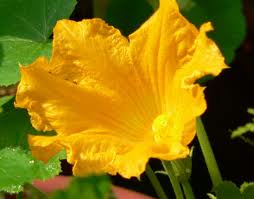
Squash blossoms are squashy

Squash blossoms actually cover a wide range of flowers including zucchini, pumpkins, calabashes, acorn, spaghetti squash and the like. All are squashes for our purposes and all have edible blossoms. Both male and female blossoms are edible but removing female blossoms can reduce squash production in your garden. You can tell the female squash blossom by looking just behind the blossom. There you will see a miniature squash. Stuffing squash blossoms with soft cheese is a time honored means of preparation. What people don’t know is that the leaves and sprouts of most garden variety squashes are edible cooked as are their seeds. Removed the seeds from a squash, wash off the debris, and roast in a slow (low) oven for a half hour or so. You can eat them shell and all or shell them.
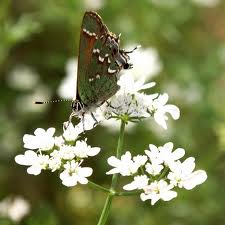
Edible cilantro, non-edible Olive Streak

You either like Cilantro, or you don’t. If you do like cilantro then the flowers are cilantro lite. The plant has a dual identity. The green part much used in Vietnamese cooking is called cilantro. Its seeds however are called coriander. Cilantro sparks intense debates. To some people it tastes like soap, or so they think. The famous chef of French cooking, Julia Child, said she would take cilantro out of a dish and throw it on the floor. Others enjoy the flavor. The different perceptions apparently is one of association. The more one is exposed to cilantro the more it moves from soap to food. It grows on you it would seem. While its seeds, coriander, are quite aromatic they don’t seem to engender flavor disagreements like the leafy parts of the plant. Use in salads or soups.
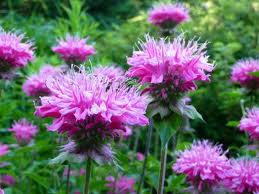
Bee balm, closet mint with oregano

Bee Balm is another huge selection of flowers closely related to the mint family. Usually in the genus Monarda, they are intense, aromatic. The flavors can vary not only species to species but between cultivated specimens and their wild siblings. The leaves are often used to make tea, some with calming qualities. Often the entire plant is placed in the house to give a pleasant aroma as it dries. The blossoms tend to reflect the flavor of the parent plant but usually have hints of oregano to thyme to citrus flavors. Our local species is Monarda punctata, which has a separate article and video. Where I grew up it was Oswego Tea, or Monarda didyma. See separate article on site and video.
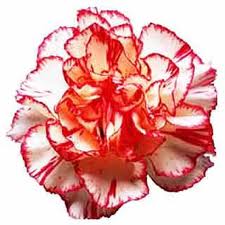
Carnation, think cloves

There are few flowers more common than Carnations. They have been cultivated since ancient times and were quite popular in Rome during the empire days. Its botanical name, Dianthus, means flower of the Gods. Originally just in shades of pink or peach now a rainbow of colors are available, each still keeping it clove-like scent. Like many blossoms carnations were used to convey sentiments in times when overt expression of love were frowned upon. Thus many a bouquet was carefully constructed to send just the right message with just the right color. As a commercial product they have gone in and out of favor to the extreme. What I liked to do when I was a kid was put white carnations in a vase with food coloring in the water. In time the carnation takes on the color of the food coloring. Use them for color and flavor. They are also one of the ingredients in the liqueur Chartreuse. In the language of flowers a red carnations means “alas for my poor heart.” A striped carnation is a refusal, a yellow carnation is disdain.
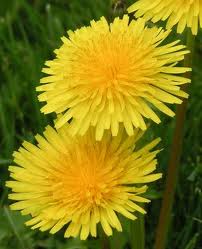
Dandelions, on the honey side of life

Perhaps no wild flower is better known as an edible, or played with, than the Dandelion. Who hasn’t sent the flower’s powder puff of seeds off into the wind with a strategic breath of air? It’s a rite of human passage. The first batch of wine I made as a kid, after two successful five-gallon crocks of beer with cooking malt and bread yeast, was dandelion wine. The yellow parts of the blossom are sweet, if not honey-flavored. It makes a fine homemade wine and the blossom added to salads (or pancakes) is a cheery compliment. However, trim off all green parts unless you happen to like bitter. And with all wild plants, be careful where you harvest to avoid pollution. I also have a separate article and video on the Dandelion. See full article on site and video. In the language of flowers dandelion is an oracle.
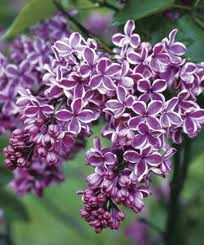
Lilacs have a lemon note

As a kid I never associated Lilacs with food. When the fragrant lilacs blossomed in late May you knew in a couple of weeks school was soon going to be out for the summer and glorious days were ahead. I don’t think I ever experienced more freedom then those summers. I was a latch key kid so summer vacation meant months of roaming through the countryside for days on end… until haying season started. In the greater Olive family the most common blossom color for lilac is … lilac. My 86-year-old mother in Maine still tends to her lilacs. And just in case you are interested there is a 10-day Lilac Festival in Rochester N.Y. every May. Not bad for a plant with European ancestry. At the festival they have over 500 different lilacs on some 1,200 bushes. You can even sample lilac wine. Where do I sign up? Lilac blossoms are pungent and on the lemony side. In the language of flowers there are three meanings. The field lilac means humility, the purple lilac is the first emotional love, and the white lilac youthful innocense,

See Edible Flower: Part Two
{ 6 comments }

Welcome to EatTheWeeds.com

https://www.youtube.com/watch?v=ld1rf2VO8pY

{ 11 comments }

White Indigo Berries are among the very few edible white berries

Randia aculeata

The White Indigo Berry is not high on the food list. Dr. Daniel Austin, author of Florida Ethnobotany, has this to say on page 562:

“People not only note the edible fruits on R. aculeata but they also consume them from other species. However, edibility is variable and some think the fruit a last resort.” That said let’s move on with our overview of the White Indigo Berry.

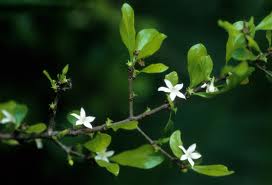
Five petaled, tubular flowers year round

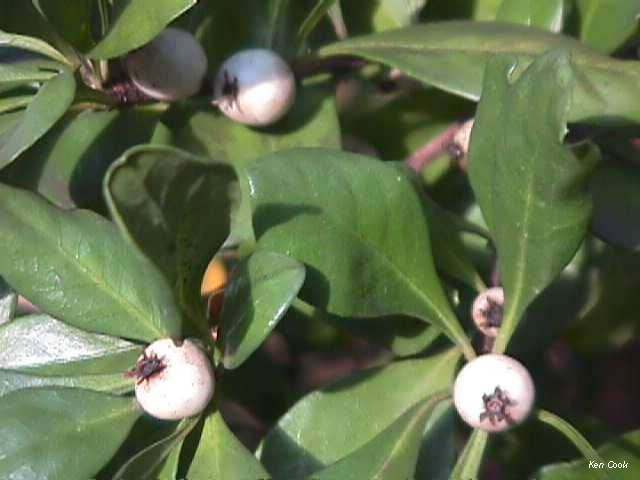
Gardeners rate the shrub as one of the best for southern Florida. It’s six to 10 feet tall, evergreen, with spiny, leathery leaves that cluster near the tips of the branches. They are simple, two-inch leaves, no teeth, circular, veins are pinnate, read spreading out from a central vein. The leaves and stiff horizontal branching habit give the shrub a kind of geometric look. Small white tubular flowers are produced axillarily, that is where the leaf or branch stems meet the main stem. They are fragrant and occur all year. These in turn become fruit which is white, one of the rare exceptions as edible white fruit. However, the fruit is also almost black inside. Sometimes the fruit is ivory with a salmon blush. It prefers to be planted in full sun and has a high salt spray tolerance, so it is used a lot in coastal landscaping (hint, that’s a place to go look for it. )

Flowers produce a green fruit

The White Indigo Berry, in the coffee family, is also “transitional” which is a botanical way of saying some don’t have spines, some have large leaves, some have small leaves… the kind of stuff that makes botanists think they’ve found a new species when they really haven’t. It has had at least four botanical names, Randia mitis, Gardenia randia, Randia latifolia, and Randia aculeata var. mitis, and dozens of  common ones including: Box-briar, Inkberry, Prickle Bush, Fishing Rod, Five Fingers, Goat Horn, Tintillo, Tintero, Palo de Cotorra, Arbol de Navidad, Sota-caballo, Resuelesuele, Cafe Cimmarron, Espino Cruz Crucete, Crucito, Maiz Tostado, Raboe, Peetsch-kitam, Cabai, Mache, Croc-a-chein, Bois-lance, Ti Coco, and Petit Coco. A few racy names reference the shrub’s stiff branches.

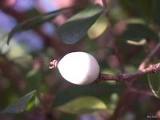
It ripens to white with 5 to 14 seeds and dark blue/black pulp

Randia aculeata is used as a Christmas tree in the Virgin Islands, and for fishing poles (remember those stiff branches?)  It’s also the most fragrant shrubs found at Fort Zachary Taylor… never heard of Fort Zachary Taylor? It’s located in Key West. You wouldn’t think anything would be hard to find in Key West, but it is. It has three entrances, one for vehicles, one for bikes and one for pedestrians. Truman Beach is located there. (And if you like remote, visit Ft. Jefferson on the Dry Tortugas, 70 miles west of Key West. It’s the least visited of all national parks and where Dr. Mudd of the Lincoln assassination did time.)

R. aculeata prefers full sun and dry soil

White Indigo Berry fruit is eaten out of hand but will turn your tongue blue. Natives used the pulp to make blue body paint. Beyond fishing poles its wood, interestingly, is used in the Netherlands Antilles for stirring guiambo soup (okra soup) and kadushi soup (cactus soup.) The stirring act is called Lele. Consider: Both of those soups are viscous, read slimy. The plant is an astringent. Maybe using an astringent stirring stick affects the texture or flavor of the similar soups, or nothing sticks to the stick. I don’t know but it is a guess. There are at least three other related species with edible fruit. Randia dumetorum, ripe fruits are eaten after cooking or roasting, Randia echinocarpa, fruits eaten raw, and Randia formosa. It’s fruit is yellow on the outside, black on the inside and taste like molasses or blackberry jam. Opinions vary. They are eaten fresh or used in drinks.

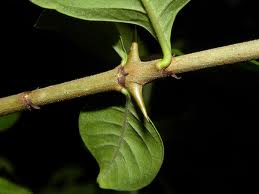
Watch out for the torns, often doubled at the end of a branch

As to the botanical name Randia aculeata, RAN-dee-uh  ah-kew-lee-AY-tuh,  Randia honors Isaac Rand, 18th century London apothecary and director of the Chelsea Physic Garden. Aculeata means prickly or thorny. It ranges from the Caribbean to Mexico, Central America, and South America as far as Colombia. The shrub is related to Wild Coffee and the Firebush, both of which also have edible fruit pulp but are not great on taste. However, the Firebush, Hamelia patens, does make good wine and syrup.

Green Deane’s “Itemized” Plant Profile

IDENTIFICATION: Dense, semi-thorny, stiff-perky, compact shrub to 10 feet tall, five feet wide, with opposite clustered simple toothless roundish leaves with stipules between the leaf bases, small white fragrant flowers, and globose fruits white on the outside but almost black on the inside, many seeds inside, an average of 8, tiny or about 18,000 to a pound

TIME OF YEAR: Flowers and fruits year round

ENVIRONMENT: Full sun, variable soil, some shade. Tolerant of coastal areas. Will not tolerate wet soil. Don’t look for this in a swamp or wet lawn.

METHOD OF PREPARATION: Marble-size fruit edible but not of great quality. They are, after all, used to make ink. The fruit is used in herbal medicine to control dysentery. The bark also has medicinal uses. Leaves are used in baths to treat infected sores. Stiff large branches good for fishing poles.

{ 2 comments }