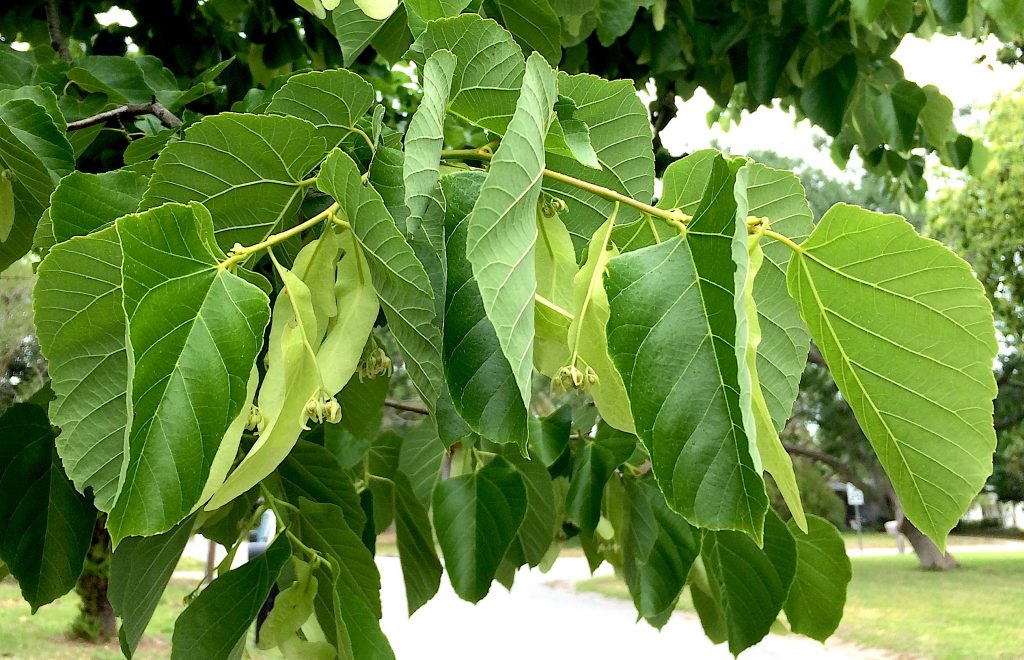
Basswood leaves and bracts soon to be blossoming. Photo by Green Deane

Tilia americana: Forest Fast Food

My first recollection of basswood was not on the supper table but rather helping my step-father make pipes.
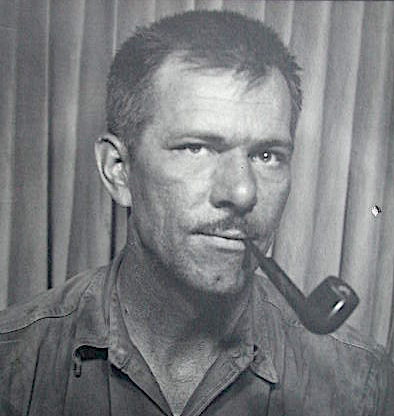
Pipe maker Robert Hartley Jordan

First we’d find a nice piece of applewood for the bowl; take the bark off then boil the bowl wood for a couple of hours on (of all things) the wood stove. That “drove” the sap out so when it dried or was used it wouldn’t crack. After the bowl was shaped, sanded and drilled a stem was needed. That’s when we’d go find a basswood sapling of just the right size to make a stem. At that young age it’s easy to run a wire through the core and ream out the pith. That was fitted to the bowl and the pipe was done except for polishing. Dad would rub the sides of his nose with the finished bowl to give it a shine. Oil glands on our nose apparently are perfect for that. I still have one or two of those pipes we made from some 60 years ago.  
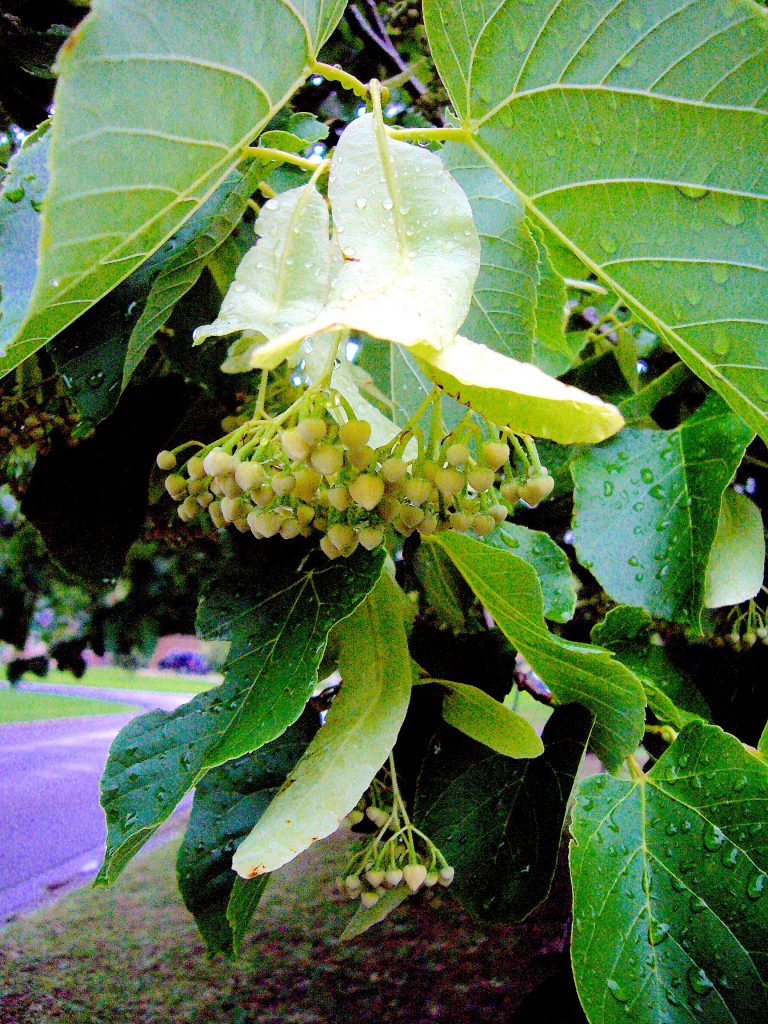
The bract and seed arrangement are unmistakable. Photo by Green Deane

It was not unusual that we turned to the Basswood for utilitarian uses rather than food. Even among the native Indians only one tribe — the Ojibwa — was known to eat parts of the Basswood. Others may have but there is no record of it. Indeed, modern foragers may actually consume more of the tree than the Natives did. However, the tree was a major source of fiber for the Indians and that’s where the  common name, Basswood, comes from.“Bass” is a corruption of “bast” which is a type of fiber. The Indians soaked the bark for two to four weeks to loosen long fibers. They used the fibers for many of their needs: Bags, baskets, belts, fishnets, house mats, snowshoe netting, ropes, sewing thread and even suturing wounds. It was used where a lot of fiber strength was not needed. The Ojibwa ate the young buds raw or cooked as greens and they used the sweet sap, boiling it down to a syrup. Fortunately, there is more to be had.
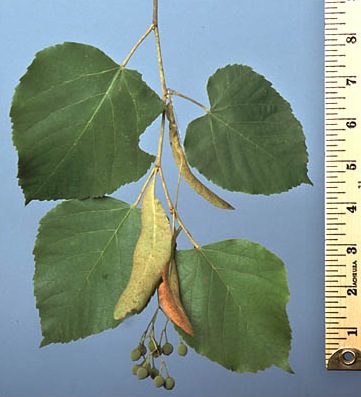
Bass wood leaves petioles, tongue and fruit

Besides the buds the young leaves are a prime “wild green” of the forest. Young shiny shoots are also tasty. Edible raw or cooked you can make a salad using the leaves as the main ingredient like lettuce. Cooked they lose flavor and shrink in size considerably. The cambium, between the outer bark and the wood, in spring time, is moist and tastes of cucumber. It’s good for soups or when dried can be powdered and used for bread. You can also eat it raw off the tree, the least amount of work for the nutrition and flavor. However, don’t destroy the tree for it. Take vertical pieces. 

While the flowers are edible raw or cooked and a tea can be made from them. Two tablespoons per cup. They  also produce a lot of nectar creating high-quality honey. For that Basswood is sometimes called the “Bee Tree.”  The tree also has a small nut, more like a seed. Fill one pocket with them as you wander through the woods, crack ’em with your teeth and spit out the shell.  The tree can produce seeds when as young as eight years and continue to 100. Past 120 years old the tree starts to get a lot of “cavities” and becomes home to a many woodland creatures, notably porcupines and raccoons. Basswoods can live up to about 200 years old.

As you would guess, denizens of the forest like the Basswood as well. Whitetail deer, rabbits, mice, voles, squirrels, chipmunks and foxes snack on the tree, as do many species of song and game birds including quail.  Some voles, however, girdle the tree, killing it.

One particular habit of the Basswood is to produce sprouts, especially after the main tree dies. Often you will find a clump of basswood sprouts of varying sizes, many of which get large enough to harvest. Basswood is valued for its wood which is soft, light and easily worked wood, particularly for turned items and hand carving. Natives made face masks out of it. Before synthetics it was was the material of choice for prosthetic limbs. It’s also been used to make boxes, toys, woodenware, drawing boards, veneer, venetian blinds, plywood and pulp. The Iroquois even used the bark as an emergency bandage for wounds.
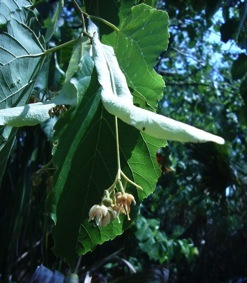
Large tongue-like bracts on Basswood blossom

One problem with the Basswood is what to call it. It has multiple common and scientific names. Experts can’t agree if there is one species with variations or several species, though they are all edible. While some call the Basswood that grows in Florida Tilia floridana (TILL-ee-uh flo-re-DANE-nah) the current name de jour is Tilia americana (a-mair-ee-KAY-na) . Tilia comes from the Greek word “ptilon” meaning wing, referring to the large winglike bracts of the flower cluster. Some think they look more like tongues than wings. Americana means of America and floridana of Florida. As for common names, particularly in Europe, the Basswood is called the Linden tree.  That name comes from the Old English word of “linde.” It’s been called that for some 1300 years. So, where did “linde” come from? That’s a bit more … sticky.

Folks of yore somehow noticed that when a bird “deposits” a mistletoe seed the seed sticks to the tree. That is how mistletoe, a parasite, gets from tree to tree. So they used mistletoe (or holly) to make a glue to put on tree limbs to catch small birds. That was called birdlime, lime coming from the Latin word for mud, limus, so less poetically, bird mud. So limus became lime which became lime+en which became by 700 AD linde which then became linden. Many Brits today call the Basswood the lime tree. (The citrus “lime” came from the Arabic limah.)  Lime, in the sense of mud, is still with us today. When we mark a field for sports it is called liming the field.

Personally, I like the young leaves right off the tree when they are about the size of your thumb nail. On one hike through Spring Hammock in Seminole County a Basswood tree had toppled over. Not uncommon in Florida. Weeks earlier it was upright. But this was prime leafing out season and though toppled it was putting on leaves and I ate my fill. Mild, slightly sweet, tender. Well worth looking for. And one more thing: A paste made from the seeds and flowers of the Basswood tree is a good substitute for chocolate.

Green Deane’s “Itemized” Plant Profile

IDENTIFICATION:

Tall tree to 100 feet, round uniform crown. Leaves alternating, distinctly heart shaped and strongly toothed. Creamy, five-petaled flowers in small clusters,. unique tongue-like light-colored bract with each flower cluster. No other tree in North America has such an arrangement. Gray bark, furrowed with flat ridges.

TIME OF YEAR:

Spring in Florida, early or mid summer farther north.

ENVIRONMENT:

Deep, well-drained soil. In Florida that is close to fresh water, lakes and streams

METHOD OF PREPARATION

Season new young leaves, smaller than mature leaves, lighter in color and shiny. Raw or cooked. Young shiny shoots, raw or cooked. The buds raw or cooked, a bit mucilaginous. Cambium raw or cooked, seeds raw or cooked though usually eaten raw on the trail. Sap boiled down to sugar.
{ 26 comments }
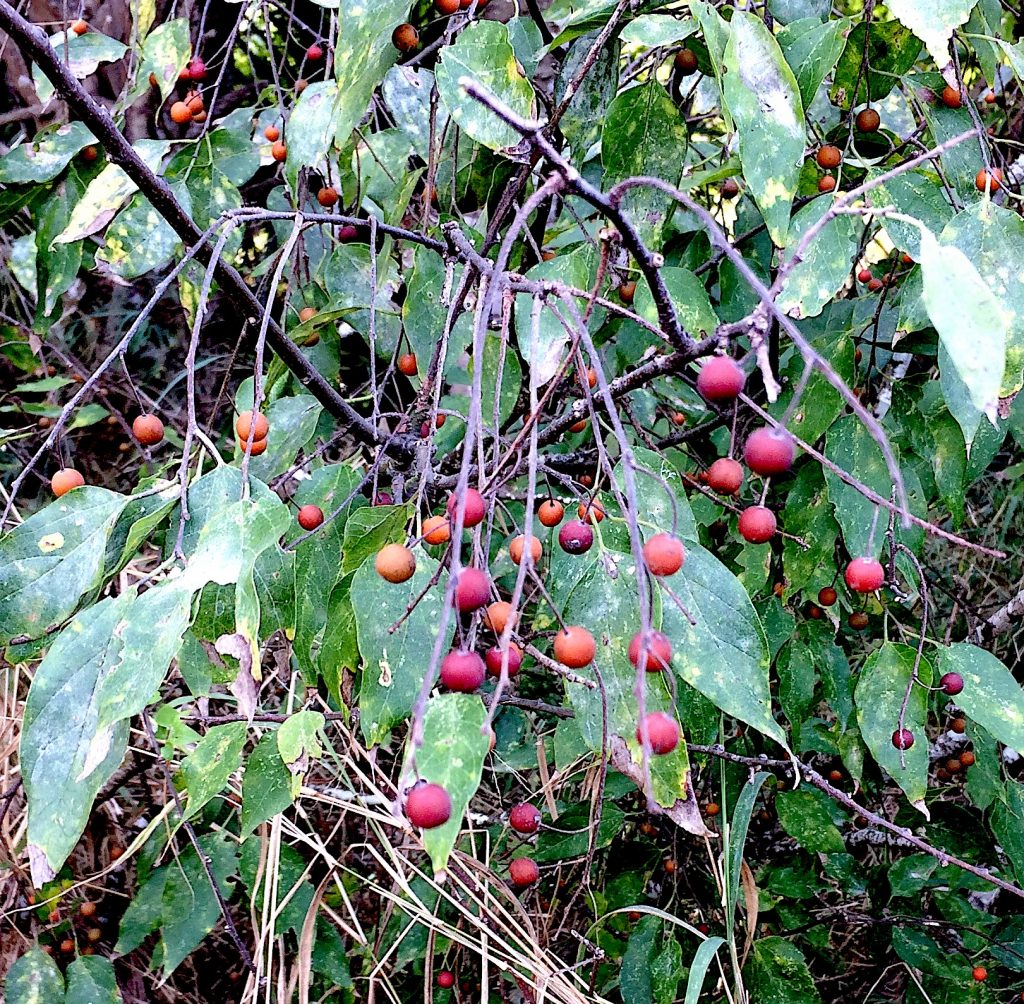
Sugarberries ripen from green to burnt orange. Photo by Green Deane

 Sugarberries are Hackberries with a Southern Accent

Sugarberries like to be near water and that’s why it caught my eye as I coasted by on a bike trail: It was growing on top of a dry hill.

Part of my approach to plants is to answer the questions raised by I.T.E.M., Identification, Time of year, Environment, and Method of Preparation. If you can’t satisfactorily answer them all then you might have the wrong plant. This surgarberry was environmentally out of place.  I had seen such a thing once before with a sugarberry and you have to figure out why. It is simply good form to do so, and safe foraging.

Sugarberries — Celtis laevigata  (SELL-tiss lee-vih-GAY-tuh )– like moisture. You’ll often find a stand of them near rivers. The last time I found a stand out of place they were growing near an irrigation canal.  This time there was no canal. The Sugarberry was struggling with two Black Cherries for one spot, and winning. There was a swale nearby but on the top of the hill it was more for aesthetic reasons than practical. Then I saw the lawn irrigation head nearby. The tree was near a large, long-term business and daily watering was enough to make it think it was living in a wetter spot. Probably a bird dropped a seed while visiting a young cherry and the rest is botanical history.

Sugarberries, also called hackberries, were prized among people everywhere, New World and Old. They are big trees that can grow to 100 feet. The berries are small, sparse, and usually way out of reach. They have been praised since ancient times. Homer, the 900 BCE blind poet of ancient stories that shaped the Greek culture, spoke of them. He said one taste of the hackberry in a foreign land was enough to make a man never want go home again. Honestly, that’s an exaggeration. They are sweet and tasty but a huge amount of work would be involved to get even a cup of  them. Perhaps natives everywhere trimmed the tree short and husbanded it.

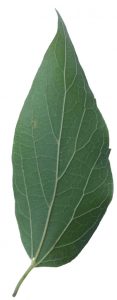
Sugarberry leaves have three main veins at the base. Photo by Green Deane

The berry is just about the same size as chokecherry but the stone is larger. Inside the stone is a kernel. The pulp around the stone is about 10 times thicker than the pulp on a cabbage palm berry which is paint thin, so think ten layers of paint… read not a lot. This is a trail side nibble when in reach. However, the Native Americans had a different idea. Some would grind up the entire berry, stone, kernel and all, and make a paste out of it, either to bake in a fire or to add with fat and parched corn to make a gruel. Others removed the pulp, eating that separately. Then they lightly dried the kernel and cracked it. The inner kernel was considered a delicacy and the outer shell was ground up and used as a spice, usually on meat. The stone can be eaten raw and they also store well in oil. When ground into a powder they can be added to flour to make bread. The entire berry is high in calcium, can be up to 20% protein, and has a good amount of phosphorus as well. It also has a high amount of fat and fiber.

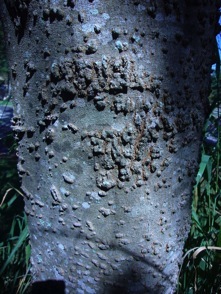
Sugarberries have warty bark

How the tree got its name is a bit of a story. Only in the South are they called Sugarberries. Elsewhere they are Hackberries. That word came via Scottish from the names of some northern Scandinavia cherry trees that mean hag, or old woman.  How the name of cherry trees got to be associated with the Celtis is anyone guess, though the fruit do resemble choke cherries and the tree is considered by some to be a ‘witch” tree. My guess is because the bark of the species is usually warty in patches it might have reminded folk of an old face . That warty bark is one of its identifying characteristics (and in the southwest of North America some hackberries also have thorns.) Don’t confuse the Sugarberry with the Toothache Tree which has very aromatic, medicine-smelling leaves and thorns.  The Sugarberry does not.

Celtis is the ancient Greek name for a lotus with sweet berries, and was used by Pliny. Laevigata means smooth, and most of the sugarberry’s bark is smooth but there are always tell-tale corky warts, usually without thorns.  It is interesting that English speakers would refer to the tree as the Sugarberry and the Greeks, a world and language away, call their tree, the C. australis, the Honeyberry. Clearly the dry sweetness impresses people.

While the C. laevigata is the common species in the lower half of the United States, there are several species, many of them edible, and found throughout North American and the world. Check out the species nearest you.  Most hackberries like highlands, the sugarberry the low lands. Oh, It is a common host for mistletoe, is a good candidate for bonsai, and like the black walnut its leaf litter discourages growth of other plants.

And at Emerson Point Preserve, Palmetto, Fl.,  there is a “sugarberry” with teeth on the leaves. Current guess is that it is a “Japanese Sugarberry.”  

Green Deane’s “Itemized” Plant Profile

IDENTIFICATION: Leaves  alternate along the stem, medium to dark green, 2 to 4″ twice as long as wide, oval,  serrated only on upper half of leaf,  asymmetrical (lop-sided) three prominent veins, leaf spots and galls common, wigs zig-zaggy. Leaves turn yellow in the fall. Flowers greenish-yellow in spring. Fruit a green berry turning to orange, red or dark purple. Branches droop. Gray bark has patches of corky warts.

TIME OF YEAR: Fruits late summer, fall

ENVIRONMENT: Likes full sun and prefers moist rich soil.

METHOD OF PREPARATION: Ripe fruit pulp raw or cooked. Stone and inner kernel raw or cooked, stone shell ground up as seasoning, kernel roasted as a delicacy, entire berry pulp and seed crushed and cooked. Dried berries ground into a powder for adding to flour. The meal you make from crushed berries can be cooked in water to make a tan-colored Milk, quite tasty and one of the easiest way to consume the fruit.


{ 34 comments }

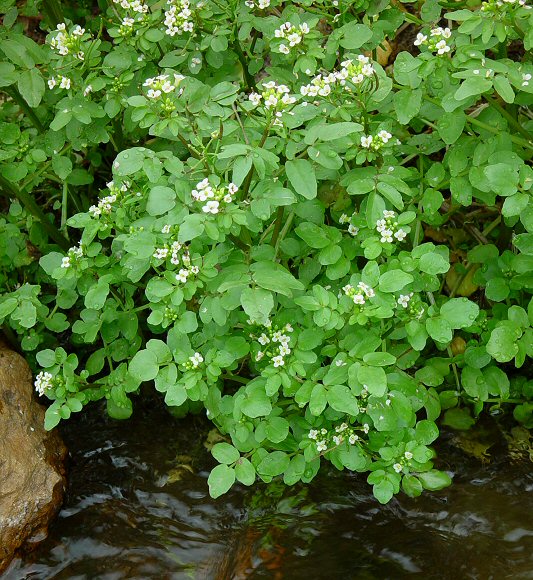
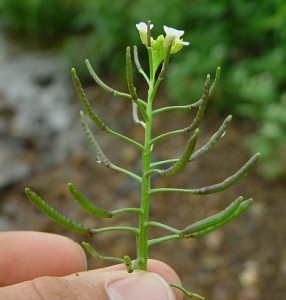
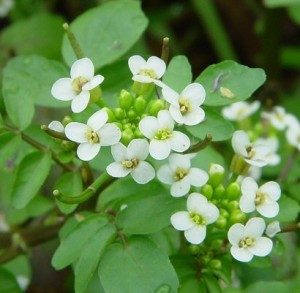
Watercress is an escaped non-native found througout most of North America

Florida is the Winter Watercress Capital of the U.S.

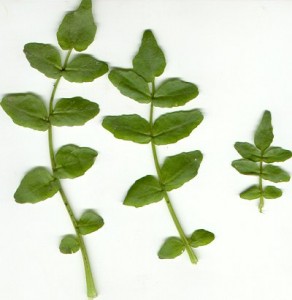
Leaf shape can vary

Nasturtium officinale (nas-STUR-shum oh-fis-in-AY-lee ) is one of the oldest leaf vegetables cultivated by man. It’s naturalized in Florida and in fact all of North America, Europe and Asia, the latter two where it is native. Wild watercress is a short-lived edible in central Florida. January to March and maybe a little of April just about sum up its season, and that’s being generous.  Of course the farther north you go the later in the season it can be found such as in Gainesville in May. Locally Watercress  can also be found in drainage ditches leading to the St. Johns River and occasionally along the banks of the St. Johns River.  No doubt in other agricultural areas such as Lake Apopka it can also be found as well as in canals. The only place I have found it past its season is downstream from natural springs that maintain a 72F temperature year round, such as Wekiva Springs.

And while it can indeed by found throughout North America central Florida is the capital of winter watercress production in the United States. The old winter watercress capital was Huntsville, Alabama, but that city traded the mustard member for aerospace technology. I discovered watercress about 45 years ago in Sanford, Fl., some 95 miles north of here.

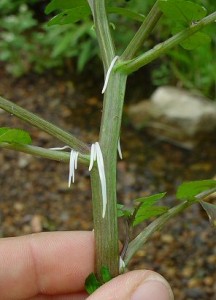
Given a chance it will root at the nodes

In 1863 Francis Peyre Porcher in his book the “Resources of the Southern Fields and Forests, Medical, Economical and Agricultural, Medical Botany of the Confederate States” wrote of watercress: “Introduced. Ditches Florida. Northward. This plant came into pretty high favor about a century ago [1776] as a spring salad; and it soon obtained preference to all other spring salads on account of its agreeable, warm, bitter taste, and for sake of its purifying, antiscorbutic and diuretic properties. It was greedily gathered in all of its natural habitats within some miles of London for the supply of the London Market, and eventually became an object of regular, peculiar, and somewhat extensive cultivations.” To read more about Dr. Procher read my article on Smilax.

Toothpick seeds pods are called siliques

Man is not the only consumer of Watercress. It is eaten by ducks, muskrats, and deer who know a good thing when they find it. Watercress contains significant amounts of iron, calcium and folic acid, as well as vitamins A and C. It has a long history of medicinal use and was even popular in Roman times.  The Greeks thought it was good for the brain and thinking. Many benefits have been attributed to eating watercress, such as that it is a mild stimulant, a source of phytochemicals, a diuretic, an expectorant, a digestive aid and anti-cancerous. Research in Iran has shown it to have antioxidant potential as well as able to lower cholesterol and triglycerides. Research in the United States suggest it has a role in preventing or treating cancer.

Typical four-petaled mustard flower

Cultivated since ancient Persian times, watercress may cause cystitis in some people particularly women (bladder inflammation.)  Its consumption is not advised for those who have a delicate stomach or suffer from acidosis or heartburn. I have a temperamental tummy inherited from one grandmother but cooked Watercress has not bothered me. I like it with salt, pepper, olive oil, a sprinkle of garlic and balsamic vinegar.  (I only eat it raw when I collected immediately downstream from a very clean spring.)  Excessive or prolonged use may lead to kidney problems and some advise against eating it during pregnancy.

Nutritionally, watercress is no lightweight. It’s 19 calories per 100g and is 93.3% water. However, it has: Protein: 2.2g; Fat: 0.3g; Carbohydrate: 3g; Fiber: 0.7g; Ash: 1.2g; Calcium: 151mg; Phosphorus: 54mg; Iron: 1.7mg; Magnesium: 0mg; Sodium: 52mg; Potassium: 282mg;  A: 2940mg; Thiamine (B1): 0.08mg; Riboflavin (B2): 0.16mg; Niacin: 0.9mg; C: 79mg. Recipes below.

There are actually several “watercress” in North America you might want to investigate. They include: Barbarea vulgaris, Barbarea verna, Cardamine bulbosa, Cardamine pensylvanica, and Arabis alpina.

Nasturtium” means literally “twisting nose” and was the Roman name for peppery watercress.  Officinale means it was approved in ancient Rome to be sold as a food or medicine in special stores. The Greek name for watercress, Nerokarthamon, broadly translated, means “able to tame Nero’s mind.” It was thought in ancient Greece Watercress could cure insanity.

Creamed Watercress

2   Tbsp  Butter

1   cup chopped onions

2   cloves  garlic, minced

2   Tbsp flour

1   cup  Half and Half

1/4   tsp nutmeg

8 to 16 ounces of watercress, chopped

Salt and pepper to taste

Heat butter in braising pan on medium low. Add onions and garlic; cook about 10 min, until onions are soft and translucent.   Add flour. Cook, stirring occasionally, 2 min.  Stir in half and half and nutmeg; bring to a simmer and cook 2 min.  Add watercress to pan in small batches; cook, stirring frequently, 3-4 min, until watercress is wilted. Season to taste with salt and pepper.  During cooking you make have to add more half & half depending on the consistency you want. For a richer side dish use cream.

Chickpeas and Watercress

1 can chickpeas in water ( also called garbanzo beans) or 1 ½ cups precooked+ ½ cup water

½ onion, diced

3 tbsp olive oil

Juice from of one lemon, ( approx 2 tbsp)

½ tsp curry powder

½ tsp coriander powder

½ tsp cumin

½ tsp gram masala

1 large bunch of watercress or two handfuls, rinsed & trimmed

* In a large skillet or frying pan, saute onions and garlic in olive oil until soft about 3-5 minutes. Add chickpeas straight from the can., including all the water. Add the spices and lemon juice, cover, and simmer about 10-15 minutes, stirring occasionally, adding more water if needed, until chick peas are browned and soft.

* Reduce heat, add spinach and cover. Allow spinach to wilt for 2-4 minutes. Serve immediately.

 Watercress Pesto

2 garlic cloves, chopped

2 tsp grated lemon rind

5 tbs olive oil, plus extra drizzle

400g spaghetti or tagliatelle

12 cherry tomatoes, halved

12 pitted olivesMethod

* Preheat the oven to 180 C

* Roughly chop 80g of watercress, and place in a food processor with half the parmesan, the pine nuts, garlic and lemon rind. Gradually add the oil and process to from a smooth paste. Season with salt and pepper.

* Cook the pasta in a large pot of salted boiling water until al dente.

* Meanwhile, place the tomatoes, cut-side, on a baking tray. Drizzle with olive oil and season with salt and pepper. Cook in the oven for 6-8 minutes or until just starting to wilt. Toss the pasta with the pesto, tomatoes, olives and the remaining parmesan and watercress.

 Watercress Tabouleh

1 cup bulgur

2 Tblsp chopped walnuts

6 tsp walnut oil or extra virgin olive-oil, divided

2 shallots, chopped

1 Tblsp finely chopped garlic

12 cups thinly sliced watercress (about 2 bunches), tough stems removed

1/3 cup chopped pitted dates

2-3 Tblsp water

4 tsp white-wine vinegar

½ tsp salt

* Prepare bulgur according to package directions. Transfer to a colander and rinse under cool water; drain. toast walnuts in a small dry skillet over medium low heat.* Cook until the shallots start to brown, 4 to 6 minutes.

* Add garlic and cook stirring, until fragrant, about 15 seconds.

* Add the watercress, dates and two tablespoons of water and cook, stirring occasionally, until the greens are tender and the water evaporates (add another tablespoon of water if the pan is dry before the greens are tender) about 4 minutes.

* Stir in vinegar, salt and the prepared bulgur; cook until heated through, about 1 minute.

* Drizzle with the remaining one teaspoon of oil and sprinkle with the walnuts before serving.

 Watercress Soup

In this recipe, freshly harvested watercress is cooked with potatoes, chicken stock, milk, onions and garlic to make a deliciously light soup.  To ensure the watercress retains its tender crunch, add it to the soup last. If you wish, you could also blend all the ingredients for a smoother soup.

Ingredients:

* 2 bunches of watercress, roughly chopped

* 1 medium potato, cubed

* 1 medium white onion, diced

* 2 cloves of garlic, crushed

* 1 Tbsp of butter & 1 Tbsp of olive oil

* 2 cups of organic chicken or vegetable stock

* 2 cups of milk

* 2 tsp of sea salt

* 1/s tsp of freshly ground black pepper

Preparation:

1. Heat the butter and olive oil in a pot over a medium heat. Add the onions and sauté for 30 seconds. Turn the heat to low and sweat the onions for 15 minutes. Stir them occasionally to ensure they don’t caramelize. 2. Turn the heat back up to medium-high and add the garlic. Fry for 30 seconds. 3. Now add the potato cubes, salt and pepper and fry for 1 minute. Add the milk, the stock and stir. 4. Let the soup simmer for 10 minutes. Add the watercress and stir well. Turn the heat down sightly and simmer for 5 minutes. 5. Add a pinch of black pepper and serve immediately.

Green Deane’s “Itemized” Plant Profile

IDENTIFICATION: A coarse, many branched pungent member of the mustard family with deeply divided compound leaves, low-growing, dense in suitable small waterways. It has the customary four-petaled flower of the Brassica family, white petals, and seed pods on stems. It grows in the same location and time of year of young water hemlock. Pick carefully.

TIME OF YEAR: January to April in Florida, spring though fall in some temperate climates.

ENVIRONMENT: Likes to grow in clean, running water but not rapids.

METHOD OF PREPARATION: Raw or cooked. Wholesome water is hard to find so cooked is the preferred way. Prepare like any mustard green.

HERB BLURB

Research supports traditional views that watercress has medicinal applications. Herbalist use it as a stimulant and diuretic, research suggests it has antioxidants, the ability to lower some blood lipids, and to prevent or treat cancer, particularly that of the lungs.


{ 8 comments }

How Ungreen Of Us

Sun dried clothes smell the best

(1 March 2019. I wrote this more than a decade ago, but it’s still relevant.)

I’m reaching retirement age. I’m also reaching the point of being tired of being told how green we are today and how ungreen we were in the past. Oh? When I was a kid:

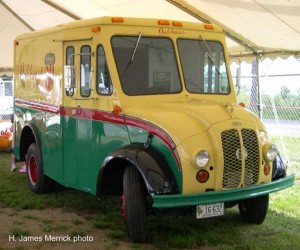
One milk truck delivered to many

We didn’t all drive en mass to the store to buy milk. Milk was delivered… by one man in an Oakhurst milk truck. And milk came in reusable, recyclable bottles (no microplastics) that you could also use for other things. Baked goods were  delivered the same way, in a Cushing’s Bakery station wagon. And vacuum cleaners sold door to door! How ungreen of us.

Diapers had pins, not tabs

Our neighbor, who raised seven kids, washed cloth diapers because there weren’t disposables then. I wonder why no one champions recycling disposable diapers? We just toss them in land fills, vertical septic systems. And those cloth diapers were dried on a clothes line, an artifact found only in museums and my backyard. We did not use a 220-volt soon-to-wear out machine to dry clothes or start house fires. And kids got hand-me-down clothes, not the latest designed-for-them fashion seasonally. I got new clothes once a year, ordered out of a Sears catalog for school. Rummage sales were community recycling. How ungreen of us.

Three channels in good weather

We didn’t get a TV until I was nine, a small black and white set we put on the window sill. It got three channels if the weather was good and you held the antenna just right. A PSB channel would not be added for a decade. Programming was wholesome and no censoring was needed for kids or grandma. We actually watched it as a family.  One TV, not a TV in every room. It did not have a digital color screen twice the size of the window. How ungreen of us.

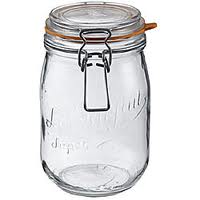
Food came from jars not cans

In the kitchen stuff was mixed, blended, chopped and beaten into submission by hand. No blenders, no food processors, no mixers. How many folks are willing to blend their environmentally healthy, nutritious smoothies by hand? What’s the collective carbon footprint of all those blenders macerating food from halfway around the world? We prepared our food by hand rather than buying it prepared. We never bought vegetables in a plastic package, or hardly anything else. We put up food in reusable glass containers. It was called canning, a verb I don’t hear too often these days. And we packaged fragile items for mailing with old newspaper not Styrofoam, plastic bubble wrap or “peanuts.” We didn’t own plastic or paper cups or “sporks.” Anything worn out that could burn was put in the kitchen stove, broken chairs to chicken bones. It cooked our food and warmed the house. How ungreen of us.

Nothing was thrown away

The only stuff we threw away was stuff that would grow fungus and  smell. And before that happened it was put outside for the animals. Dead motors were kept for parts, old appliances were cannibalized for cords and wire. All manner of things were taken apart and the nuts and bolts saved. We actually took down a three-car garage and used the boards and timber to build our barn. We pulled nails out of boards, pounded them straight, and reused them at a time when nails were a couple of dollars for a 50-pound keg. My mother made rugs out of rags and had a huge button box filled with buttons off every piece of clothing destined to be a rug. How ungreen of us. (I still have a button box and a nuts, screws and bolts pail.)

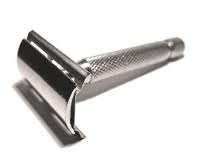
You kept a razor for decades

Pens and cigarette lighters were refilled. We put new blades in razors, put tape on the old blades and used them around the house. The whole safety razor was not thrown away just because the blade was too dull to shave with. I still own and use two straight razors. Typewriter ribbons were re-inked, and typewriter technology barely changed every half century rather than like computers and cars seasonally.  How ungreen of us.

Outdoor Exercise Machine

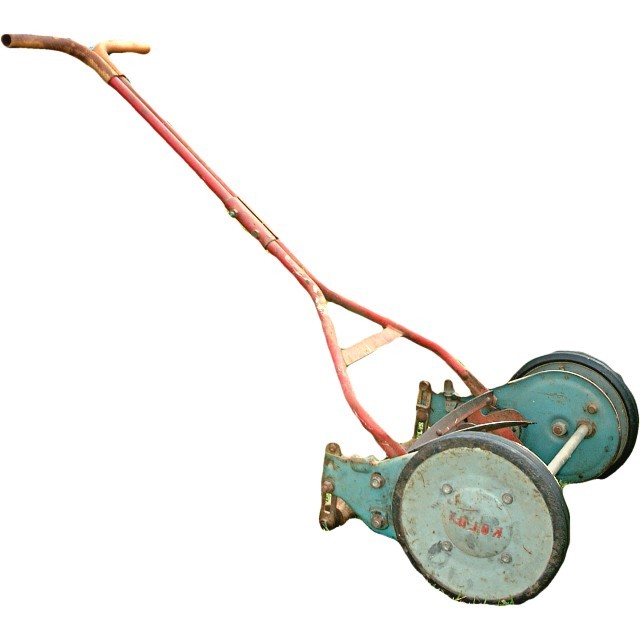
We walked up stairs because stores did not have elevators or escalators. We mowed the lawn by hand with a push mower (or watched some domestic animal eat it.) We bought local because it was what we had. Every home had a summer garden and us kids collected return bottles for pocket change. We rolled pennies by hand. Now a machine charges you 8% to do that. I walked or rode my bike several miles to school even the in winter, and shoveled the driveway by hand. We played board game with real humans during those long winters evenings rather than buying a new game when we got bored. How ungreen of us.

Get lost, it makes life interesting

And we didn’t get a telephone until I was 20 and in the Army, and it was a “party line.” Overseas I got to call home once a year. Once. We wrote letters, now a dead art. Not every one had a cell phone or a personal computer in every pocket. How ungreen of us.

And we didn’t need two or more  devices bouncing and triangulating signals over thousands of miles to find the nearest pizza place. We used our nose. How ungreen of us.

{ 70 comments }

I rarely write about toxic plants because this site is about edibles. However there are enough prickly nightshades around to justify an article about them and how to identify them even if they aren’t edible.

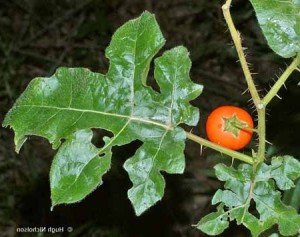
Red Soda Apple, photo by Hugh Nicholson, rainforest publishing.

Red Soda Apple, photo by Hugh Nicholson, rainforest publishing.

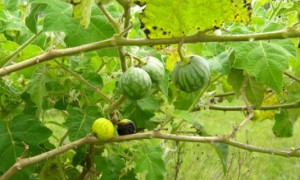
The Red Soda Apple, Solanum capsicoides, might be a native Floridian. Botanists can’t agree. It is now found in most warm areas of the world. Outside of North America S. capsidoides  is often confused with Solanum aculeastissimum. Or… botanists being what they are… S. aculeastissimum and S. capsidoides might be the same species, or a close variation. At any rate it is a thorny, large-leafed plant to a yard high with spines all over it including the leaves, which can be shiny. The round green fruit resemble a striped water melon. When ripe it is red and slightly smaller than a ping-pong ball. One is safe saying the fruit is not edible because it certainly is toxic at some stage. Yet, one can find snippets of references here and there to the opposite. Usually they say the ripe flesh is edible but not the skin nor seeds which have the highest concentration of toxins. If the flesh is eaten it is only in small amounts. Loaded with steroids and precursors of steroid hormones it has been associated with abortions and other things steroids can do to your body. Ripe cut fruit is used as cockroach bait.  Some botanists would argue S. aculeastissimum is African and all the nasty stuff is about that plant not S. capsicoides which they say is Brazilian. It is a dangerous family and best avoided. The easy answer is the Red Soda Apple is not edible. That is my position until someone can demonstrated in person otherwise.

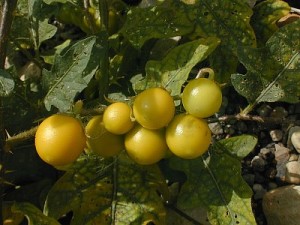
Tropical Soda Apple, photo by Northcoast Weeds

Tropical Soda Apple, photo by Northcoast Weeds

The Tropical Soda Apple, Solanum viarum,  is similar to the Red Soda Apple except its fruit turns bright yellow when ripe. And if I remember correctly the riper the fruit gets the more toxic it gets. And while it is similar-looking to the Red Soda Apple it’s oak-shaped leaves are dull green, never shiny. A lot more is written about the Tropical Soda Apple. For a toxic plant cattle and feral hogs spread the plant’s seeds around in their droppings. Growing to six feet high it has thorns on the tops sides of the leaves, underside of the leaves and all along the stem. It can grow year around as long as it stays warm. The blossoms are creamy white with petals and a yellow center. Its sweet-smelling fruit is one inch in diameter containing up to 400 brown seeds. The plant can produce some 50,000 seeds a year. They think its seeds came to south Florida in the tummies of cattle from Brazil around 1988. It became such an invasive that some ranchers were spending as much as 40% of their working time on controlling the plant costing some $16 million in 2007 dollars. Biological controls were implemented in 2003 with the release of Gratiana boliviana a beetle that only eats Tropical Soda Apple.  It is currently found in Florida, Louisiana, Alabama, Mississippi, Georgia, South Carolina, North Carolina, Tennessee and Pennsylvania. All reports say it is toxic. Avoid it.

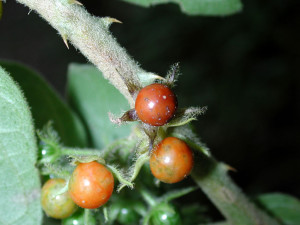
Horse Nettles, photo by Illinois Wildflowers

Horse Nettles, photo by Illinois Wildflowers

Horsenettle, Solanum Carolinense, is similar looking to the Tropical Soda Apple but is a smaller plant. The Tropical Soda Apple has larger leaves and long thorns and is more shrubby. Horsenettle flowers can be purple or white where Tropical Soda Apple has only white blossoms. And while the Horsenettle also has yellow fruit they tend to be wrinkled when ripe. The Horsenettle also has a potato-like odor when a leaf is crushed and the leaf stems are are covered with star-shaped hairs. Yellow fruits are half-enclosed in a paper calyx. The Horsenettle is found in most of the United States and Eastern Canada. It skips Nevada, Colorado, North Dakota, Montana and all of Canada west of Ontario. Not edible. A close relative, the Robust Horsenettle (Solanum dimidiatum) which has rounder leaves  than the Horsenettle, also is not edible.

Aquatic Soda Apple, photo by Invasive.Org

Aquatic Soda Apple, photo by Invasive.Org

The Aquatic Tropical Apple,  Solanum tampicense, typically prefers wetlands. Much of southwest Florida have been invaded by it. Once established, it forms large, tangled, dense stands along river banks, cypress swamps, open marsh, and relatively undisturbed wetlands. It’s native to the West Indies, Mexico, and Central America and blooms in the fall. A straggly, sprawling prickly shrub, woody below, herbaceous above, has green stems to 16 feet long. Leaves: Alternate, simple, leafs longer than wide, 10-inches wide, three inches wide deeply round-indented edges, recurved or straight prickles on veins, and stellate hairs. Flowers are small, three to 11 individual flowers in stalked, branched clusters at leaf axils. Petals are white; stamens with yellow anthers held closely and erect in center of flower. Fruit: A small, spherical, tomato-like berry to almost half-an-inch, shiny solid green turning orange then bright red at maturity, with 10 to 60 yellowish, flat-round seeds. Not edible.

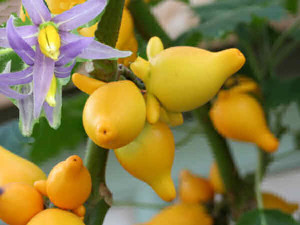
Solanum Mammosum, photo by Prota4u

Nipplefruit, photo by Prota4u

Among the more unusual prickly non-edibles is the Nipplefruit Nightshade, Solanum mammosum. While it is naturalized in Puerto Rico it also escaped from back yards in peninsula Florida south coastal Texas. I’m not quite sure why one would plant it. Not edible, prickly, and irregular in flowering and fruiting. The fruit contains solanine saponine, mallic and gallic acids, and solamargine, a glycoalkaloid. It is purgative. There is one Malaysian report that the unripe fruit is edible. I’d have to see it to believe it. The plant resembles a thorny eggplant but can grow to the size of a small tree.

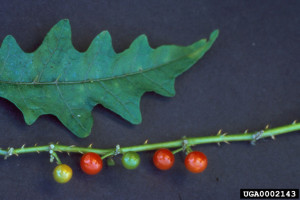
Jamaician Nightshade

Jamaician Nightshade

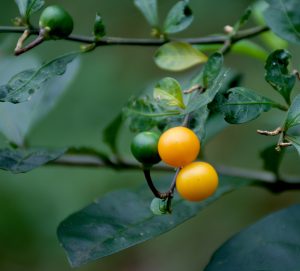
The Jamaican Nightshade (Solanum jamaicense) is found in only a few central Florida counties. It’s a prickly, perennial, invasive shrub in central and southern peninsular Florida and was first seen in the state in 1930 near St. Cloud. Jamaican nightshade is usually found in woodlands where it can dominant the understory. Occasionally it grows in isolated patches in the open. Like other nightshades in this article it is armed with short curved spines. Leaves are in subequal pairs, with dense stellate hairs, somewhat diamond-shaped, flowers white, yellow anthers; fruit is an red-orange berry to about a third of an inch.

The Toxic Buffalobur

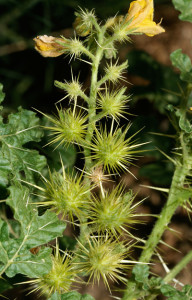
The Toxic Buffalobur. photo by FireflyForest

Very few people would mistake the Buffalobur, Solanum rostratum, as edible but it is a prickly, toxic nightshade often seen.  The small fruit is totally encased in a spiny calyx. It is an erect, branching annual found in fields, pastures, fence rows, roadsides and wastes sites. The leaves have with prominent white veins. The plants, especially the leaves and green fruit, are poisonous and contain the glycoalkaloid solanine as well as other tropane alkaloids. The plants can also accumulate toxic levels of nitrates from the soil. Stinging or Itching – The numerous sharp spines on the plants and burs can cause intense, lingering pain if touched. Animals are also affected, and even after the burs are removed, dogs will continue to lick and chew on their feet because of the pain.

Before we move on to an edible prickly nightshade, why the term “soda apple?” Soda through Middle English, Middle French and Middle Latin is probably from the Arabic word Suwwad (saltwort) which was a plant alkaloids were gotten from perhaps for soap making. And most of these non-edible plants have alkaloids. So instead of thinking Soda Apple or Tropical Soda Apple think Alkaloid Apple, a good reason to avoid said.  Lastly there is one local prickly Solanum that is a tomato and definitely edible, the Litchi tomato. To read more about it go here.   There is also a lesser edible, the Turkey Berry, read about it go here.

The controversial two-leaf nightshade. Photo by Green Deane

And what are we to do with the Two-Leaf Nightshade, Solanum diphyllum? This native to Mexico and Central America was first spied in the United States in Miami in the early to mid-1960s. It has spread since then and is a common shrub in south and Central Florida as well as parts of Texas and in southern France, Italy and Taiwan. It’s almost always reported as toxic. I wrote “almost” because some people say they have eaten a few ripe berries without noticeable issue.  Our usual sources of plant expertise are no help with this greenery: Daniel Austin in his tome Florida Ethnobotany doesn’t mention the plant though he was a professor of botany in south Florida when the species was proliferating. His University of Miami boss, the crusty Julia Morton, doesn’t do us much better.

In her book Plants Poisonous To People in Florida she calls it Amatillo. Instead of having it in the main section of the book it’s in the back under “other toxins.” After a description she writes: “The ripe fruit is sweetish, not acrid like the Jerusalem Cherry, but the green fruit and leave probably contain solanine.” She adds “In one pasture, where there were several of these bushes, a horse had optical abnormality, was staggering and weak in the hindquarters and may have grazed on the foliage.” I think that means don’t eat the leaves. Morton finishes her entry with “We must regard it with suspicion until we have actual evidence of toxicity.”  I would add the species in not mentioned in the Journal of Economic Botany which spans some seven decades and was created to bring lesser-known plants to public attention and use.  I know several people who eat a few of the ripe fruits at a time. I have eaten two at a time, several times, and as far as I know it as not bothered me. If you have arthritis avoid the ripe fruit. Solanine is known to aggravate arthritis.

{ 7 comments }