Does The Nose Know?

What Does a Word Smell Like?

During nearly every class I have students smell three or four plants — depending upon the season — and I ask them what common food each plant smells like. I also add a hint, such as “what salad ingredient does it smell like?” or “what nut does it smell like?” I find the exercise interesting in two ways.
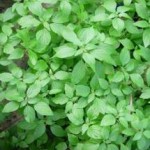
Pellitory: Cucumber

First is the fact that few ever guess right the first time. And one can tell some of the guesses are inductive such as naming salad ingredients by descending percentages starting with lettuce. But the more interesting part is the aroma recognition when you tell them the name. Their faces light up, they make a connection, and you hear “yes, that’s what it smells like.”
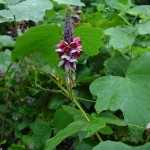
 

Kudzu: Grapes

You have to wonder what is going on. Smelling a fragrance is a concrete act. Chemicals meet sensors, an electrical pulse is sent to a particular part of the brain and the memory of the aroma is in there or it is not. Complex enough but putting a word to that memory. Probably only humans do that and perhaps that is the most difficult task. Except for a few words that sound like a sound — oink, tick tick tick, squeal — words are quite abstract. The combination of sounds used to represent any particular thing can be as varied as possible, as any student of languages can attest.
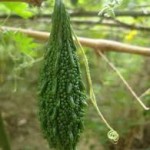
Bitter Gourd: Gym Shoe

It is the searching around for the abstract sound for the concrete aroma that seems to be the difficult part. As scent is often part of the proper identification of an edible — or a toxic — it makes one wonder how dependable that function is. That is why I try to make my descriptions rather specific.

“Kudzu in bloom smells like a classroom full of second graders all chewing cheap, sweet, imitation grape bubble gum.” Or, “the Bitter Gourd leaf smells like an athletic shoe that been in the bottom of a wet high school gym locker for a year.”

Maybe I’m making the task more difficult when I am trying to be very specific. In an abstract description are ten words really better than one or do they help find the memory?  Perhaps worse I build on the abstraction: “It is only one of two plants locally that smell like cucumber, it is one of two plants locally that smell like an old gym shoe.”

What Does A New Plastic Shower Curtain Taste Like … Exactly?

Suggestion can be quite powerful.

Almonds and cherries can smell quite alike depending whether you have been told they smell like almonds or cherries. This is rather important in that unless you have an almond in your hand the smell of almonds in the wild is usually cyanide, best avoided.

Bubble gum shower curtain

Then there are genes. There is a particular plant here in Florida whose fruit is difficult to find because the woodland creatures like it. But people who have found it disagree on its taste and aroma. Some say it tastes and smells like pink, baseball bubble gum. Some say it has no taste or flavor at all. Or (go with me here) some say it tastes and smells like a new plastic shower curtain. (What a new shower curtain tastes like is a bit difficult to imagine.)

One plant (the gopher apple) three tastes and flavors. There can be consensus on an aroma, or a diversity of opinions. In the end how do we know we are all smelling the same smell or putting the proper word to it?

Apples Might Smell Like Steak

One of my uncles on my mother’s side was married twice. His second wife was a walking genetic time bomb. All of her five children had some genetic problem or another, from mild to serious, or passed them on.
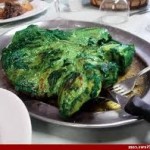
Green Steak

One of those cousins was well into his teens before they discovered he was color blind. The problem was he saw all the colors just in different places. Live trees are red to him, dead ones are green et cetera.

When someone said green he saw red but called it green and didn’t know any difference. Thus his color blindness hid well. The discovery of his situation came when his mother told him one day to go to the garden and pick some ripe tomatoes. He came in with all green ones.

Perhaps peoples’ noses are the same. They smell an apple but perceive steak, and abstract words just make it worse.

Your Opinion Smells

The sense of smell is like an opinion, everyone has one and it can vary greatly.

Not everyone smells the same, so to say, nor does my nose speak for all.

Now I tell my students “this is what it smells like to me.”  I am not concerned what abstract word is placed on a particular aroma. I don’t care what they call it, as long as they recognize it.
{ 0 comments }

Lawn Garden

Can you have a “garden” that you ignore?

I don’t see why not.

Is That A Garden?

Indeed, some might argue that is what my front lawn currently is. I really don’t have a lawn. It’s an open space with fruit trees and other plants, mostly edible weeds. I just went out and counted 13 edible species of weeds, and nibbled on my mulberry tree which is coming into season.

When I stopped mowing my grass regularly, most of these weeds simply volunteered, and then reseeded themselves. I can eat greens for several months without any work beyond harvesting.

Is that a garden?

I’m Eating Mine, He’s Mowing His

I will admit to originally throwing around weed seeds but that was years ago. Yet, every year I get a crop of food off my lawn basically by neglecting it, or at least neglect by the authorities’ point of view. I have been cited twice for having an overgrown lawn in cul-du-sac suburbia.

That tells me I am doing something right.

In fact, as I write this blog and have breakfast, my neighbor is mowing his lawn, a stretch of decapitated grass that resembles a putting green.

I’m eating mine, he’s mowing his.  I think I will lean back, put my feet up, sip some coffee, and listen to him work…. yeah, I know I am doing something right….

{ 2 comments }

Foraging Myth Busting

As many of you already know I am highly critical of the Internet as a source of information on foraging. This is not to say there isn’t quality information available, there is. Journals, universities, research groups, dedicated institutions and credible individuals do a good job of bringing foragers good information. It is home-grown sites where most of the nonsense gets proliferated to the point that those of us who are deeply involved in this endeavor spend a lot of time debunking myths. Personally I have given up on Wikipedia. It is so wrong on foraging so often that it is a serious threat to a forager’s health.

Some of the myths are understandable, some of them are just plain ignorant. But they highlight what I see as the one of the main problems of the Internet: It is not self-correcting. I am not saying books are error free because they are not. But published errors tend to get corrected and certainly are not as proliferated as much as those on the Internet. I can think of several immediately:

Myth 1: Pine needle tea causes abortions.

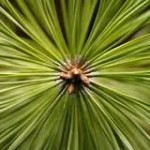
Pine Needles

The basis for this rumor is a veterinary study decades ago. If you are a cow and you eat many pounds of Ponderosa Pine needles you have a 5 to 8 percent chance out of 100 of having an abortion or still-birth. If you boil a huge amount of pine needles in water for hours down to a small amount of gross liquid and you drink it, then maybe it would cause an abortion. A few needles soaked in hot water is no threat to anyone except for possible allergies. Here’s what famous forager Euell Gibbons had to say: “When I was a boy we used to eat ponderosa pine for pleasure . . . called it “slivers”. In the spring the bark is really gorged with starches and sugars and tastes quite sweet. It’s also high in vitamins.”

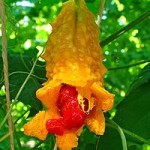
Myth 2: The arils around the seeds of the bitter gourd (Momordica charantia) are toxic to children.

Bitter Gourd

This started with one website that provided no evidence. I have no idea where this came from because there is nothing in the literature or the history of this plant to suggest that. Professor Julia Morton, who wrote extensively about edible and toxic plants, never mentions any problems with the aril and children. Indeed, the aril is nearly all lycopene. Hard to see how that is life threatening. I knew a nursing mother who ate them with no effect on her or her child. The  fruit, however, is toxic to dogs.

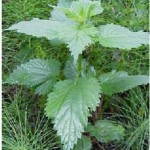
Myth 3: Eating old stinging nettles will give you kidney stones.

Stinging Nettles

They will give you a tired jaw but not kidney stones. The older nettles have cystoliths (Greek for cavity stones) which are clumps of calcium carbonate in the membranes of the nettles. Because they are “liths’ some took that to mean they can cause kidney stones and why one should not eat old nettles. The research shows just the opposite of the rumor, that intake of calcium carbonate decreases the chance of kidney stones.

Myth 4: Tiger Lily pollen makes people sick.

Tiger Lily

This one is rife on the Internet. It is absolutely absent from published sources prior to this century. Even books on poison fail to mention this whereas books published before 2000 say the pollen is quite edible. There is no research that shows tiger Lily pollen is toxic to humans. In fact, I know a well-known international expert who eats it. I know because I asked him. However, all parts of the plant can be fatal to cats. If they lick the pollen off their fur it can cause kidney failure.

Myth 5 & 6: If a bird or an animal can eat it you can.

Squirrel eating a mushroom

Among the many shortcuts I hear these have to be the most common. I have raised both chickens and squirrels and happen to know some about them. Arsenic is a disease preventative in chickens meaning birds can eat arsenic. Squirrels can eat a mushroom laced strychnine whereas a small part of it would kill us. Poison Ivy is a high protein food for deer.  Enough said.

Myth 7: Only Tuberous Begonias are edible

Wax Begonia

This one did start with a published source but the moment the Internet was invented this myth became institutionalized on the Internet. In fact I wrote to the main proliferator of this myth and provided research that it was not true. Indeed, I eat wax begonia leaves often and make them into delicious tartlets (the recipe is in the article.) If they ain’t edible they’ve had more than a decade to let me know and haven’t so far.

The Least Credible Is The Most Credible?

Not too long ago I was commissioned to do some research on who believed the Internet versus actual accuracy among the various popular media. Newspapers still came out on top as the most accurate, the Internet the least. Yet, those under 40 viewed the Internet as the most credible of all media. Therein lies the rub, the least credible media is considered by part of the population as the most credible.

Personally, I would not bet my life on it.

{ 17 comments }

Eating In Season

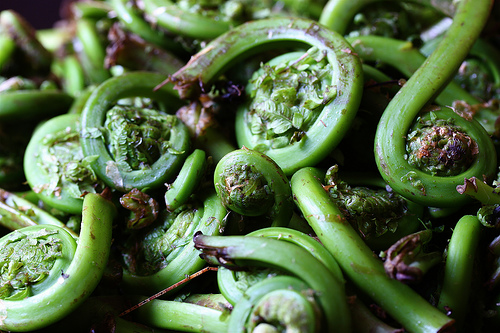
Seasonal Fiddlehead Greens

There is little doubt that eating certain fiddlehead greens can significantly increase ones chances of cancer. In fact, science says they cause cancer. On the surface that would be a sobering thought but is it?

Eating? Toxic?

Toxicity can be a matter of degrees

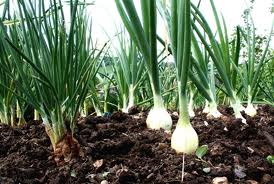
This may sound a bit picky, but what is “eating?” And for this discussion, what is “toxic?” In broad terms there isn’t much issue: Eating is consuming food and toxic can make you sick or kill you. Eat water hemlock and you will die in a couple of hours. That’s fairly straight forward. What about eating a pound of onions a day? It may take a few weeks or months but they can kill you, too. So are they toxic? Are they deadly?

But, back to fiddleheads. Phrases like “fiddlehead greens can significantly increase ones chances of cancer” are surprisingly unqualified. That is because science, that wonderful tool, is reductionist. It does not and cannot have a Gestalt view.

What if I ate just a few fiddleheads in a few meals just in spring, when they are in season? Can I expect cancer from them 20 or 30 years down the road? What if I can them, and eat a whole lot of them throughout the year for 20 or 30 years? Might that be the cause of cancer in the time to come? Research has shown that you can get cancer by drinking the local water where fiddleheads grow. But the again, we drink water everyday, not just a few times every spring.

A Pack A Day

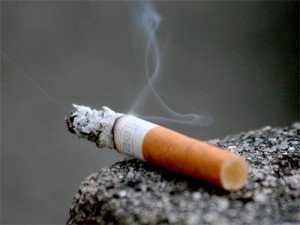
One cigarette does little damage

Perhaps some plants cause disease when they are eaten extra-seasonally, or to excess, or over a long period of time. A few fiddlehead every spring might actually be good for you, like a little wine, some greenery after a long winter. Preserving them and eating them all year might be akin to smoking, damage by excess or prolonged consumption. One cigarette a month is probably not going to kill you, but a pack a day can.

Simple Carbs

We used to call them “empty calories.”

It might be that man lives best when he eats seasonally, which brings me to carbohydrates. Simple carbs used to be a seasonal part of man’s diet, a fruit tree in the fall is a good example. He would eat until stuffed and the excess went to fat for winter use when the days were lean. Now most of us eat simple carbs every day, if not every meal. The

Almost as empty…

government even recommends it! But what if simple carbs are like fiddlehead greens or even cigarettes. Now and then, in season, no harm but daily deadly? Might that be what’s behind our obesity epidemic and our diabetes epidemic, the proliferation of simple carbs to the exclusion of other food?

Most of us no longer eat seasonally, and maybe that is catching up with us.

{ 5 comments }

Where the Weeds Are

There is little doubt that man has been foraging for food for a long time. As one might guess, in different places he foraged for different plants. He also foraged before there were cities and suburbia. Foraging continued well into the 1900’s, and of course, selectively today.

Among the challenges of teaching foraging is finding suitable sites. In my classes I tend to visit the same areas, at least four times a year, usually more often. Almost all of these sites are in suburbia, not in the wild. This surprises people because they assume wild food is out in the wilderness.  When the famous Willie Sutton was asked why he robbed banks, he said because that’s where the money is. I teach foraging in suburbia because that’s where the plants are.

That said, I have to qualify that comment. There are edibles in the wilds, but they tend to be different than those found in population centers and represent more a subsistence living than variety.

Many edible weeds, perhaps the majority, are not native. They are from somewhere else. They come with humans and humans go to population centers.

In an old city park I can usually find 60 to 100 edible species and I usually have to walk only a mile or so. In a state park I can walk 10 miles and find perhaps two dozen edible species. This is not to say native food is inferior or rare. It is better to say the choice is limited. But when you combine native and imported plants (and edible ornamentals) then one has a large menu.

The other reason I use city parks is because most of the species we find there most folks can also find in their own yard or neighborhood. It’s good to learn what the natives ate to survive but most folks want to find food around their own home, not a distant park (where foraging is probably also illegal.)

Foraging in suburbia does raise the issue of pollution, and that has to be taken into consideration. Despite that complication foraging in suburbia is where more people forage today. It is where most people find their wild food, and it’s where I teach. Willie Sutton would understand.

{ 0 comments }