Plants Can’t Run

Plants can’t run. That’s why the vast majority of them are unpalatable or lethal. Guesstimates range from 5 to 10 percent of plants are edible. Let’s split the difference at 7.5%, with a higher percentage towards the poles and lesser percentage towards the equator (percentage of overall edibles, not sheer numbers. Most plants in the tundra are edible, most plants at the equator are not. )

Through trial and error both animals and people have learned which ones are dinner and which ones are death. In fact, many of our “edible” plants are toxic at some time or in some way. The seeds of most plants in the Prunus clan (apples, cherries, peaches, plums) et cetera are toxic, though many peoples have discovered ways to eat them, which suggest to me a lot of hunger. You don’t figure out how to eat something with cyanide in it unless you’re hungry.
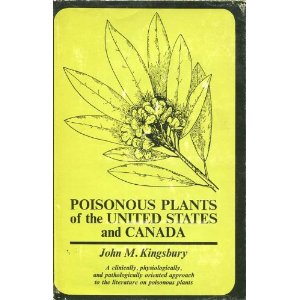
It is wildly reported that a man saved up a cup of apple seeds, ate them and died.  It was reported in Poisonous Plants of the United States and Canada, by John M. Kingsbury, 1964. But he got that from a farm bulletin in 1942 which said it happened but did not say who, when or where (see my article on wild apples.)  My mother always eats the entire apple, seeds and all, but it’s a few seeds at a time. And my grandmother ate the pit of every northern fruit seed she ever ate, but only one at a time.  Many grains have toxins and a lot of legumes in the pea family are only edible when young. Tapioca, cassava, and cashews start out non-edible. Even potatoes can be toxic.
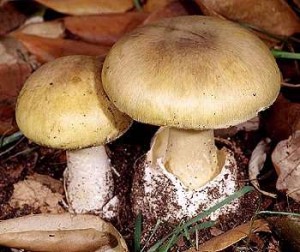
Deadly Death Cap Mushroom

No one wants to eat a toxic plant. But how often does it happen? In today’s society serious poisoning by accidental ingestion of plants is extremely rare in both adults and children. However, many plants can make you ill. Mushrooms, of course, get a lot of headlines. But that’s something of a distortion with the large majority of them being Asian immigrants collecting a toxic look-alike to a mushroom back home. Still, there is an occasional amateur mycologist or mushroom expert who gets it fatally wrong. Statistically oleander kills more adults than any other plant, but that’s because it is the suicide plant of choice in Sri Lanka, tallying several thousand a year. It was unheard of 30 years ago but two girls had a suicide pact and used oleander seeds. The resulting publicity spread the practice.
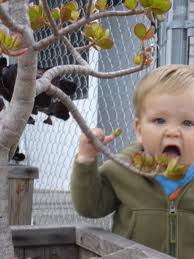
In the United States children are the most common victims of plant poisonings. Three quarters of those happen in their own yard. If you add your neighbor’s yard that covers most of the accident plant poisonings. This is specially true of toddlers (and young pets) who will chew anything regardless of taste. It is also a liability of slightly older children who see mom and dad foraging and just assume they can to, which brings up two issues.

First, if you are going to forage and you have children they have to be told the limits. They can’t just pick plants on their own. The other is in the past man’s knowledge of plants was vast because they were extremely important to day to day life. People knew the plants around them and children grew up knowing which plants were edible and which ones were not. Now most don’t know, and worse, when we moved to suburbia we surrounded our homes with ornamental plants, most of which are very toxic. That adds up to an increase in poisonings. And in one case out of nine with kids, the offending plant is never identified.
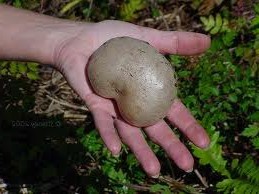
Toxic Air Potato

What about poisonings among foragers? I do not know anyone who was seriously ill from eating toxic plants though I know of two, both of whom tried eating the bulbils of the Dioscorea bulbifera which in some varieties are edible and in others toxic. Preparation is also an element. In fact, the last time I was writing about those bulbils and saying don’t eat them I had a visitor from Brazil. He told me his mother cooks them all the time. This is one of the problems with that genus, and a few others. I have research on my desk right now about a nightshade that the state of Florida says is toxic and the state of Louisiana says is edible. That the plant has seven very close toxic look alikes does not help. This is when my faith in state botanists isn’t rock solid.
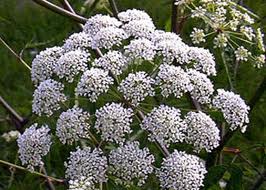
Deadly in minutes

Frankly, I think there will be more poisoning of foragers. I get a lot of email about foraging, much of it from people who prefer to watch videos about plants rather than study them and get it right. One is particularly chillling. Every plant one fellow has asked me about eating has been poisonous. Every one. No exceptions. He’s been 100 percent wrong so far. It is difficult to imaging anyone being that wrong so much. If he’s planning on eating wild foods he is certainly won’t be doing it for long. Another wrote to tell me saying if a plant tastes good he eats it, if not he doesn’t. He asked me what I thought of that. I said I hoped he had good life insurance and a will made out. Several lethal plants taste good, the yew seed perhaps the best tasting of all. It will stop your heart.  Poison hemlock root is reported to be very delicious. It can also kill you in 15 minutes.

As far as lethality goes, there are three local plants — not counting mushrooms — that will not only kill you but do so quickly, painfully and with no antidote. There is one report that one of them is edible if prepared correctly. Unless starving I ain’t volunteering, and maybe not then.

As for expert and medical opinion… Some states list wild strawberries as toxic. I have no idea why. But I certainly have eaten more than my fair share. Acorns make the list, too, though they sustained native populations for thousands of years and Japan during WWII. The tannins in them are hard on your kidneys if you can manage to eat the bitter ones.
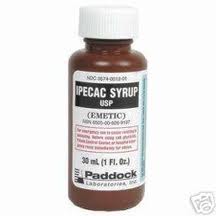
It is also now recommended that one not administer syrup of ipecac if you or someone has eaten something toxic. Ipecac will make you throw up inside of 20 minutes. The rationale behind this is shaky and I carry ipecac in all my backpacks and vehicles. Not for me per se but for accidental others I might meet. The view of not administering ipecac rests on the assumption the victim can be gotten to a hospital quickly (the same view is held about treating snake bites. The “medical advice” is get them to the hospital. Not helpful in the field.) The attitude is, ‘don’t you amateurs do anything. We doctors will take care of it.’ Personally, I like to be prepared as if I am several days from medical help. In that case, ipecac can be a life saver, just like knowing how to treat a snake bite.
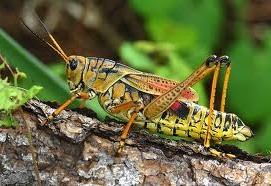
The coloring screams toxic. Listen to that.

Are there some plant warning signs we should keep in mind as foragers? Absolutely. Like some creatures, colorful plants or parts can be a warning to stay away. Modern landscape plants are almost always toxic. Avoid all plants with white berries as 99.999999 of them are toxic and the rest don’t taste good. Avoid plants with white sap, 98% of them are toxic, with some notable exceptions: Learn them. I can think of four prime ones. Bitter tasting plants are often toxic. Purple or red shoots should be avoided. View every mature legume or pea as toxic. There is no taste test for edibility. And the so called field edibility test is more dangerous than helpful.

I am not a mushroom hunter but this I can tell you: Never eat little brown mushrooms. Burn that into your memory: NEVER EAT LITTLE BROWN MUSHROOMS. Yes, I know they are cute and fresh and everywhere and tempting. Just don’t do it. No exceptions. Even experts can’t tell them apart. White mushrooms with gills are more toxic than not. Avoid them. Mushrooms without gills and mushrooms on trees may make you very sick but probably won’t kill you. That is not too comforting when you are in the hospital. If you are going to eat any mushroom, study with an old expert, a very old expert.

{ 3 comments }

Tools of the Trail

Over the years I have added a few items to my back pack that can make foraging more easier.  You might want to add one or two of these items.

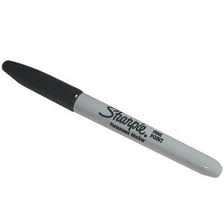
The handiest thing I take foraging with me is an ultra fine point permanent marker. It will write on anything. If I need to make a note I just grab a good leaf and write on it. Why carry paper?  I can also write on leaves I’m interested in. I write the date on them and place them collected as well as identify them if I know.

Recently I decided to make a video of a plant I came across while out hiking. I had my little video camera with me. I don’t need a script per se but I did write down the items I wanted to cover on the back of a leaf.  And I carry two cameras, a digital still and a digital video camera, plus batteries.  Neither are expensive and are among the simplest of designs… less to go wrong. One hint is to make sure your still picture digital has a good close up function. My little Lumex is excellent but a NiKon I was given is very poor with close ups even though it has a close up function. Try the camera first. Can you take a picture of a dime that fills the view finder? A close look at small difference many times makes the difference between identifying a species or not.

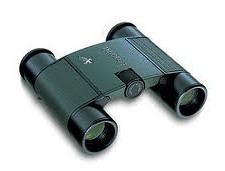
I also carry an excellent pair of waterproof binoculars, and I usually wear them around my neck for three reasons. First,  no one is afraid of anyone wearing binoculars, from hikers to the police. (You would be surprised how many times I’ve been looking at plants around a mall only to be approached by the police. As soon as they see the binoculars I am dismissed as some bird lover. If an officer does inquire further I tell him looking at the flora as a hobby and that usually convinces him I’m a harmless tree hugger.)

With the binoculars I can look at a lot of leaves a long ways away or up, which is often quite handy. And quite a few conversations have started over the binoculars. It usually begins with “out bird watching, eh?” Answered by, “no, leaf watching…” And truth be known I do look at a bird or two now and then, and other fauna.

The next items of importance are a few baggies and plastic bags. I am always finding something I want to take home to eat or investigate. Plus the baggies can be used to protect the cameras should I get caught in the rain.

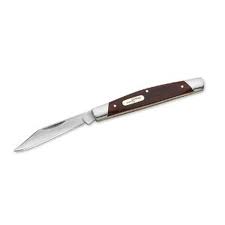
In my pocket are always three things. A 10-powered loop, very handy for some identification issues, a pocket knife, and a fire steel. The latter just in case I get stranded and need to spend the night in the woods.  Might as well be comfortable. Surprisingly I use the pocket knife quite a lot, usually to show cross sections or to cut up some edible for students to taste.

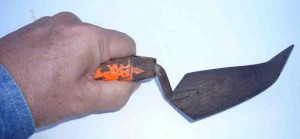
Many years ago I also bought a six-inch trowel, heat bent the end two inches to a 45 degree angle. It makes a fine digging tool, light but strong. Painting the handle flourescent orange helps to find it after you put it down.  If I know I am going to do a lot of digging I also take along a digging/walking stick made from an ash shovel handle.

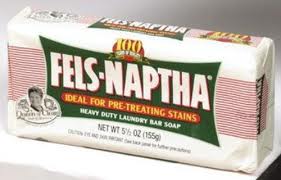
Last on my must-carry list is part of a bar of Fels Naptha soap. It can be found in most grocery stores in the laundry section near the floor. It’s inexpensive and can stop such things as poison ivy if washed off in a few minutes.

The grand dame of toxic and edible plants, Dr. Julia Morton, said she would have gotten a lot less calls on topical irritations if folks carried a few latex gloves with them when handling plants they didn’t know. I carry them, they weight nothing and take no space, but I rarely use them.  The soap I do use because one forgets about the latex gloves but remembers one should have but didn’t. The soap saves the day.

{ 1 comment }

Grub-A-Dub-Dub

Ray Mears

It had to happen. If you forage for wild foods at some point you run in to grubs and related insects and you wonder… edible? And once you’re past eating your first bug you suddenly realize there’s a lot more food out there.

The world-famous Ray Mears says that when you are hungry noting too small is to be passed up for the soup pot. And that certainly makes sense for our past hunters and gathers. And while Mears does not often mention insects what of them?

Unfortunately food has taken on the air of an orthopraxy, that is, a list of shoulds, oughts, and nots. We should eat insects because they have a small carbon foot print. We should eat them because they are nutritious. We should eat them because people in 113 countries eat them. Those arguments fall on insect-deaf ears.

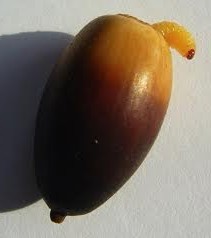
Acorn Grub

Shy of mass starvation I don’t think Western nations will adopt eating insects any time soon. I have a difficult time as is trying to get people to eat common weeds there were once part of the seasonal diet. Increasing “entomophagy” seems a long shot at best. So why did I do a video on eating acorn grubs? To quote Sir Edmund Hillary: Because it was there. Also because I forage. I run into insects, on and in my food. Expanding my diet and pallet a little seemed a reasonable thing to do.

In the past finding a grub in your guava was a joyous moment, a bit of protein and flavor you didn’t have to run down. Somewhere along the way finding a grub in your guava became, at least in western nations, a reason to throw the entire guava away. So in the end I think looking into edible insects is not so much about eating insects as it is knowing, recognizing and using a resource. Eating insects from foraging just kind of goes with the territory. It’s not the main mission, but it’s in there. It expands your knowledge and makes just a bit more competent to survive and thrive.

Update:

Apparently a lot of folks don’t like to eat insects. My latest video on eating weevil grubs in acorns was met with a lot of yuk comments. (read my editorial on said here.)

That’s understandable. Interestingly, oak grubs and pokeweed have something in common. They are both rites of passage. The first time you identify, collect, prepare, eat and survive pokeweed it’s a memorable experience. That’s when you know you are a forager. Likewise when you eat your first grub. That’s when you realize there a lot more food out there, and tasty , too.

By eating that first grub you get past the yuck factor to the food factor.

I used to have a pet squirrel named Pooky. She loved meal worms. I thought they had a lot of yuck factor even though I raised them for her. But now I know what the little squirrel brain knew years ago. They taste pretty good.

Mealworms and grubs, are not just for squirrels anymore.

{ 0 comments }

Sunny Savage

I had the pleasure this past week of having the well-know forager Sunny Savage visit two of my classes here in Florida (If you think she is attractive on TV you should see her in person.)

She and her husband Ryan were in the state looking for a sail boat and they stayed locally. She had quite a few stories to tell particularly about the taping of her shows.  It was quite nice to have another foraging notable on the trail because I don’t have the opportunity to be a student too often any more and it is fun to learn.

I will tell you more about the boat and plans this adventuring couple have as they shape up, but I think a world tour is in the offering.

{ 2 comments }

Why Forage?

Often I am asked “why forage for wild food?” Why that question is asked is probably worthy of an article unto itself. But here let’s focus on one answer (out of several.) Let’s look at cost.

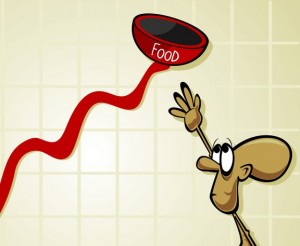
The U.S. Bureau of Labor Statistics released recently their March number crunching. Food prices in March rose 2.4%, the sixth month in a row food prices have gone up, and the largest jump since 1984. But that’s counting everything. If you look at specific categories the numbers are more revealing.

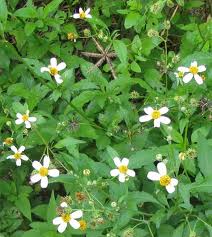
Fresh and dry vegetables went up 56.1%, fresh fruits and melons 28.8%, fresh eggs 33.6%, pork 19.1%, beef and veal up 10.7% and dairy products up 9.7%.  All of that makes the Bidens alba growing in my yard all the more attractive, maybe even that pesky squirrel. Some think “food inflation” will continue even if the economy improves. Apparently that is what is happening in India now. Some investment gurus are talking about investing in, literally, food, and others like Warren Buffet are recommending investment in agriculture or countries with a lot of agriculture.

Bidens alba

It’s interesting the price of plant products rose more than animal products, though animal products are also dependent on plants, however not necessarily plants that man grows. The difference is commercial plants for people need chemicals and tending whereas many plants for animals — range grass for example — do not, nor do most of the weeds we eat. However, contrary to what most folks think, foraging is not free. There are costs. Discounting time, one has to get to a place to forage. One has to transport the collected food and the food has to be cleaned. That requires some cost, from calories to bike tires to gasoline to clean water.

One also needs to know which plants to pick. That knowledge can come free, and/or from lessons, books, and internet services. My personal plant library of some six dozen books cost me about $1,000. You may never own more than one foraging book, but my point is wild food is not totally free. But, it is the next thing to free, and the cost is much less than store-bought food and is less subject to inflation and taxes.  Once you have foraging knowledge inside your head any cost gets prorated over time to the point of being negligible.  A $20 course and a $30 book totals up to $50 but if you and yours can eat for a lifetime it’s a good investment. It’s also a certain measure of independence and security.

I’m not suggesting foraging as an answer to the growing food problem.  With unemployment hovering near 17% (depending who’s counting and how they count) there are nearly 40 million Americans on food stamps, up 22.4% over this time last year. The government is now paying out more in benefits than it is taking in. At some point entitlement programs will be cut back.  However, 40 million people can’t go out and forage even if they knew how. The impact on the environment would be devastating. The reality is not even one percent of the population (400,000 persons) are interested in foraging. I doubt that even one tenth of one percent (40,000 persons) are interested. Maybe one hundredth of one percent might be interested.

This we know: Food prices are rising, sharply. There is some cost associated with learning how to forage, and most people are not interested in foraging — at least not now. I think that adds up to a strong argument. Not only is it economical to forage, but it will be a steady food supply because others don’t see the value it represents. Even if they recognized its value today they are far behind you in the learning curve. Learning to forage can mean you have something to eat when they don’t. You certainly have more variety and better nutrition.

When you learn to forage you are doing more than identifying edible wild plants. You are also developing a skill and confidence. No matter how dire the need, those cannot be learned overnight. Foraging is like rigging, you learn mostly by doing and that cannot be rushed. You’re already way ahead of billions.

{ 2 comments }