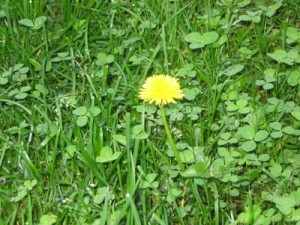
Weeds and Wolves

I am often invited to see someone’s vegetable garden, and it’s usually growing well. Then I’m asked if I see any edible weeds, and usually there are some. I point them out. Then I hear something like, “oh, is that what it is?” There is professed interest but few of these gardeners ever eat any of these weeds. Baby sow thistle in a vinaigrette is not on their menu.

At first that would seem a strange, after all a vegetable garden is all about raising food, fresh and nutritious. But on reflection perhaps a gardener’s reluctance to eat weeds is understandable. Weeds don’t need gardeners whereas cultivated crops are almost entirely dependent upon gardeners. Weeds are independent adults who go their own way, crops need protection like children and die off without constant supervision and intervention. Weeds are kind of like relatives… you can’t choose them. Cultivated crops are like friends you want to keep.

That may be stretching psychology a little, but once something is labeled a weed, or more so a noxious weed that threatens agriculture, it ceases to be a positive plant. It becomes a drain on resources; space, water, sunshine, fertilizer and time. The sow thistle we welcomed a century ago into our garden is now chemically killed.  Or looked at it another way: The sow thistle wasn’t as clever as spinach. We can believe we choose which crops to cultivate, or perhaps the crops choose us. I like to make the analogy between plants and canines.
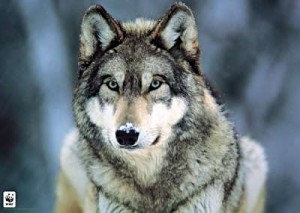
In the United States there are some 75 million dogs, and only about 15,000 wolves. The dogs are clearly giving people something people want and the wolves are not. We recognize wolves as the superior canine but it is dogs we choose to raise. One in three of us “own” at least one dog. Weeds are the superior plant, but we raise crops. As dogs have outwitted wolves, crops have outwitted weeds.

Cultivated crops seduced man with taste, texture and energy.  Weeds offered more nutrition. They lost. There is one more aspect, ease of cultivation. Like the dog who figured out — if I act friendly they’ll feed me — some crops figured out if they are easy to grow man will do all the work of taking care of them.

Weeds fight a constant battle with their pest, and as a consequence succeed or die off. They are strong. Crops are totally depend upon man to fight off the pests. They are weak. Like dogs and wolves there are 11 million acres of potatoes planted every year but not one acre of spurge nettle or even cattails, though the latter of which produces more starch per acre than potatoes.  The potato is clearly playing the game of popularity better than the spurge nettle or the cattail. But who or what is controlling whom?

The problem is man’s seduction by crops, also know as agriculture. Like run-off nutrients into a lake crops have produced a bloom in the human population. We are under cultivation by crops and now nearly 7 billion of us on a planet that would support without crops only one million. Paying attention to crops is a major portion of all human activity. It is the fabric of civilization itself. We like to think we are the crops’ masters but it just might be the other way around. We are doing what they want. But more importantly will or can crops protect us when a human pest comes around?

Animals and plants that gain and benefit from out favor cannot survive without us. If humanity dies off cultivated crops and dogs will disappear. But, there will still be weeds and wolves.
{ 2 comments }

Are You A Cook Or A Baker?

I am often asked about herbal medicine. My answer to the inquirer is often a question: Are you a cook or a baker? Their answer is instructive.

While one person can be a good cook and a good baker they usually are not. Usually one is a very good cook and a mediocre baker or a very good baker and a mediocre cook. Why? They are two different mind sets, as can be foraging for food and herbal medicine.

Cooking tends to be more flexible than baking. If a recipe calls for a cup of water many a cook will try a cup of wine, or milk, or beer. If it calls for veal emu might work. There can be experimentation and non-directed creativity.  Bakers are more like chemists. They follow recipes and often they must do so carefully or they end up with a mess. When a baking recipe calls for a certain size pan, a certain temperature of the sugar, and a specific amount of time in the oven, it means exactly that, no taking liberties, no changing ingredients, no changing the size of the pan, follow the recipe exactly.  Dionysus and Apollo, creativity, restraint. Foraging and herbalism are so cleaved. I happen to be a genius cook but an imbecile baker. My mother was horrible at both but is still kicking at 85, I think in part because every meal she made challenged her immune system to do or die.

There is another separation between forager and herbalist. I spend a lot of time and care to make sure the plant I have eaten does not remind me that I ate it. I want to enjoy it and move on. I do not want to be reminded in an hour or two or more than I consumed it. An herbalist has a very different point of view. They want the plant to do something after its use. In fact, often they are counting on it, and quickly, too. Where I just make sure I’ve got the right plant and preparation, they have preparation, doses, and effects to consider. For the herbalist it’s like baking: Know you materials, use them in a particular way, create an effect, and measure the effect.   It’s really the difference between the chemist and the artist. A poison is host response, dose and time. In Latin the medical attitude is: dosis sola facit venenum only the dose makes the poison’) 

So yes, I know many herbal plants, and make it a point to talk about them. I also report about them particularly when confirmed by modern research. But I am a forager, not a herbalist. And I suspect mushroom hunters have to be even more dedicated to detail than herbalists. Then again, if they are not, it is a self-correcting problem.

{ 6 comments }

Where Do You Forage?

It’s a simple question with a complex answer. When I was younger the 1000 acres behind the house and the 2000 across the road answered that question. Today it is where ever I can. Indeed, a woman at the local health food store that I’ve been trying to get interested in foraging recently said “there’s no place to forage.” She is wrong, but more right every year.

Abandoned Groves

To be utterly frank, I forage where ever I find the plants and (that “and” is very important) and I think the soil and water are wholesome. This means yards, parks, fields, vacant lots, cemeteries, bike trails, the back of businesses, residential neighborhoods, abandoned citrus groves, working citrus groves and local woods. This is also a tad iffy since this state says you can’t take plants from public land and everything that is not private is public. However, that usually applies to plants they don’t want removed whereas I am usually taking plants they want to get rid of. No one loves weeds but me and thee.  I also forage in lakes, ponds, rivers, the inner coastal waterway and seaside.

The truth of the matter is I spy the edible plant first and then I ponder where it is.  If it is a pindo palm on a lawn I ask the homeowner if I can have the fruit and if he or she puts down pesticides. If it is a body of water I examine the quality of the water. A spring and a ditch are quite different. If it is a field it depends where.  The less witnesses the better.

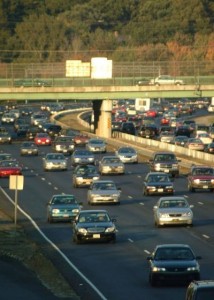
It might be more instructive to say where I don’t forage. I try to avoid any land or water that has parking lot run off. I don’t forage down hill from the interstate or a heavily traveled road. Uphill I might is it were far enough away. Avoid anyplace near a garage. And the absolutely worst place to forage is railroad lines, even old ones. Railroads are among the most toxic property in the United States, and among the longest contaminated. Folks have died from chemicals put down around the tracks to hold the weeds down. What you can do is collect seeds there and plant them to get a clean generation.

And whenever a police officer stops me I just say “I’m looking at the flora and fauna.” That usually creates a blank stare to which I add “I know something about edible plants and I’m looking for something to eat.” By then they usually decide I am not any threat to anyone except myself and they leave me alone.

{ 0 comments }

When Is A Lawn A Lake?

It sounds like a trick question, when is a lake a lawn, but there is a non-tricky answer: When it is in Florida.

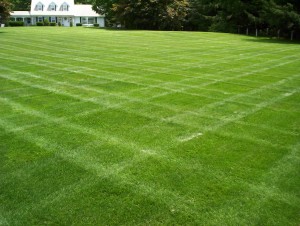
Regular followers of this writer know I am not a fan of lawns as an every day household item. I think lawns are great for national monuments, cemeteries, and golf courses. They are an irrational money pit for residential homes. Lawn grass is the second largest crop in America after corn, another grass. In fact, we grow more lawn grass than anyone else in the world. Compare that to Greece where lawns are nearly nonexistent. The only “lawn” I’ve ever seen there is around a small monument in Athens. Lawm is so rare you don’t see lawn mowers for sale. Goats do the job for free and give milk in return.

What does that have to do with lakes? First consider the lawn. A wide open space, barren of any wild growth. Take that same sterile mentality and apply it to water and you get a lot of Florida lakes, especially those in residential areas.

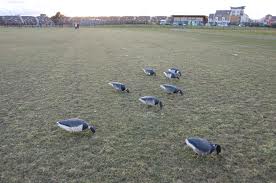
In Florida this is what a lake should look like: Lawn right down to the water’s edge, and then only water. No water plants are allowed to grow in the lake. No cattails, no pond lilies, no rushes. However, floating plastic ducks and geese are allowed to give the impression the lake is alive where as real waterfowl won’t land there because there is nothing to eat and no place to hide. One also usually sees a pump in the middle circulating the water to keep the dead lake from slipping into slime. Just as the lawns are sterile and artificial — think deer statues — so, too, are the lakes.

Left on their own the lakes will soon be alive with food, both plants and aquatic life. But at the same time the lakes will also slowly fill in and grow smaller. Over several decades the lake will become a marsh, and marsh-front property is not as profitable as “lake-front” property.

Deadly Orleander

When man moved off the farm into suburbia he quit growing food and began growing lawn and toxic ornamentals, as if he wanted to distance himself as far from living off the land as possible. Then he extended that same barren mentality to lakes. They have to be bodies of dead water, not oases of food and life.

The elimination of all but obedient nature on residential land and water seems perverse to me, the extension of some mental compulsion usually treated by professionals. I do not see the sense in maintaining plants that do not produce anything except expense. And preventing a lake from providing thee, me and the denizens of nature food and shelter seems environmentally unsound, a problem not a solution.

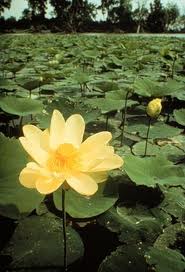
Two years ago, about 12 miles from me, a 10-acre residential lake with grass right to water’s edge blossomed in thousands of American Lotus (you can see those pictures in the article on American Lotus here.) This greatly offended the residents. How dare large yellow flowers grow in their lake. A plant exterminator was immediately hired — I actually talked to the president of the homeowners’ association — and the lake was chemically purged of that offending plant. Today the lake is barren again, save for the pump doing what nature used to do. But, the humans with their putting-green lawns of decapitated grass are happy with their sterile lake. Let’s hope they never are so hungry they are forced to eat their lawns. I wonder what view they might have then of all those offending, nutritious lotus?

{ 2 comments }

Real Food Rules!

This blog all started with hot dog relish.

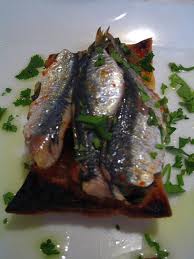
Sardines on Toast, yum

I happen to like sardines on whole wheat toast with onions and mustard. (Regardless of what you think of that, go with me here for a while.)  Excepting the sardines, that’s close to the classic condiments one finds on ballpark hot dogs. So I wondered what that would all that taste like with some sweet hot dog relish tossed in.  That sets the stage.

I am also some one who avoids high fructose corn syrup. It’s part of my first personal food rule, avoid refined carbohydrates.  I think they are behind some disease trends. Let me show you some statistics from one study, Trends in Stomach and Pancreatic Cancer and Mortality in England and Wales, 1951-2000, published in 2007.

High Fructose Corn Syrup

The relative risk of dying from pancreatic cancer from 1951 to 1955 was 0.91. From 1976 to 1980 it was 1.11.  The risk now is 12.0. High fructose corn syrup was invented in 1957, was introduced into prepared foods and was widely used by 1977.  Is it a coincidence that the pancreatic cancer rate rose with the use of high fructose corn syrup? And in the 30 years since the risk has risen from essentially 1 to 12. Coincidence? Consider diabetes.

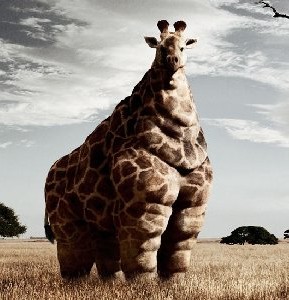
Government Food Guidelines Giraffe

The proliferation of diabetes, of which we have an epidemic, is in lock step with the invasion of that syrup into our foods and the wide-spread use of refined carbs. We are now seeing in children a form of diabetes that was usually confined to overweight older adults, in fact it was called Adult Onset Diabetes. Now it is type two diabetes. Ponder that. We are seeing a disease in children that was virtually nonexistent a few years ago. When you have an endemic change in a chronic disease it suggests something has changed to which we have not physically adapted. To me that says wide-spread changes in the food supply. Bottom line: I want sweet relish without high fructose corn syrup, HFCS.

Fattening Small Print

I must have looked kind of silly reading all of the relish jars in the supermarket. They all had HFCS, as I suspected they would. It’s easier to use — if you’re a commercial food manufacturer — and sweeter, less goes a long ways. And it is in everything. Try finding some ketchup/catsup without it, or canned beets, or creamed corn. The list goes on.  Like the fall from grace of transfats, which were once the darlings of kitchen chemists, I suspect some day HFCS (and refined carbs) will also fall after being linked to health pandemics. I, however, avoid HFCS today. Thus I now make my own relish and ketchup.

Chemists in the Kitchen

I have  two other personal food rules I try to follow. One is no more than five ingredients in a boughten food. When the food comes in a package, I count the number of ingredients. If it is more than five I usually pass unless most of them are named spices. Five ingredients gives you a medium such as water, vinegar or syrup, a few spices and minimally processed real food. Less is more. I like to read things like: Cabbage, water, salt.  Better: Beets, water. Best: Dried apricots. If the label reads like the stuff in the chemistry set I got for Christmas once, I skip it. You know what I mean; ingredient lists with a lot of words that start with: Mono-, tri-, methyl-, di-… et cetera… if I can’t pronounce it I don’t eat it. Avocado is about the longest word I consume.’

Of course real food is always better than something packaged. Where is the real food, besides out in the fields and woods? It’s usually around the edges of the grocery store. Produce, meats, and dairy are usually around three of the store’s four walls, the front being the fourth. Shop around the edges and you’ll do well. Be on the fringe and be healthy. Non-food is in the middle.

To be frank, a similar chemical problem exists in the field with wild edibles. Amaranth and PBC’s come to mind, pigweed and motor oil, persimmons and tire dust. In the supermarket I try to avoid food contaminated by “kitchen” chemicals, such as additives, dyes, and preservatives, in the wild I try to avoid edibles contaminated by commercial chemicals, such as pesticides, petroleum products, and compounds that will make you glow in the dark or have kids with five arms. The irony is wild food tends to be more nutritious than cultivated food but it is exposed to even worse chemicals.  It is a statement about our times that we have to be careful about chemical contamination in and out of the grocery store.

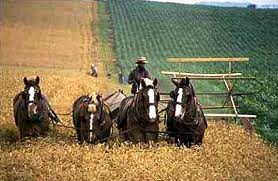
Back to nature Amish

I have a friend who is a chemist, and he’s fond of saying everything is chemistry, and he may be right. But the chemist in the kitchen does not have a good track record health wise, nor in the field starting with DDT (which is still out there in many long-lived plants such as lichen.)  I don’t want to sound like a Luddite, or a poster child for the Amish way of life, but I think many things of the past were better, particularly the food our ancestors ate. That brings me to my third personal rule, and I’ve mentioned it before, … if your great grandmother would not recognize it as food, don’t eat it.

Now, by avoiding high fructose corn syrup, chemicalized food and eating like my great grandmother, do I expect to escape the grim reaper? No, not at all. When ever you read a study that says such-and-such reduced cancer or heart attacks what that really means is the people didn’t get cancer or had a heart attack at the expected age. They still die of cancer and of heart attacks et cetera, just a few years later than usual. And that’s the goal. I’m here only once that I know of and I want to hang around as long as possible.

I think the more real food you eat and the less chemicals — where ever they are — the better off you are. So I avoid the the non-food of the grocery store and adulterated wild foods. Hopefully I can wander in the woods a little longer than usual, and be healthy while wandering.

{ 4 comments }